

Welcome to Water and Power, a monthly newsletter about the elements of our survival—and those who seek to profit from them. Water & Power highlights reporting found at Deceleration, but also offers links to critical stories from other publications, prepares you to engage on these issues with notices of events around the bend, and always offers unique content exclusively for newsletter subscribers.
If you know someone who would appreciate this research and analysis, pass it along. Subscribe to this and our growing roster of Deceleration newsletters. — Greg Harman
Extreme Drought to Extreme Storms: Texas's New Whiplash Weather Requires Greater Preparation
Once upon a time, Texas’s Hill Country was celebrated as “the Land of 1,100 Springs.” This ecological wealth is not always obvious, as most of the state’s ecological gems have long been hidden behind barbed wire, a state where virtually all land has been sold off as private property. Today we know a mere shadow of what’s been lost. San Antonio’s sacred Blue Hole flows only after the heaviest of rains, and only for a day or so. The rest of the water making up the San Antonio headwaters is pumped-in recycled water. Jacob’s Well outside Wimberley is becoming better suited to spelunking than floating. Big Spring was a big spring…but its flow today is pumped in like the San Antonio.
“The future of many Texas springs is clearly not assured, and that should be cause for concern for us all,” Larry McKinney wrote back in 2005 in Texas Parks & Wildlife Magazine.
A study published in 2024 sought to update a 1975 survey of Texas springs, finding that 11 percent of springs had gone dry by 1981. They found another 30 percent of Texas springs had gone dry since 1981—“an increase of 173 percent, or 2.7 times more,” the authors wrote.
(No wonder the residents of San Marcos have rallied against pressing in of water-ravenous AI data centers, no? It's not just them.)
Drought continues to grip much of Texas, deeply across the Hill County and South Texas. While we’re getting a bit more rain than is typical this month, it will take much more to break the drought.
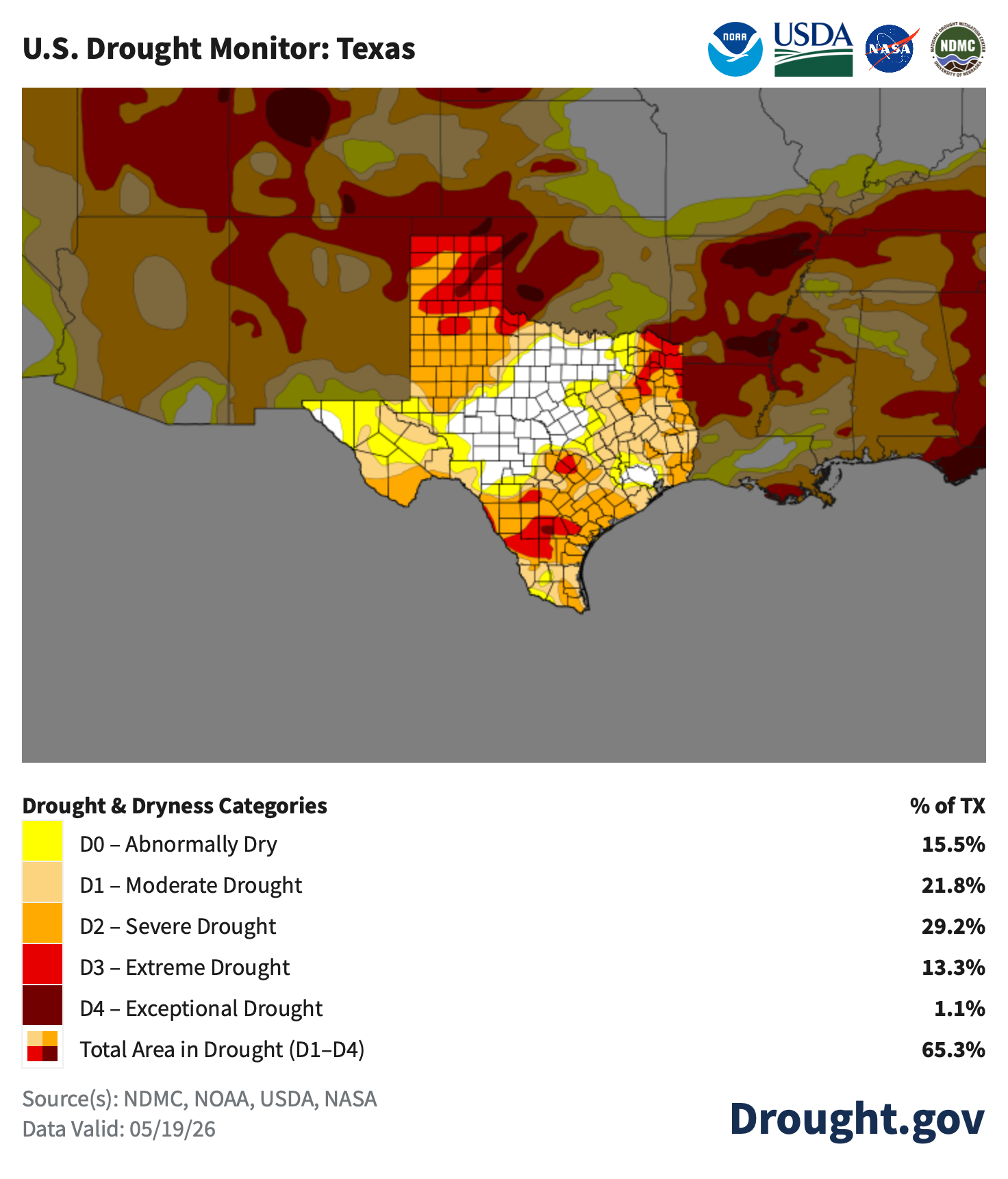
And it’s not just Texas.
More than 60 percent of the entire United States has entered some level of drought in recent months. Andrew Ellis, a climatologist at Virginia Tech University, said that a warming planet is compounding the hardship of declining rainfall patterns.
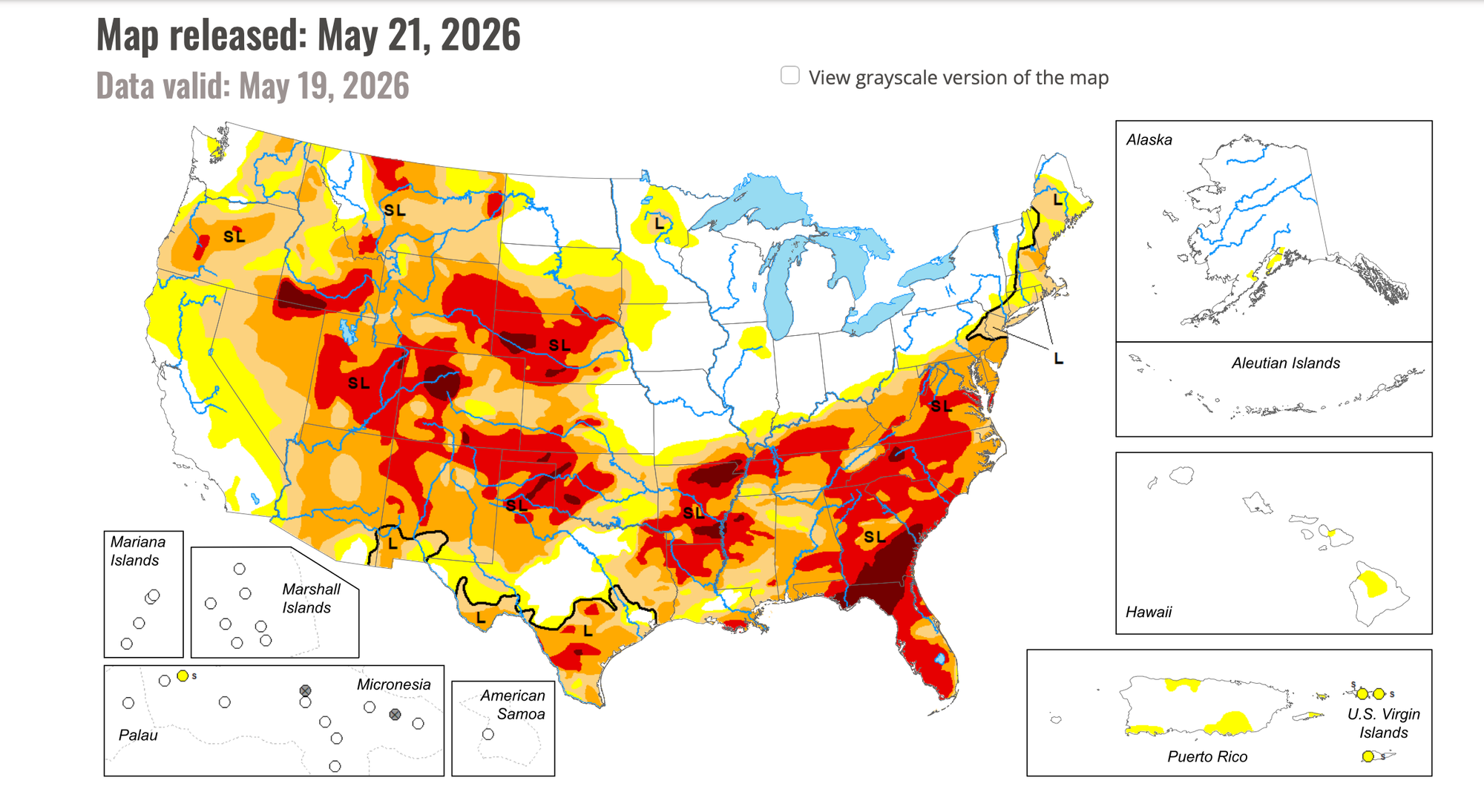
"While precipitation remains the primary driver of drought, increased air temperatures lead to greater water loss from the soil through evapotranspiration, intensifying the effects of dry spells," Ellis said.
So-called “flash droughts” are being driven more often by heat patterns (as opposed to rainfall) and bring severe risks to agricultural systems via rapid soil moisture depletion. That shift is making forecasts more difficult.