

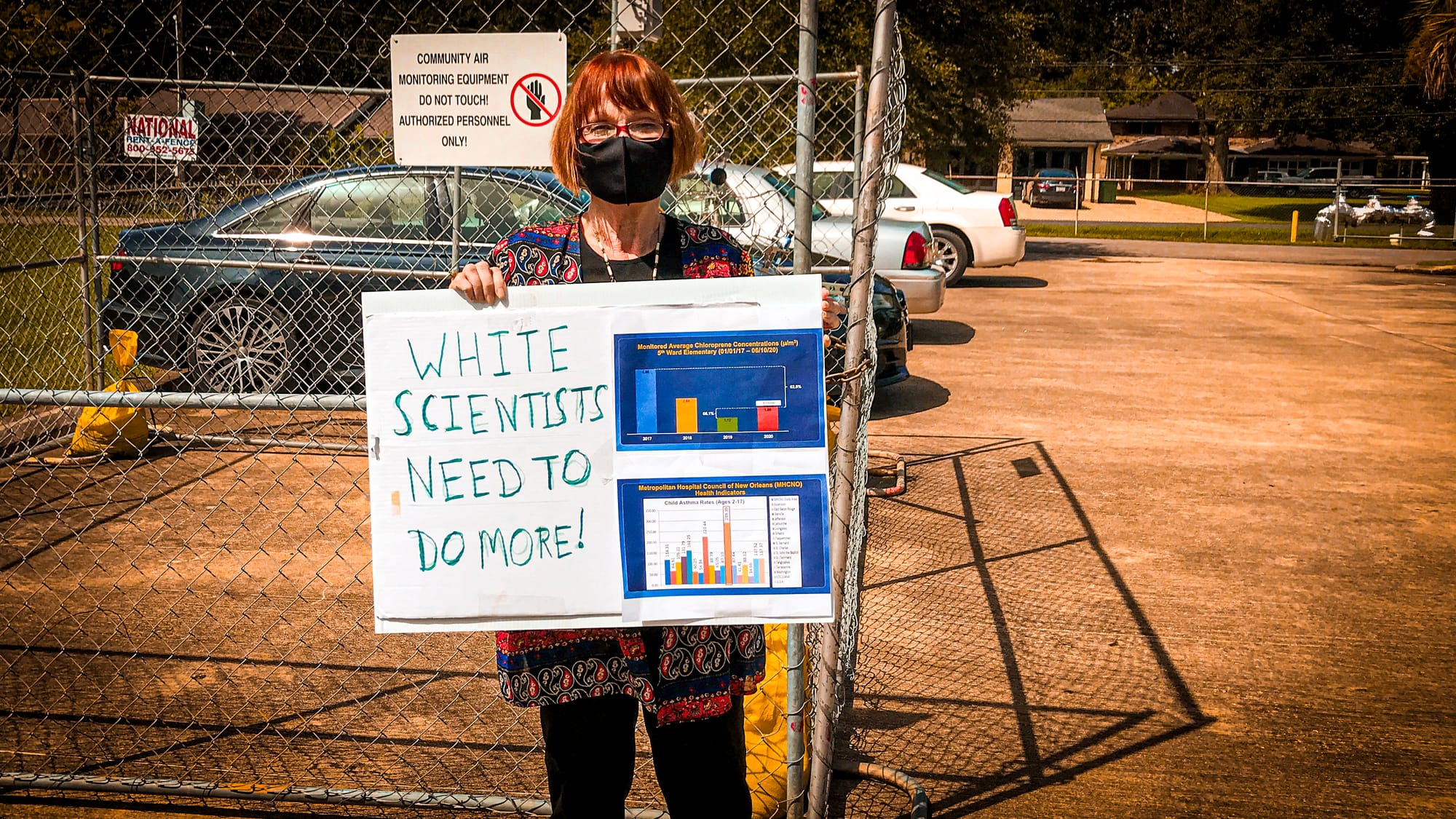
Under President Biden, the United States was producing more oil and gas than at any point in its history. What’s left for his “drill, baby, drill” replacement but to make extraction and manufacture dirtier, less regulated, and unrestrained by past declarations over many protected wilderness areas? With a wave of executive actions, including retreating (again) from the Paris Climate Agreement, President Trump signaled it was, indeed, possible to go lower.
In direct blow to frontline communities on the Gulf Coast benefiting from historic commitments to environmental justice under Biden, Trump closed the “Justice40” initiative set up to direct more benefits from federal environmental programs to frontline communities.
Yet scientists serving those fenceline communities in Louisiana still believe they can make this the last year industry polluters in Cancer Alley and Southwest Louisiana can spew benzene, chlorine, ammonia, and vinyl chloride with impunity. They plan to force reform by exposing industry lies and driving local power for change.
Vickie Boothe, a retired environmental epidemiologist, has been volunteering with grassroots groups in St. John the Baptist Parish for the past six years to reduce their chemical pollution burden. She told Deceleration she’s tried every avenue she ever learned from over three decades with the Environmental Protection Agency and the Centers for Disease Control and Prevention.
“State law doesn’t even require the Louisiana Department of Environmental Quality (LDEQ) to read our comments, much less respond to them.” When they do, Boothe says, it’s to dispute the cancer rates or deny the chemical air quality problem. “It’s right out of the tobacco industry playbook.”
Even with all her know-how of navigating government bureaucracies, Boothe says she was naive in the swampwater of Louisiana environmental and public health politics where disparities are profound and the needle stays stuck.
“I thought if the residents just knew the right people in the right government offices to talk to, and what information they needed to take to them, we could start protecting the residents,” Boothe said.
“But when I couldn’t get any traction with the state health department, with the state environmental agency, with the local elected officials, then I realized there was something much deeper going on.”
Boothe concluded the intended outcome of the disinformation was division, and the most damaging divide was between workers and environmentalists. To mend that rift, she felt she had to better communicate industry’s purposes in cultivating the division and how it’s enforced. Which brings her to one last tactic: calling out industry lies, calling out government lies. Lies of omission, lies of commission, she’s got receipts for all of it.
“LDEQ lies even when their own records reveal their own investigators have recorded very dangerous levels of off site chemicals,” Boothe said.
She led a research team that studied 27 serious incidents between September 2020 and September 2023 at 18 facilities across eight parishes. After examining the data, they had to conclude that disinformation from industry and state government is the norm in Louisiana.
The lies are landing like a hard rain on an already drowning wetland. Over a hundred thousand residents have been impacted: two workers died, 123 people were hospitalized, 16,700 residents were ordered to evacuate, and 106,200 residents received shelter-in-place orders.
Now, she says, there’s at least 36 wrongful death and worker injury lawsuits filed, and hundreds of residents are represented in class action lawsuits.
On a per capita basis, Boothe said Louisiana’s residents are exposed to over twice as many accidental chemical releases than any other state. Texas had 70 releases to Louisiana’s 59, “but Texas has four times the size of the population,” she explained.
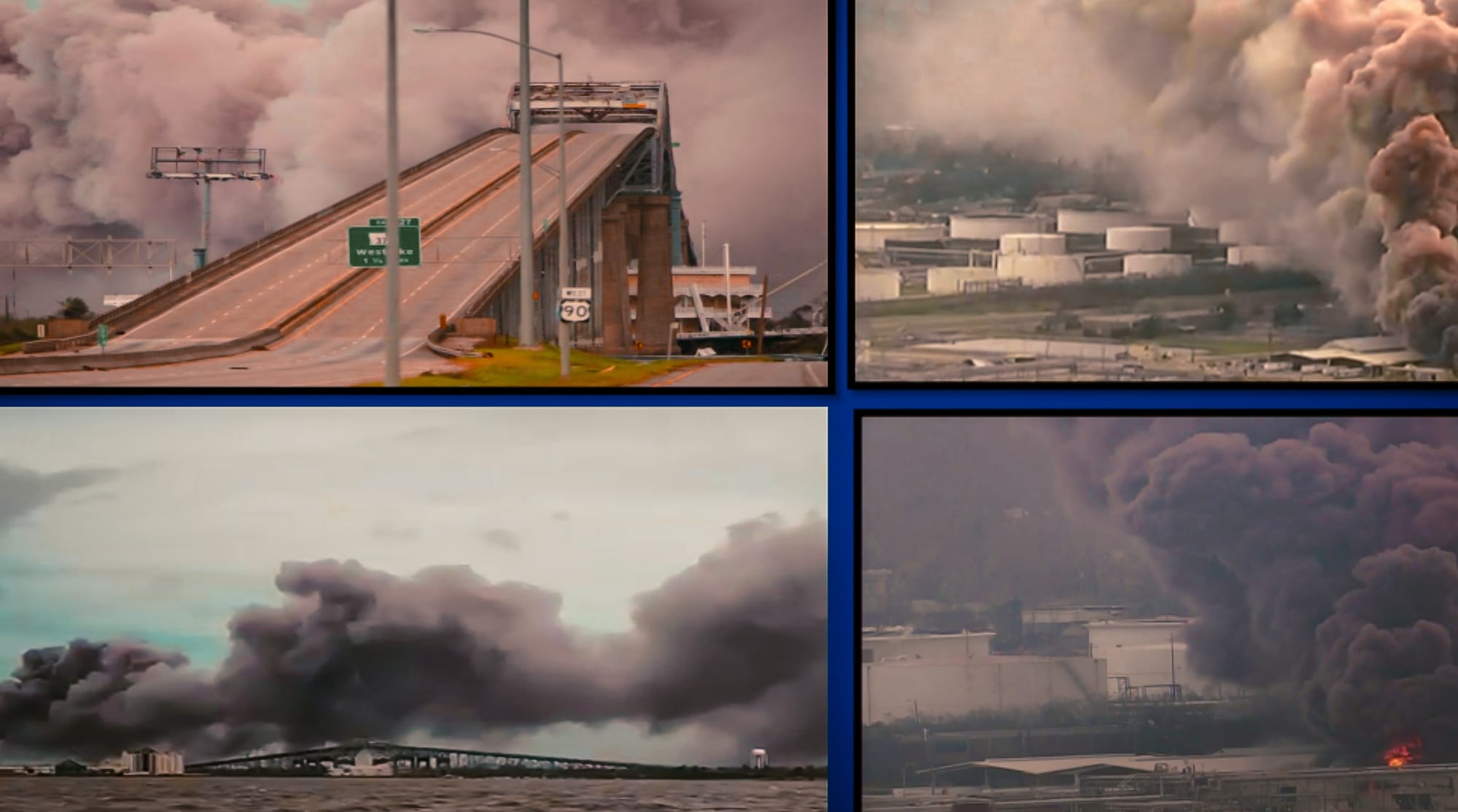
Rosane McGowan, a consultant with a chemical engineering background, was on Boothe’s research team. She started by locating incident reports for the Marathon oil refinery fire in Garyville, LA, in state databases, which can be opaque. The explosion happened on August 23, 2023, and burned for three days so intensely it was seen from space; it was the subject of a brief documentary by Forensic Architecture. Their goal was to understand the sequence of events and why no alarms were sounded.
After studying Marathon, they kept digging.
“I hope the findings bring some light to the magnitude of the chemical exposure, how frequently it happens, and how much community is relying on the state to protect them,” McGowan said.
Now she, Boothe, and others have turned their attention to promoting a statewide legislative fix in Baton Rouge. They want community air monitoring, a data dissemination website, and a real-time alert system. And they want the state to induce industry to pay for the set up which would be a fraction of the $130M industry had to pay in fines and penalties for the incidents they studied.
18-year-old Molly Mchaffie has been going through active shooter drills at school all her young life, but when the local refineries release into the air on a school day, the teachers turn off the AC and keep teaching like breathing a little benzene is perfectly normal. Citgo funds her high school. The school’s rundown and the water tastes foul.
“I’ve thrown up after drinking from the water fountain,” Mchaffie told Deceleration. “But at our career fairs, guess who’s giving out little trinkets and the coolest stuff?”
Refinery jobs pay well in the area.
“So people defend it,” she said. “They’re in denial.”
She’s a high school senior serving as Youth Ambassador for Micah 6: 8 in Calcasieu Parish, where 11 of the 27 studied serious incidents occurred. To keep her spirits up, she’s working to inform young people about biodiversity loss. “These incidents affect every single bit of that,” she said.
She reports that disinformation starts early: a Citgo-sponsored club leaflets at school; there’s a school-to-refinery pipeline; lots of kids bring inhalers to school but they’re told the smoke coming out of the stacks is water vapor, nothing to worry about. In her view, air-monitoring is the least industry can do.
“I love Louisiana, but all I want to do is leave. I just don’t want to have to breathe it,” Mchaffie said.
“Every single time I drive on the interstate there’s smoke from the plants blowing overhead. It stinks so horribly. There’s nothing you can do but hold your breath. You’re getting lightheaded, you’re getting a headache, your throat’s burning, and you’re driving. It’s just not okay at all. Our water’s getting worse, and we can’t eat our fish.”
Juan Flores manages the community air monitoring program at Air Alliance Houston. “As a community, we’ve never trusted the refineries to tell us the truth,” he told Deceleration.
AAH gained air monitoring in 2019, and it’s been a big help. Before monitoring, it was always the community’s word against the bureaucracy’s.
“The network is great because it’s maintained by us— the residents and the nonprofit organization. It’s no longer our word against theirs,” said Flores. “It’s our scientific data against theirs, which takes it to another level. Which is something we never had.”
AAH has rolled out a new dashboard that can better pinpoint conditions.
“I always tell people, know what’s going on right now, in real time, inside your community. Know if the air quality is in the red or the purple, let it guide you.”


