

The UN global climate summit known as COP30 opened in Belém, Brazil, at a boiling point—both for the planet and for Indigenous land defenders, who stormed past security lines demanding greater protections across the Amazon rainforest.
“We want our lands free from agribusiness, oil exploration, illegal miners and illegal loggers,” said one Indigenous leader.
A legal framework that could help accomplish that has been bubbling in the background since at least June 2024, when Latin American delegations and representatives from Indigenous groups submitted a Declaration of the Rights of the Amazon to the Brazilian authorities. As a Rights of Nature framework, the declaration calls for the fundamental rights of the myriad species that collectively make up the Amazon River—as well as the Indigenous peoples who have long protected it—to be recognised and respected.
However, even as this movement gains new force, it faces fierce opposition. Ecuador’s newly elected President Daniel Noboa proposed rewriting the country’s constitution—a beacon for the Rights of Nature movement since 2008, when it became the first country to enshrine protections for Pachamama (Mother Earth)—in ways that could diminish its pioneering legal protections for nature. “It’s no coincidence that in the run-up to COP30,” when Rights of Nature are in the global spotlight, “this [rewriting of the constitution] has been proposed, splitting Indigenous groups between Belém and Ecuador,”, said Natalia Greene, global director of the Global Alliance for Rights of Nature.
Voice of the Amazon
The Declaration of the Rights of the Amazon, drafted at the XI Pan-Amazon Social Forum in Bolivia and submitted to both the Brazilian and Colombian authorities, strives to extend these same protections to the entire rainforest.
Rights of Nature is a global movement with nearly 600 global law initiatives, spanning 56 countries and numerous Indigenous communities. Previous sections of the Amazon granted Rights of Nature protections would be joined up under the Amazon declaration.
“What happens to the forest in Ecuador affects the people in Brazil,” Greene observed.
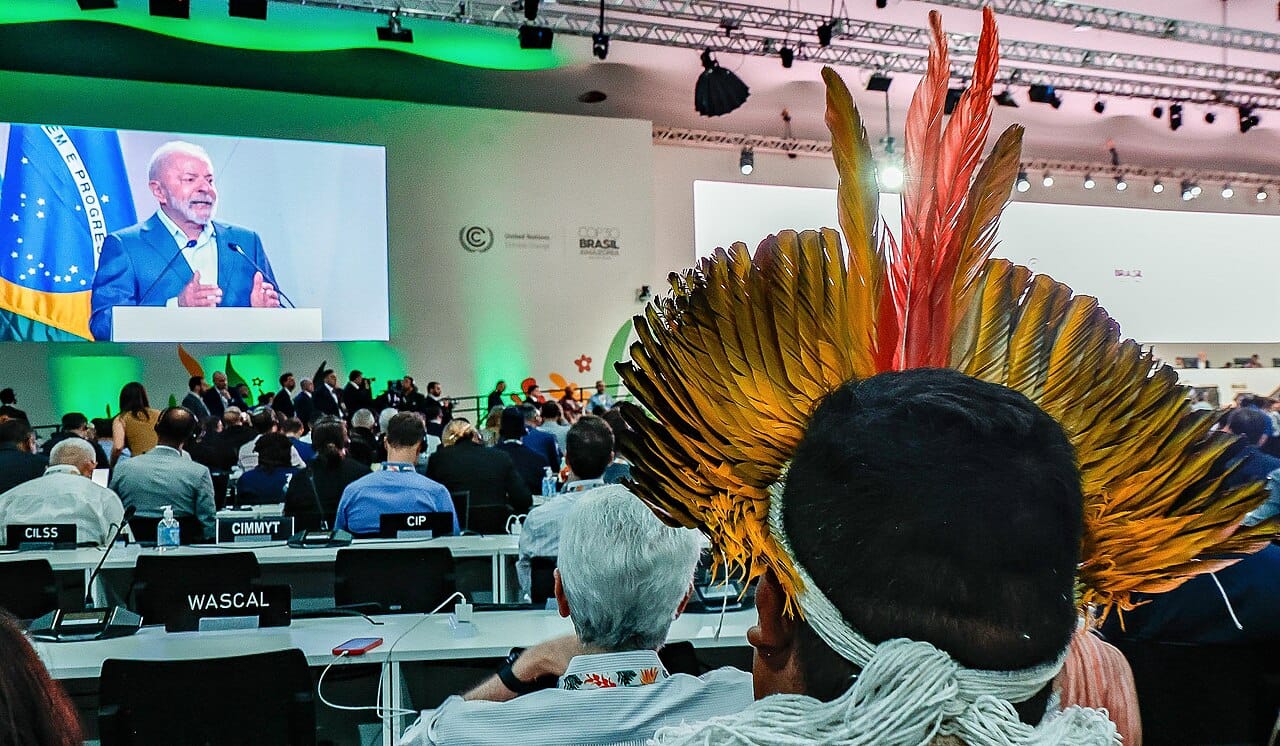
Justino Sarmento Rezende, an Indigenous scholar from the Utãpinopona-Tuyuka peoples in Brazil, provides perspective on the need for the Amazon rainforest to have a voice.
“The forest is the river, the world, the air, the rains, the winds, the clouds, the earth—with its many colors, its clay… we humans are included,” he told Deceleration. “Many times, we do not eat certain beings—certain birds, certain fish, snakes, certain fruits—because they are considered, let’s say, human. Or rather, not simply human—they are members of our family.”
This understanding of deep human integration with the rest of the natural world stands in stark contrast to Western legal frameworks, where nature has historically been treated as property.
Branching of a Global Movement
The concept of granting legal rights to natural habitats entered Western legal systems in 2006, when concerned residents of Tamaqua, Pennsylvania, adopted an ordinance recognizing natural communities and ecosystems as persons. The ordinance banned corporations from dumping sewage sludge in the borough, asserting that nature itself had the right to exist free from such contamination.
Following suit in 2008, Ecuador’s constitutional provision went further, establishing Rights of Nature to exist, maintain itself, regenerate, and be restored. Bolivia adopted its Mother Earth Law in 2010, Maori tribes in New Zealand granted Rights of Nature to the Whanganui River in 2017, and the Mar Menor Lagoon in Spain became the first ecosystem in Europe to be granted rights in 2024. In North America, the White Earth Band of the Ojibwe nation recognized the rights of wild rice in 2019.
RELATED: ‘WILD12: It’s Time to Step Up to Protect the Legal Rights of Nature, Panelists Say’
Colombia’s Supreme Court of Justice recognised Rights of the Amazon in 2018. Advocates now hope Brazil will follow suit at COP30.
“We’re trying to jump to a new model of governance,” Greene said. “We’re pushing a new way of relating to this ecosystem. The whole world needs to have a say on it, and so does the Amazon herself.”
The declaration goes beyond symbolic gestures. It recognizes that Rights of Nature must be inclusive of all people who depend on the ecosystem. As Rezende describes it: “Giving voice to the original peoples, listening to what they have to say, does not prevent the politicians of Brazil, of Latin America, of other continents, from presenting the results of their discussions, their dreams, their plans. The world needs to receive this strength—from many peoples, from different continents, from different cultures—in order to care for, defend, preserve, and give sustainability to the world in which we live.”
It’s this merging of Indigenous knowledge with scientific evidence that offers the greatest promise for nature, whether we’re talking about the Amazon rainforest or the banks of the San Antonio River.
In October 2023, the Lipan-Apache “Hoosh Chetzel” Native American Church took the City of San Antonio to court after an announced redevelopment plan for Brackenridge Park, which hinged upon removing many large trees and driving off three species of migratory birds. Such actions, the plaintiffs argued, would permanently disrupt the sacred ecology rooting their religious practice, passed down for generations.
While the ruling on religious liberty claims did open the area again for ceremonial practice— limited to small groups of 20 members for no more than an hour and only on specified astronomical dates— it it failed to acknowledge the sacredness of the site to the Lipan-Apache or the rights of the species making up that “sacred ecology” to remain undisturbed.
However, there are examples where recognizing Rights of Nature have been central to winning court cases.
Rights Bring Results
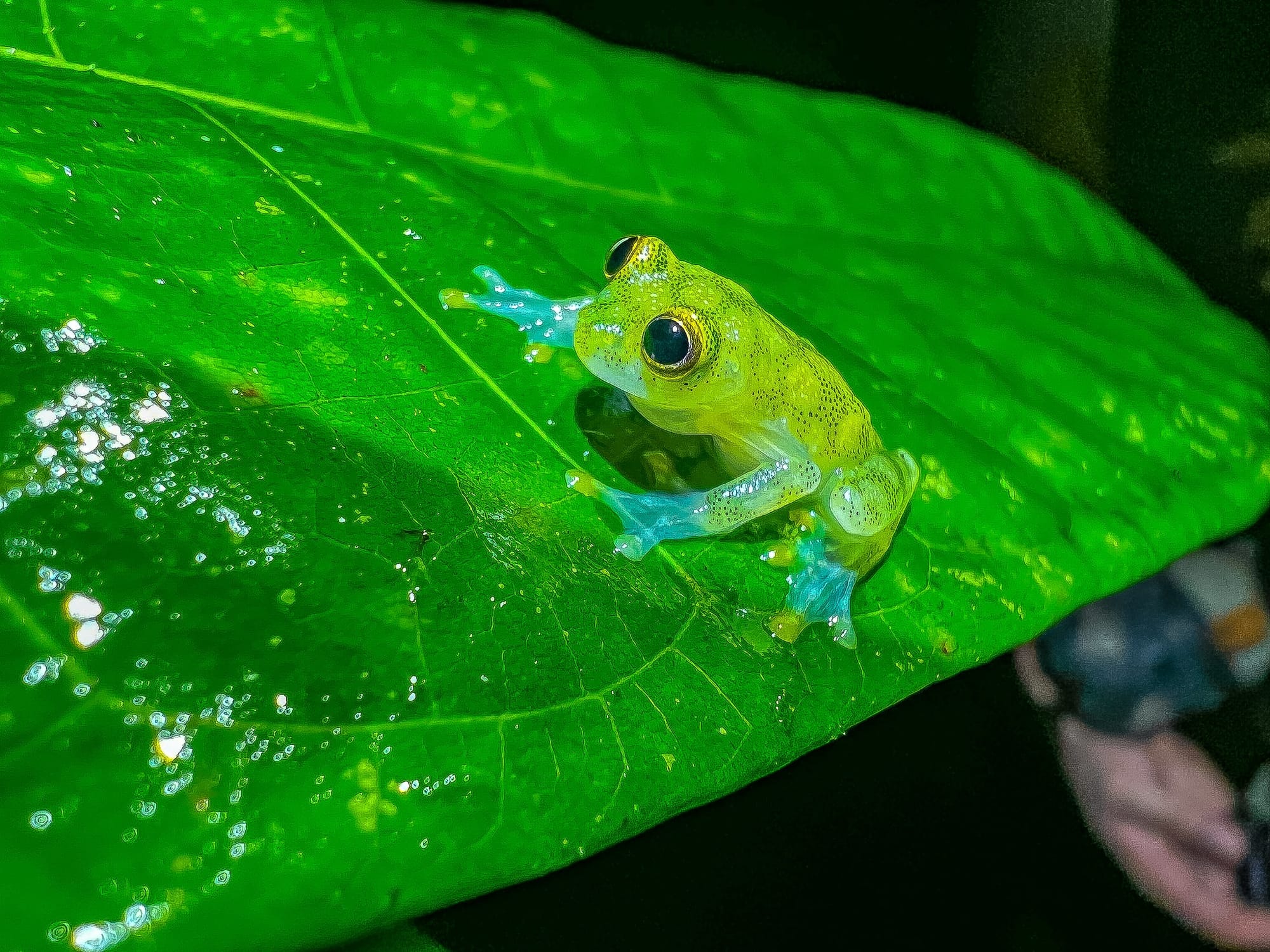
In 2021, Ecuador’s Constitutional Court sided with the Global Alliance for the Rights of Nature and others in a case protecting Los Cedros, a 6,000-hectare cloud forest, from a proposed mining project. The court reasoned that environmental licensing cannot override the constitutional Rights of Nature, a decision that halted operations by the second-largest mining corporation in the world.
When Greene showed a photo of a tiny frog from Los Cedros, she said simply: “This is what I do this for. This is what gives me hope.”
In 2024, Panama’s Supreme Court suspended the Caribbean Corridor road project through the Sierra Llorona nature reserve, citing Rights of Nature violations. These victories matter not just for the ecosystems they protect, but for what they prove is possible.
Imagine applying the same framework to the San Antonio River. Consider the migratory species that hold both ecological and religious significance in its broader reaches: the cormorant nesting in high oak trees, the green kingfisher diving for prey, or for the critically endangered Houston toad further to the east. What would it mean for these beings to have legal standing? What would it mean for the Lipan-Apache to be recognized as people speaking on behalf of their relatives?
Backlash & Skeptics
Today’s threat to Ecuador’s constitution is part of a wider movement. “Around the world there is a huge growth in authoritarian governments,” Greene told Deceleration. “There is a pushback against the possibility of a different world. Rights of Nature is a tipping point, we’ve been able to reach the mainstream.”
Advancing the Amazon Rights of Nature would send a clear message during a time of rising authoritarianism so often in service to fossil fuel companies and other extractive interests.
Two main criticisms of Rights of Nature frameworks often emerge: Does Rights of Nature give power to the wrong people? And, can it be enforced?
On the first question, Greene argues for “a city of voices,” which would represent diverse perspectives in understanding what happens to the water cycle, the trees, the soil, and the humans when a nature-impacting project is proposed. “Not one person can represent an entire ecosystem,” she argues.
Rezende echoes this: “It’s necessary to create groups to think together, so that we can move forward…toward deepening knowledge and, at the same time, to dialogue with scientific institutions, so that they may come to know and build bridges between our knowledge and what is considered scientific knowledge.”
On enforcement, the counterargument is clear. It’s better to have an imperfect declaration in place that upholds the values of the people, and which serves as an instrument to defend communities against the worst environmental offenses, than to leave the current legal framework in place out of concern for the pragmatics of enforcement. The court victories in Ecuador and Panama prove that when these rights exist in law, they can be successfully invoked.
What Comes Next
The decision to grant the Amazon Rights of Nature at COP30 would set a strong precedent. At a time when nature protections are being contested, protecting the world’s largest rainforest could be the catalyst the world needs.
Greene’s hope is that by connecting on a local scale with our natural spaces, we can catalyze larger changes. Both the tiny frog of Los Cedros and the entire Amazon matter.
Indigenous advocates urge us to listen to those who understand nature in ways that Western ideologies often miss. As Rezende says, “The birds that sing differently to announce joy, abundance — these same birds sometimes sing differently to announce bad news.”


