

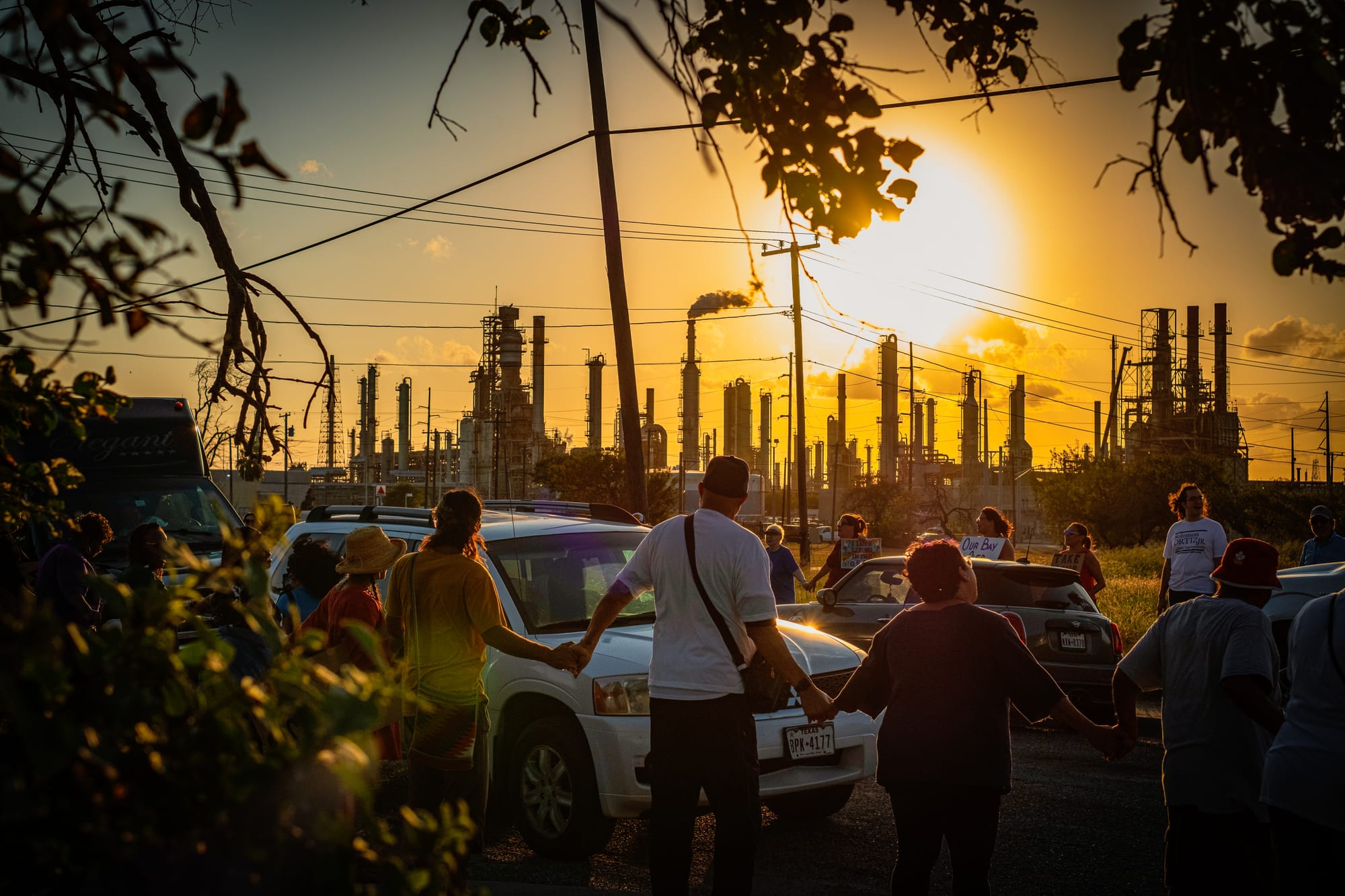
Heading into the last weekend before early voting, Hillcrest, the Northside Corpus Christi neighborhood with a long history of resident-displacing projects, was once again the center of local organizing against the state’s biggest industries.
Dozens of people gathered at Brooks A.M.E. Worship Center this last Friday to decry decision making by elected leaders they say puts corporate profits ahead of the lives of residents. The church sits at the opposite side of Hillcrest but still in plain view of “Refinery Row,” the petroleum plants that line Hillcrest’s west side and beyond.
In nearby Gregory, Angelica Cuevas described a familiar experience in this rapidly industrializing pocket of the state, where her neighbor includes the 1,000-acre Cheniere liquified natural gas facility.
“My little town is supposed to be a very rich little town,” said Cuevas, referring to city and corporate promises of economic development from the plants. “It’s not. If anything, we’re all dying.”
That afternoon, Chispa TX, a local environmental justice organization founded by the League of Conservation Voters, held a “people’s hearing” on the local impacts of such LNG export facilities. People from Texas, Louisiana, and Pennsylvania convened at Brooks in person and online to share stories of sickness, displacement, and pollution perpetuated by area oil and gas operations.
Cuevas said she and several of her family members and neighbors have cancer, which she attributes to industrial pollution. The story is familiar for the residents of Hillcrest, where residents suffer among the highest health inequities in Nueces County and some of the highest cancer rates in Texas.
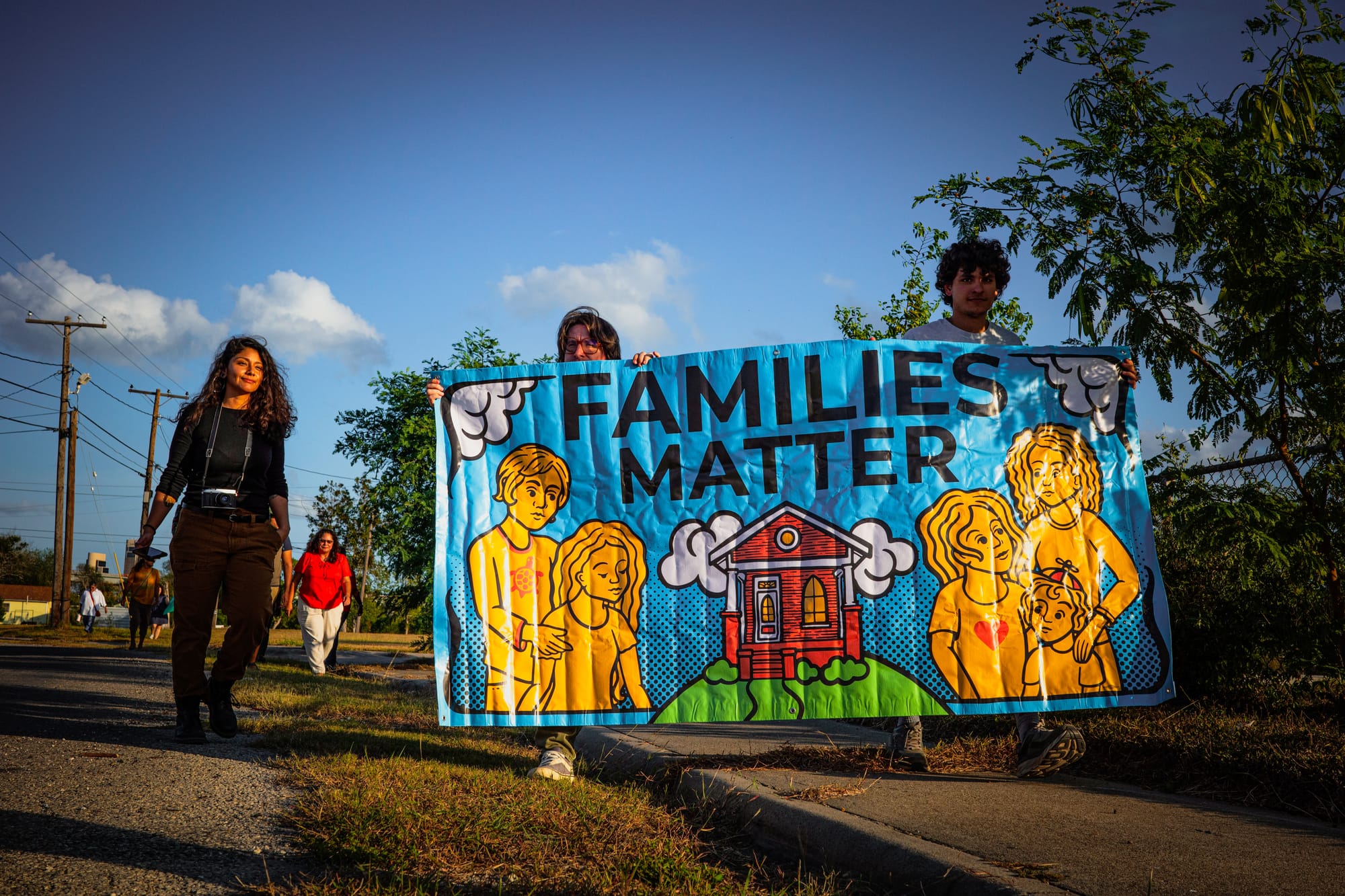
Later, the group marched to the site of a planned desalination plant, Hillcrest’s latest fight for its neighborhood. The city is pursuing desalination to meet escalating industrial water demand after much of the area’s water was sold off to industry.
Residents opposed to the plant say it’s another example of the city prioritizing industry over constituents, the latter of whom are frequently under water restrictions while industries are not. Fears were also expressed about the impact of dumping desalination’s waste product—brine—into the Corpus Christi Bay could further wreck its ecology. The desal plant is planned for what some City leaders described as a “buffer zone” between Hillcrest and the plants, effectively bringing the industry into the neighborhood.
Some questioned why the plant needs to be built in Hillcrest at all, seeing as it could be built in other bay-facing areas. The City of Corpus Christi said its location was based on “environmental sustainability, cost, and reliability,” according to a FAQ page.
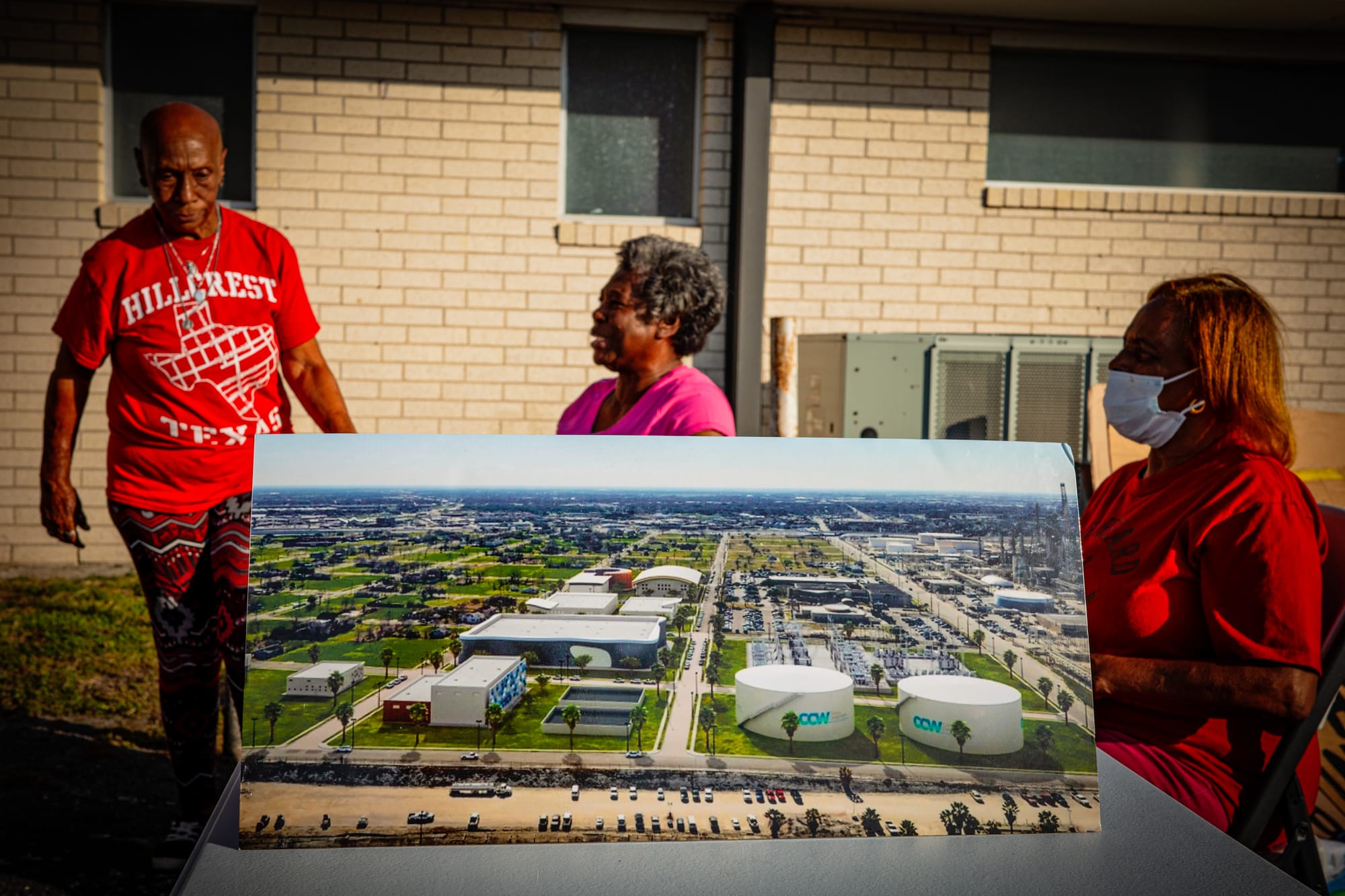
Those who live in Hillcrest, who have seen part of the neighborhood demolished for the Harbor Bridge project in order to provide port access to ever larger vessels, known as Very Large Crude Containers, know the disinvestment well.
“I live here, I didn’t want to leave here: I still love my neighborhood,” said Madeline “Maddie” Chapman, a lifelong Hillcrest resident who also has cancer. “They don’t want [the desalination plant] for us. Then they want to build it in our neighborhood, calling it the ‘inner harbor.’”
Chapman is referring to the name of the Inner Harbor Desalination Plant given by the Port of Corpus Christi, and the channel that the port made through the northern shore of the neighborhood for ship traffic. The neighborhood, however, is not part of the Inner Harbor, residents emphasize. The ‘Inner Harbor’ name, they say, is an attempt to write their community out of existence.
Currently, the desal plant site is one of many empty lots in Hillcrest facing the 900-acre Citgo Refinery.
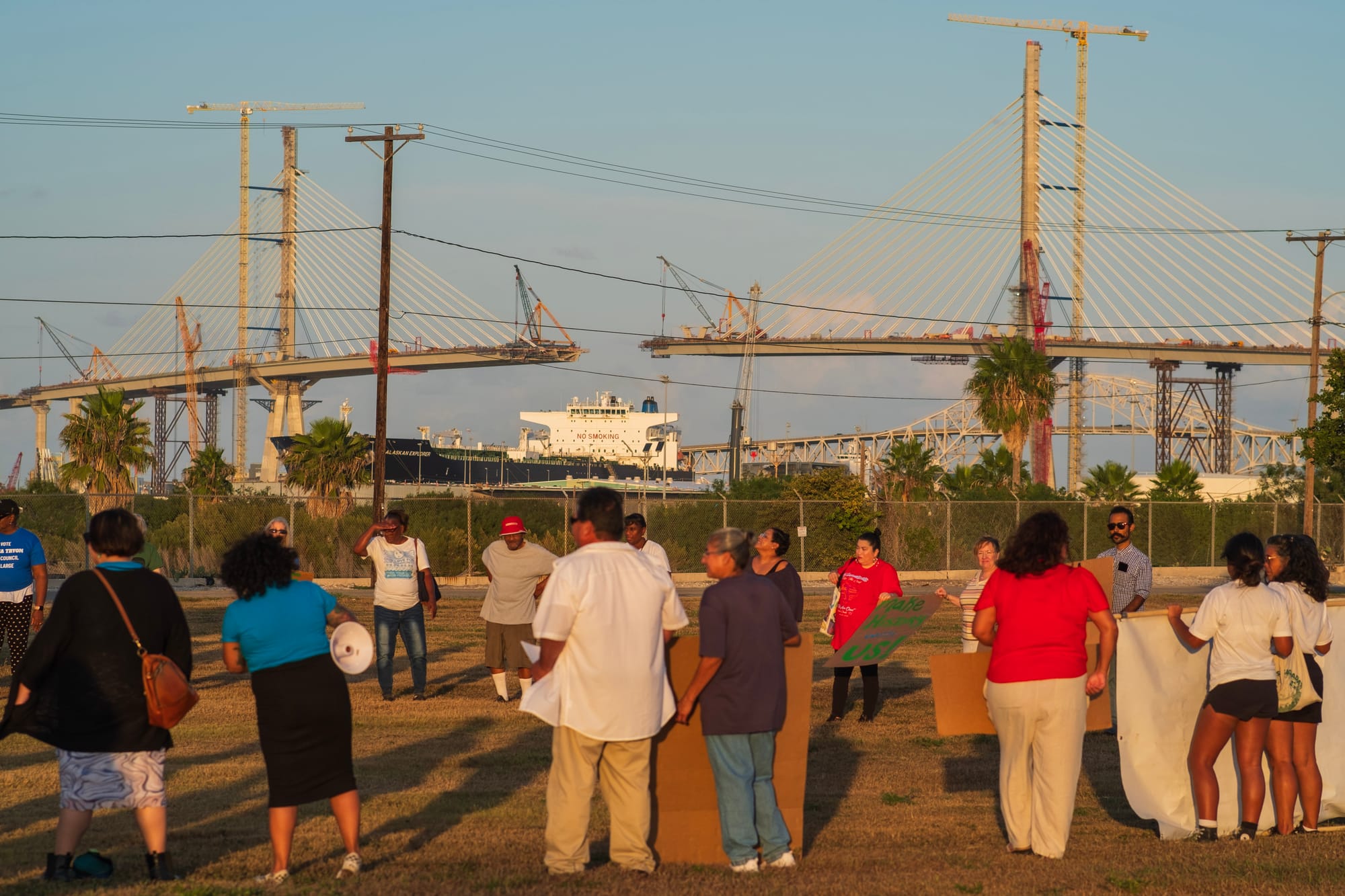
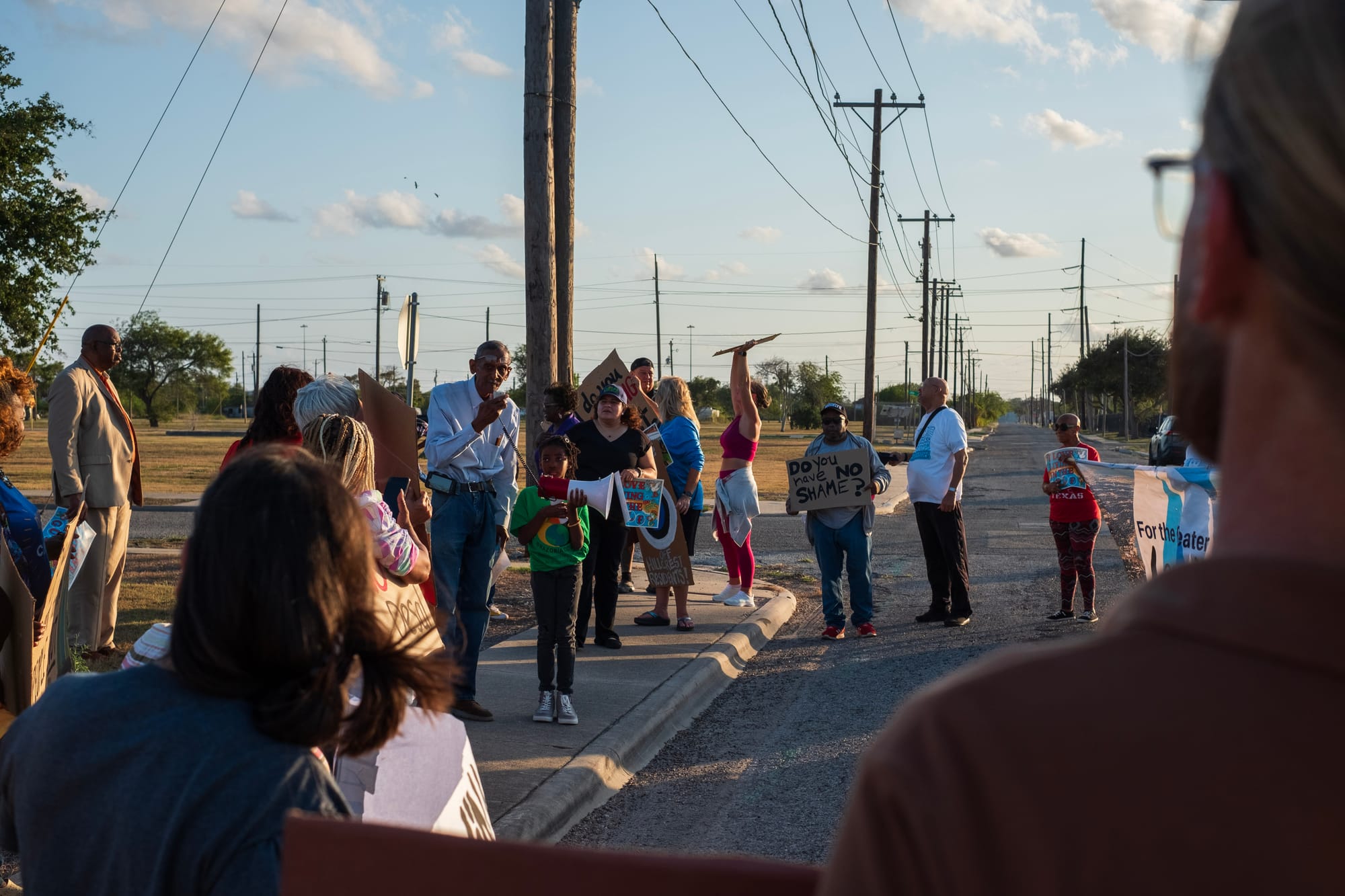
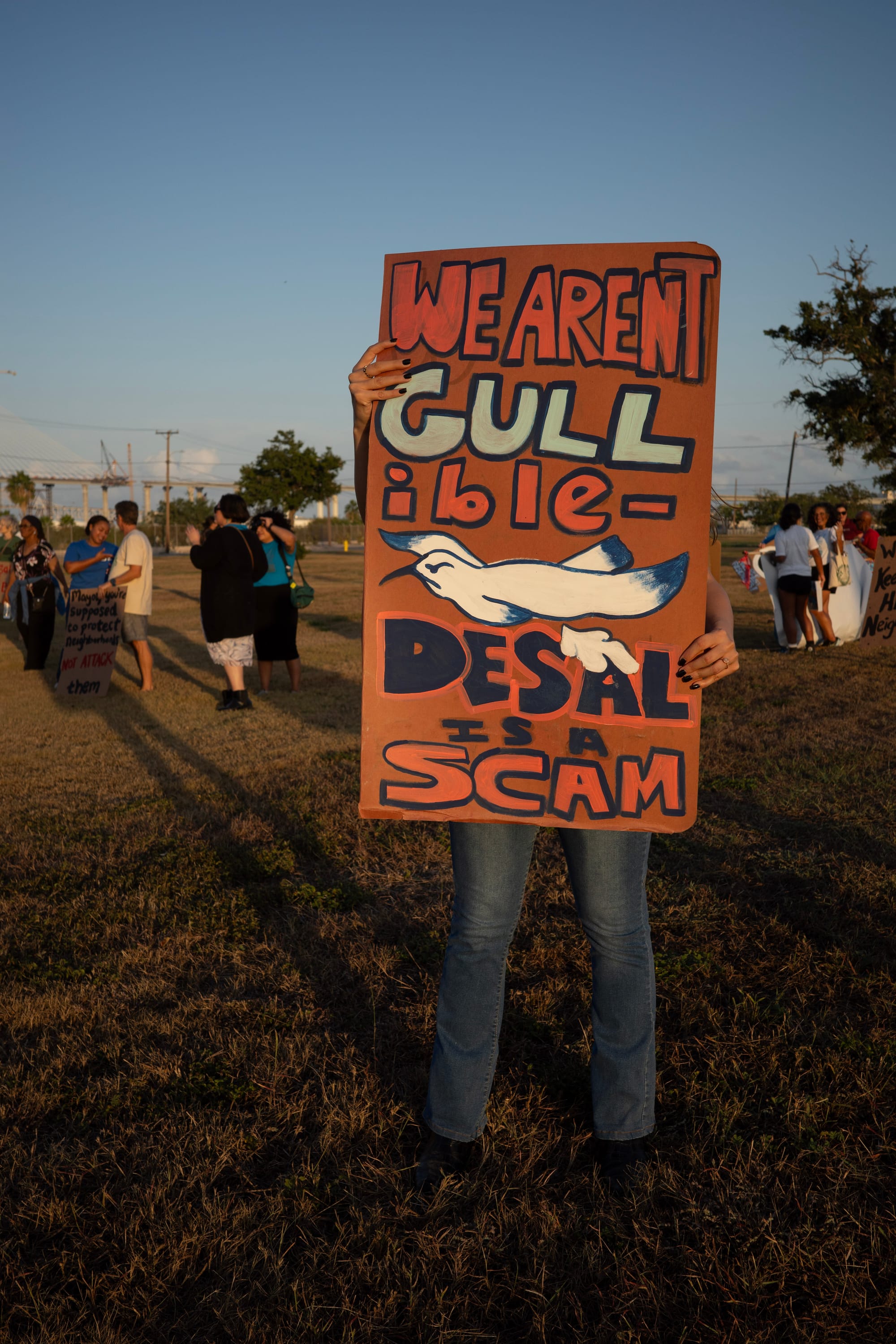
The crowd of about 50 marched to the proposed desal site through the neighborhood’s uneven sidewalks and streets, snaking alongside many empty lots, some punctured only by the foundations of razed homes.
At the site, the group prayed, sang gospel songs, and chanted protest slogans. Some pleaded with those in attendance to vote for a group of ‘Clean Slate’ candidates seeking positions on Corpus Christi City Council, many of whom were partaking in the protest, running against the desal plant and tax breaks for heavy industry.
Members joined hands as they spread down Floral Street, eventually moving into the lot facing Broadway where the plant would be built, continuing their songs until the sun set.
Hands Across Hillcrest
October 18, 2024
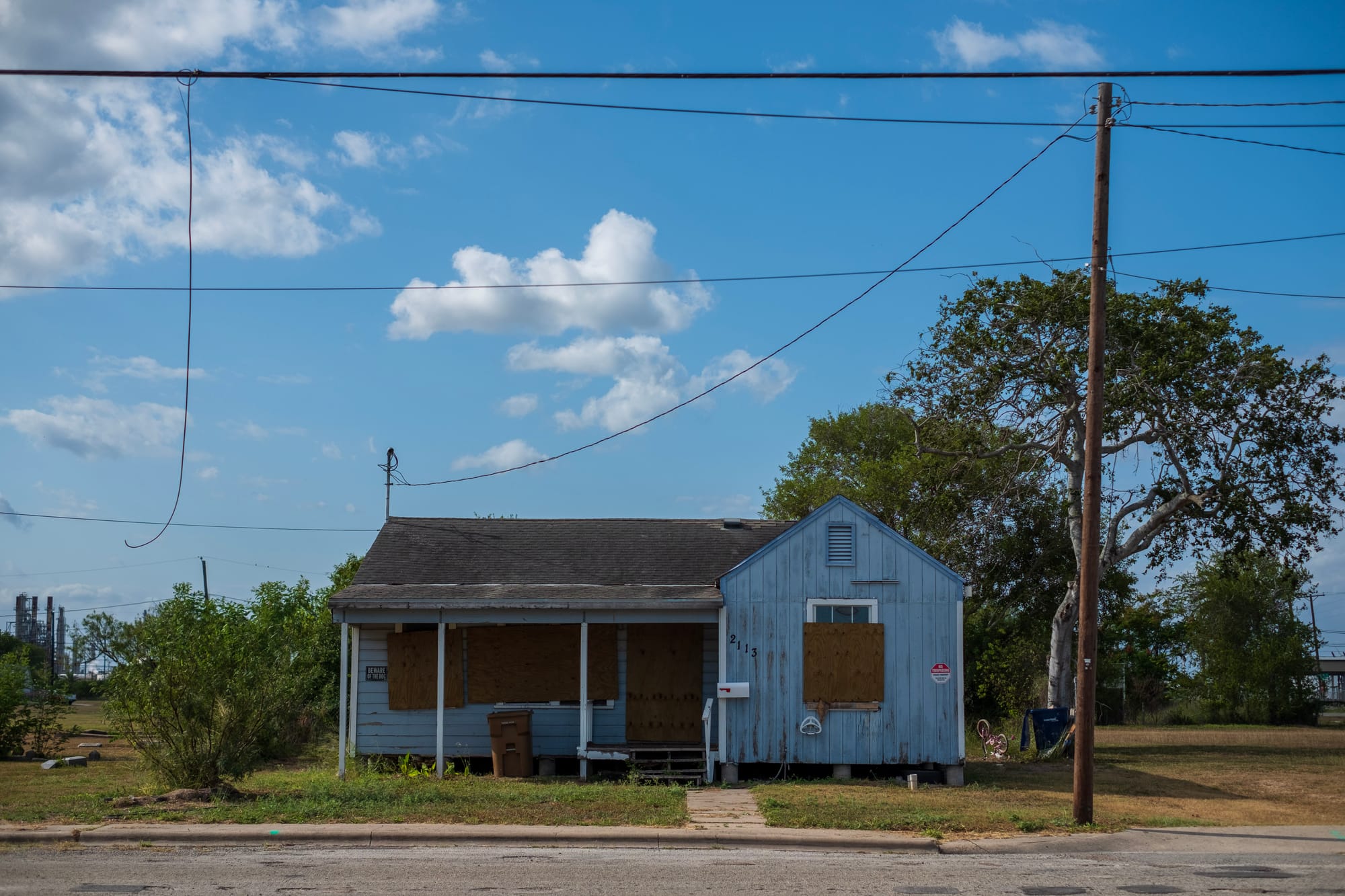
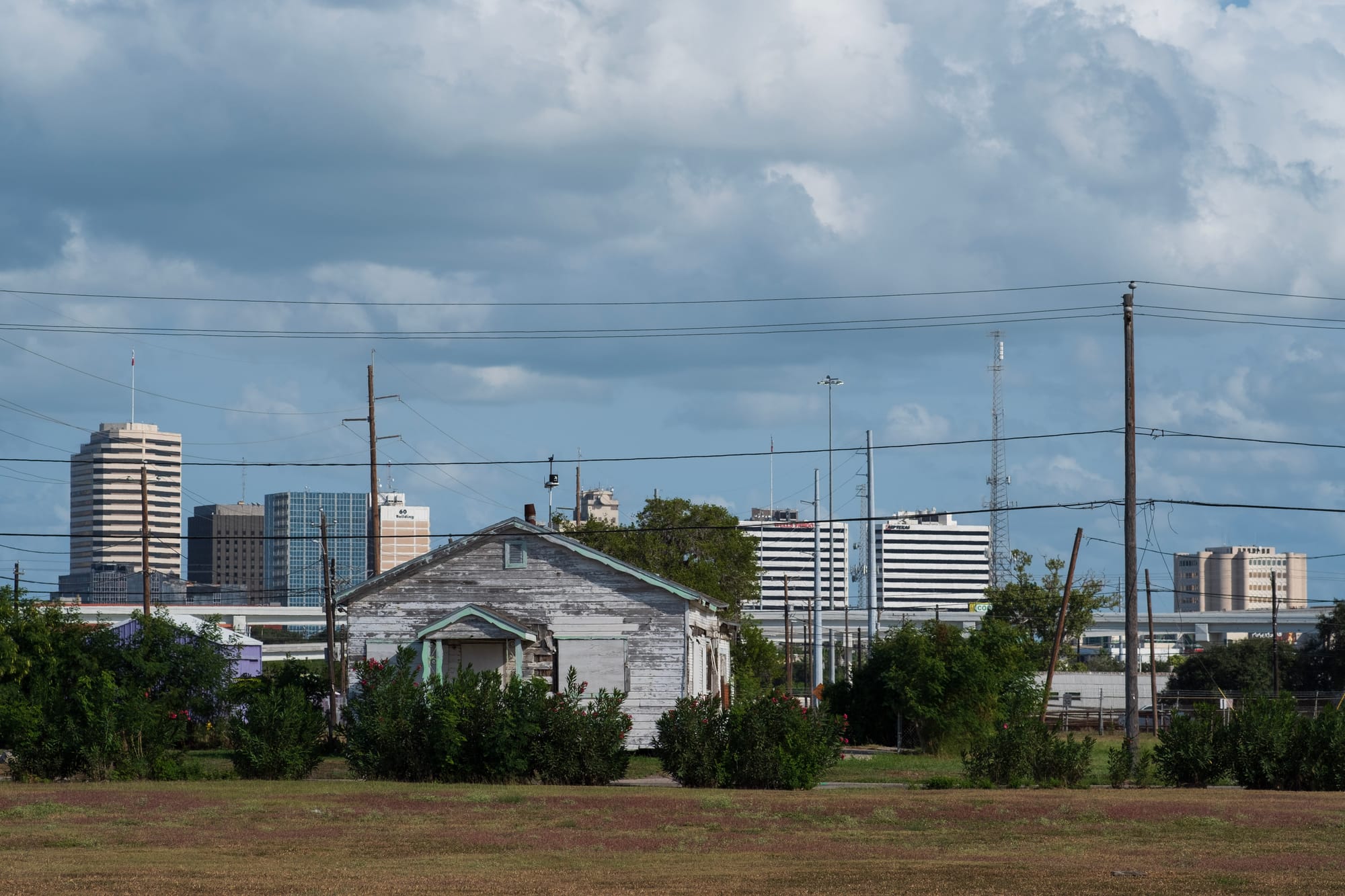
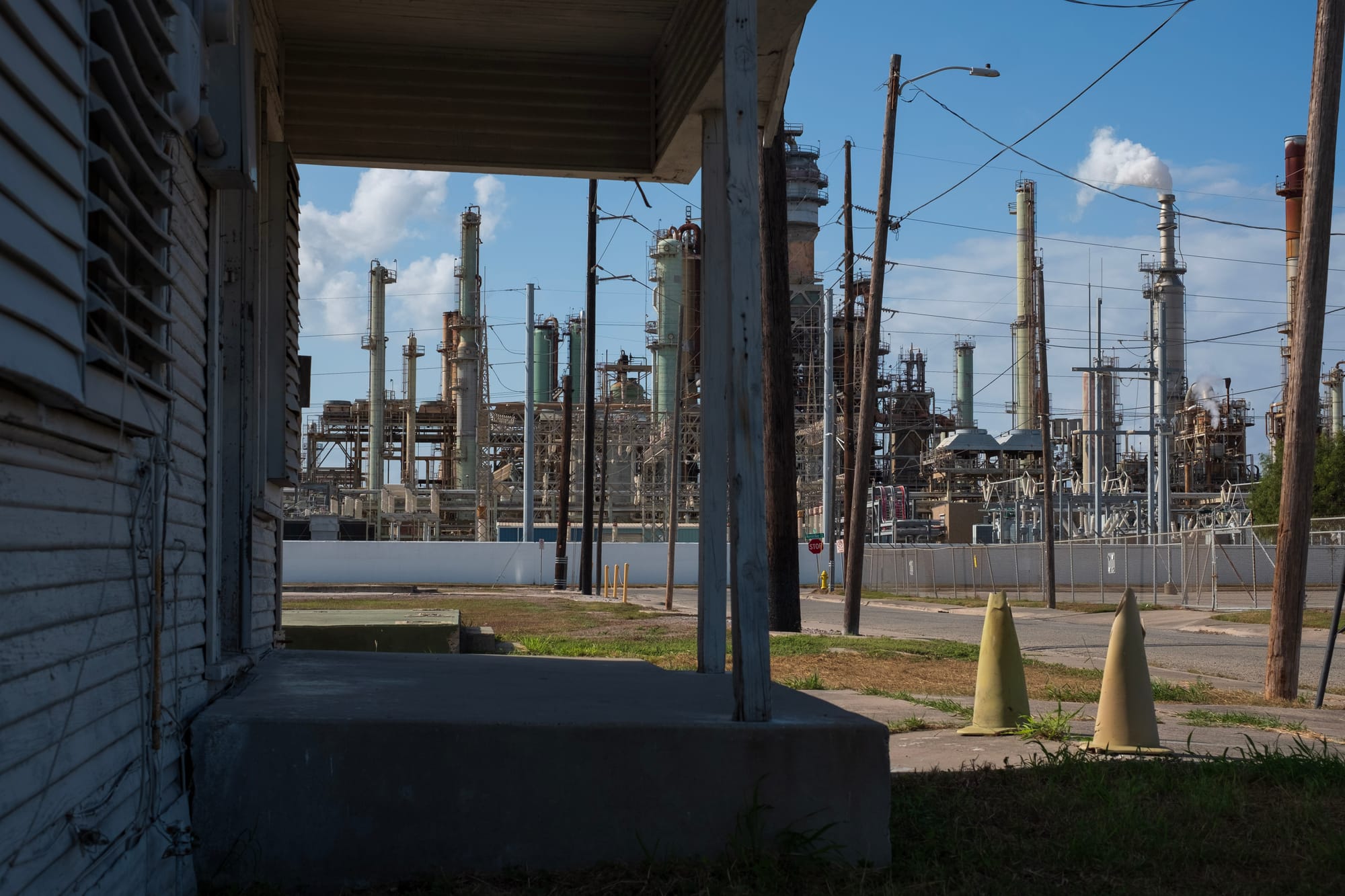
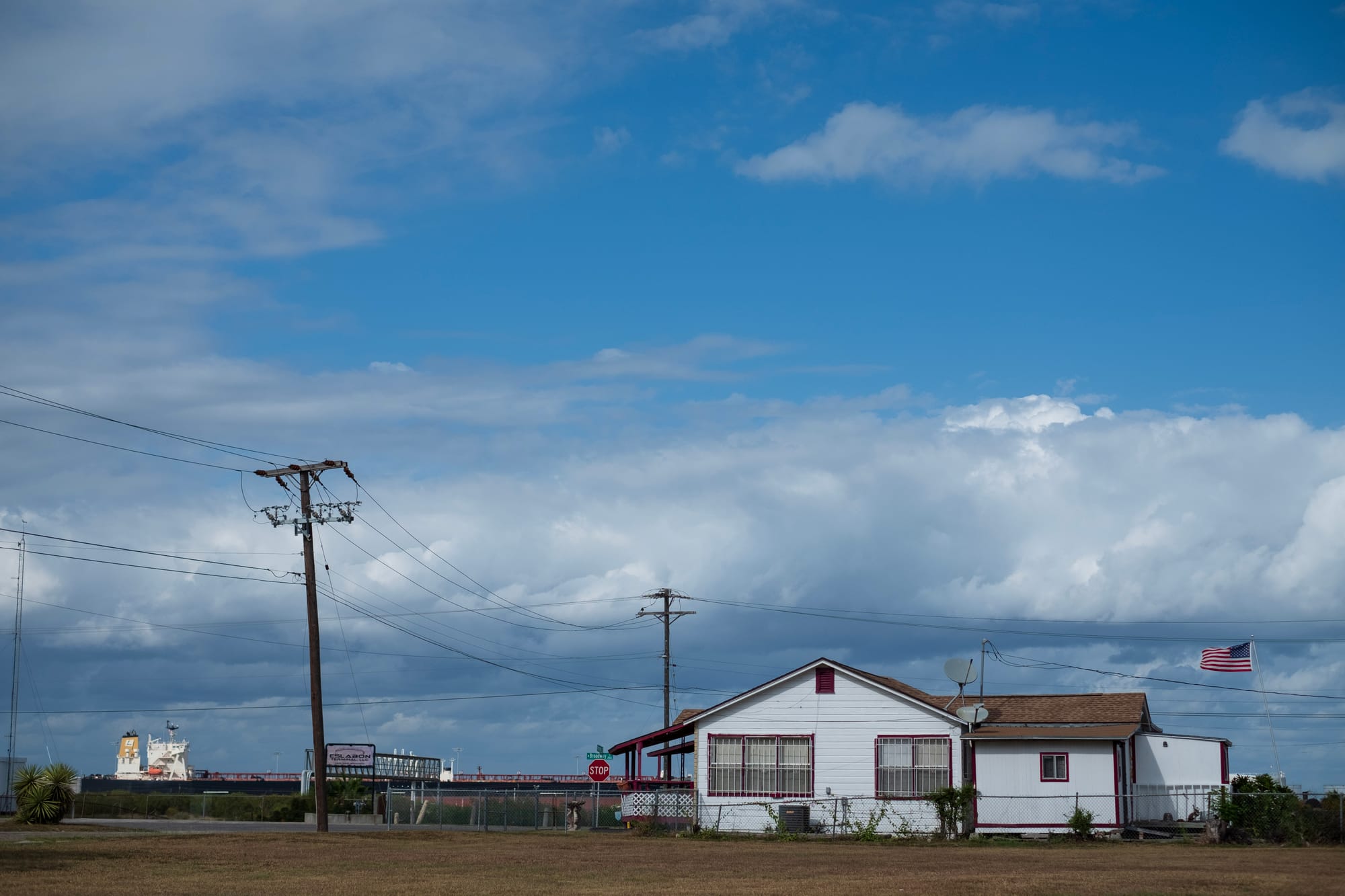
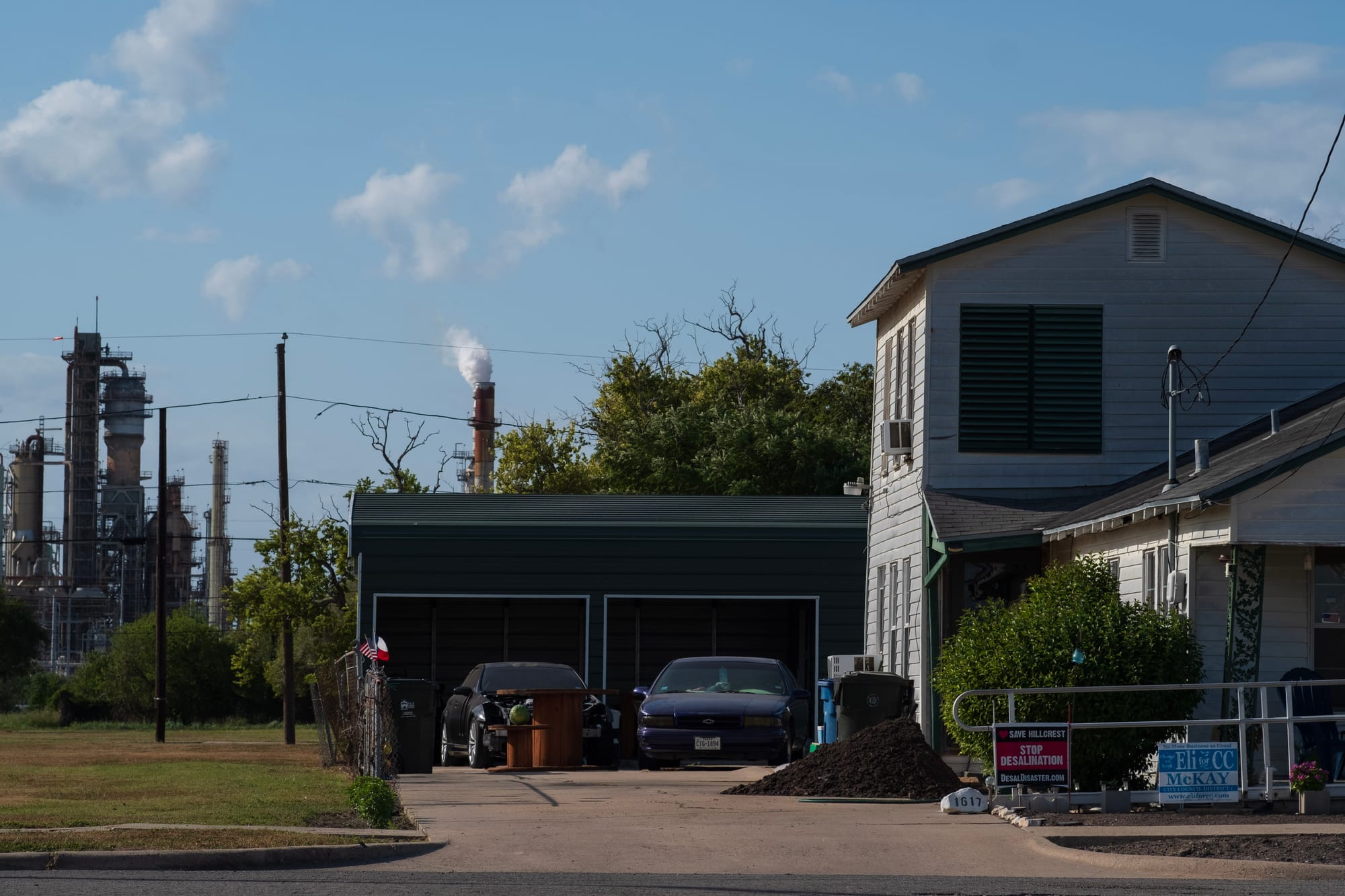
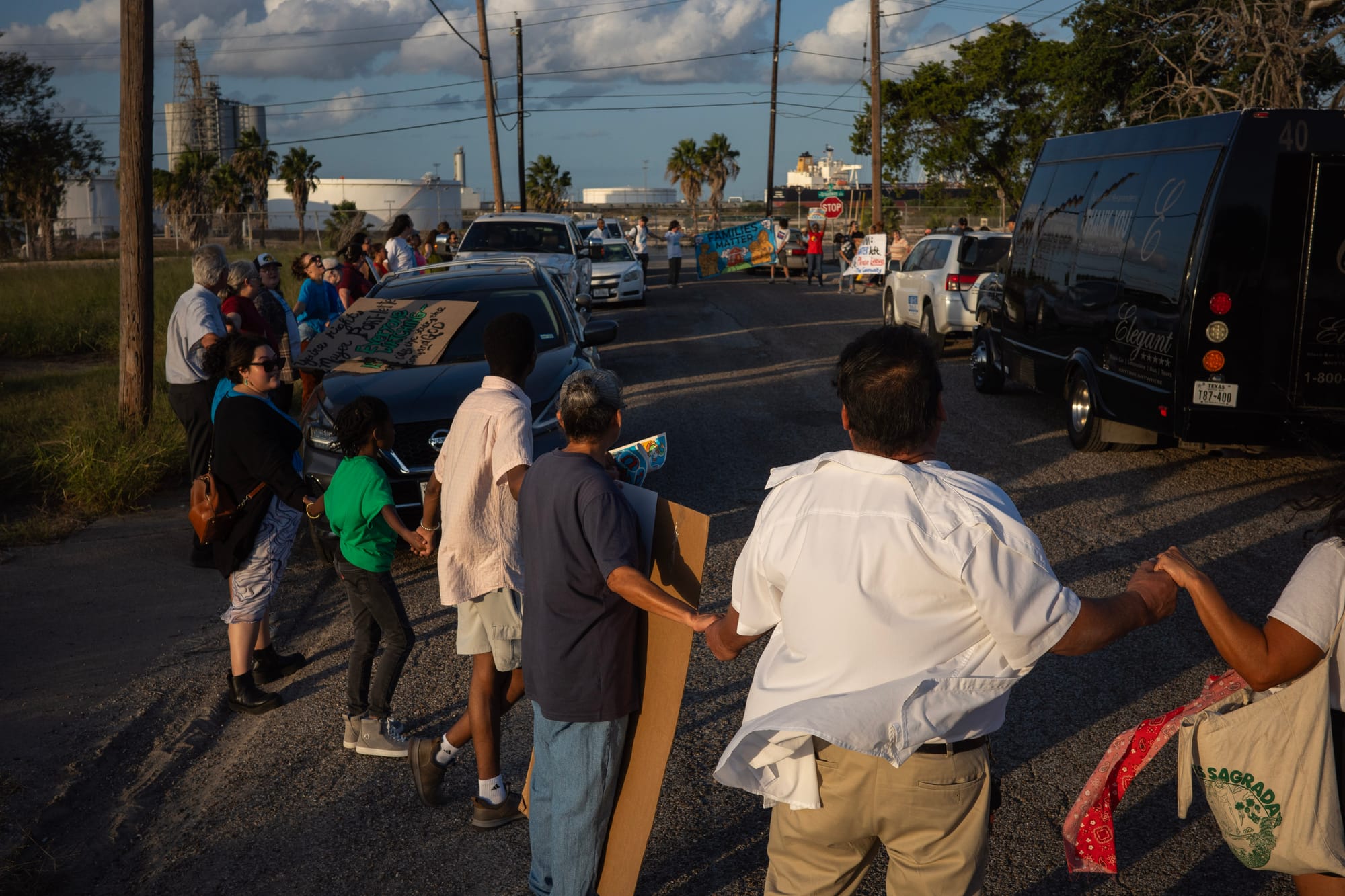
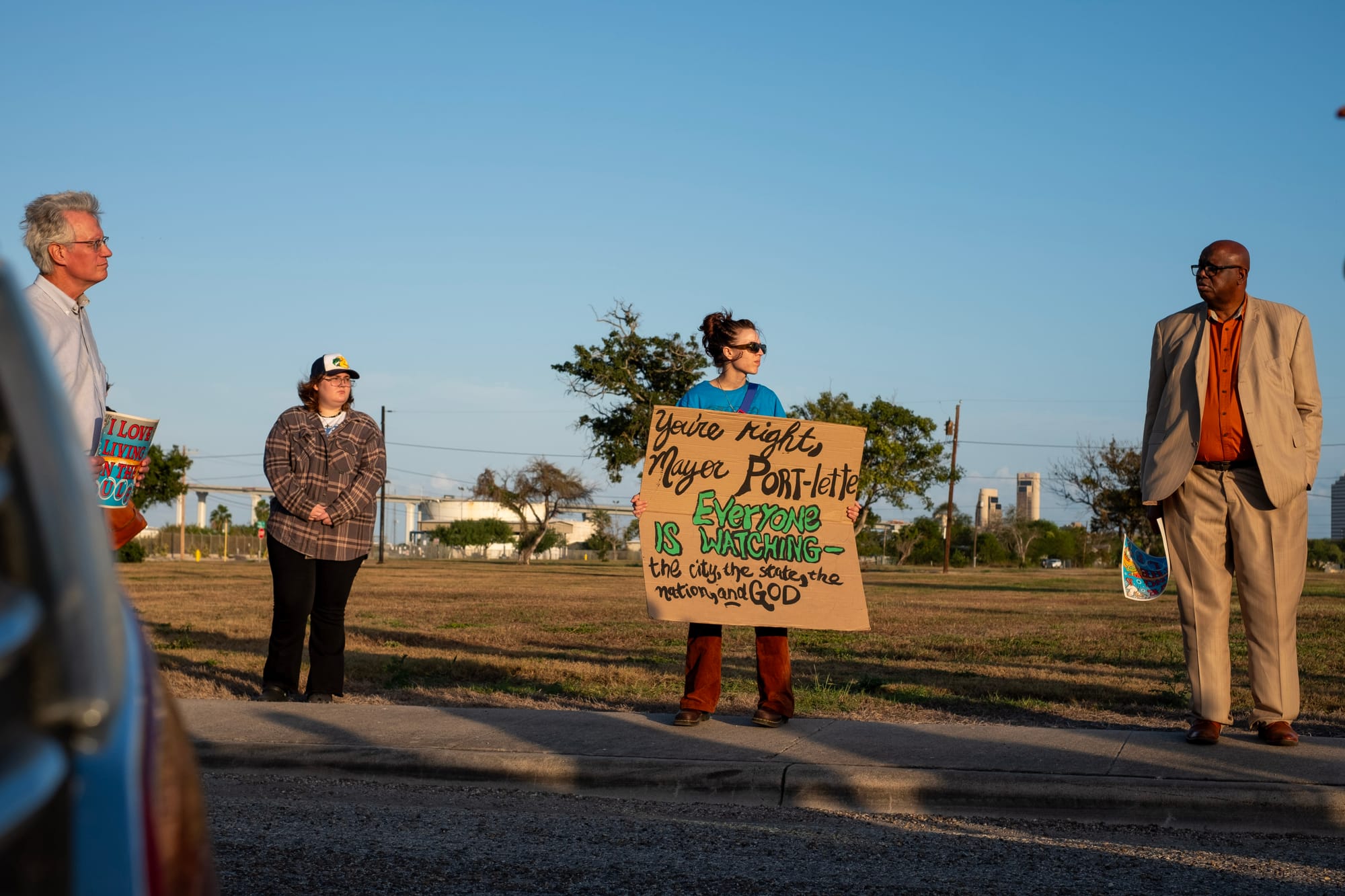
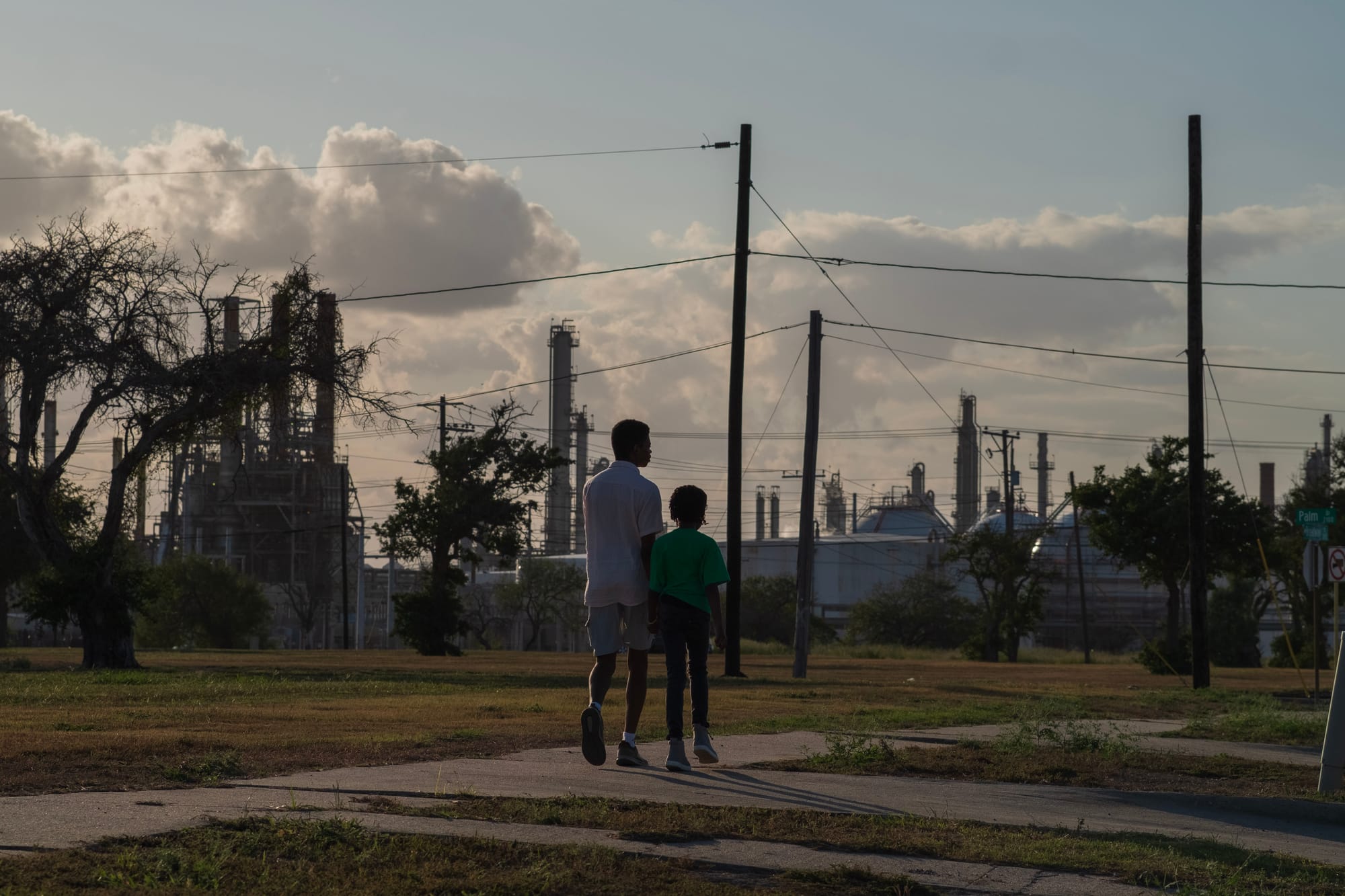
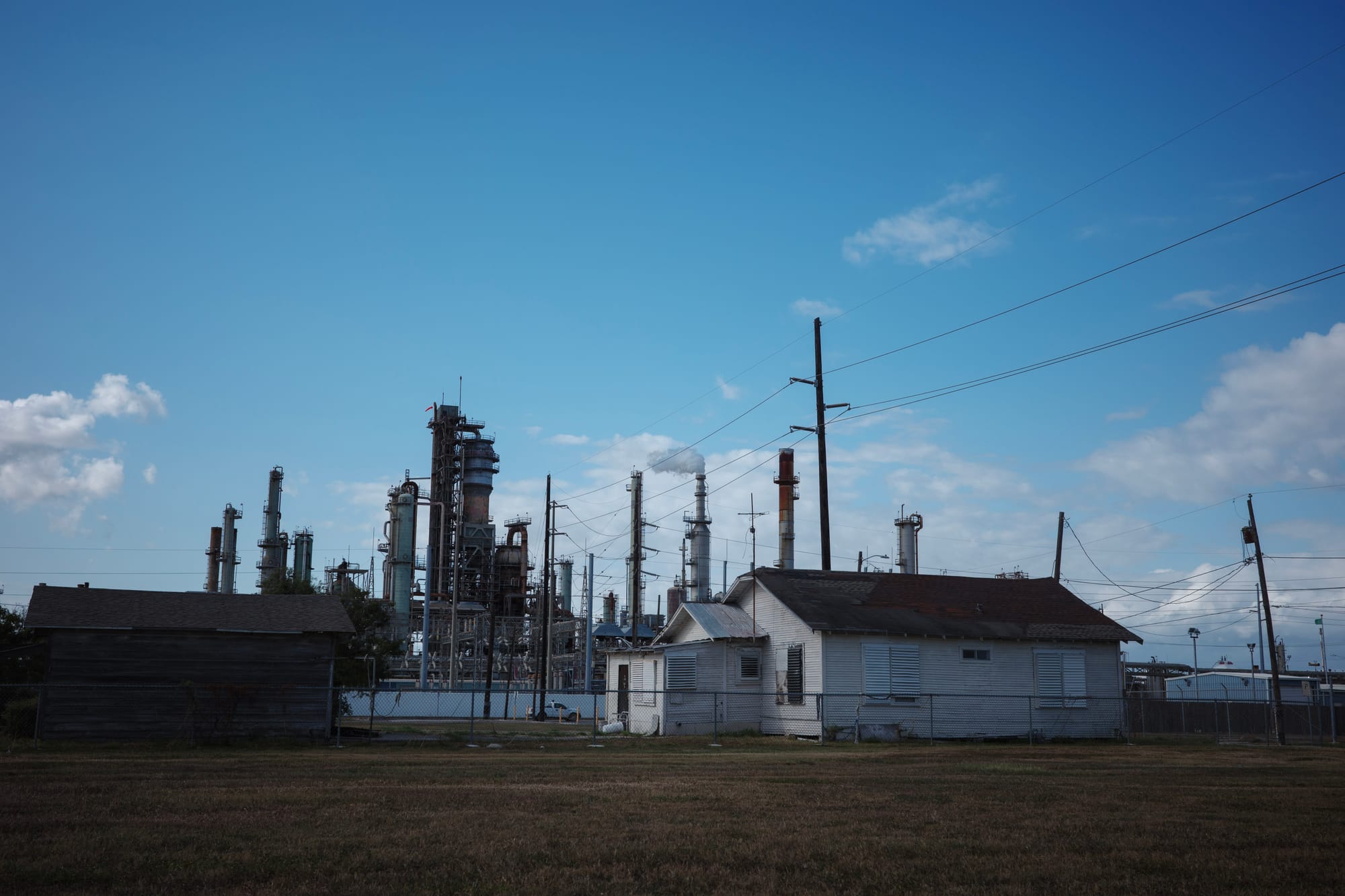
About 40 families still live in Hillcrest, with most of the remaining homes having Clean Slate candidate signs or other signs opposing the city’s planned desalination plant in front of them. Last week, the Department of Housing and Urban Development closed a civil rights investigation request filed by Hillcrest residents on the plant.
The city has already picked a builder for the plant after the U.S. Environmental Protection Agency communicated that it would not overrule any future draft approval of the project by the Texas Commission on Environmental Quality. But Hillcrest residents, their neighbors, and the several environmental justice organizations supporting their cause are maintaining their stiff resistance.
“As we come together and touch with each other’s hands and hearts about the situations that we are experiencing, from Louisiana, from Brazoria County, from all of the places that we gathered today, it’s important for the people that reside as the commissioners, as the governors, as the people who are in charge in the cities, to reach out and touch us,” said Reverend Claudia Rush of the Brooks Worship Center.
“So that they can be concerned with what we are concerned about and not just take it for granted that it’s OK, that they can do whatever they want to do.”


