

Wednesday morning, in a meeting lasting fifteen minutes and seven seconds, the U.S. government’s Endangered Species Committee — dubbed the ‘God Squad’ in the 1970s—overrode the Endangered Species Act (ESA), exempting all oil and gas development in the Gulf of Mexico (Trump’s “Gulf of America”). Despite the Gulf providing just 15 percent of our energy production, Secretary of Defense Pete Hegseth called it “a matter of urgent national security.”
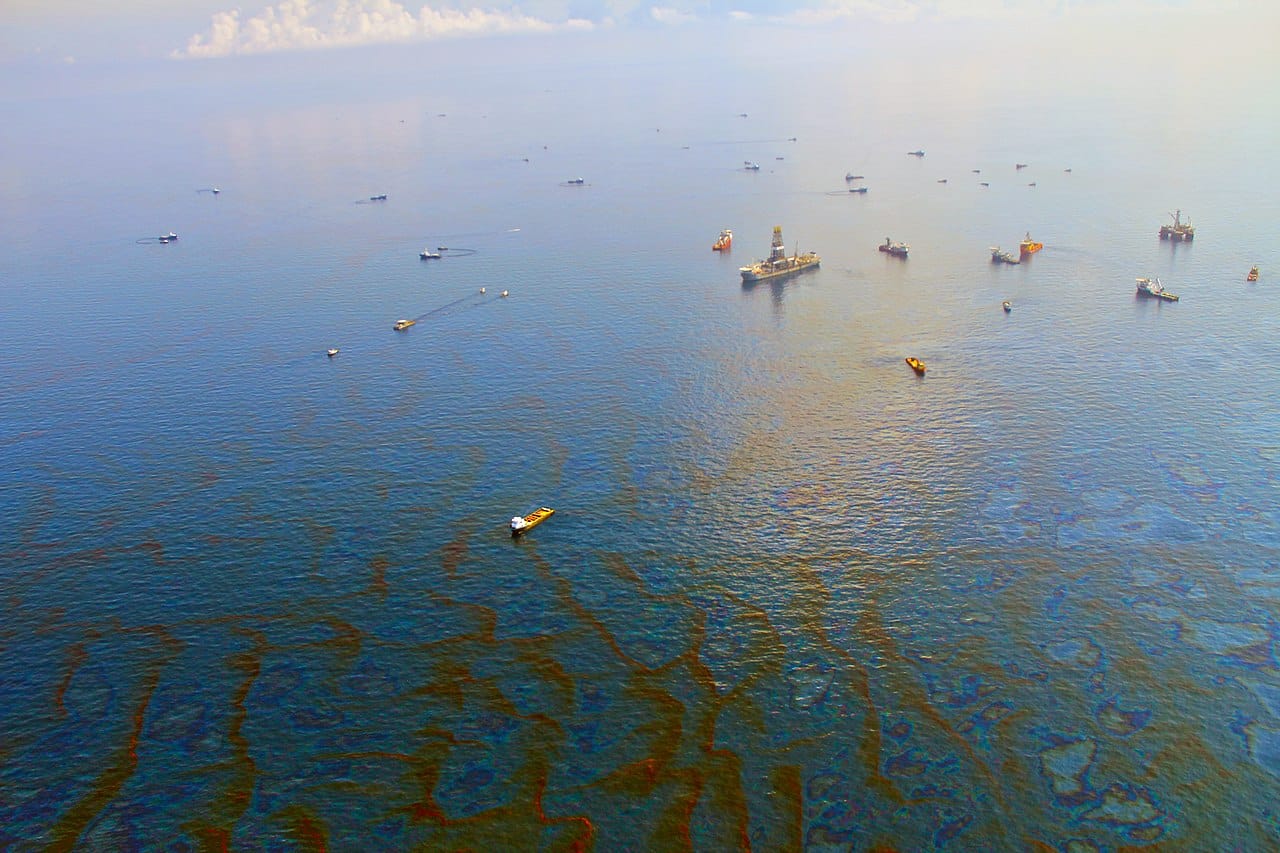
In an unprecedented move, each of seven members voted “aye,” disemboweling the ESA, not for one company, one drilling rig, or one operation, but for “the full scope of the Gulf of America Oil and Gas Activities, and for the duration of those actions.”
Rice’s whale? Pfft. Who cares about the 51 remaining in the world? Kemp’s ridley sea turtles? Pa-shaw. Smalltooth sawfish, Gulf sturgeon, whooping crane, Elkhorn coral? Who cares? Seemingly not this committee.
Secretary of the Interior Doug Burgum and each member insisted they had no choice. “Under Section 7j of the Endangered Species Act,” said Burgum, “if the Secretary of War makes a national security finding, then the committee shall grant an exemption.”
Hegseth did not publicly release the “national security finding” shared with the Committee, though his statements at the meeting suggested this was more of an “I’ll show you” power move towards environmental groups than a genuine national security threat.
Back Up, What’s the God Squad?
Congress created the Endangered Species Committee as a “safety release valve” of sorts, per a previous interview with University of California Berkeley Professor of Law Holly Doremus, for a Deceleration article, The Battle to Save the ESA.
In one of the first tests of the ESA’s strength, a dam threatened the existence of the endangered snail darter, a small fish. Angry lawsuits followed. To calm the vitriol, Congress created the Committee in a 1978 ESA amendment—almost immediately dubbed the “God Squad.” When they met for the first time, they upheld the ESA. In other words, the snail darter won, proving the law had teeth.
Since, the Committee has met only twice. In 1979, they waived ESA requirements for a dam affecting whooping cranes, and in 1992, they again waived it, allowing timber sales affecting northern spotted owls; a federal court overturned the latter.
The Committee has six permanent voting members, all of whom attended the Wednesday tribunal. Under the Trump administration, these include Secretary of the Interior Doug Burgum, Secretary of Agriculture Brooke Rollins, Secretary of the Army Dan Driscoll, Chairman of the Council of Economic Advisers Pierre Yared, Environmental Protection Agency (EPA) Administrator Lee Zeldin, and National Oceanic and Atmospheric Administration (NOAA) Administrator Neil Jacobs.
Per law, the President must also appoint one individual from each state affected. No such appointees attended Wednesday, despite the Gulf bordering five states: Texas, Louisiana, Mississippi, Alabama, and Florida.
The Committee must also consider international treaties that an exemption may violate—but only if the Secretary of State requests it. In the Gulf of Mexico, several such treaties affect endangered species: the Convention on the Conservation of Migratory Species, the Migratory Bird Treaty Act, and the Convention on Nature Protection and Wildlife Preservation in the Western Hemisphere. No one mentioned this at the brief meeting.
‘God Squad’ Meeting: A Show of Farce
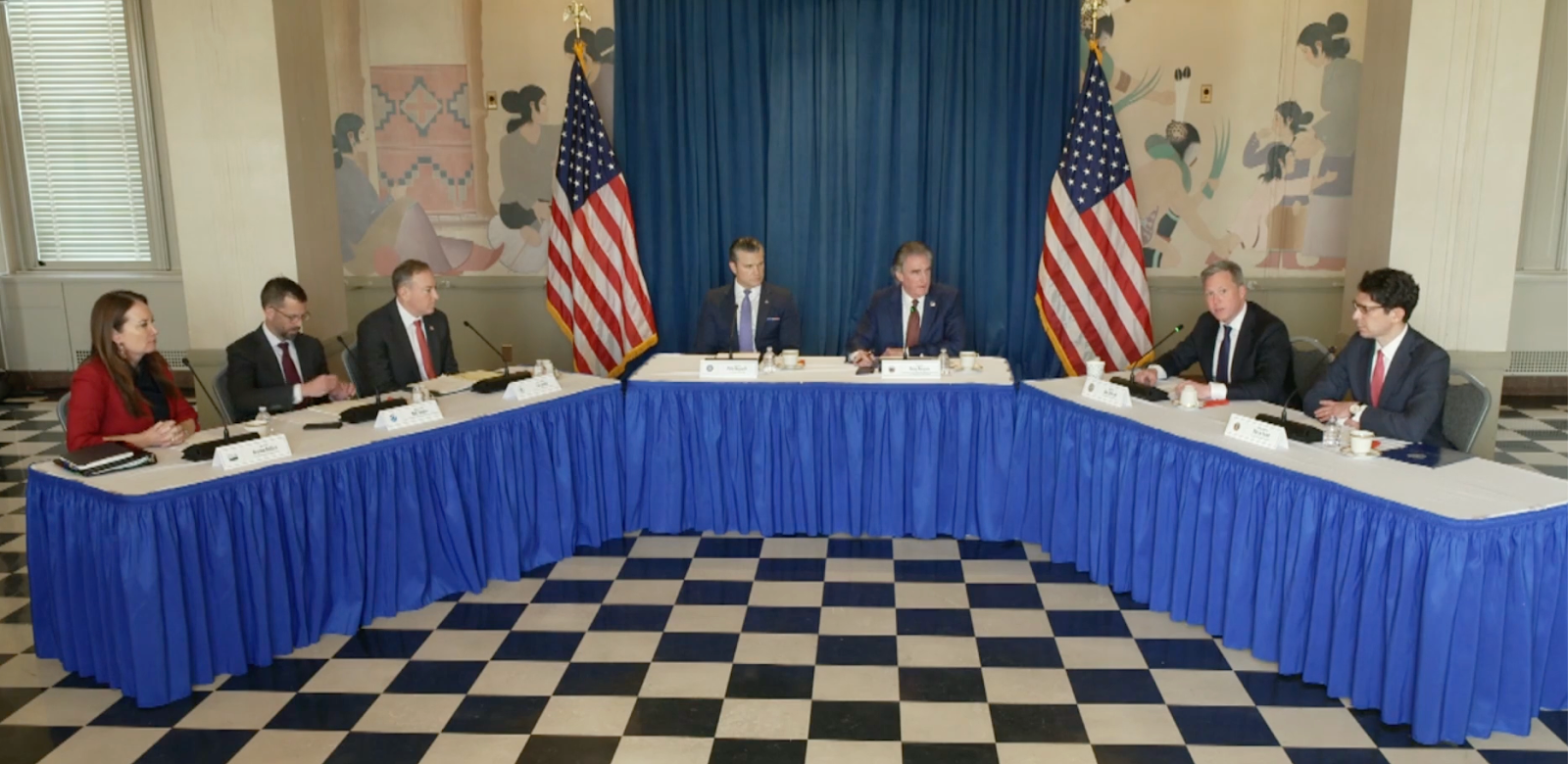
Streamed live on YouTube, the meeting took place at the Department of the Interior’s headquarters in Washington, D.C., beginning after its scheduled 9:30am start. Seven people sat at three rectangular tables with blue table skirts, a mural of Native Americans behind them.
Durum introduced each member, and then Hegseth—a guest to the Committee—spoke:
“To be as secure as a nation, we need a steady, affordable supply of our own energy. The Gulf of America is a cornerstone of our security, providing 15 percent of our country's crude oil. This is not just about gas prices. It's about our ability to power our military and protect our nation. That vital energy supply, right now, is under threat.”
The threat? Not the military action in Iran, but… wait for it… a lawsuit.
“Well before Operation Epic Fury, the Department of the Interior notified the Department of War about ongoing Endangered Species Act litigation that threatened to halt oil and gas production in the Gulf of America. So the War Department acted,” Hegseth read from a prepared statement.
“Considering this litigation, it is essential to our national security to exempt all Gulf oil and gas activities from the Endangered Species Act requirements. … Litigation diverts critical federal resources away from approving, managing and regulating oil and gas activities and creates uncertainty over the industry's development.”
Is the ‘Threat’ a Lawsuit or National Security?
The U.S.—a net exporter of oil—gets 88 percent of our crude oil from North America, with the Gulf providing 15 percent of it. Of the remaining 12 percent of imported oil, just 8 percent of that comes from Persian Gulf nations, having declined from 25 percent in 2014.
Hegseth didn’t provide the American public with any version of the ‘national security findings’ purportedly presented to each committee member, but offered this additional rationale: “These legal battles waste critical government resources and make it impossible for energy companies to plan and invest in new projects.”
Considered alongside the $1 billion per day spent bombing Iran in recent week, or the $100 billion per year ($27 million per day) on ICE (Immigration and Customs Enforcement), the argument sounds like ludicrous codswaddle. Based on my calculations from a 2012 report, the government spends just $5.3 million annually—$14,000 daily—to defend ESA litigation, when those figures are adjusted for inflation.
In a large leap of logic, Hegseth added that, “recent hostile action by the Iranian terror regime highlights, yet again, why robust domestic oil production is a national security imperative. Production in the Gulf of America provides a vital buffer, insulating our economy and military from foreign instability and reducing the strategic leverage of our adversaries.”
Fuck the Whales
Each committee member then read from pre-written, nearly-verbatim statements like a council of royalty seduced by Wormtongue under Saruman’s spell (for you Tolkien fans). These included, “I have been advised that, as a legal matter, the committee is required to grant an exemption when a national security finding is made.” All added that, nevertheless, they agree with the decision and will be voting yes.

“Disruptions to oil and gas production in the Gulf would significantly impact the Army's ability to man, train and equip combat ready formations,” Driscoll said. Though they conduct joint training exercises in the Gulf with the Navy and Air Force, it defies logic that an ESA lawsuit prevented the Army from having combat-ready formations.
My ears perked up when I heard NOAA Administrator Jacob say, “I want to highlight that the agency action under consideration, all oil and gas activities in the Gulf of America, encompasses the full suite of actions, including various protective measures for the Rice's whale,” measures identified by BOEM [Bureau of Ocean Energy Management] and BSEE [Bureau of Safety and Environmental Enforcement] and reviewed by the National Marine Fisheries Service.
Such protective measures include having trained observers to prevent vessel strikes, documenting observances of the whales, and avoiding nighttime boat transit in the Outer Continental Shelf region where they live and oil leases occur. Did he mean they’d retain these?
Nope. Though the Marine Mammal Protection Act still mandates protections, per this ESA decision, accidental killing of any endangered animal—so-called “incidental take”—can occur with no penalty.
Effective immediately, the lawlessness that has been a key tool of the border wall construction is being offshored to protect oil and gas. A lot of folks are putting odds on Hegseth going the way of Noem and Bondi, but even if he retains a federal bank card to spend millions more on lobster and king crab—where does he think the ‘surf’ in ‘surf ‘n’ turf’ comes from? (Hint: Not out of a drilling platform.)
This decision—for as long as the Trump regime maintains its hold on power—certainly seems a harbinger of things to come for what experts have called the world’s strongest (and wildly popular) environmental law.


