

“Nobody dreams of becoming an undocumented mother.”
Those are the words of Claudia, an undocumented mother narrating her experience seeking health and safety for her child in the U.S. They come from Elizabeth Farfan’s book “Undocumented Motherhood.” For the mothers separated from their children and the hundreds of women who have miscarried or have been forced to give birth in detention centers, there is certainly nothing dreamy about having your child ripped from your arms all for being undocumented.
In celebration of Women’s History Month, this edition of ICE Watch focuses on women leading the defense of health and rights of immigrant women. Although immigration enforcement actions and detention is violent for everyone and all communities, historically and statistically we know that those most vulnerable to heightened forms and rates of violence are women and children. To understand this dynamic, this week we speak with community organizer Beatriz Batres and immigrant rights advocate Sarah Cruz about ICE, local law enforcement collaborations, and growing community responses—including the mobilizaiton of a “resistance force” that is itself largely led by women.
If this newsletter speaks to you, be sure to share it with your friends, family, and community. Join as a paying supporter and engage in the comments below. Let me know what you want to see in our next newsletter!
—Roxana Rojas
Call to Action
To support the effort to protect the rights of pregnant, postpartum, and lactating individuals in detention:
- Sueños sin Fronteras: Sign on letter to demand the liberation of pregnant people from the Dilley detention center. Add your signature and support their work. Also: You can support their work to improve pregnancy, birth, and postpartum outcomes for undocumented people in Texas with a donation here.
- Request an EO 12866 meeting with the Office of Information and Regulatory Affairs to advocate for access to reproductive healthcare for unaccompanied immigrant youth who are pregnant and in the custody of the federal Office of Refugee Resettlement (ORR). Advocates anticipate that a forthcoming regulation will restrict access to abortion-related care for pregnant unaccompanied youth by prohibiting the Office of Refugee Resettlement (ORR) from providing transportation to unaccompanied youth in ORR custody to receive abortion care.
- Free Them All VA: Support Beatriz Batres’ organization La ColectiVA by giving to the Free Them All Collective Liberation Fund that supports families and community members who are impacted by the incarceration-to-deportation pipeline in Virginia.
- RESOURCE: Learn about your First Amendment rights
- RESOURCE: Know your rights related to public demonstration

¡NOS QUEREMOS VIVAS! ¡NI UNA MENOS!
Meet Beatriz Batres
The chants of women marching reverberated around the world earlier this month on International Women’s Day. These voices met the wails of mourning for the nearly 180 young girls murdered in an illegal war that we all pay for but did not consent to. Meanwhile, war drums beat to the tune of AC/DC.
The cacophony grows louder with the innumerable pregnant and breastfeeding individuals reeling from the injustice of having the right to parent their children thrashed away from them. Their bodies accumulate the trauma of medical neglect and abuse in immigrant detention centers across the United States. This is another stave in the new anthem of this country.
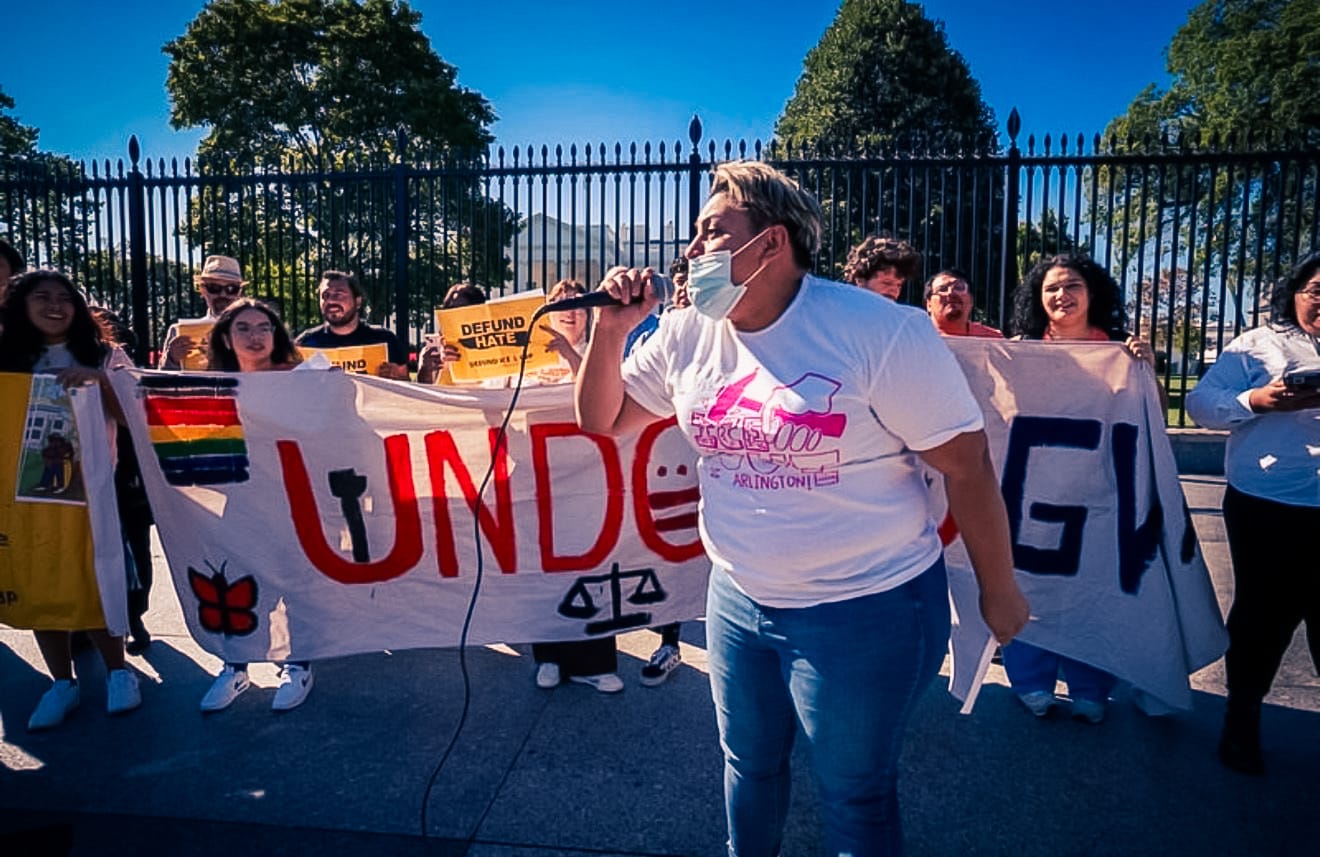
“We have had so much taken from us,” Beatriz Batres, a formerly detained mother turned activist, confides in me. “Using public space to denounce violence, create discomfort, elevate the voices of others has become a habit and a moral responsibility.”
Batres shared with me her story, the abuses she witnessed personally, in order to highlight several overlooked facts we need to hold in our minds. Just as women bear inordinate burden and abuse by the deportation-industrial complex, they also make up a large part of the visionary leadership charting a path beyond those abusive systems. But our ultimate success, she insists, lies outside our current campaigns to prevent or even shut down camps.
The squalid conditions of immigration detention are well documented. Yet, we know that historically the most vulnerable are women, particularly children and pregnant, postpartum, and breastfeeding individuals. Dilley, CoreCivic’s family detention center an hour south of San Antonio, Texas, has recently drawn much media and public attention for medical emergencies faced by children and pregnant women. Currently the only center holding families, Dilley is one of five family detention centers used since 2001.