

The hundreds of Texas residents who died from the heat last year shows that our gaps in heat accounting matter.
It was one for the record books. With an official high temperature of 108°F, Wednesday’s scorcher was, as KSAT reported, “the hottest temperature recorded for the Alamo City since 2013.” But, they added as a clarification, it was the fourth hottest ever recorded at the San Antonio International Airport, where official weather monitoring takes place.
In downtown San Antonio proper, Deceleration recorded temps on Wednesday as high as 120 degrees, with a “feels like” heat index temp of 129 and 130 degrees after the relative humidity of around 20 percent was factored in.
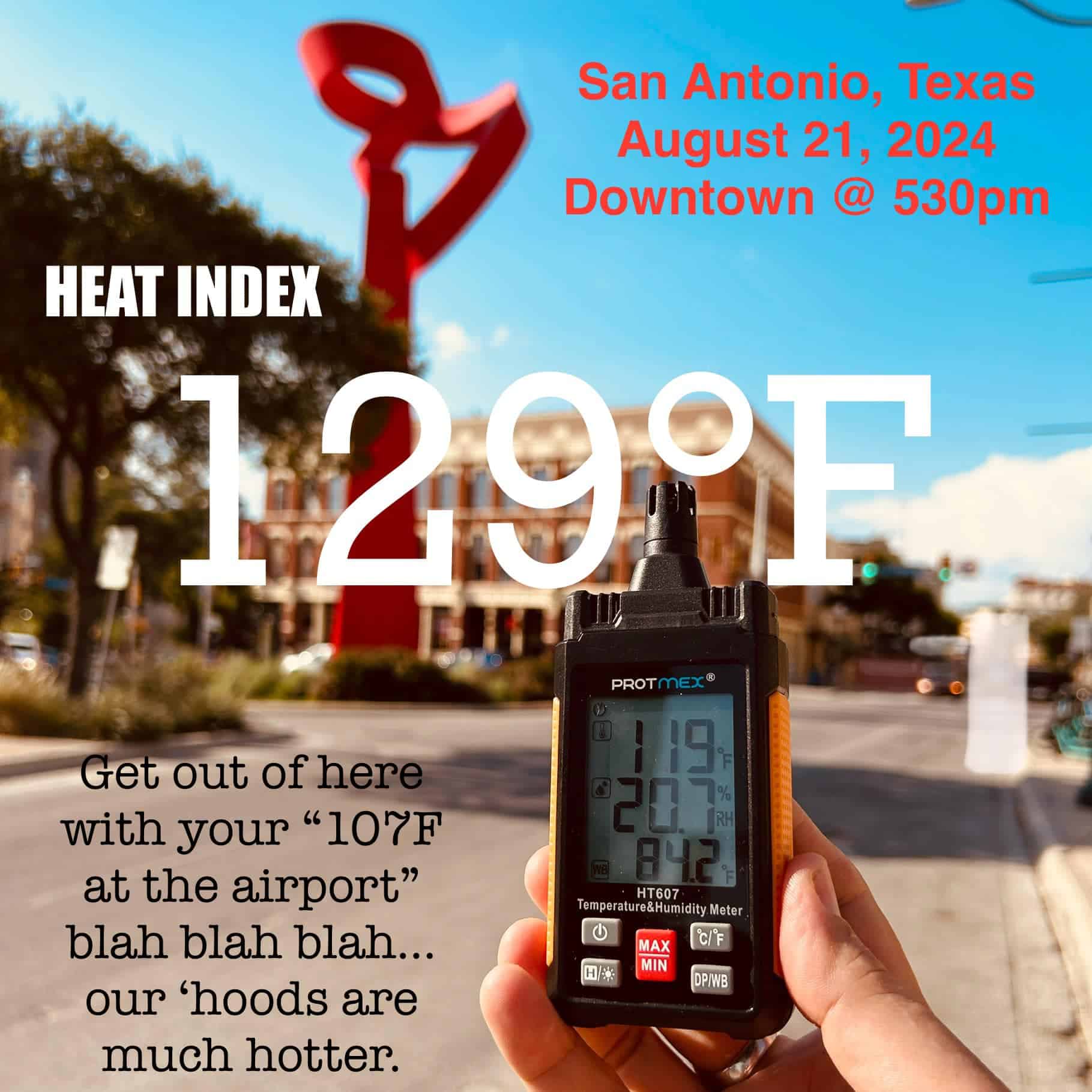
The official city temperature is recorded at San Antonio International Airport far to the north of downtown and two meters above the ground. National Weather Service meteorologist Mack Morris confirmed that urban temperatures can be considerably higher than what the instruments at the airport record due to the amount of heat-absorbing concrete and asphalt and loss of tree canopy in many areas. This phenomenon is understood as the urban heat island effect.
Over the course of two 30-minute visits to the corner of Alamo and Market, one at 1:30pm and the other at 5:30pm, Deceleration recorded temperatures about 4 feet above the ground (our chest level) ranging from 114°F to 120°F. The heat index ranged as high as 130 for a few minutes, as captured by our temperature and humidity meter.
While Morris at the NWS said he “wouldn’t be surprised” to see heat index around 120 in heavily developed pockets of the city yesterday, he expressed surprised at the 130 reading.
And this isn’t even the hottest part of the city.
In 2022, Deceleration mapped urban heat impact in San Antonio and Bexar County at the Census tract level using NASA data. Downtown came out as the 12th hottest pocket of the city. Ranking higher are the neighborhoods of Government Hill, Dignowity Hill, the Medical Center, Harvard Park, USAA, and other areas.
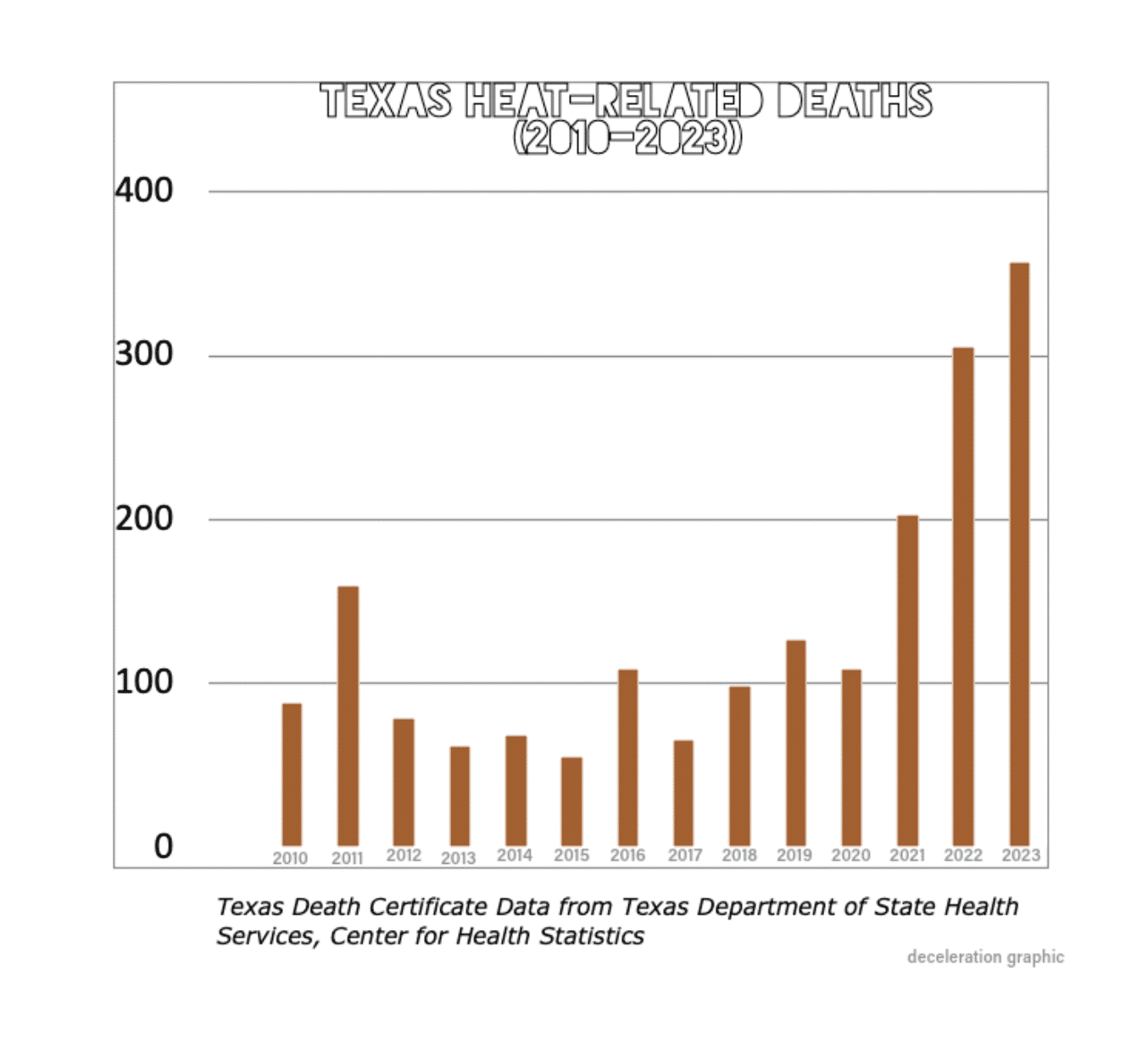
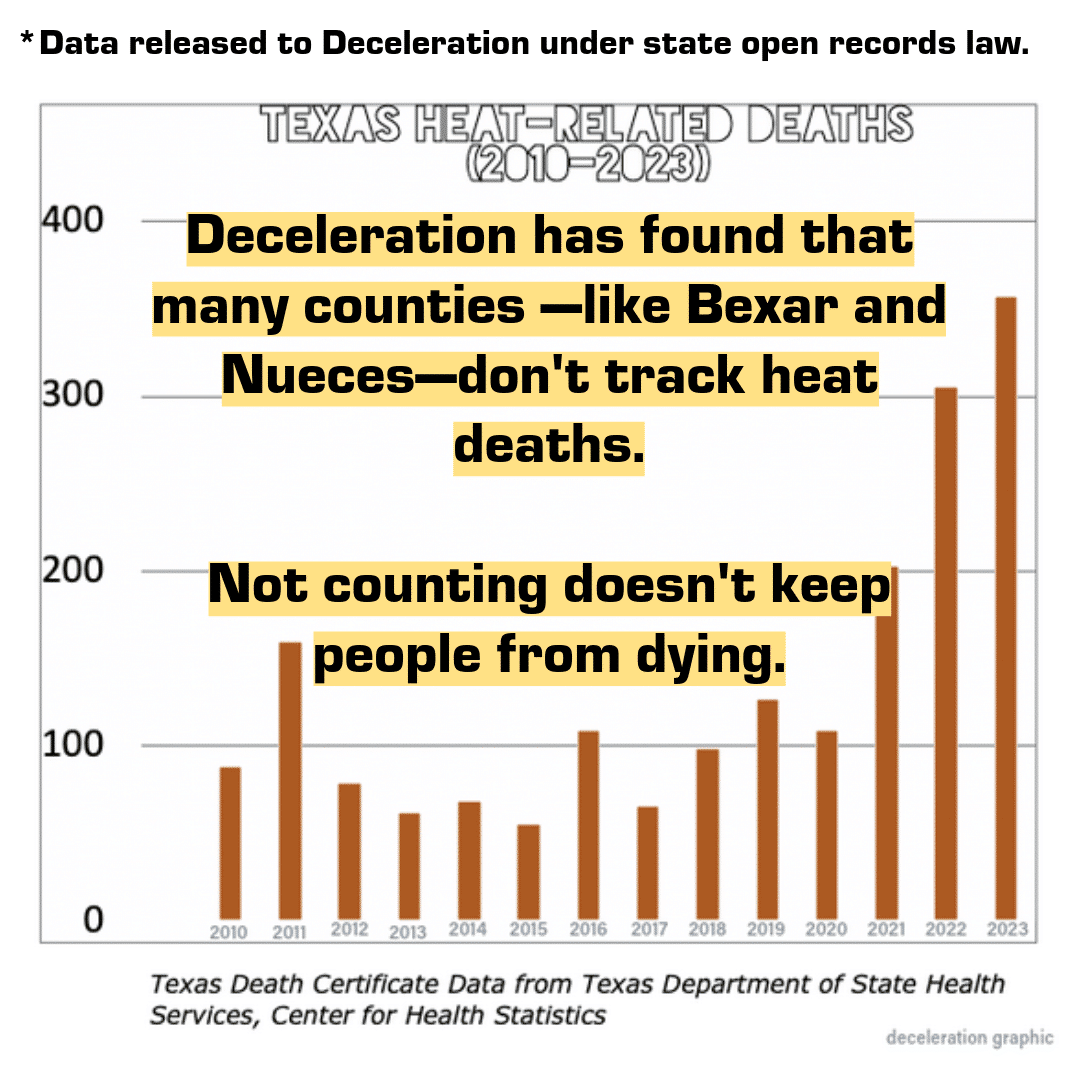
Extreme heat claimed the lives of more than 350 people across Texas last year, according to data provided to Deceleration in April by the Texas Department of State Health Services, Center for Health Statistics. This figure is almost certainly an undercount as many counties in the state—including Bexar and Nueces—don’t track heat deaths.
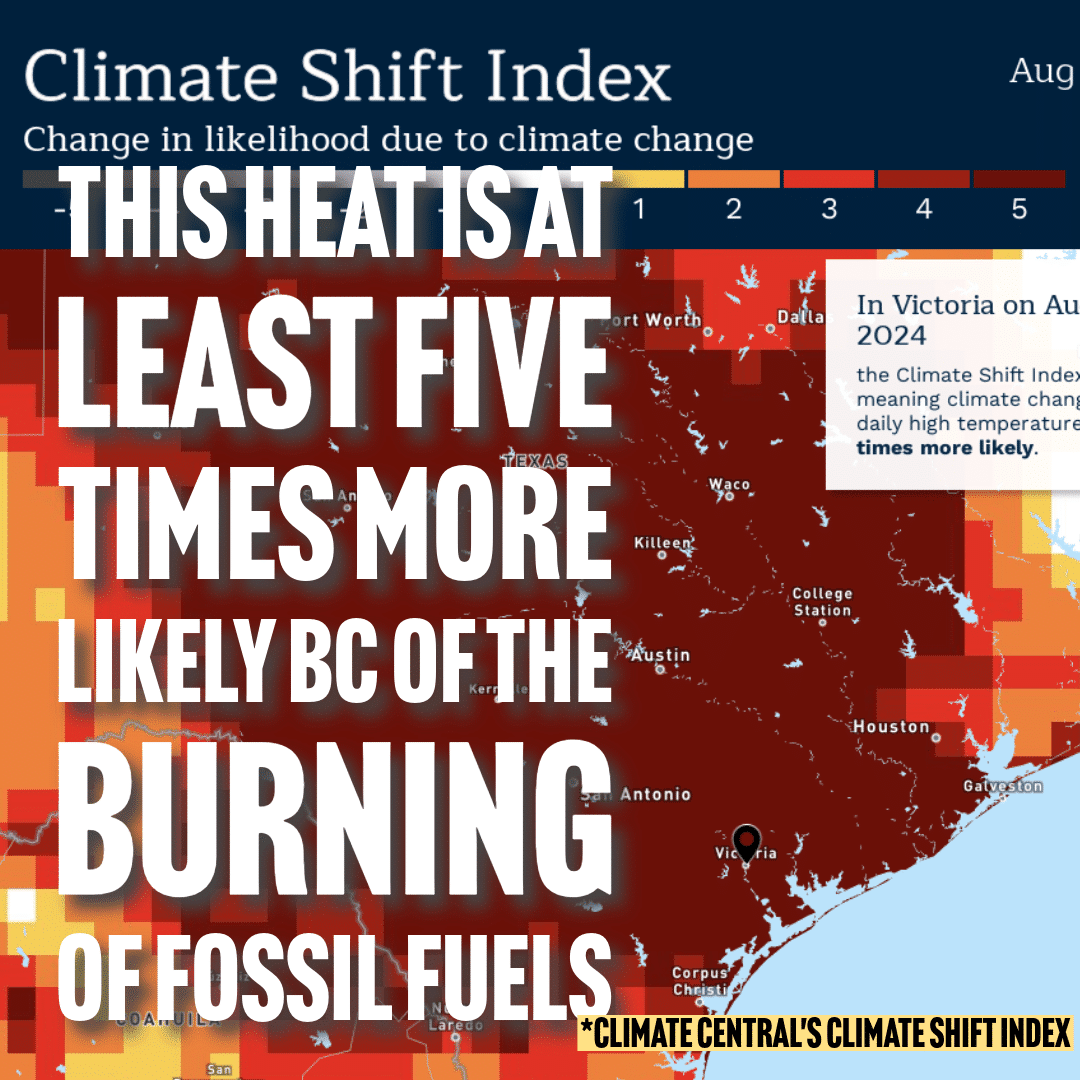
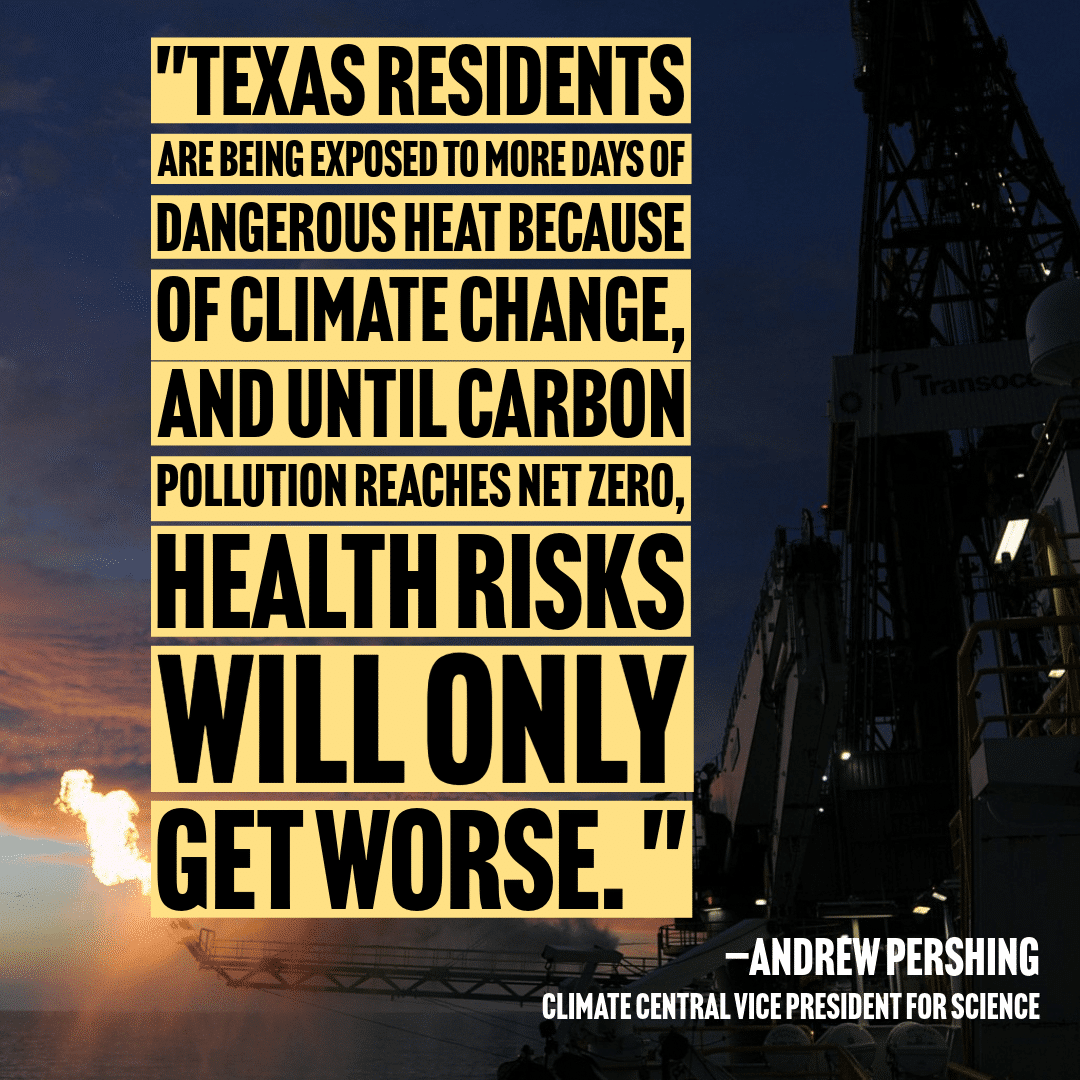
Temperatures across San Antonio and the world have been rising quickly over recent decades, heat that is being driven primarily by the burning of fossil fuels and deforestation. Recent extreme heat hitting Texas has been made more than five times more likely due to global warming, according to researchers at Climate Central.
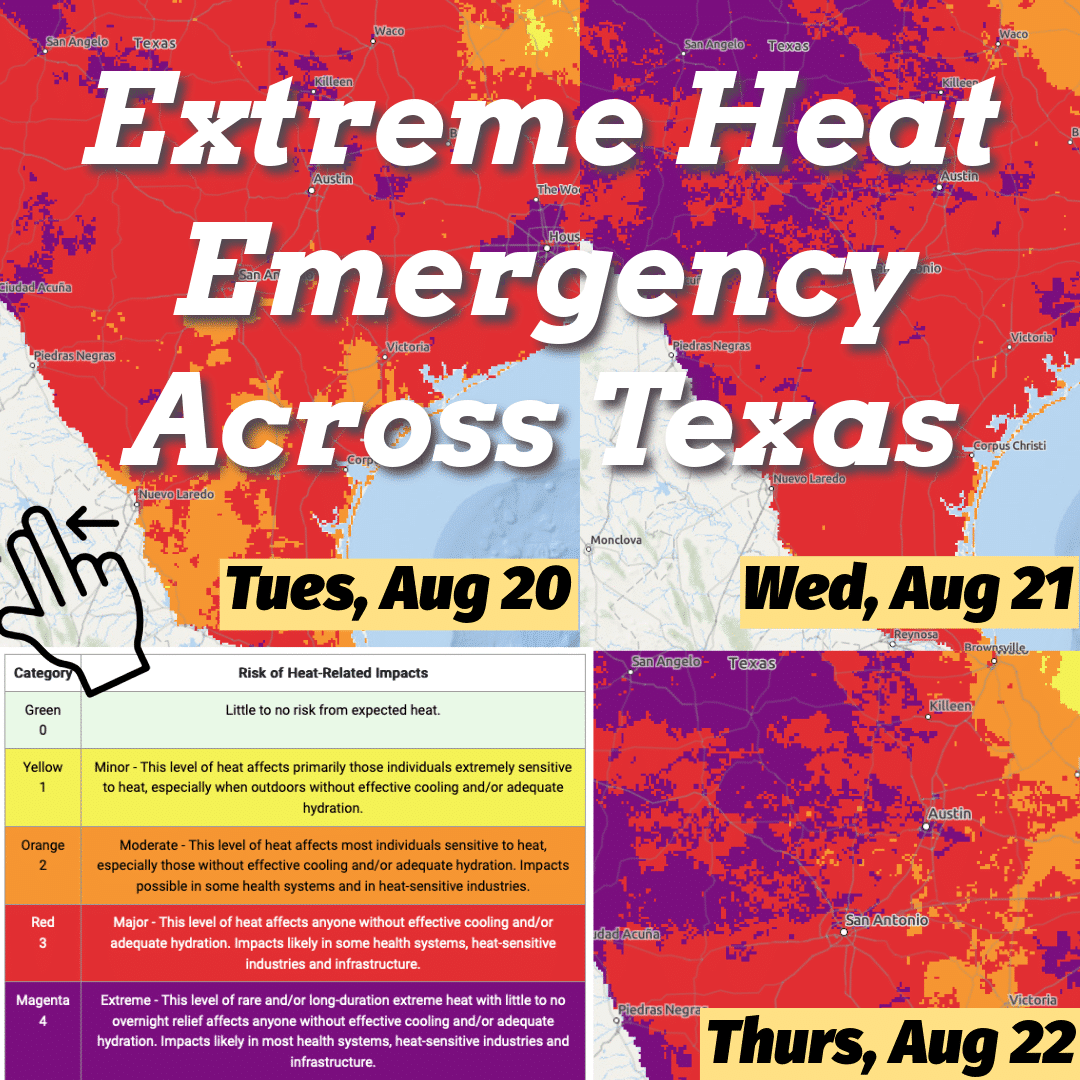
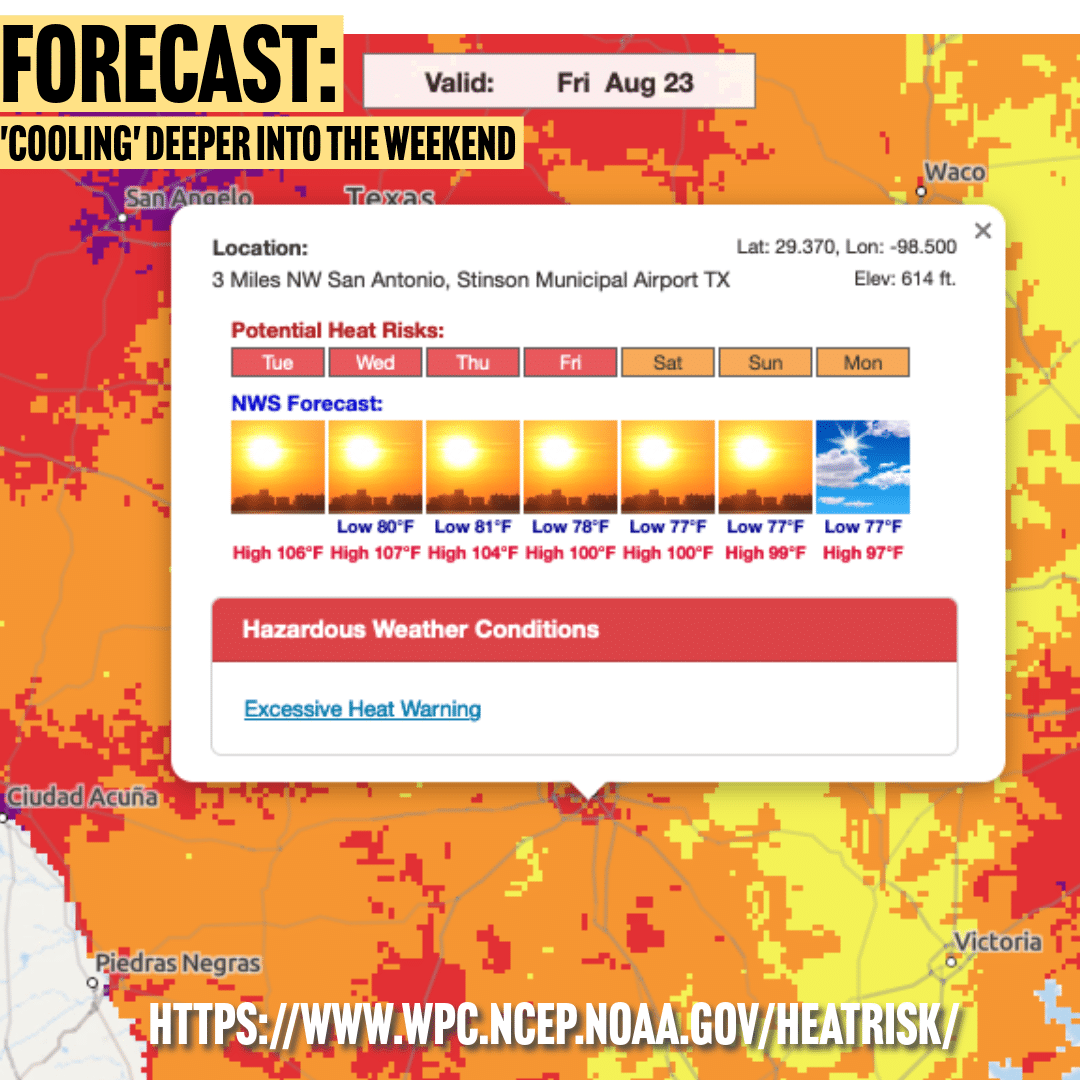
Deceleration Heat Alert for the Week




-30-


