

Hawaii state representatives are demanding the U.S. Federal Aviation Administration (FAA) study more deeply the impacts of SpaceX’s Starship program, which launches from South Texas, on the waters the rocket is supposed to land in just off the coast of the state.
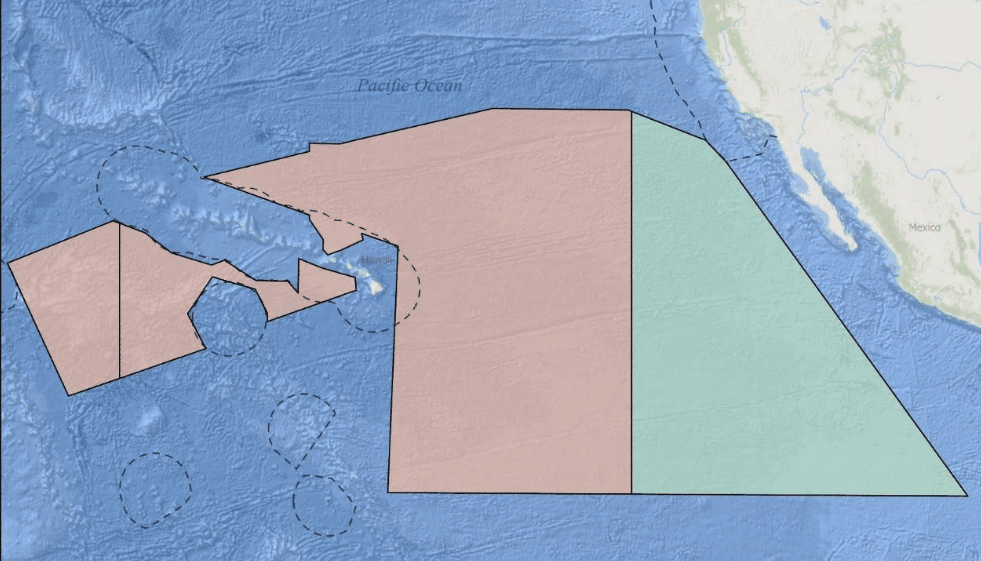
Twelve state leaders filed a bill that would require the FAA conduct an EIS if a rocket launches or lands in state waters or near the Papahānaumokuākea Marine National Monument (PMNN). Starship rockets, when they don’t blow up, are directed towards the coast of Hawaii after they separate from a booster, Super Heavy, in a splashdown landing.
SpaceX is hoping to launch up to 25 times a year, which it must receive FAA approval to do. The FAA, as it has done every time SpaceX has expanded its facilities at Boca Chica Beach, drafted an Environmental Assessment (EA)—which is written by SpaceX environmental engineers and consultants hired by the company and the FAA—of the expansion plans.
EAs are shorter, less intensive analyses of projects that impact environmentally sensitive areas. EISs, on the other hand, can take years, are more thorough, and measure cumulative impacts more closely. The FAA last issued an EIS for SpaceX’s Boca Chica facility in 2014, when the company said it was going to launch smaller Falcon 9 rockets in a “small, eco-friendly” facility.
The company started building the Starship facility immediately after without opposition from the FAA.
Six years later, the FAA, in trying to help SpaceX, said the company’s larger, more environmentally impactful facility was fine operating as it was. Two years later, the FAA would make SpaceX mitigate some of its impacts, no longer able to deny its expanding footprint and resulting damages.
Legislators said they filed the bill due to SpaceX’s proposed expansion of its landing zone for Starship—up to 20 times larger than previously outlined for the FAA—and the FAA’s failure to consult with Hawaiians.
“Given the lack of previous stakeholder participation, a change in spacecraft type, and the dramatically expanded area, which is further affected by ocean currents, it is unclear what the impact will be on Hawaii,” the bill’s text reads.
When the FAA collected public comments on SpaceX’s new plans, Hawaiians demanded an EIS be conducted. Residents told the FAA during a virtual meeting held on January 13 that they were being left out of any considerations when it came to the Starship program. Texas residents said much of the same, once again citing the agency’s limited analysis of environmental impacts.
The FAA has not said when it will issue a decision on SpaceX’s expansion plans.


