

This year, I’m predicting, Corpus Christi will be inundated with journalists from national outlets wanting their own story about the city’s imploding water supply failures. As the city lurches toward the ignoble status as potentially the first modern U.S. city to run out of water, we are witnessing an echo of shocks felt in much larger cities, like Johannesburg, South Africa, where much of the population suffers under ‘Day Zero’ conditions due to “infrastructure failure, poor planning and weak accountability,” as The Citizen writes.
Those of us from state and bioregional projects like Deceleration will also be reporting on the evolving situation. But, as I make clear in this month’s newsletter, this story goes back much further. In spite of that history and all of its lessons, communities across the Laguna Madre area of South Texas—and beyond—are poised to make the same easily preventable mistakes.
— Gaige Davila
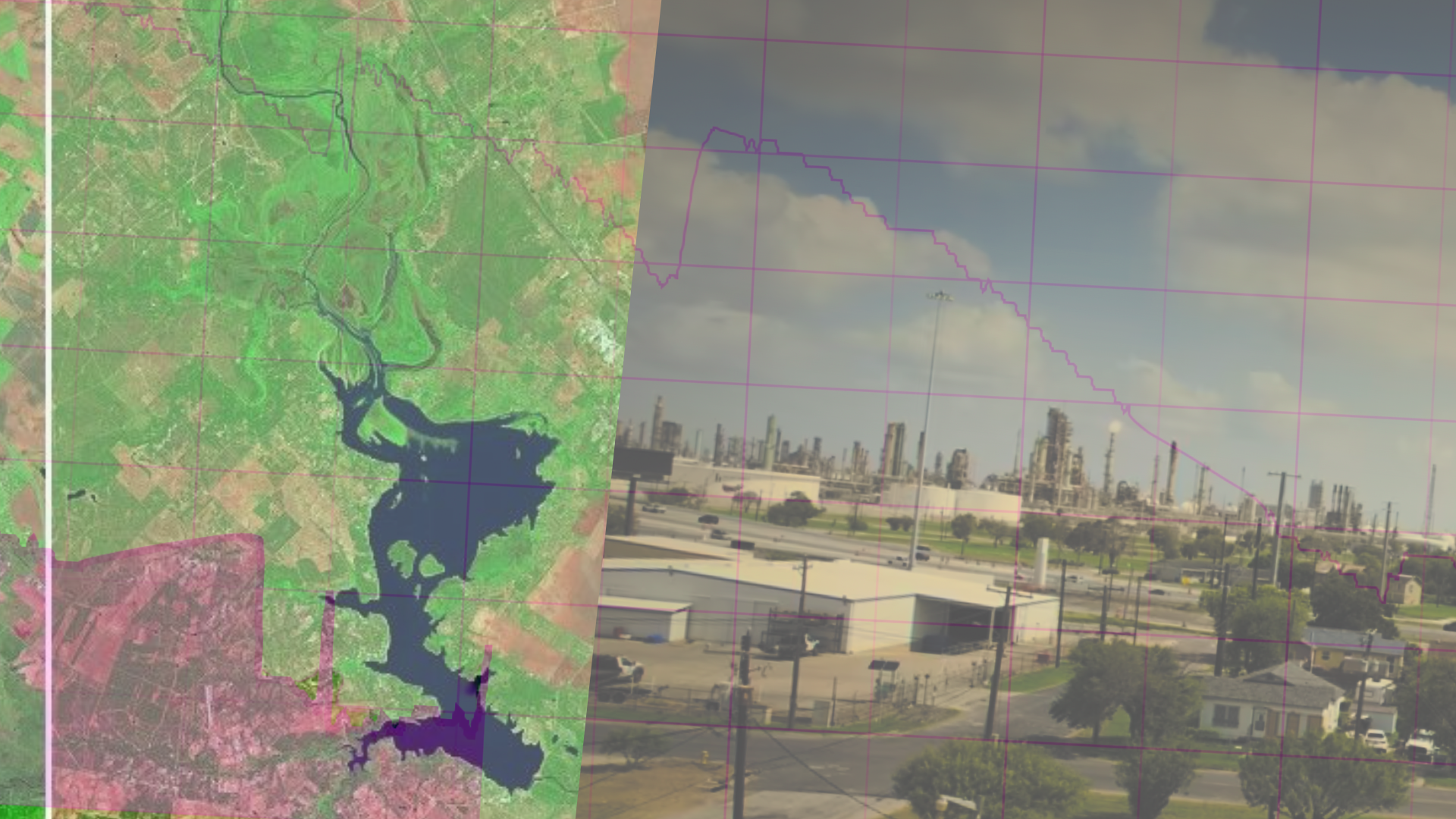
Months Away from Running Out of Water, Corpus Christi’s Officialdom Still Holds Industry More Dear Than its Own Residents
Gaige Davila | Deceleration
It’s been about two years since I first reported on Corpus Christi’s water. I shouldn’t be at all surprised that what residents were worried about back then has not only happened—a city so enamored with billion-dollar industry that it pushed into the bleeding edge of water promises to the detriment of residents—but is even worse than predicted. Yet here I am, writing this from just a few hours away in Austin, Texas, after screening the documentary Shifting Baselines by Julien Elie, being surprised for another reason.
It has to do with the idea behind the title of the film. That idea was first elucidated by Daniel Pauly, a fisheries biologist who is heavily featured in the film.
Here’s a good Ted Talk listen on the concept of shifting baselines from Pauly himself, but think of it as our collective understanding of “normal” changing imperceptibly, year by year, until the new “normal” begins to collapse. Only then would people notice anything was different at all.
For instance, if you were to watch any Corpus Christi council meeting or see its city manager, Peter Zanoni, talk about water, you’d assume the industrial companies and the region’s drought were always there, beyond history, in a productive tension. It’s a convenient illusion for industry boosters. But the people who live there know better.

The only thing consistent from two years ago is that some of the people on Corpus Christi’s council dais and leadership still appear to believe that, even at this crisis point, where Corpus Christi becomes the first modern U.S. city to not have enough water to meet residential and industrial demand, there can still be some sort of balance between the water needs of industry and the people who live there. That balance will allegedly come from several new water projects intended to satiate a demand the city sold beyond what it could sustain. Many of these projects, which now include mining of the groundwater, industrial-scale desalination operations, and wastewater reuse, are still in the design phase.
What I didn’t write about in October 2024, is what it felt like to be in Hillcrest, a neighborhood on the northern edge of the city that was largely consumed by the city’s industrial companies and then, eventually, its port, which purchased many of the homes of the area before demolishing them.
The neighborhood is where the Inner Harbor Desalination Plant, which the City of Corpus Christi is still pursuing, would be built.
What I remember most about that day is when Hillcrest resident Maddie Chapman made note of the city calling Hillcrest the “inner harbor.” Few people live there now, but it’s still a neighborhood. Before the plants, it was a Black and Latino neighborhood, and it still is, even if so many are gone. It is still Hillcrest, always will be; to call it “inner harbor” would ignore that it was intentionally neglected and disinvested, and that its community was disbanded.
It’s also one of the hottest Census tracts in all of Corpus Christi, according to data reviewed by Deceleration as part of our mapping of urban heat island impact.
To walk through those streets and hear nothing but the machines of Flint Hills’ East Plant refinery producing 300,000 barrels of petrochemicals per day and the cars powering through the nearby highway was beyond disorienting, because I could still smell salt and feel coastal wind. These sensations—the sea breeze and plastic smell—should not exist simultaneously, but they do, and we’re all the worse for it, even if we’ve never walked on Hillcrest’s empty streets, or driven on the highway beside it.
Hillcrest is getting some investment back, but I genuinely wonder if it is supposed to serve the people who live in Hillcrest or an attempt to influence their perception of the city.
“Ensuring a safe and reliable water supply for the City of Corpus Christi builds a foundation for the community’s growth and prosperity.”
That’s one of the first lines in the city’s “Securing Water” web page.
Putting more stress on a future water supply before even developing it is a hell of a guiding star. And you can interpret that definition of prosperity any way you want, but it’ll always shake out to trying to gain something out of nothing, usually on hope alone.
Any notion of a “foundation” that isn’t people having the most basic life source isn’t sincere, and it seems Corpus Christi’s residents know that. Look no further than the comments on this City of Corpus Christi Facebook post selling residents rain barrels for $47 each.
Wrote one critic:
“You should be giving everyone a barrel… and encouraging this… not be in advantageous about it and making a buck while the citizens get hit with curtailments and threats of fines… this is nuts…”
Corpus Christi officials are doing weekly press conferences about the city’s water supply and plans to replenish it. The city is preparing to issue Level 1 water restrictions this September, Zanoni said, which means everyone, including industry, are supposed to reduce their water usage by 25 percent. The city is now involved in four desalination projects, with a fifth potentially entering the mix, according to the latest water press conference.
As of now, though, Corpus Christi’s industries can continue buying their way out of the city’s drought exemptions thanks to the city’s ongoing surcharge program.
While all this was happening an Israeli company announced it was developing a massive desalination plant on South Padre Island. The Laguna Madre Water District, which is based in Port Isabel and supplies water from Laguna Vista to South Padre Island, is also developing a desalination plant. I’ve seen very little critical response in the media or social media. Most people appear to still fail to understand that this development is for the Port of Brownsville’s mega-industrialization and little else. That’s never mentioned whenever these plants are being promoted by elected officials in the area, of course. And it wasn’t mentioned in the video that the Laguna Madre Water District published last month.
There will be no shortage of water stories along the coast this year, especially in Corpus Christi and the communities that use its municipal water supply. For this month’s newsletter video, I spoke with Dr. Isabel Araiza, one of the founders of For the Greater Good, a Corpus-based environmental justice group, to understand what makes this moment in Corpus Christi different from when she and I met two years ago. We talk about power dynamics, the group’s coalition building, how Corpus Christi’s extractive legacy continues today, and hope. May you get as much value from the conversation as I did.
Video
Click to play video. Follow Deceleration on YouTube.
Corpus Christi, Texas, is hurtling toward a potentially disastrous "Day Zero." Years spent privileging the water wants of incoming heavy industrial users over the security of the hundreds of thousands of local residents of this seaside city got us to this point. Gaige Davila, of Deceleration's Coastlines/Faultlines newsletter, wrote about the tensions over water use two years ago. He brings that investigation current with this deep conversation with Corpus resident, instructor, and sociologist Isabel Araiza of the community organization For the Greater Good.
Against the backdrop of weekly press briefings and a growing list of desalination projects moving into motion, they talk about accountability and reform, community organizing, and how much progress has been made exposing the lopsided values that took this "Shining City by the Sea" in this brutal direction.
“If Corpus can rise up … and fight billionaires and an authoritarian governor and have the audacity to say 'No'—that has them quaking in their boots.”
— Isabel Araiza
Buy Gaige a Coffee
Buy Gaige a Coffee...or three!
If you enjoyed this newsletter, let the author know by hitting the tip jar.
Further Reading
- After a Decade of Missteps, a Texas City Careens Toward a Water-Shortage Catastrophe (Inside Climate News)
Note: This is the most comprehensive read on how Corpus Christi’s water issues got to where they are today. If you don’t know where to begin with reading about it and have 20 minutes, start here.
- The Gas Peddle: Records show how LNG special interests have shaped city and county leaders’ decisions to ignore Laguna Madre community concerns about a fossil fuel build-out. (Texas Observer)
- Study finds toxic benzene emissions along the Texas Gulf Coast are among the highest in the nation (Capital & Main)


