Marisol Cortez
On March 27, 2024, responding to the wave of campus encampments protesting Israel’s U.S.-backed genocide in Gaza, Governor Greg Abbott passed Executive Order GA44, “Relating to Addressing Acts of Antisemitism in Institutions of Higher Education.” This order sought to define pro-Palestinian activism and teaching as part of a “proliferation of antisemitism at public universities” and restrict student activism and organizations under threat of expulsion, explicitly naming Students for Justice in Palestine and the Palestine Solidarity Committee. Not long after the passage of this executive order, Abbott put it to action by deploying state troopers to violently crack down on students and faculty demonstrating at Texas institutions of higher education.
Comments & questions related to PUFP: pufp.yanaguana@gmail.com
This brutal repression of pro-Palestine speech and teaching on university campuses did not come out of nowhere. Beginning in 2021 with HB3979, which sought to restrict teaching on racism and slavery in K-12 social studies classrooms, Texas legislative sessions have explicitly targeted speech, teaching, and job security at public universities and colleges in Texas. In 2023, SB16 sought (but failed) to ban teaching on race, gender, and sexuality at the university level, SB17 banned vaguely defined “DEI initiatives” on campus, and SB18 undermined long-term job security for Texas faculty by placing tenure decisions more squarely in the hands of governor-appointed Board of Regents members. EO44, then, has to be understood against this broader attack by far right and white Christian nationalist movements on knowledge work and knowledge workers–teachers, researchers, historians, librarians, students.
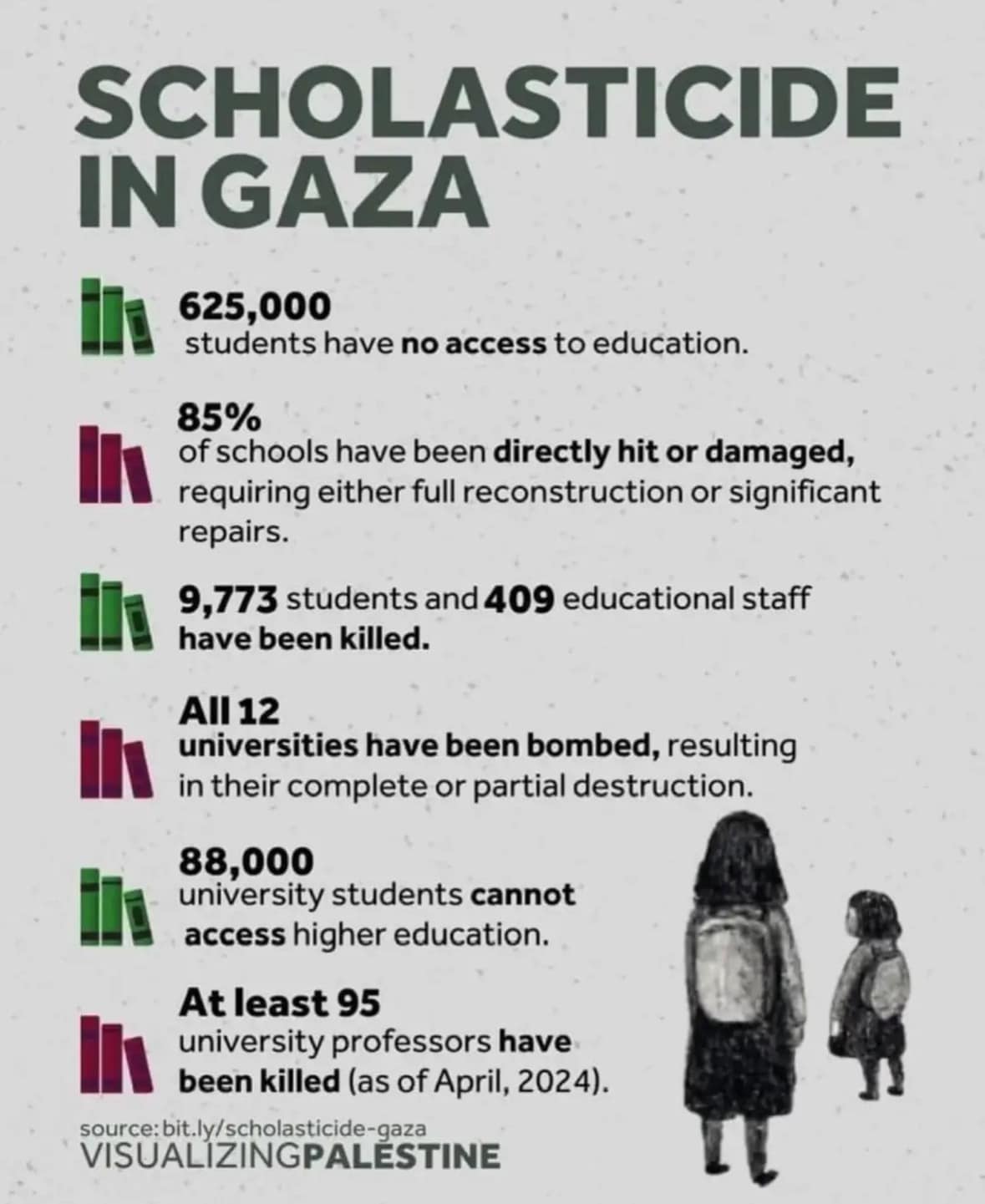
In response, a coalition of faculty and students calling itself the People’s University for Palestine formed this past summer to collectively develop and launch a curriculum on Palestine for both university and community participants. Designed as a semester-long series of programming, the People’s University seeks to intervene not only in genocide and educide—the destruction of Palestinian universities, schools, libraries, and cultural centers, alongside the murder and displacement of students, teachers, professors, poets, artists, and journalists—but also to raise critical questions about the nature of the university itself and its role in either silencing or naming and disrupting colonial violence.
Speaking to these questions on a July panel discussion that opened the process of curriculum planning, Dr. Habiba Noor, Lecturer at Trinity University, discussed what it might mean to locate knowledge outside the university, in the embodied reality of Palestinian suffering or the imperative to protect life. Animated by WEB DuBois’s vision of a people’s college where knowledge might serve Black liberation rather than the interests of the state and board of trustees, Noor stated:
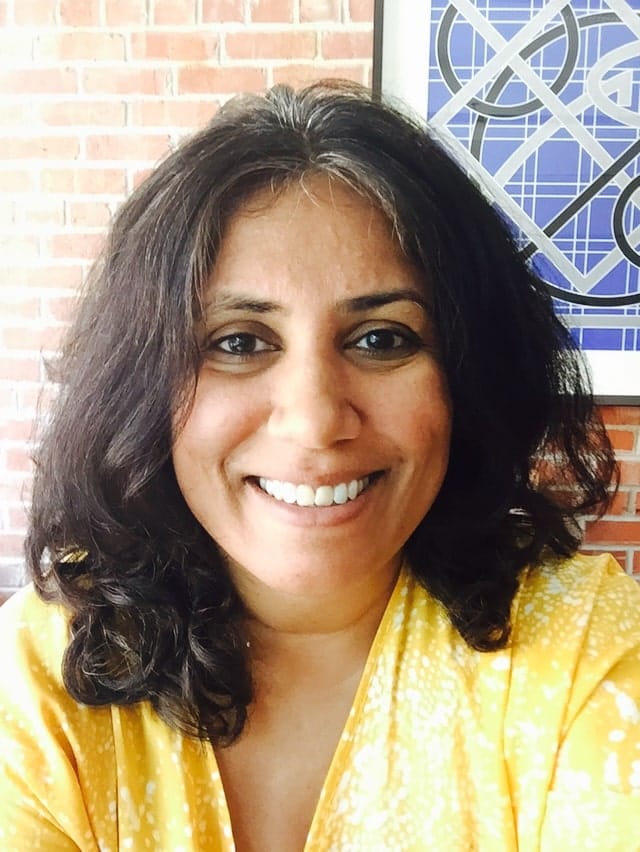
“There’s an assumption here that knowledge resides in the university: embodied through the professors and living in libraries. There’s an assumption that the university is a vacuum—separate from the so-called real world. EO 44 tells us that this is not true. Our brilliant sister from Texas State, Aimee Villareal, reminded us recently that Universities ARE the real world.
“As we launch into our people’s university, I want to push all of us to think about the location of knowledge. Where does knowledge reside? …
“In settler societies, we talk about the values of a liberal education as essential to democratic citizenry. However, the[se] expressions of knowledge are framed under a liberal rubric that frames justice as theoretical: not embodied. There is a significant difference between an education that is liberal and one that is liberated.”
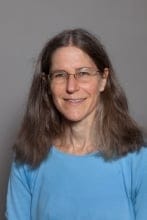
In the first session of the People’s University held in August, Dr. Judith Norman, Professor of Philosophy at Trinity University and a member of the San Antonio chapter of Jewish Voice for Peace, echoed this longing for a knowledge that is grounded in, rather than disrupted by, the body and caring:
“I’m a philosophy professor. I teach ideas all day everyday. But I have no relation to the way ideas might matter to students. I’m only concerned with whether students understand the ideas, right? And that’s not something universities accommodate easily. You get it, you can write it all on the test and get an A. But do you care? That’s something that gets left out of traditional universities and why I love this idea of a people’s university. Our people’s university is about caring and not just knowing.”
For decolonial theorist Arturo Escobar, the term for what Norman is describing is sentipensando or “feeling-thinking”: a form of knowing that resists the many hierarchical dualisms at the core of Western thought (self/other, mind/body, male/female, light/dark, human/nature). In centering knowledge in Palestinian experience—both the suffering of genocide but also the longing for liberation—the People’s University of necessity also reimagines the university, repairing the colonial fracturing of thinking from feeling, ideas from caring, knowledge from action.
People’s University Sessions and Resources
The first semester of the People’s University for Palestine at Yanawana is taking place throughout the Fall of 2024 and features the following sessions:
Session One: Speaking of Palestine
“Speaking of Palestine,” our August kickoff, is both an introduction to Palestine and a workshop on how to handle conversations with friends and family about Palestine and the ongoing genocide in Gaza.
Session Two: The Land and Its Peoples: Indigeneity and Settler Colonialism from Texas to Palestine
Our September session features stories, poetry, a panel discussion, and medicinal practices celebrating Indigenous lifeways and resistance to settler colonialism.
- Session Two Resources:
Session Three: Deadly Exchanges
Our October session organizes discussion around four keywords and their intersections: capitalism, militarism, borders, and policing. Through the lens of these keywords, our discussions also considers how the situations in Palestine and Texas are interrelated.
This session wasn’t recorded as it utilized small group discussions more than a presentation format. For anyone wanting to replicate or catch up on this session, we’ve posted below the facilitation notes and suggested readings below.
Program and Packet – OctoberDownload
Session Three Resources
- Nur Masalha, “Settler Colonialism and Disinheriting the Palestinians”
- Ahmad Amara and Yara Hawari, “Using Indigeneity in the Struggle for Palestinian Liberation”
- Readings for all four keywords HERE
Session Four: Palestine and Israel: A Religious Conflict?
Recording will be posted ASAP!
Facilitation Notes:
Palestine and Israel_ A Religious ConflictDownload
Session Four Resources
Smart Grrrl Summer, “What is Religious Nationalism? Why Should We Care?” (Podcast)
Rashid Khalidi, “The Hundred Years’ War on Palestine” (Podcast)
Further Reading and Resources
- Want to help plan future sessions or continue the discussion? Join our Signal chat here: https://tinyurl.com/38bk9zhw
- Want to read/study further? Check Zotero for articles, books, media, and other resources mentioned during People’s University sessions (updated throughout the semester).
***