

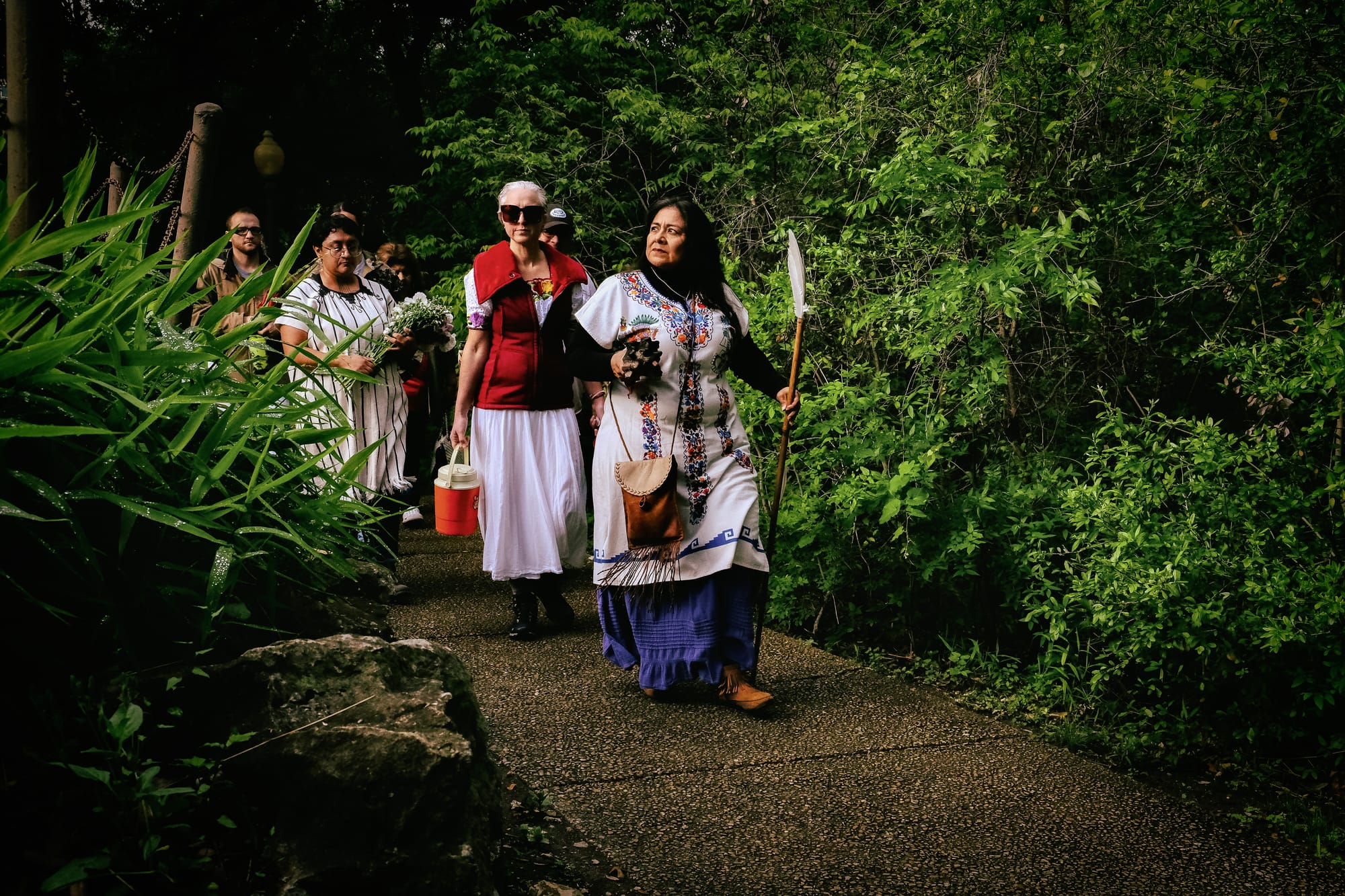
After a string of setbacks, Gary Perez and Matilde Torres’s legal battle with the City of San Antonio to protect both their religious practices and the birds and trees at Brackenridge Park received a breath of life last month from the U.S. Court of Appeals for the Fifth Circuit. In a shift embraced by the plaintiffs, the court agreed to rehear the case and sent a relevant constitutional question to the Texas Supreme Court for consideration.
Perez told Deceleration that the decision, while exciting, “in no way” fixes the problem.
“Right now we are still looking at our spiritual ecology at the park being destroyed,” Perez said.
Since at least 2018, the City of San Antonio has been escalating a campaign of harassment to prevent migratory birds from nesting in the city’s public parks. These actions have been arguably most aggressive in the San Antonio River’s headwaters at Brackenridge Park. City contractors here used a range of deterrents—from chemical sprays to heavy pruning and aerial explosives—to disband a rookery occupying trees the City wanted to remove to allow for a bond-funded redevelopment project. Those assaults on the birds in the park continue.
Originally slated for removal in 2022, the dozens of trees here that City staff claimed they needed to remove to repair the river wall still stand due to strong public resistance and misrepresentations made by City staff about the necessity of those removals, which weakened support among regulators and some on City Council.
Perez and Torres sued the City in federal court last summer, urging the protection of a river bend in the park known as Lambert Beach. It is a site, they argued before U.S. District Judge Fred Biery last fall, that has cosmological significance for their Indigenous membership. Ceremony there requires the presence of the river waters reflecting the sky and stars, but also the trees and the cormorants that are central to the group’s creation story. It is an ecological relationship they see reflected in the constellation Eridanous.
As the Fifth Circuit’s August decision recounts:
“They sued the City under the First Amendment Free Exercise Clause, the Texas Religious Freedom Restoration Act (“TRFRA”), and the Texas Constitution and sought declaratory and injunctive relief to require the City to (1) grant them access to the area for religious worship, (2) minimize tree removal, and (3) allow cormorants to nest.”
While Biery ultimately ruled the City must afford the group limited access to the site, he rejected their call for protections for the targeted trees and birds. Upon appeal, that rejection was upheld this April by the Fifth Circuit.
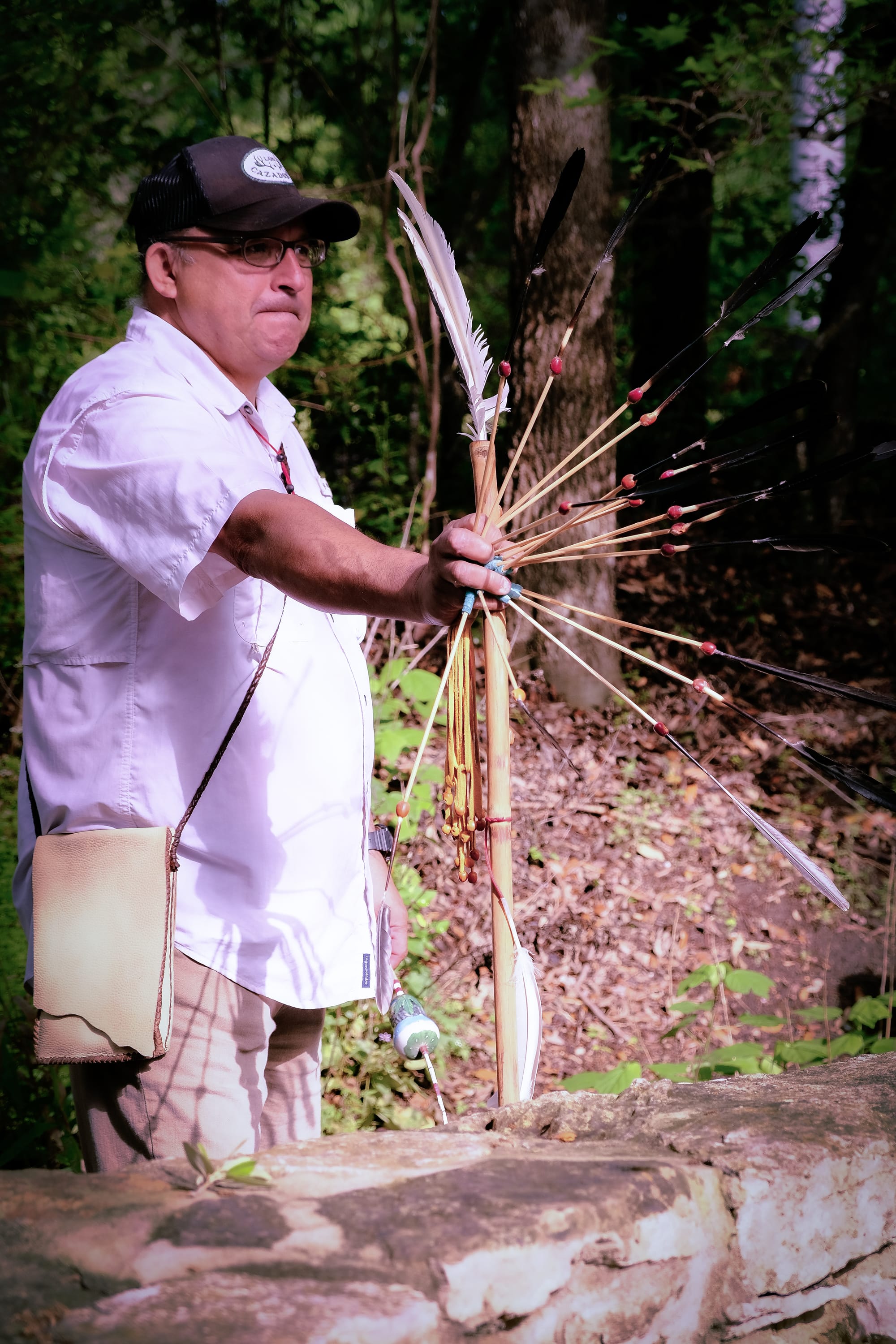
But now the Fifth Circuit has agreed to reconsider the case—after the Texas Supreme Court weighs in. The Texas Supreme Court is scheduled to take up the question with oral arguments on December 4, 2024.
At its core, the lawsuit is a religious liberty case that requires protection for certain birds and trees at the location. Perez and Torres maintain that, as members of the Lipan-Apache “Hoosh Chetzel” Native American Church, the Blue Hole spring at the river’s headwaters and the Lambert Beach area of Brackenridge Park are fundamental to their ability to practice their faith. They continue to argue that the City of San Antonio is in violation of the Texas Constitution, where Article 1, Section 6, as amended by the Texas Legislature in 2021 in response to COVID-inspired lockdowns, that reads:
“This state or a political subdivision of this state may not enact, adopt, or issue a statute, order, proclamation, decision, or rule that prohibits or limits religious services, including religious services conducted in churches, congregations, and places of worship, in this state by a religious organization established to support and serve the propagation of a sincerely held religious belief.”
The Fifth Circuit’s August decision asks the Texas Supreme Court to consider whether or not Article 1, Section 6, imposes “a categorical bar on any limitation of any religious service, regardless of the sort of limitation and the government’s interest in that limitation.”
While the Brackenridge Park Conservancy prepares new park amenities that celebrate the park’s persecuted—and some would argue former—biodiversity, harassment of migratory birds as alleged public health threats continues across the parks system. This harassment has perhaps been most conspicuous at Brackenridge, where the birds are not allowed to nest in part due to fears of potentially delaying the removal of the large trees at Lambert Beach.
The Texas Supreme Court now has an opportunity to show “just how much the State of Texas sticks to its guns in terms of religious liberty,” Perez said.
John Greil, Clinical Professor at the University of Texas School of Law’s Law and Religion Clinic, is working on the case along with a number of colleagues. Greil likened City of San Antonio efforts to remove birds and trees from Brackenridge to the removal of an altar from a Catholic church, stating that for Perez and Torres and those they worship alongside, these specific trees and these specific birds are directly tied to the sacredness of this space.
“It is important for us to understand the beliefs at play here,” he said. “They believe that for thousands of years the trees at this site have provided a generation-to-generation connection, so severing that will prevent the site from serving their religious purposes.”
A brief submitted last year in support of the lawsuit by the Norte Dame Law School Religious Liberty Clinic on behalf of the International Council of Thirteen Indigenous Grandmothers warns that the City’s current arrangement allowing the group limited site access while refusing to interrupt the violence it directs at the birds and trees could do irreparable spiritual harm.
“Though the district court ordered the City to give the Appellants limited access for the immediate future, that reprieve will be short-lived if it proceeds to decimate the site,” the amicus curiae brief reads. “And once the spiritual ecology of the site is destroyed, it matters not whether the City continues to deny Appellants ‘access’ to the site or restricts what they may do there, any more than it would be meaningful to let a Christian still ‘access’ a once sacred pilgrimage site that the government demolished.”
In addition to his stance on the “important constitutional principles at play,” Greil also expressed frustration at the City of San Antonio’s unwillingness to pursue a middle ground with Perez and Torres. While the City of San Antonio sought variances to the law to facilitate both the removal of the trees and harassment of the birds (which normally enjoy strong federal protections under the Migratory Bird Treaty Act of 1918), they did not seek comparable accommodations from the U.S. Department of Interior that could have allowed them to restore features of the riverway without removing the trees and birds.
“The common sense point of this whole case that’s been frustrating for us is that we know this doesn’t have to be a situation where one side wins and one side loses; we engaged a civil engineering expert who identified multiple ways that the city can repair the walls and preserve the tree canopy and allow the cormorants to nest there,” Greil said. “They never even put out a bid to ask engineers ‘if your goal was to save as many trees as possible and as much tree canopy as possible, how would you rebuild these walls?’”
City of San Antonio spokesperson Brian Chasnoff offered no comment on the City’s recent loss in court when reached by Deceleration. On the matter of the City’s seeming unwillingness to try to work with Perez and Torres’ demands, he said only:
“The Brackenridge Park Bond Project was fully vetted over a lengthy period dating back to Spring 2022. The recommended plan reflects input from the public and consultation with industry-leading experts about the various options to improve Brackenridge Park. The courts have repeatedly affirmed that the City’s plans to deter birds, remove decaying, dangerous trees, and repair collapsing historic walls are critical safety measures for the protection of all who use the park.”
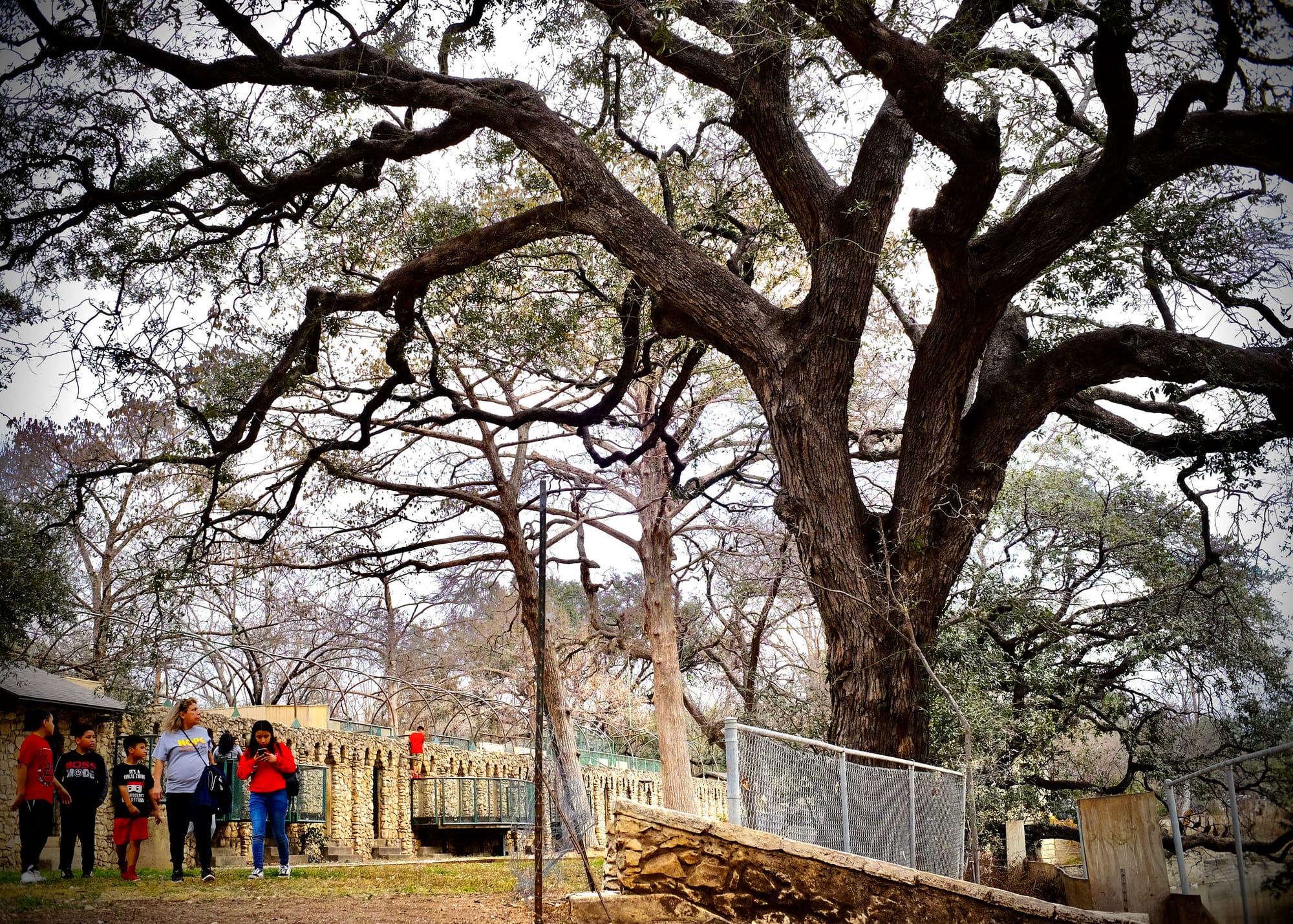
Of course, most of the largest trees slated for removal are neither decaying nor dangerous. Unless, of course, the danger is to construction timelines.
Deceleration’s review of the City’s redevelopment plans for Lambert Beach in 2023 showed 47 trees slated for destruction in the first phase of the project—four of which they listed as “dead” and four of which they listed as “invasive” species (see page 15 here). Nearly two dozen trees were scheduled to be relocated. However, what may be the largest tree in the project area, “Tree 101,” will require most of the funds that San Antonio’s City Council transferred from the City’s Tree Mitigation Fund for the relocations—or roughly $500,000. It will be moved about a dozen feet away from the river.
Defenders of religious liberty and conservationists alike may find promise in the looming Texas Supreme Court date. Because if Chasnoff’s words accurately represent the City’s most current position on the issue, court mandated change may be the only way.
Even beyond that, the limited slice of the natural world covered in this lawsuit would still leave plenty of work to do for those who would protect all the birds and all the trees in our city’s natural spaces.
-30-
Greg Harman contributed to this article.


