

The touring ‘Golden Years’ photography exhibit captures roughly 15 years of government oppression and popular resistance in the Philippines. These are images and stories that most residents of that one-time U.S. territory—where most media was under the direct control of a dictatorial regime—couldn’t have seen at the time.
Batons are raised on protestors; bodies are lined up, face-down, in the street; hungry eyes stare out behind iron bars. These are photographs captured largely in a period of martial law under President Ferdinand Marcos Sr. that lasted from 1972-86. It was a period that concluded after as many years of sustained popular resistance and the People Power Revolution of 1986.
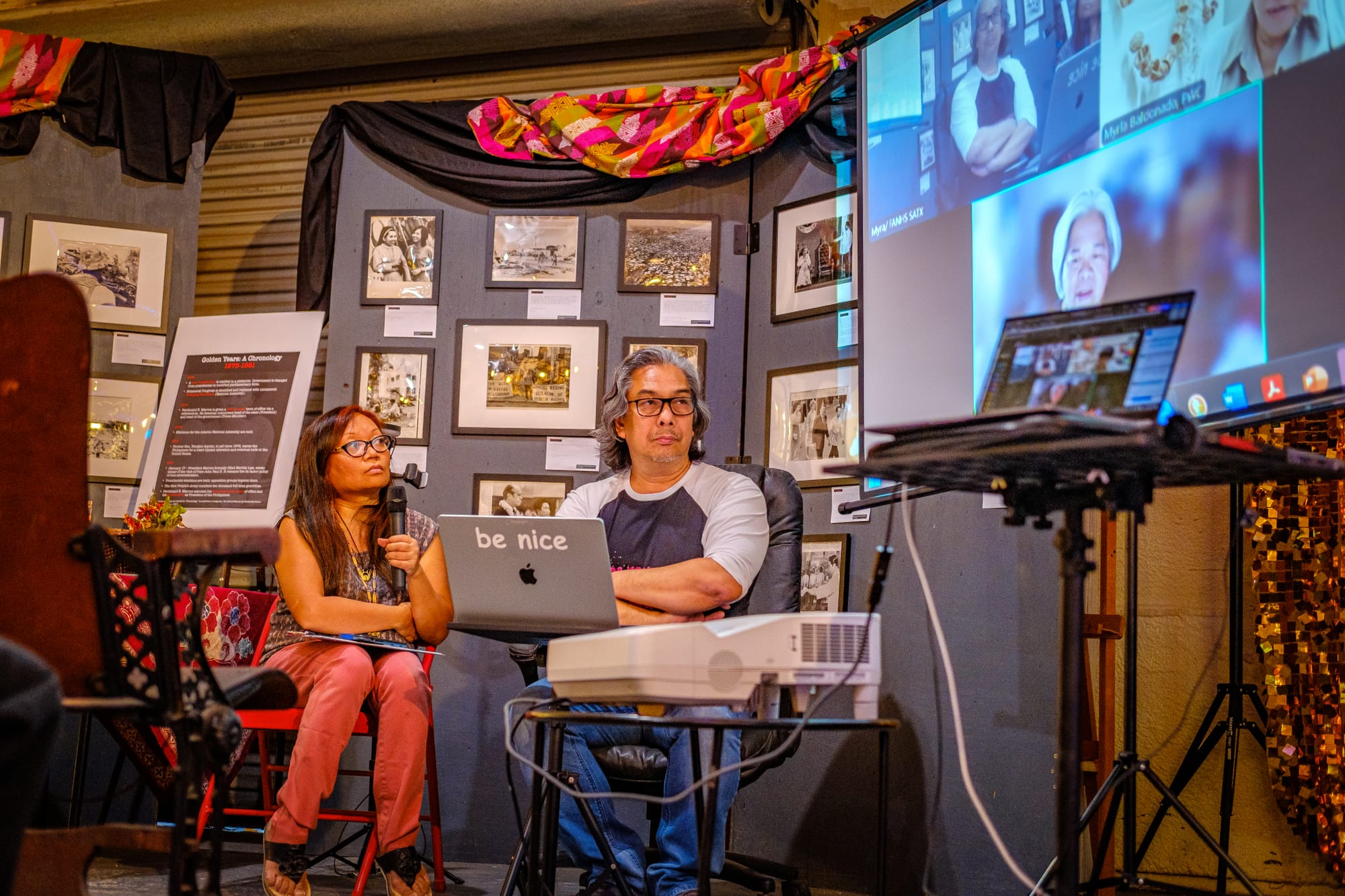
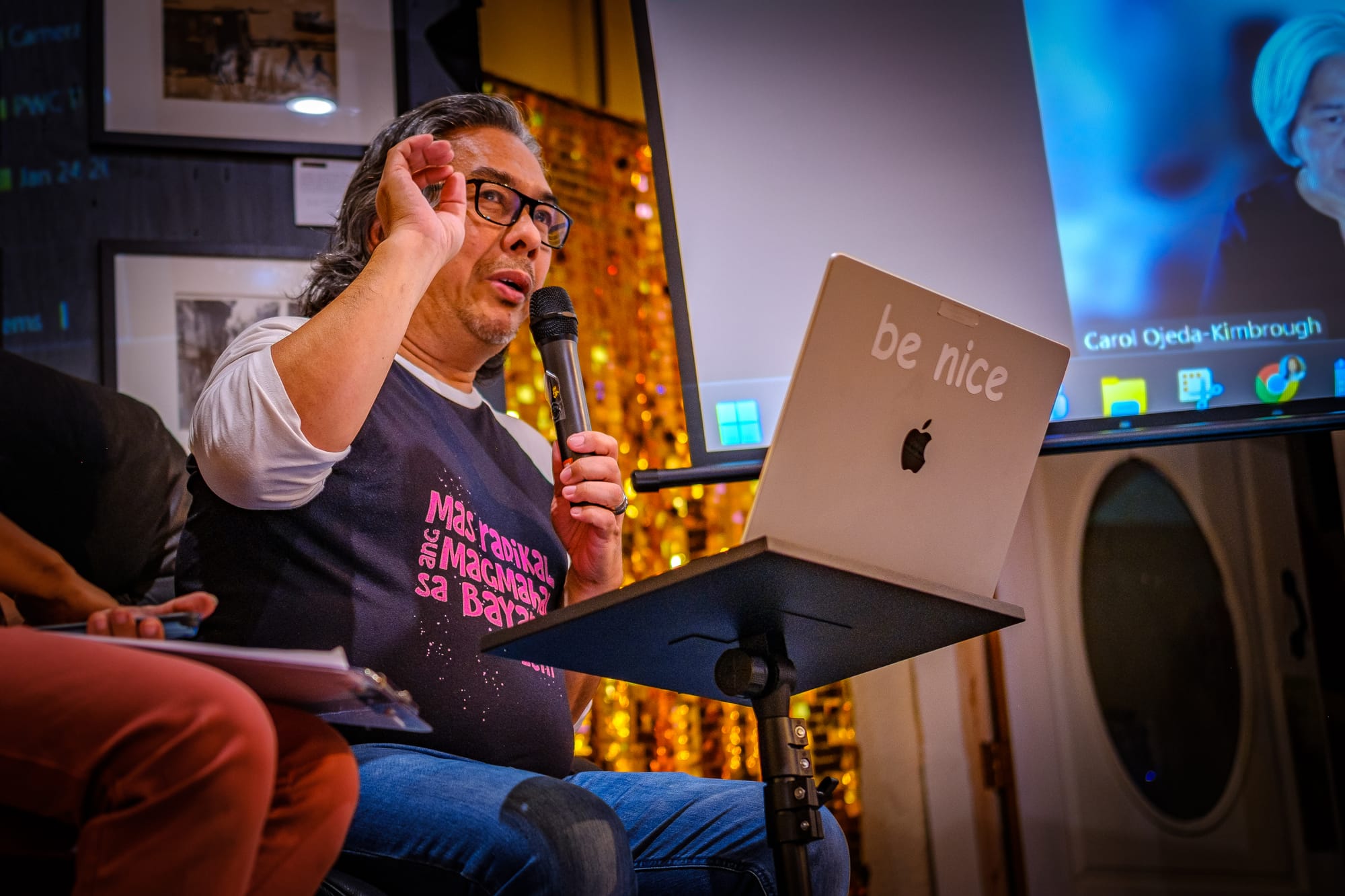
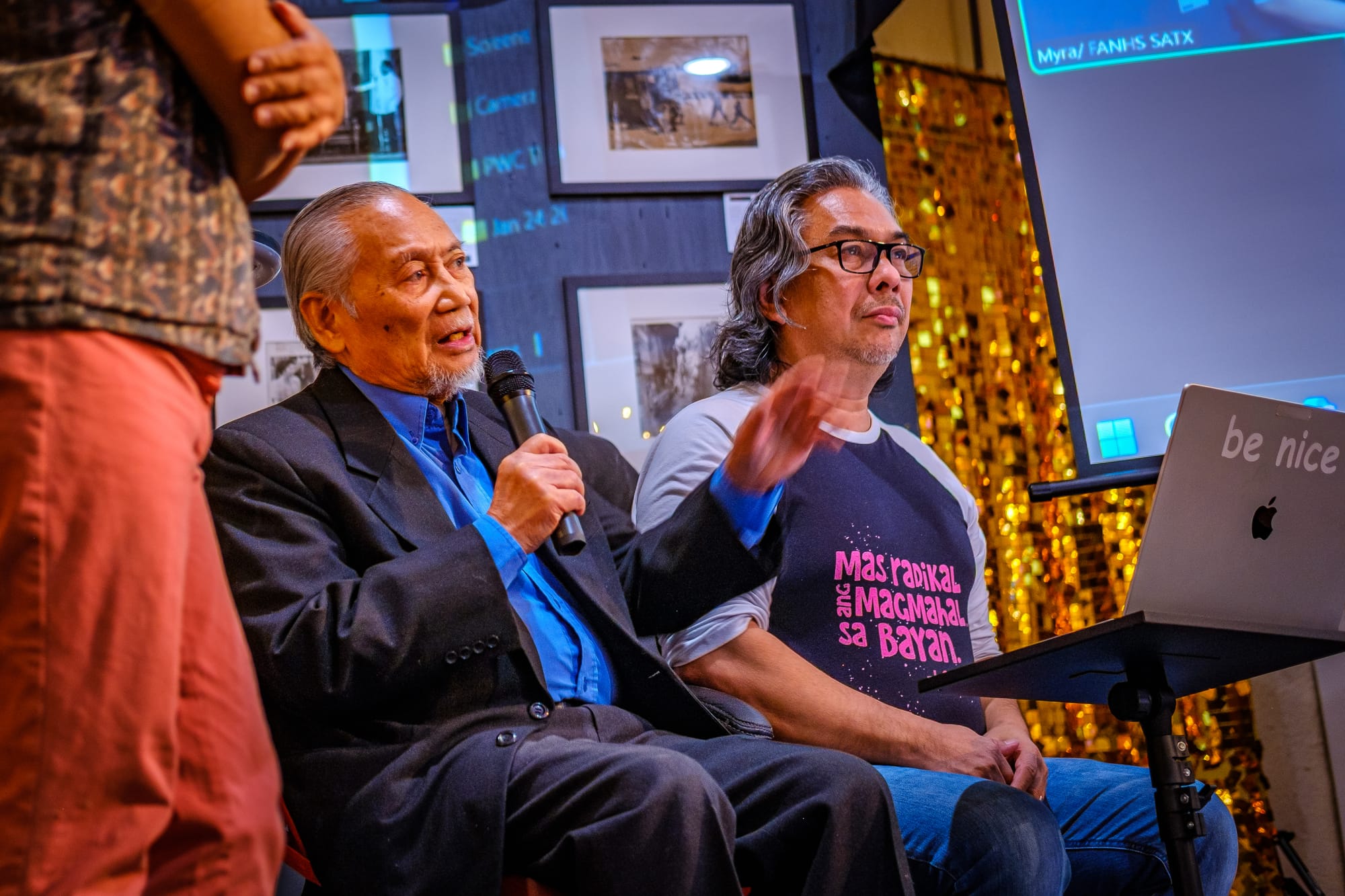
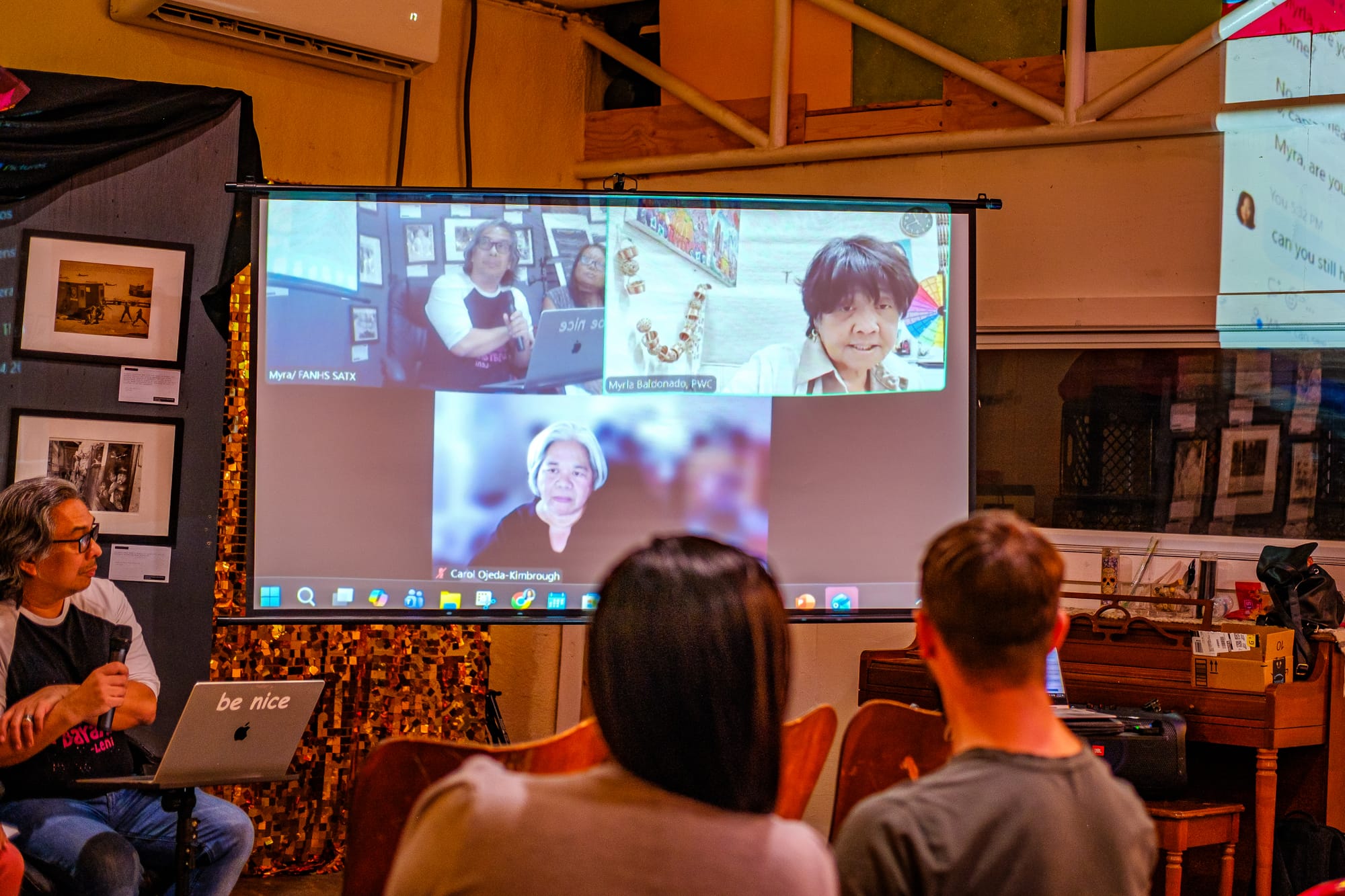
Collection curator Victor Barnuevo Velasco, a poet, author, and founding member of the Albay Arts Foundation, provided a guided tour of that history—a time during which thousands were murdered by the government and tens of thousands tortured or illegally detained—before engaging in dialogue with other survivors of the Marcos regime who joined remotely. Myra Dumapias of the Filipino American National Historical Society San Antonio (FANHS) facilitated the panel discussion, while FANHS selected the panelists to participate.
Velasco said the exhibit was borne out of a need to educate Filipinos—especially those in the U.S.—who have fallen for recent “rebranding” of the dictatorship, a rebranding that in 2022 helped lift Marcos’s son into the presidency.
“They have been campaigning and telling people that during their time there was [an] economic boom, there was peace and order, everybody was happy in the Philippines,” said Velasco. “And a lot of those folks, a lot of the younger folks that don’t know any better, don’t have the real information. And so I realized that the biggest supporters of the Marcos in the Philippines were really diasporic Filipinos, Filipinos here in the U.S.”
Researchers have also noted that the younger Marcos benefited from a global trend in “democratic backsliding” and active “rewriting” of the Marcos family story on social media (including claims that the period of martial law was actually a “golden period” of opportunity, hence the title of the collection) to sway younger voters who were not alive during Marcos 1.
“I realized that there’s a need to tell what really happened during the Marcos years,” said Velasco. “What better way to tell them, aside from those people who survived and who lived through those years, [than] these photographs that were taken and published in U.S. newspapers.”
For many in attendance who are now witnessing masked unaccountable federal agents engaging in increasingly aggressive acts of violence targeting immigrants and U.S. citizens—oftentimes supported by U.S. military operating inside U.S. cities—questions about how Marcos’s increasing belligerence was resisted and ultimately defeated were top of mind.
U.S. President Donald Trump campaigned on a promise of political retribution on his political enemies and a promised largest deportation effort in the country’s history. Thus far, he’s lived up to both promises in full autocrat mode: Masked ICE and Border Patrol agents have streamed into cities like Los Angeles, Portland, and Chicago, and Trump has offered up American cities as a “training ground” for the armed forces—actions largely forbidden by the Posse Comitatus Act.
Trump also speaks regularly about a “war” on an “enemy within,” weaponizing the federal government to go after his long list of personal enemies. Social media accounts of those entering the country are checked for unflattering references to Trump.
Most concerning, Trump confirmed recently that he is considering invoking the Insurrection Act, while federal judges warn the U.S. is sliding toward martial law.
“I’m watching what’s going on in our country, the U.S., today, and it’s very eerily familiar because of what we went through in the Philippines in the ‘70s,” said panelist Carol Ojeda-Kimbrough, who was a university student when martial law was declared in 1972.
She dropped out of school at the time to become a community organizer. Three years later, she relocated to the United States out of fear for her newborn child’s safety.
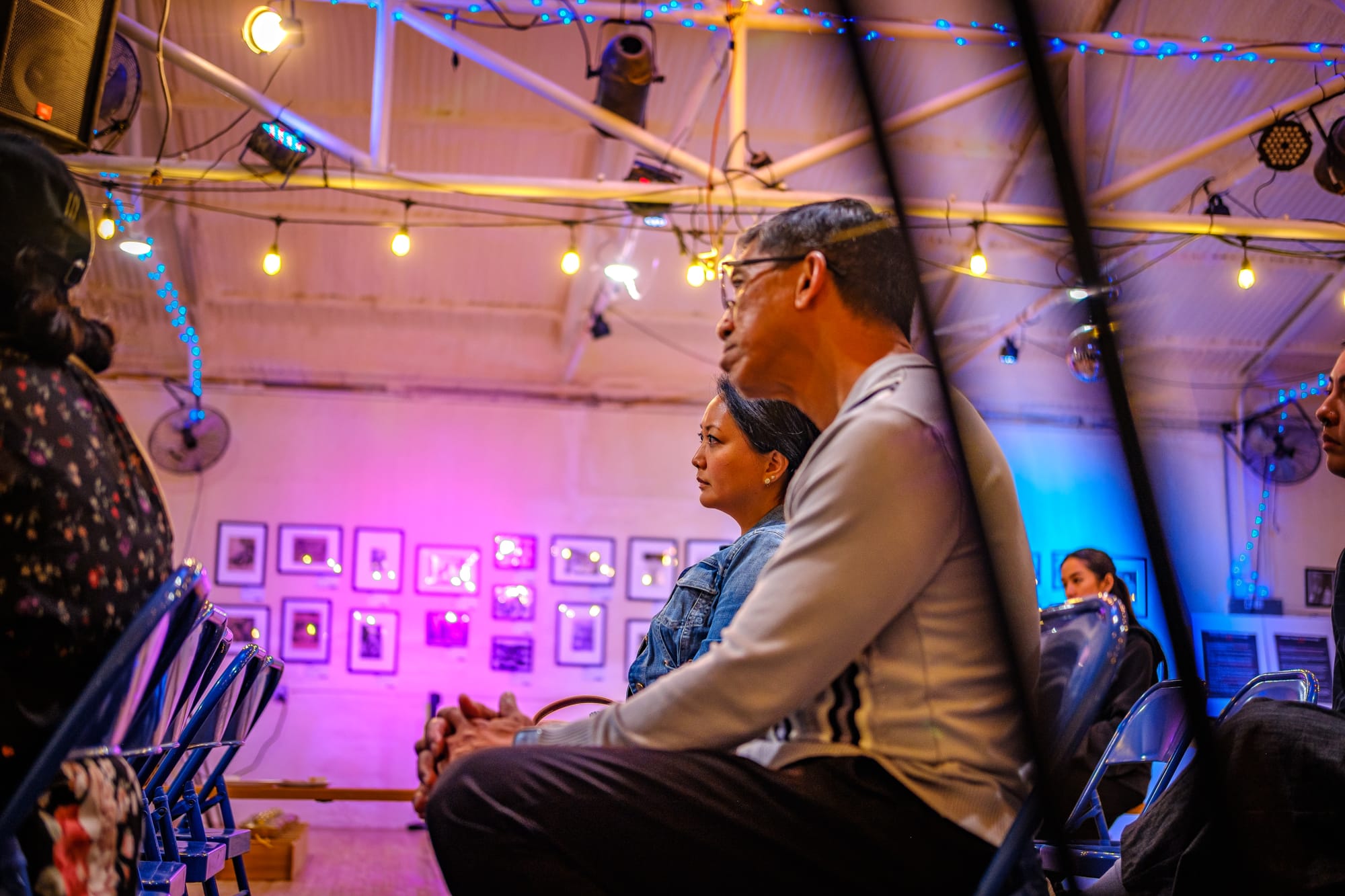
When Q&A opened following the panel, audience members asked for tips for organizing to resist the current autocratic slide in the United States.
Ojeda-Kimbrough reminded attendees of a time before social media. She spoke of “phone trees” (“everybody makes a list of 10 people to call, and those 10 people have to call 10 other people to get information across. And that’s how we got information through to the community.”) and distributing physical newsletters and flyers (“Many of the activists were not particularly religious, but on Sundays we spent more time in churches than anybody…distributing flyers.”).
She added:
“Many of us have recently participated in the No Kings rallies nationwide. And this is important because there are a lot of Filipinos that support the Trump administration. … So to be present in [Los Angeles’s Historic] Filipinotown and showing that there is a viable opposition to the fascism that is growing is important.”
“We made the difference then,” Ojeda-Kimbrough said, “and I know we can make a difference today.”
Myrla Baldonado, the director of community empowerment at the Filipino Workers Center in Los Angeles—which has been resisting ICE tactics in greater Los Angeles in recent months—was imprisoned, tortured, and raped during the period of martial law in the Philippines. While speaking openly about the long-term harms that abuse caused her, she urged strong and sustained community resistance today to prevent the further deterioration of civil rights in the United States.
“I learned the hard lesson that jail was meant to destroy your resolve to change society. Though two years seem short, they were the longest days in my life of pain and sorrow,” Baldonado said.
“It was a national democratic struggle that I joined. And there was so much hardship,” Baldonado continued. “But looking back, we have no regrets, for we were eventually able to bring the people to fight Marcos. And that’s a legacy that we all look back to despite all the challenges and the pain and the loss that we had.”
Considering the rewriting of history that helped the Marcos family return to power in spite of these horrific histories, Velasco offered a powerful reflection about the importance of memory in his concluding words.
His words are captured in this short video above and are transcribed in full below:
“What the Marcos years did to us was not only to manufacture what we think, but condition how we should think. First, we were trained to conform to the routines of checking the cleanliness of the fingernails and the length of hair as students, as grade schoolers. Then we were told who was law-abiding and how to react when a public enemy is caught or killed by government agents.
"A popular saying in the Philippines goes, Ang hindi lumingon sa pinanggalingan ay hindi makararating sa paroroonan.
Those who do not look back where they came from will not be able to reach their destination. Time becomes distance. In the past is mile markers along the highway that informed us of our life's direction and velocity.
"But the English writer George Orwell also warned us that he who controls the past controls the future and he who controls the present controls the past. But what if the past was manufactured to begin with? A curation of spectacles and pageantries and distractions by those in power? What if the past was believing curfews and banning of public gathering by more than 10 people were for public safety and not for controlling the movements of the communities?
"What if the past was being told to feel safe because the military jailed or killed subversives instead of the fact that the Marcos government imprisoned, tortured, and disappeared citizens without due process of law? I'd like to propose a different way of looking at the past by invoking the Aymaras, an indigenous people from Bolivia.
"The Aymaras believe that the past is in front of us and the future is behind us. The past is in front because it was something we have already seen and known and experienced. The future is behind because it remains unseen. In that sense, all of us walk backwards into the future, our eyes fixed on the horizon of society.
"I believe personally that the past changes every day. Even now, as you are listening to these words, this lived present is already slipping into the past. Tomorrow and the following week, in weeks and months and years, this moment will slip further and farther back from our sight into memory. How will you remember this moment?
"What will you be nostalgic about in this new regime? This new administration, this person that came back to power? Will you celebrate his return to power or a renewed energy to resist the revisions that they're doing to our history?"
-30-
Collection available to view through the month by appointment at River Alchemy of Creative Arts (2600 S. Flores 78204) in San Antonio, Texas.
Bonus Footage: Join collection curator Victor Barnuevo Velasco for a guided tour of the photo exhibit at Deceleration’s YouTube channel.


