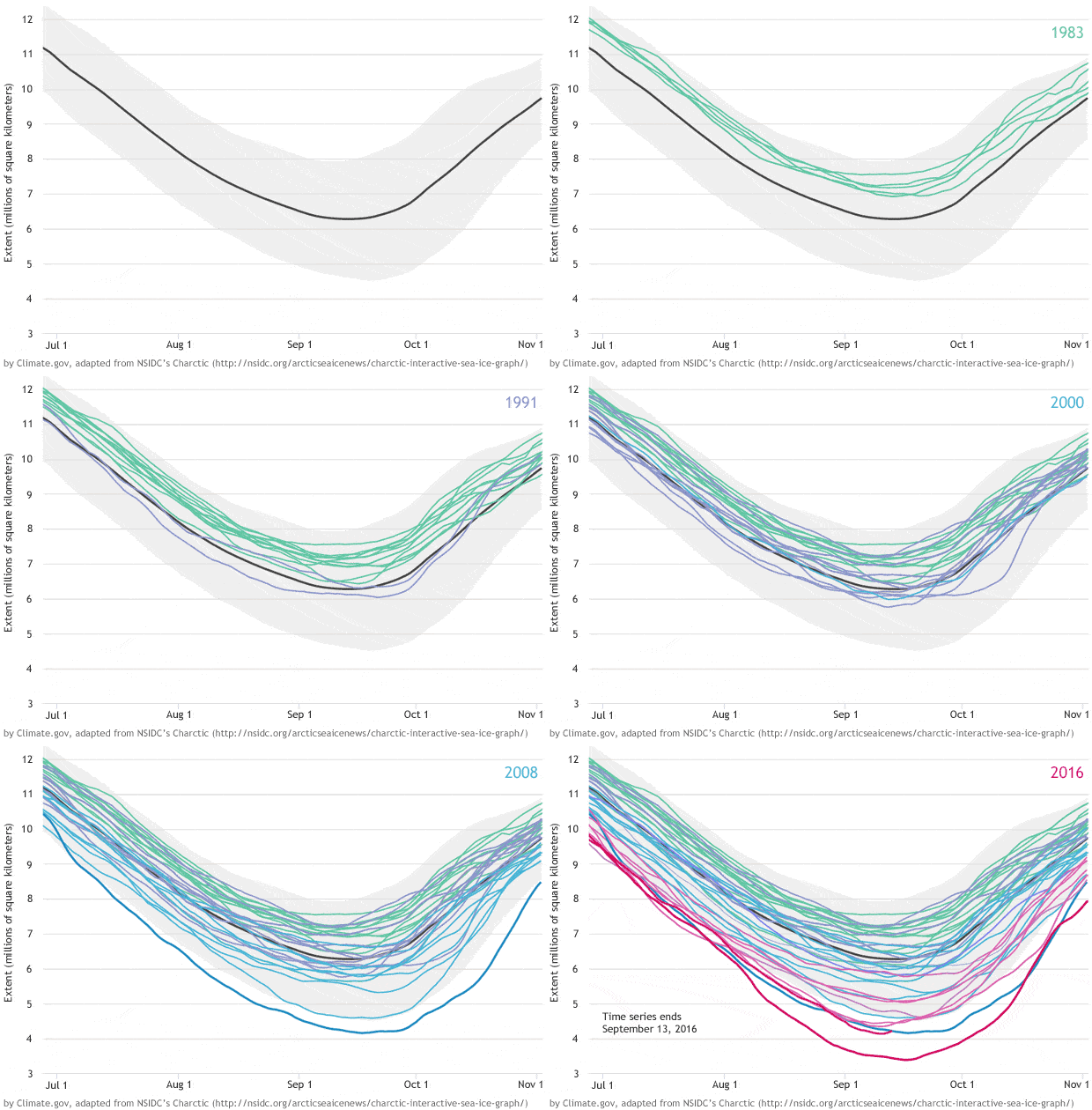
The Arctic is the fastest-warming region of our planet today, heating up at roughly twice the globally-averaged rate. And nothing illustrates the north pole’s hot flash as poignantly as sea ice, that thick mantle of shiny white stuff that blankets a region of the Arctic the size of the United States and Mexico combined during the winter that shrinks back down in the summer. Thanks to unseasonably warm winters, earlier spring thaws and long, hot summers, Arctic sea ice has been on a downward spiral since at least the ‘90s.
Deceleration Founder/Managing Editor Greg Harman is an independent journalist who has written about environmental health and justice issues since the late 1990s.
In April, one of the city’s three reservoirs received its first inflows in eight months. But narrowly avoiding an immediate disaster doesn’t mean that Corpus Christi has solved its water crisis.
‘Every state a border state’ has shown the U.S. interior MAGA’s anti-immigrant furor, but on the actual southern boundary, border residents—and the Rio Grande they share—are bearing the fuller price of ever expanding militarization.
The contract comes just a week after Customs and Border Protection Commissioner Rodney Scott said the agency would not build a wall in Big Bend National Park.
‘Every state a border state’ has shown the U.S. interior MAGA’s anti-immigrant furor, but on the actual southern boundary, border residents—and the Rio Grande they share—are bearing the fuller price of ever expanding militarization.
Deceleration speaks with Amite Dominick, founder & president of Texas Prisons Community Advocates, about efforts to force the state to install potentially life-saving air conditioning.