

The Austin-based war machinery company Saronic is eyeing the Port of Brownsville for its “Port Alpha” project to develop an autonomous “fleet of the future” (see the Navy contract here). It’s another billions-of-dollars project in an area that just can’t seem to stop getting them. Brownsville officials, of course, love the attention, while many residents near the growing SpaceX shadow are feeling the “Terminator Skynet vibes.”
Local elected officials wouldn’t name the company when asked by the Rio Grand Guardian because of the NDAs they have with Saronic, but some are using the phrase “game changer” to describe Port Alpha.
It seems the growth coalitions of the Rio Grande Valley are living in their own reality, one where benefits are assumed to follow each billion-dollar enterprise…But the rest of us aren’t sure how exactly. They always mention the jobs that’ll come, as if every person who is without one in the Valley has idle–but skilled–hands, ready to construct the next pyramid for the Port’s vision of “progress." No explanation is given as to what these corporations are providing the Valley outside of “jobs,” “economic development,” “growth,” and a litany of other terms that are both the question and answer for developing these things.
Cameron County held a public hearing on whether to grant Saronic a tax abatement last week.
I don’t deny that these companies help people living here make money that wasn't possible before. I have friends that are employed by some of them. But when you look at Census data, nothing has fundamentally changed about the area’s socioeconomics in the last decade.
Hospitals and clinics, school districts, and retail are still where most of the people in the Brownsville-Harlingen metro work. The wage growth in Cameron County is from the six-figure jobs in industries like aerospace and construction. But the rest of the industries, where the majority of people who live in the county work, did not see wages increase. In other words, high-wage jobs in certain industries, which are being paid to both people who have moved here and are from here, are inflating the average. The new wealth is not spreading, and the legacy industries of the area are hardly adjusting for inflation or rising costs generally, if at all.
Construction and science jobs are higher than they were a decade ago, most likely from SpaceX and the Rio Grande LNG project, and that’s about where new jobs in the area end. This isn’t news to anyone there, of course. Even Cameron County had to account for the area getting more expensive, giving a cost-of-living adjustment to its employees for the third year in a row.
Those new high-paying jobs in those sectors are likely why Cameron County’s poverty rate decreased by 10 percentage points since 2014. But 25% is still double the national average, despite SpaceX and NextDecade being here now. Local elected leaders exempted both from county property taxes—money that would go to schools and county services and truly be invested in the community.
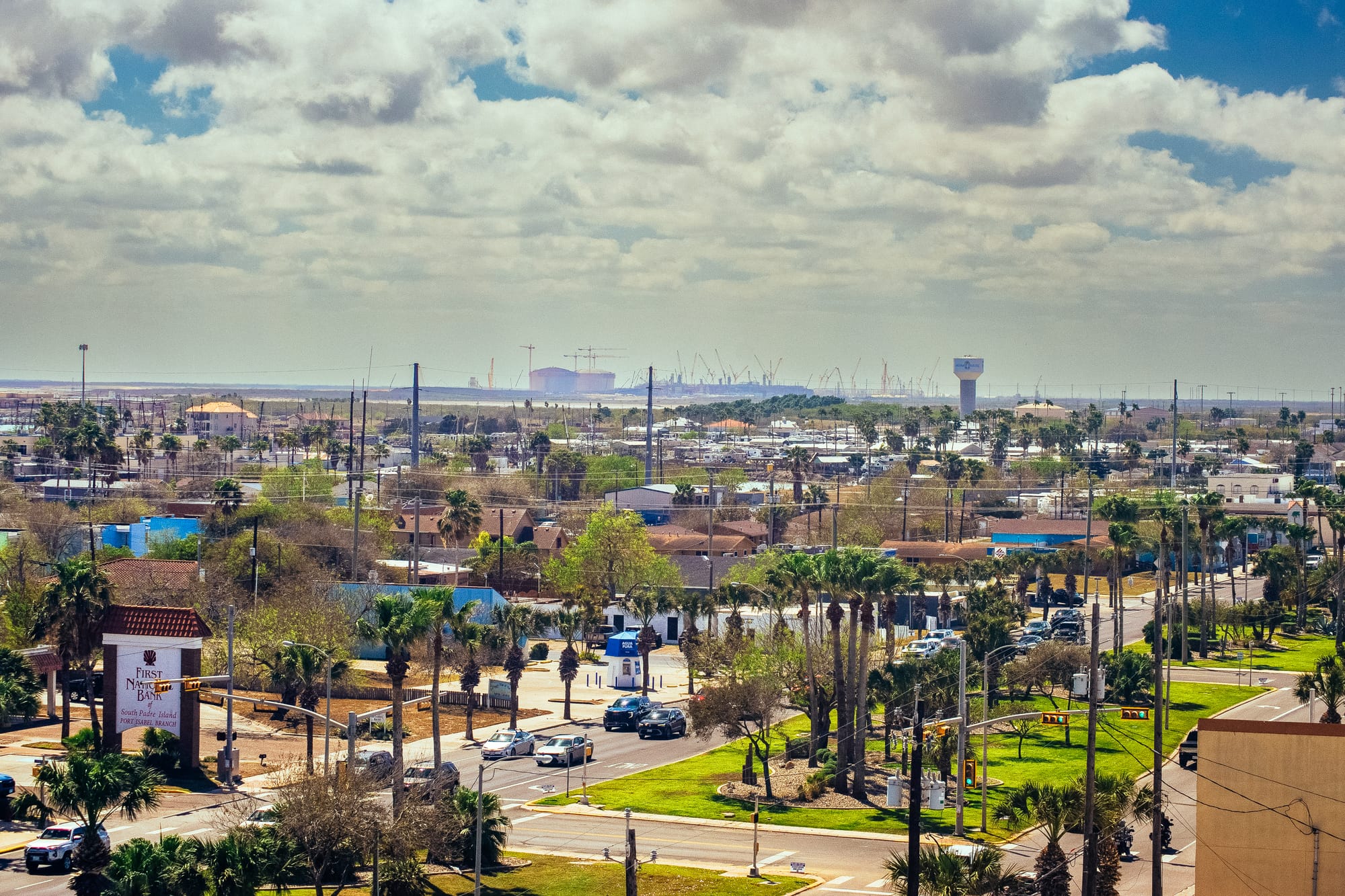
Property values in the Brownsville area are also rising, which is translating to higher rents, effectively cancelling out these wage increases for locals. From 2014 to 2024, the median property value went up 76%. The average rent in Brownsville is now the same or more than San Antonio, according to Zillow. Having lived in both cities, the thought of paying San Antonio rents in Brownsville, without any of SA’s qualities but all of its burdens, is asinine. Those rent prices mean nothing to the people who are moving from elsewhere to work at SpaceX, Rio Grande LNG, or any of the other industry projects coming to the Rio Grande Valley. Compared to California, Colorado, or Florida, South Texas housing is still a steal. But for the 10,000 Cameron County households who are paying half their salaries on housing, it’s theft of another sort.
Texas LNG once again didn’t get a tax abatement from the Point Isabel ISD, my alma mater. The school board, some of the members of which had denied the company its first tax abatement attempt years ago, unanimously denied the state abatement program, which would have allowed the company to forgo $160 million in taxes to the district over 10 years. A Texas LNG spokesperson said in a statement to local media that the ISD didn’t understand the rationale of the decision because the district would’ve gotten, allegedly, $15 million a year from the agreement. The district didn’t think the supposed $15Mx10 was worth forgoing $160M.
“Our responsibility is to ensure that every decision we make reflects the long term financial stability of the district,” Heather Scott, PI-ISD’s school board president said in a statement. “After thorough evaluation, the Board concluded that this proposed agreement did not sufficiently align with those priorities.”
Two weeks ago, I was in the land where Texas LNG is supposed to set up their scaled version of its neighbor Rio Grande LNG. There’s a small pull-off on Highway 48, just as the road lifts before curving towards Port Isabel, that used to be a picnic area before the road became the traffic artery it is now. I was taking photos of how large the under-construction Rio Grande LNG facility, which seems to spread much beyond what anyone thought it would.
I went to all of the boat ramps and walked along the edges of Highway 48 closer to Brownsville. There was construction litter everywhere: paper purchase orders, plastic wrap, plywood, and shipping materials. It didn’t come from the few people fishing there.
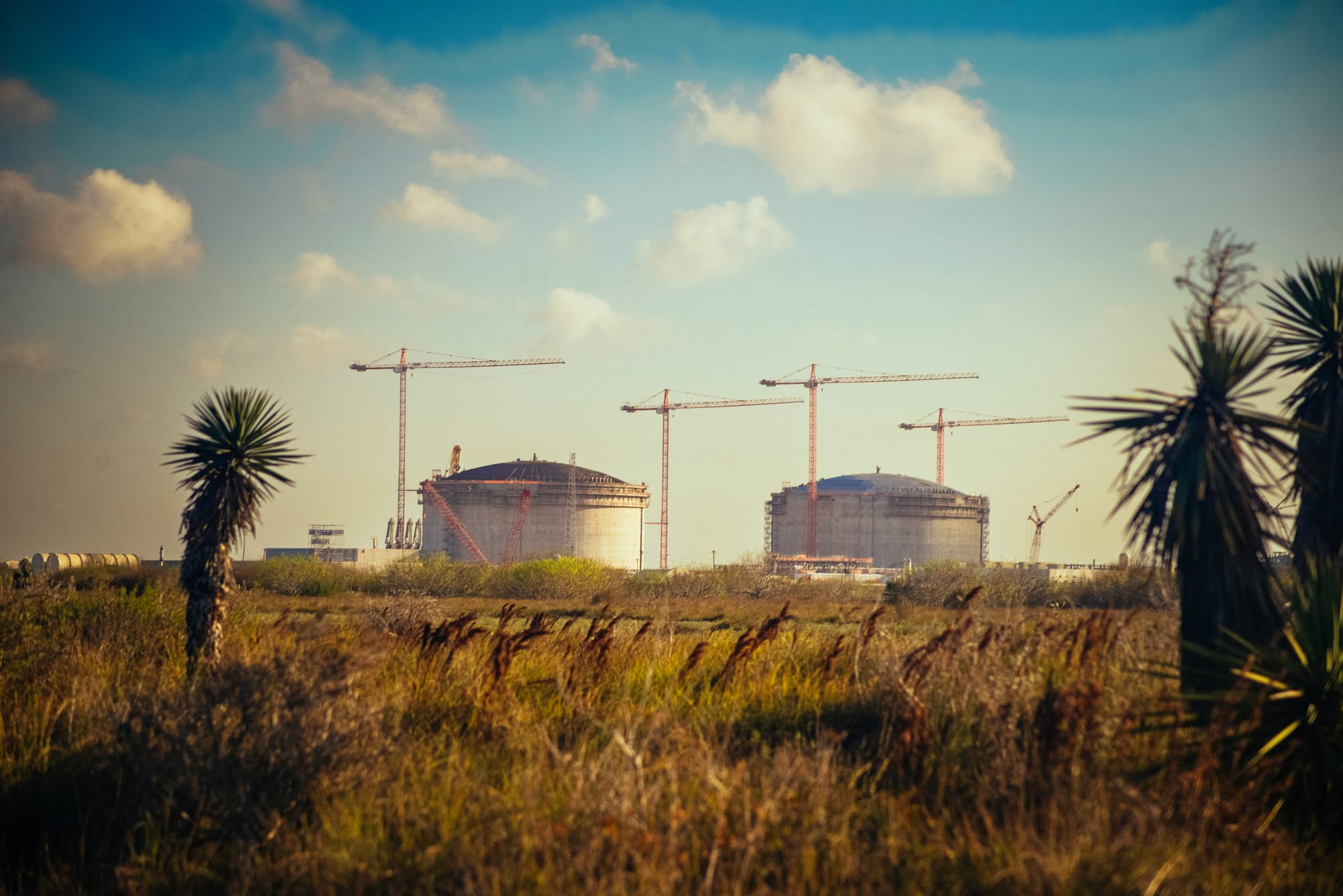
Highway 48 itself is pockmarked with potholes, more so than usual. Similar happened years ago when SpaceX was just beginning its own malignant stretch toward Boca Chica Beach. Rio Grande LNG is only different in that its making its growth a central part of its narrative, despite not having finished its first of 6 “trains,” the machinery that liquifies the gas they’ll receive from Central Texas’ pipeline network before shipping the product to sea.
That pipeline is also starting to carve across the landscape to the east side of Highway 48, running from the plant to just before Port of Brownsville’s shrimp basin. That pipeline continues into the ranches and farms in the most rural areas of Brownsville, where Bechtel is storing equipment and pipeline segments.
The all-consuming image that the pipeline and plant conjure is fitting for an area that has now staked most of its future on this project. The Port of Brownsville used NextDecade, the parent company of the Rio Grande LNG project, to make the Brownsville ship channel deeper and wider for larger ships and the international commerce they bring.
Steve Guerra, the Port of Brownsville chair, wants the rest of the county to look that way, too, as he vies for Cameron County Judge. He’ll be going to runoff with incumbent Eddie Trevino Jr., who has been just as instrumental for this industrial remaking of the port, in the same way a coin can pay no matter what side it's facing. Whoever of the two is elected will change only the speed of the port’s current direction but nothing else: one fast (Trevino) and one faster (Guerra).
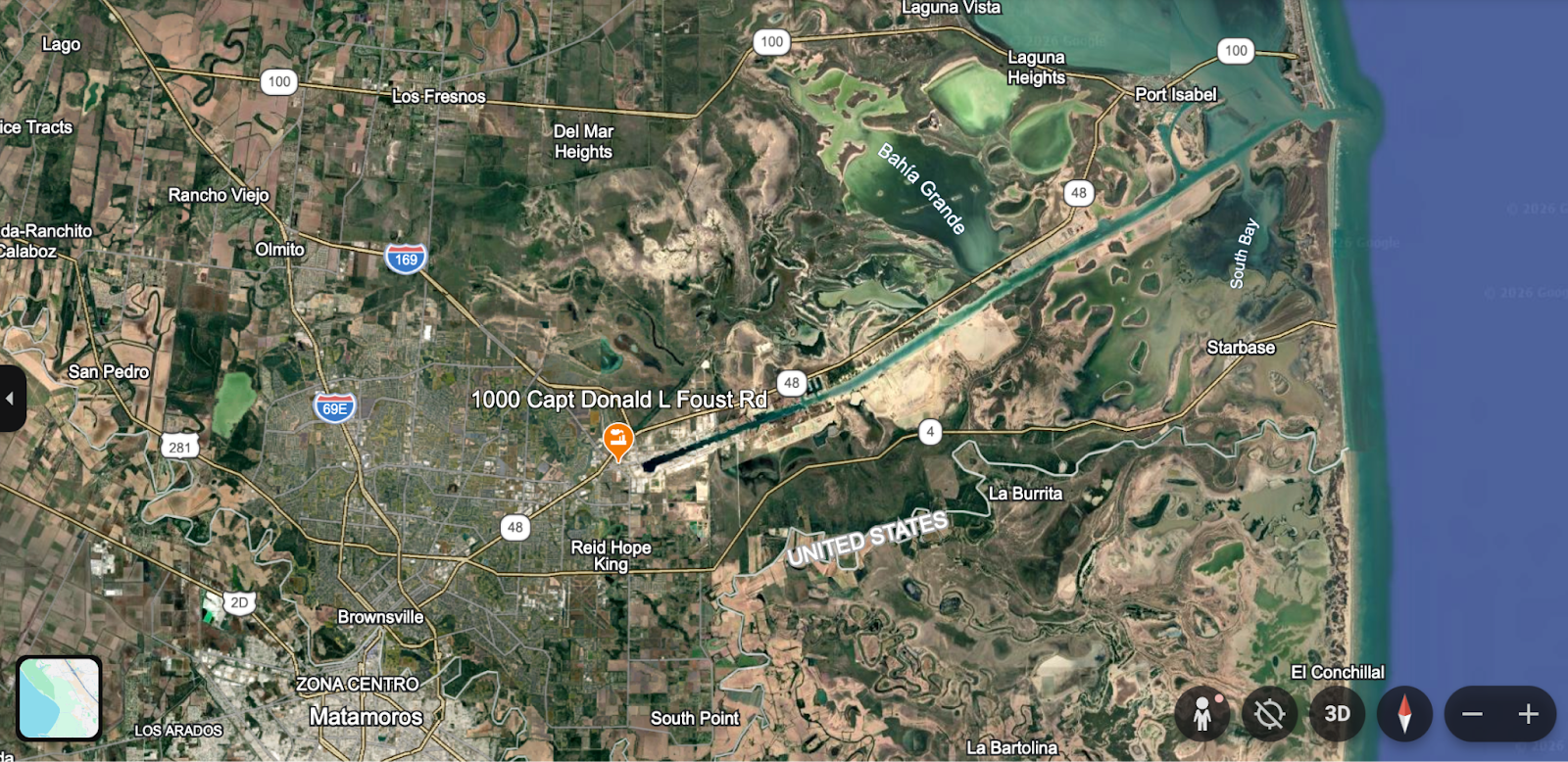
Once I reached the old picnic area off 48, I saw someone had cut the barbed wire fence that leads into the wetlands. It looked like it was done years ago, maybe when people started watching SpaceX launches from the side of this road. I crossed past this rusted splintered boundary line attempting to segregate the state property from the port and walked onto land wild, first down the loma split by the construction of Highway 48’s expansion and onto the dry basin that was once traversed for the fresh water wells deep below. And dry it is, layered in dust from the nearby imposition of metal and gasoline and unmet deadlines.
Acres of brown sea oats and saltgrass move in waves. It reeks of bobcat piss and the gulf waters.
Had there not been cars speeding just a few hundred yards away I’d have thought I was in the time before land like this needed defending. The end of our wild spaces. If the Texas LNG project succeeds, it will all be gone. Its wild return, if it were to ever, will not be in our lifetime. Nor, perhaps, anyone’s.
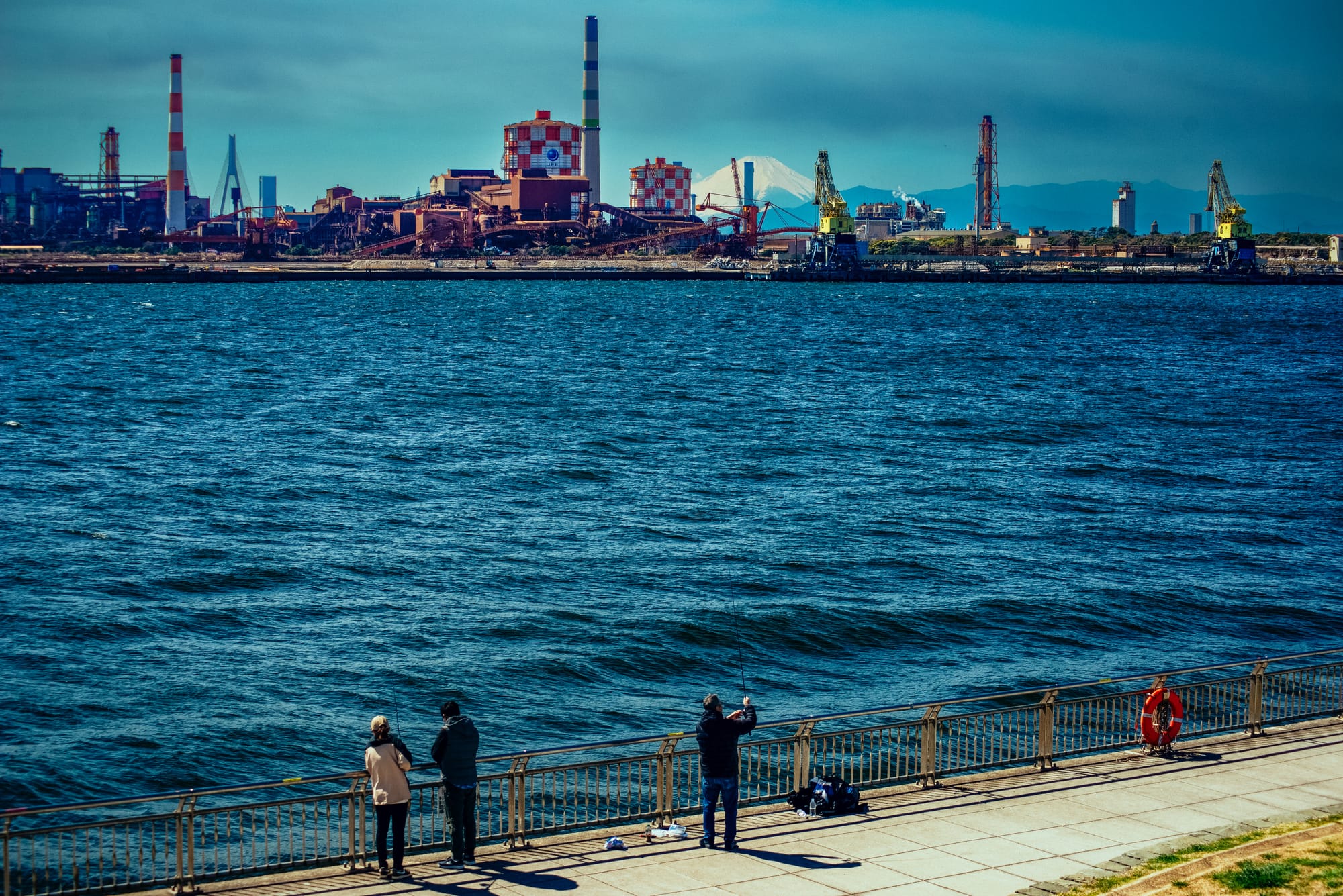
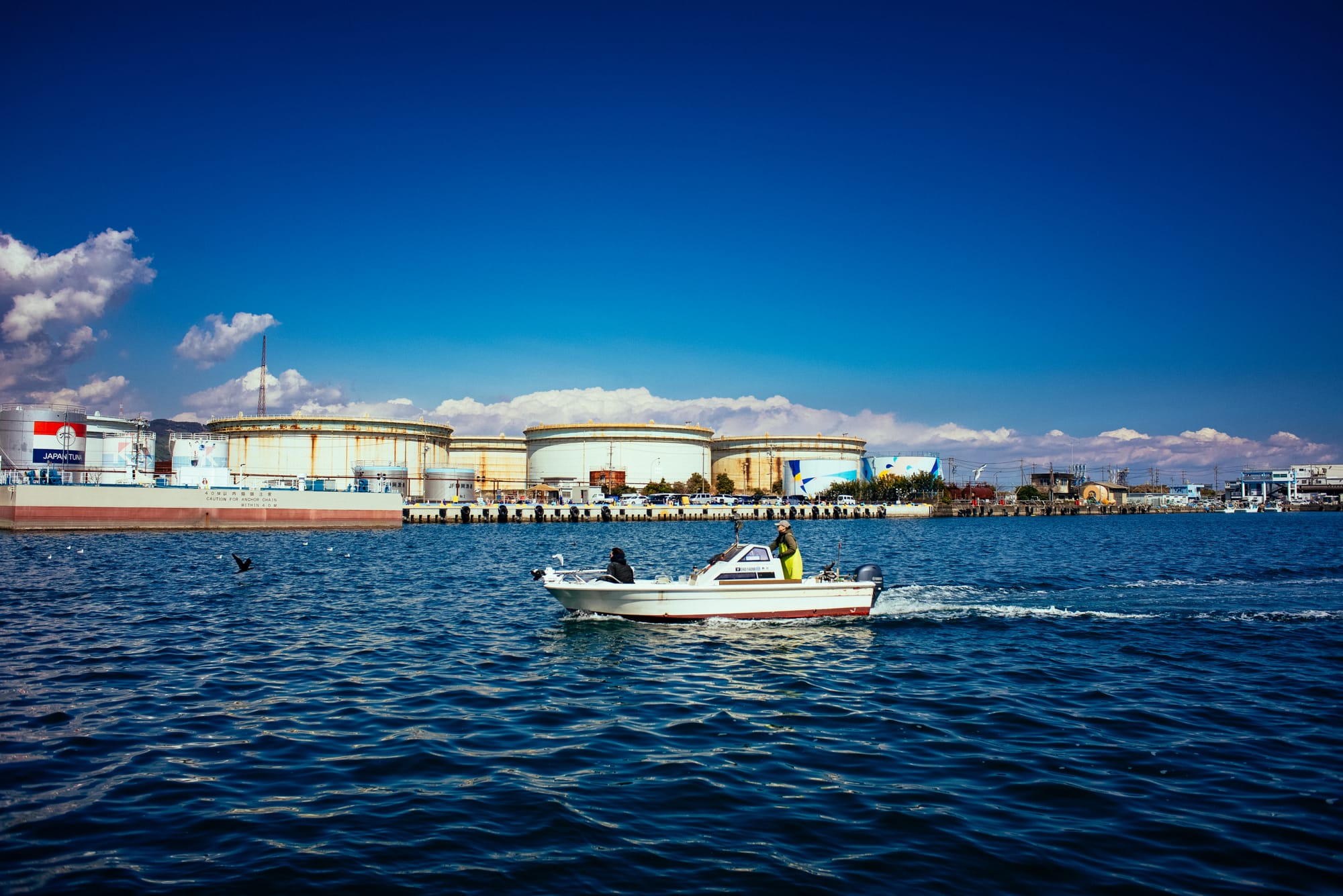
Flying into Japan, what I thought were sprawls of suburbs were actually the petrochemical facilities and ports in Tokyo Bay. It’s all been there for decades, built onto manmade islands and inseparable from the country’s economic culture. The same can’t be said for Port Isabel, where fossil fuel infrastructure is the startling visible equivalent of an escaped zoo animal.
I would also learn they have a culture out of patience with this sort of industrial development. So, Japan is outsourcing the consequences of its gas demand to whoever has the blessing and burden of living on the gulf coast.
Most people in Japan don’t know this is happening, but neither do people in most of the U.S., including in the Rio Grande Valley. While in Port Isabel, I explained to several people what the Rio Grande LNG project was, what countries were buying its gas, and Japan’s outsized role in its creation. D
espite it being one of the largest construction projects in the country, if not the world, the most basic information about Rio Grande LNG doesn’t seem to be widely known in the areas it's closest to. After I had done a few interviews in Tokyo with Japanese groups, who are protesting the country’s banks, hoping to force them to disinvest from LNG projects all over the world, I came back to my hotel to read that the U.S. president announced an oil refinery was coming to the Port of Brownsville, the first in 50 years. Local elected officials celebrated the news, with jobs and alleged billions of dollars in investment being the highlight.
Pablo De La Rosa’s reporting is the only worth reading on the subject, as of now, which points out that this refinery project is the same one that has tried to develop in the port for the last decade. And despite the company leading the project being owned by the same person who failed to develop a refinery there a decade ago, Brownsville couldn’t help but congratulate the Port. On social media, residents said clearly they didn’t want it there, or any of the other massive projects coming to the area.
Like when the U.S. president came to the city, Brownsville didn’t respond to any of what residents were rightly questioning. If the refinery fails again, it wouldn’t be the first time that the city has propped projects that went nowhere. Organizers I spoke to in Japan called their country’s investment in gas nationalistic, veiled in talks of “energy security.”
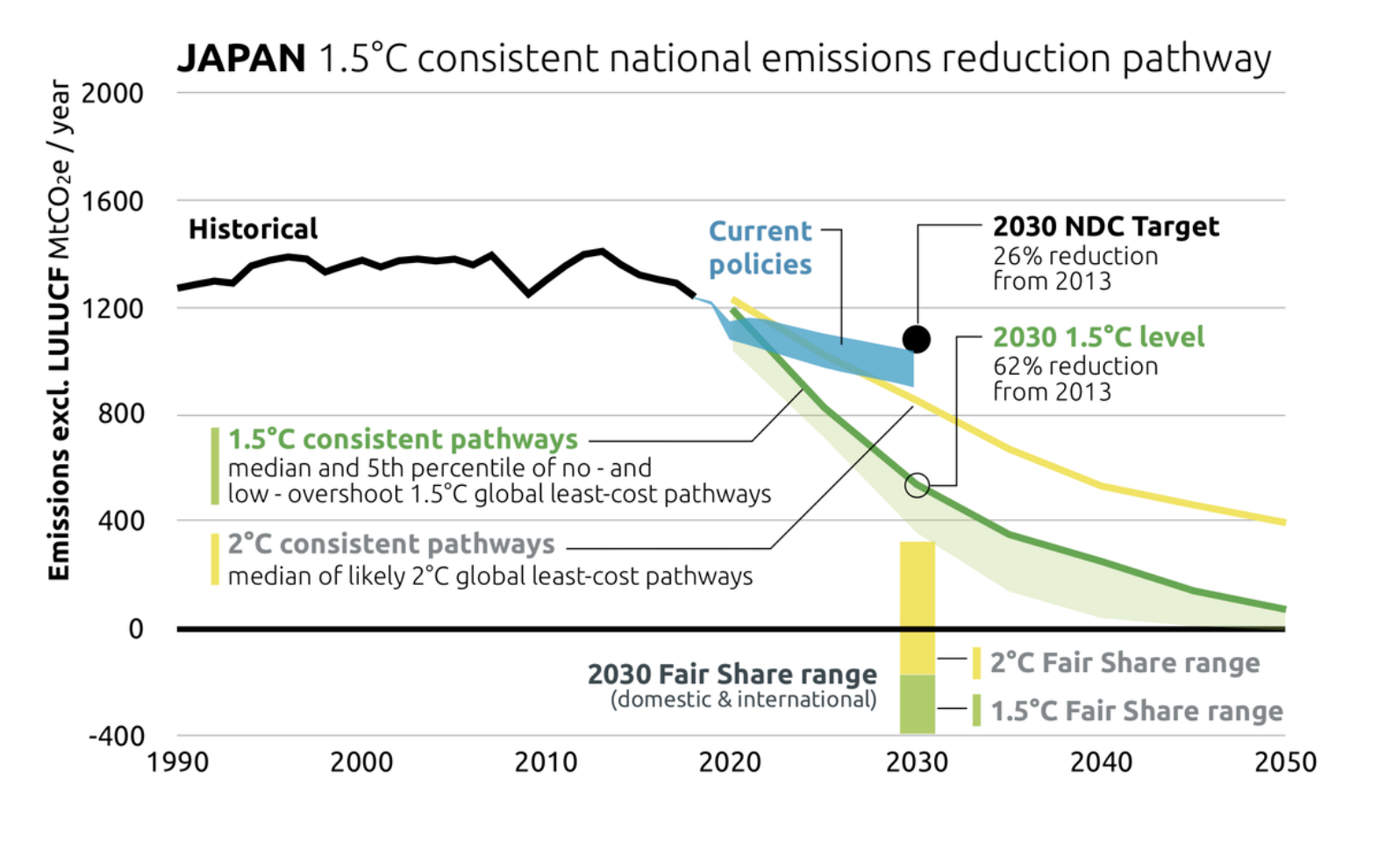
The banks that buy gas from U.S. LNG facilities or handle their finances never acknowledge the contradiction between their interior policy guidelines and the projects they invest in, these organizers said. Nor do these banks acknowledge that Japan is trying to be carbon neutral by 2050. Trajectories maintained by the Climate Action Tracker show they are failing. Beyond that, investments in the fossil fuel industry abroad don’t count either.
But Japan’s private banks will soon need to report their investments in fossil fuel projects and how much greenhouse gas they’re emitting. As necessary this is, I don’t see it changing how much the country is investing in U.S. gas.
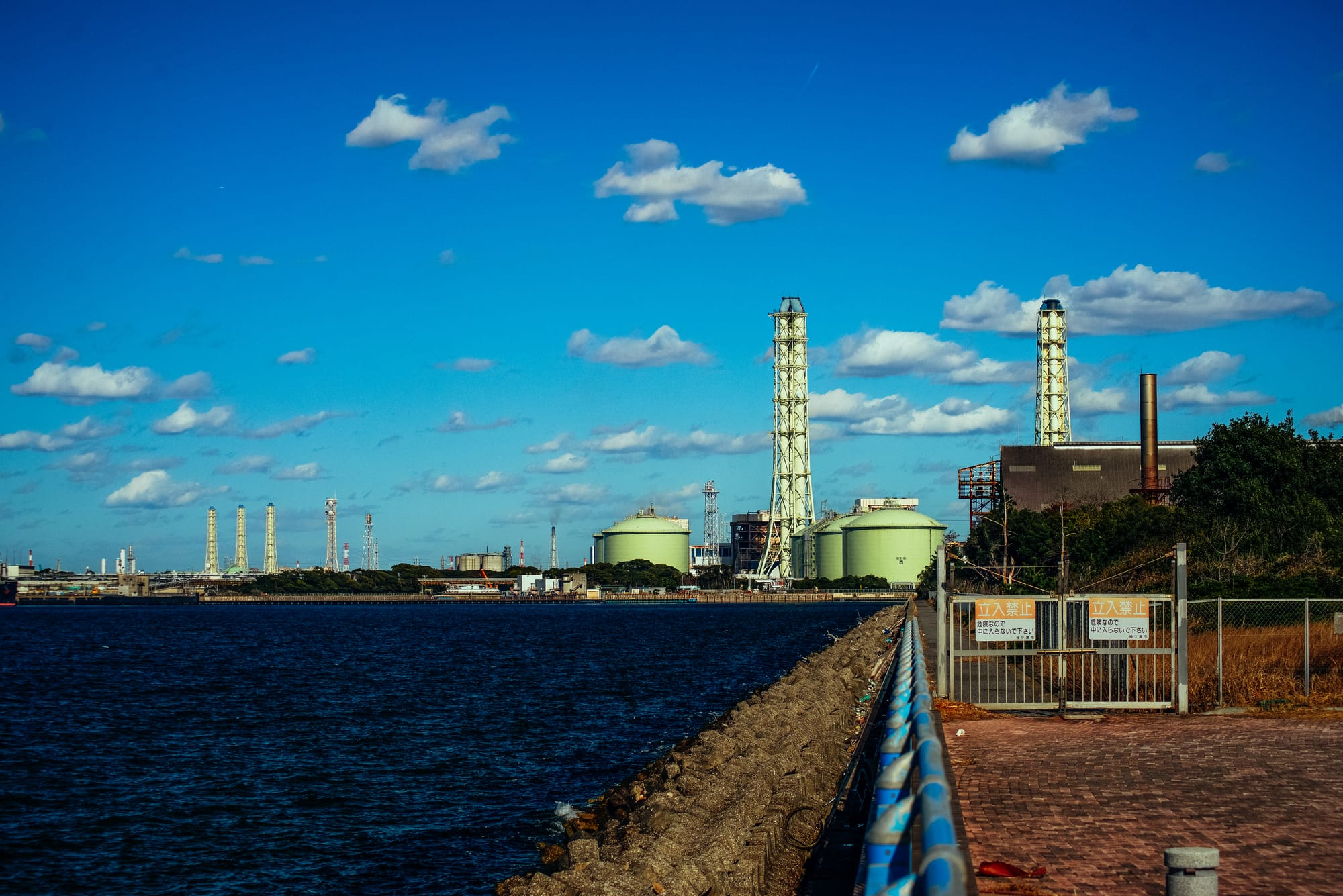
One night I got on a boat that toured Tokyo Bay. I could not discern any space of land that did not have some kind of machine or facility on it. At one section of the channel, there were flares in every direction and countless smoke stacks venting.
This was different from the Brownsville ship channel, which I had been on just a week prior, which still had pockets of wildness, ones that stretched towards South Bay. For now, anyway. Saronic wants to build its warship facility in that area still natural. Though Saronic attempted to downplay its interest in the region when news broke of its talks with the Port, PI-ISD gave Saronic a tax abatement denied to Texas LNG.
The school board president, apparently unable to see that both of these projects are part of the same worldview working to remake the region in its own dystopian image, said that they approved Saronic’s tax abatement because it had an obligation to its students to give them places to work after they graduate.
Disappointed as I am, the fact of the district praying to the same growth orthodoxy as the rest of the RGV elite doesn't and will never surprise me. In its statement rejecting the Texas LNG tax abatement, PI-ISD said its decision didn’t mean that they weren’t open to “future discussions with industry partners.”
There is an alignment happening among elected offices, school districts, and chambers of commerce here, one that ensures there are no barriers to extracting profit from all of the land still unpaved or pipelined. It’s an alignment that guarantees our collective displacement from our homelands.
It’s as cynical and willfully ignorant as it gets; some in power certainly know this. When you believe in nothing, the true nature of growth nihilism, making these decisions is easy. There’s nothing grounding you. Not land, not to other people.
One day that same ship channel tour from Port Isabel will have more pyramids on display, and more ships to maneuver past, if such an anarchic ramble were still possible. The water in that ship channel is nothing more than a means to an end for the Port of Brownsville and, by extension, Cameron County and the City of Brownsville.
For them, all of the gulf’s water is. For them, history and the future are cycles of booms and busts forever. The latest Greater Brownsville EDC report shows how far this industrialization has spread beyond the city’s coastal appendage. Conveniently for the City of Brownsville, it’s not into the city itself but its outer edges and the Laguna Madre.
People who live in Shimizu, Japan, do not see it this way.
I met with residents there whose resistance shut down an LNG project. It took a few years, but they were successful, in part, because Japan’s political leadership, and its corporations, culturally, seem more receptive to listening to their coastal communities and their concerns about existential threats to their livelihoods. My colleague, Reuben Brown, who I’m reporting with in Japan, and I tried our best to explain that the entire chain of elected leadership in Texas, from local to national, would never take such a stand on behalf of community.
The corporations even less so. That said, Japanese bank MUFG, subsidiary of Mitsubishi UFJ Financial Group, is the main financial advisor behind the Rio Grande LNG project. Texas LNG, which just hired a contractor to build its facility, has arranged the same relationship with Mizuho, another Japanese bank that’s also involved in the Rio Grande LNG project.
My and Brown’s reporting on Japan’s attempts to remake the gas market, and offshoring the consequences of doing so to U.S. coastal communities, will be published just before summer.


