The federal government reportedly closed on the purchase of a 640,000-square-foot warehouse on San Antonio’s East Side this week that is expected to be used to house thousands of detained people moving through the growing national deportation-industrial complex. The sale of the property by Oakmont Industrial Group at 542 SE Loop 410 was resisted by local elected leaders and community members.
“ICE detention centers are centers of documented atrocities,” Councilmember Jalen McKee-Rodriguez (D2) said in a recent video.
“Families are torn apart. People are denied medical care. Human dignity is routinely violated. These facilities do not belong anywhere in our communities.”
But there was little local government could do to prevent the sale.
The United States Immigration and Customs Enforcement (ICE) agency is buying up warehouses across the United States as they detain an unprecedented number of people—nearly 75,000, according to a recent count. This is the most ever in detention in the agency’s 23-year history.
"It is absolutely a record, certainly in modern times," Doris Meissner, a Clinton administration official who led the Immigration and Naturalization Service, told CBS.
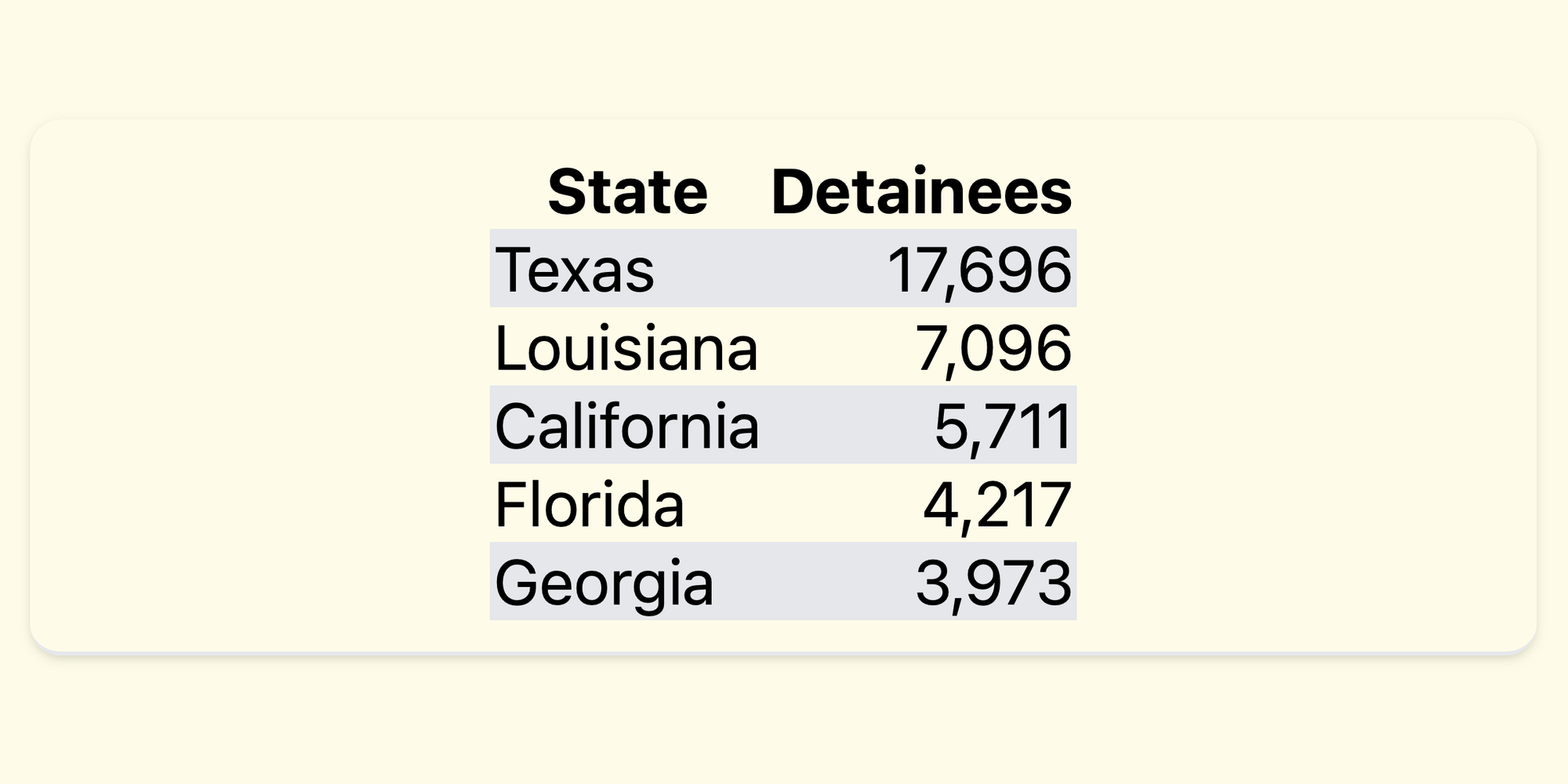
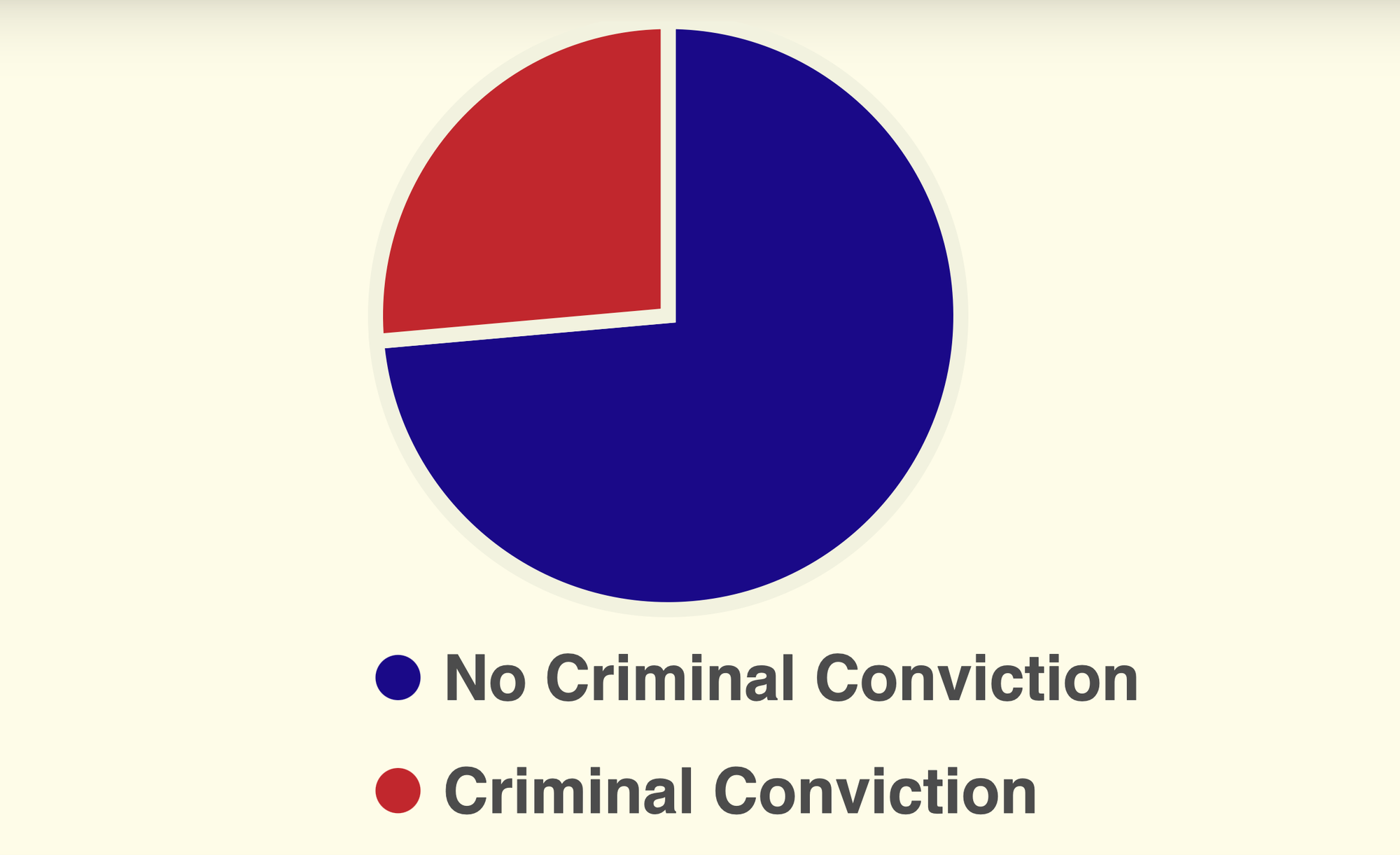
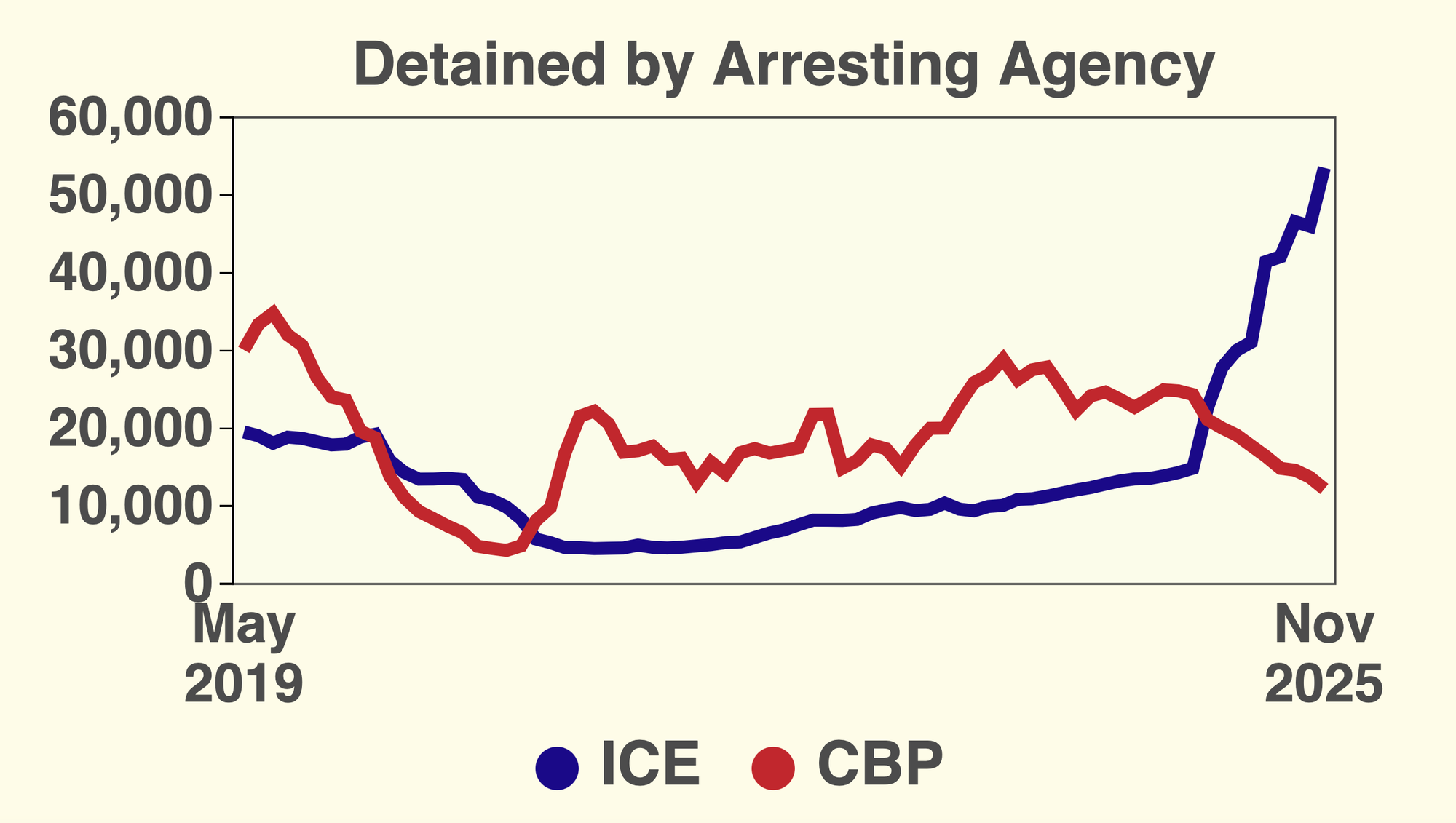
Among rising ICE detainees, vast majority of detainees have no criminal record. Graphics: TRAC
According to the Transactional Records Access Clearinghouse (TRAC), which describes itself as “a data gathering, data research, and data distribution organization that was founded in 1989 at Syracuse University,” roughly two-thirds of those being held have no criminal conviction of any kind.
Among the 25 percent who have a criminal record, most involve minor offenses, such as traffic violations, according to TRAC.
Texas, due to its geography and prominent deportation-industrial history housed the most people in detention, according to recent data.
As Deceleration has reported previously, numerous lawsuits and judge’s orders have dogged ICE detention over conditions. One federal judge compared a facility outside Chicago to a “concentration camp.”
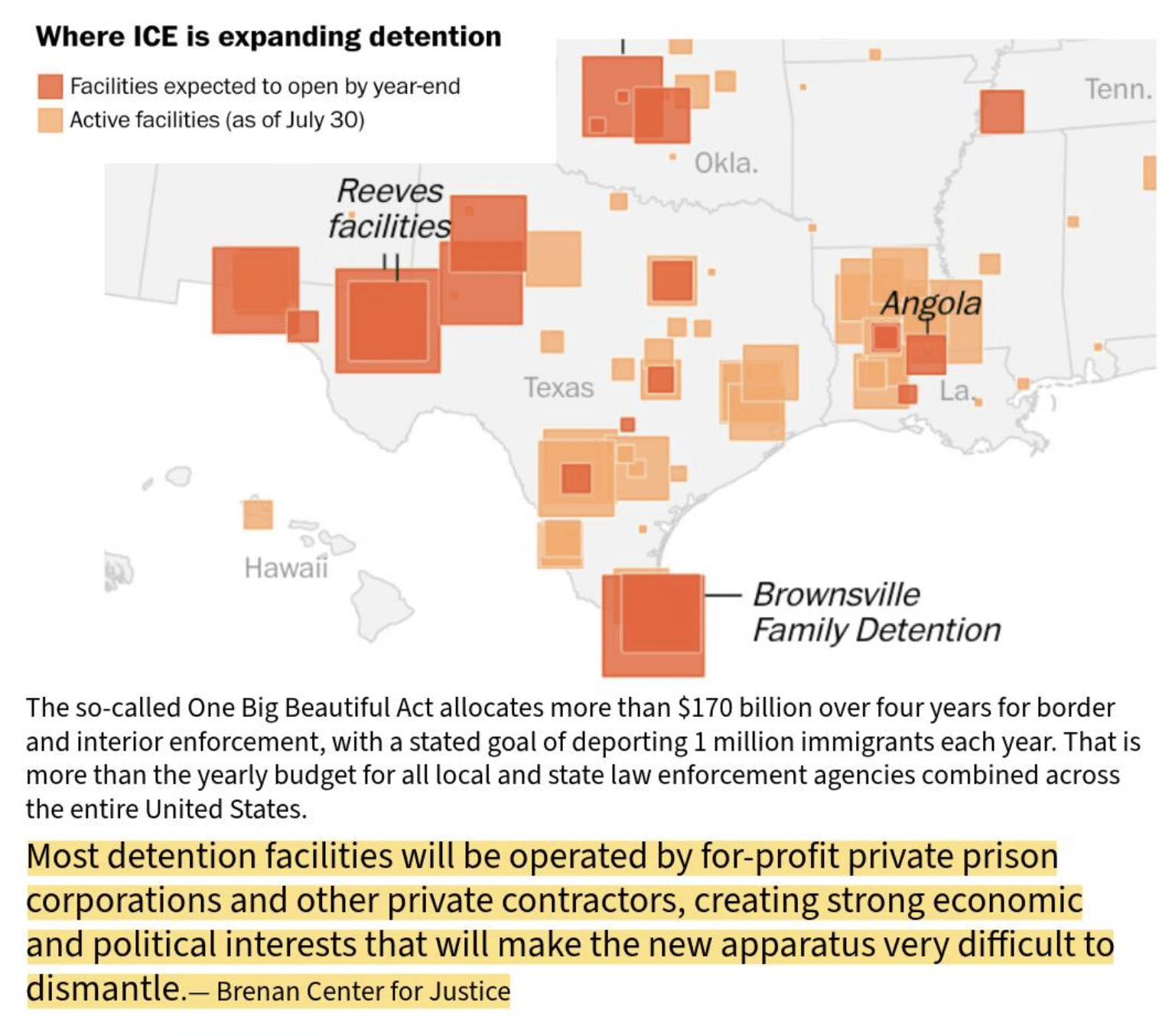
ICE is sprinting to expand capacity. It's unclear if capacity will improve conditions at facilities mostly run by private for-profit corporations.
Already in 2026, ICE has killed nine people. Last year, a record-setting 31 people died in ICE detention.
Also unclear is how long individuals and families would be forced to stay at facilities such as this one planned for San Antonio, with an anticipated capacity of 1,500 (though most facilities are filled well over capacity).
The Dilley family detention center is officially described as a "processing center" and intended to be a short stop only. But attorney Eric Lee speaking at a press conference recently said he currently represents a family of six who have been incarcerated at Dilley for eight months.
"They have suffered from deprivation of medical attention," Lee said. Additionally, after the 18-year-old daughter spoke out to the media about their conditions, CoreCivic's staff engaged in "retribution." She was separated from her family and denied visitors ever since.
In a federal order that freed recently detained 5-year-old Liam Ramos from Dilley, Federal District Judge Fred Biery chastised members of the federal government for their indiscriminate attacks, including on children.
“The case has its genesis in the ill-conceived and incompetently implemented government pursuit of daily deportation quotas. Apparently, even if it requires traumatizing children," Biery ruled.
"For some of us, the perfidious lust for unbridled power...knows no bounds.”
McKee-Rodriguez has been among the most outspoken of local leaders who fought to stop the sale, urging residents to exert pressure on the sellers of the property.
Recently, a Canada-based company backed out of a sale to ICE in Ashland, Virginia, after learning its intended use, according to Raw Story.
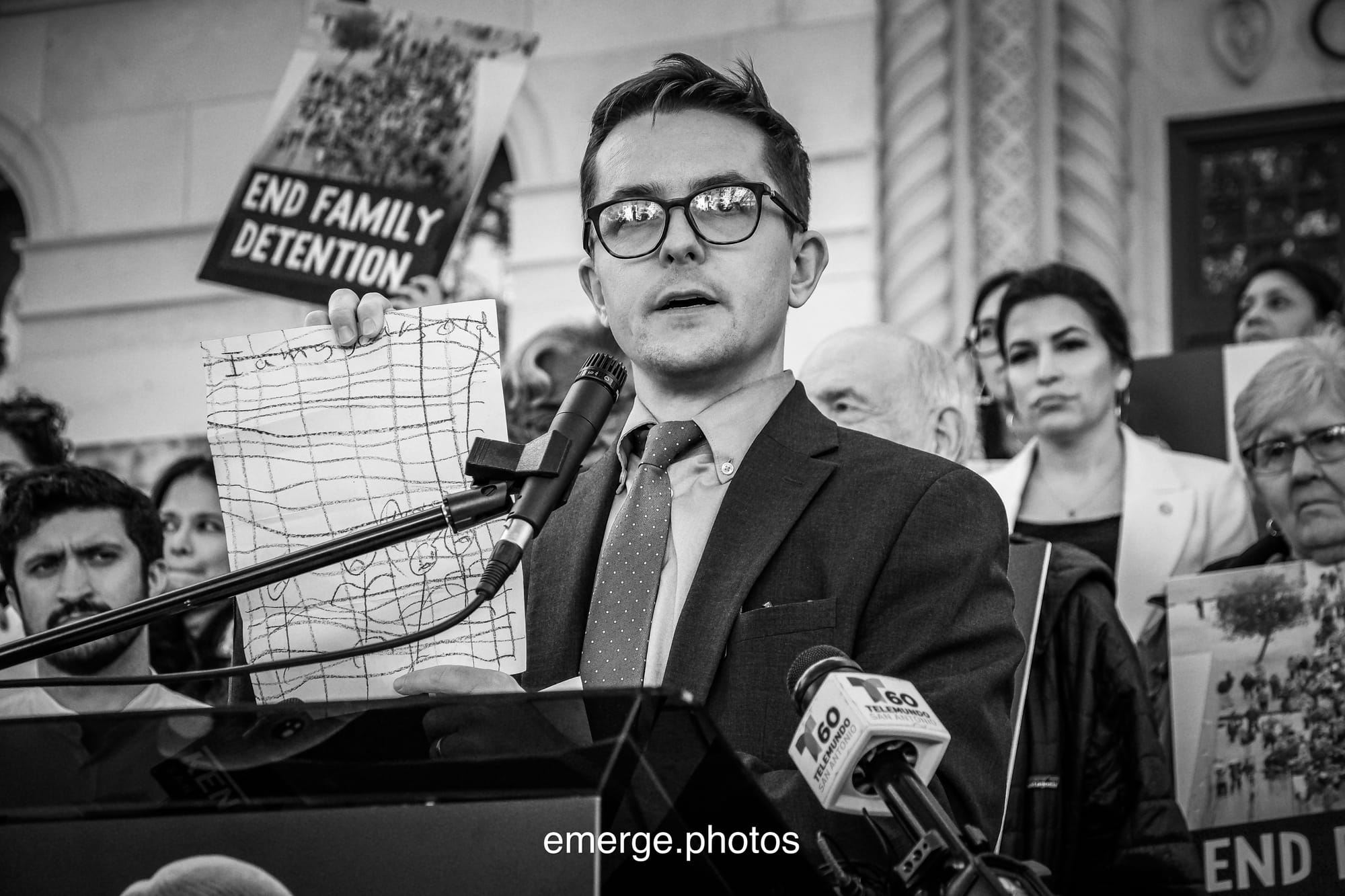
At a recent press conference, U.S. Rep. Joaquin Castro described the suffering of Liam Ramos and his father, saying they should be release "immediately" and ICE dismantled.
Lee shared the artwork of one of his clients at the press conference. This visual impacted Texas state Rep. Barbara Gervin-Hawkins, who told the San Antonio Observer:
“Wednesday, I saw drawings from children in detention — stick figures with tears, standing behind fences,” Gervin-Hawkins said. “Now they want to build another one of these places right here on the East Side? Hell no. I’ve spent 30 years building up this community. We need jobs, not jails.”
ICE has already spent hundreds of millions of dollars on warehouses elsewhere in the U.S. as its deportation network expands. Yahoo News reported that ICE is seeking as many as 23 warehouses beyond Texas, including “Minnesota, Indiana, Louisiana, Missouri, Mississippi, New Hampshire, New Jersey, Pennsylvania, and Virginia.”
A neighbor of the San Antonio location told KSAT they were opposed to the sale.
“I don’t want to be outside, and my kids be outside, and we see someone get taken,” they said. “That would be really scary.
In Estancia, New Mexico, an ongoing campaign exposes chronic unsanitary conditions at CoreCivic's Torrance County Detention Facility.
"I just want to make this statement for the people outside that believe that...everything is OK with CoreCivic and that the facility is providing for everything that a detainee’s supposed to get, but it's not the truth," said one detainee.
"It's been almost three weeks that we haven't been with water, with drinkable water. ... And if we do, we get a jug that is for 40 people. A jug that is only maybe 5 gallons is not even enough for 10 people. ... There's a lot of things going on that are making people sick."
A San Antonio campaign is growing calling on Council members to declare a moratorium on detention facilities in the city.
Kansas City, Kansas, reps recently used zoning laws to enact a five-year moratorium on all "non-municipal" detention facilities in that city.
One legal expert told the Kansas City Star that the federal government could still overrule that moratorium—but only if it planned to operate the facility itself, which hasn't been the pattern with ICE.
“It would be really highly unusual for the federal government to suddenly want to operate its own federal detention center," Georgetown University law professor Sophia Genovese told the Star. "And that would be the only way to overcome this ordinance — is to operate its own federal detention center.”