

Welcome to Deceleration In Depth, where we are growing solutions for an overheating world. We highlight the latest global, national, and regional developments in climate and environmental justice to better inform local action. Deceleration is rooted in San Antonio and the South Texas bioregion but our concerns and enthusiasm are broad. Pitch us your story idea at editor@deceleration.news.
- Click any story below to log in to our new website
- Become a paying supporter today—with benefits!
- Review Deceleration on Apple Podcasts or Facebook or ... wherever.
- Forward this email to friends; grow the work.
- Subscription info at the bottom of every email.
What do you want us to cover next? Members may leave a comment below.
REPORTING

Thousands of Heat-Related Deaths Go Uncounted in Texas Each Year, New Research Finds
Existing systems record only ‘one-sixth of the statistically estimated heat deaths’ in Texas, a new paper by a Texas A&M researcher finds.
Greg Harman | Deceleration
Texas officials are undercounting heat-related deaths every year, missing thousands of deaths, according to a trio of models run by a Texas A&M-based climate scientist—deaths that may otherwise motivate policymakers to respond to a long neglected (and accelerating) public health crisis.
“Official Texas records captured only about one-sixth of the statistically estimated heat deaths, though this undercounting has improved over time,” concludes a new paper by Andrew Dessler published earlier this month in the journal GeoHealth.
“These findings highlight the need for better heat death tracking systems and expanded protection programs for both extreme heat waves and routine hot weather as climate change brings more frequent and intense heat to Texas,” writes Dessler.
Researchers have struggled in the face of poor record-keeping to accurately track heat deaths even as temps have been rising for decades.
Related Podcast: 'Bill Barker on Extreme Heat, City Planning, and Policies to Save Lives'
ARTS & LETTERS

Smash Fascism While Blasting These 10 Texas Tunes
Bad Bunny and the Boss aren't the only ones decrying federal abuses. The resistance in Texas is remarkably fertile, as these critical artists prove out.
James Courtney | Deceleration
In the world of music, there exists a seemingly endless potential for joy, for creating authentic community, for educating, and for emotional catharsis. Perhaps music is not always thought of as such a powerful social force, but that’s exactly what it is.
Chances are that right now, if you give it some thought, you can think of at least a few great songs or artists that have used music to fight for justice, to raise awareness, to give spiritual sustenance to mass movements. Music can serve as a powerfully educational and uniquely energizing force within the context of movement-making or simply awareness-building. History, from Nigeria to Cuba, from Radio Free Europe to Vietnam, is full of examples.
In an effort to spotlight regional artists making music making a difference by responding to right here, right now, we’ve compiled a list of ten recent songs by Texas artists that will leave you yearning to make the world a better place—or at least recharge your battery for that good fight you’ve been fighting.
The list is by no means exhaustive and it certainly gives away our geographical location: over-familiarity with the San Antonio music scene is the sole reason it is over-represented here. However, we’d love to hear your recommendations! Send your favorite recent Texas protest music to editor@deceleration.com and you just might find it explored in a future follow up to this article. Viva the music of movements!
REPORTING
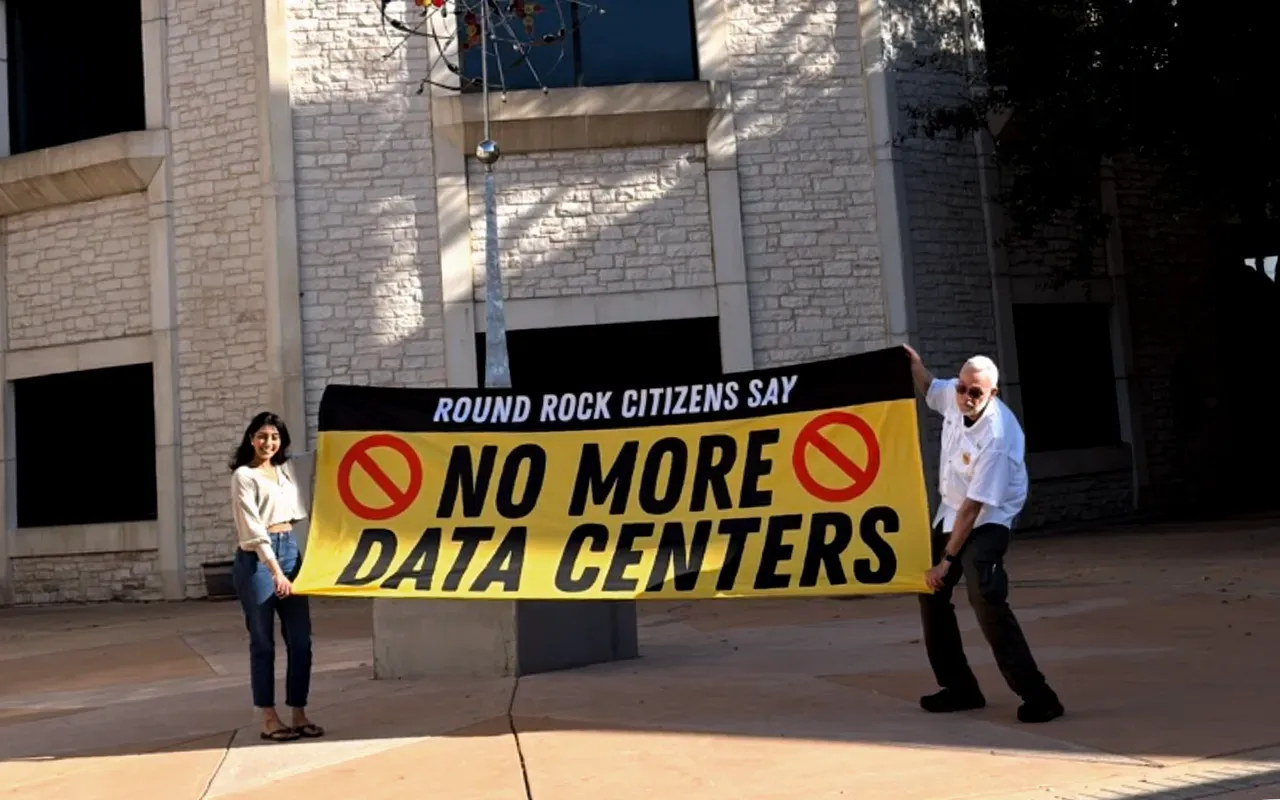
Round Rock Texas Approves Ninth Data Center Over Strong Community Resistance
City of Round Rock is 'business friendly ... resident hostile.' A Q&A with Gary Oldham of Protect Round Rock
Greg Harman | Deceleration
Earlier this month, Round Rock City Council approved a rezoning request to allow Skybox Data Centers to become the ninth data center in this city just north of Austin. The vote paves the way for Skybox to begin construction on their third facility in the region, adding to similar facilities in nearby Pflugerville and Hutto.
Due to what some residents describe as shoddy community outreach, eight data centers were approved and moved to construction before local residents noticed—though they quickly formed up into a potent force of opposition. Among those was Gary Oldham who, alongside his wife Pamela, created the Protect Round Rock website and began to fill community meetings with neighbors skeptical of their community transforming into a "hot spot" for artificial intelligence infrastructure.
Oldham spoke recently with Deceleration about their experience raising awareness of the project, and the stonewalling their efforts faced from local elected leadership. We first shared this interview last week with subscribers of our Water & Power newsletter, while also highlighting a similar effort in San Marcos that resulted in a win for data center opponents.
Community members in both cities told Deceleration just how difficult it is to fight these developments when local governments appear to be functioning not to empower and encourage residents in managing the affairs of their communities, but instead to facilitate the transfer of water and power to the data center owners at the expense of those they are sworn to serve. The following has been edited lightly for context and length.
ALTERNATIVE FUTURES
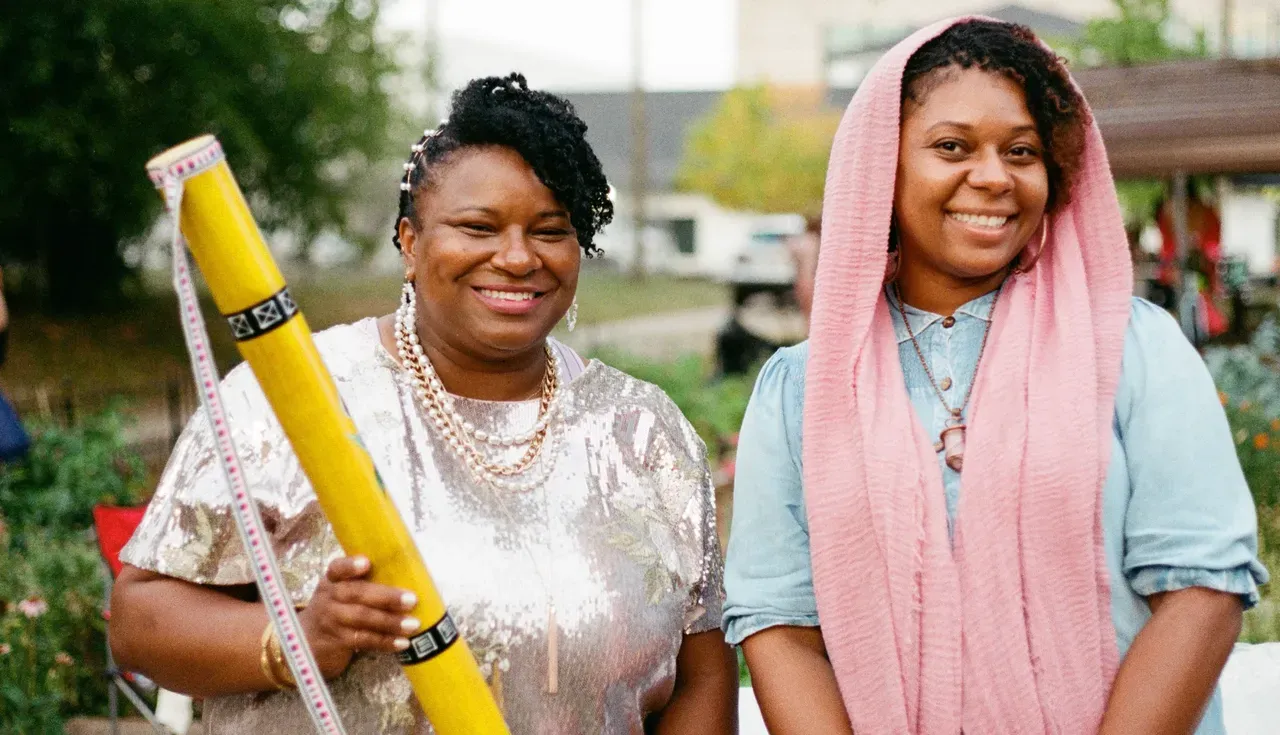
Black Communities Are Building the Future
Exploring the new documentary, 'Grasping at the Roots,' from the Climate Justice Alliance.
Many, if not most, Americans today understand that the United States would not—could not—exist but for the enslavement of millions of Africans over the span of centuries. Emancipation, however, did not mean the end of oppression for Black people. Instead, it exposed them to new forms of exploitation like sharecropping and chain gangs, both of which helped the post-Civil War South to rebuild its economy.
Geography also imposed no constraint on oppression.
As Black families fled north looking to escape racial terror and access new opportunities, the communities they landed in became the dumping grounds for the toxins, residues, and wastes produced by the swelling fleet of factories that the United States built out during the wartime booms of the 20th century.
Black people have long been the pawns America has manipulated in its gambit for global economic hegemony, sacrificing entire communities if such violence would allow some piece of the country’s industrial army to advance down the ranks and assert dominance in the never-ending geopolitical chess match played between world powers.
Filmmakers Keenan Rhodes and Leah Derray explore the arc and impact of this legacy in the first part of their new documentary, Grasping at the Roots, produced by Climate Justice Alliance.
RECENT STORIES
 Victoria Valenzuela
 Martha Pskowski
 Truthout
EVENTS
 Deceleration Staff
TODAY!
 Deceleration Staff
March 8, 2026
 Deceleration Staff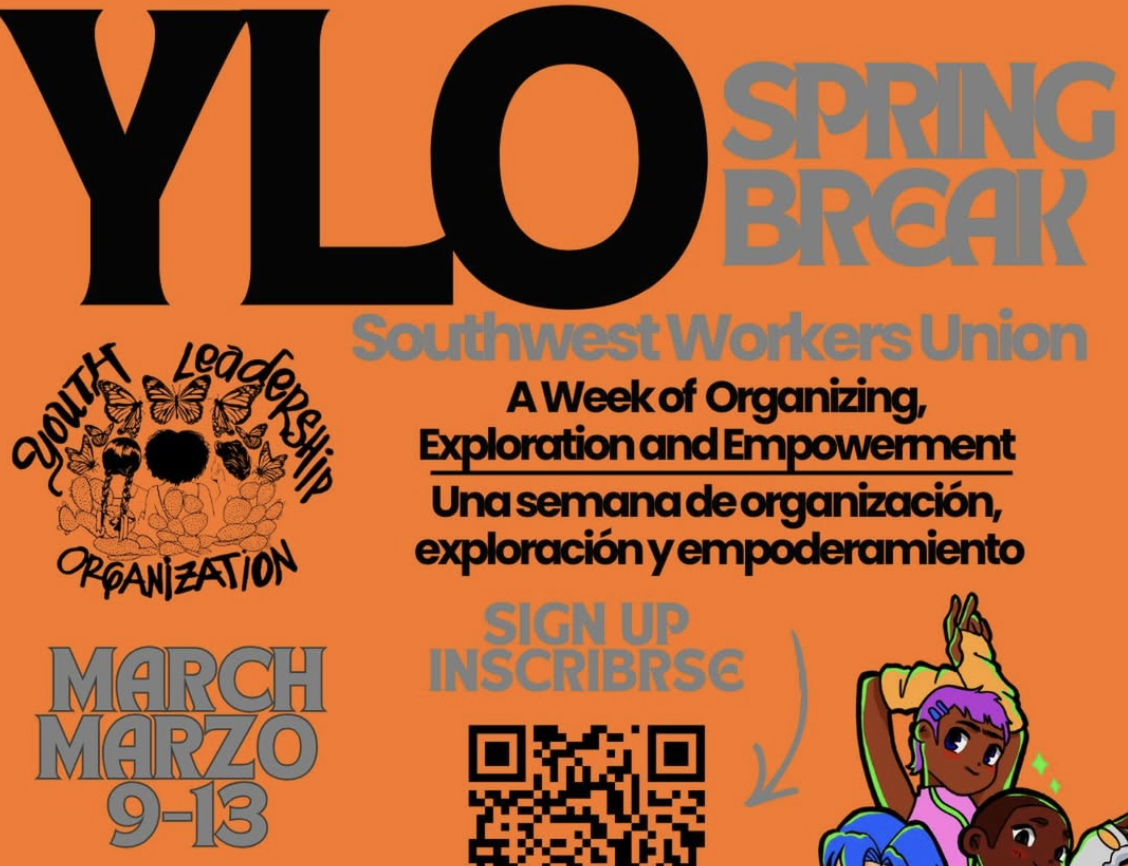
March 9-March 13


