

George W. Bush ushered in an era covert mass surveillance, extraordinary renditions, and a highly secret drone-powered assassination program. Though pledging to break with the policies of his shadow-hugging predecessor, President Obama veered into the dark as well. By the time he left office earlier this month, Obama had pursued a record-breaking eight cases under the U.S. .Espionage Act. This is more, as Rashed Mian points out at the Long Island Press, “than all US administrations combined.”
Donald Trump rose to power scapegoating the media and calling for the plugging of leaks-mainly those that have already so tarnished his legitimacy. The intelligence agencies he now claims to be “one thousand percent” behind, were directly to blame, he asserted, for the public’s ability to read a dossier suggestive of a deep and highly criminal relationship between him and his campaign and the Putin regime in Moscow.
This is the man collecting federal lawsuits in his very first week in office. Whose unreleased tax returns detailing global business dealings scream of conflicts of interest and personal aggrandizement all the louder because of his decision to keep them in the dark.
Trump refuses to release his tax returns, so we have no idea how far his foreign entanglements (as international loans and investments become known once you go to work for the American people) go. He refuses to divest from his company, so we have no idea how current and ongoing business dealings may influence his policies.
In other words: Trump has carved out a yawning no-go zone harboring huge secrets that he intends to keep. That will take huge and undemocratic effort.
Already he has shut down any and all press communication from multiple federal agencies to the media or public. It is unclear how far this directive has spread, but it is broad. Press Secretary Sean Spicer says it is temporary to aid the unsteady transition period. But after repeatedly pushing blatant lies to the press corps and (therefore) the American people, few are willing to take Spicer on trust.
The result is a lot of fear over the state of our democracy and encouragements such as:
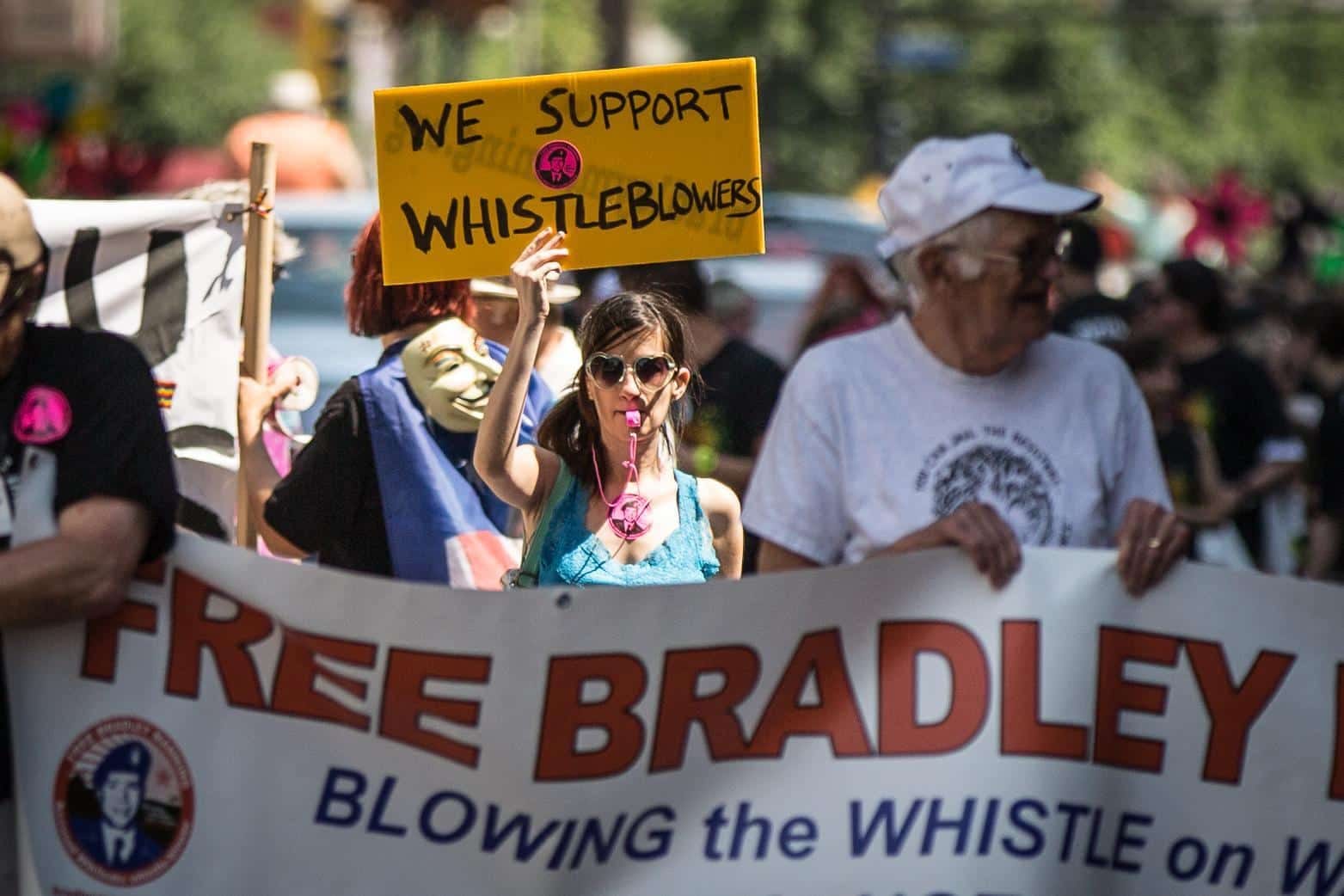
Whistleblowers and leakers (often the same) are about to become some of the most important people if the republic is to be saved.
— Dan Gillmor (@dangillmor) January 24, 2017
Whistleblowers at EPA, CIA, FBI, every single agency. You know what your job is. Who do you answer to? The American people. https://t.co/vLdLooMzvZ
— Xeni Jardin (@xeni) January 24, 2017
Here’s a list of dozens of news orgs with a @SecureDrop for any EPA whistleblowers out there: https://t.co/f9qoXnueCS https://t.co/oVNaOdkBGL
— Freedom of the Press (@FreedomofPress) January 24, 2017
Still need some direction? Consider the following guide.
Via Joe Davis/SEJ Watchdog:
Leaking is as American as apple pie — a key source of information for journalists and an important check on abuse of government power. With political conflict on the horizon at the U.S. Environmental Protection Agency and other agencies, the value of confidential communication between government employees and journalists is sure to go up.
So it’s important for government agency leakers and whistleblowers, and their journalistic colleagues, to be prepared. Hence this Leaker’s Guide.
First, know that leaking is legal, unless you are dealing with classified information — and there is only a tiny amount of that at EPA and most federal environmental agencies. Still, leaking and whistleblowing is usually dangerous because of the possibility of retribution against the leaker.
Anonymous sharing of information with the news media can still be highly effective
Retribution against legitimate whistleblowers is actually illegal under the federal Whistleblower Protection Act (originally enacted in 1989). The protections from that law have proven increasingly toothless over the years. The Office of Special Counsel, which is supposed to protect legitimate whistleblowers, has failed to do so in many cases.
So be aware as a source that while formal complaints to protect whistleblowers may not often work, anonymous sharing of information with the news media can still be highly effective, if leakers feel they can trust reporters.
“Only work with media you know and trust,” one veteran agency leaker advises. “Do not let your name be used.”
To help safely and anonymously communicate tips, leaks and documents, many news media outlets have set up online portals using technology like SecureDrop (see more on specific news organizations below).
But good common sense on the part of leakers is probably more important than advanced web portals. Some things to remember:
- Don’t call from your work phone or email from your work account
- Use anonymous or public internet accounts (e.g., a public library)
- Use web anonymizer technology, such as the TOR Browser
- Use strong encryption
- Remain anonymous until trust is established
- Remove from documents any information that may identify you (e.g., your name on a distribution list)
Among the news and other organizations whistleblowers can trust are:
- Washington Post: These are the people who brought you Watergate. And while they may have fallen some notches in decades since, they have an editor, Marty Baron, who will stand up (see the film “Spotlight”) and an owner, Jeff Bezos, with pockets deep enough to take on a lawsuit. The Post’s SecureDrop portal is here.
- The New York Times: A long history of integrity and discretion. Its reporters have gone to court (and sometimes to jail) to protect sources. The Times’ SecureDrop portal is here.
- Center for Public Integrity: Don’t be confused. This nonprofit is all about investigative watchdog journalism (some of the best). And it has a team that specializes in environment and workplace safety. While its general contact for tips is tips@publicintegrity.org or 202-466-1300, whistleblowers might prefer to go straight to Managing Editor for Environment Jim Morris at jmorris@publicintegrity.org.
- ProPublica: Another nonprofit devoted to investigative journalism in the public interest. It has done exemplary coverage of environment and energy (see Abrahm Lustgarten’s work on fracking). It loves leaks and encourages them.
- The Intercept: Formed in the aftermath of the Edward Snowden leak by some of the journalists involved in it, and funded by Pierre Omidyar, who is committed to freedom of information. Its welcome page for leakers is here.
- Mother Jones: This magazine has a venerable tradition of muckraking and undercover work, plus an interest in environment and energy issues. It has no special set-up for leakers, but whistleblowers might call Washington Bureau Chief David Corn (202) 813-1126). There is a general tip form here.
- The New Yorker: You might not think of The New Yorker as a leaker’s outlet. But it is home to great journalists like Jane Mayer (who blew the lid off the Koch network) and Elizabeth Kolbert. Naturally, it has a Strongbox for leakers.
- Associated Press: A straight-ahead news organization that protects its sources and welcomes leaks. The best way to initiate a leak is to snail-mail The Associated Press, c/o Ted Bridis, investigations editor, 1100 13th Street NW, Suite 500, Washington, DC 20005. Leave your return address off the envelope. You can find the AP SecureDrop page here.
- Other news outlets: If you know of another news outlet that you wish to contact confidentially, look for it in the SecureDrop directory here.
- Government Accountability Project: GAP has a long record of protecting and defending whistleblowers, and understands that informing the press is often an essential part of the process. Information for contacting it is here.
- Public Employees for Environmental Responsibility: PEER has taken up the causes of many employees of federal agencies related to the environment. It offers legal defense, but also presents stories of waste, fraud and abuse to the media. PEER’s whistleblower contact page is here.
- Union of Concerned Scientists: UCS has often taken up the cause of besieged agency scientists who may be muzzled or otherwise harassed by agency political officials. UCS typically offers support and advice to potential leakers, rather than simply publishing their stories. Two good starting points are Michael Halpern (202- 331-5452, mhalpern@ucsusa.org) and Andy Rosenberg (617-301-8010).
- EPA Scientific Integrity Officer: It may seem counterintuitive, but EPA’s Office of Scientific Integrity can prove an ally to a muzzled or whistleblowing scientist there. The agency’s Scientific Integrity Policy supports free flow of information under some conditions, and prohibits undue meddling by political appointees. Under President Donald Trump, however, that could change. The current SIO, Francesca Grifo (202-564-1687), is trustworthy.
- EPA Inspector General: The Environmental Protection Agency’s Office of the Inspector General investigates waste, fraud, and abuse at the agency. It is politically independent. The current IG, Arthur A. Elkins Jr., was appointed in 2010 by then-President Barack Obama. The OIG Hotline is one option for agency employees who want to report problems. It is confidential and tips can be anonymous. Tips from EPA employees are subject to whistleblower protections.
-30-


