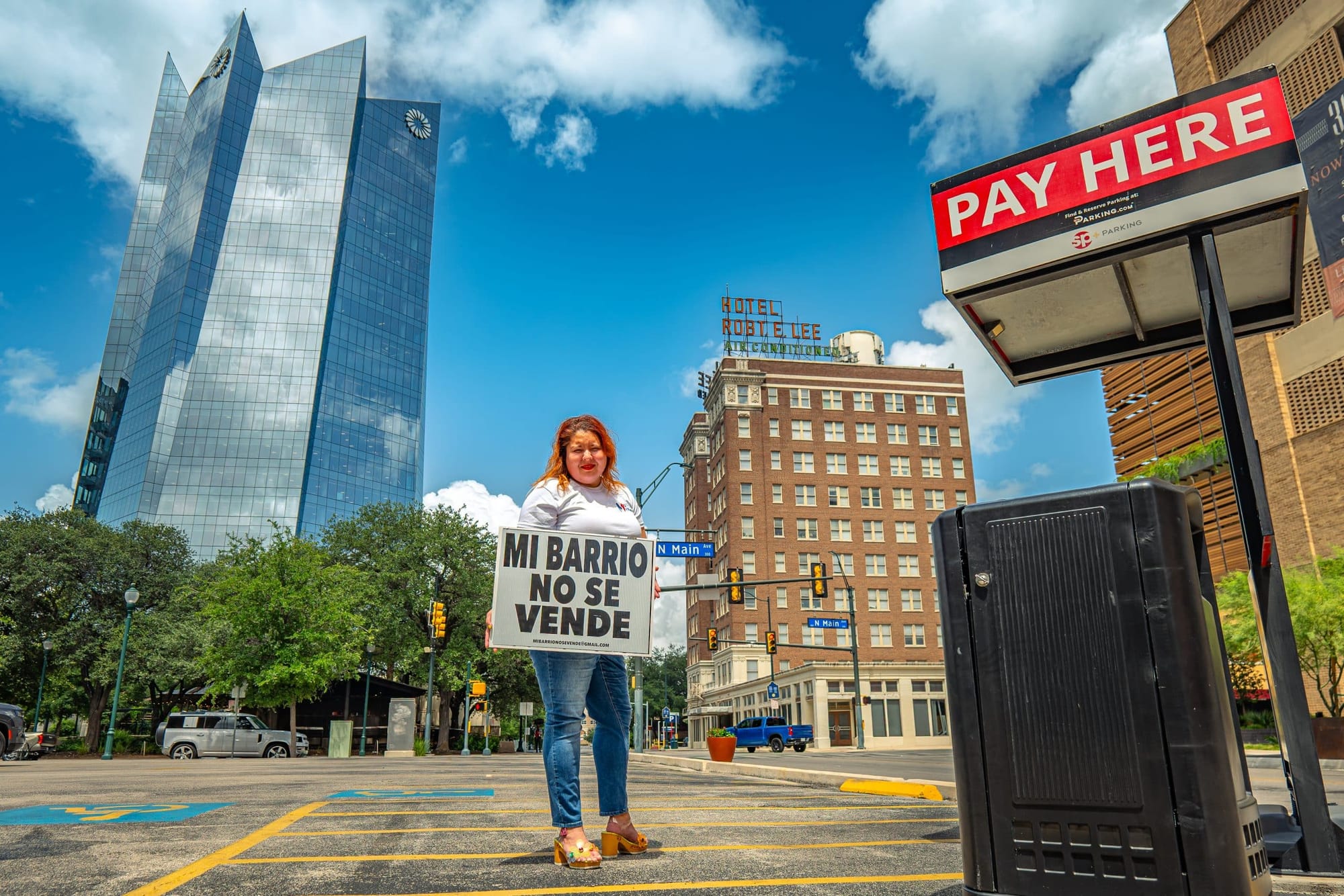
Earlier this month, the San Antonio Housing Trust announced that it had entered into a Purchase and Sale Agreement for downtown affordable housing high-rise, the Robert E. Lee Apartments. The announcement appeared to end a nine-month ordeal that has been watched closely by local advocates of housing justice who hope to curb the trend towards gentrification and displacement in San Antonio’s city center. Many had, quite reasonably, feared that the building would fall into the hands of developers who would uproot the tenants and erase yet another downtown affordable housing option.
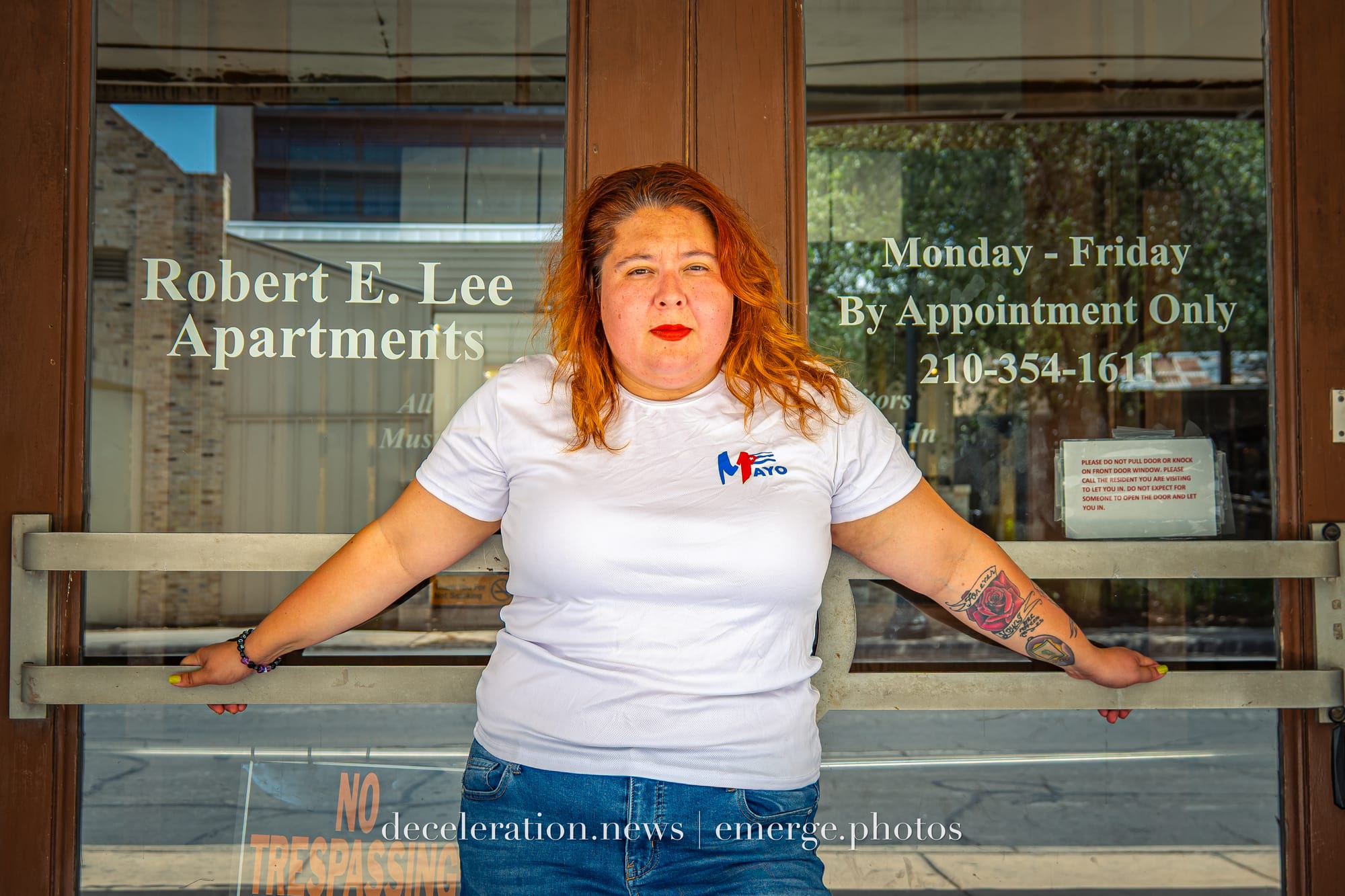
While it appeared that the Housing Trust, originally established by the City of San Antonio, saved the day—beating out informal bidder, presumptive buyer, and would-be downtown monopolist Weston Urban—it was the persistent organizing, advocacy, and agitation of the Robert E. Lee tenants union themselves, spearheaded by resident Megan Navarro, that paved the way. Specifically, it was Navarro’s insistence that residents make good on their right of first refusal, a key plank of anti-displacement policy, which made it possible for Robert E. Lee residents to avoid the fate of recent victims of mass displacement, including at Mission Trails Mobile Home Park and the Soap Factory apartments.
Navarro, a paralegal student, moved into the historic apartment building in September 2024. Within just a few months she had organized a tenant union, contacted local housing justice organizations for assistance, and alerted the press to the likelihood that Weston Urban, a local developer high-keyed on downtown properties and a mission of “reviving the city’s center,” was going to buy the property unchallenged and proceed to unceremoniously give its predominantly low-income residents, which number more than 50 at the moment, the boot.
Many of these residents live with disabilities and some are only recently unhoused and very familiar with the impact of the amplified summer heat on downtown streets thanks to a combination of rapidly amplifying climate change and the urban heat island effect.
Related: ‘PODCAST: Gentrification, Displacement, Heat Deaths, & the Robert E. Lee Tenants Union (2024)’
What happened next that was the product of sheer determination in the face of an uphill battle—and maybe a little bit of good luck.
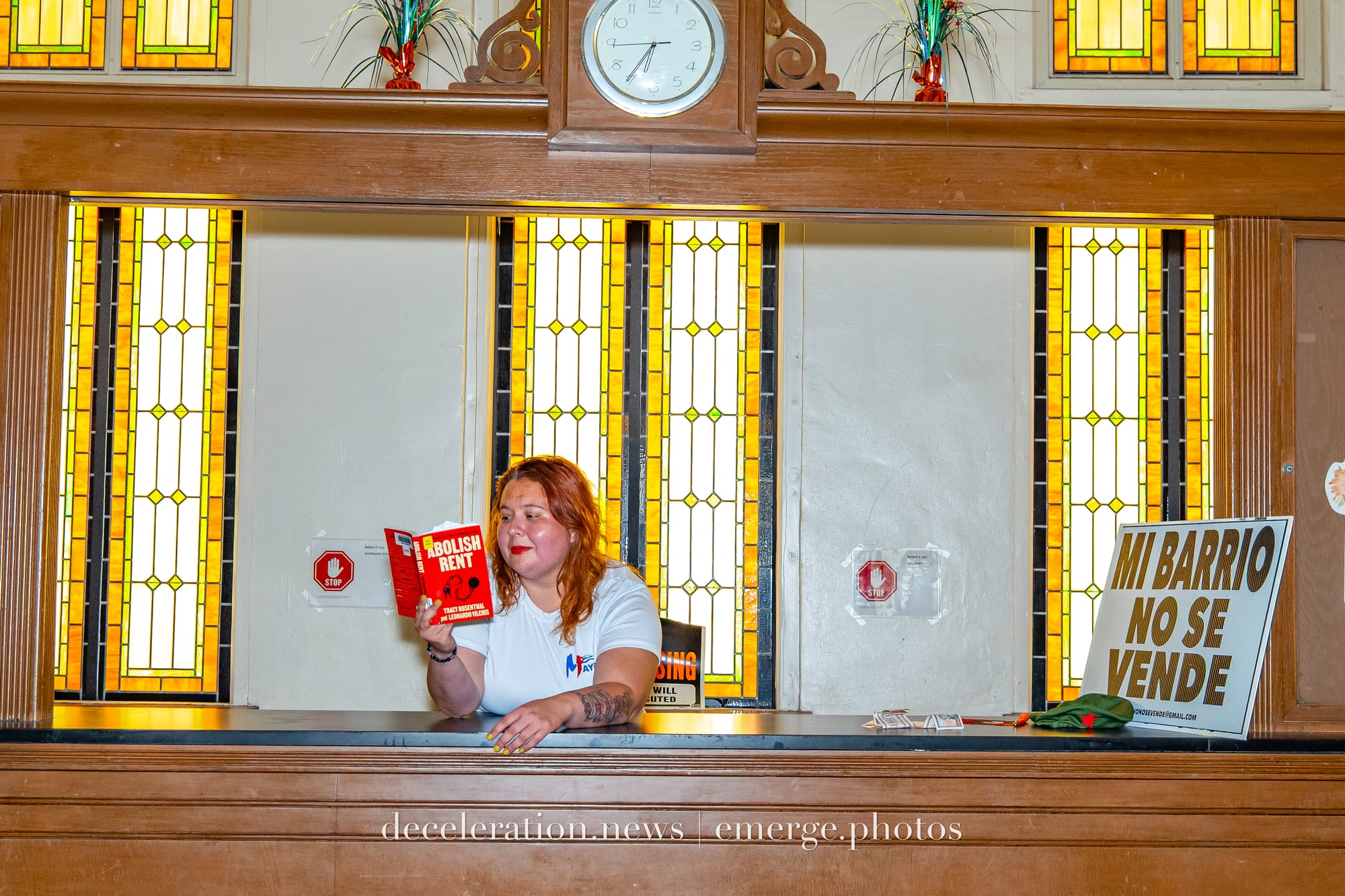
Deceleration caught up with Navarro last week to talk about her experience and what lessons it might hold for other housing justice and anti-displacement struggles and all movements hoping to realize the people’s “right to the city.”
Deceleration Q&A with Megan Navarro
James Courtney/Deceleration: What got you involved as a leader of this charge to save the Robert E. Lee as an affordable housing option?
Megan Navarro: The second night of living there, I found out from a neighbor in the elevator that the property was going to be sold. She said all the tenants had all received a letter, that they really didn’t know what it meant, and that they were all really stressed about it. I asked them to let me read the document, because this was never mentioned to me during my application or moving-in process. I read the letter with a few neighbors, and I said, ‘Oh, this is awesome, we have the right to first refusal.’ And, they were all like, ‘What does that mean?’
I explained that it means we get to buy it. But then they looked even more confused, like where are we going to get the money? I really didn’t know, but I felt like I was going to find a way to do it somehow.
After discussing the matter with a few of her professors, Navarro started learning more about tenants’ rights and Texas property code. She spoke to anyone who would listen about the problem and about all the people who could suddenly find themselves unhoused if the building fell into profit-driven developer hands. She was aided or advised in her organizing and outreach efforts by groups like Texas Organizing Project, Pueblo Over Profit, Esperanza Peace and Justice Center, and the Coalition for Tenant Justice.
(All of these efforts resulted in an invite for Navarro to speak at the People’s Housing Summit, held at St. Mary’s Law School. It was there, at an event she says she almost didn’t attend due to burnout and self-consciousness, that she first met and began a dialog with staff from the Housing Trust.)
What lessons from this experience stick with you the most as potentially valuable in the ongoing fight for tenant (and other) rights?
Delusion. Be delusional. When you start to overthink it and doubt yourself, doubt will be your biggest enemy. Be stubborn that you can and will do it, by any means.
Another important thing is to gatekeep: be very selective about who you say things to, because not everyone will have your best interest at heart. If you have something that you believe in fighting for, know that the media and the people with power might not be on your side the way you think. When you are organizing you have to be mindful to be optimistic but always have a suspicious nature about you.
Something else I would recommend for tenant organizers especially is to invest in security cameras, because you are going to have people who try to retaliate or get into your place and spy on you. Document everything too, every interaction with press or outsiders. Be consistent. Be diligent. Have one-on-one conversations, even when you can’t meet as a group. Develop community and be a good listener. Find out what people’s needs are and find a way to address them.
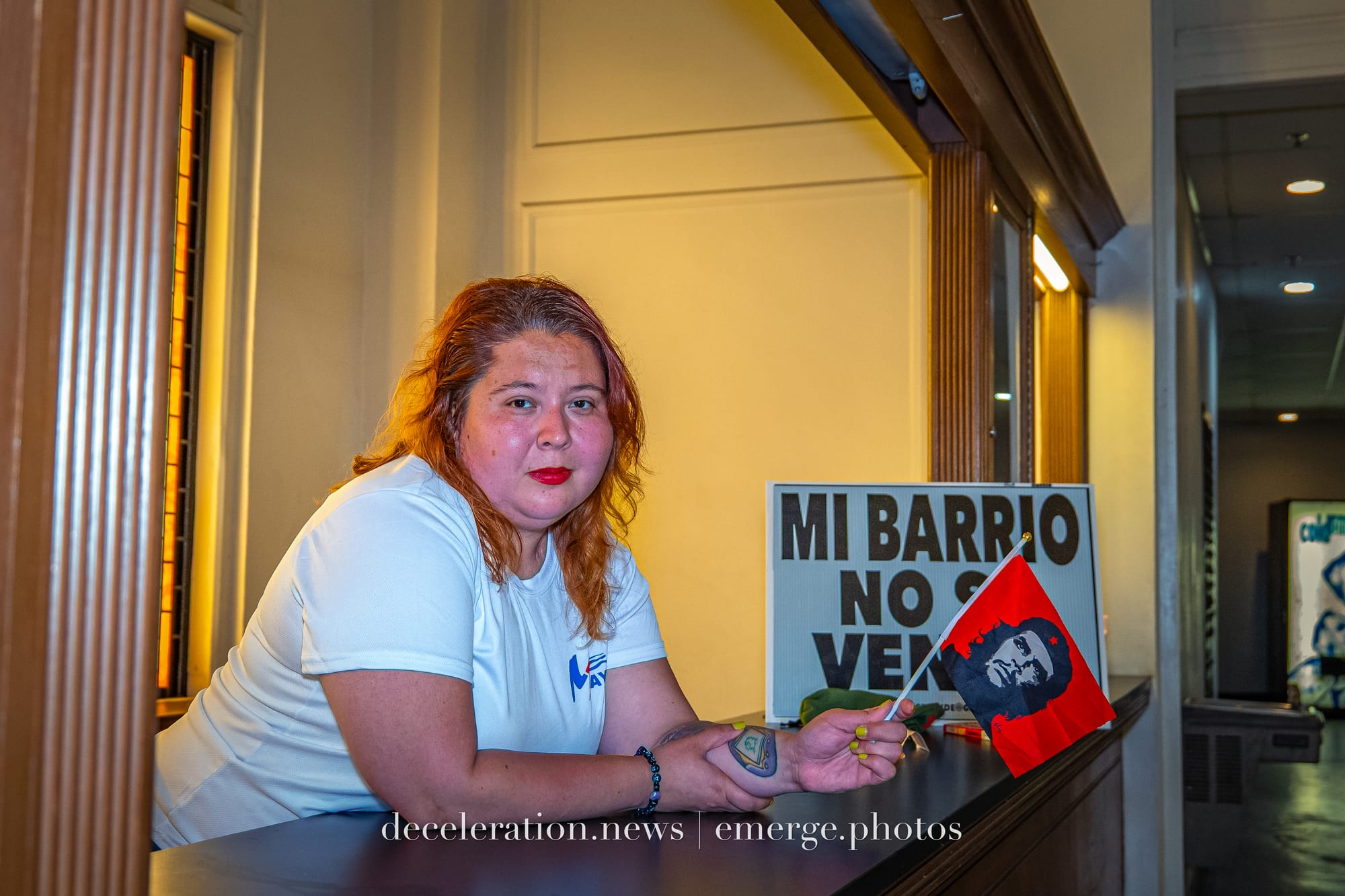
Also, be selective on which media you talk to, because some just want to get the sound bite and then do whatever their funders tell them to do. It is very important to get the message out to the public in the right way. Texas Organizing Project offers media training, and I think that is really helpful.
What lessons have you drawn upon from broader social justice movements that are applicable to this struggle?
I took a few organizing courses recently at the University of Havana, and while I was there I asked a few teachers how they in Cuba had been able to be so resilient, even under the blockade and the sanctions from the United States government.
One of the women who had worked under Fidel Castro and Che Guevara looked me right in the face and said ‘discipline, discipline, discipline.’ You have to remember the goal, and everyday you don’t do anything that takes you away from that goal. I think that is so important. I try to take that with me in all my work.
What’s next for you?
Right now, I want to keep working with the tenants’ union while I’m here, still helping make improvements and making sure that people’s needs are being met. I know I won’t stay here forever, but I want to build a community here that can be a beacon of hope for people in San Antonio and that sets an example of what can be achieved through class solidarity and working together and unionizing and demanding better treatment.
I want people to know that, whatever the fight is, when you work together, when you unionize, you win.
In different countries around the world, working people face the same struggles as we do here. They might be a little bit different, but it’s the same struggle at the end of the day. And it’s the same oppressor.