"When people find themselves genuinely supported and cared for, they are able to extend this to others in ways that seemed impossible or terrifying before. When people find their bellies filled and their minds sharpened among communal kitchens and libraries, hatred for capitalist ways of life grows amid belonging and connection."
—Joyful Militancy: Building Thriving Resistance in Toxic Times by carla bergman and Nick Montgomery
With each passing year, as capitalism’s death tremors ratchet up both climate catastrophe and the general suffering of working people around the globe, May Day presents, if we let it, a reminder that we must find the energy to imagine a better world — because we deserve a better world and, when organized, we are capable of achieving one.
This year, more than 200 unions, organizations, and coalitions, rallying under the May Day Strong banner, have called for folks to participate in a “no work, no school, no shopping” campaign aimed at emphasizing the theme of “workers over billionaires.”
In San Antonio, the call to action is being spearheaded by the San Antonio Democratic Socialists of America, San Antonio AFL-CIO, SAStandUp, and the local Party for Socialism and Liberation, among others.
 Deceleration Staff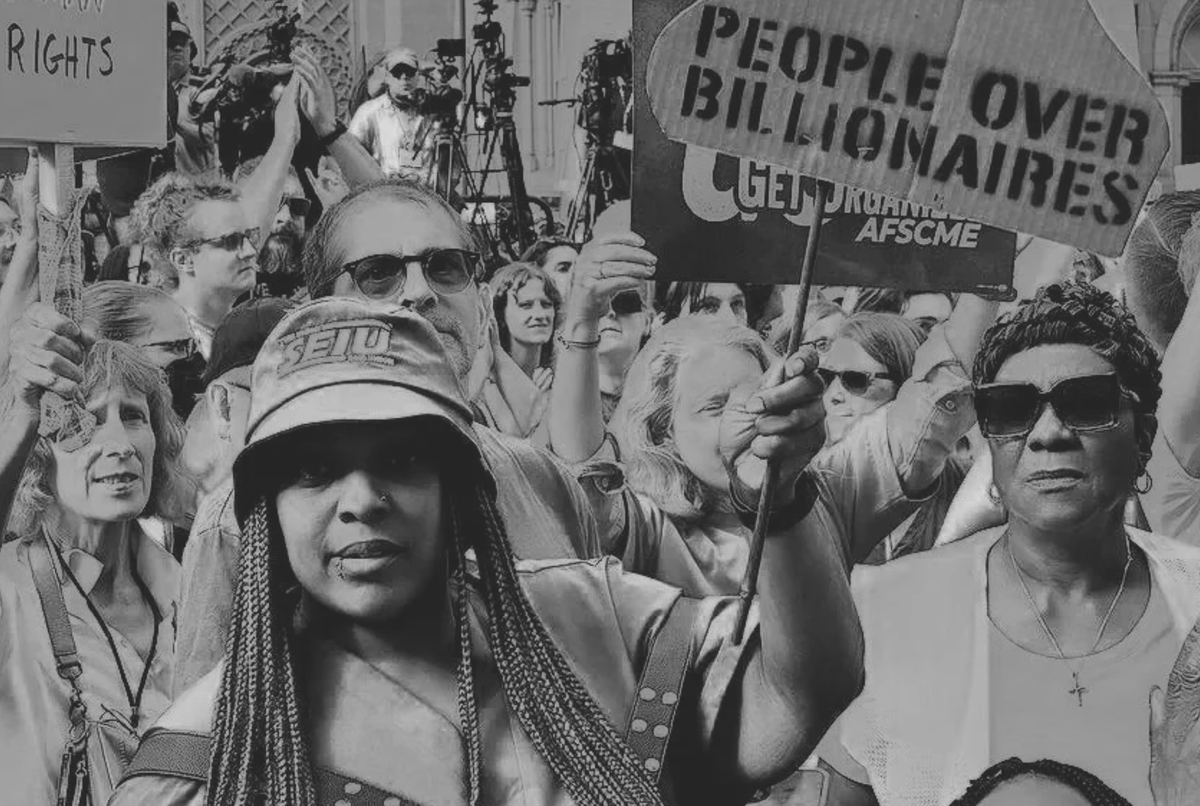
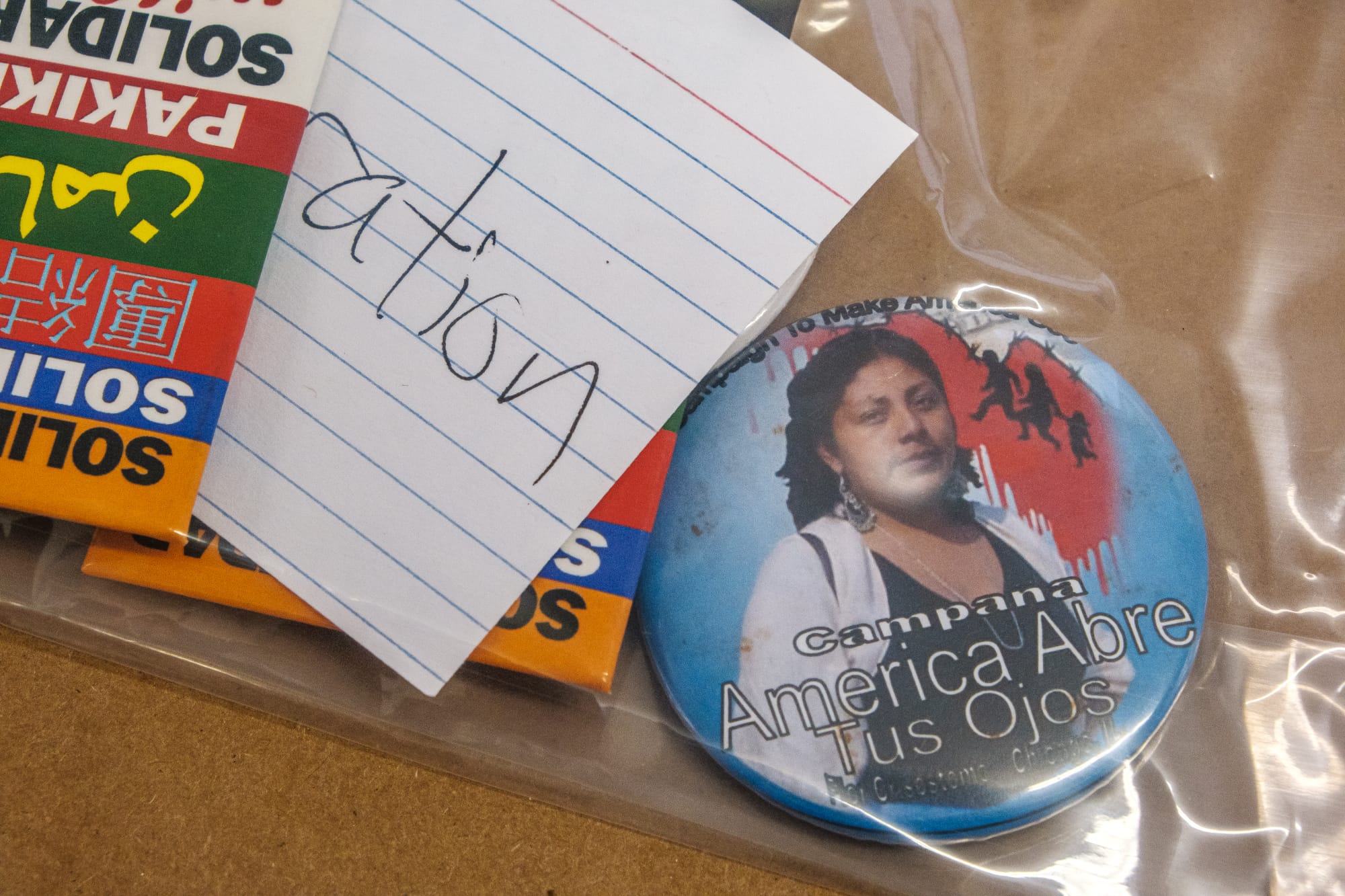
In addition to the strike campaign, there are a few local caravans and rallies planned — all of which serve to remind workers, and those in power, that we have the numbers on our side. But, members and auxiliaries of the tiny San Antonio Workers Assembly (SAWA), in partnership with the local chapter of the Texas State Employees Union (TSEU), have decided to celebrate May Day this year with an exhibit that commemorates San Antonio’s particularly rich labor organizing history, from the more famous examples like the Tex-Son Garment Workers Strike or the Pecan Shellers Strike to those lesser known.
Deceleration talked with the organizer of San Antonio Labor History Exhibit, Angel Duran of Five Palms Photography, about the exhibit and the origins of her passion for organizing work. We also caught up with TSEU/SAWA member Brian N. Lopez and local TSEU organizer Carolynn Ekbaeck. In all cases, we endeavored to get a sense of what each sees as the value of labor organizing, the challenges associated with it, and their ultimate visions for where organizing, in a broader sense, can get us.
Radical Histories: Two San Antonio-based labor activists Shelley Ettinger and Teresa Gutierrezreflect upon their lives in the movement. Deceleration video.
‘What Radicalized You?’
Especially since COVID, it seems like this question has been ubiquitous enough in online discourse to have become almost a meme, sometimes turned into a cynical joke. That, however, is exactly what the ruling class wants to become of perhaps our most human commonality, the ultimate inroad to powerful unity: the fact that we all suffer, albeit in myriad ways, at the hands of the same white supremacist, capitalist, patriarchal machine.
Duran, for her part, didn’t mince words.
“When people ask me what radicalized me, I’m like: ‘Have you ever worked for a living!? It’s shitty,” she said. From her own working experience and observations of others’, she has developed a mindset that the fight for justice in workplaces should be continual.
“We have to accept that the system is not broken,” she said, “it’s working exactly how it is intended to work.”
This is a crucial framing to highlight, as the broken-system myth generates despondency while the reality can generate useful, righteous rage.
Brian Lopez joined UA Local 142 for plumbers and pipefitters fresh out of high school, some 15 years ago. Now he is a member of TSEU and helps with their organizing efforts.
He credits his previous exposure to the concept of organized labor, via his family, as the reason he sought the help of something like the UA so early.
“It’s a natural transition for me to help with organizing,” Lopez said, noting that TSEU gives him a new kind of direct opportunity to help with a grassroots campaign to unite workers, in his case within the UTSA system.
He’s seen firsthand all the various types of good that union membership can bring, not just the stability we sometimes think about, but also “brotherhood between workers.”
For TSEU organizer Carolynn Ekbaeck, who struggles with a number of health challenges, the journey to organizing was intensely personal. From her vantage, she recalls, thinking of her first jobs, she could clearly see that all workplaces were basically the same in the dehumanizing way they treat workers, never centering human need or compassion in their considerations.
Why Don’t People Rush to Join Unions?
“I see younger people who are afraid to organize or afraid to stand up because they see what the older generations have put up with,” Duran said of the challenge to enlisting more people in struggles for justice.
She also believes that “we have to get the message out that it is okay to stand up for yourself, because I was definitely taught the opposite.”
In his efforts to recruit new TSEU members in his workplace, Lopez said that he’s learned “to expect that whoever you are speaking to has either no idea what a union is or has an inherently negative opinion about unions.”
Part of living in Texas, he said, is that the anti-union bias, as a result of propaganda, misinformation, and lack of education, is very strong.
He also cited the fear of retaliation as one big reason why people balk at unions. This is, for reasons that should be painfully obvious, especially the case for people who work for the State of Texas.
Ekbaeck echoed this, describing our current social climate as one where “people are afraid to step out of line,” citing the recent unjust firing of Texas State University professor Thomas Alter as the kind of thing that makes people think: “if he’s so disposable, what about me?”
For Lopez, the way to tell people about unions is to start by being a good coworker and building trust.
Once a relationship is established the talk doesn’t even have to revolve around the word “union.” After all, once class consciousness starts to germinate, even just a little, it’s practically instinct to look for safety in numbers.
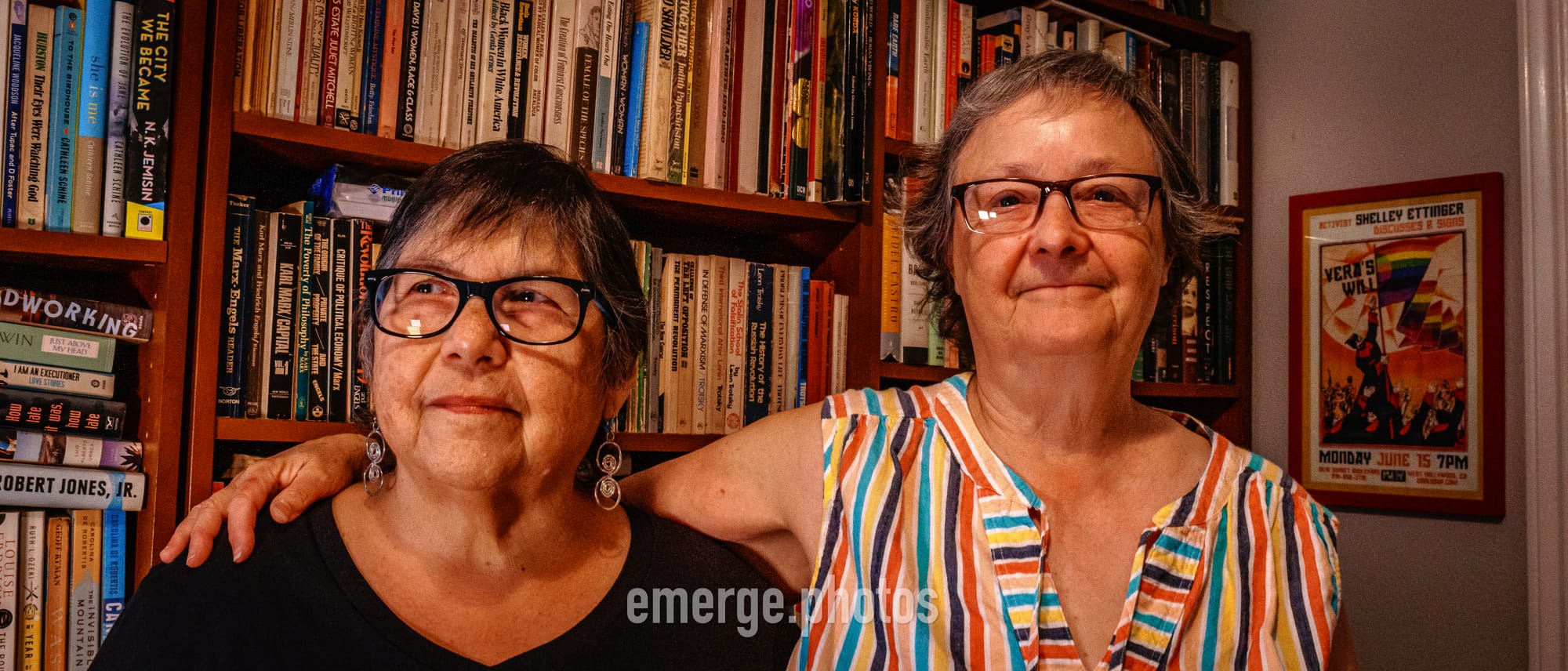



Labor activists Shelley Ettinger and Teresa Gutierrez (featured in the video above) speaking with Angel Duran of Five Palms Photography. Images: Greg Harman
New Benevolent Societies?
As we looked at a particularly striking picture from the exhibit, one depicting a family holding picket signs during the Tex-Son Garment Workers Strike, Duran talked about the importance of viewing unions and organizing in general as family affairs.
“I should have been learning about this in school,” she reflected, noting that the solidarity that begins in the home becomes a powerful political education that serves to show people of all ages that there is strength in togetherness.
Duran envisions San Antonio Workers Assembly as a vehicle through which she can educate people, especially young people, about organizing history and what it can mean for the future. She uses the union’s Instagram page to post frequent educational items, tapping into the media through which younger generations today are often looking to supplement their education.
With exhibits like the one this May Day, Duran hopes to foster a program that can eventually include other types of community-focused educational opportunities. Education leads to community organizing leads to class consciousness leads to a better world, in her estimation.
Lopez takes Duran’s more holistic vision of union efficacy to the next level. Citing Gilded Age Benevolent Societies (mutual aid groups, essentially) as inspiration, he wants to see “more of a social and material impact, rather than just trade negotiations” from unions.
These societies, Lopez said, took the mantle from churches and charities to center working-class attention and efforts in collective good, pooling resources, timebanking, feeding folks, and more.
In some ways, these societies were proto-unions, existing before much workplace regulation had been passed, eventually evolving into what we think of as labor unions today.
In Lopez’s estimation, however, something was lost in that deal that we desperately need to recover: the sense of dual power that comes from having a social safety net that exists wholly free from government or business interference.
This vision for unions is one that can, therefore, cut across various struggles and materially affect the lives of workers in such a way that they might be liberated from fear of or dependence on corporate entities or governments.
This May Day, and well beyond, perhaps we should begin to conceive of worker’s unions not as simple tools to wrest a few more crumbs from the forces that dominate us but as potential hubs for building autonomous community structures for the good of all, structures that can ultimately form the foundation of a more just world.