

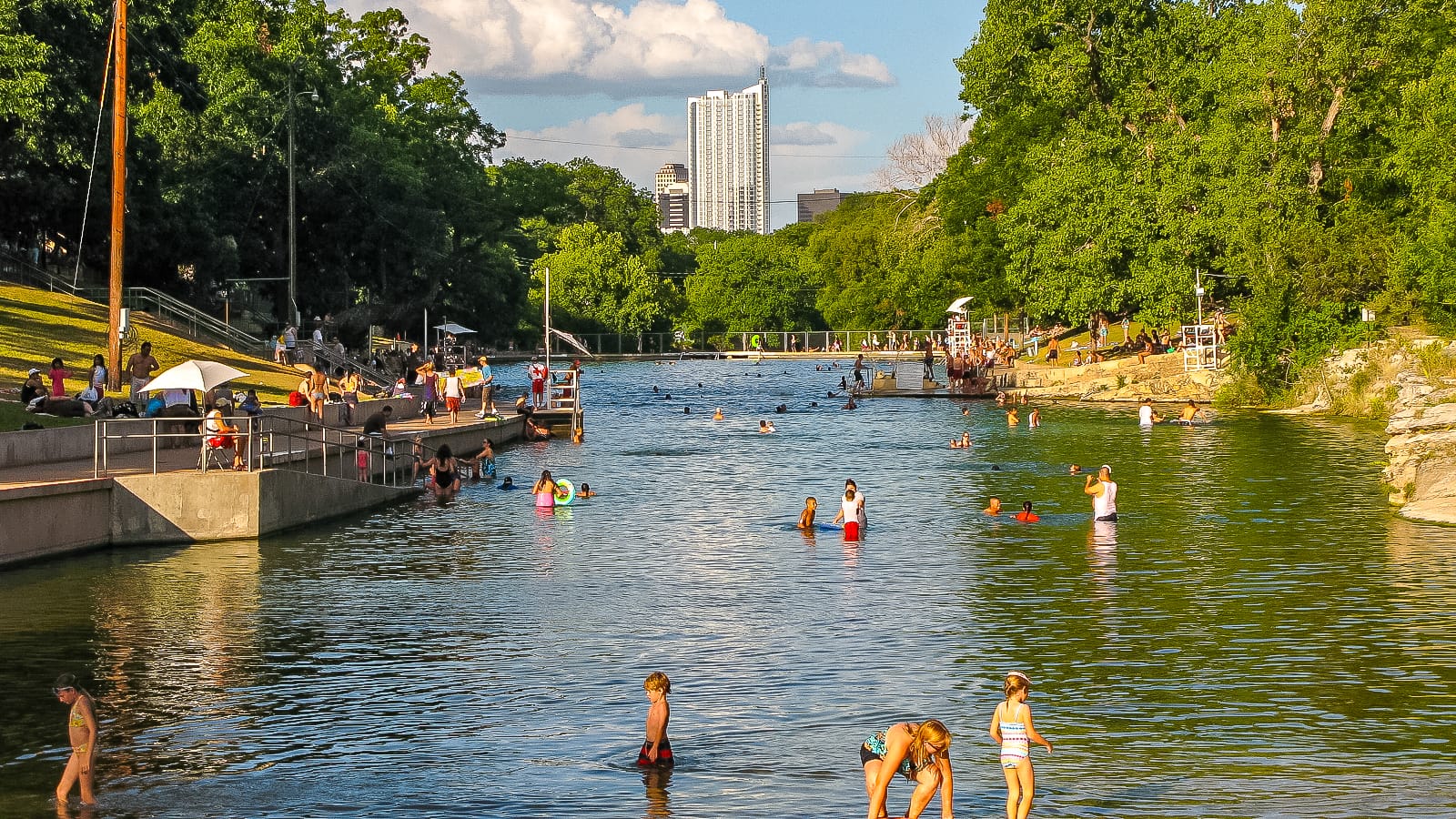
On July 26, 2025, an apparent transphobic attack took place at Barton Springs, Austin’s world-famous freshwater spring-fed swimming hole, leaving multiple injuries including a hospitalized “Good Samaritan.”
The incident feels like a sadly typical escalation of male violence and entitlement towards femme bodies, as the victims reported that the attack began with sexual harassment against three women, one of whom was transgender. Harassment became transphobic slurs and turned to groping when the women objected. Jarod Adkison, a man who had befriended the women during the afternoon before the incident, attempted to step in and help them defend themselves. He told me later he woke up in the hospital with no memory of the blow that broke his jaw and sent him sprawling. One of the cis women also stepped in to protect her trans friend and was violently thrown to the ground.
The attack was shocking, coming as it did in broad daylight, just outside the official boundaries of the Barton Springs swimming area. Austin famously came together in 1990 to defend Barton Springs from a massive development, swarming a city council meeting with 12 hours of protest, testimony and chanting. Their action ensured that the Springs remain a beloved place to swim.
According to Maria Rocha, board of elders secretary at the Indigenous Cultures Institute, the modern Barton Springs Pool is built on one of several natural springs in the Hill Country which have long been sacred to the Coahuiltecan Native community, especially the Miakan-Garza tribe. Other Indigenous nations whose traditional homelands span South Texas and Northern Mexico, such as the Esto’k Gna (Carrizo/Comecrudo Tribe of Texas) and Lipan Apache, also have ceremonial relationships with these springs and regard them as sacred sites.
“Barton Springs is also depicted on the White Shaman mural, along with our Sacred Springs in San Marcos, Comal Springs in New Braunfels and San Pedro Springs in San Antonio,” Rocha wrote in an email to Deceleration.
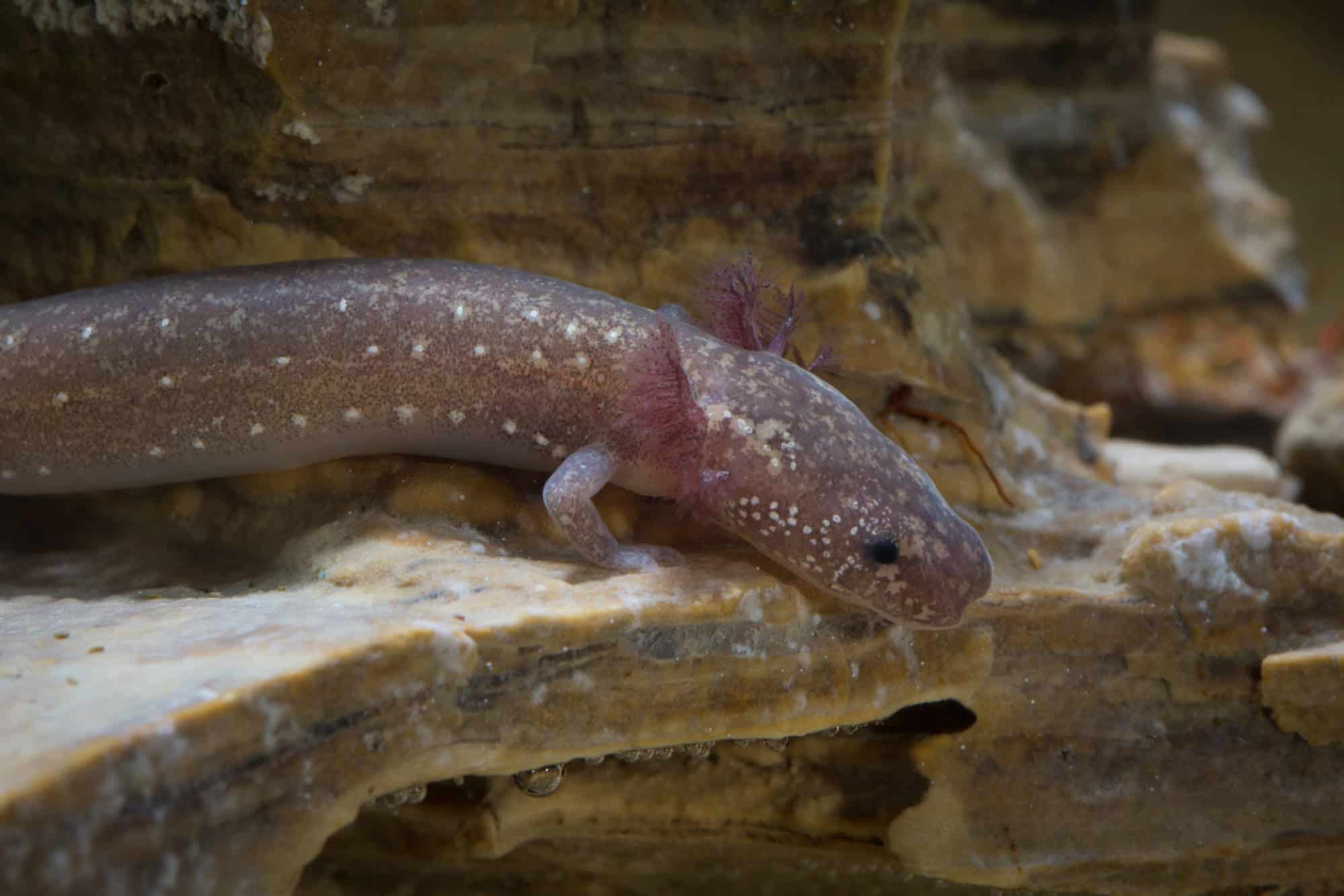
They’re also home to the endangered Barton Springs Salamander. Residents are fervent in their love for Barton Springs as protected ecosystem and public space, pushing back against other polluting developments, as well as attempts to end Thursday night “free” swims.
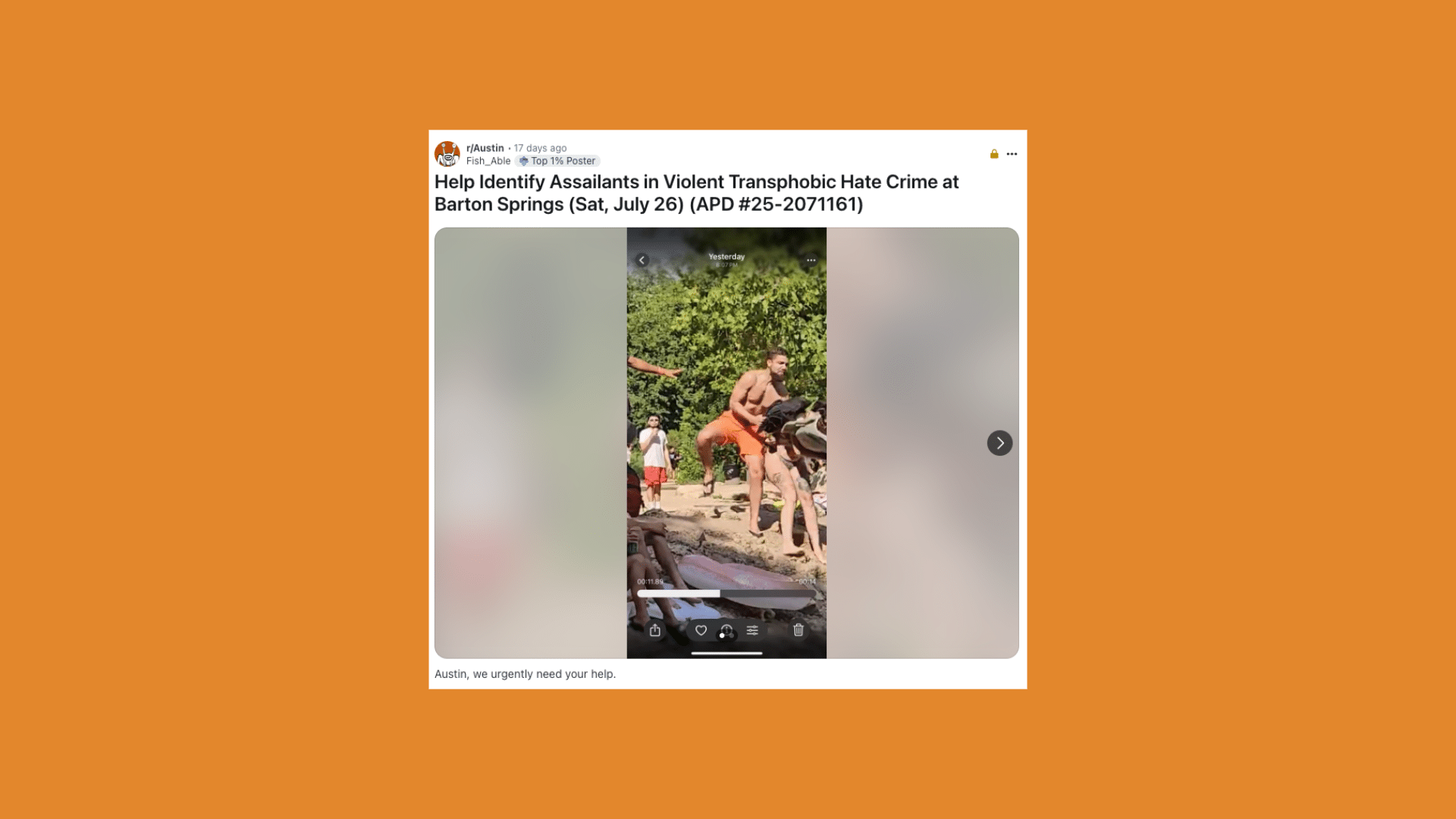
News of the attack went viral days before it hit the media. After an initial post featuring photos of the attackers made its way from Reddit to Instagram, it came to the attention of Brigitte Bandit, an Austin drag performer, who became world famous after fighting against anti-trans and anti-LGBTQ+ laws at the state Capitol. She echoed Austin’s collective horror at the violation of this sacred waterway with transphobic violence.
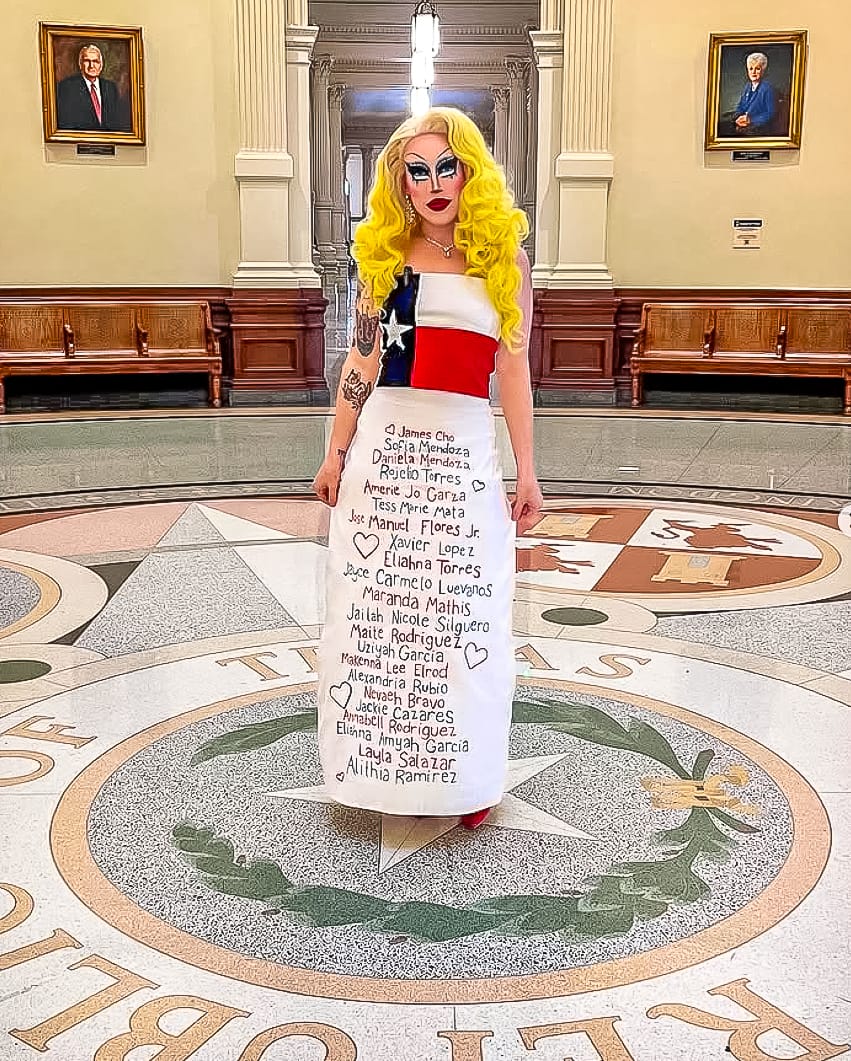
“I think it’s an obvious escalation of the effects of all the anti-trans rhetoric we’ve been hearing,” Bandit told Deceleration. It was “especially upsetting in a space like Barton Springs,” where they said they usually feel acceptance and inclusivity. “People normally just respect other people’s space there.”
Bandit told me she was up late into the night, evaluating tips about the identities of the potential attackers as people sent them in. Eventually, certain names kept coming in—recurring themes, they said, that made her all but certain the trio of attackers had been identified. She passed their identities on to the victims, who have sent them to the Austin Police Department. If anyone is apprehended, the county prosecutor’s office will decide whether to treat the incident as a hate crime.* So far, there have been no arrests.
Bandit said she hopes the victims find some form of justice. “I also think we need more protection and more resources to find justice on these kinds of issues,” Bandit said.
As I think about the dangers queer and trans people face in our state and our country, and the fragile nature of the springs themselves, I can’t help but connect what happened here with a presentation on “femme navigations of water grief,” which I attended this past July at a conference organized by the Association for the Study of Literature and the Environment (ASLE). This presentation was part of a larger panel on “queer and trans climate futures”—a pairing that may seem unlikely, but which reveals the important interconnections between gender and nature we see borne out in the violent attack on trans and femme bodies at Barton Springs.

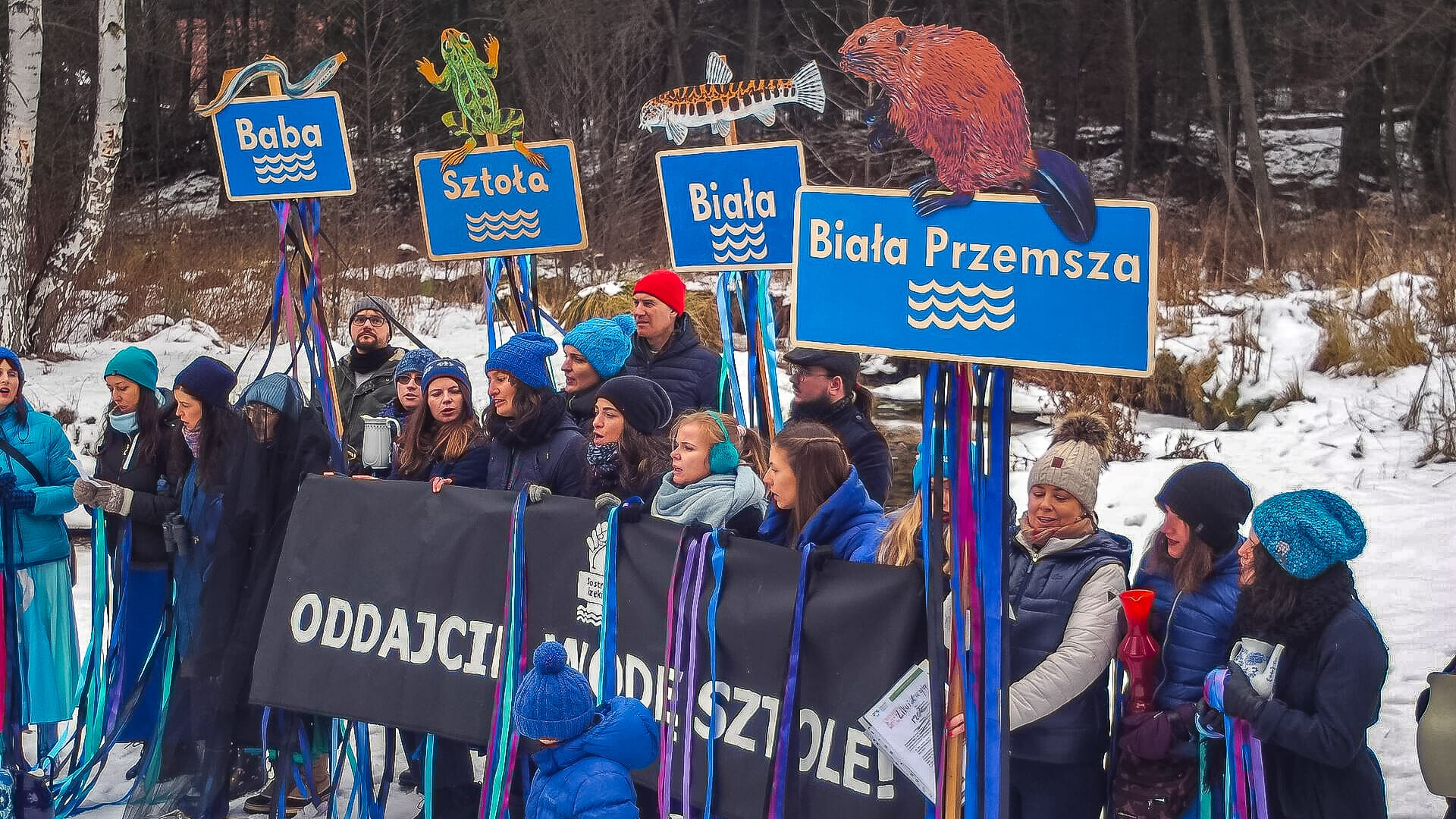
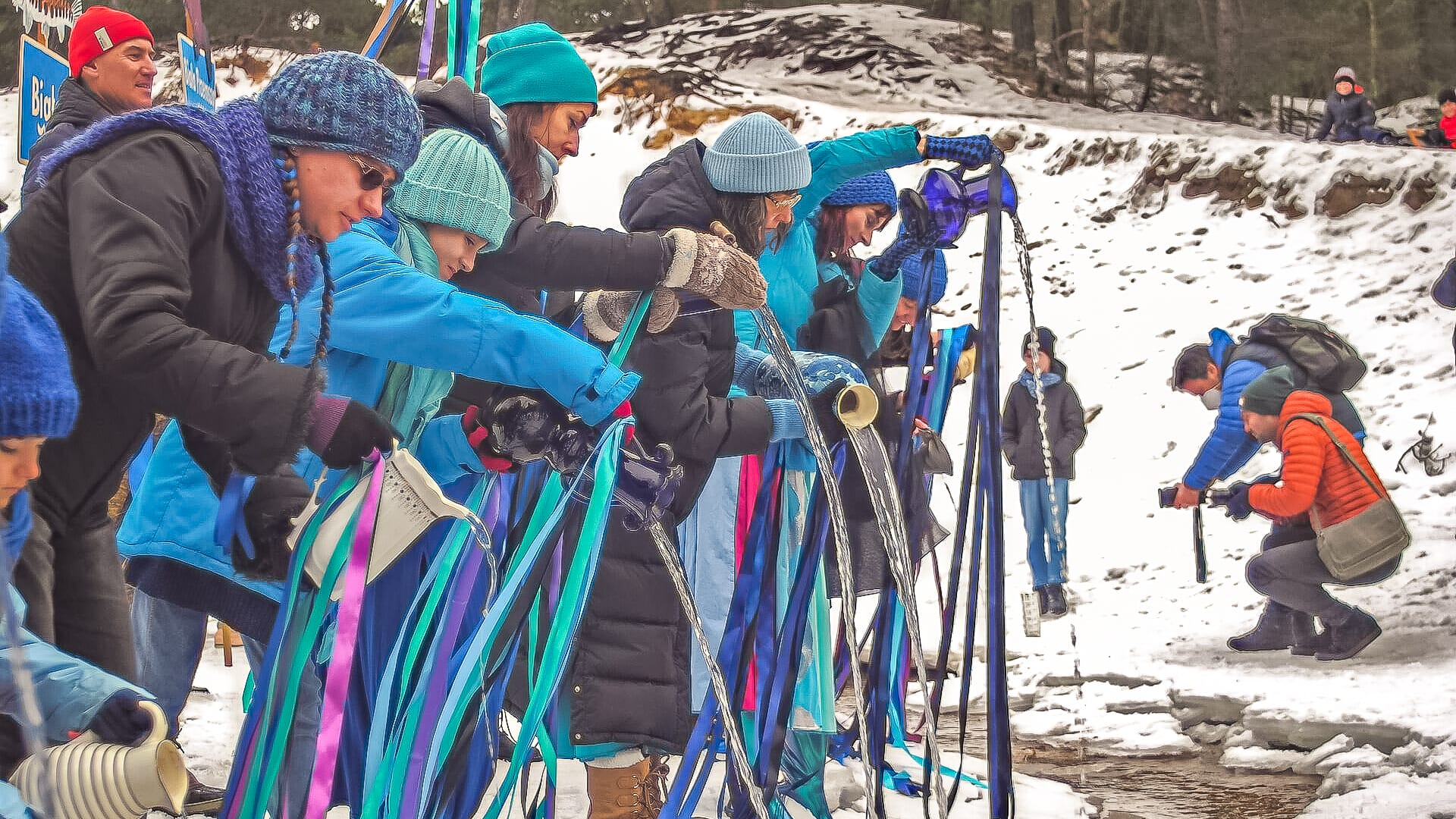
A professor of English and gender studies at Illinois State University, Ela Przybylo presented her research on the group Siostry Rzeki, or “Sister Rivers,” a Polish environmental arts collective made up primarily of femmes (a queer articulation of femininity across gender identities). In Przybylo’s words, Sister Rivers counters the dominant environmental politics of gloom-and-doom, instead centering “an alternate politics of desire grounded in celebrating femme friendships and aesthetics.” In doing so, the group seeks to “rethink relationality, kinship, and environmentally-embedded embodiment” through what Catriona Mortimer-Sandilands and Bruce Erikson have called a “queer ecology” lens.
By building solidarity and “femmeships” between river defenders, Sister Rivers comes to view the river itself as part of this relationship, and in a way forms an arguably queer kinship with a waterway.
As Przybylo notes, these “femmeships can be understood as prioritizing values and aesthetic modes socio-culturally understood as feminine, and denigrated under sexist and cisheteronormative modes of relating.” The Rivers are reclaiming space for femme-coded ways of thriving, amid a world that sees femmes as property, or—as we saw so clearly at Barton Springs—targets of violence when they resist being property.
The Rivers use playfulness, costumes, and other femme aesthetics to celebrate rivers, and ritual to mourn attacks on nature, highlighting the way capitalism partitions waterways and isolates us from their splendor and connection to us. Here Przybylo quotes from Tatyana Bakhmetyeva, who writes that the Rivers “[raise] people’s awareness about the social, ecological, and cultural values of unimpeded river flows.”
The attack at Barton Springs can be seen as an attack on that flow, both on the springs and on the culture it nurtures, highlighting the growing danger to trans, femme and queer people in Texas and America broadly, which exists even beside these cold waters that are so special to Austin residents. Here it’s worth noting where the attack took place. As mentioned above, Barton Springs was constructed by damming up part of the natural springs in the area, creating a fenced swimming pool. But the attack took place beyond the boundaries of that paid swimming area, in what’s known as “Barking Springs” — an unpaid area that’s not protected by lifeguards, where people gather for free and often bring dogs. I have to wonder if the attackers would have felt as bold on the other side. Without the artificial barriers between those “inside” and those on the “outside,” if the springs were treated as a true commons and sacred site, would more people have felt empowered to step in to defend the victims?
While admission to Barton Springs is inexpensive for locals who can prove their residency, rising inequality means admission costs are still a barrier for many. With the regular “free” swims under threat, it seems likely the city will soon raise prices on what should be a shared resource, accessible to all. Meanwhile, the police budget continues to endlessly balloon, sucking vital resources from other parts of the city’s environment. One wonders how useful Austin Police Department’s newly purchased robot dog will be for preventing the next hate crime at Barton Springs. The Austin City Council recently voted to revise how it handles hate crimes, with the hopes of better protecting residents, but the results remain to be seen.
Although LGBTQ+ people can be seen at the Springs any time they’re open, there are also groups that meet more intentionally, like Austin Trans, Enby, Intersex & Queer Swim. This swim group gathers multiple times per month, throughout the long Texas summer, taking up space in nature for queerness and LGBTQ+ culture. As the group prepared for their next regular event after the attack, they posted on Instagram, “Swim is this Thursday. We’ll be here smiling, will you?”
Przybylo notes that the Rivers embrace the joy found in the excess of queer life, wearing brightly colored costumes made from upcycled materials in their performances and generally embracing the loudness of unapologetic femininity. But through these aesthetics, the Rivers also provide a framework through which to explore and respond to the grief of capitalist attacks on our waterways, and the cultures that gather around them.
“Sister Rivers provides a femme and campy form of play that is politically engaged and offers participants ways to wade through their grief and seek joy in what remains,” Przybylo concludes.
From the Oder River to Barton Springs and beyond, the Sister Rivers invite us to explore new forms of resistance and community-making, and remind us to find space for celebration and ritual even as we “bash back” against a fascist uprising that wants to erase us from existence.
-30-
*Update: This sentence originally read, in keeping with the information provided to Deceleration at the time: “A task force within APD, separate from the detectives assigned to the case, will decide whether to classify the incident as a hate crime, if charges are successfully brought against anyone.”


