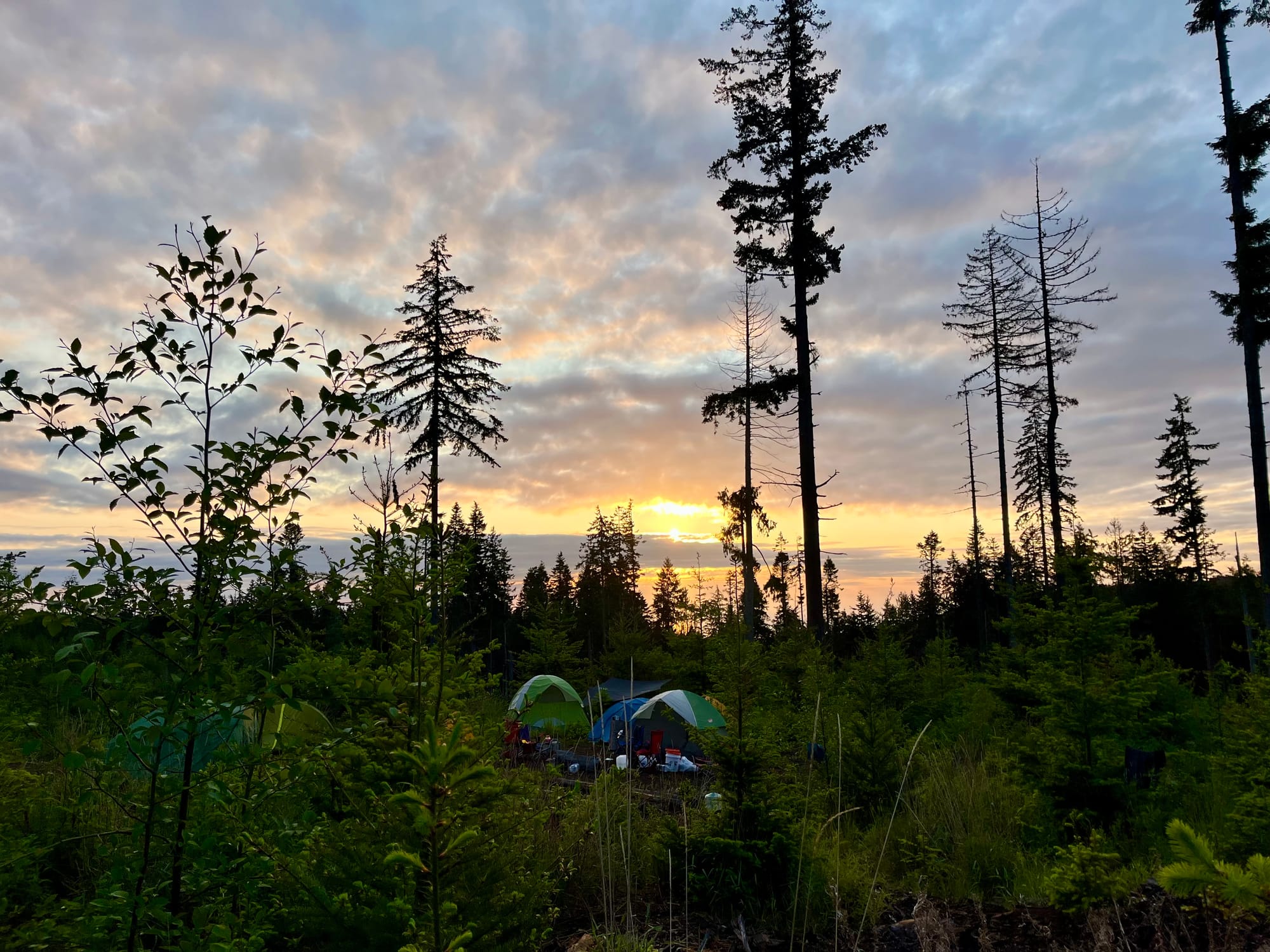
June 15, Father’s Day, was one of those gorgeous spring days in the Pacific Northwest when the air is cool and fresh and the sun shines bright. It was also the fortieth day following the fortieth night of the tree sit launched by the newly birthed Olympic Forest Defenders outside Port Angeles, Washington.
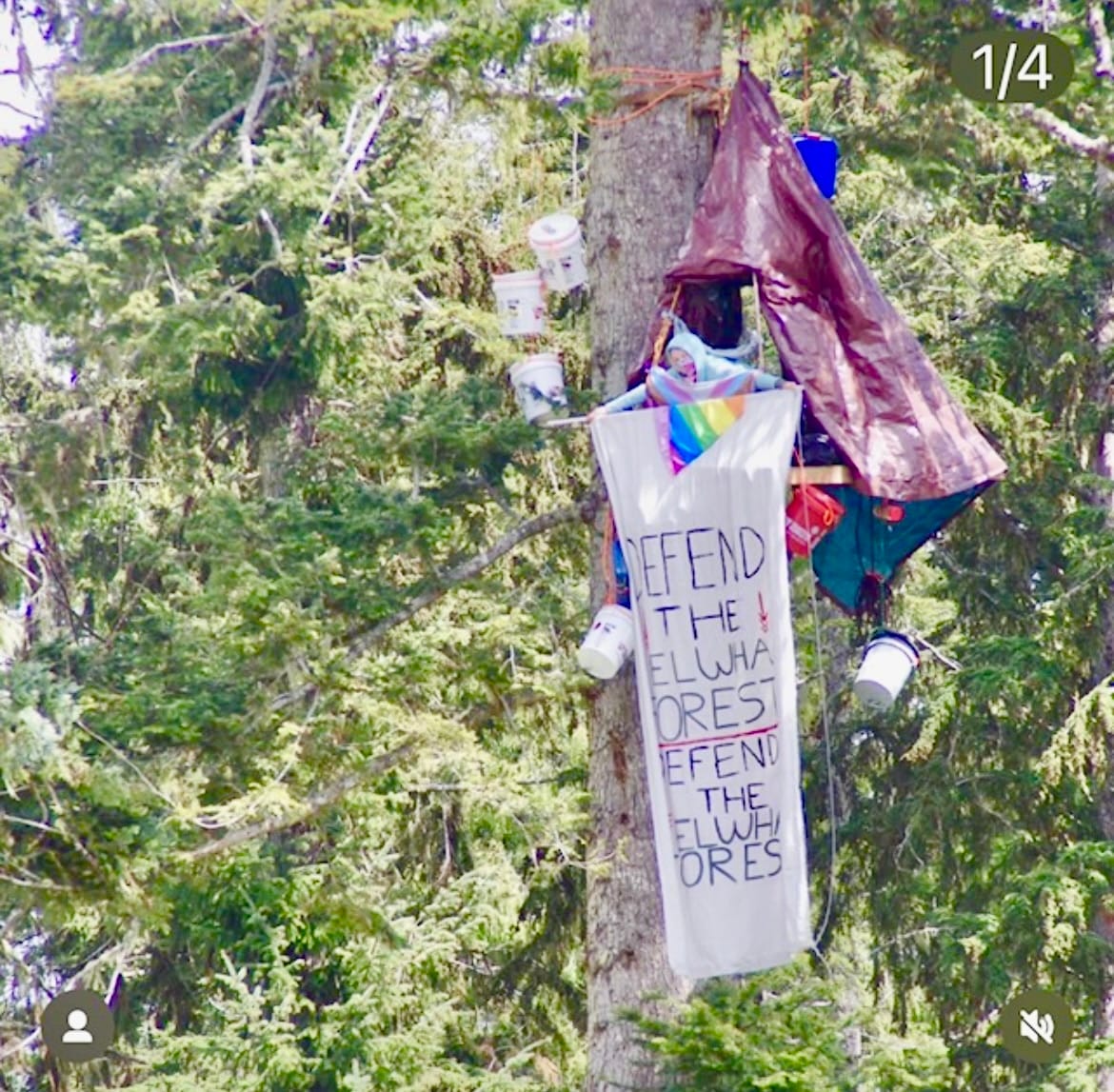
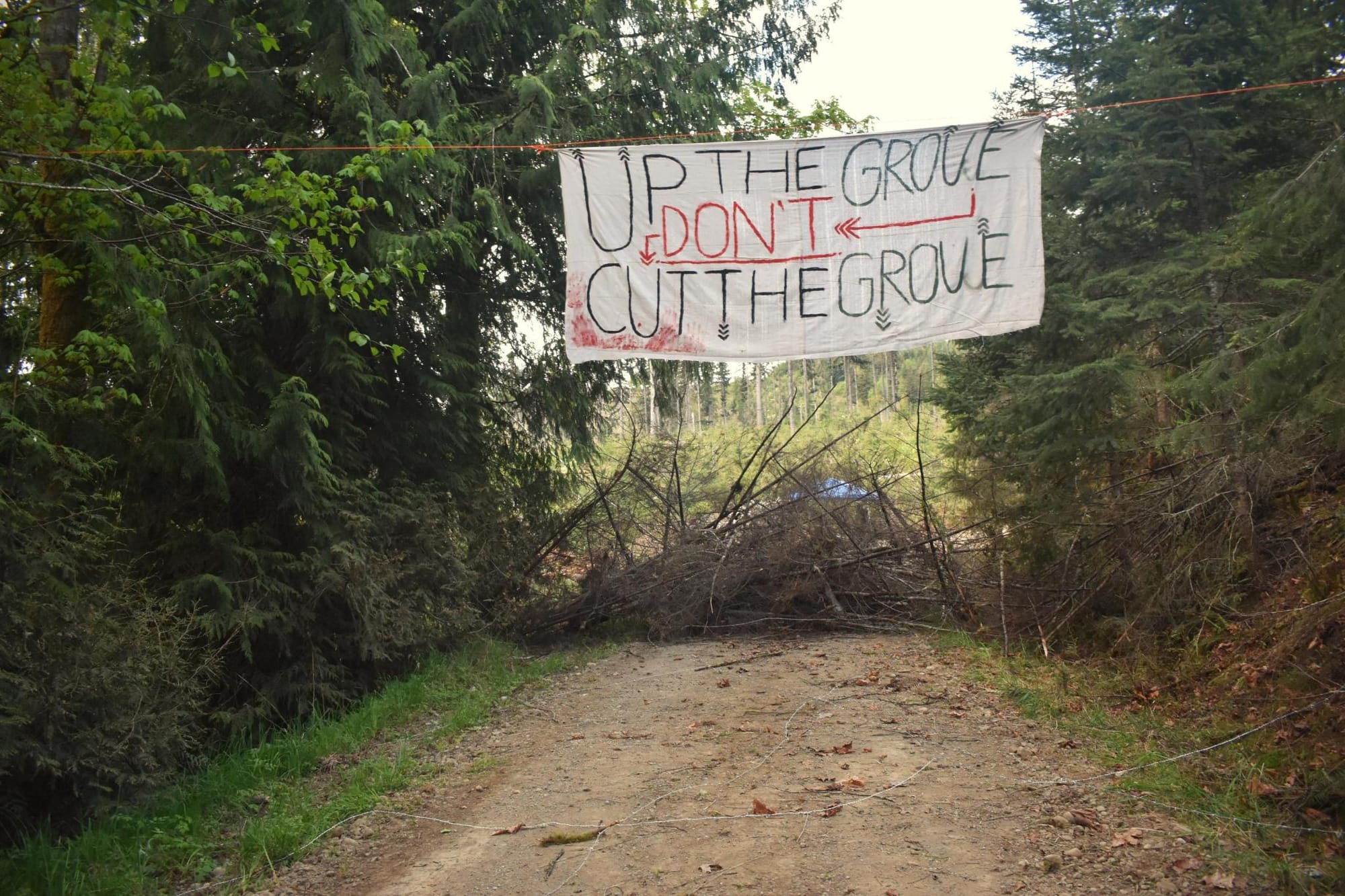
In a forest outside town, an activist known as “Fable” perched on a small platform eight stories up a grand fir tree. The platform was secured by a cable to a makeshift barricade. If the barricade were removed, the platform would plunge to the ground, potentially killing Fable. This dunk-tank-style structure blocked the logging road leading to the Parched and Tree Well timber sales, around 300 acres of older forest that Lower Elwha Klallam tribal citizens, community members, and environmental groups had been trying to save from clear cutting for over two years. Supporters camped nearby to ensure Fable’s safety and to provide the necessary food, water, and supplies needed for them to live 24/7 in a tree.
A Fairy Tale Ending?
Tree sits are a compelling form of civil disobedience because they are archetypal. The forest setting itself is the stuff of myths and fairytales — think Little Red Riding Hood. In fact, the forest is one of the most common fairy and folk tale settings, a wild and mysterious place where both danger and transformation await. The fact that the Port Angeles tree sitter was named “Fable” only underscored this association for me during the early days of the Olympic Forest Defenders’ blockade, and the analogy wove itself through my thinking about the action as it progressed. I wondered how the story would end and followed it closely.
After overcoming multiple challenges and holding strong for more than a month, it seemed that this tree sit might enjoy the fairytale ending that Fable and supporters hoped for—preventing the logging of two legacy forests in the Elwha River watershed. But fairy tales don’t always have happy endings. Early versions of many fairy tales ended tragically—even violently. A cannibal witch imprisoned Hansel and Gretel, and a wolf gobbled up Little Red Riding Hood in early versions of those stories. After all, fairytale forests teem with monsters. The forest that Fable and the Olympic Forest Defenders occupied was no exception.
Monsters in the Forest
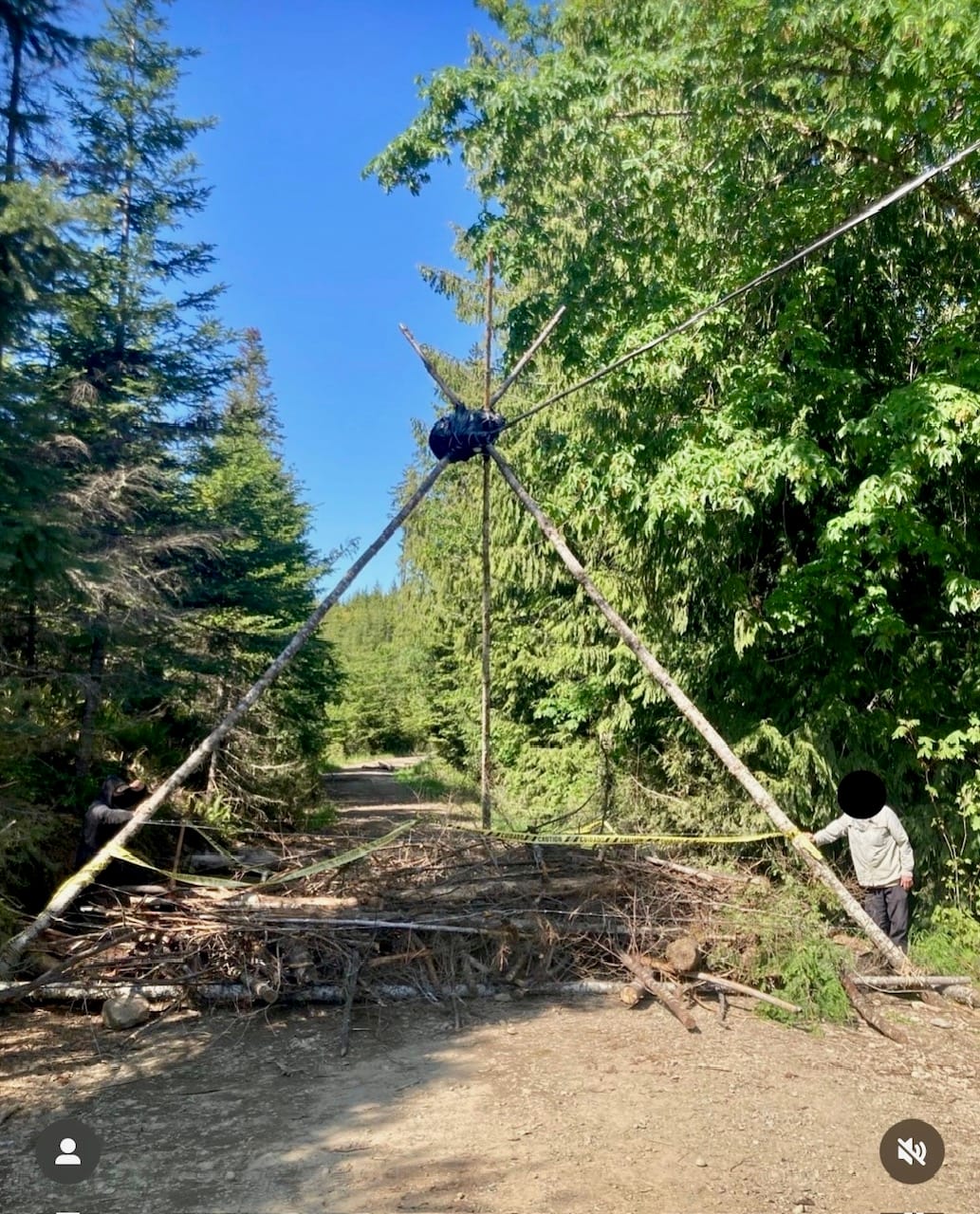
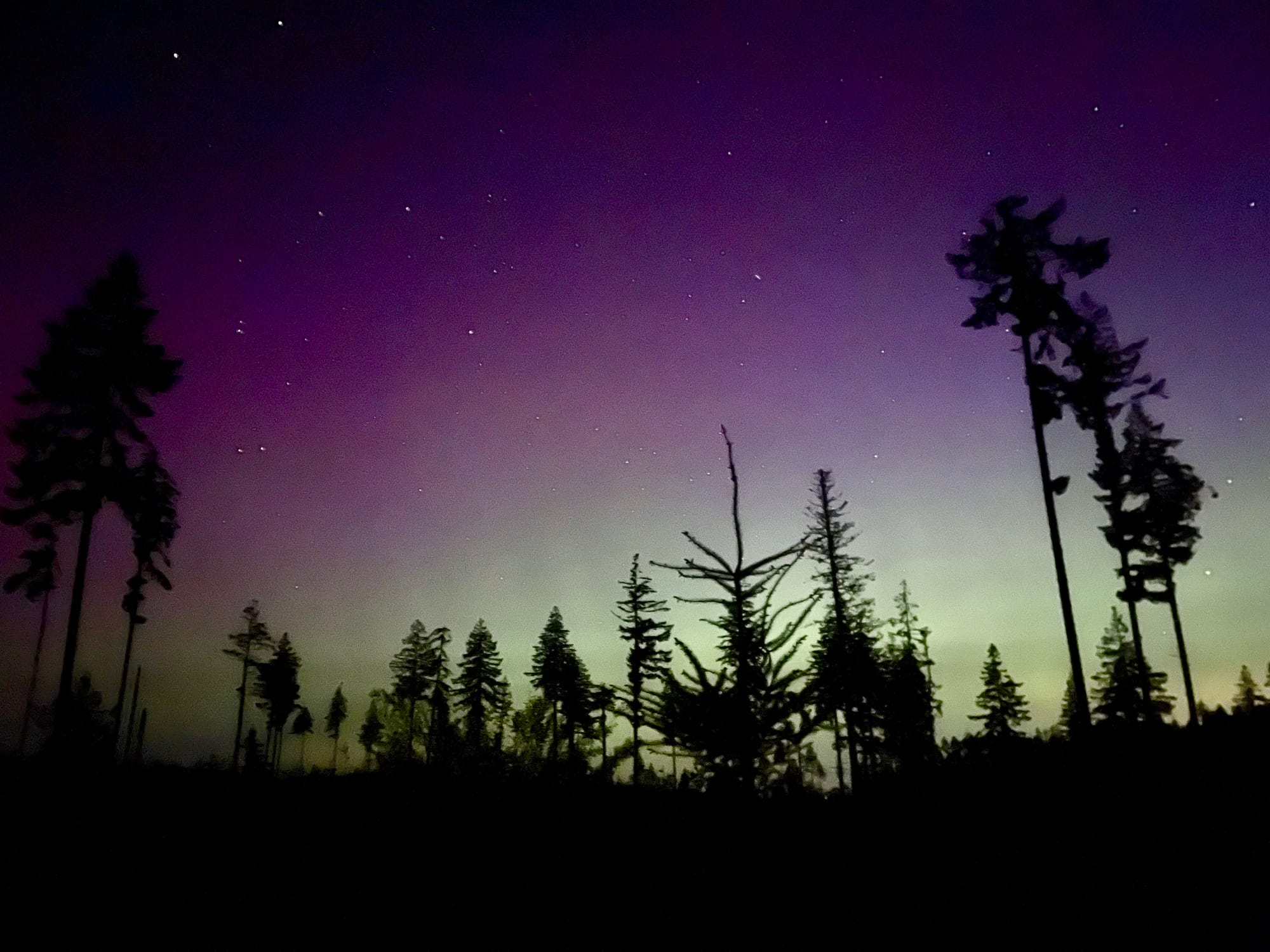
On May 29th, a monster in the form of a Department of Natural Resources (DNR) bulldozer cleared a path around the original barricade wide enough to allow logging vehicles to pass. In order to re-block the road, Defenders worked into the small hours of the night to construct an elegant tripod structure to which they anchored the tree sitter’s platform. The tripod closed the breach that could have allowed logging equipment to pass. As they worked, the Aurora Borealis shimmered across the sky, a harbinger of something—whether good or ill was as yet unclear.
A few weeks later, on June 13, police raided the camp, destroying the carefully arranged and supplied kitchen, first aid, and equipment tents and seizing everything, including activists’ personal belongings. Camp supporters were forced to continue their vigil without camping equipment or supplies to ensure their own and the tree sitter’s safety. In response, local community members rallied to purchase all new supplies and pack them several miles and over 1,000 feet up the foothill to re-supply the camp.
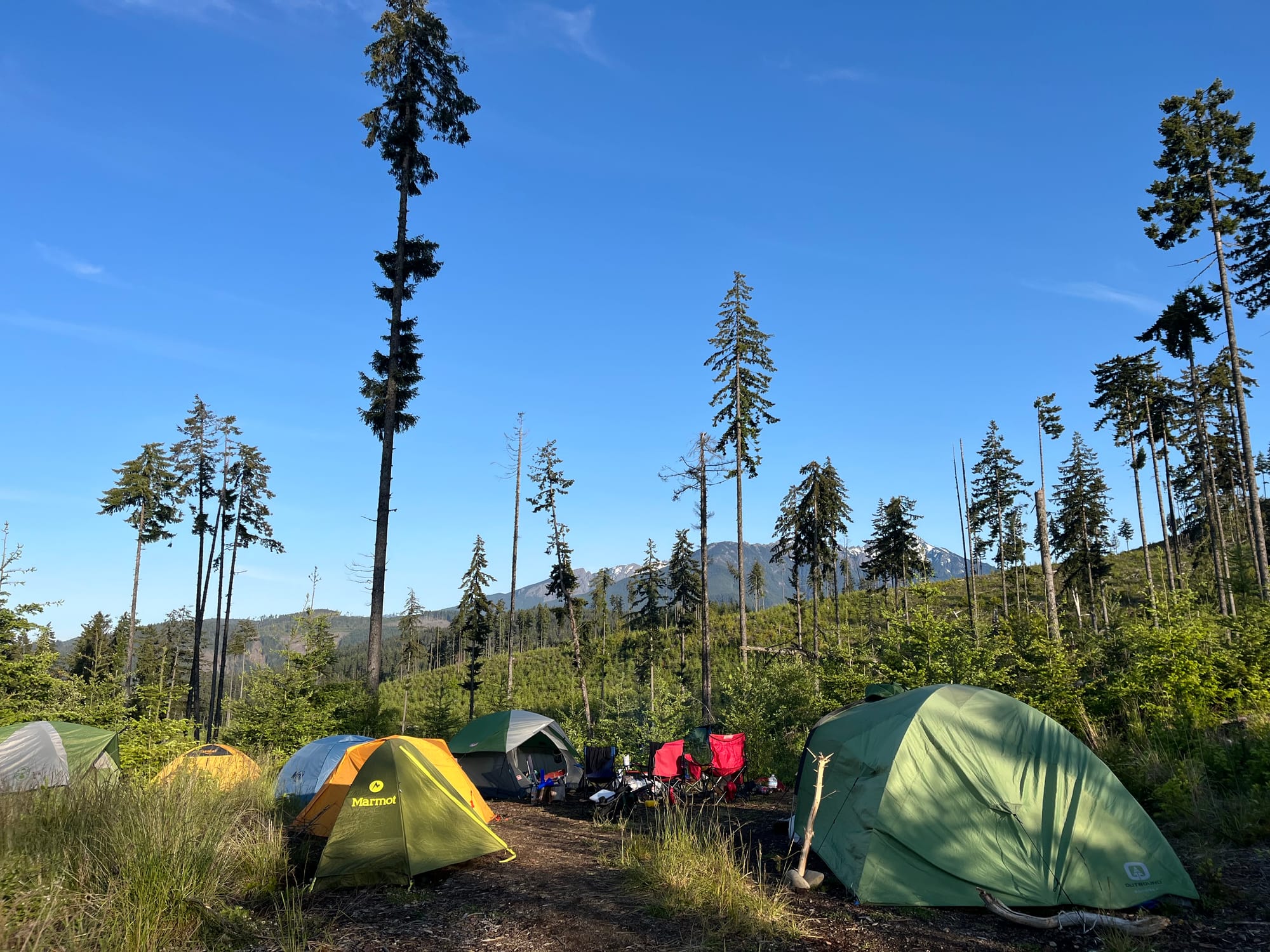
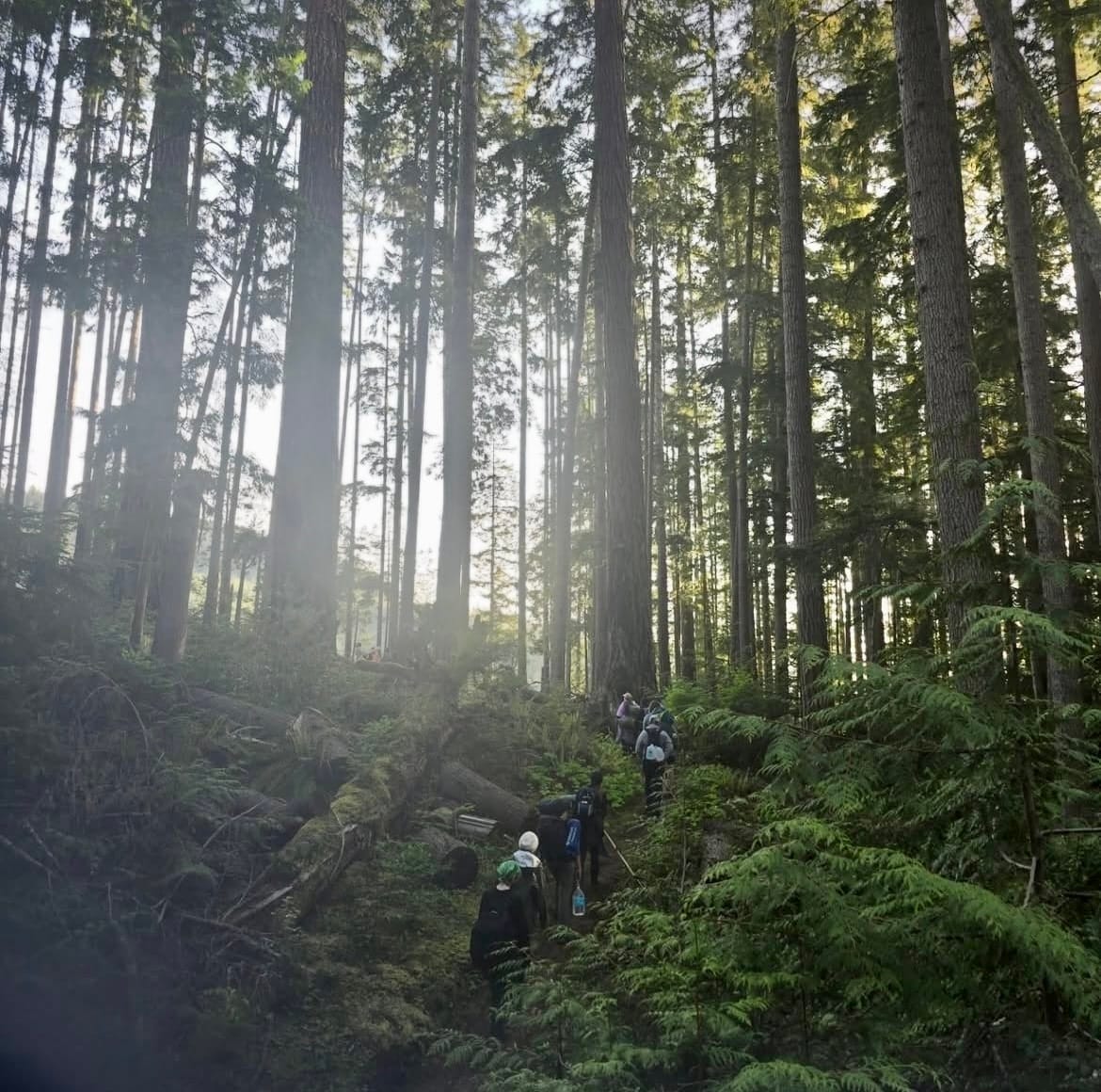
With these challenges overcome, it seemed that the tree sit was accomplishing its goals—to inspire and activate new supporters, to create community and a spirit of camaraderie, to spread awareness about the threat to two of the last remaining legacy forests on the Olympic Peninsula, and of course, to protect habitat for Roosevelt elk, black bear, hummingbirds, black-tailed deer, golden-crowned kinglets, cougars, and, very possibly, the threatened marbled murrelet. The Olympic Forest defenders had even organized a training program for those who wanted to learn the requisite climbing, construction, and direct-action skills. Just days later, however, the relative peace of the rebuilt camp was shattered by violence. A new kind of monster had entered the forest.
Activists report that on Saturday night, June 14, a truck and two ATVs barreled up the logging road and attempted to tamper with the tree sit’s anchor line and tripod. Those present on the ground say that the intruders appeared drunk, made threats, and threw bottles. Where were the DNR police officers who, as I wrote in a previous story about the sit, had stated unequivocally that they would keep watch on the area to protect the tree sitter from “bad elements”? What had made DNR decide to abandon that effort and leave the area unguarded?
The next day, Father’s Day, a black Jeep-like vehicle equipped with a winch passed through the open gate of the logging road and tore through the forest to the location of the tree sit.
As one supporter recounted:
“At dusk, about a half a mile from the sit … I could hear a woman’s voice screaming, ‘We’re coming back!’ I started to run up the road, and as I approached the wrecked tripod, a black late-model Jeep turned its headlights on and started to drive toward me.
“[The driver] got out of the car and I was able to see two children and a woman. He came running over at me, threatening to kill me. I ignored him and continued to walk to the tree to see if Fable was okay.”
Activists report that the man driving waved a gun, firing several shots into the air, and threatened to shoot the sitter and their supporters. He then attached his winch to the anchor line and dragged it off the road, an act that compromised the platform and put the sitter’s life in grave danger. By acting quickly, the sitter was able to avoid catastrophe. Shaken but not injured, they were able to safely descend from the tree.
The Olympic Forest Defenders then made the excruciating decision to end their blockade of the logging road. The group put out the following statement:
"The most central thing that happened here wasn’t the fact that someone was living in a tree. It was that a group of people came in closer contact with the Earth through joy and grief, interfering with the forces that do Earth harm—in this case through logging. Our commitment to defend the forests and waters of the Olympic Peninsula remains strong. To the vigilantes, the DNR cops, and state-sponsored repression, we say: “You did not dig up our roots. We are still here. Stop pillaging our people. Stop pillaging our forests. Stop pillaging our waters. Our movement has not been uprooted. It is just beginning to grow.”
The Moral of the Story: Lessons Learned
Peaceful protests are shockingly vulnerable to vigilante violence. With the rise of right-wing movements since Trump’s first administration, stochastic terrorism by openly fascist groups like Patriot Front and vigilante violence against left-leaning activists has seemed to increase alarmingly since Charlottesville. The violence has been celebrated and even rewarded by authorities. In July 2020 in Austin, Texas, for instance, U.S. Army sergeant Daniel Perry drove his car into a Black Lives Matter march and shot marcher Garrett Foster dead after he approached the car. Perry was convicted of murder, but Governor Greg Abbott later pardoned him. Like vigilante Kyle Rittenhouse, Perry literally got away with murder. In such a climate, what can activists do to vigilante-proof their efforts?
- De-escalation Training: One Defender I spoke with after the attack pointed to the need for having trained de-escalators on the ground. While it is unclear whether de-escalation techniques would have worked with the highly agitated vigilante who brought his kids to attack a peaceful protest on Father’s Day, it likely would not have hurt. The Activist Handbook includes a section on de-escalation tactics at protests, and various organizations offer training.
- Organization and Planning: Organizers with the Olympic Forest Defenders also shared that a higher degree of organization and planning could have made the action more secure. In fact, they said, activists were in the process of establishing a basecamp at the time of the vigilante attack. Establishing a basecamp could have provided organizers with a place to orient and train activists prior to and during the action.
- Strength in Numbers: One tree-sit supporter concluded that keeping a large group of supporters present at all times might have discouraged the vigilante attack. When it happened, he said, only two supporters were present. If there had been more people on the ground, events might have unfolded differently. So, one obvious key to safely organizing direct actions such as encampments and blockades is strength in numbers. Longer lasting blockades, such as the Standing Rock DAPL pipeline protest and the Fairy Creek Blockade, have attracted the participation of thousands of activists and have either been organized by, or enjoyed the support of, members of local Indigenous communities.
- Chaotic Evil/Lawful Evil: While large protests are less vulnerable to vigilante attack, they may provoke more intense state repression and violence. The Standing Rock encampment was eventually overwhelmed when police from several agencies began an intensive and violent operation to clear it. More than 300 protesters were reportedly injured by police and private security contractors who used tear gas, rubber bullets, concussion grenades, flash bangs, dogs, and water cannons in subfreezing weather. At least 140 protesters were hit with felony charges. More recently during the Fairy Creek blockade, which was located in British Columbia just across the Salish Sea from the Port Angeles blockade, more than 1,100 were arrested for defying court orders in the largest act of civil disobedience in Canadian history. Those who were found or pleaded guilty faced up to 10 days in jail, community service, and fines around $1,500.
As the U.S. government becomes increasingly authoritarian and prone to violent suppression of peaceful protests and civil disobedience, how can activists pivot to stay safe while still working to directly prevent ecocide? Is it simply a matter of improving familiar tactics—or is a total paradigm shift required? How do we build the power necessary to stop the Hydra of unpredictable shows of vigilante violence on the one hand, more predictable but state-sponsored repression on the other?
Power and Risk
As Frederick Douglass said, “Power concedes nothing without a demand. It never did and it never will.” Malcolm X elaborated further: “Power never takes a step back, except in the face of more power.”
Organized money is one kind of power; organized people are another. Since activists cannot hope to match the financial resources and firepower of states and corporations, they must rely on a different currency—risk. People risk their social standing by speaking out and their jobs by going on strike. Those who participate in civil disobedience and direct actions risk their freedom, their comfort, and their safety. Ultimately, no matter how well-organized, smart, creative, well-resourced, and popular a protest movement becomes, it cannot succeed without activists’ willingness to take risks.
Entering the Forest: Accepting and Preparing for Risk
Little Red Riding Hood entered the forest ill-prepared for the risk she would face—a hungry wolf—and was gobbled up. Direct action organizers have a responsibility to prepare for actions by evaluating and mitigating risks to protest participants. The Ruckus Society pamphlet, A Tiny Blockades Book, outlines a number of points organizers should consider when organizing actions. I have paraphrased some of them below.
- Levels of risk vary depending on race, class, gender identity, age, appearance, immigration status, and physical ability. Activists should consider who may be most at risk and plan accordingly. For instance, a person whose race and gender identity could make them a target might want to avoid a front line role.
- Arrests are not the goal of most direct actions. Rather, the best outcome for direct action is no arrests and no injuries.
- Tactics such as a tree sit or the scaling of a monument to hang a banner should not be attempted without a skill-level assessment and safety plan. Tree sitters have fallen to their deaths on at least two occasions.
- Some tactics increase the risk of injury by design. Obviously, a dunk-tank-style tree sit/blockade presents a real risk of physical injury to the sitter—that is its point and its power. Such actions force the opposition to make a choice 1) remove the sitter or occupiers forcibly and face the negative public attention this would create, or 2) wait, allowing activists to gather more attention and support while business as usual is disrupted. This kind of choice is referred to as a “decision dilemma.” In the case of the tree sit discussed here, the DNR opted to wait, allowing activists to accomplish some of their goals, not least of which was raising funds to support future direct actions in the area. However, the enraged vigilante did not appear to be concerned with negative public attention and seemed prepared to harm the sitter and their supporters.
This begs the question: Are forms of direct action that involve the physical presence of activists too risky? Each person will have to answer this question for themselves prior to deciding whether to participate. My hope is that most will arrive at the conclusion that NOT acting is far riskier in the long run. After all as many have pointed out, we just have the one planet to call home. If we allow its destruction, we risk everything.
Just as organizers have a responsibility to prepare for actions by evaluating and mitigating risks to protest participants, participants have a responsibility to educate themselves and decide how much risk they are willing to take. Deciding on your risk threshold before an action can make it easier to decide what action to take when things heat up. Things to consider include
- Willingness to be arrested: There is a risk of an arrest or charge if you participate in any action, including peaceful protest. Risk of arrest usually increases in direct proportion to the level of disruption created by the action. To reduce risk to yourself, stay calm and don’t run, argue with, resist, or obstruct cops. However, keep in mind that low-risk actions and participation may not be as successful in meeting their goals as those that involve a higher level of risk. Also keep in mind, as we are seeing in Trump’s use of ICE as domestic brownshirts, that staying calm and not resisting with or obstructing cops may not allow you to avoid arrest or physical violence.
- Physical and mental health: Does the action present known risks to your physical and mental health? What can you do to mitigate those risks and how can you prepare for them? Do you have a physical or mental health condition that could compromise your ability to fulfill your role in the action? What medications should you bring with you? Keep in mind that if you are arrested, medications would likely be confiscated. Police and jail personnel are infamous for failing to provide access to needed medications.
- Job and financial security: How many days can you miss work without risking your job and/or financial security? Prepare for the worst case scenario.
- Privacy: Be prepared to be photographed or filmed without your consent. This risk can be mitigated by making sure you wear a mask or face covering at all times during the action.
- Loss of Property: Any personal possessions that you bring to an action may be confiscated by police. Don’t bring anything you are not willing to lose, including and most especially your phone. If you can leave your phone at home, do so. If not, back up your data prior to the action. Encrypt the data on your phone and ensure that it is password protected. Disable facial and fingerprint recognition and location services as police can use them to gain access and track you. During the action, keep your phone in airplane mode.
- Civil Rights: Do you know your rights? If not, please review and memorize them. You can learn more on the ACLU’s Know Your Rights webpage. No matter how well you know your rights, you cannot ensure that the state will not violate them. If you are new to activism, prepare to be disillusioned.
How to Slay Monsters: Be Pure of Heart
In fairy tales, the heroes’ purity of heart, exemplified by selflessness, courage, and incorruptibility, often enables them to slay monsters and overcome challenges to achieve that fairy tale ending. But how can something as intangible and idealistic as purity of heart inform modern-day activism? I believe that it comes down to motivation, or intention. In my experience, actions motivated by fear, anger, or the desire for control or glory almost always backfire. But actions motivated by love? Those have a chance of succeeding—or at least getting several steps closer to delivering the metaphorical picnic basket to Grandma, as the Olympic Forest Defenders succeeded in doing. Their love for the forest and its creatures led them to risk arrest, injury, and even death to prevent logging of critical habitat for more than a month, buying time for other avenues to work; their commitment to non-violence created an action unmarred by injury, guilt, or serious charges; and their love for one another led them to end the blockade before anyone was seriously injured or killed. Bravo!
I set out to write this piece hoping that I could research or think my way into identifying new tactics activists could use to stay safe in this new, scarier moment we’re in, while still preventing ecological violence. Instead, I find myself asking: What makes a person willing to risk status, financial security, health and safety, even their life? And the answer that arises is this: Only love can make us willing to accept such risk. For instance, many of us would not think twice about risking our lives for our children or other loved ones. Can we learn to love one another and the world enough to risk a little of our comfort and security?