

COVID-19’s emergence was hell on Earth for millions around the world, ultimately claiming the lives of more than seven million (and counting), according to the World Health Organization. In Texas, some of the first executive actions intended to limit its spread happened in San Antonio, when Mayor Ron Nirenberg called for overseas exposed travelers being detained at Lackland Air Force Base to be held for a little bit longer.
In March of 2020, Texas Governor Greg Abbot issued a state-level order shutting down public gatherings while carving out room for limited engagements, “including grocery stores, gas stations, parks, and banks, so long as the necessary precautions are maintained to reduce the transmission of COVID-19.” Bexar County’s order followed a few days later and made the closures of churches explicit there, allowing religious services “by video, teleconference or other remote measures.”
Similar declarations were made in cities around the state. They proved contentious.
By the summer, Abbott would issue new orders with “no occupancy limit” for churches. Soon enough religious faithful were contracting the virus by the dozens, as the Texas Tribune later reported. Some churches voluntarily closed after those early spikes. Others mobilized and pushed in the opposite direction.
Even when the very act of congregating is dangerous, churches must be forever free of any governmental control, some lawmakers argued.
“All we have, I believe, is our everlasting soul,” said Rep. Terry Canales, D-Edinburg, at the time. “If it’s dangerous, and you want to go to church, well by God, you go to church.”
Texas voters approved amending the Texas Constitution in 2021 to enshrine that sweeping sentiment into law.
And that’s the libertarian fuel that has reanimated a lawsuit against the City of San Antonio over its plans to fell dozens of trees and harass migratory birds to make way for a bond-funded redevelopment project in Brackenridge Park.
Religious faith takes many forms. Some encounter the sacred in a converted gymnasium with amplified guitars and drums, others at the bend of a river whose twists appear to reflect a constellation floating in the night sky. That’s the case for Gary Perez and Matilde Torres, members of the Lipan-Apache ‘Hoosh Chetzel’ Native American Church, two Indigenous area residents who have been fighting the City’s efforts to remove—at one tally—more than 100 trees from the river’s headwaters. They also oppose San Antonio’s ongoing harassment of migratory birds that have made the trees in the city park their home.
The religious liberty claim has proven to be a boon for, as Canales was quoted, protecting religious services from regulation wasn’t just a matter for Christians, but it was also “about mosques, it’s about all people of faith.”
For Perez and Torres, and those who join them at a bend of the San Antonio River known by the City of San Antonio as Lambert Beach, the headwaters, and this spot in particular, is a sacred site.
The waters, the trees, the birds, and stars above all organize a “sacred ecology” the group has sought to defend against the City of San Antonio’s redevelopment plans.
Their federal lawsuit that dropped the day after Mayor Ron Nirenberg pushed through a City Council vote in spite of warnings from a Council colleague that he was risking potentially permanently spoiling relations with the broader community that has mobilized to protect the site.
Ultimately, U.S. District Judge Fred Biery ruled that the City of San Antonio, which had fenced off the sacred area, ostensibly to protect the public from what they described as a hanging branch, must allow access for groups of 20 or fewer members of the Lipan-Apache Native American Church—but for no more than an hour and only on “specified astronomical dates.”
He rejected, however, the need to change plans to destroy the trees or stop aggressive bird deterrence in the park.
An appeal to the U.S. Court of Appeals for the Fifth Circuit was initially rejected. But the change to the Texas Constitution—Article I, Section 6-a—was later considered reason to consider the matter again through the lens of religious liberty.
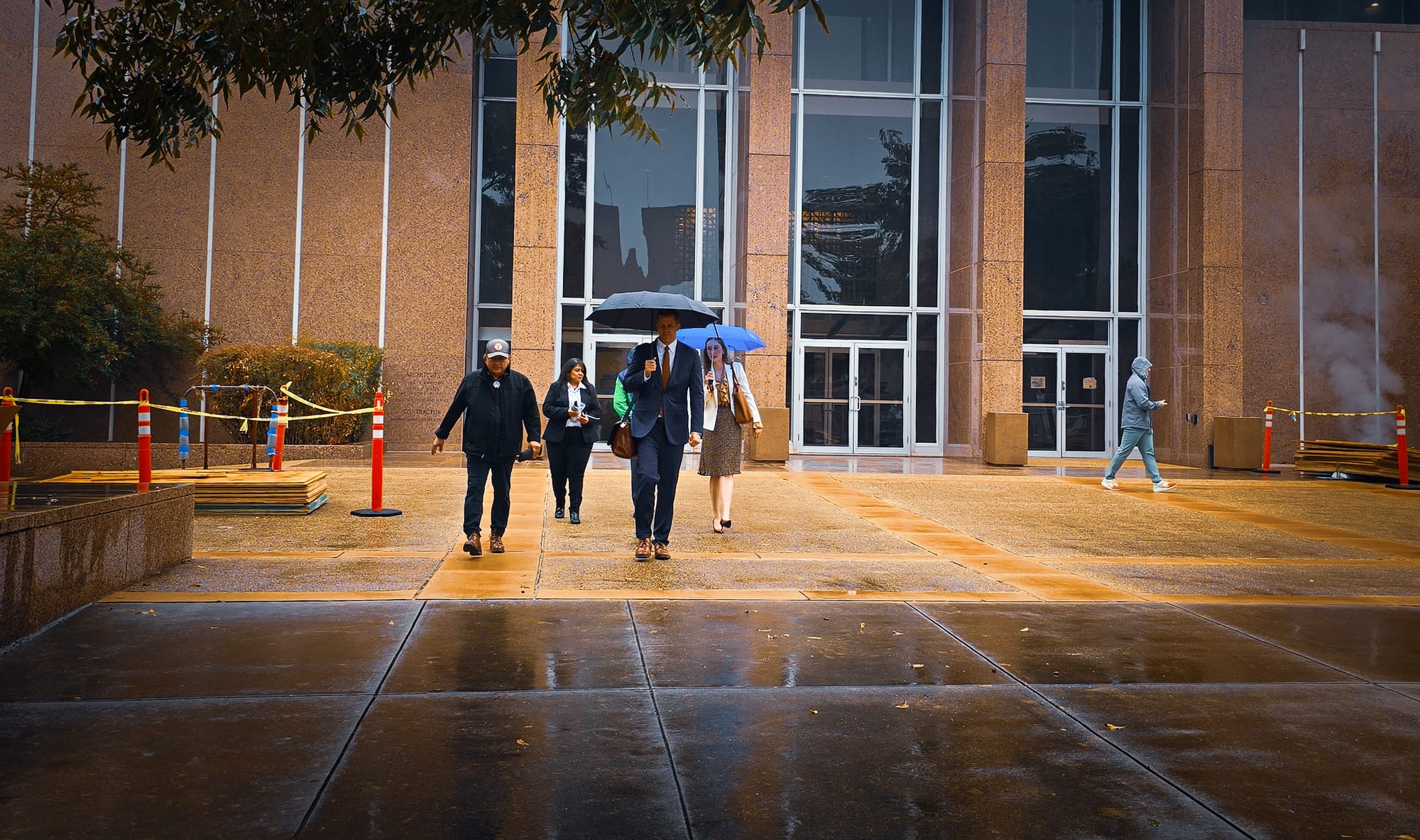
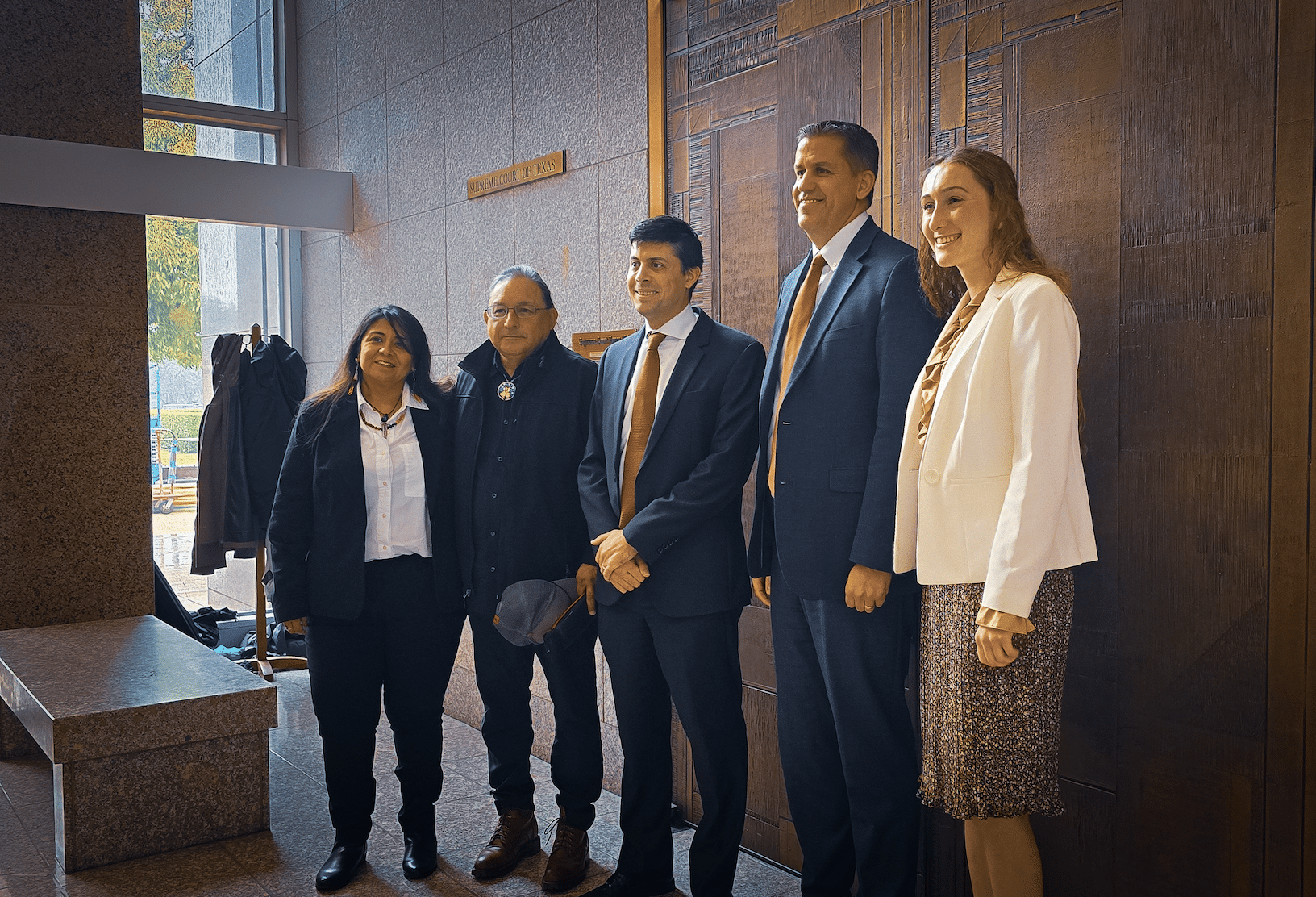
On Wednesday, December 5, 2024, the Supreme Court of Texas heard oral arguments in “Perez v. City of San Antonio.”
“Like their ancestors before them, Gary Perez and Matilde Torres perform religious ceremonies at a bend in the San Antonio River,” said the couple’s legal representative, John Greil of the University of the University of Texas Law and Religion Clinic, during introductory oral arguments before the court.
“They believe that bend is sacred and that the cormorants that nest in the trees, and the trees themselves, form the central components of those religious ceremonies. The City of San Antonio has chosen a construction that will remove all but 14 of the 80 trees at that bank.”
Article I, Section 6-a of the Texas Constitution bars the state of Texas and any subdivisions within it (like cities and counties) from limiting or prohibiting the practice of religious activities. Though originally aimed at reopening churches which may have had their activities limited over pandemic-related health concerns, the amendment is broadly written. On Wednesday, the justices of the the Supreme Court of Texas met to attempt to figure out where the boundaries of that amendment lie. It is the first court case in the state’s history based around the religious freedom amendment, according to Greil.
“We’re moving the needle forward with this case,” Perez told Deceleration after the hearing. “We’re moving justice in the direction it needs to go.”
However, Perez stressed that the hearing was not about the validity of his group’s spiritual beliefs or practices in San Antonio. Instead, the court was debating what is necessary for a city to meet the requirements of the state constitution in regards to freedom of religion. “The state of Texas and its laws make it very clear that they protect the freedom of religion under just about any circumstance,” Perez said.
During oral arguments Greil argued that the state should take an expansive view of Section 6-a, allowing the church nearly unlimited access to the river bend in Brackenridge Park where there was once a rookery of egrets, herons, and cormorants, all of whom have since been evicted by the City of San Antonio, regardless of any perceived risk that the condition of the trees or river bank might pose to the congregants. In opposing arguments, both the City of San Antonio and a legal representative of the State of Texas took turns presenting their arguments that Section 6-A was, no matter how broadly its wording, only intended to prevent religious discrimination during situations like the pandemic, when churches may have been closed while other gathering places, such as grocery and liquor stores remained open.
The justices seemed highly engaged with the case and the potential precedent it could set over a wide range of religious practices in Texas. Greil admitted there were limitations to religious freedom clearly defined in established legal doctrine. For example, the City would not be required to provide communion wine to an impoverished church that could not otherwise afford it. However, he argued that Section 6-A does require cities to allow religious practitioners to assume some risk, for example, from potential falling branches in the grove of trees.
Many of the legal arguments during the hearing hinged on hypothetical situations. Justice Jeff Boyd asked whether a city would have to allow access to a Spanish mission church, such as those found in San Antonio, if it had fallen into disrepair, with Greil arguing that Section 6-A would require access to that kind of religious site under those circumstances.
In discussing the hearing, Perez acknowledged that his group is willing to take some risks and believes that they are the best ones to judge when it isn’t safe to be at their sacred river bend.
“The only reason we wouldn’t show up for our church services is if there was lightning or a thunderstorm. We know what we’re doing,” Perez said.
One argument made by the City of San Antonio, represented in the hearing by Jane Webre, a partner at Scott Douglass & McConnico, LLP, was that such an expansive view of Section 6-A could allow for extreme abuses by people who argued that their behavior represents their “sincerely held religious beliefs.” She raised the specter of Warren Jeffs, a Texas cult leader currently serving a life sentence in prison who notoriously performed “marriages” on underage girls. But Greil argued that such behavior would still not be defensible under what Texas law defines as “vicious and harmful” behavior.
City of San Antonio spokesperson Brian Chasnoff said that the City plans push forward with the tree removals and broader bond project at Brackenridge as soon as it gets a final permit from the U.S. Army Corps of Engineers.
“Plaintiffs contend that the City of San Antonio will be in violation of that provision [Section 6-1] if it undertakes the planned rehabilitation of portions of Brackenridge Park,” Chasnoff wrote Deceleration by email. “The City contends that the rehabilitation and repair of crumbling walls is imperative to protect the public health and safety of park patrons.”
When asked if the City was restrained in any way while the legal complaint continues to be discussed by the courts, Chasnoff texted Deceleration: “That’s speculative. At this point we’re just waiting for the permit.”
After the hearing, the justices returned to their chambers to begin discussing the merits of the case. A decision could take months, but Greil expects to hear from the court by August at the latest. According to him, the Supreme Court of Texas will “decide the proper interpretation” of Section 6-A. “It will likely announce an interpretation, and then the case will return to the federal Fifth Circuit.” At that point, the Fifth Circuit court could either hold an additional hearing, or even send the case back to the district court for a retrial.
Outside the Texas Supreme Court on Wednesday after the hearing, Perez said:
“We have a right to say the birds and the trees need to be there. We just need to know that [the birds are] in the trees nesting, because that’s our reassurance that the cycles [of life] are going to continue again and again.
“That’s primarily why we show up, because they show up and the cycle continues, and then our children show up, and our children’s children’s show up and the next generations of birds.”


