

A review of lessons learned, and learned again, about heat since the ‘90s; Plus! A guide to heat-busting efforts happening now in San Antonio, Texas.
Marisol Cortez
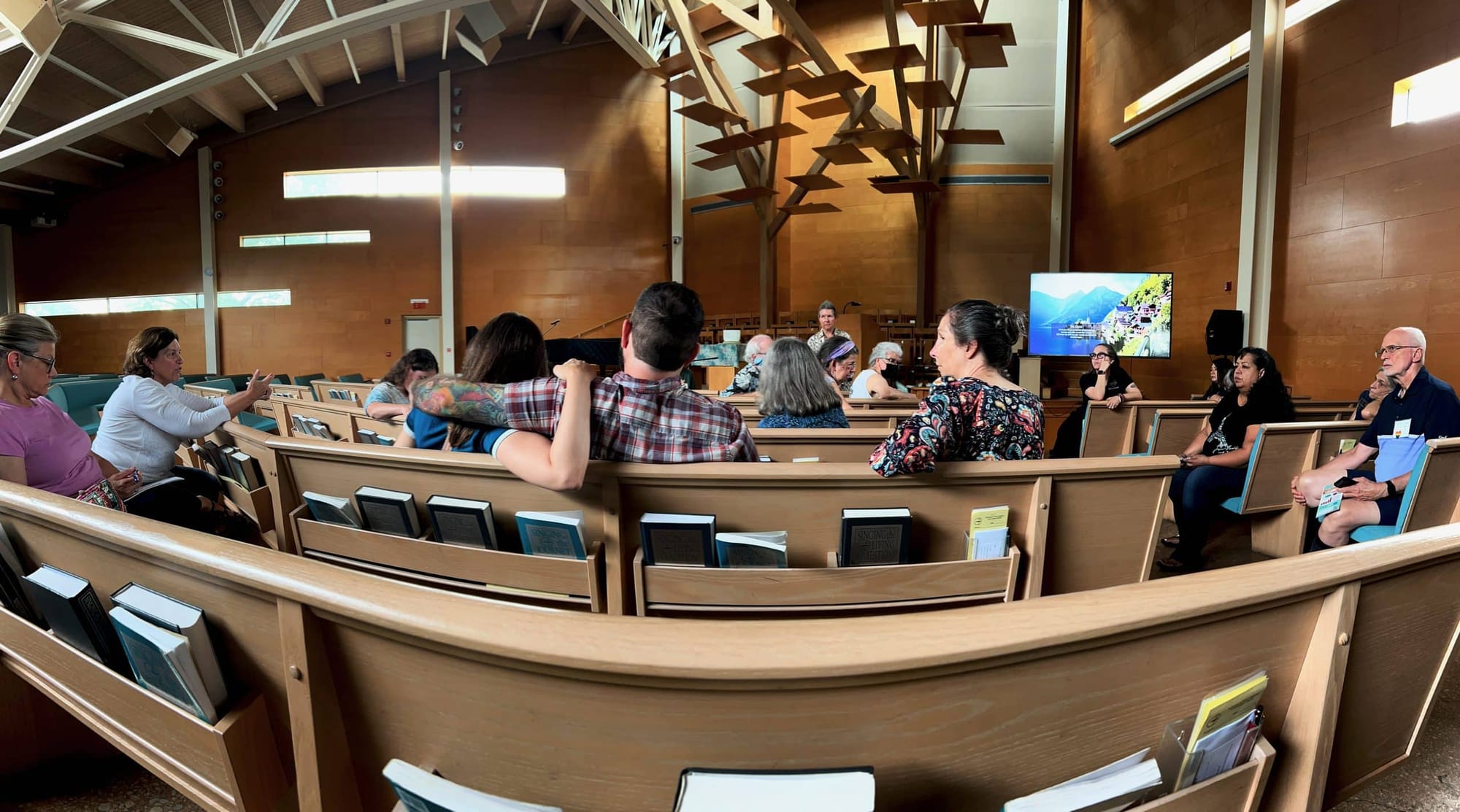
“We’re on Plan B,” Diane Duesterhoeft apologizes. A power surge hit the First Universalist Unitarian church that Sunday morning, knocking out their A/C and internet. We’re there after their morning service for a screening of Cooked: Death by Zip Code, a documentary about the 1995 Chicago heat wave. “So kind of living the experience here, right?”
Ironically, Hurricane Beryl has brought a break in San Antonio’s streak of triple-digit days, meaning the un-airconditioned sanctuary is unusually tolerable. But this reprieve rubs uncomfortably against our knowledge that just three hours down I-10, nearly 100,000 Gulf Coast neighbors still lack power amid sweltering temps more than a week after Beryl barreled its way up East Texas. Ten deaths have been reported, two of which happened as a direct result of the power outages.
Cooked likewise focuses on a heat wave that hit Chicago unprepared in July of 1995, leaving 739 dead by the time the city finalized its tally of excess mortality. The patterns in who died have by now become familiar: concentrated in the most disadvantaged ZIP codes, most of the dead were poor, Black, and elderly.
I read about this case years ago in Heatwave: A Social Autopsy of Disaster in Chicago, a classic work of environmental sociology by Eric Klinenberg, originally published in 2003—before Hurricane Katrina laid bare the racial and class inequities of all “natural” disasters, at the same moment it brought climate change into broader public awareness. At the time I was writing my cli-fi novel Luz at Midnight, and I wanted to know what scholars understood about the social outcomes of extreme temperature events, especially when coupled with power outages—the likeliest and deadliest face, at least to my mind, of climate change in South Texas. Klinenberg’s social autopsy of the Chicago heat wave thus became one of my templates for a subplot involving the deaths of brown and Black elders in San Antonio’s poorest neighborhoods, after power outages hit the city in the middle of a climate-accelerated summer.
A Democracy Now! report on extreme heat from June 2024 seems to confirm these earlier predictions. Asked about “the heat wave scenario that keeps climate scientists up at night,” environmental reporter Jeff Goodell says:
“That scenario is … what would happen if there were a five-day blackout during an extreme heat wave … which is not kind of beyond the pale of kind of reality at all—we had a five-day blackout similar to that in Texas a few years ago.”
“In that kind of a scenario in a city like Phoenix, where there’s virtually 100% penetration of air conditioning, you would have 800,000 emergency room visits and more than 13,000 deaths within 48 hours.”
The combination of high heat and power outages last week led to a surge in ER visits in the Houston area and hundreds of cases of heat illness, according to the Houston Office of Emergency Management.
All of this earlier reading and reporting drew me to the UU Green Sanctuary Team’s screening of Cooked, a 2019 documentary directed by filmmaker Judith Hefland, whose work often gravitates toward questions of environmental justice. When asked what made the Church’s green team approach the present moment’s extreme heat by casting back a generation to the ’95 heat wave, Alison Hom-Corsier said the film holds important lessons from an earlier moment in climate change history—when an early warning sign, viewed in retrospect, could still seem to be a freakish one-off:
“The extreme heat we’re experiencing … is not something that’s new, and it’s something that different cities have been experiencing for a long time. And I just think that sometimes we have short memories. So it’s really important … to bring in historical knowledge and context around events that happened in the past, how maybe they were mishandled at that time and what we’ve learned from them.”
Hom-Crosier also pointed to the importance of moving beyond a conception of disaster relief that attends only to the immediate aftermath of crisis versus the “longer term, more difficult work of creating community resilience,” especially where that work seeks to name and address the root causes of the climate destabilization driving disaster:
“We’ve also seen the city talking about and wanting to do some of those things [resilience work], and so we do want to give them a chance to come in and talk about what they’re doing,” Hom-Crosier said.
“But [the film] is also a perspective on how city governments have failed in the past, and how sometimes it takes nonprofits or grassroots efforts to fill those gaps, and also hold political leaders accountable.”
Toward that end, we wanted to provide a round up of grassroots and neighborhood-based mutual aid efforts that have blossomed in recent months in response to extreme heat in San Antonio, including calls for direct support for anyone wondering how they can help sustain these efforts. Here are just a few we know of; if you hear of others we should add to the list, email us at editor@deceleration.news.
Heat-Busting Efforts in SATX
Southwest Workers Union
Southwest Workers Union is canvassing neighborhoods on the south, east, and west sides that are among the hottest and most energy burdened in San Antonio. In an old-fashioned door-knocking campaign, youth organizers are going block by block talking to neighbors in the heat not only about extreme heat and inequities in utility rate structure but also SB4 and migrant justice. (Survey time: Did you know the 5,000 biggest residential energy hogs have a special rate class ensuring they pay way less per kilowatt hour than the rest of us? This 2022 essay on the subject is still sadly relevant.) SWU youth are using Deceleration’s Extreme Heat Survival Guide door hangers to facilitate many of their conversations.
Eastside Heat Team
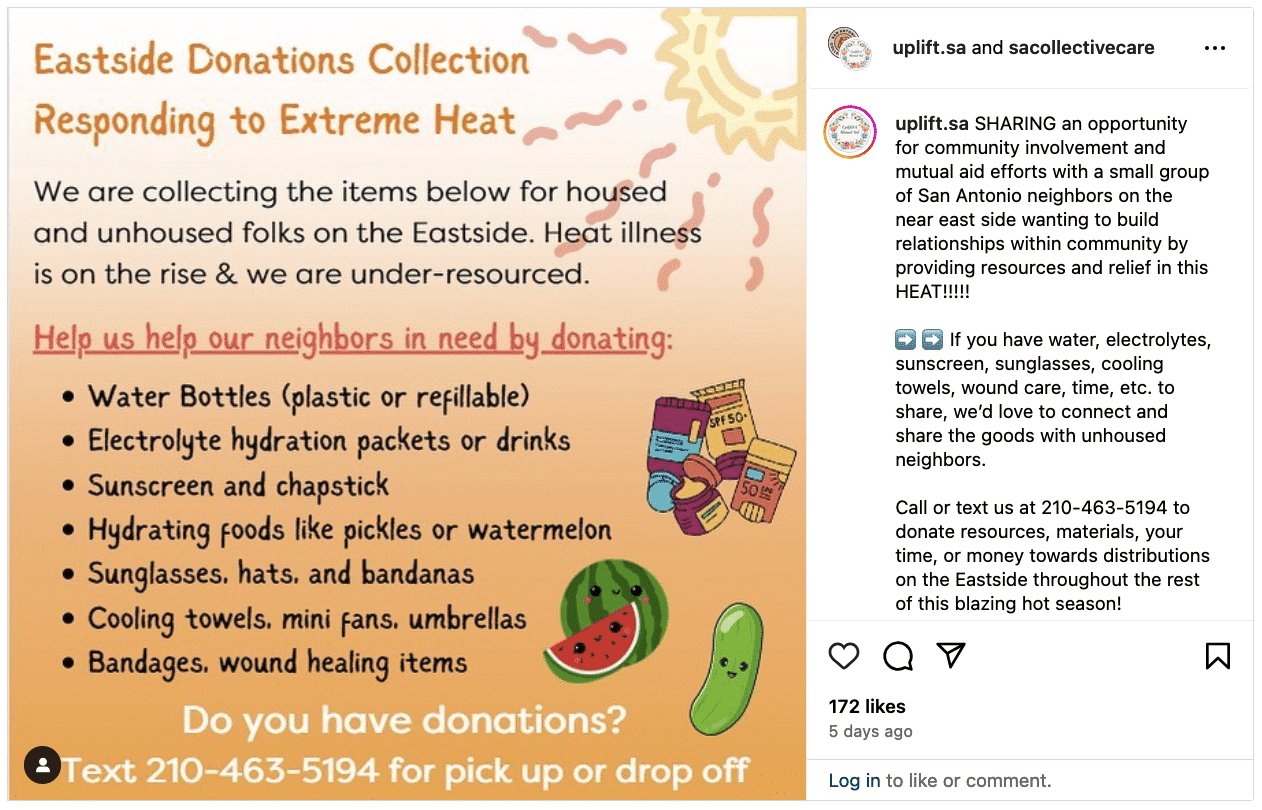
On the Eastside, an affinity group calling itself the Eastside Heat Team is seeking heat relief donations to redistribute to unhoused and inadequately housed neighbors. In their words, they hope “to gather a group of committed individuals and build connections with organizations who can steadily supply resources so our climate response efforts can become a year-round mutual aid effort.” To donate resources or plug in, call or text 210-463-5194.
Yanawana Herbolarios
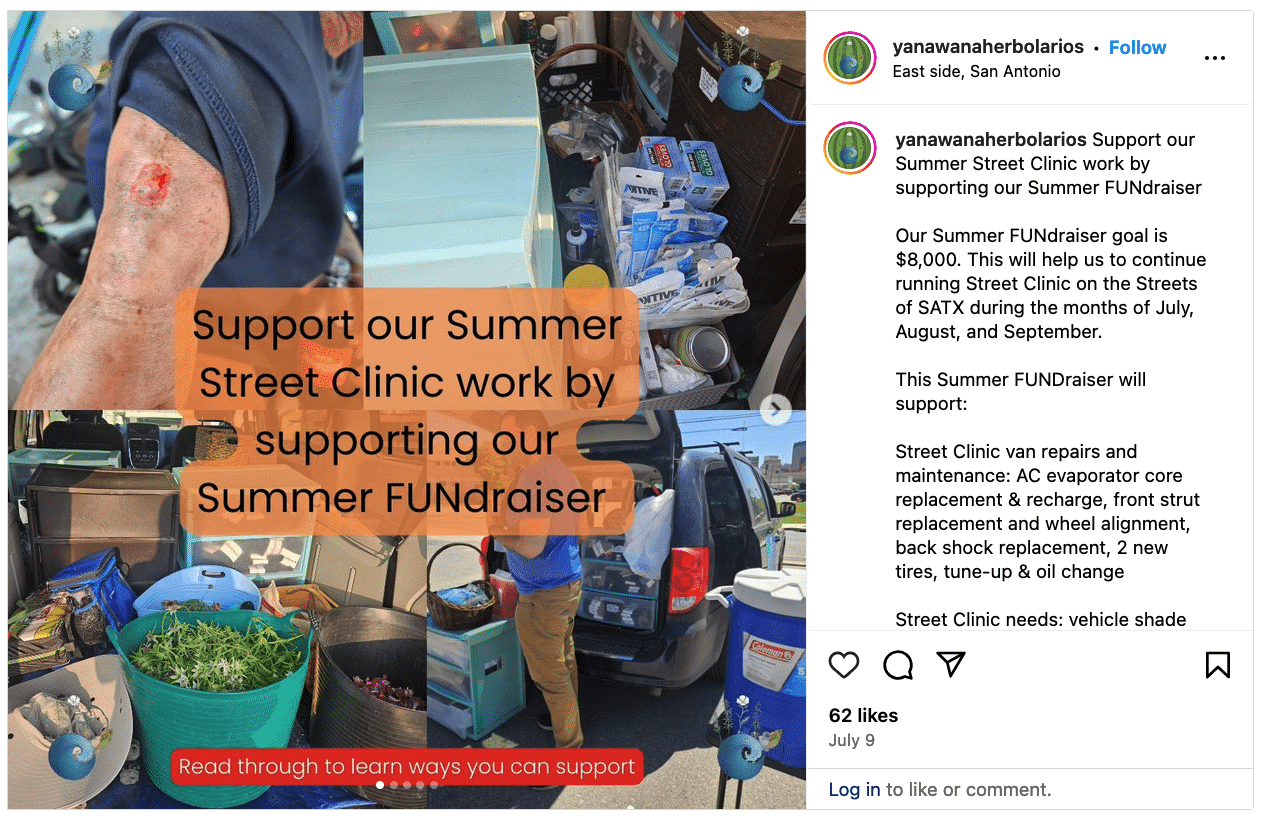
Yanawana Herbolarios is seeking to raise funds to sustain their mobile street clinic efforts during the hottest part of the year. This street clinic serves unhoused neighbors around the city who are among the communities most impacted by heat yet are frequently ignored in the city’s preparedness planning. This summer, YH’s biggest need is to fix the a/c in their clinic van so that medics can complete their rounds safely, and to install van awnings to provide shade for clients and medics as they provide care. If you or your neighbors have been helped by YH’s street outreach team or are looking for ways to meet the needs of unhoused neighbors, consider supporting this work here–see Insta post above on how you can do this.
¡Esta Caliente!
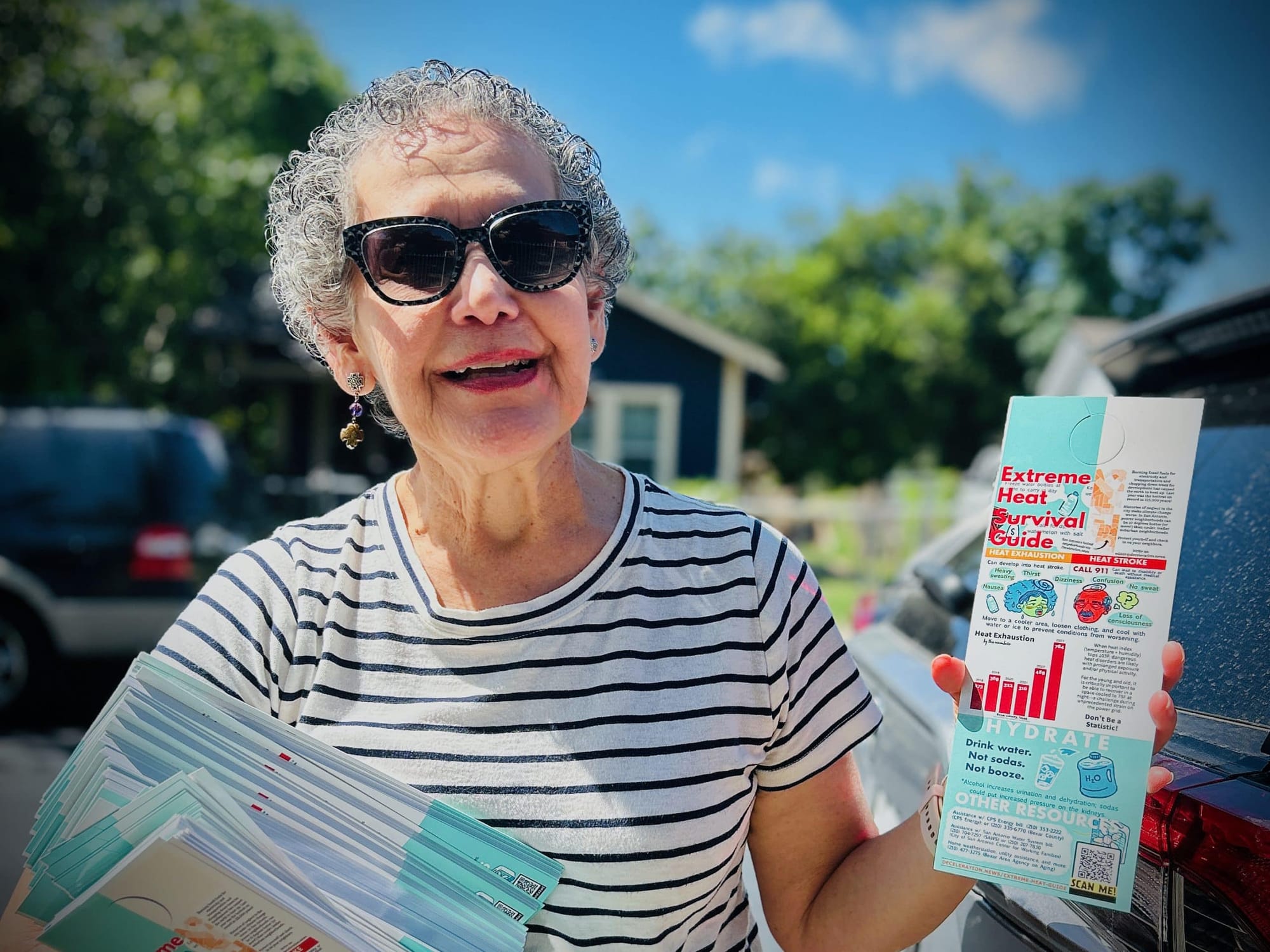
On the West Side, a new initiative called Esta Caliente is starting up, thanks to the leadership of Adelita Cantú, a nationally recognized community health expert based at the University of Texas Health Science Center at San Antonio. The mission of the group, which is lifting off with grant support from the City of San Antonio’s Office of Sustainability (more on them below), is “empowering today’s youth to meet tomorrow’s climate change challenges,” Cantú said. The team will tackle a range of environmental justice issues, including plastics and heat (also distributing Deceleration’s Extreme Heat Survival Guide), while helping young people develop leadership skills. Based out of the Good Samaritan Community Center, the effort will benefit from additional support from UTHSC-SA student volunteers operating as Climate Action for Public Health. To volunteer or for more information, write Cantu at CantuA2@uthscsa.edu.
San Antonio Office of Sustainability
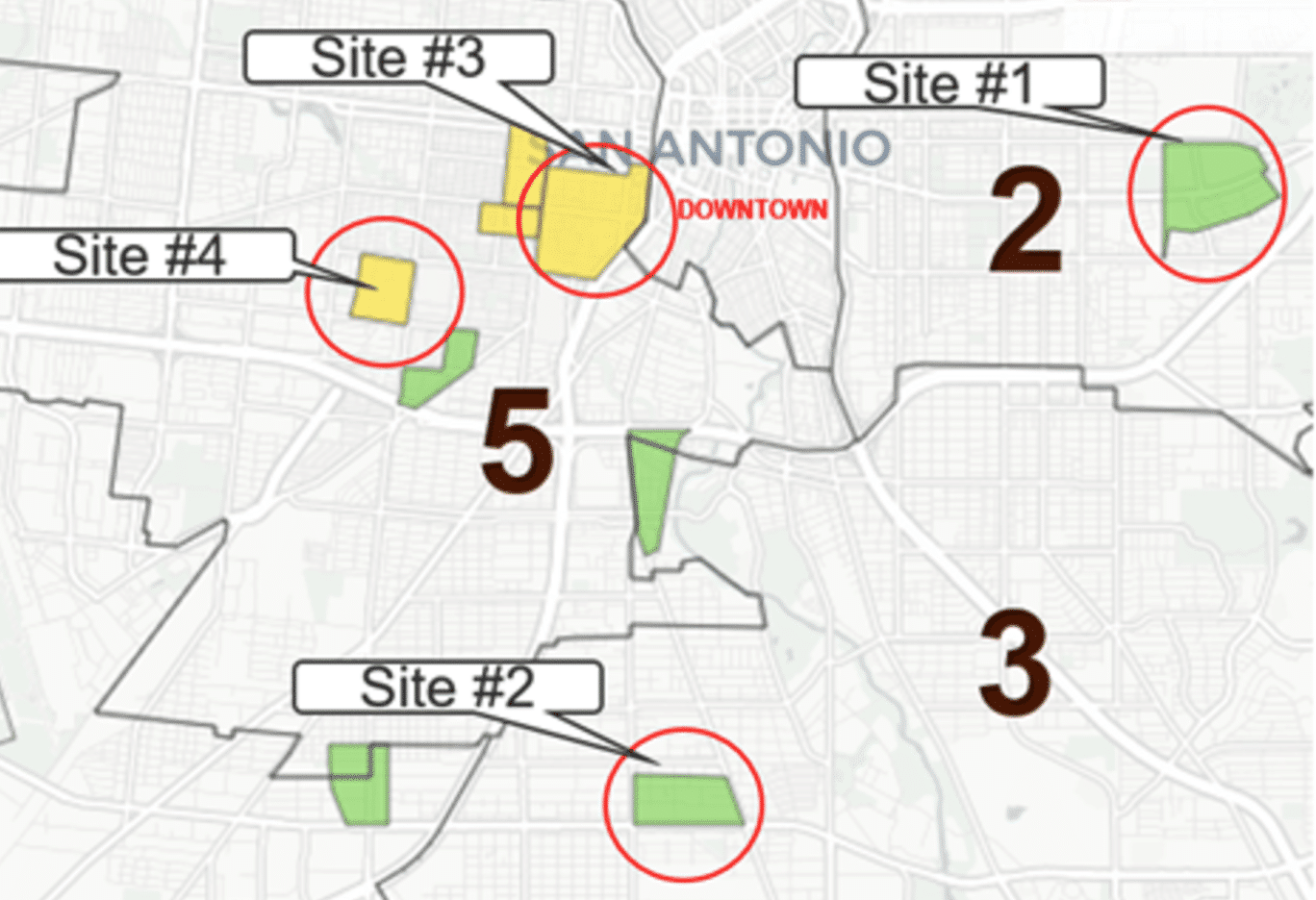
None of this is to overlook the City of San Antonio’s efforts to engage in resilience work at the neighborhood level, which rolled out this year under the auspices of the City’s Office of Sustainability. Adapted from the Urban Sustainability Directors Network’s concept of resilience hubs, the Climate Ready Neighborhood program is “a network … to support community-based organizations who in turn support their community as Neighborhood PODs.” That stands for “points of distribution,” or community-based nodes for sharing information, trainings, resources, and funding. Through the program, neighborhood associations, businesses, churches, nonprofits, and community groups can apply to serve as communications, shelter, or resource PODs for their neighbors—as well as $5,000 micro-grants or $20,000 project grants to carry out their PODly activities.
While the City of San Antonio is coordinating and funding the Climate Ready Neighborhood program from the top down, it’s important to note that it is neighbors—the same relations of care and horizontality that power the grassroots mutual aid networks listed here—who anchor these efforts. Networks of resilience, then, are only as strong as the bottom-up community turnout that makes them possible.
Ready to spawn a POD for your hood? Click to access this interest form, or contact carina.trevino@sanantonio.gov for more info. Or come to the next Climate Ready Neighborhoods Network meeting on August 22nd from 9-11am at the Culture Commons (115 Plaza de Armas, Ste 102, San Antonio, TX 78205). Or take the Cool Neighborhood Program Survey here.
Hurricane Beryl Recovery
Finally, for those looking to support Houston neighbors, West Street Recovery is a “horizontally organized grassroots non-profit formed after Hurricane Harvey” that “uses recovery efforts to build community power.” As of July 11, they write: “WSR and our city were already stretched to the brink by the Derecho [windstorm in May 2024]. But it’s on all of us to keep going as best we can. Please donate and keep reaching out to volunteer. We need you.”
-30-

Like What You’re Seeing? Become a patron for as little as $1 per month. Explore ways to support our mission. Sign up for our newsletter (for nothing!). Subscribe to our podcast at iTunes. Share this story with others.


