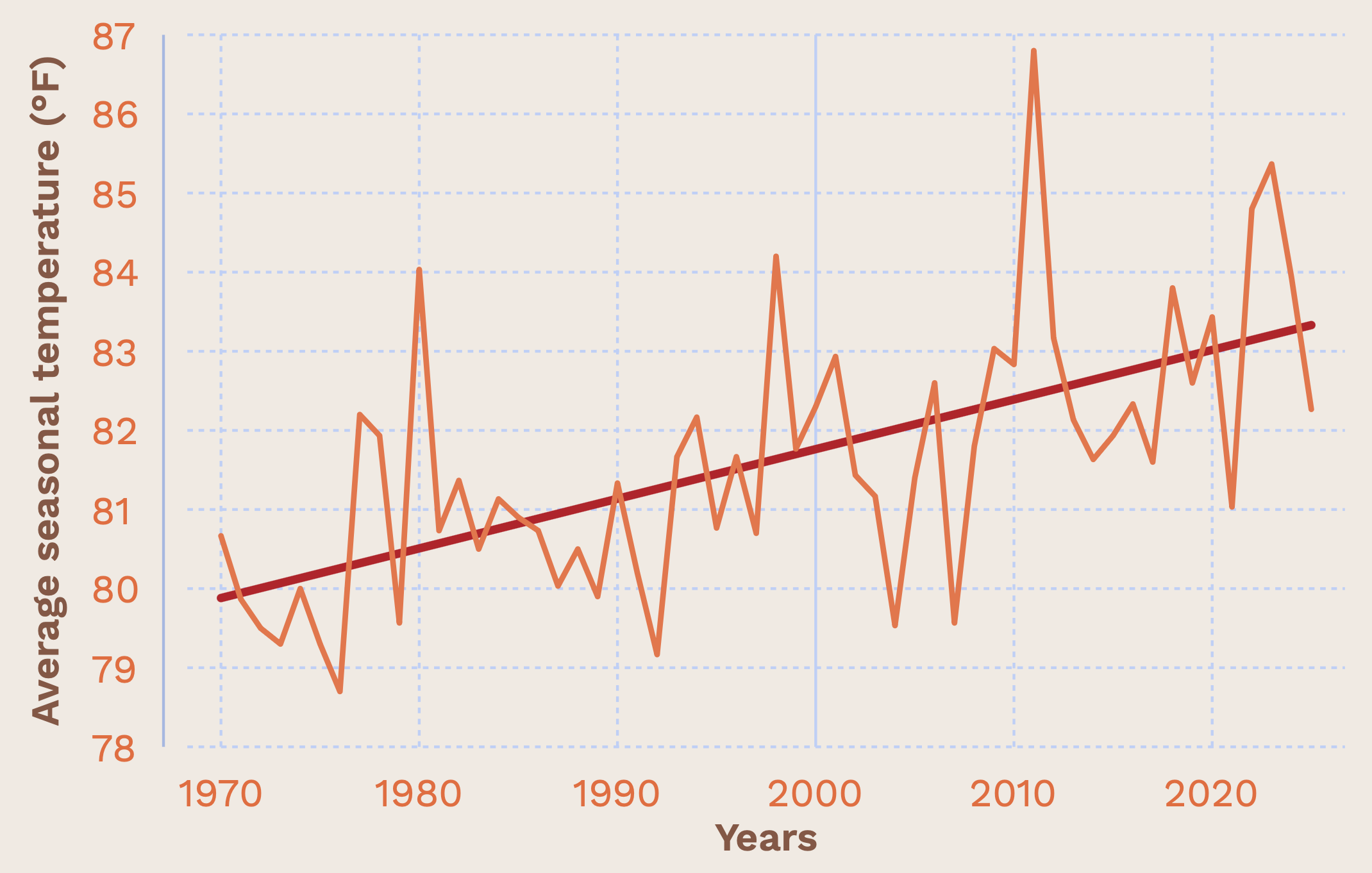
Like most of their neighbors across the planet, Texas residents are on voyage into the sizzling unknown. In recent decades, heat and humidity across the state have risen steadily as the heat-trapping gases pumped out by fossil fuel combustion continue to clog the atmosphere. Texas, a land of highly variable weather, is fast emerging as one of the fastest warming states in the U.S. And it's keeping a dangerous pace with flood-, storm, and fire-prone states like Florida and California as a national epicenter for costly billion-dollar disasters.
The heat hitting in recent years has exceeded anything local inhabitants have ever faced. Climate scientists are increasingly confident heat this extreme hasn’t been known on Earth for more than 120,000 years—possibly much longer.
There are political and structural challenges to navigating this heat. In the second most populous state in the U.S. a full 80 percent of residents live in cities—where the amount of concrete and asphalt artificially raises temperatures as much as 10 degrees or more.
What Texas cities can do about offsetting or slowing that heat remains to be seen. MAGA-aligned state and federal leaders are actively climate hostile, forcing renewable projects to the margins, while continuing to subsidize the most polluting forms of energy. Federal dollars previously reserved for social services or climate adaptation are have been clawed back even as state elected Republicans continue to block potentially lifesaving policies for climate action.

For instance, cities like Houston, San Antonio, and Austin had sought to require heat and shade breaks for workers inside of their respective city limits. But statehouse Republicans clapped back with legislation seeking to still such progressive impulses. The bill that came to be known as the “Death Star” bill by opponents—declared unconstitutional by a Travis County judge but cleared by the Third Court of Appeals—forced a rewrite of many local ordinances, including the one seeking to require heat relief.
Yet the challenge of survival remains.
While heat is the most deadly of all weather-related phenomena, most counties and cities across Texas still fail to accurately track heat-related deaths. As Deceleration has reported, nearly 600 state residents died in 2023 from extreme heat, according to a survey of state data. That's still a fraction of the deaths that likely occurred, according to published findings from a recent study by a climate scientist at Texas A&M.
Last month, San Antonio officials presented their “Heat Resilience Playbook” to City elected leaders sitting on the Community Health Committee. The 43-page document outlines existing and emerging actions intended to blunt the force of all this new heat on residents.
"The playbook has 52 action and they are divided into new actions, existing actions, and improvements," said Resilience and Sustainability Director Laura Patiño. "I’m happy to share that 80 of these actions are ongoing."
Presenting the 'Heat Resilience Playbook' to members of San Antonio City Council on April 23, 2026. Deceleration Video
The need is real and pressing, she emphasized.
"San Antonio has experienced a series of records," Patiño said. "We are experiencing hotter and longer heat seasons with more frequent heat days and documented heat related illness."
Since 2022, for instance, there have been roughly 2,400 documented cases of heat illness in the city, she said.
"Those impacts are not evenly distributed," she added. Residents in hotter pockets of the city with less tree canopy and higher income strain are most at risk, she said.
Ongoing projects include the application of reflective coatings to area streets in hope of bringing down temperatures, analyzing of heat vulnerabilities across the city, and expanding cooling center access and improved heat-related communications to local residents.

A study of shade at area bus stops is expected to be completed this fiscal year. And a partnership with the City of San Antonio and Centro San Antonio is expected to deliver 1,000 trees downtown by 2035 as part of a "Trees Everywhere" initiative.
A hub for resources and information about extreme heat—including the location of cooling centers for residents—has been corralled at sa.gov/hotweather.
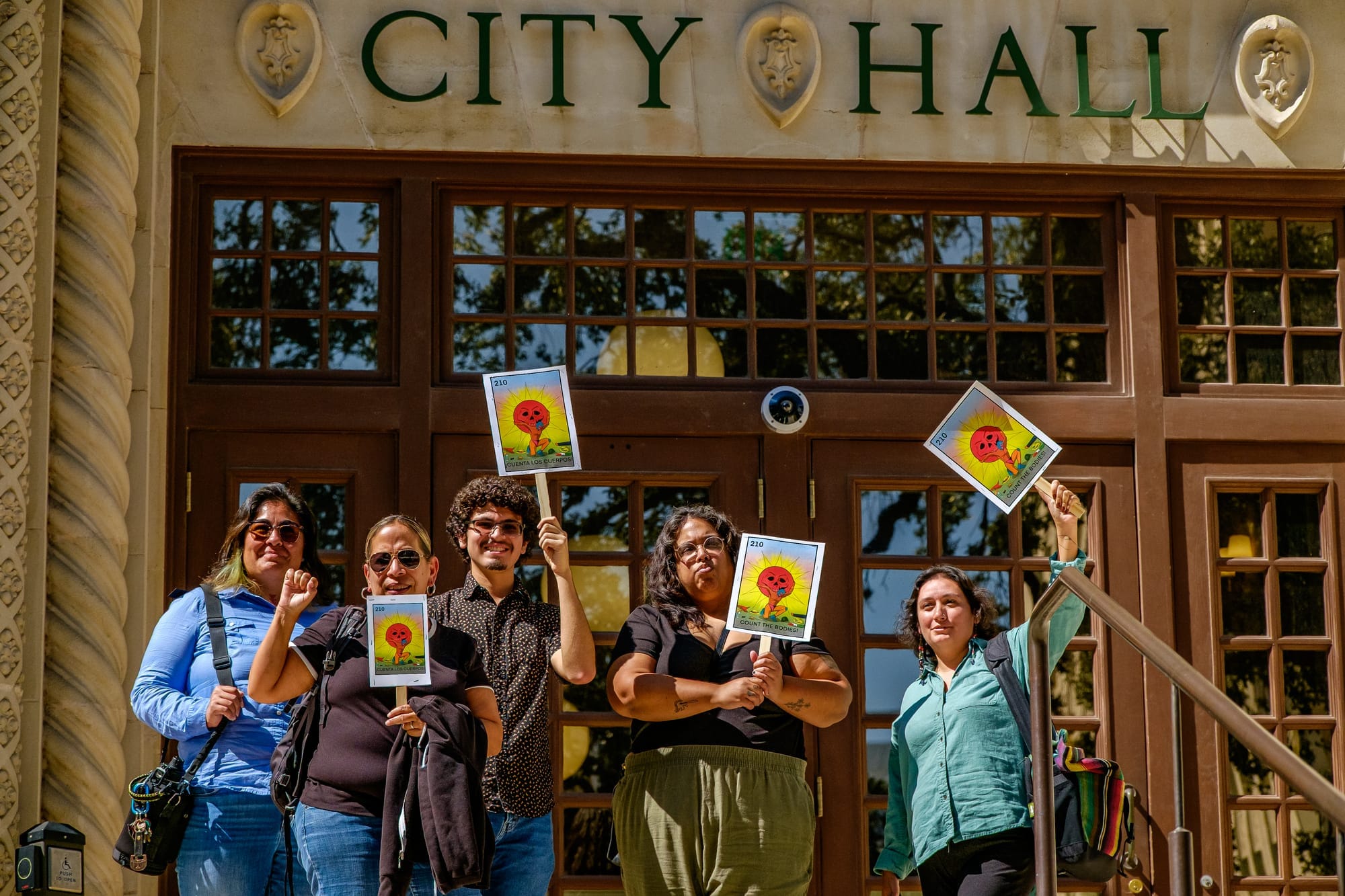
However, although local residents (who rallied in the thousands over the years for the original animating climate action plan, ultimately passed 2019) could be credited for putting the heat plan in motion, the outcome of a grassroots campaign demanding the tracking of heat-related deaths is still unclear.
Related: "San Antonio Heat-Death Tracking Effort Advances Over Staff ‘No Action’ Recommendation"
While heat-related deaths will be tracked and reported starting this summer, Patiño said, it's unclear exactly how reliable that data will be. Metro Health has been researching the best way to track heat-related deaths, she said, including researching best practices in both Texas and Arizona and entering into dialogue with the Bexar County Medical Examiner, who has importantly, as the certifying authority on death certificates, to date refused to track heat-related deaths.
“Tracking deaths due to heat is complicated and our team will continue to research methods to better estimate the impact that heat is having on our community," Patiño said.
"Currently the most standard method of collecting that data is through death certificates. Metro Health will add death data to their current heat-related illnesses dashboard starting this year."
Metro Health's heat illness dashboard previously included a line for heat-related deaths, but the department stopped including them in their monthly reports a couple years ago as Deceleration highlighted the unreliability of the data without the Bexar County Medical Examiner's participation.
Metro Health Director Dr. Claude A. Jacob told the Heath Committee members that beginning this summer that heat tracking nonetheless will again be rolled into the monthly reports, including provisional death certificates from any heat-related deaths logged.
The City of Austin, meanwhile, released its Heat Resilience Playbook in 2024, boasting 56 actions meant to reduce heat’s impact on residents. Last year, the City of Austin—with a commitment to reach net-zero greenhouse gas pollution by 2040—announced it had been awarded $70,000 to develop heat survival strategies alongside three other U.S. cities (Miami, Fla., New York City, and Washington, D.C.) as part of the C40 Heat, Health, and Equity Challenge Fund.
Last fall, the Austin-San Antonio region was selected as a “climate resilient communities accelerator” zone by the Center for Climate and Energy Solutions. That put in motion a two-year effort involving local governments across the fast-growing I-35 corridor of Central Texas, including Austin and San Antonio.
“We are the fastest growing region in the United States and live in the state with one of the highest number of federally declared disasters per year,” Patiño said at the time. “Yet, there is a strong culture for collaboration that can be leveraged to ensure we are improving quality of life for residents in the region for years to come.”
El Paso, which struggles with dangerous drought and some of the hottest daily temps in Texas, recently approved its own climate plan when nearly half of the City Council members were absent. However, the plan doesn’t mandate or enact any specific policies.
“We’re not adopting a specific policy yet. It’s more of a guide that will essentially bring those policies forward,” El Paso Matters quoted District 5 city Rep. Ivan Niño. “And that’s the time the council can start talking further (about) what they want to advocate within those specific policies.”
Deceleration reached out to Metro Health with questions about what changes are anticipated in heat tracking of heat-related deaths and we were referred to the Office of Resilience and Sustainability.