

Editor’s Note: As I write, the Trump regime is threatening to invade Cuba and abduct its revolutionary hero and former president, 94-year-old Raúl Castro. This after kidnapping Venezuelan President Nicolas Maduro and murdering nearly 200 fishers in the Eastern Pacific and Caribbean Sea; after relentlessly bombing Iran and assassinating many of its leaders; after funding and backing the Israeli assault on Lebanon and genocide campaign in Gaza: all of it in just the first five months of 2026.
I’m 71. When I try to count how many countries the U.S. has invaded, occupied, intervened in, ravaged just during my lifetime—Korea and Vietnam, Grenada and El Salvador, Palestine and Libya and Somalia and so many more—well, I can’t. The bitter truth seems to be there’s no end in sight.
How do we respond? What can we do?
We march. We protest. We disrupt the war machine as best we can. And, taking to heart brilliant writer James Baldwin’s impassioned cri de coeur of almost sixty years ago, during the Vietnam War—“Every bombed village is my hometown”—we create art. Because while this moment calls for action, it also calls for radical empathy. Which is where artists come in, as Baldwin teaches us.
With words, sounds, and images, artists tell our fellow humans suffering under U.S. or U.S.-backed bombardment: We care. We are with you. We tell our friends, neighbors, and co-workers here at home: This is our family. Feel them. Stand with them. Don’t look away.
So when Deceleration invited me to guest edit this issue of their creative review, it felt like an important, even urgent, task. Asking writers and artists to respond to Baldwin’s call contributes toward the international solidarity we need in this moment.
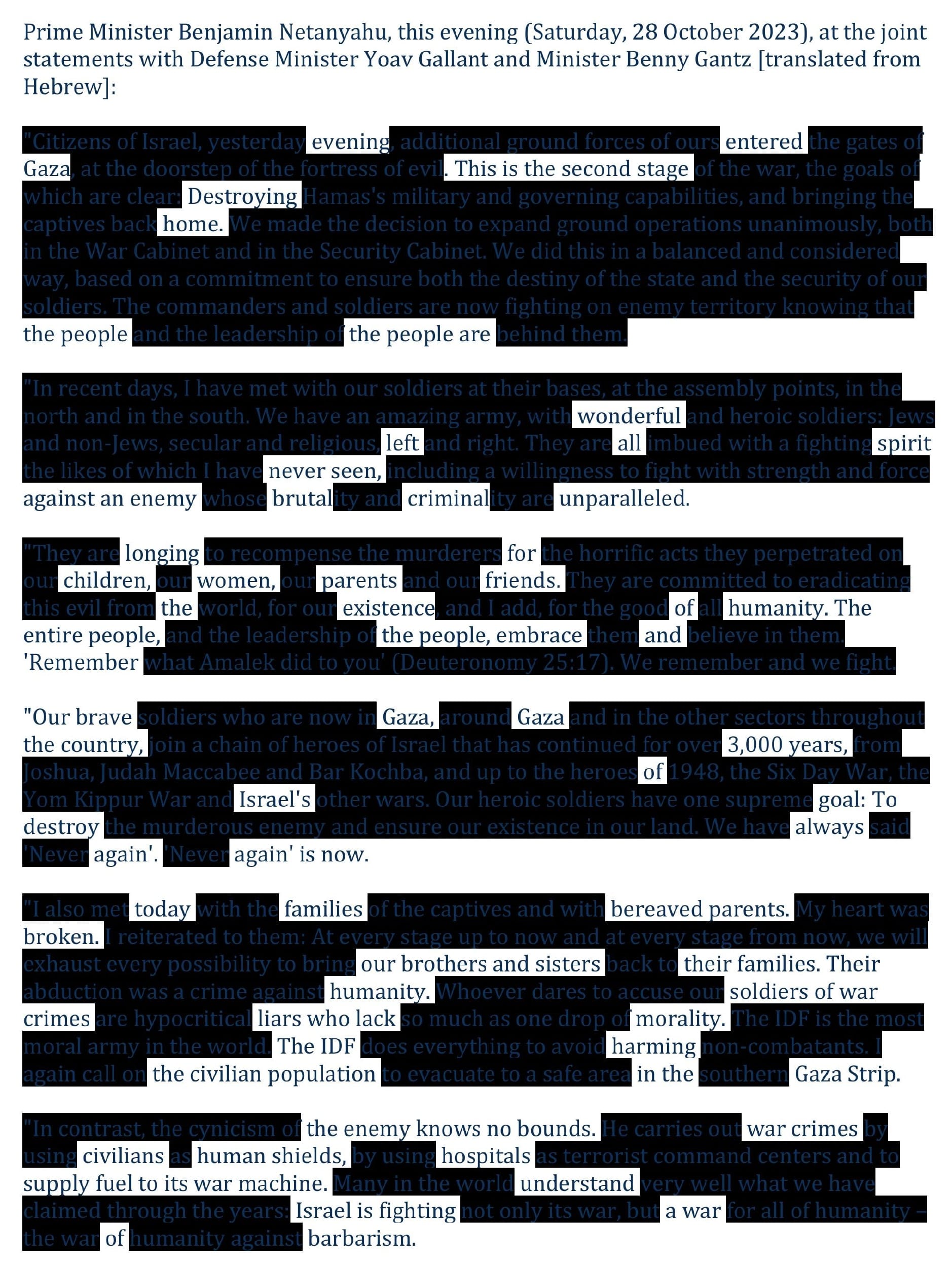
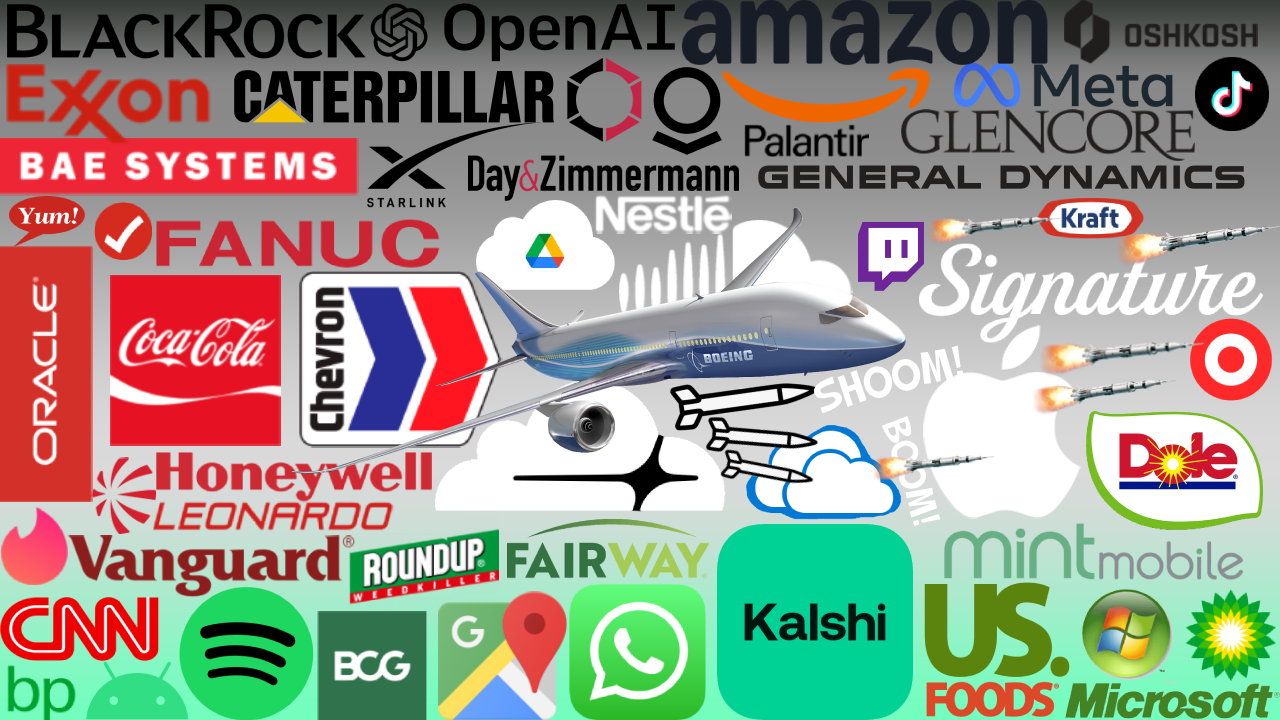
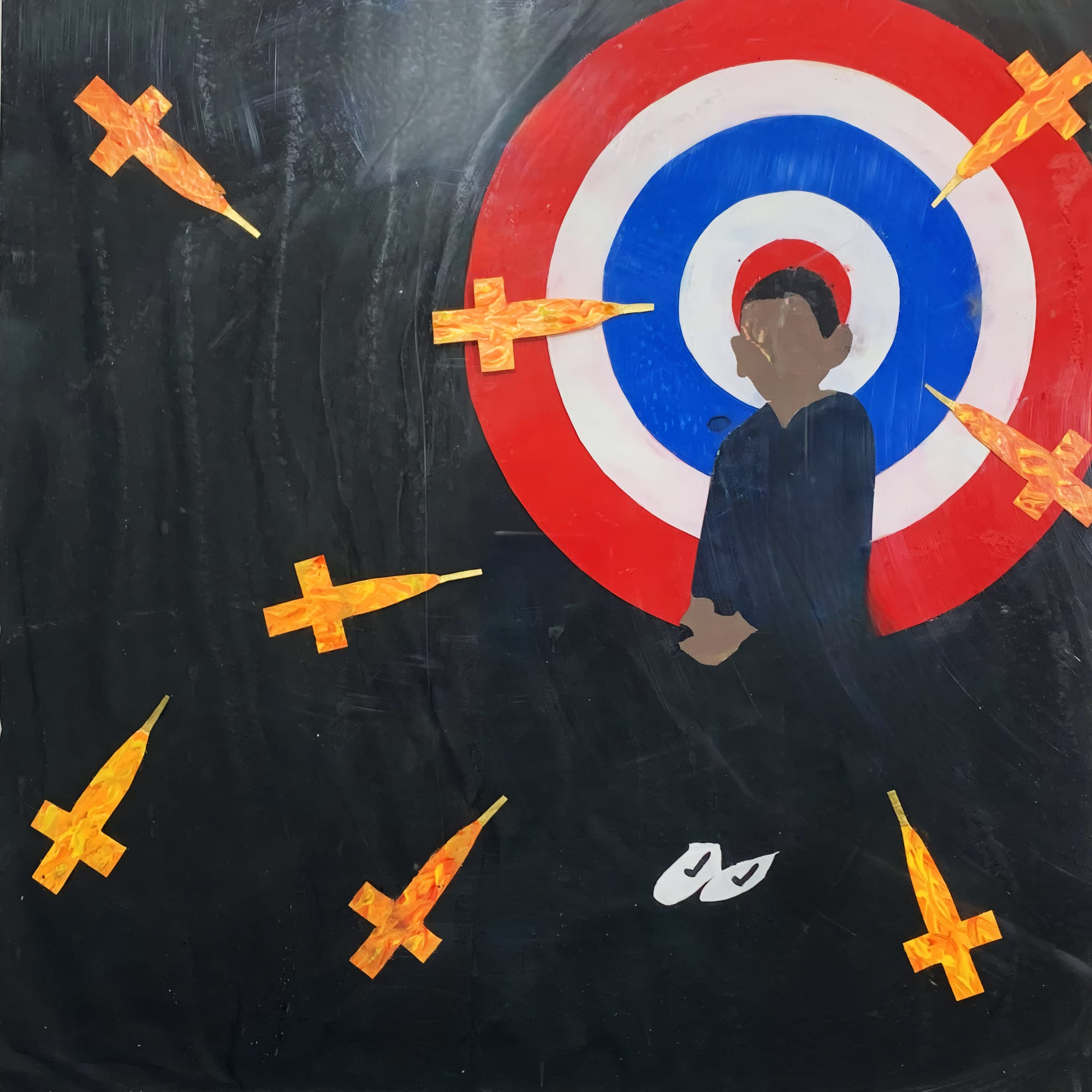
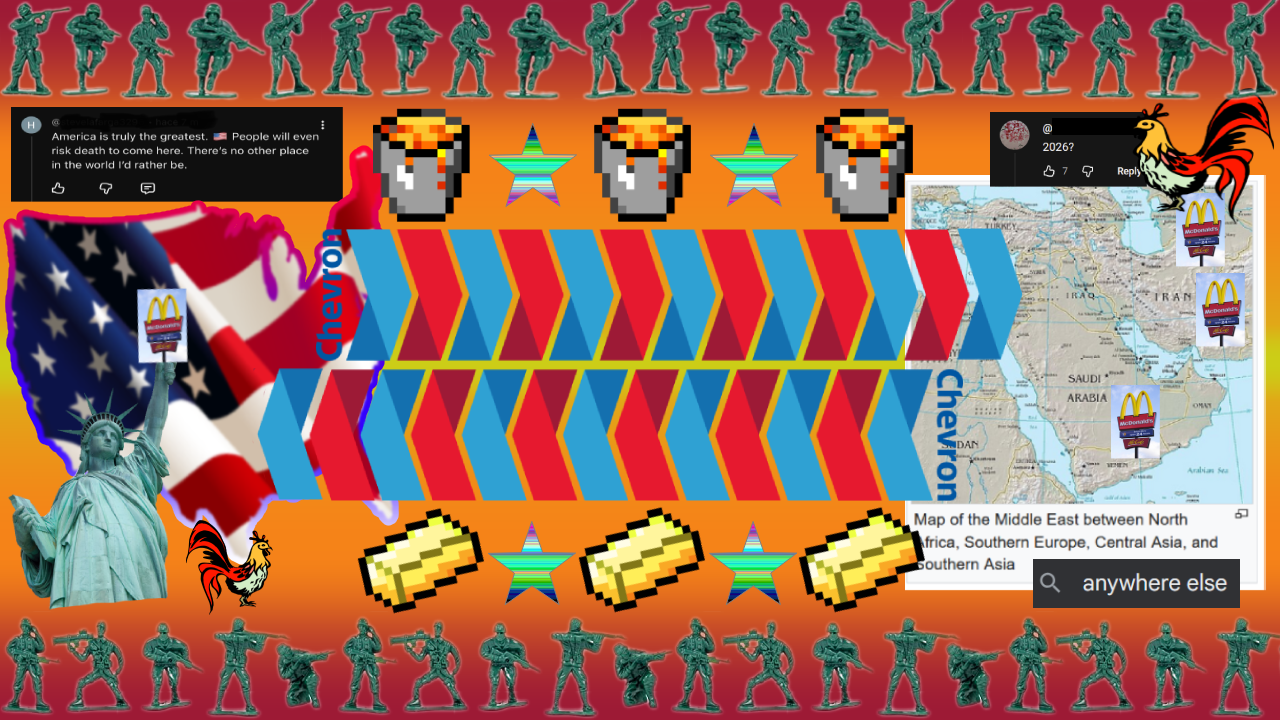
We think the work presented here is just such a contribution. From Mecca Miles’ superb opener “Watching the World End from the Rower at Planet Fitness” to Aliza Haskal’s stunning Netanyahu blackout poem, Odi Welter’s “Butterfly Massacre,” Isabella Briseño’s “Power Lines,” and Daniel Bertetti ‘s powerful graphic rendering of war profiteering, this is art full of heart and fury.
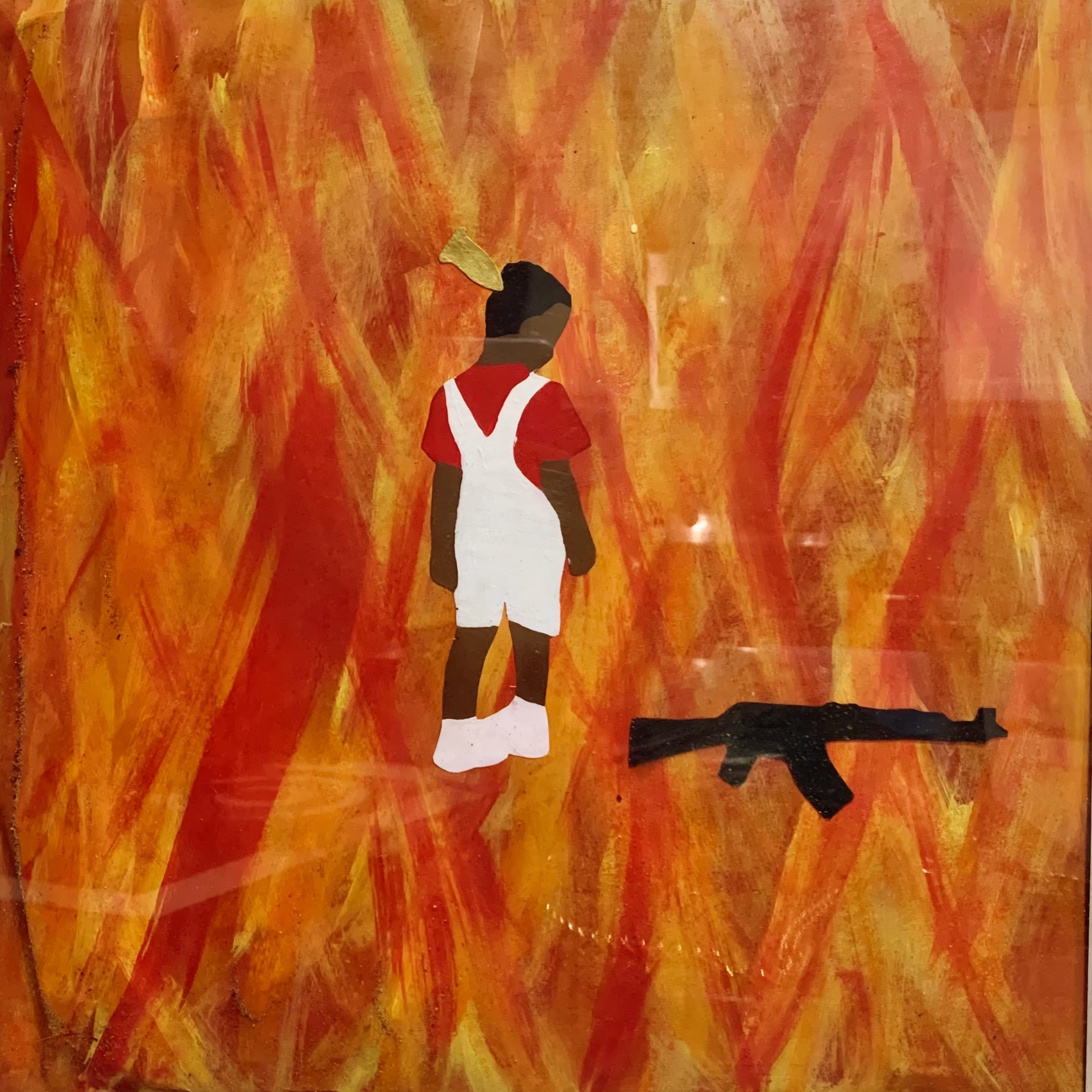
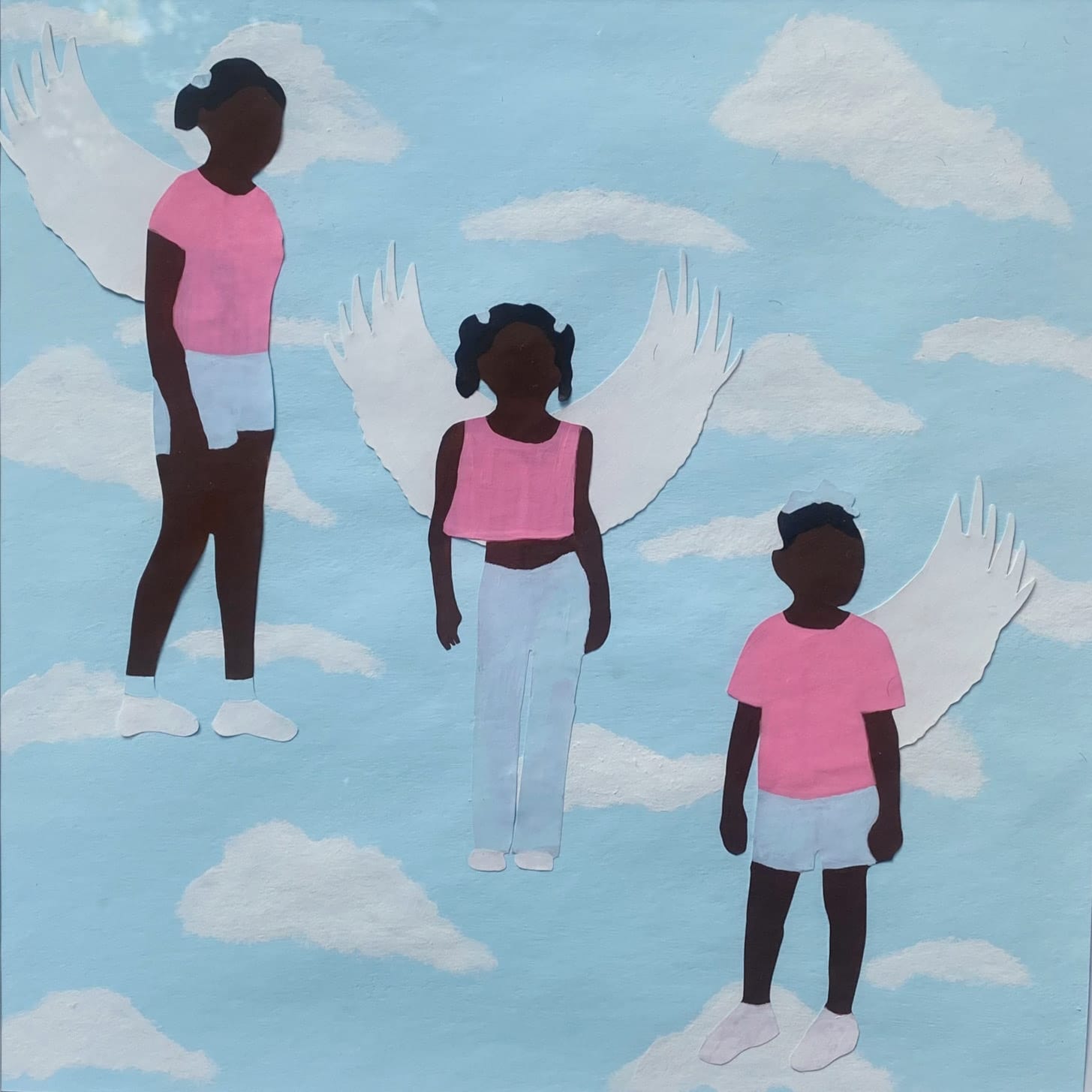
Ed Johnson’s “Emanuel” and Maya Perkin's "The War on 'Thugs'" also reminds us—as did the original context for Baldwin’s quote, which appeared in a 1968 letter to the editor at the height of both anti-war and Black Power movements—that the imperialist bombing and bulldozing of homes elsewhere is always deeply linked to the racist and willful destruction of homes and lives right here.
We hope you are similarly moved by the artistic responses to the brutality and cruelty of this moment. Angered. Inspired. And strengthened to keep fighting for a better world.
— Shelley Ettinger, Guest Editor
Watching the World End from the Rower at Planet Fitness
Mecca Miles
The Bible say we be made of dark earth—
that from the dust we came,
and to the dust we shall return.
And maybe that’s why
some mornings
taste like dirt—
like decomposition disguised as daybreak,
like an oasis
that forgot the rain.
I bury headlines
in anime and funny cat videos,
try to imagine
the debris in the air
is not the remnants of an explosion
and its victims,
but a body
being breathed into existence—
that the plume means life,
not death.
I try to imagine a softer world
where my only worry
is the wind
and whether it might
blow the sediment
off my skin.
But the fine print
at the bottom of the TV screen
at my local Planet Fitness
becomes my worst enemy.
Or maybe it’s the man
who put Fox News on
right in front of my favorite rower.
Or maybe it’s the too-expensive shoes
that don’t quite fit
how they’re supposed to.
I can’t tell which is worse—
the realization that I am uncomfortable,
or the understanding that I should be.
When Adam came face to face with his sculptor,
after the realization of his nakedness,
nothing about his shoulders
spelled relaxation.
When the news anchor fabricates another story,
molds the clay of truth
into something unrecognizable,
the muscles on my scapula tense.
Even my tendons feel the farce
as I pull the bar toward my chest—
nothing about my earth
feels like fertile land.
Instead,
it feels like quicksand,
like each row sinks me deeper into the ground,
like my ragged breath is not the result of exertion,
but rather a mushroom cloud.
In this moment,
I do not have my phone to distract me—
no funny TikTok
to take my mind off
all the horror that transpired the previous day,
that is being reduced to dust
on the bottom of a screen.
And maybe this is just an exercise in being present—
not the one I pay a membership for,
but one paid in the blood
of those on foreign soil
Prime Minister Benjamin Netanyahu, This Evening
Aliza Haskal
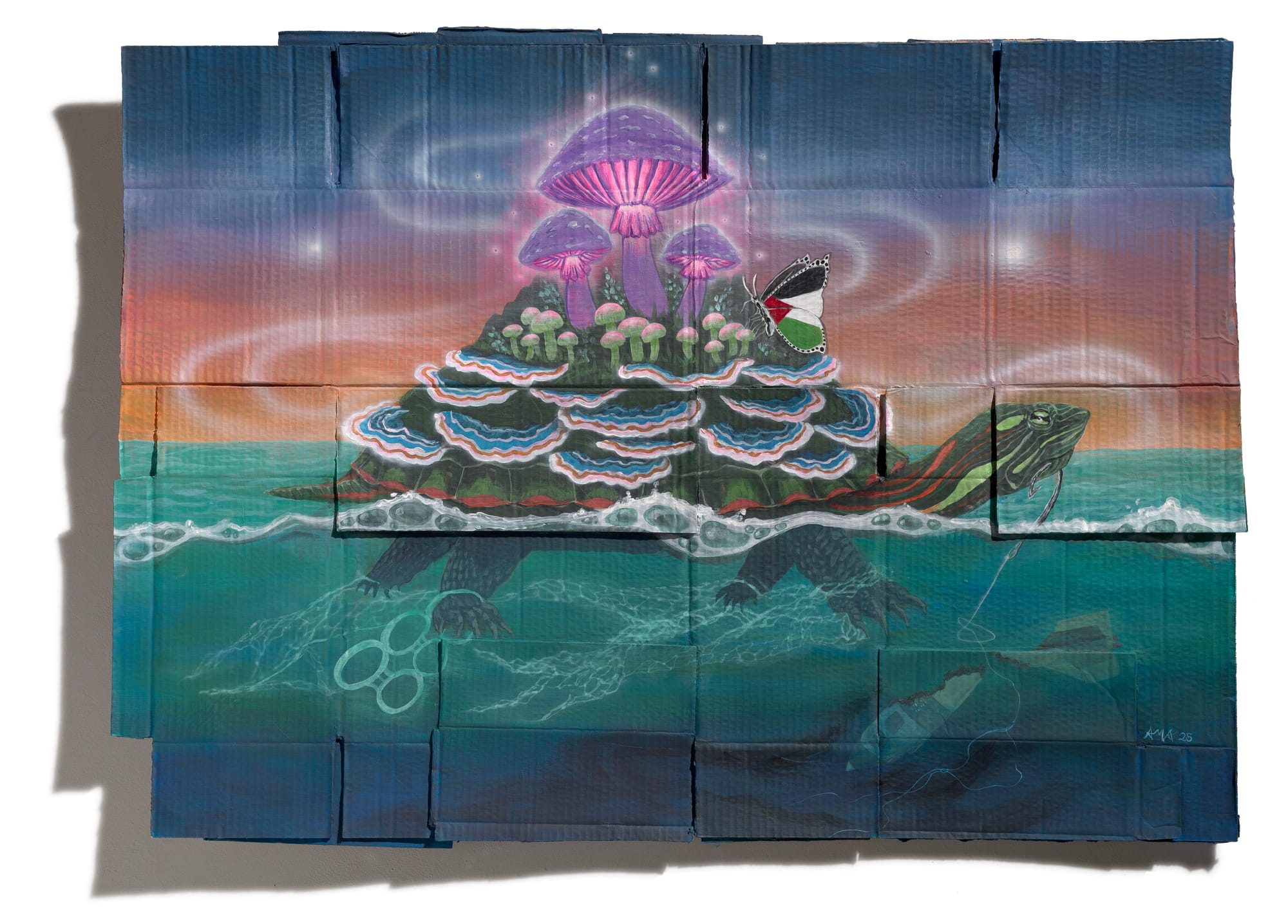
Butterfly Massacre
Odi Welter
There are more butterflies in my stomach
then there are in my hometown
even though flowers abound in my mother’s garden
and I take pills to drown out the anxiety
There are, in my hometown,
people in red hats and no more butterflies
I take pills to drown out the anxiety
whenever I come to visit
People in red hats and no more butterflies
is the path our nation is taking
whenever I come to visit
I can’t forget that I’m not welcome
The path our nation is taking
is one of erasure and denial
I can’t forget that I’m not welcome
when I look in the mirror
Is it one of erasure and denial
if we scream louder than they shoot?
When I look in the mirror
does it matter if they think I shouldn’t exist?
If we scream louder than they shoot
can they make us disappear like butterflies?
Does it matter if they think I shouldn’t exist
if I continue to anyway?
They can make us disappear like butterflies
but it would be seasonal, a migration
it matters if they think I shouldn’t exist
because they will try to make sure I don’t
It would be seasonal, a migration
another moment in our history where
they will try to make sure we don’t
exist because the colors hurt their eyes
Another moment in our history where
they build armies and call them coalitions
that exist because color hurts their eyes
and they think red will wash the world gray
They build armies and call them coalitions
to make hometowns unwelcome
and they think red will wash the world gray
as they throw bombs in neighbors’ windows
My hometown has been made unwelcome
and I have more butterflies in my stomach
as they throw bombs in neighbors’ windows
and I take pills to drown out anxiety
Powerlines
Isabella Briseño
They're building a concentration camp
by the school, and a wall on the river.
Today I saw a bird, half run-over,
turning itself in a jagged arc
with its good wing
like a warplane might circle and hum in the sky.
Other birds watched from the power line.
I'm changing my passwords to be more secure.
What if I forget my old dog's name?
They're building a concentration camp
by the school, and a wall on the river.
I think of the bird turning itself, clinging to life
What was my old street's name?
I feel myself sinking into the asphalt
turning with my good wing.
While I sink, I can see the spirits of roots
under the hot pavement they suffocate under.
They welcome and envelop me
back into the land.
I can see the shadow of the power line swaying over me.
I've been in the street, writhing.
I've been on the powerline, watching.
They're building a concentration camp
by the school, and a wall on the river.
The walls and camps
and broken wings.
I hear they're a fracture in who we are.
Our bad wing. But,
We're building a concentration camp by the school
We're building a wall along the river
We're dropping bombs
We're watching from the power lines.
The bird has passed through the asphalt, and sunk into the Earth.
Recess Revoked
Alexandria Lacayo
No Red Rover. No Duck-Duck-Goose. Let’s play the Blame Game.
You can say it’s the cows, their methane, greenhouse gases,
deny it’s the crude oil, and an Arabic surname.
Resume diligently digging graves for the masses.
What if both were true? An ecological crisis
served with a unified pandemic of genocide.
Children begging for water, wanting to quench their thirst,
watching the most unthinkable–Mission Classified.
Those poor schoolgirls, not blessed like the brave Malala,
but learning still, aspirations yet to be attained.
The mothers wept as the fathers tried to maneuver
the rubble, the embers, the remains of what remained.
Thousands of miles away, the sun shone high, warm, and bright,
while nannies lathered children with Banana Boat Kids
to run, play, cry, and eat woodchips. No one at this park
knows the carnage across the globe, and their skin won’t burn.
Every day, there is a little more death in the air.
You breathe it in, and so do I; no need to compare.
She notices it during her early morning prayer.
He’s immune to the toxicity, so he doesn’t care.
Let us return to the Blame Game; I triple dog dare.
We can impersonate equals; I, the billionaire.
To get into your headspace, my speech, “I do declare;
We aren’t mindful of the earth’s or people’s welfare.”
You turned swiftly to leave, and I said, “That is not fair!
Imitate me!” All you gave was a blank, vapid stare.
I’m sure you’re busy, with the trusty title of Chair.
When your head hits the pillow, how’s that vivid nightmare?
The sky is blue; the clouds are white, but I don’t know where.
The rain won’t fall; dust and sandstorms swirl; what say, Voltaire?
They need bots to follow orders–not men, self-aware.
Recess has been revoked; time to upgrade the spyware.
Hometown Poetry in My Zoom Meeting Notes: “Heeding Lebanese Voices—The Villages of Nabatieh and Bint Jbeil”
Kamala Platt
“This conversation puts a human face on the Lebanese, including Americans, who are victims of Israel’s war. Arab Americans and Lebanese who have been directly impacted…share their stories, focusing on [their] southern villages.” —Arab American Institute
People from Nabatieh and Bint Jbeil are displaced.
“They are not refugees. They are in limbo.”
“There is no village anymore.”
The residents found out on the Internet.
“Their struggle goes back decades”—
From grandmother’s house,
we had a view of Jabal Safi,
Israel demolished the house.
The family came to the US in 1978.
Later they returned, rebuilt, the house was destroyed, and rebuilt.
Now my grandmother’s repeatedly rebuilt house is demolished.
We have no more view of Mount Safi.
“Israel has no history, there,
so it is nothing to them to destroy a 400-year-old mosque.”
“They say every air strike is a Hezbollah target, but this is not true—
They destroy even solar panels and Catholic monasteries.”
Media headlines focus on “security”
People who lived there were beekeepers, carpenters, farmers.
Nabatieh’s history spans eight centuries.
There is “a massive surge to start each ceasefire.”
There has been “systematic destruction of civilian infrastructure
so people can’t go back.”
I’ve a very deep connection with my village—
I’ve memorized everything, its stores, its neighborhoods, its alleys, its roads…
I recall the baker who would offer me a free piece,
while I was waiting for my order—
that’s just how the people live there.
There are many elders with stories to tell.
There was an elder man, over 90—
when we would walk by, he would always say hi.
He would tell a joke. Everyone knew him.
He refused to leave home.
Israel killed him on their last day there,
when that war was almost over.
Pre-war, between wars, it was like any other city.
People were living well. Jewelry stores were investing there.
Every holiday was celebrated there.
The Lebanese national anthem was played.
Our village was a city, really,
but it was like a village—everyone knew each other.
Now no one is in the village.
Residents are in limbo.
They are being told “the village is dead.”
Black Rain
Mark Wittmer
“Black rain has fallen over Tehran after oil depot strikes in the United States-Israel war on Iran filled the sky with toxic petrochemical smoke.” – Al Jazeera, March 24, 2026
How the water cycle rewrites itself: oil
like ink spilled across a bombed out suburb.
Children dip fingers in the rooftop
cistern, scrawl with darkened fingers hearts
and birds, crude trees like geysers. They hold
the black creases of their palms skyward. Low clouds
loom, a mass of tea leaves congealing at
the bottom of a cracked cup, prehistoric algae
and phytoplankton sedimented under heat
and pressure. The kettle boils dry. Its hollow body
trills a rising curl of steam, of smog, now
smoke. What sends up a plume? What arcs
darkly across the sky? A bird. A war. Augur,
if eagles still ride air currents tell me when
the bodies under rubble will become liquid gold.
Emanuel
Ed Johnson
Vestiges of human light on the valley floor –
the neighbor kids are dressed up for Easter,
the men from the Portland Development Commission
knock on doors, then bulldozers and rubble.
My new lilac hair in the Old Schoolhouse mirror
makes me look like I’m on the run, likely from myself.
I am here, but not here. I order a Ruud Awakening
because it opens windows, for a little while.
I defenestrate to the streets of Central Albina.
The houses are long gone, the lots still inexplicably
empty. You don’t have to know all the details
of what happened here to commiserate with the ghosts
that haunt this land. The hospital is still unexpanded,
the community gone forever, the urbanity unrenewed.
The made-up blight, however, grows more real by the decade.
Elegy for What I Cannot Write
Aida Zilelian
I never wrote a poem about war.
As a child every storm shook
the walls of my home.
I never wrote a poem about war.
In classrooms I read the scene of Juliek
playing his violin in the Giewitz snowfall.
I never wrote a poem about war.
At six, I was given thick-bound books filled with
pages of my decapitated poets.
I never wrote a poem about war.
All my dears are toiling, fervent
as they cry out the death tolls of children.
I never wrote a poem about war.
I haven’t the right. How can I ever know
those sorrows. I dare not try.
I never wrote a poem about war.
Not even today when a cellist played
Katchaturian on a pile of wreckage in Beirut.
I’ll never write a poem about war.
What can I say that hasn’t been said,
when I’m silenced into prayer for the dead
and the dying.
The children of Mariupol dream
dreams in dark bunkers: sky burdened
only by stars. Believe
dreams in dark bunkers -- sky burdened
now with fire, chaos
that sound through fractured glass
dreams in. Dark bunkers. Sky, burdened
only by stars. Believe.
—Steve Wilson
Biographies
Shelley Ettinger, Guest Editor
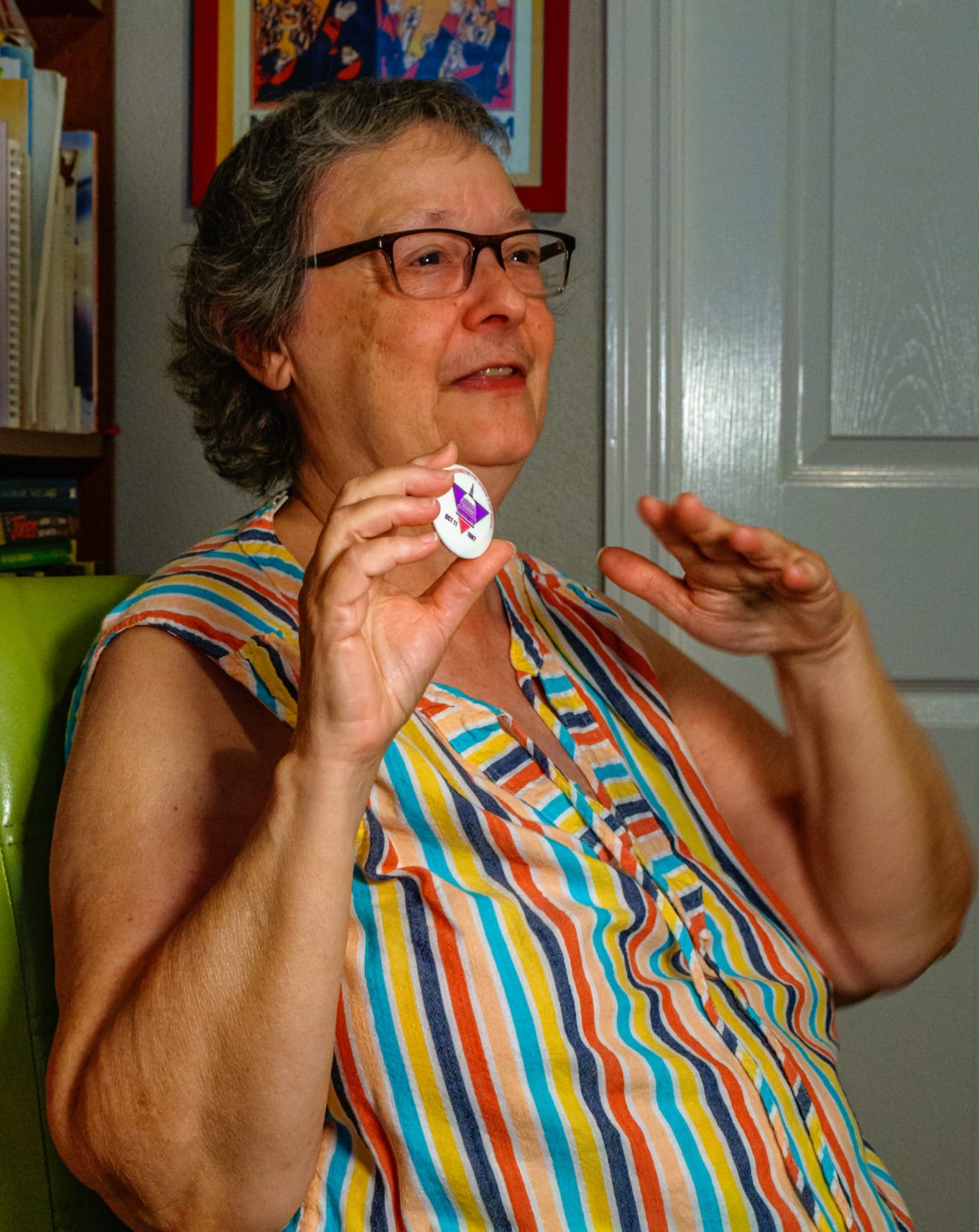
Shelley Ettinger is the author of Vera's Will. Her poetry and short fiction have appeared in Gaza Verse, Mizna, Foglifter, Beyond Queer Words, Gertrude, Rabble Review and other journals. She is a Lambda Literary Foundation Emerging Writers' Retreat fellow and has been a queer anti-racist social justice activist for over fifty years.
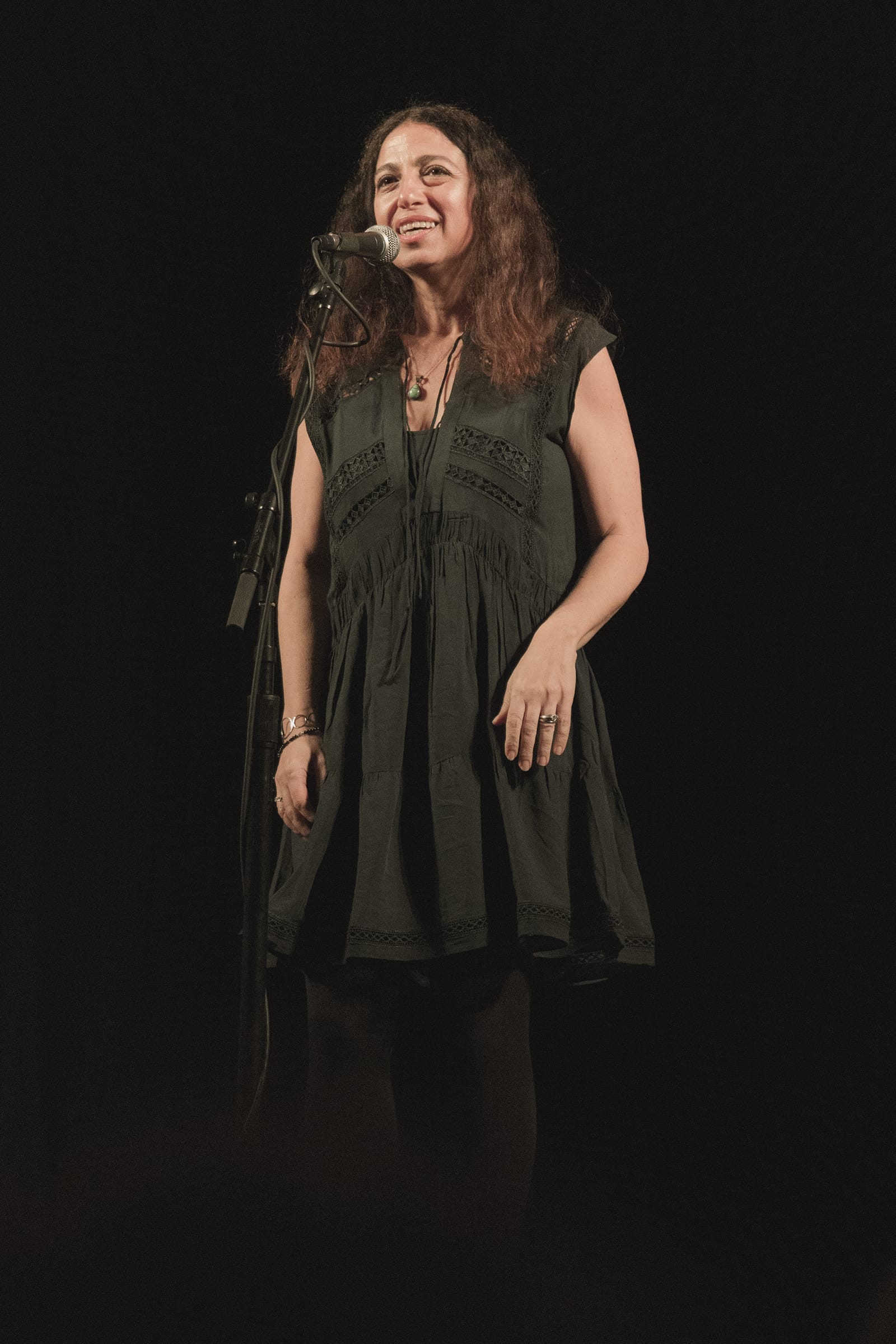
Aida Zilelian
Aida Zilelian is a first-generation American-Armenian writer, educator, and public speaker. She is the author of novels The Legacy of Lost Things (winner of the Tololyan Prize) and All the Ways We Lied, and her debut poetry chapbook Dissonance won the Swan Scythe contest in 2025. Aida has told stories across the country, most recently on PBS’s televised Stories from the Stage. Her work has appeared in West Trade Review, Midway, Phoebe, Sand Hills and others. She gave her first TEDx talk this April with TEDx Cabarete.
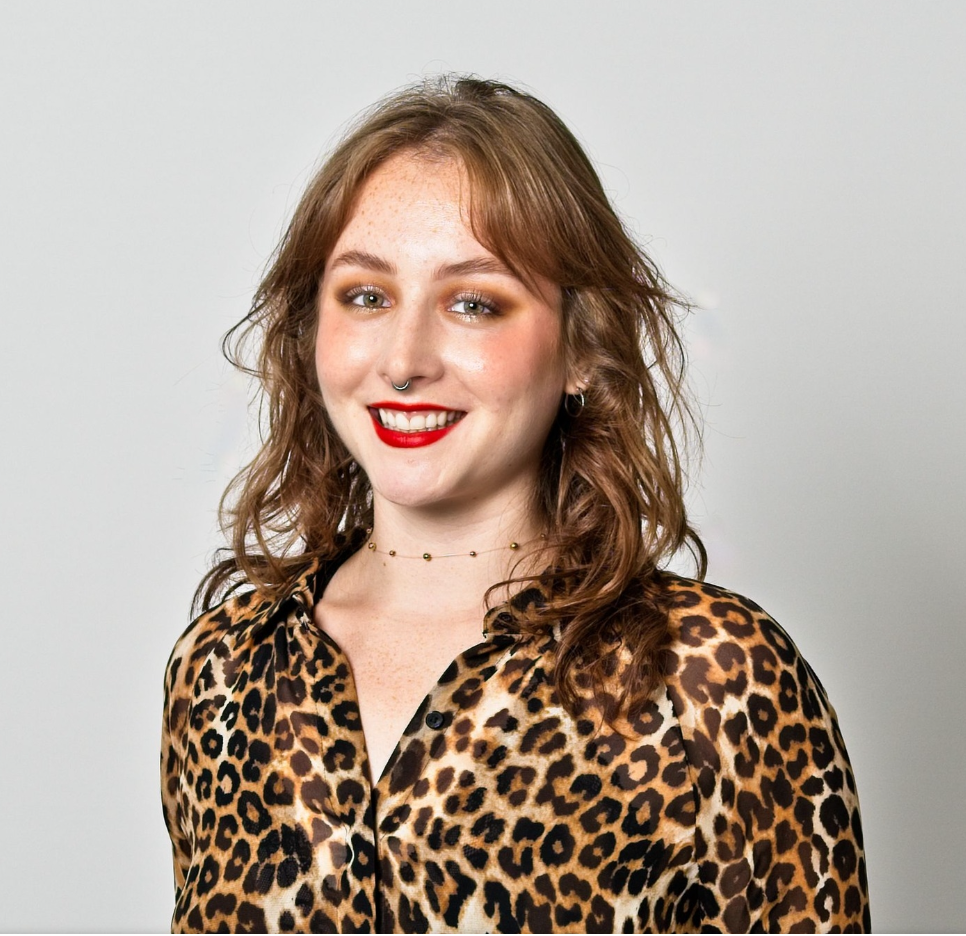
Alena Duckworth
Alena Duckworth’s career began in makeup, face painting and body painting. Using herself as her canvas and becoming interested in surreal and otherworldly themes through makeup, she transitioned into watercolor and acrylic painting. Growing up in British Columbia, Canada, Alena began creating at an early age and chose not to pursue a formal art education. Instead she practiced self-teaching methods and learned from her community and peers. Now, living in San Antonio, she has been a full-time artist for the past four years. She wields a diverse set of skills including airbrushing, mural painting, sign painting, body painting, prop fabrication and sculpting. Her work has been featured in several group exhibitions and galleries in Central Texas. Alena’s recent work and current focus cross many mediums as she continues to create pieces with surreal and fantastical elements that carry both personal and political themes.
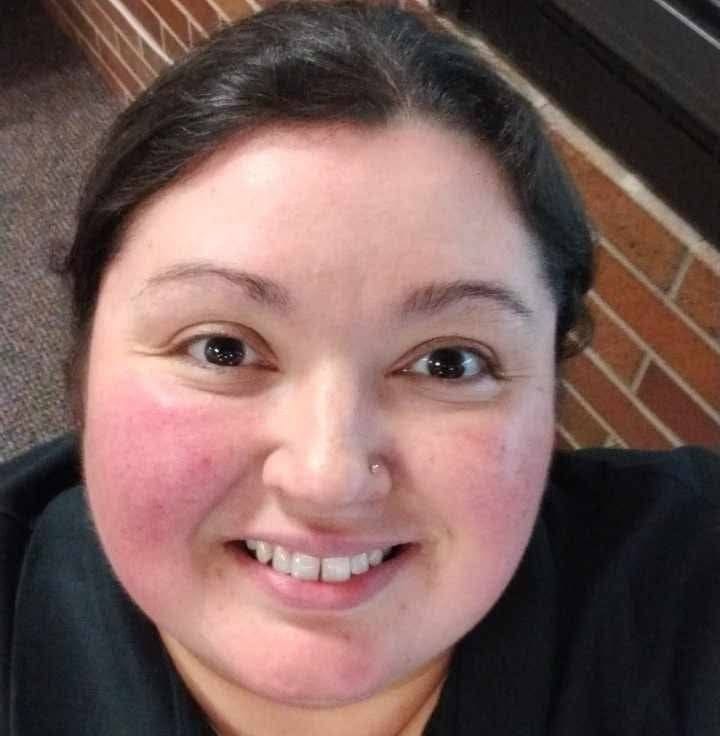
Alexandria Lacayo
Alexandria Lacayo is a writer, educator, and lifelong Clevelander. Her work has been published in Cleveland Magazine, Northeast Ohio Parent Magazine, Livinia Press, pacificREVIEW, Skeleton Flowers Press, and elsewhere. Alexandria enjoys spending time with family, reading, and watching trashy TV. She holds an MA in English and Creative Writing from Southern New Hampshire University and a BA in English from Baldwin Wallace University.
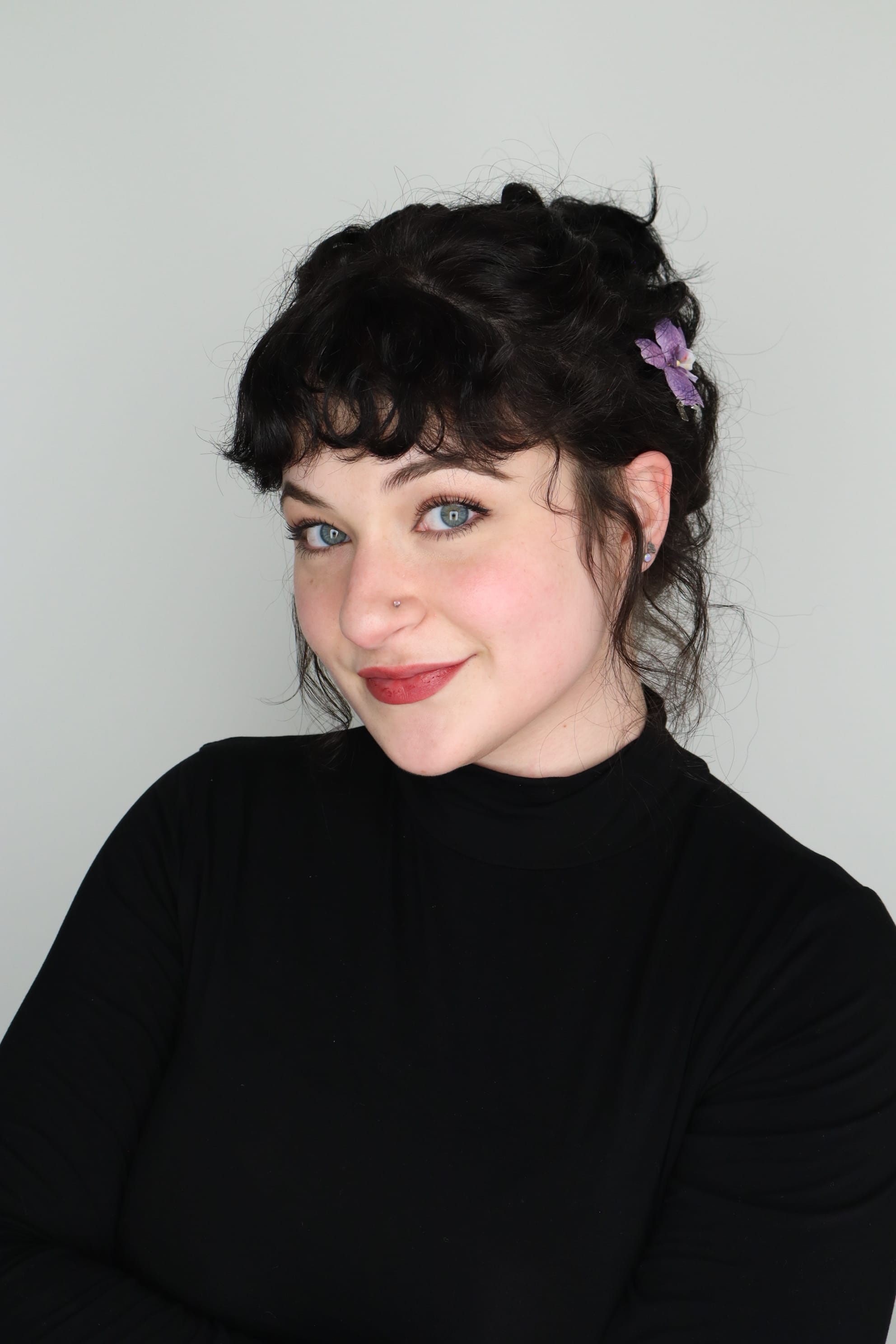
Aliza Haskal
Aliza Haskal is an emerging poet and recent graduate of Syracuse University's MFA Program in Poetry. She received a University Poetry Prize from the Academy of American Poets, and is published by Pacifica Literary Review, Club Plum, et al. She is kissing you on the cheek right now.
Daniel Bertetti
Daniel Bertetti is a visual artist who recently returned to San Antonio to recommit to celebrating and interacting with his hometown. He believes that these unprecedented times require us to celebrate art and not shy away from the fact it has always been political.
Edward Johnson
Edward Johnson is a legal aid attorney from Portland, Oregon, who has spent the past 30 years representing people living on and over the edge of homelessness. From 2020 to 2025 he litigated a case as part of a legal team that successfully sought restitution for 26 Black Portlanders whose families lost their community due to a planned hospital expansion that never happened, part of the legacy of Urban Renewal in Portland (depicted in the poem included here). He has poetry out or forthcoming in a number of literary magazines including Eclectica Magazine, The Dissident Voice, Evergreen Review, Whisk(e)y Tit Journal and Wailing & Gnashing.
Isabella Briseño
Isabella Briseño is an educator and organizer in San Antonio, Texas. They studied English at UTSA, and Library Science at UNT. In addition to teaching, Isabella has experience working in archives and special collections, tying together passions for storytelling, educating, and preserving our histories.
Kamala Platt
Kamala Platt is an adjunct profesora, artist, independent scholar, and author in South Texas and at The Meadowlark Center in Kansas. Publications include Gravity Prevails (2022) Weedslovers (Finishing Line Press 2014), On the Line (Wings Press 2010) and Kinientos (Wordsworth 1992). She has shared her visual and performance art and poetry broadly, most often in community arts and cultural centers. Through 'green rascuache' lifeways, Kamala searches borderlands for footholds of dignity and well-being (resistance to walls, injustices, militarisms, 'isms,’ and ecological disrespect) amidst a feverish planet's crises. She holds an MFA in poetry and a Ph.D. in Comparative Literature.
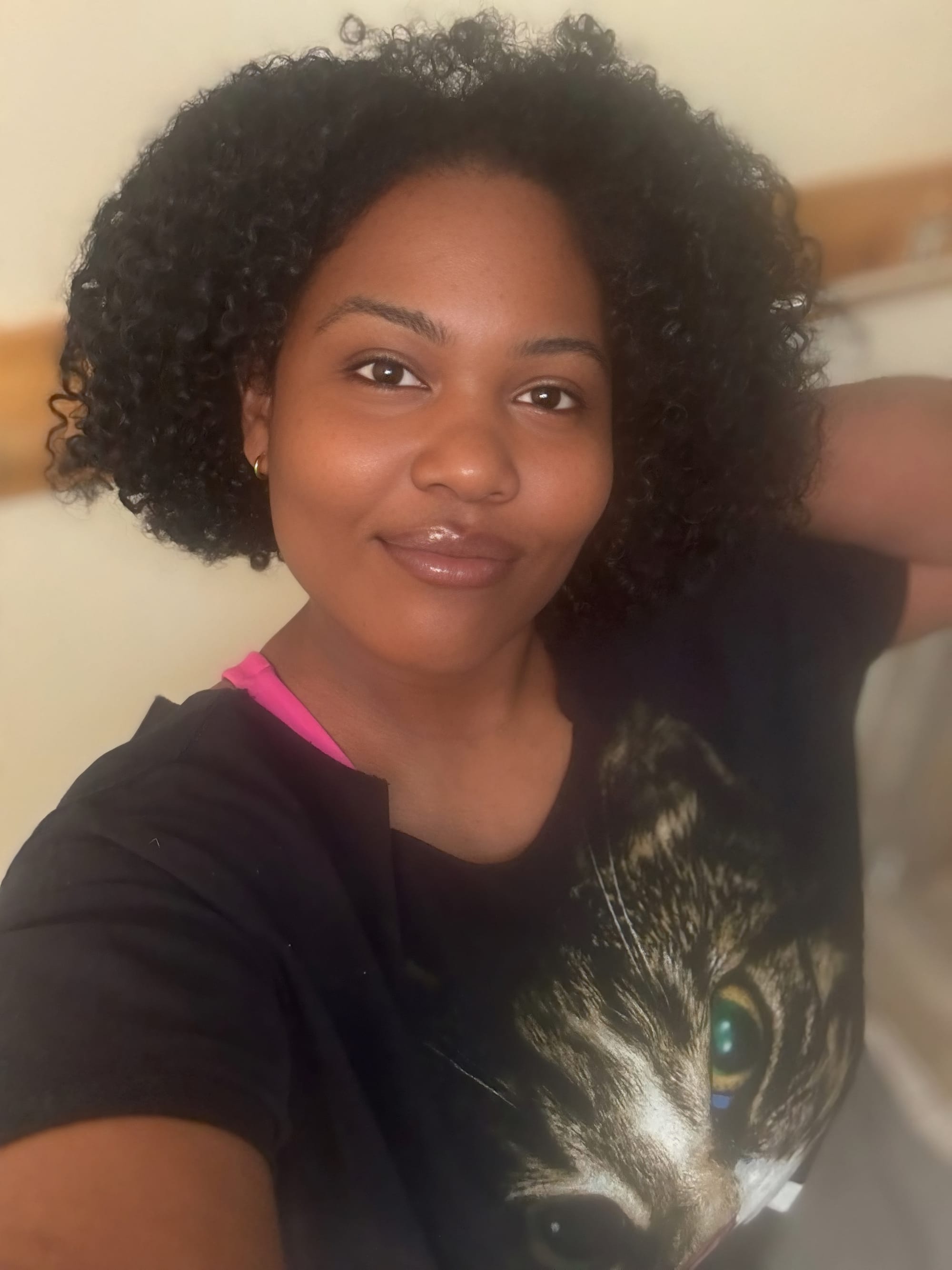
Maya Perkins
Maya Perkins—@littlebummergirl on Instagram—is a multidisciplinary artist whose work thrives on the tension between visual harmony and emotional turbulence. Her work is not meant to comfort. It is meant to awaken by bringing forth the thoughts and feelings that are often buried. She thrives on utilizing her art to explore the chaos of everyday life.
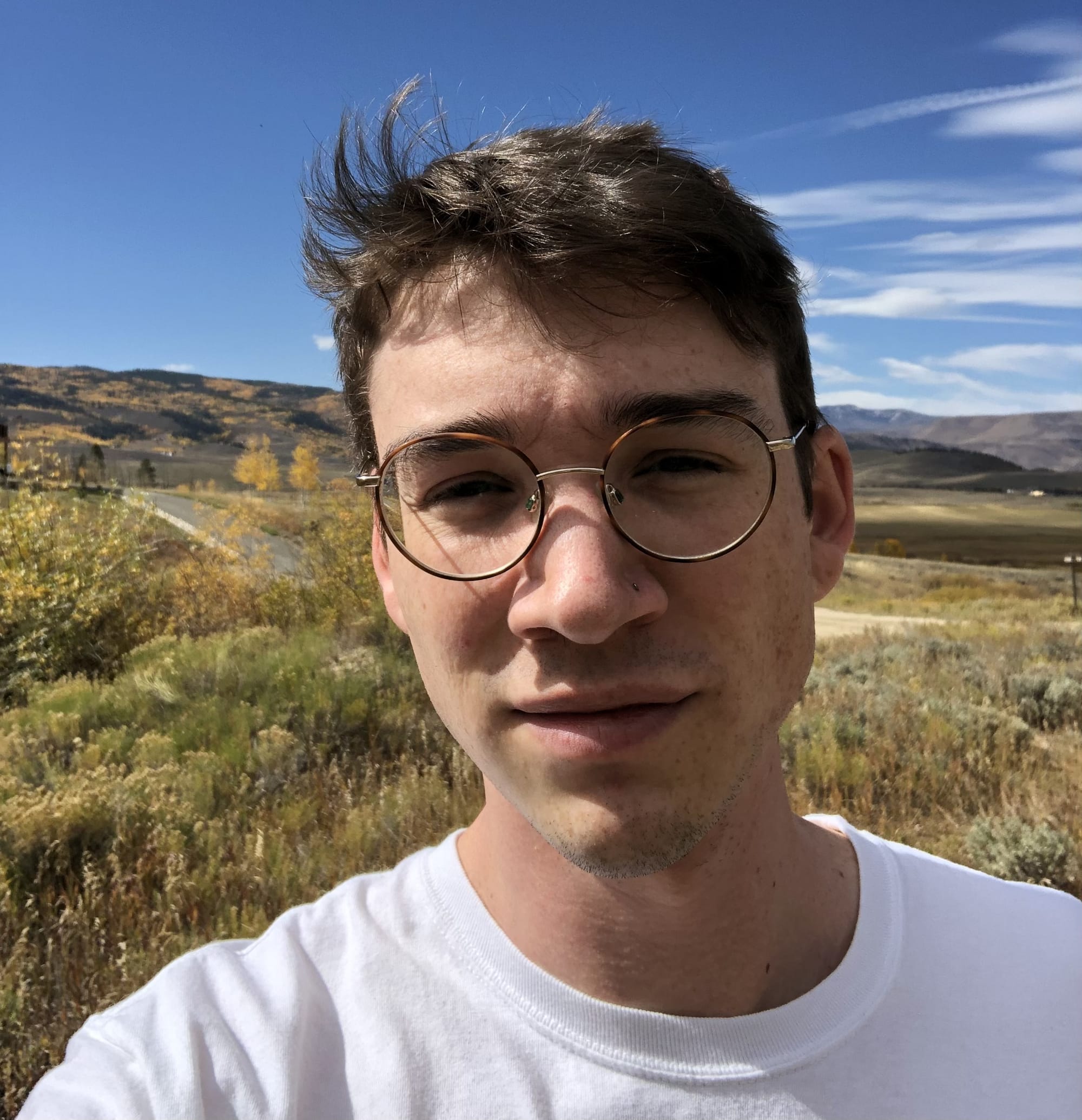
Mark Everett Wittmer
Mark Everett Wittmer is a poet and an MFA student at the University of Oregon. His work has appeared in Plume, Apocalypse Confidential, Barnstorm, Barely South Review, and elsewhere.
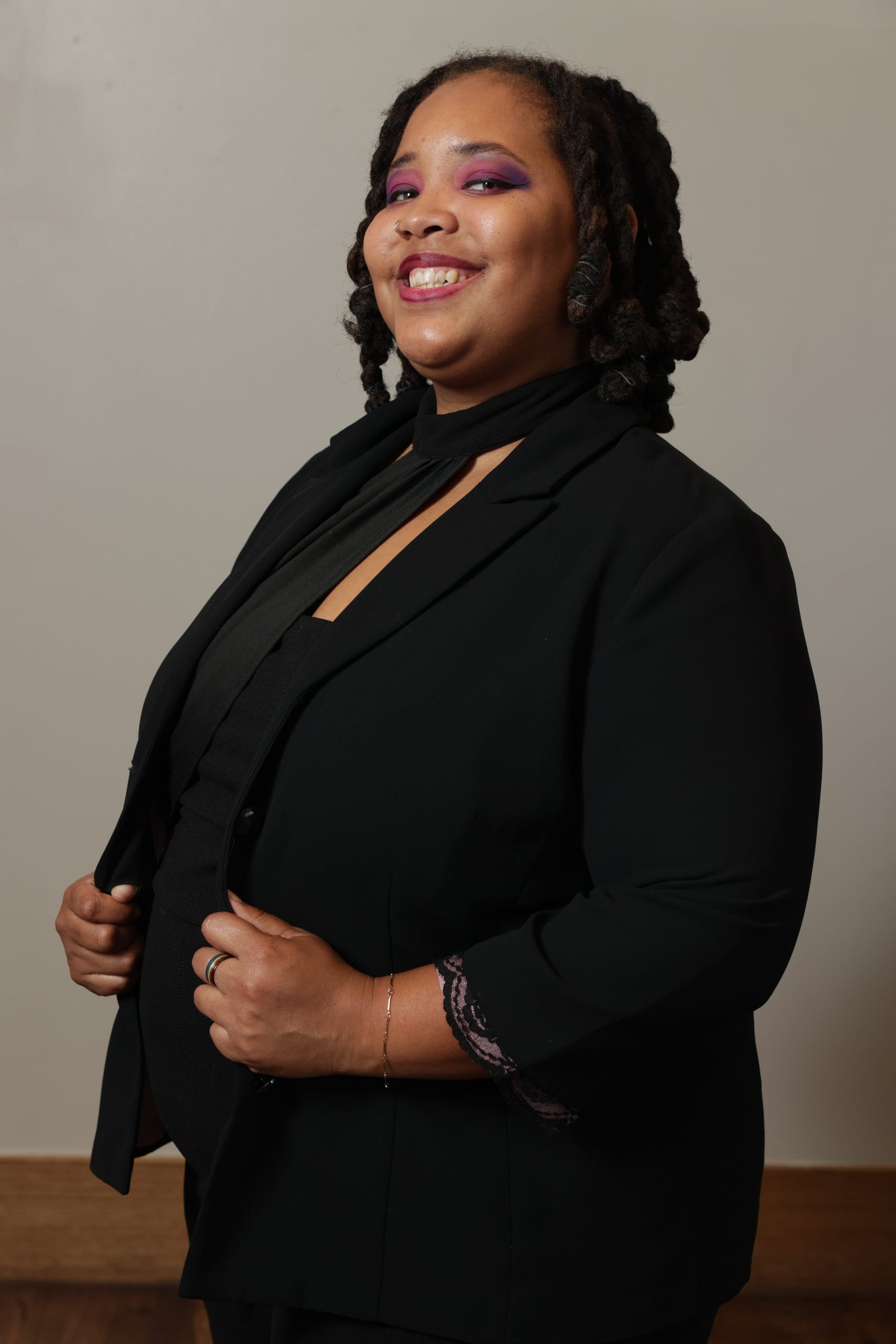
Mecca M. Miles
Mecca M. Miles is a Black, queer writer and spoken word poet from San Antonio, Texas. Her work has appeared in such publications as Torch Literary Magazine, Wellspringwords Literary Anthology, The San Antonio Review, Texas Bards Anthology, When the River Speaks, Voices de la Luna, Voices Along the River, and has been featured on Button Poetry. She has competed nationwide, taking 8th in Florida at the Exit 36 Slam in 2023, and 8th in Dallas, TX at the Right to Write Slam in 2024. She has featured at a number of local venues and was the 2024/2025 Poetry Grand Slam Champion of San Antonio, TX.
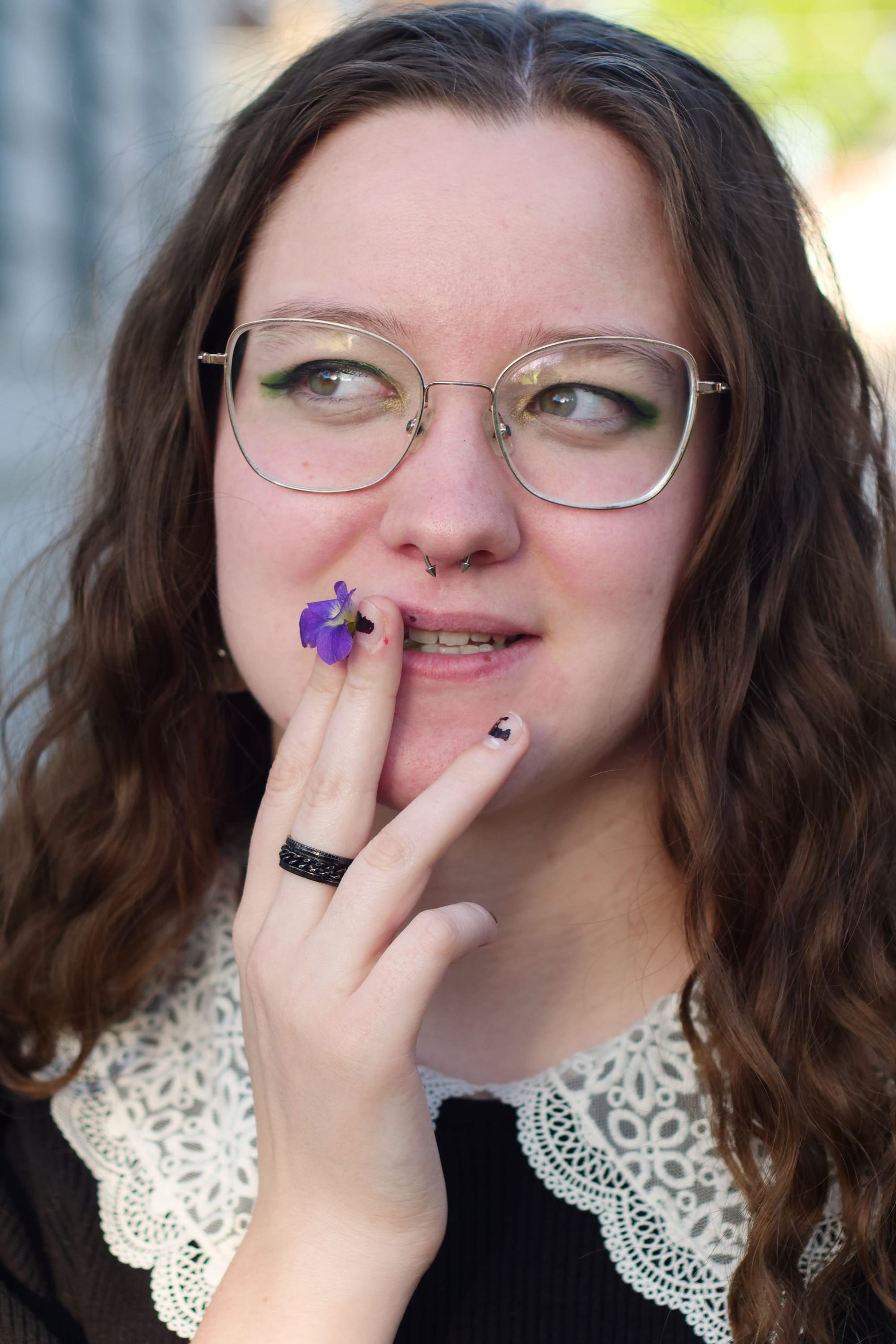
Odi Welter
Odi Welter (they/she/he) is a queer neurodivergent author raised in Minnesota and living in Milwaukee. Their first publication was an obituary—which should make him way more emo than she is—and since then their creative work has been published in many journals and anthologies, most recently Ouch! Collective, Catalogue Zine, and Becoming: Voices on Queerness and Gender by IHRAM Press. Find them on Instagram @o.d.i.welter, TikTok @odiasinoverdose19, Bluesky @odiwelter, or at their website odiwelter.net.
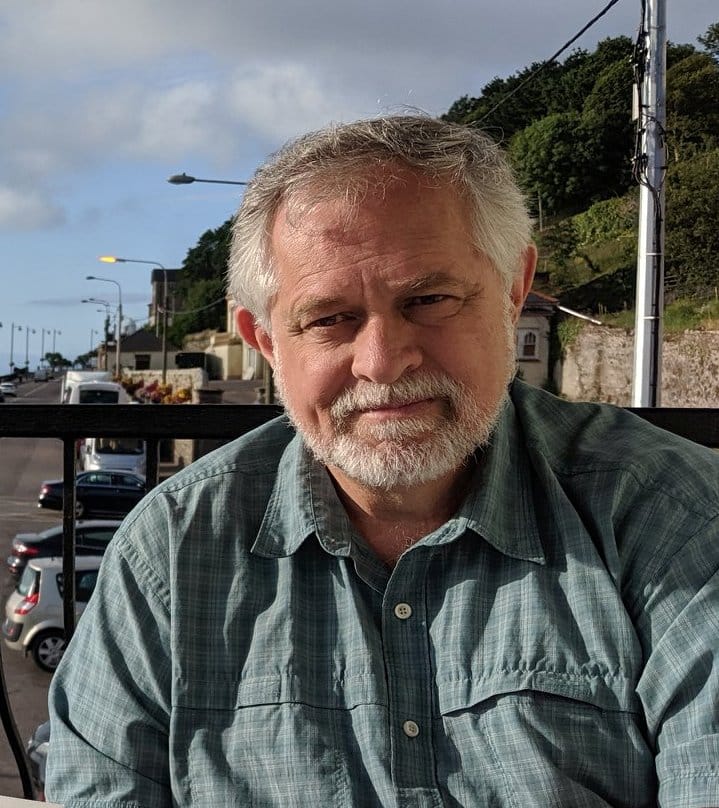
Steve Wilson
Steve Wilson's poetry has appeared in over 200 journals and some 65 anthologies. He is the author of six collections, the most recent entitled Complicity (2023). He lives in San Marcos, TX.
Note: We previously included an excerpt from Avril Shakira Villar's essay "Anywhere the Bombs Fall." We have since flagged this piece as AI-generated and removed it from publication along with the author's bio. Deceleration deeply regrets the error and remains committed to fighting the data center-driven, water and energy-guzzling, climate-destabilizing AI takeover of writing, thinking, and research. We continue to refine our submissions guidelines to honor the labor of human writers and artists. --Marisol Cortez


