

The creep of artificial intelligence into everyday life, via assorted web agents, large language models, image generators, and more, has become a full-blown onslaught. Teachers are increasingly bombarded with AI writing, social media is flooded with AI-generated images and videos, and it’s even interrupting our search results with "intelligent" search boxes.
In one form or another, AI is making us dumber, malforming the subconscious minds of our children, taking our jobs (and not in a good way), committing atrocities in our name, all constructed on a backbone of climate-killing, water-guzzling data centers. So ubiquitous and multifaceted is the problem that it can almost be difficult to find a focal point from which to frame our criticisms.
Well, here’s one.
Last month in San Antonio, a long-beloved art supply shop and a public art organization unintentionally triggered some vigorous discussion about generative AI use in the art world. Each was called out for using AI to create images for social media. Both posts have since been deleted.
Shelby Criswell, known for their graphic novels, illustrations, and mixed-media work, called upon the art store to “do better,” while Ray “Tattooed Boy” Scarborough, known for his design and print work that captures San Antonio in a gently gothy, often humorous pop-art style, stepped in too. Deceleration caught up with both artists, as well as Harlingen-based artist and gallerist Rachel Comminos, who recently used her craft to express displeasure with AI creators, to discuss this emerging field of contention.
Betrayal of the Arts Community
Criswell felt a sense of betrayal seeing the art-store post. They did not merely call out the store owners, however. They're intention was to invite them and the broader arts community into dialogue on the issue.
“If we can’t count on art supply stores,” Criswell wondered, “who can we count on?”
They also noted that it’s not necessarily smart business either, since art stores stand to lose if AI art becomes more popular. But, ultimately, Criswell, a queer artist who uses they/them pronouns, sees missteps like these as useful ways into the conversation and collaboration that might make things better.
“Things made by humans are just better,” they said, expressing hope that more people can be convinced of this through a combination of education and patience. They also noted the importance of artists and art institutions unifying in the fight against AI art.
“Art institutions can’t be using these tools that basically replace artists,” they said.
AI Stealing Design Jobs
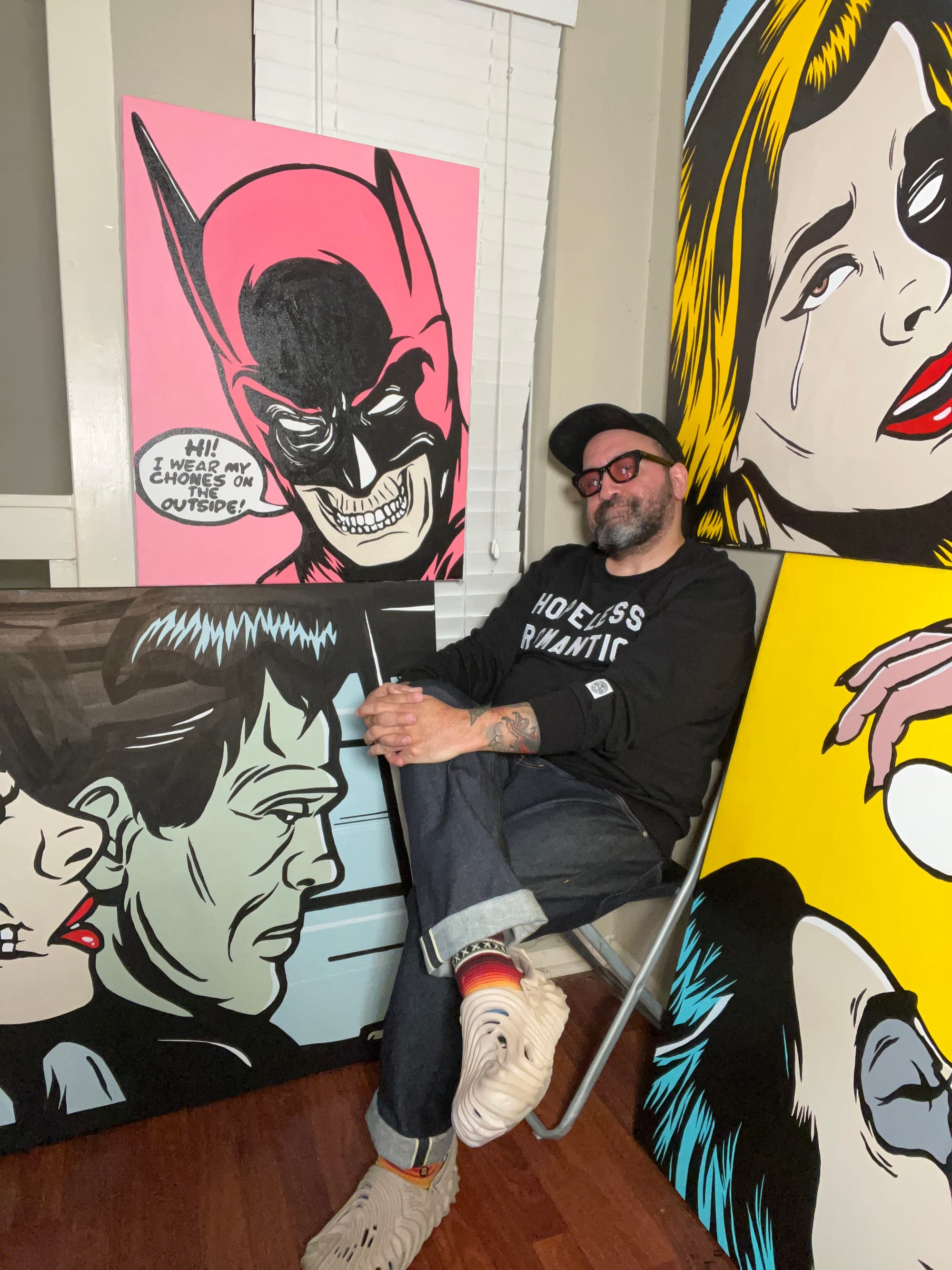
Scarborough said that he has been in frequent conversations of late about the encroachment of AI on the art world, describing the use of generative AI by an art store as a bad omen.
He shared a story from his past that illuminates another problem that many in the design world are facing. In 2024, after 16 years of working on the graphic design team of a large company, he was forced to resign after watching his team dwindle from 20 to 7 members due to AI-related cutbacks.
The final project he worked on at the company had him investigating the usefulness of AI for the future of the company’s design work. Instead, he pointed out to his managers that AI trains on copyrighted images and therefore went against the company’s standards.
“I told them that I didn’t feel comfortable exploring AI for my graphic design work. And they asked me to tell them why it’s bad," he said. "So, I did.”
His story has a happy ending of sorts. Scarborough now works full time on his own art and design work and recently collaborated with the Spurs among other high-profile clients. But the prevalence of AI systems have also inspired him to save his keystrokes while using digital design programs, in case anyone ever accuses him of using AI.
At the same time, Scarborough sees fewer opportunities for work, like show flyers for artists at all levels, as more turn instead to AI.
'It Fucking Sucks'
In some ways, one can understand the temptation to create an AI flyer or something of the like for one-time commercial use. However, like the art store or art institution posting an AI image, every casual use of this technology has the effect of normalizing it, which both further impoverishes the broader arts community and harms living Earth systems. Better to do a bad job making your own artwork, if you can’t afford an hiring an artist.
For Comminos, who has had to deal with AI art submissions to her gallery as well as feared rate hikes and environmental harms stemming from data centers in her community, “it fucking sucks” is the first thing she has to say about AI generated art.
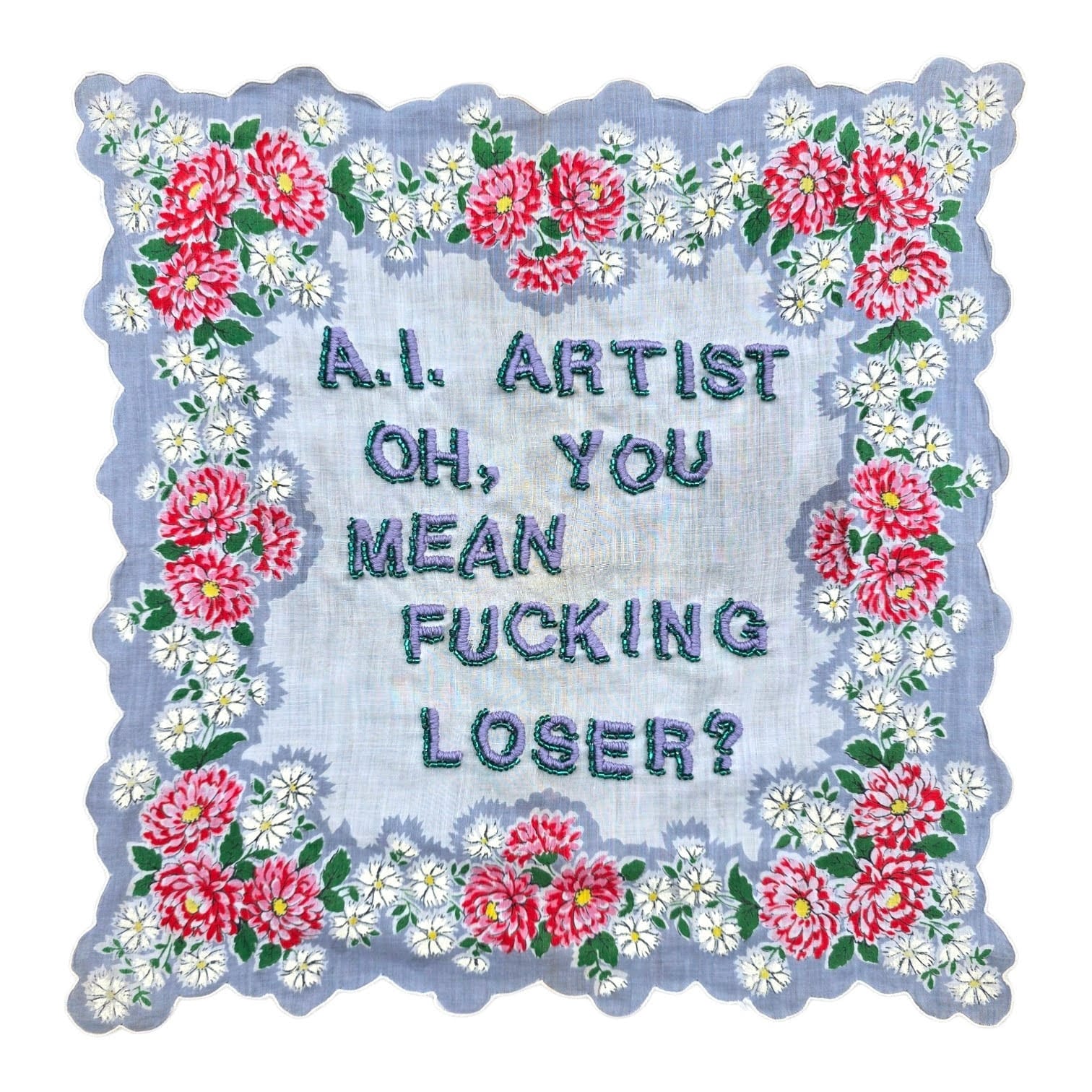
In a recent Instagram post, Comminos shared an embroidered work that offered her commentary on folks who would call themselves artists but use AI to create.
“AI artist / Oh, you mean fucking loser?” it reads.
Articulating the problem with letting AI create our art requires considering big (and rather philosophical) questions. Such as: What’s the difference between a lived experience and a simulated experience—and how important is that difference?
AI: The 'Experience Machine'
Is training to become an artist, honing your craft for years, and finally creating a compelling body of work that resonates with people actually any better than creating work with AI and finding some kind of success with that? Isn’t that hard work that you might ultimately fail at anyhow?
And, as consumers of art and language crafted by AI, why should we care? What does it mean to lose the soul behind the work?
In his 1974 book Anarchy, State and Utopia, philosopher Robert Nosick posed a thought experiment generally referred to as “The Experience Machine.” While Nozick intended it to refute ethical hedonism—the notion that the only thing that matters is getting pleasure and avoiding pain—it seems that it could be useful here too.
Basically, the thought experiment goes like this: if you could plug into a machine offering you the experience of having a flawless life, filled with all the accomplishments and pleasures you desire, would you leave your real life to plug in? For a month? A year? Or permanently? According to Nozick’s stipulations, you would be unable to distinguish your experiences in the machine from experiences in the real world.
Nozick insists, and many would no doubt agree—though some interesting challenges have arisen—that we should not find this machine desirable. He suggests that it is not enough to feel like we have done something; we want the experience of actually doing it, including facing any associated hardships.
This, of course, applies to nearly every human endeavor, though perhaps most specifically in areas where we are expected to feel something or grow from the natural friction embedded within a task or experience. If we expect our lives to be meaningful, we must accept that the meaning is ours to make and to share with one another.
All three artists expressed this notion in subtly different ways. All cherished their own unique struggles as artists for giving meaning to their successes but also (perhaps most importantly) for helping them find their own individual artistic pathways or voice.
To use AI to engage in creative work, or any potentially meaningful work, is to forfeit any actual meaning from the effort.
“It’s sad to see people so willing and ready to have a computer do what humans do, especially with art," Criswell said. "What else do we have if not human expression, which is all art is?”
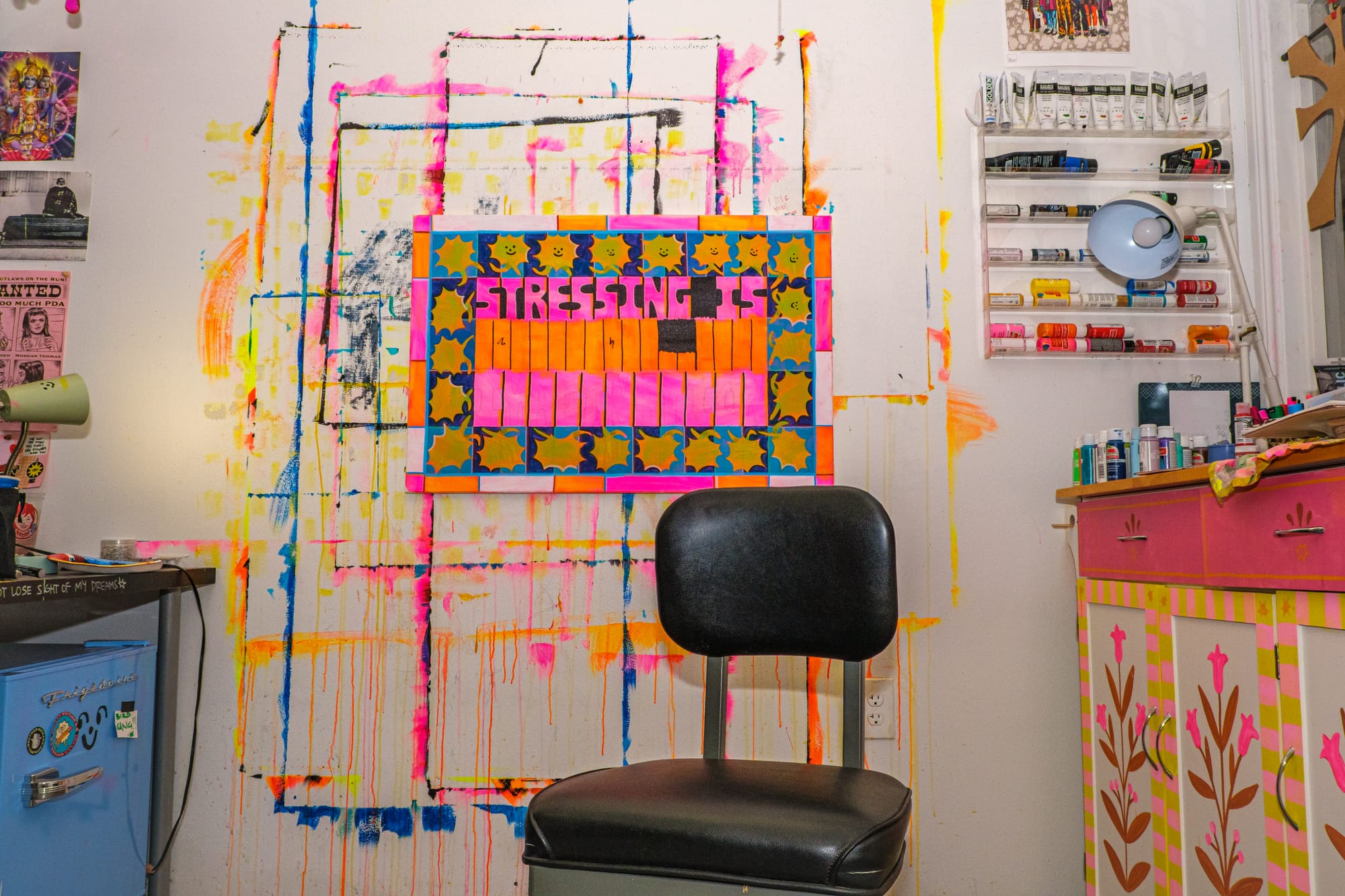
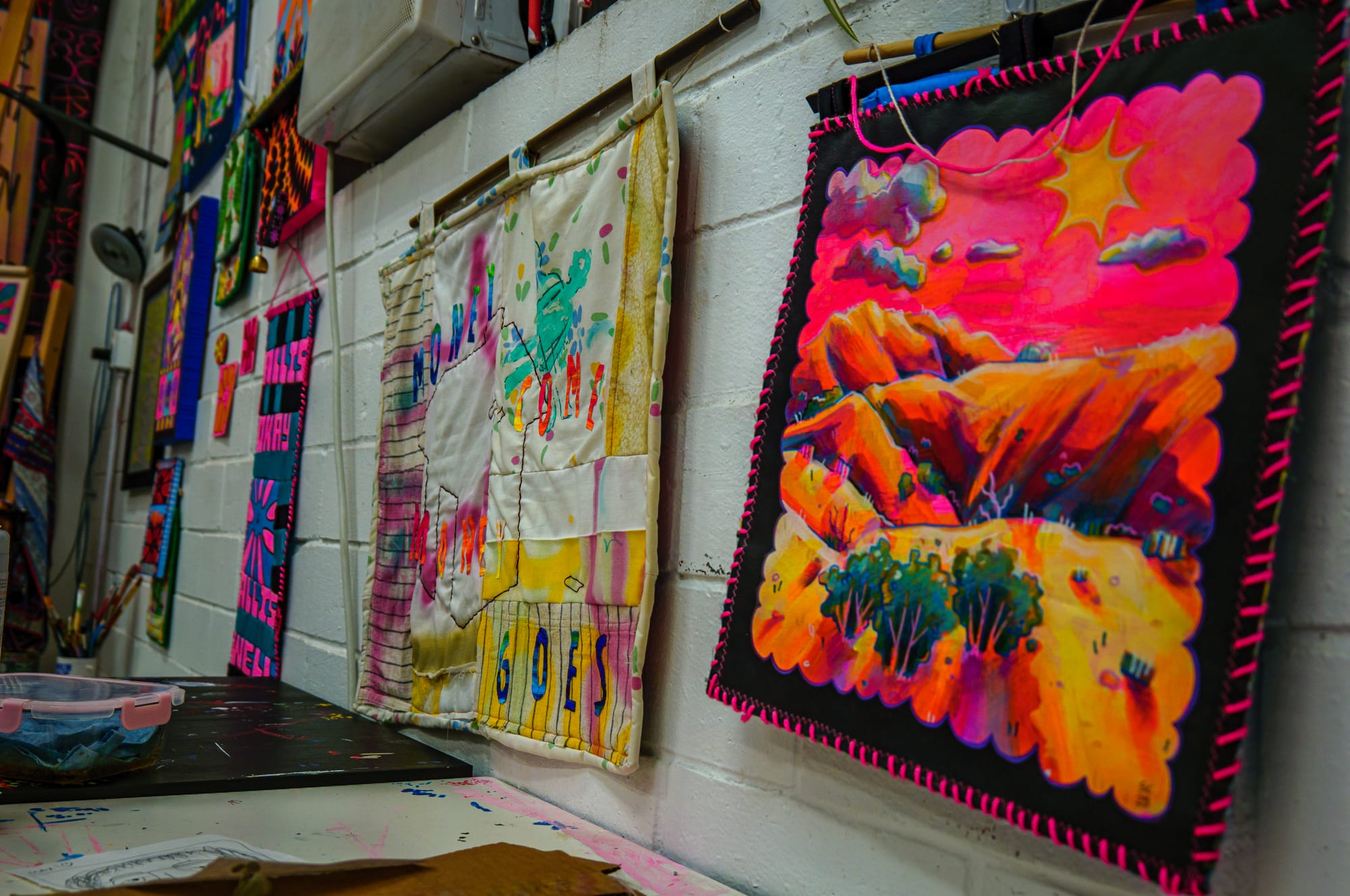
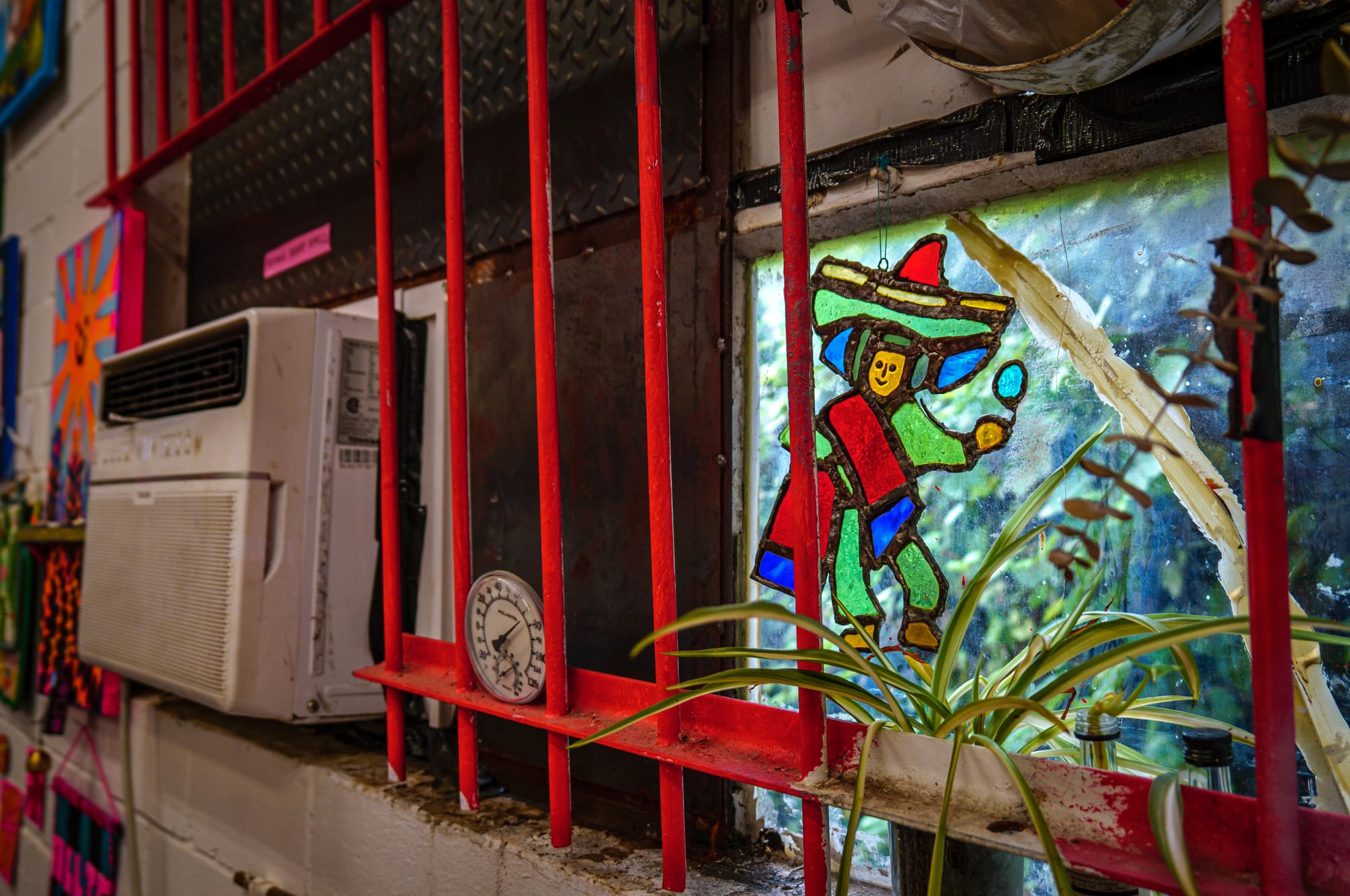
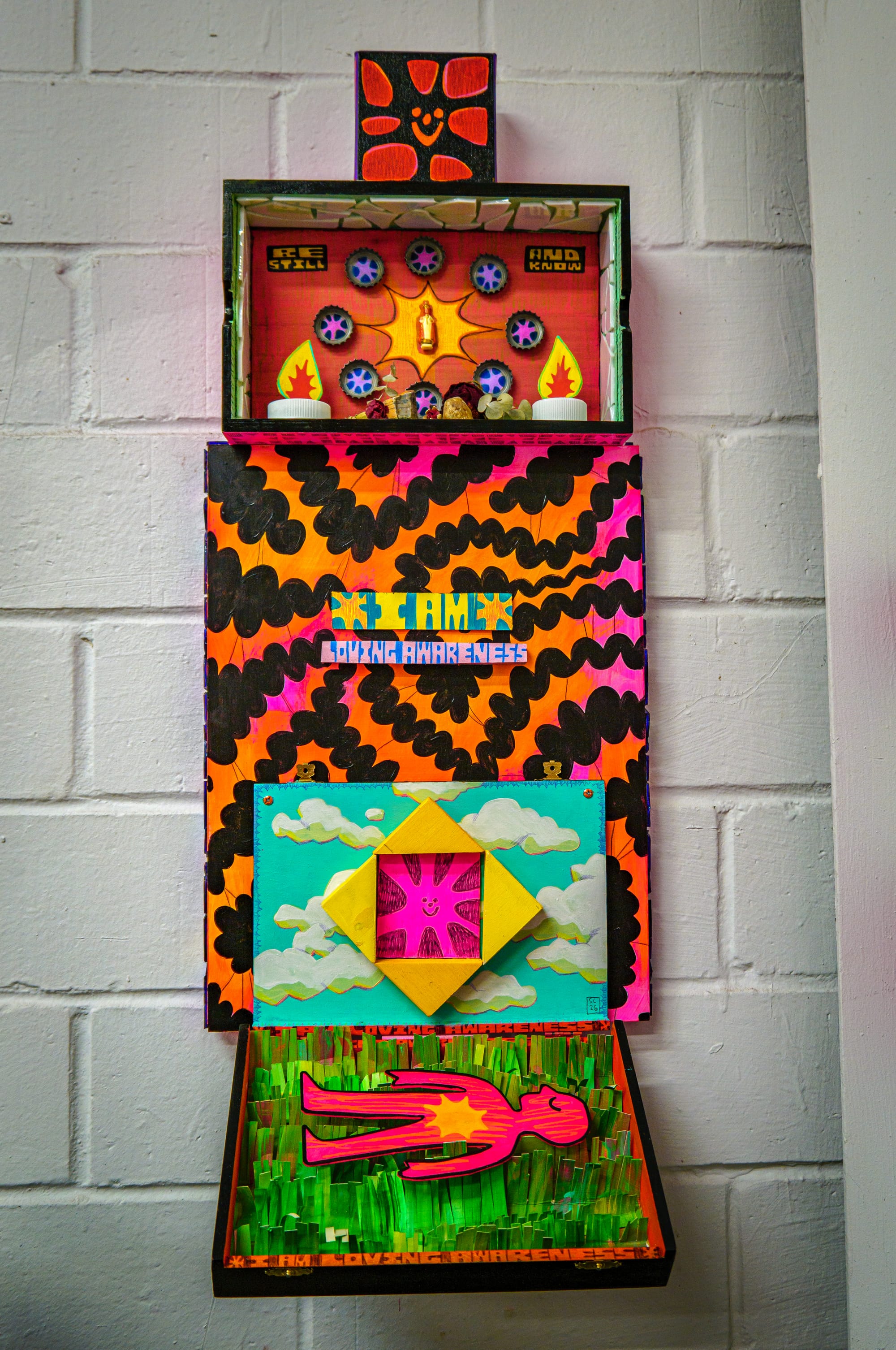
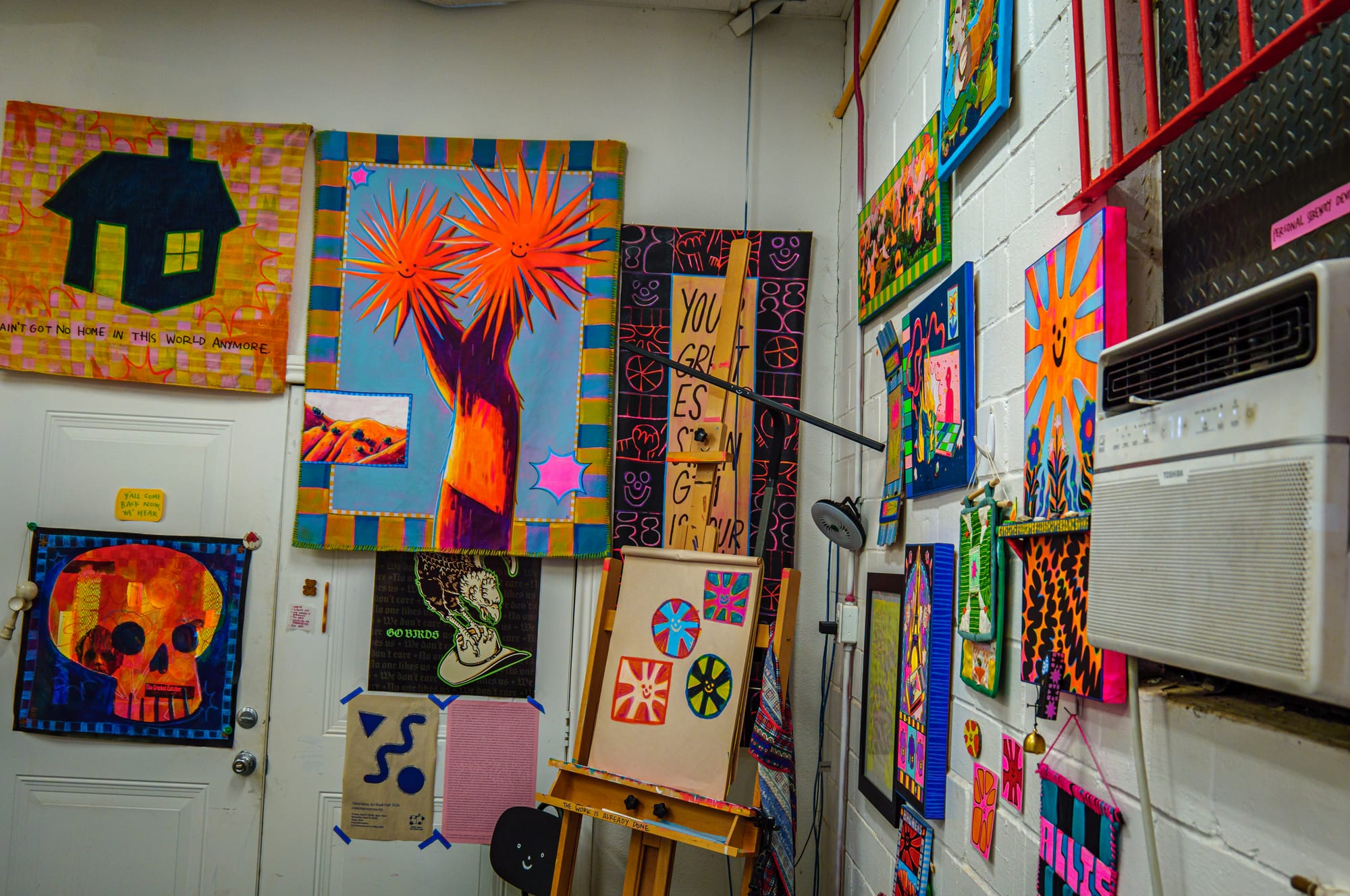
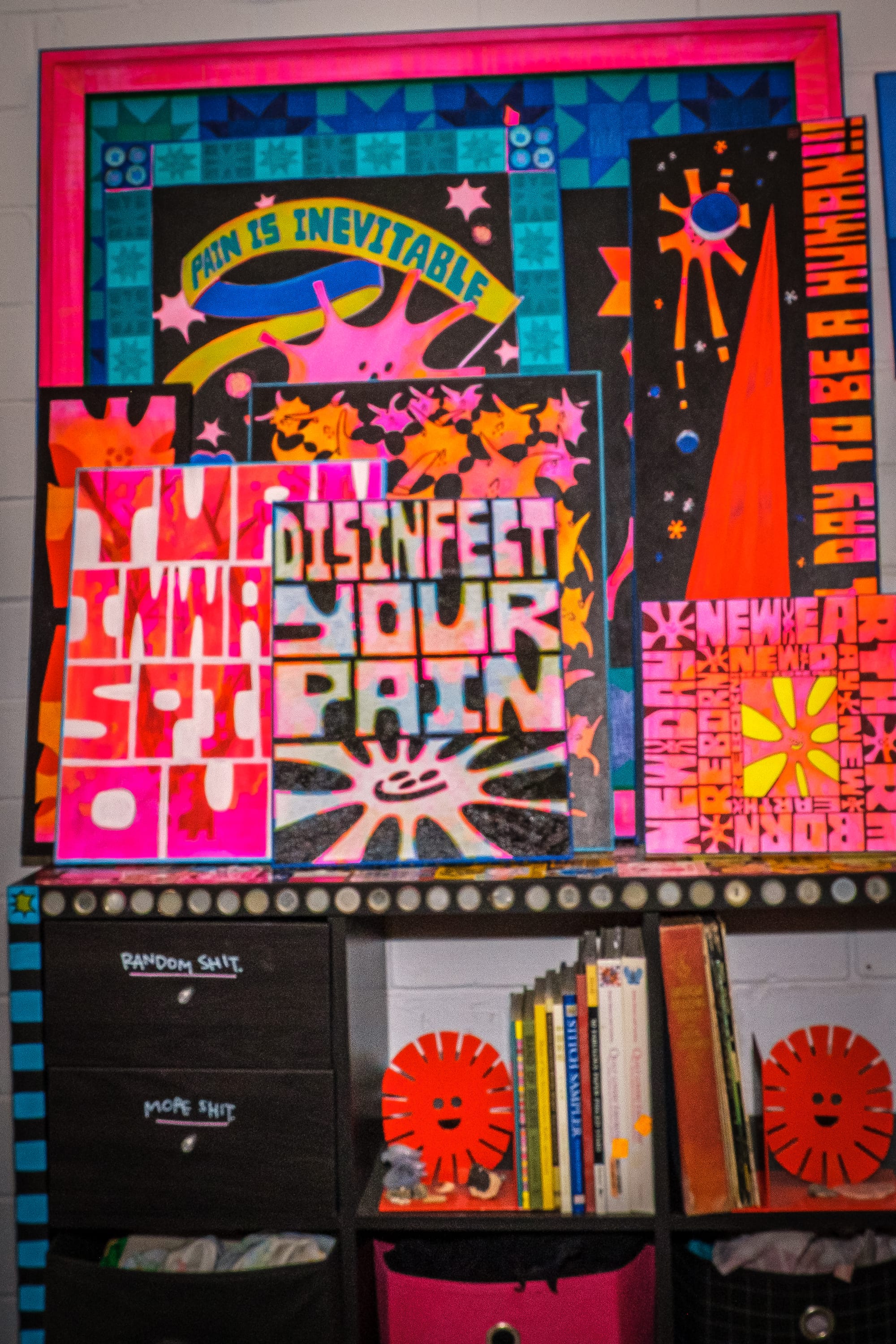
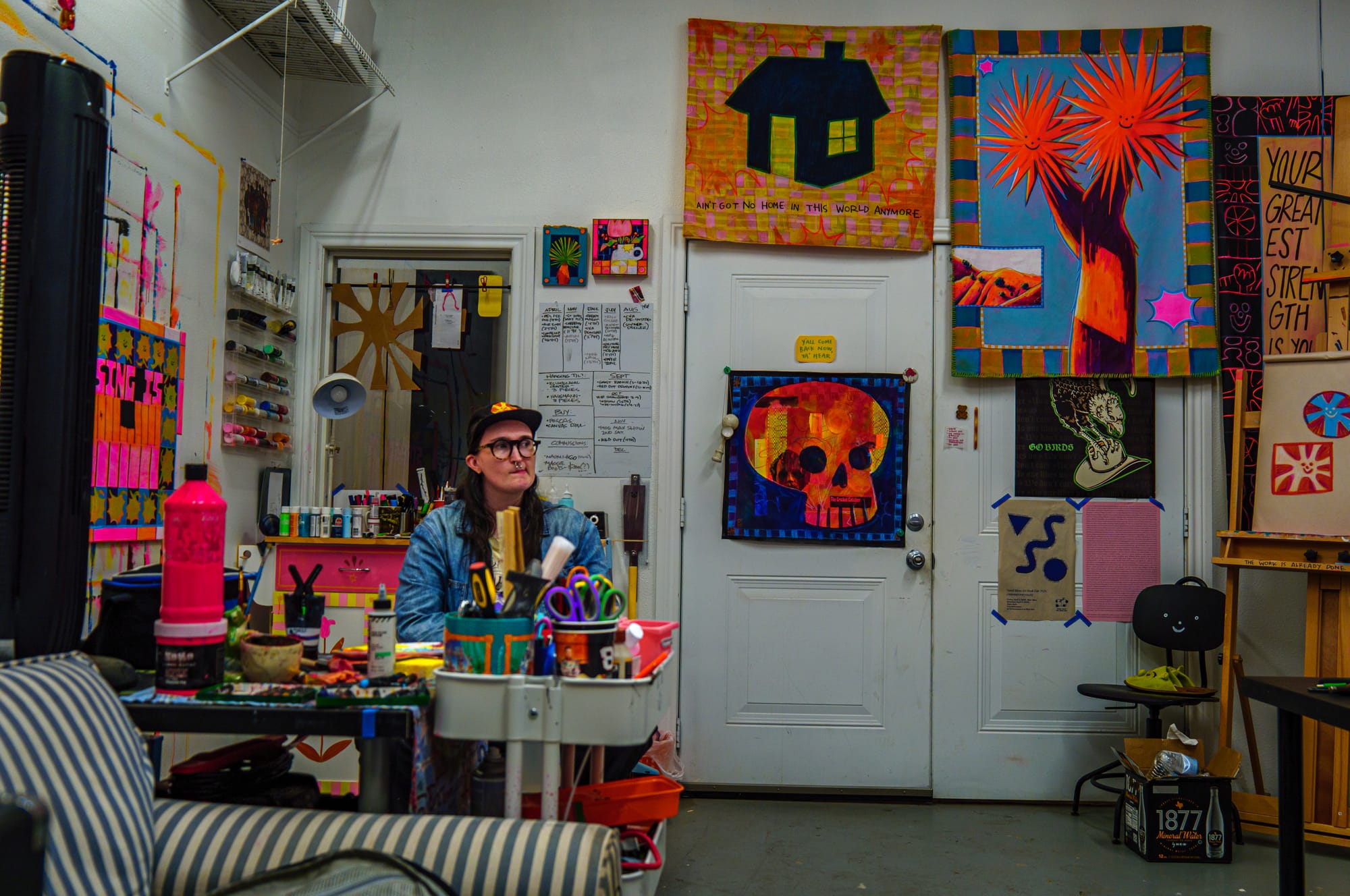
Criswell's San Antonio studio. Images: Greg Harman
What Can We Do?
Nosick's thought experiment and discussions with the artists point to one critical task ahead. We must help people to discover, experience, and defend the value of human-created work — from art to music to writing and beyond — for the sake of artists and viewers alike.
And, it would seem, if we are going to set about the business of defining (for the sake of defending) what makes human effort and creation special, we are going to have to do it together. Artists are perhaps the ones best suited to lead. Let’s call it the Criswell approach.
In fact, each artist in their own way agrees that conversations, openness, pushback, and accountability will be key.
Comminos elaborated on the importance of holding businesses accountable for using AI art, particularly businesses that profit off cultural and artistic connectedness.
“If you’re a coffee shop that also wants to be an art gallery, you don’t get to use AI to make flyers for your events. That should be called out,” Comminos said.
On a practical level, Scarborough hoped that, as happened with the internet itself some years ago, belated AI regulations might help partly rectify the “wild west” situation we currently find ourselves in with AI art.
He suggested that a starting point might be regulations requiring that any AI-generated art be labeled as such. This would give art buyers, business patrons, and even Instagram scrollers the chance to know and decide what to think for themselves. And it would be a kind of safeguard for real artists.
The battle against the broader problems of AI and enabling data centers will have to be fought on many fronts with as much immediacy as we can muster. But, as with so many of our other issues, any effort must begin and end in community with one another.
And, maybe, at the risk of sounding utopian, in the effort to collectively establish the value of the real things that real humans do, warts and all, we might also begin to establish a shared value system that can rival the techno-capitalist, neoliberal behemoth that superimposes the nothingness of capital’s roiling machine atop all our earnest attempts to create lives worth living in a world worth living in.
-30-
In the spirit of the sentiments of both Criswell and Scarborough, and in part because the original posts no longer exist, I have omitted the names of the art store and art institution mentioned above. The art store’s thoughtful reply to the community’s concerns, however, can be read here.

This article is licensed under Creative Commons (CC BY-NC-ND 4.0), and you are free to share and republish under the terms of the license.


