

Deceleration’s bilingual community resource to help our friends and neighbors navigate dangerous extreme heat events in San Antonio, South Texas, or wherever you may be sweltering.
Words: Greg Harman | Artwork: Carly Garza
Español Aquí
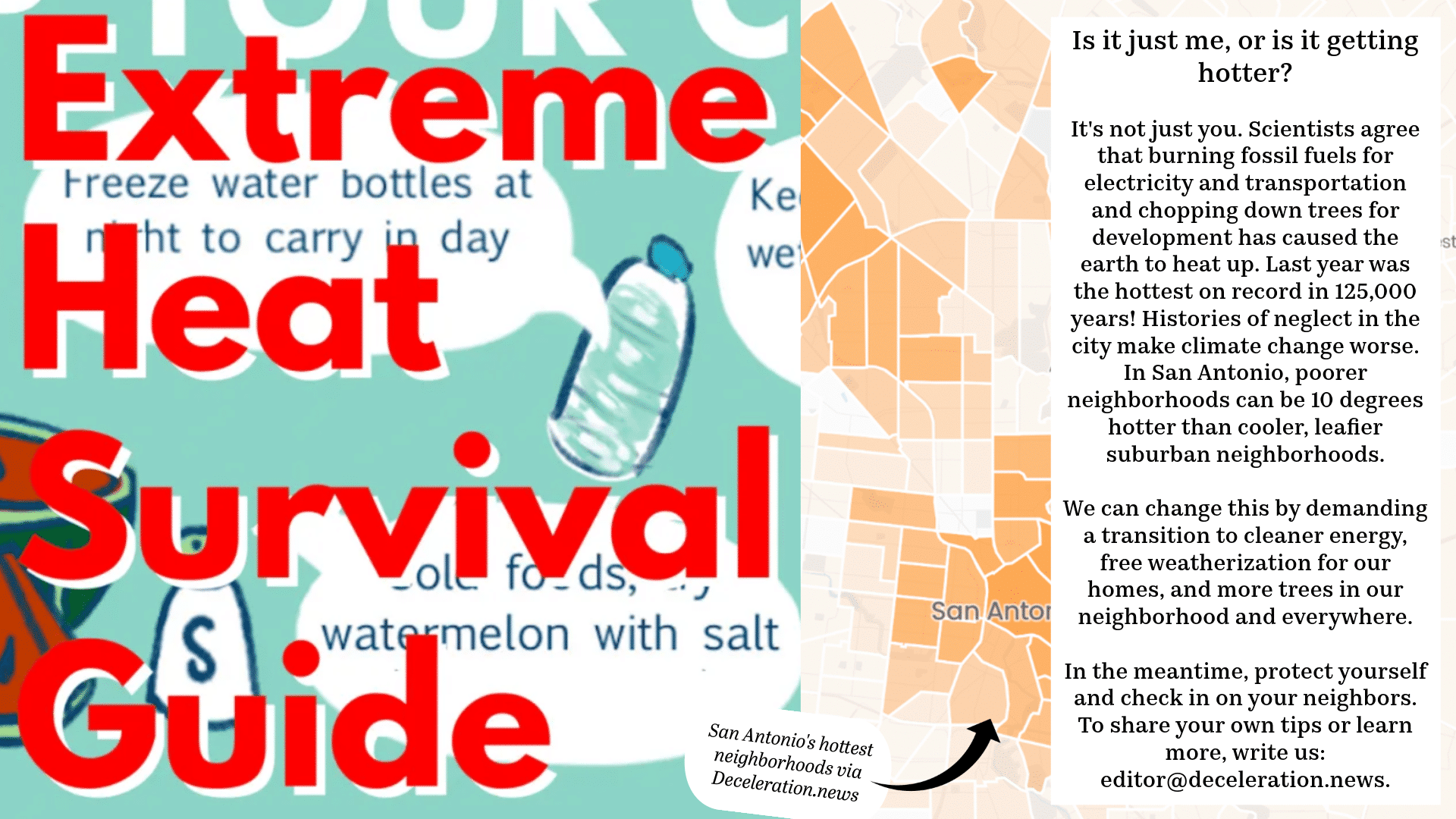
Around the world, heat records are being incinerated. The last 10 years have all ranked among our hottest years ever recorded. Continued burning of massive amounts of fossil fuels and ripping out of forests have shunted the planet into is hottest period in (at least) 125,000 years. This artificial thickening of our greenhouse layer ensures rising heat well into our future—or at least until we stop filling the sky with heat-trapping gasses. It is a climate emergency. In Texas, it has become unbearably hot during the day for months of the year and increasingly hard to cool down at night, compounding threats to our collective health. To survive and to thrive it’s imperative that we stop these hazardous behaviors by throttling back fossil fuel pollution and transitioning to cleaner energy sources as rapidly as possible. This can help slow and reverse this dangerous warming trend.
To keep people safe in the meantime, we must also launch massive weatherization programs to keep at-risk families safe from extreme weather. We must also plant more trees, food forests, and community gardens to clean the air and cool our city. This is especially important across inner-city low-income neighborhoods where the temps can be 10 degrees hotter (or more) than those on the city’s leafier more affluent suburban fringe. Our unhoused neighbors are particularly vulnerable to heat exposure. Record keeping on this in Texas is not great. But in Maricopa County, Arizona, they found nearly half of all heat-related deaths (there were 650 just last year!) were among the unhoused community. Resources to reduce this trend are desperately needed.
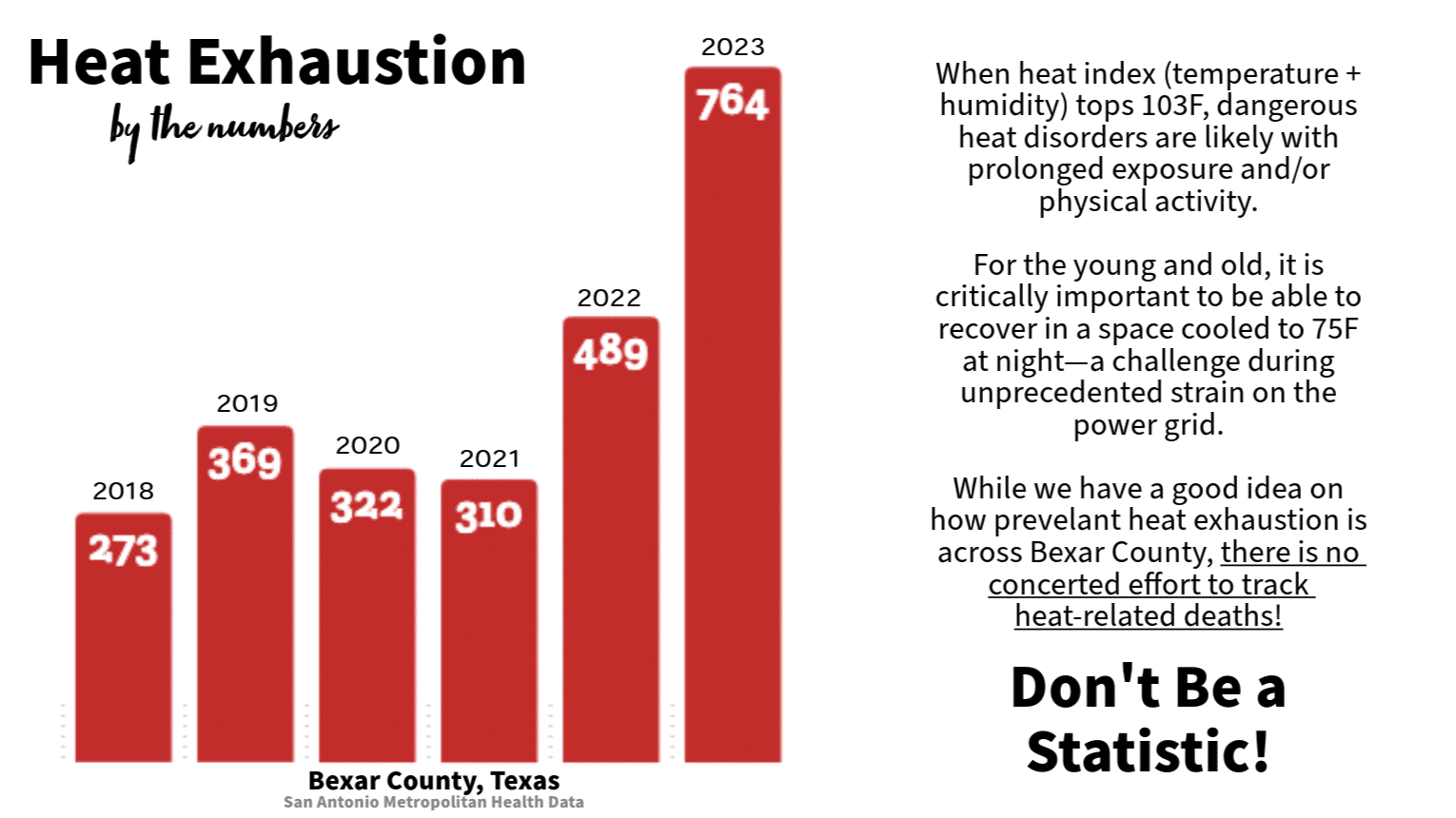
Deceleration organized this guide to help people stay healthy during the reality of rising heat. We had a lot of help from the community and consulted public health experts and reviewed existing local, state, and federal resources. Much of the info we received has been distilled and integrated into this page, which will be updated in the months and years ahead. The need for this information is clear, as captured in the (almost-certainly-an-undercount) record-breaking number of heat-illness cases collected by San Antonio’s Metropolitan Health District last summer. Yet the Bexar County Medical Examiner isn’t even counting the number of people dying from heat each year. You can sign the petition to demand this change now!
Please share this page and the resources within it widely. This is an active page and we are actively updating it. Write with ideas on improving this page at editor@deceleration.news.
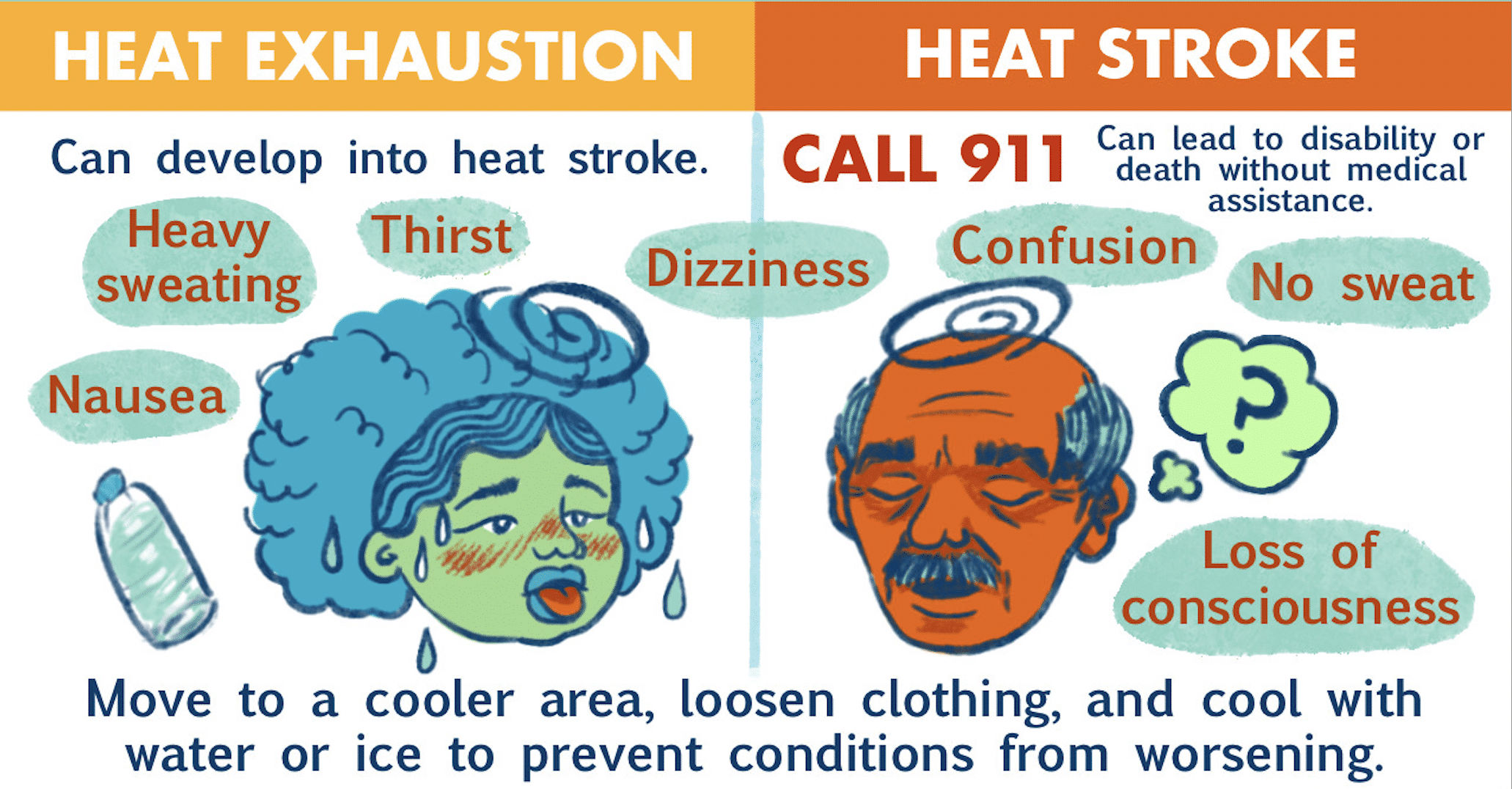
Heat Exhaustion or Heat Stroke?
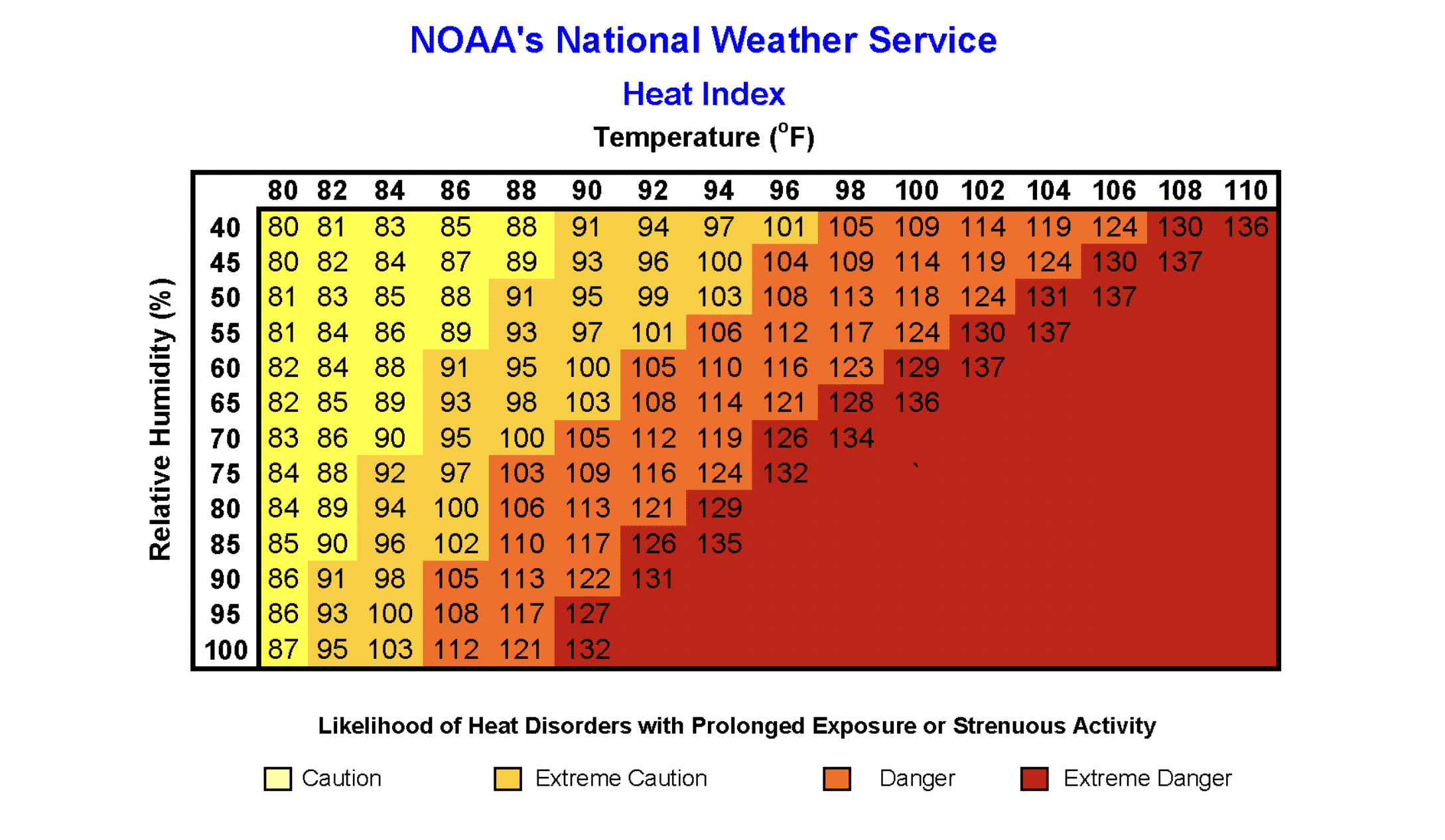
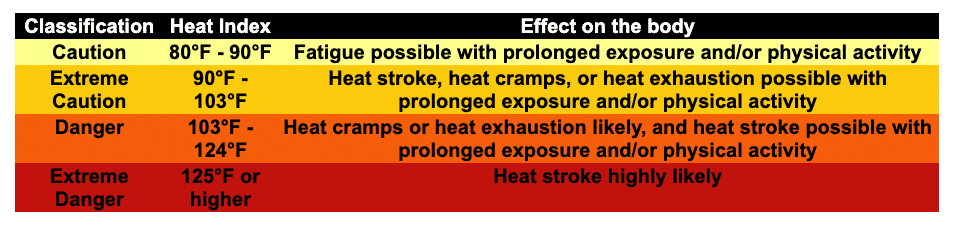
Extreme heat can result in a range of health impacts, including heat cramps, heat exhaustion, heatstroke, hypothermia, and death. San Antonio Metro Health is reporting the most cases of heat exhaustion and heat stroke on record. Keep in mind: When the heat index (temperature + humidity) meets or tops 103°F, such impacts become more likely—especially if you are outside for long stretches of time or doing physical labor in the sun. For the young and old, as well as those at increased health risk for other reasons, the World Health Organization says it is best to cool your living space below 75°F at night—a challenge when the state grid managers are urging folks to keep their thermostats at 79°F for fear of a collapsing electric grid in Texas during a time of unprecedented energy demand.
Drink Water
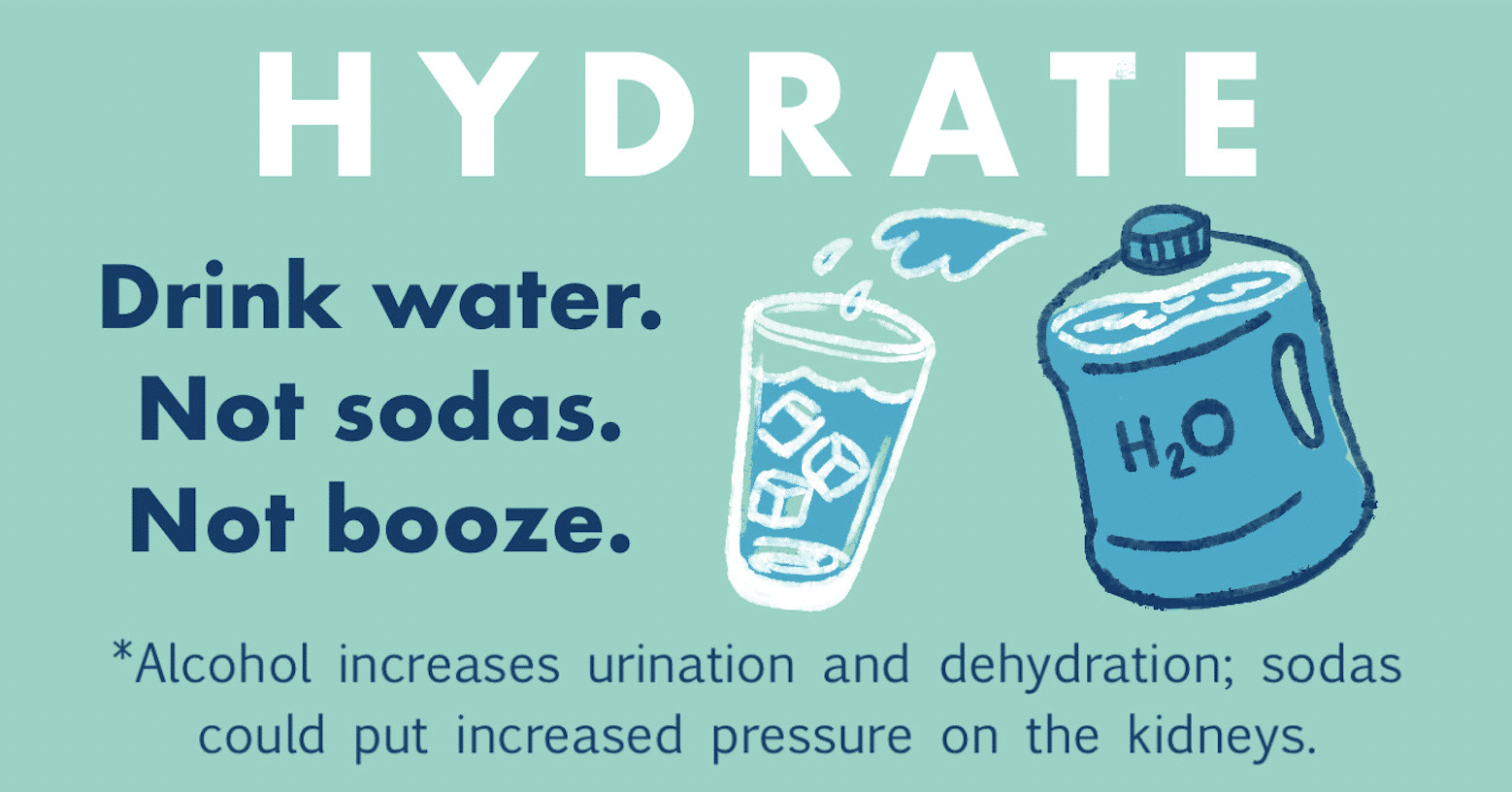
* If you’ve been sweating heavily, consider adding a pinch of salt to your water w/ honey or agave nectar and lemon or lime to add lost electrolytes. Here’s a DIY electrolyte drink recipe, one of many available online. And, no. Your salt does not need to come from Tibet. And, actually, a tall rusa would probably do the trick here, too.
Dress Sun Smart
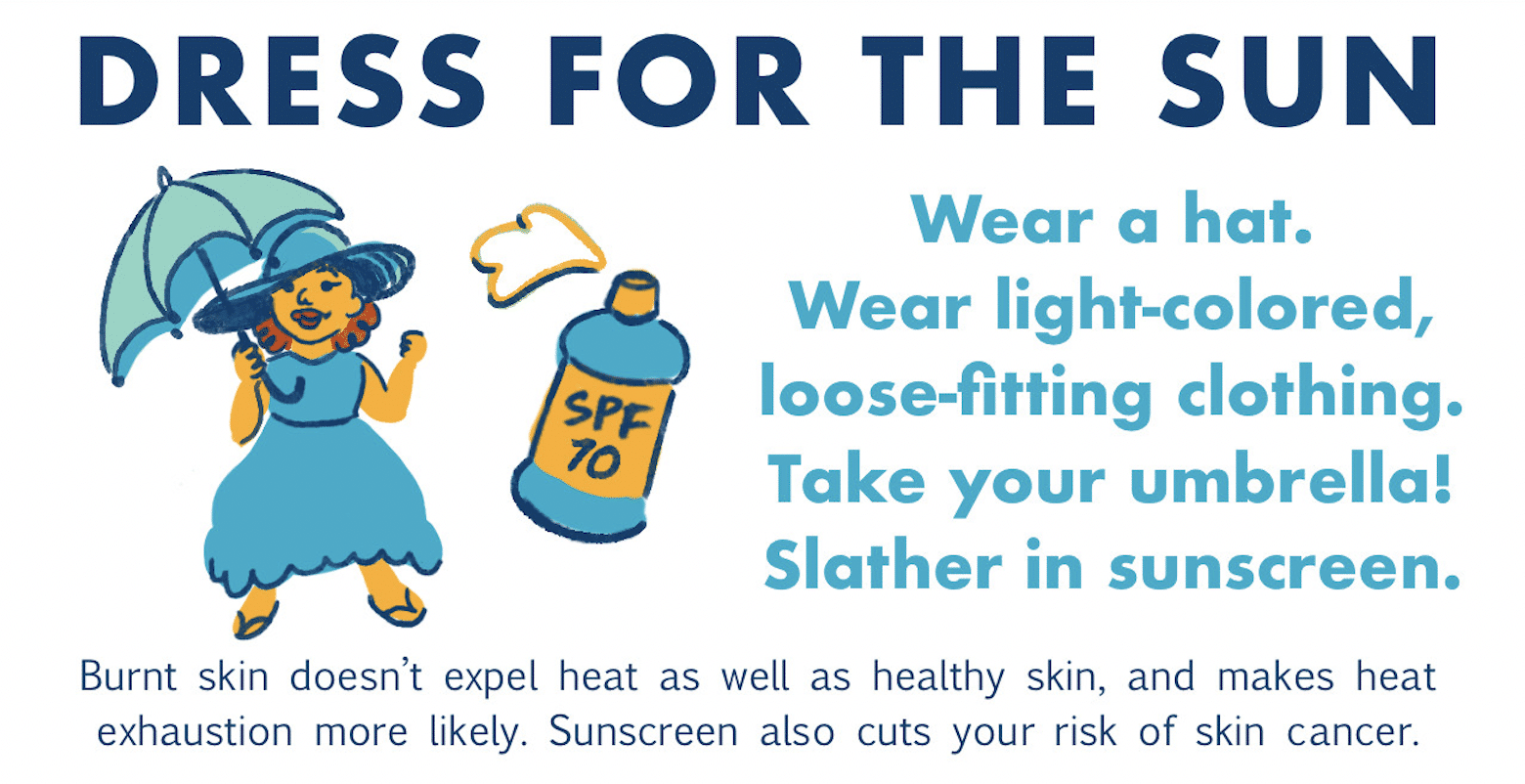
Community Recommendations
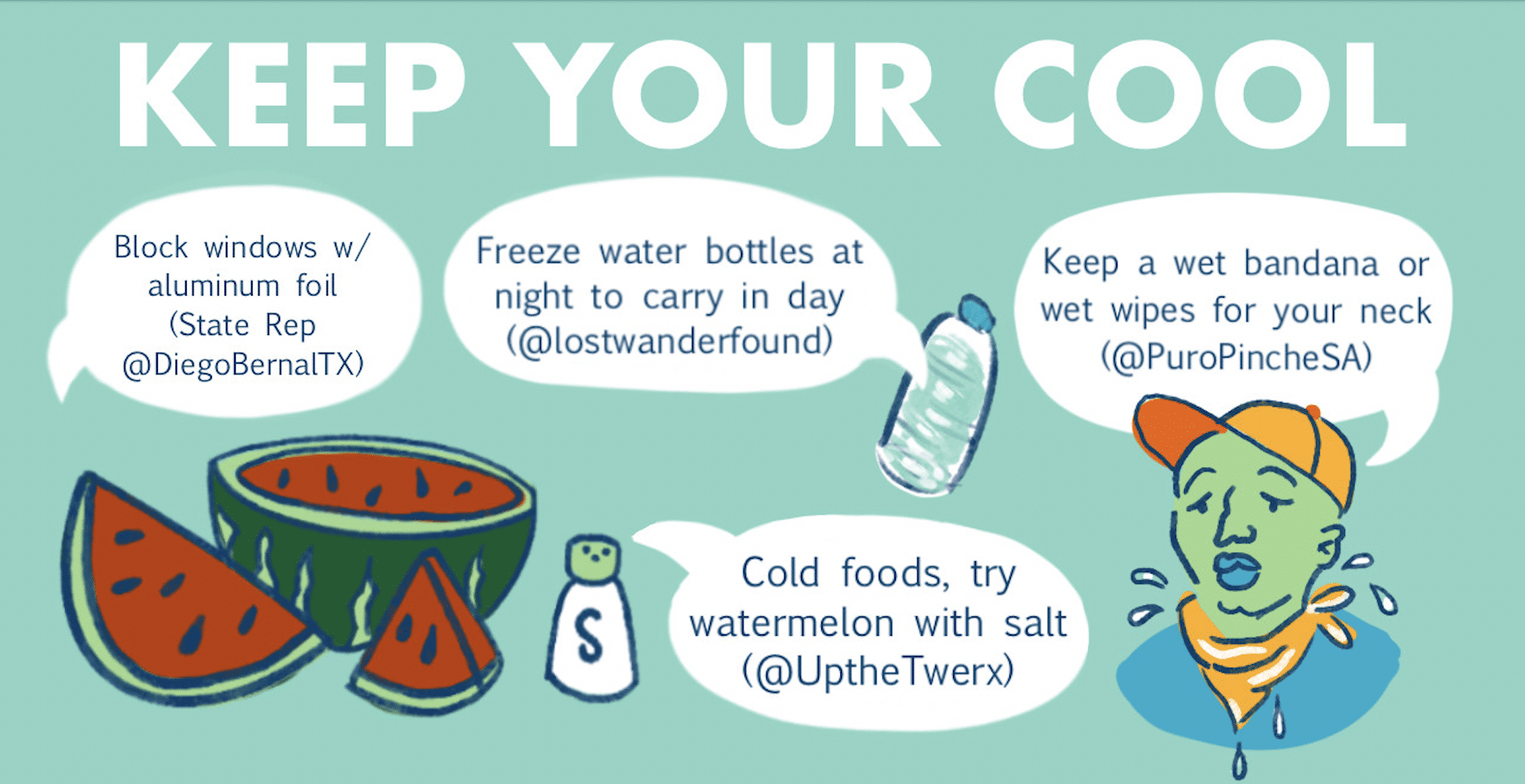
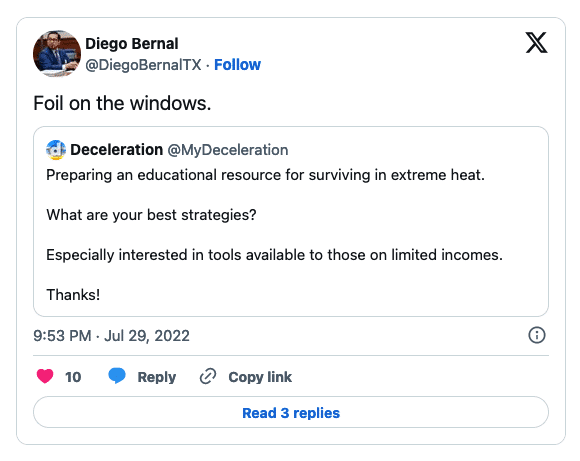
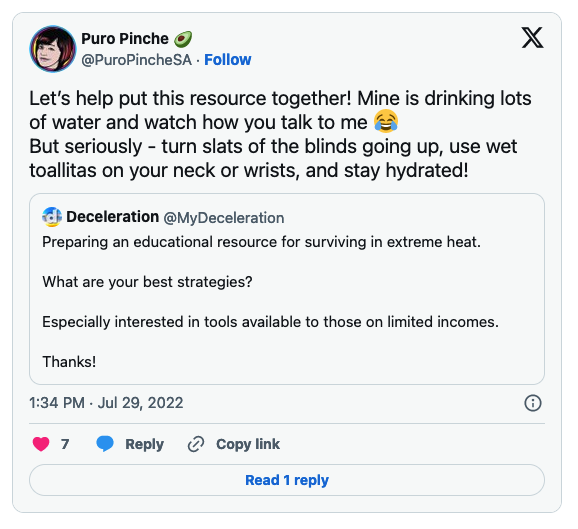
We asked our friends on Twitter their best tips and tools for staying cool. Here are a couple recommendations (from accounts that haven’t been suspended to harassed off the platform since we started this).
Other Recommendations

- Retreat to the library or sneak in some movies.
- Crash at a cooling center (locations) … Also see: VIA free bus rides.
- Unplug everything you don’t need & weatherize* (@AngelaBGarza)
- Share with others in need (in hot or cold!) (@_rootbound)
- Free weatherization for your home/rental property through the Casa Verde program (details below).
- Also: Google “DIY swamp cooler” (@Blancanieves721), a la:
Know Your Rights
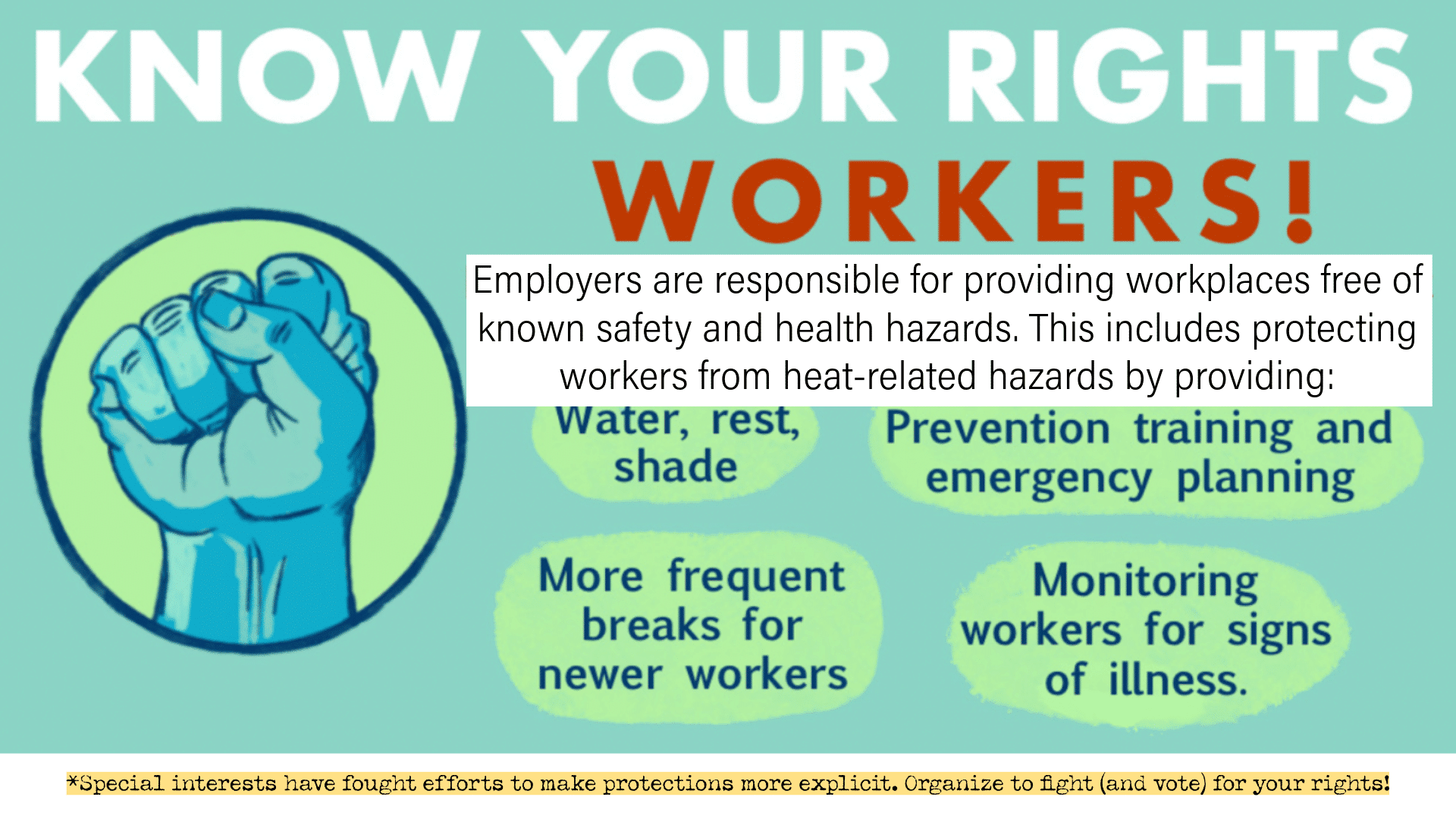
Texas Governor Greg Abbott signed into a law the so-called “Death Star” bill that limits the ability of local governments to regulate across a range of sectors (unless specifically granted that right by the Texas Legislature). It goes into effect on Sept. 1, 2023. Legal challenges are likely. The potential here is to force a rollback on Houston’s worker protections, heat protections in Austin and Dallas, and casts into doubt San Antonio’s halting efforts to protect workers from heat stress.
While the Occupational Health and Safety Administration has refused to pass a national heat standard for decades, it holds that current federal rules should protect workers and directs employers and employees to consult their heat illness prevention checklist.
Under the General Duty Clause, Section 5(a)(1) of the Occupational Safety and Health Act of 1970, employers are required to provide their employees with a place of employment that “is free from recognized hazards that are causing or likely to cause death or serious harm to employees.”
The courts have interpreted OSHA’s general duty clause to mean that an employer has a legal obligation to provide a workplace free of conditions or activities that either the employer or industry recognizes as hazardous and that cause, or are likely to cause, death or serious physical harm to employees when there is a feasible method to abate the hazard. This includes heat-related hazards that are likely to cause death or serious bodily harm.
President Biden’s Inter-Agency Effort to Protect Communities from Extreme Heat
President Biden’s call for a coordinated federal response to extreme heat is a space to watch as a new trend in cities emerges—the appointment of dedicated “heat officers.” It is already well understood that low-income and communities of color bear a disproportionate share of the risk from extreme heat and other environmental factors. Fixing this long-standing reality will require significant work in the months and years ahead. Read: “Climate Change and Social Vulnerability in the United States.”
Washington, Minnesota, and California have OSHA-approved rules that set specific heat standards (Cali, for example, kicks in extra protections at 80 degrees.)
Big Picture
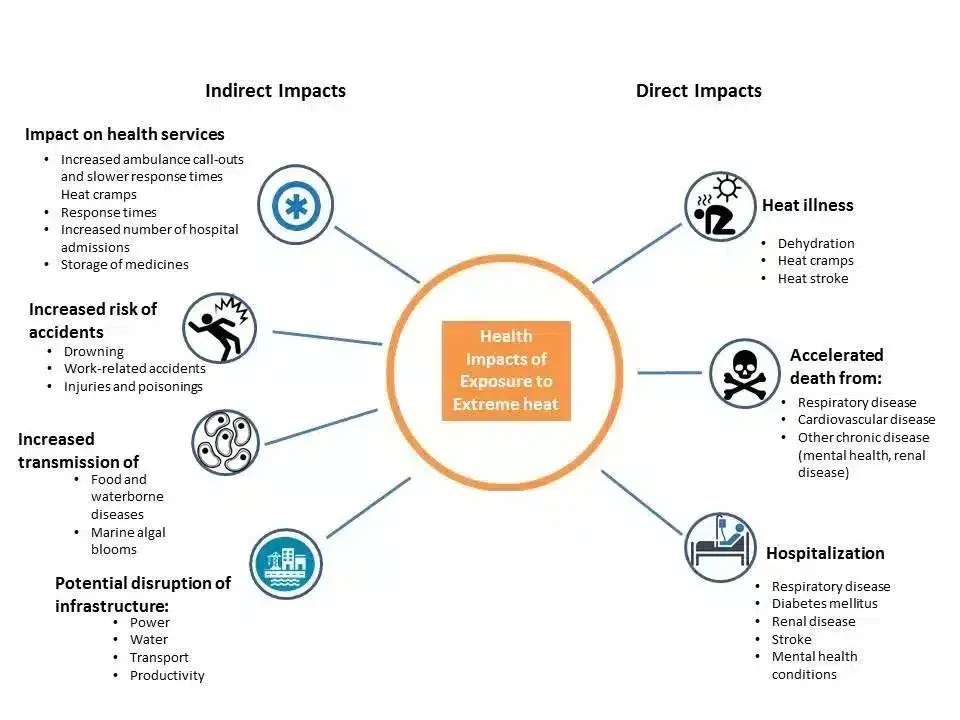
The World Health Organization writes:
“[S]ome populations are more exposed to, or more physiologically or socio-economically vulnerable to physiological stress, exacerbated illness, and an increased risk of death from exposure to excess heat. These include the elderly, infants and children, pregnant women, outdoor and manual workers, athletes, and the poor. Gender can play an important role in determining heat exposure.”
Understanding Heat Index
It’s the heat. And it’s the humidity. To understand the impact of heat on the human body, you have to understand how the body experiences heat. That is as a combination of air temperature (what meteorologists usually say) plus the relative humidity (something they may leave out). The may calcutate the two and relay the “feels like” temperature. At high heat index levels, the body loses the ability to cool itself down by perspiration, raising your risk of heat illness and heat stroke. To calculate your risk, you can use the chart below. Or you can use this online calculator. (NOTE: This chart is using shady locations. If you are in the sun, add another 15F.)
2-1-1: Project Cool
Text United Way Helpline at 211 to Request (or Donate) a Box Fan*
* Free to those 60 years or older
Heat Island Effect
Highly developed areas with few trees and lots of concrete can be more than 10 degrees hotter than leafier, hillier sides of town. Like other cities, San Antonio is experimenting with more reflective asphalt and white roofs (apply to city program here) to try to dampen the impact.
Deceleration mapped heat island impact for Bexar County by Census Tract in 2022. We found that more than half of the hottest Census tracts are in District 8 and District 1
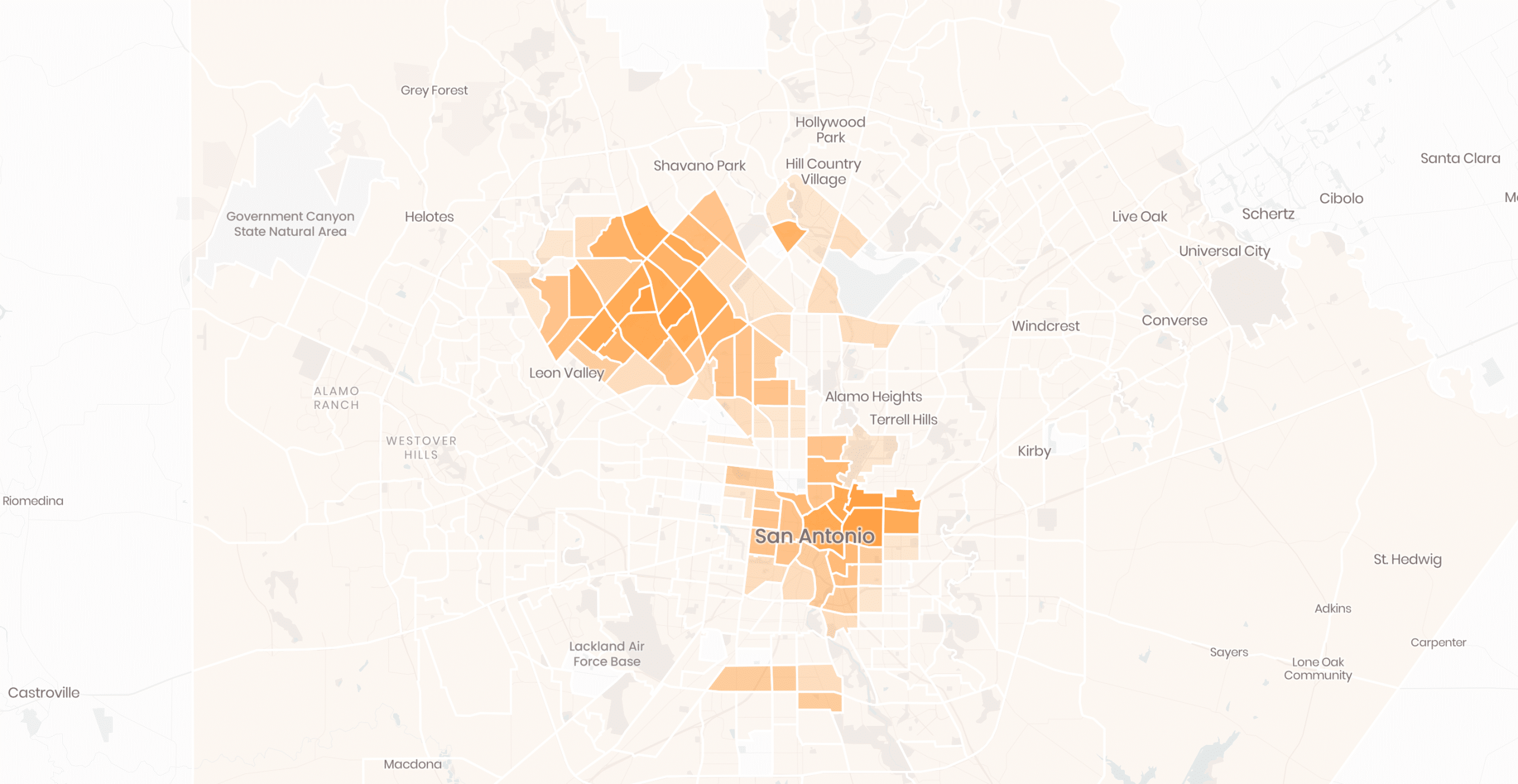
(See: “San Antonio’s Hottest Neighborhoods—Literally“)
Keep an Eye Out
Check in on those most at risk from heat-related illness:
- Babies/Young Children
- Elders
- People who live alone
- People with disability, disease, or medicated for mental illness*
- Houseless people (more below)
* Some mental illness medications impact the ability of the body to cool itself. Medications list here.
Help for the Unhoused
Among those most at risk from extreme heat are members of the unhoused community. The following groups do direct assistance, including medical intervention, in some cases. Top requests from our unhoused neighbors (after cold water) are for small portable coolers, battery operated fans with batteries, and cooling rags, according to Yanawana Herbolarios. You can donate cash or items—or request assistance—from:
* For help with housing placement, you must register with the Homeless Management Information System (HMIS). This can be done through San Antonio’s Department of Human Services, Haven for Hope, or Christian Assistance Ministry, among others.
Deadly Bacteria
The State of Texas does not close rivers or put up signs to warn you about this, but understand that when the river flow is low, the bacteria count in the water is almost certainly high. That includes brain-eating amoebas known as Naegleria fowleri. Infections are fatal in 97 percent in these cases. The bacterium enters through the nose. Wear a noise plug. Try not to stir up the sediment where they live. Or better: Do not dunk your head underwater at all.
More Resources
If you live in Texas:
If you live in San Antonio or Bexar County, Texas:
- Emergency Preparation & Safety Tips (CPS Energy)
- Energy Conservation Resources (CPS Energy)
- Beat the Heat (San Antonio Metropolitan Health District)
Download & Share
Facebook Infographic
These resources are being updates for 2024.
Twitter & Instagram blocks
-30-
Like What You’re Seeing? Become a patron for as little as $1 per month. Sign up for our newsletter (for nothing!). Subscribe to our podcast at iTunes or Sticher. Share this story with others.


