“Nobody dreams of becoming an undocumented mother.”
Those are the words of Claudia, an undocumented mother narrating her experience seeking health and safety for her child in the U.S. They come from Elizabeth Farfan’s book “Undocumented Motherhood.” For the mothers separated from their children and the hundreds of women who have miscarried or have been forced to give birth in detention centers, there is certainly nothing dreamy about having your child ripped from your arms all for being undocumented.
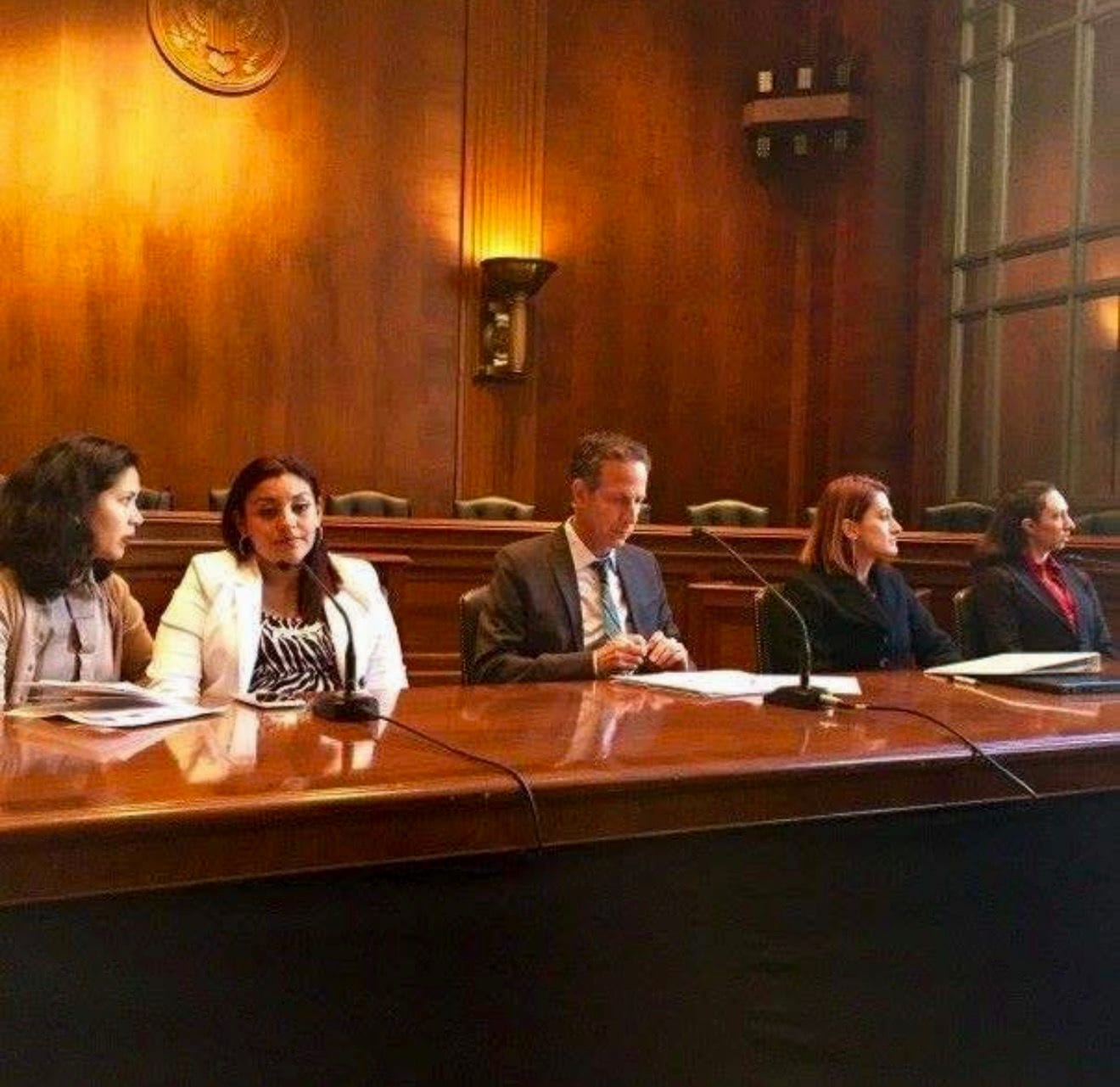
In celebration of Women’s History Month, this edition of ICE Watch focuses on women leading the defense of health and rights of immigrant women. Although immigration enforcement actions and detention is violent for everyone and all communities, historically and statistically we know that those most vulnerable to heightened forms and rates of violence are women and children. To understand this dynamic, this week we speak with community organizer Beatriz Batres and immigrant rights advocate Sarah Cruz about ICE, local law enforcement collaborations, and growing community responses—including the mobilizaiton of a “resistance force” that is itself largely led by women.
If this newsletter speaks to you, be sure to share it with your friends, family, and community. Join as a paying supporter and engage in the comments below. Let me know what you want to see in our next newsletter!
—Roxana Rojas

Call to Action
To support the effort to protect the rights of pregnant, postpartum, and lactating individuals in detention:
- Sueños sin Fronteras: Sign on letter to demand the liberation of pregnant people from the Dilley detention center. Add your signature and support their work. Also: You can support their work to improve pregnancy, birth, and postpartum outcomes for undocumented people in Texas with a donation here.
- Request an EO 12866 meeting with the Office of Information and Regulatory Affairs to advocate for access to reproductive healthcare for unaccompanied immigrant youth who are pregnant and in the custody of the federal Office of Refugee Resettlement (ORR). Advocates anticipate that a forthcoming regulation will restrict access to abortion-related care for pregnant unaccompanied youth by prohibiting the Office of Refugee Resettlement (ORR) from providing transportation to unaccompanied youth in ORR custody to receive abortion care.
- Free Them All VA: Support Beatriz Batres’ organization La ColectiVA by giving to the Free Them All Collective Liberation Fund that supports families and community members who are impacted by the incarceration-to-deportation pipeline in Virginia.
- RESOURCE: Learn about your First Amendment rights
- RESOURCE: Know your rights related to public demonstration
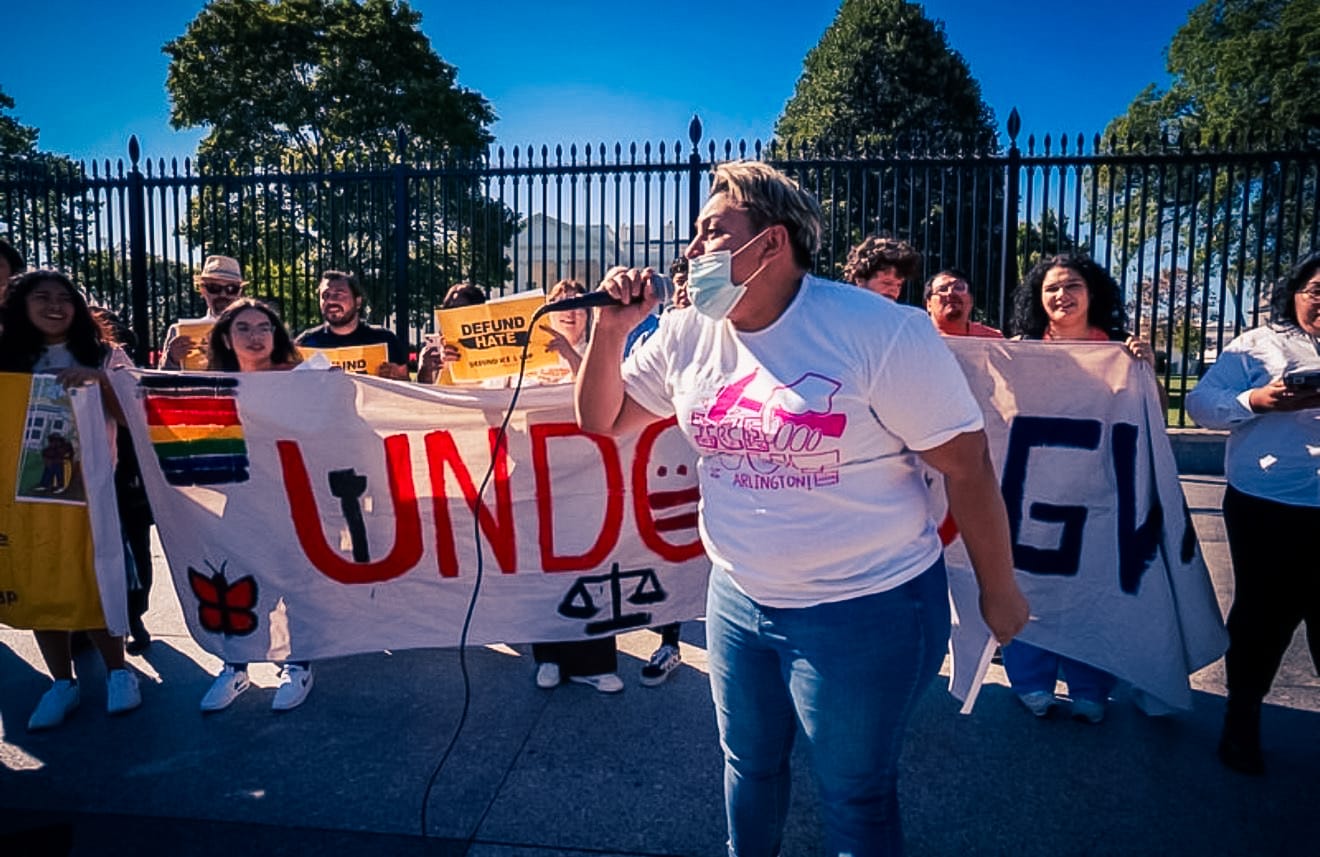
¡NOS QUEREMOS VIVAS! ¡NI UNA MENOS!
Meet Beatriz Batres
The chants of women marching reverberated around the world earlier this month on International Women’s Day. These voices met the wails of mourning for the nearly 180 young girls murdered in an illegal war that we all pay for but did not consent to. Meanwhile, war drums beat to the tune of AC/DC.
The cacophony grows louder with the innumerable pregnant and breastfeeding individuals reeling from the injustice of having the right to parent their children thrashed away from them. Their bodies accumulate the trauma of medical neglect and abuse in immigrant detention centers across the United States. This is another stave in the new anthem of this country.
“We have had so much taken from us,” Beatriz Batres, a formerly detained mother turned activist, confides in me. “Using public space to denounce violence, create discomfort, elevate the voices of others has become a habit and a moral responsibility.”
Batres shared with me her story, the abuses she witnessed personally, in order to highlight several overlooked facts we need to hold in our minds. Just as women bear inordinate burden and abuse by the deportation-industrial complex, they also make up a large part of the visionary leadership charting a path beyond those abusive systems. But our ultimate success, she insists, lies outside our current campaigns to prevent or even shut down camps.
The squalid conditions of immigration detention are well documented. Yet, we know that historically the most vulnerable are women, particularly children and pregnant, postpartum, and breastfeeding individuals. Dilley, CoreCivic’s family detention center an hour south of San Antonio, Texas, has recently drawn much media and public attention for medical emergencies faced by children and pregnant women. Currently the only center holding families, Dilley is one of five family detention centers used since 2001.
National media recently highlighted the experience of Liam Ramos and his father, brought from (and since returned to, thanks to enormous pressure from outside protest and efforts by some elected representatives) Minneapolis. It is important to note the entire abusive network of detention modalities that go widely undocumented.
There are, for instance, prolonged detentions at hotels without the ability to make any outgoing calls to contact family or counsel. There are also hundreds of "shelters" for unaccompanied minors that are not even on the media radar, impromptu holding centers not meant for long-term detention, and (soon) retrofitted warehouses in places without capacity for an influx of people sure to strain local resources, such as waste management and water.
Even established facilities are fraught with issues that often go under reported and or chronically unaddressed. Women have faced forced sterilization, obstetric violence, miscarriages, sexual violence, separation from nursing babies, in addition to lack of access to counsel and unsafe conditions.
Transgender people don’t fare any better, often being denied access to lifesaving medication in addition to the violence of being forced into facilities with people of the assigned sex at birth.
While supporters of the regime mistake Trump’s affection for TV cameras for transparency, this has been the least transparent administration in modern history. Under the current administration ICE and DHS no longer provide timely or reliable detention data. There is no public data on the number of detained women versus men, with even less information on detained transgender people.
The number of children detained in so-called “shelters” is also unclear. One such black hole of information is the San Benito facility in Texas that is holding pregnant teens in direct violation of the Flores Settlement and ICE’s own policy to detain pregnant people only under exceptional circumstances.
ICE no longer provides reporting on the status and circumstances of detained pregnant, postpartum, or lactating individuals. The previous policy that required such disclosure lapsed in March 2025 and wasn’t renewed. The issues will only exacerbate in conditions where there is understaffing, inadequate infrastructure, and no proper medical care in or near these facilities.
What happens inside these centers can be understood in part by studying the remains of those who die or are murdered in custody. Non-profits have started to crowdsource information in order to help track information on detained pregnant people. But our most reliable source is the accounts of those who have experienced these facilities and have survived.
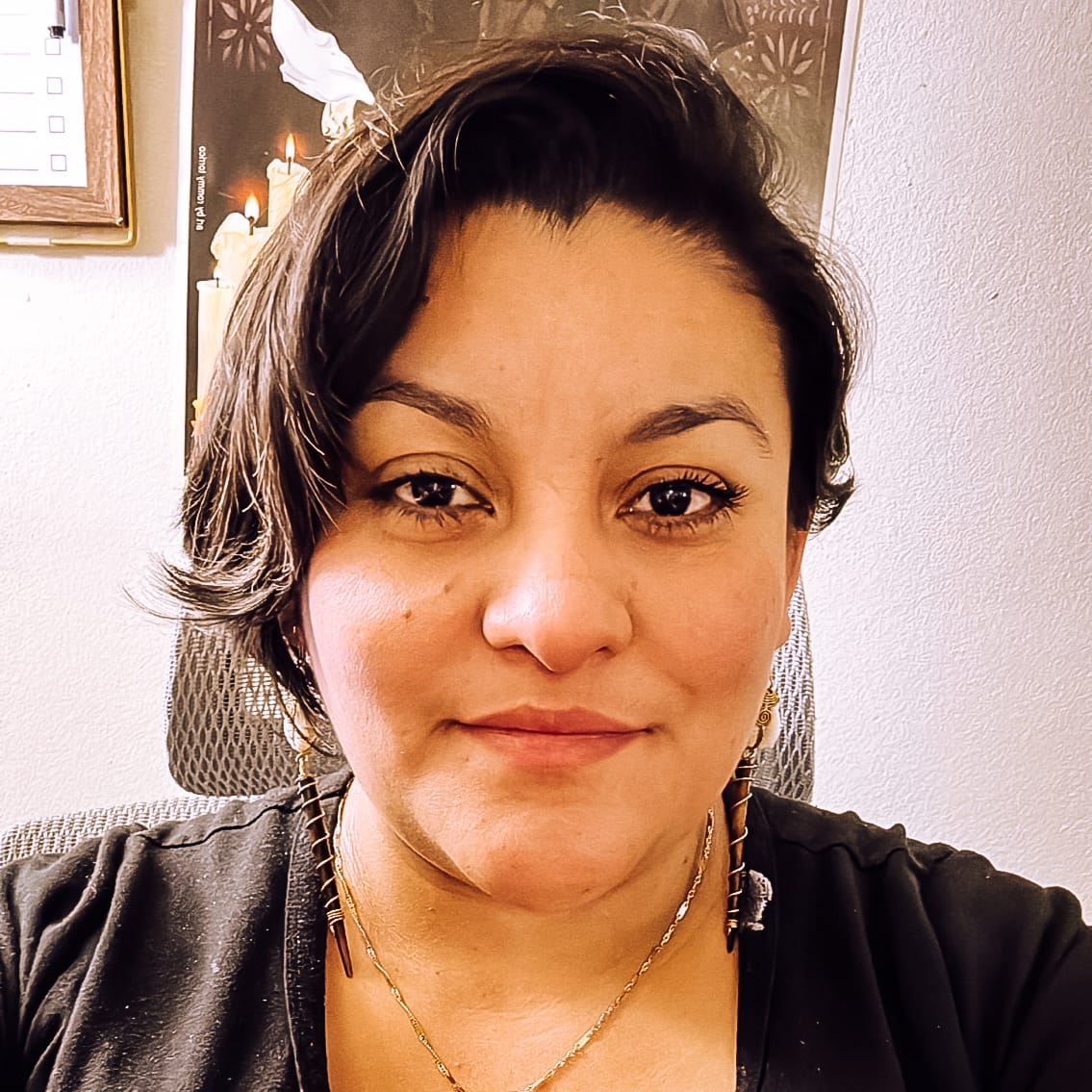
One such person is Beatriz Batres, who was detained with her two children at Artesia, New Mexico, in 2014. ICE Watch spoke with her about her experience and how that experience motivated her to organize for justice with other impacted people starting even while she was still within the detention center.
“What I started to do is talk with the other women and gather the women from the same block,” Batres told ICE Watch. “We’d all talk and ask each other who was able to get an appointment with the attorneys. And whoever had an appointment would take the other women’s requests and hand them in to the attorney so that they would get called.”
Batres’s account of the violence experienced in detention is not unlike the testimonies of countless others. Not only is there direct violence from guards and the officers, but also among detainees, she says. Overcrowded facilities with limited (and overpriced) commodities, including often unhealthy or inedible food, compounds the tension, fear, and stress of disinformation or lack of information.
“The guards would deny you access to water even if it was for your children if you didn’t ask for it in English,” Batres said. “They would also not hand over our requests to see an attorney or the documents that we had to fill out that trigger the asylum process.”
When Batres figured out that guards were depriving detainees the opportunity to access legal help or make claims for asylum, she organized.
Today, Batres works as a community organizer at La ColectiVA, which describes itself as "an inclusive collaborative led by gente Latinx who are committed to upholding social justice and equity. It's a role she has held since 2021. Her efforts with La ColectiVA have been vital to campaigns such as ICE Out of Arlington and Shut Down Farmville under the Free Them All VA coalition.
A fiery public speaker and organizer, Batres says uncomfortable truths in spaces that often tokenize and victimize impacted individuals. She is critical of spaces that fail to center impacted communities by dominating the narrative from a non-profit perspective and controlling resources.
She has a vision of a world beyond detention. But realizing that, she says, requires action across sectors, including spaces already being resisted by larger populations, such as AI data centers and networks of increasing surveillance.
As we read recently in MIT Technology Review, tech companies like Amazon and Palantir are ICE’S unseen “backbone.”
ICE Watch offers Batres’s words here, edited lightly for the sake of clarity:
“I was asked recently how I envision the end of detention. When I said this the first time, folks were shocked because I said: ‘What good is it to me if detention is shut down if tomorrow they will reopen? If there is no building of awareness this will continue happening.’ The enemy is not Trump, the enemy is the system.
“For me it is also important to note how people begin to see the whole picture. Virginia is the data center of the country. There are many who may not ever know what it is to be deported or to be in the deportation process, but they do see the increase in their electric bill [caused by data center energy use]. There are folks whose bills were $300 and are now getting $1,200 bills. So how is this all connected? Here in Virginia it's data centers. They have passed a law allowing cameras to identify your vehicle license plates. And because here there is a driver privilege card, they know who is and who isn’t an immigrant. All this data is then shared with Amazon. Amazon is part of the surveillance system for Alternatives to Detention [ATD], so all of this is connected.
“How do we want to shut down detention centers if we have not created awareness [about] the big picture? They are stealing our local resources, our natural resources because they are wasting a shit ton of water and increasing global warming, all of these things. So how do we begin to trace the [connecting] lines? It doesn't matter what color you are, this is a machine and will screw everyone.
“And people are talking about abolition without talking about capitalism. And we are also part of the capitalist system because that’s what is generated around us where we are, but the step of recognizing where we are and how to use that is what can make the difference.”
ICE Watch Video
On the tail of International Women’s Day marches around the world, and Women’s History Month in the U.S., ICE Watch’s Roxana Rojas speaks with Sarah Cruz, an experienced immigrant rights advocate in the immigration justice space in San Antonio, Texas. View and subscribe to Deceleration's videos on YouTube.

Event
 Deceleration Staff
Free Know Your Rights Training hosted by Asian American & Pacific Islander in partnership with ACLU Texas, CAIR Texas, AAASA and LEAD Filipino.
Learn about your rights in public and community spaces, how to navigate difficult situations, and what resources are available to support you and your community.

Support community organizer Beatriz Batres
You can buy her a coffee to thank her for her work and courage in sharing her detention story!
Links
- Pregnant migrant girls held at Texas center criticized for inadequate care (PBS)
- Teen mariachis and family from McAllen released from ICE custody (Texas Tribune)
- Afghan father, former U.S. military ally, dies in ICE custody in North Texas (CBS)
- “Slowly killing us on the inside”: A family of 6 at Texas’ Dilley ICE detention center begs for freedom (Texas Tribune)
- On anniversary of ICE detention, Texas judge orders Palestinian woman released on bond (KERA)
- ‘Serious Threat to the First Amendment’ as Trump Admin Wins First Antifa Terror Charge in ICE Attack (Common Dreams)
- New Interactive Tool Helps Families Locate Loved Ones in ICE Detention (Truthout)
- Trump Administration Sends Pregnant Unaccompanied Minors to Texas Shelter Flagged as Medically Inadequate (KQED)
- Medical emergencies frequently involve children and pregnant women at Texas ICE detention center (WTKR News)
- ICE whistleblower accuses agency of ‘deficient, defective and broken’ training amid hiring surge (The Hill)
- Report: ICE replacing operator of El Paso’s Camp East Montana detention camp (El Paso Matters)