

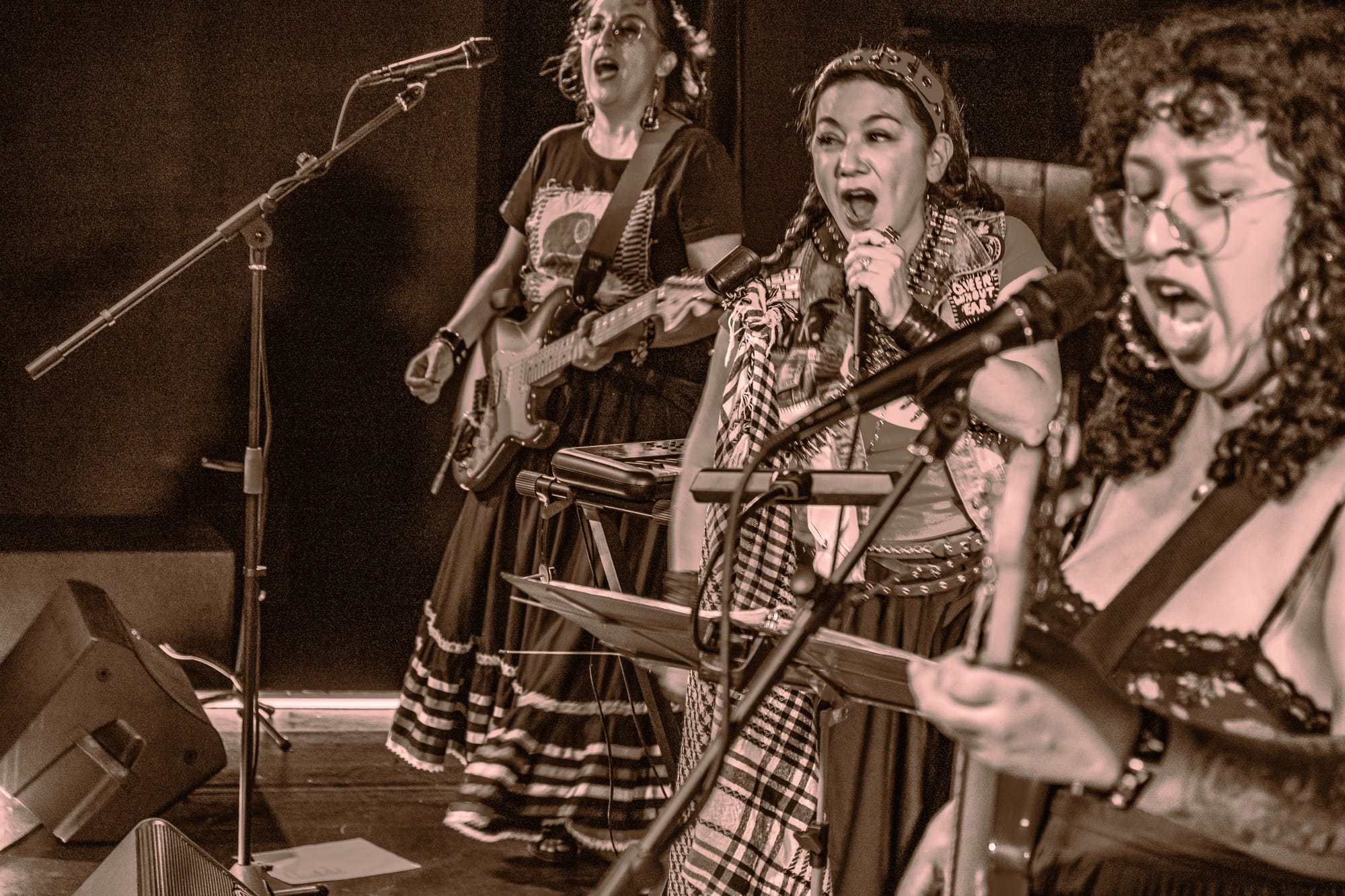
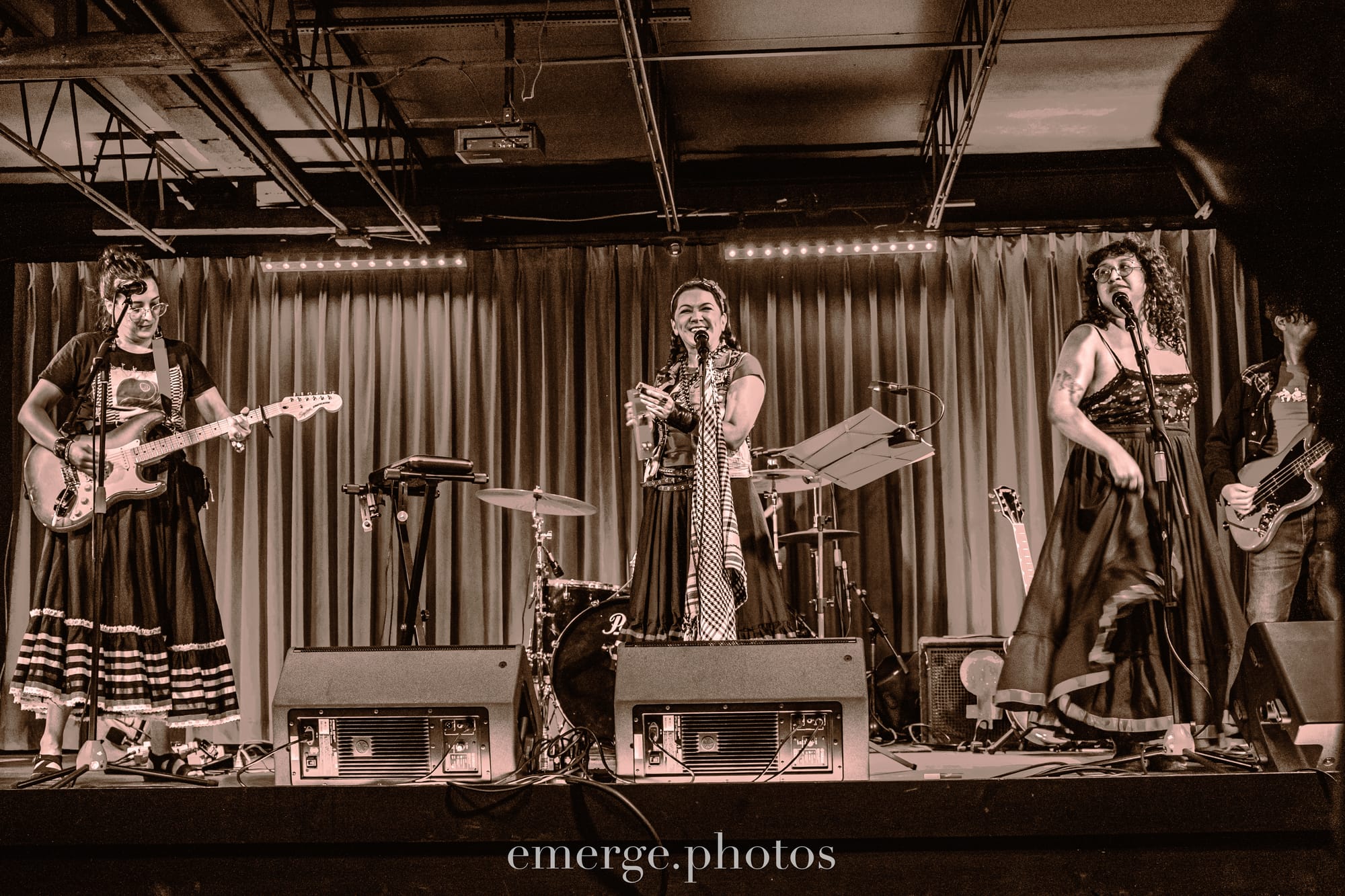
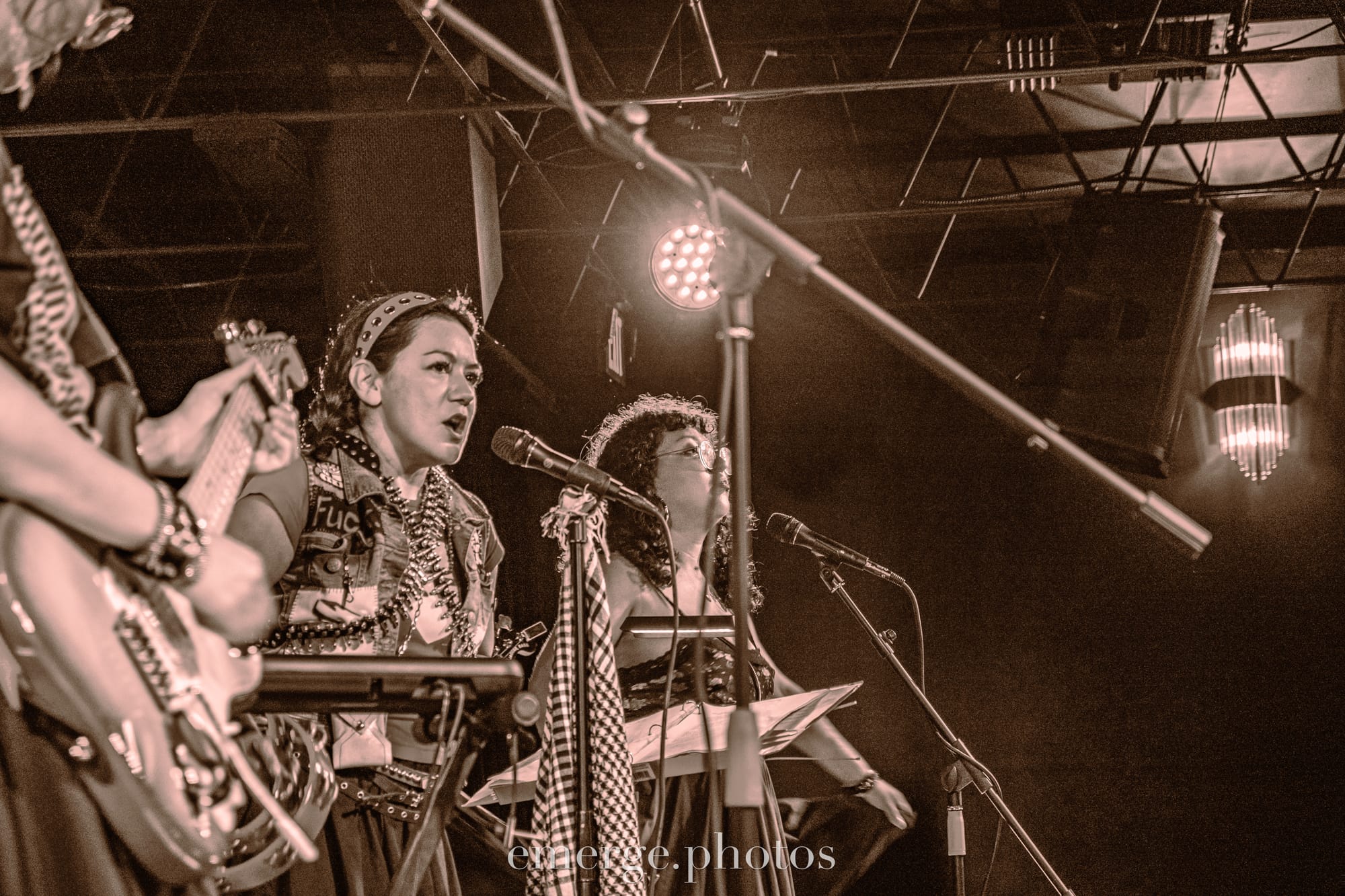
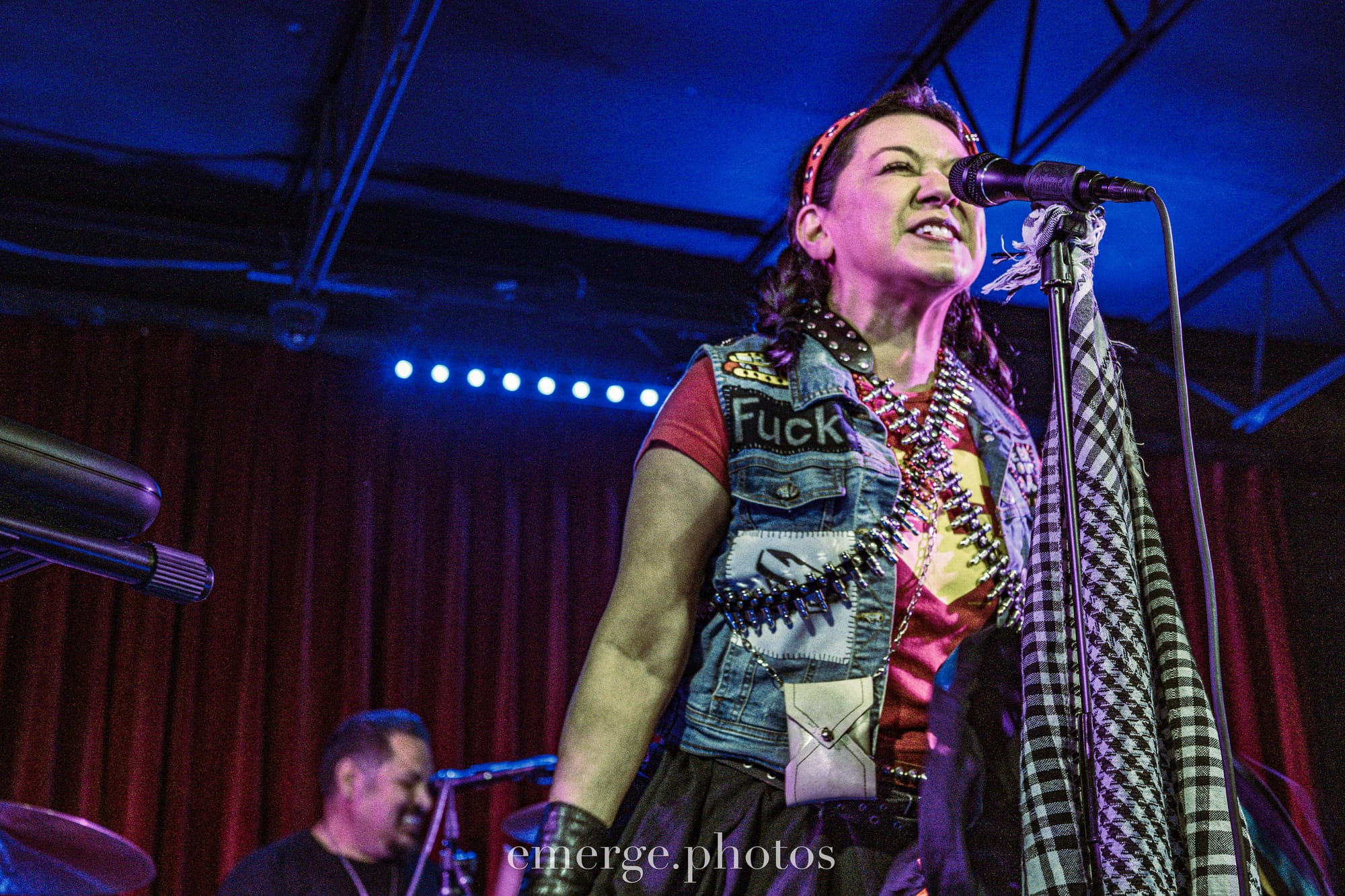
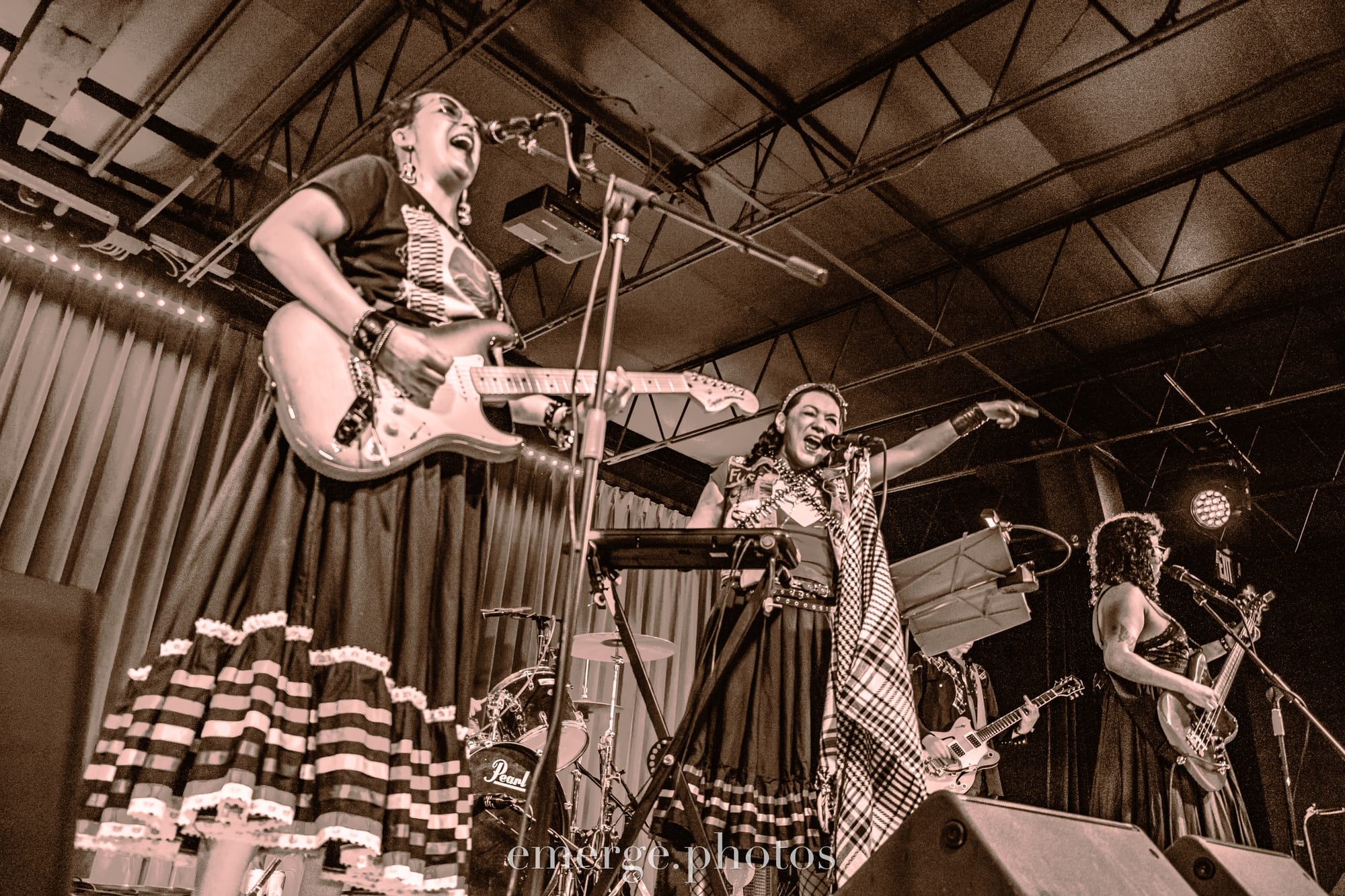
Late last month, Las Hijas de la Madre, a Latinx feminist punk band from San Antonio, released its first single, celebrating the occasion with a show at the Rah! Rah! Room. That song, “Hocicona, Peleonera,” (“loudmouth, fighter,” roughly) encapsulates a mission statement of sorts of the fiercely authentic revolutionary spirit animating the group’s work.
“They call me ‘peleonera’ / ‘cause they think I like to fight / but I’m not fighting for my ego / I’m just fighting for what’s right,” front woman Amalia Ortiz (who uses both she and they pronouns) shouts on the song’s pre-chorus.
The feminist anthem reflects on Ortiz’s personal experiences being dismissed as loud or combative when standing up for herself.
The single, with a few more to be released later this summer, is being bundled as a part of a full album, Diatribas Punk, slated for a fall release.
Ortiz writes in an artist’s statement that they “chose the punk aesthetic because the issues [tackled] … such as racial injustice, gender inequality, and environmental justice, demand immediate action and outrage.”
Catch Them Live: See Las Hijas de la Madre with a new single release on Saturday, July 12, 2025, at San Antonio’s Lighthouse Lounge, where they are sharing the bill with MexStep, who raps about decolonial issues and social justice, and Principe Q.
Deceleration caught up with the band at its final rehearsal before the June show. Before we get there, however, it’s necessary to trace the unique trajectory that has led to Las Hijas’ current iteration.
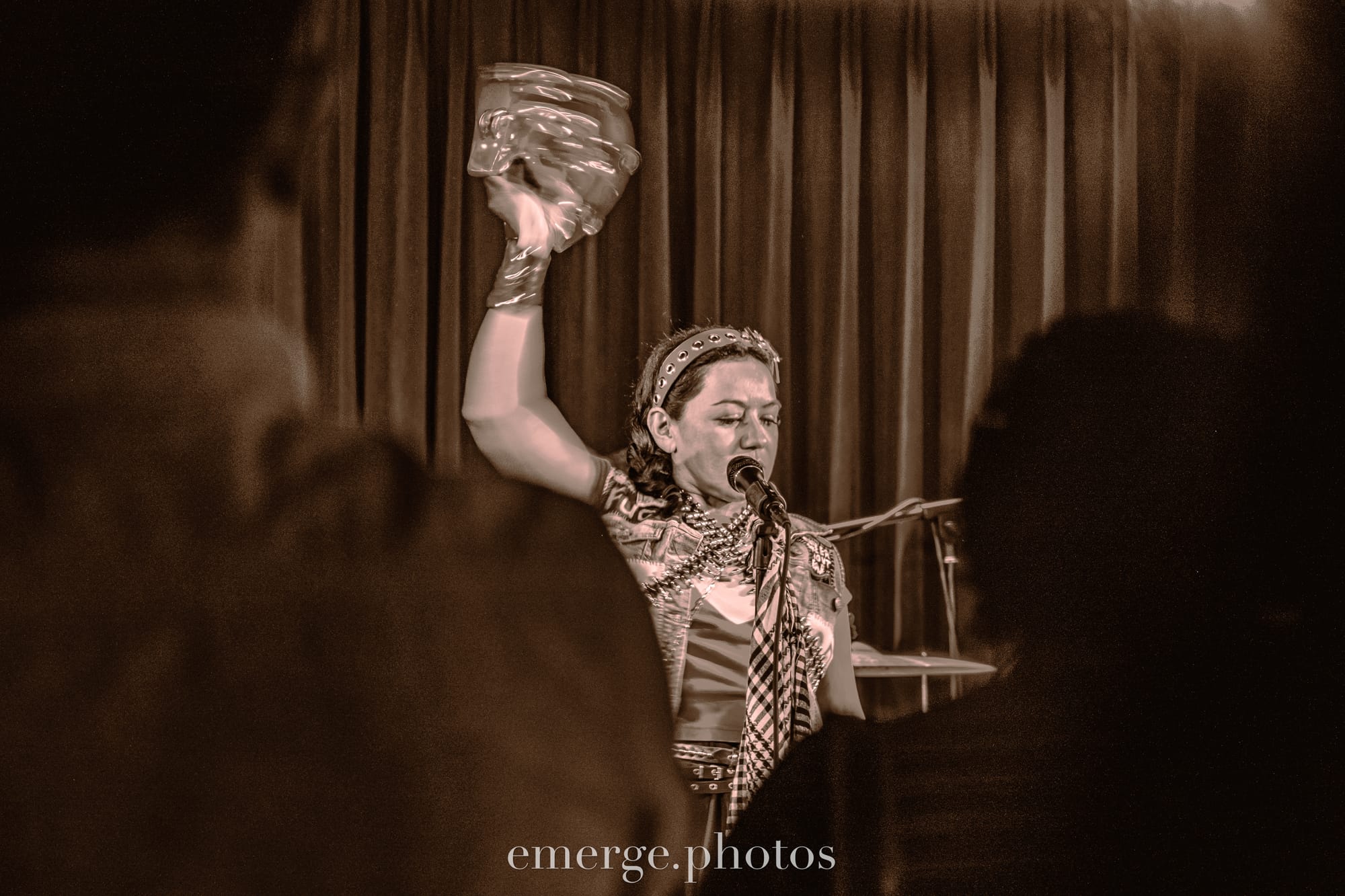
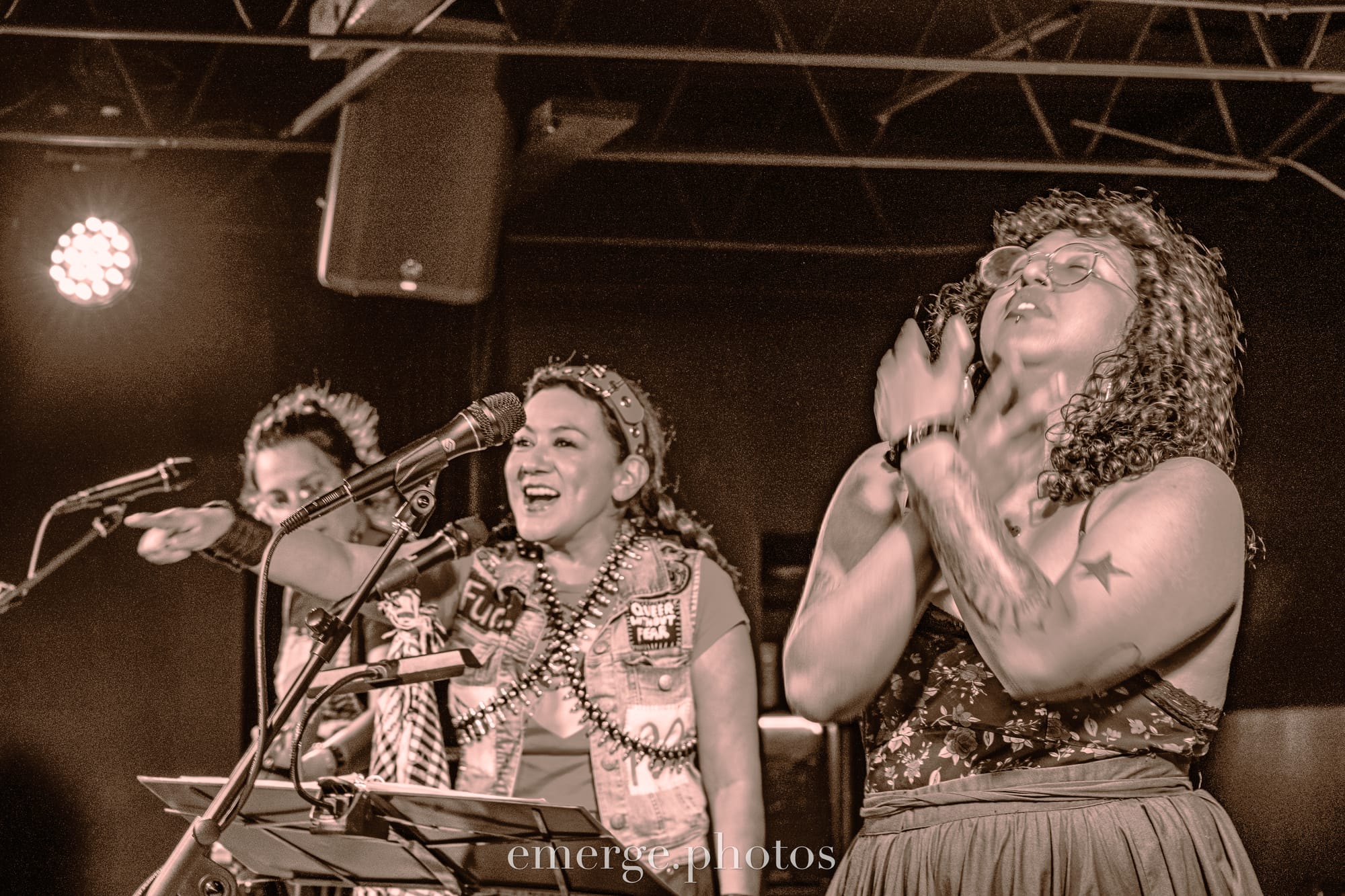
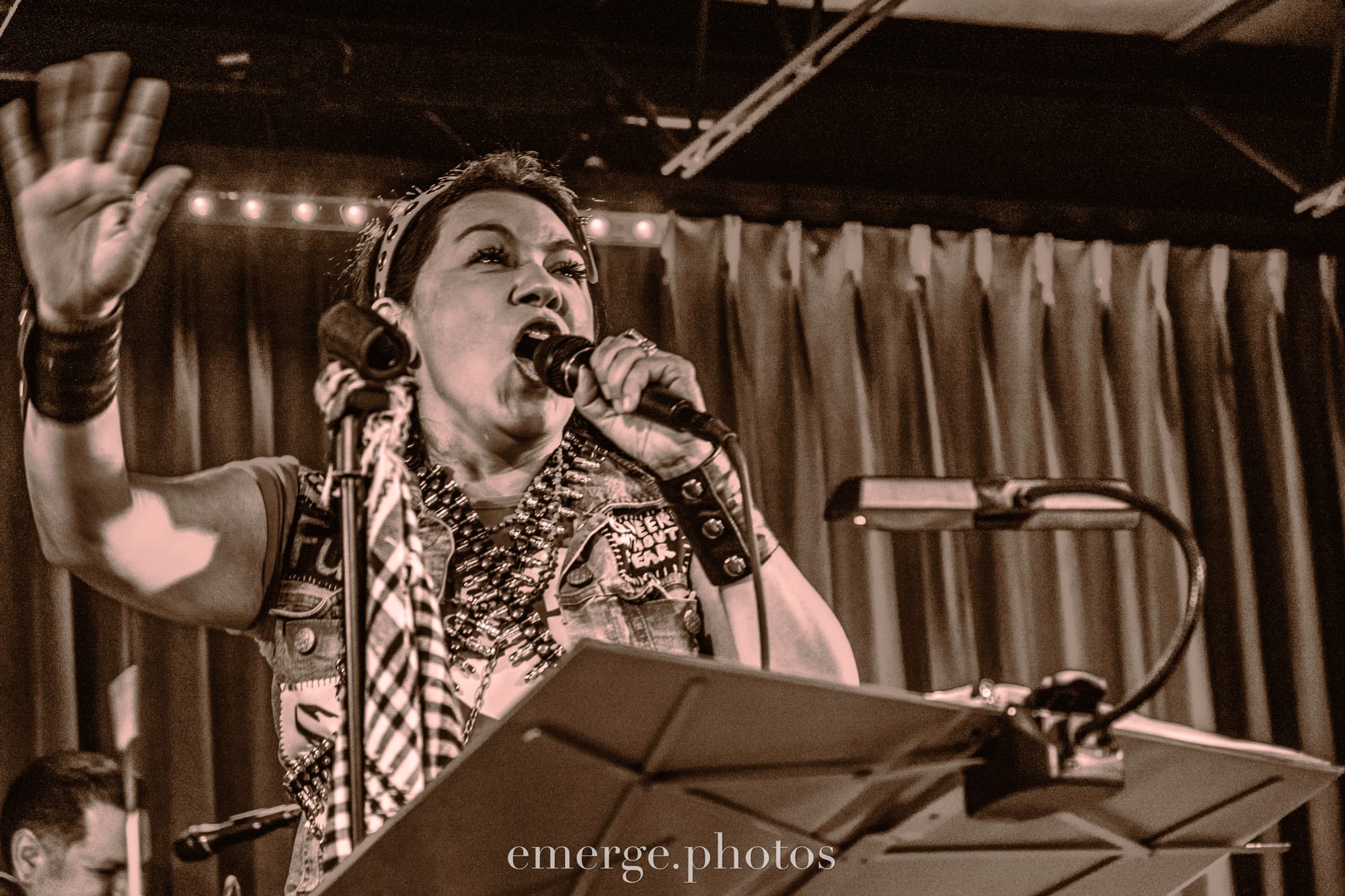
El Nacimiento De La Hija
It started in the mid-late 2010s, as Ortiz, an educator, poet, playwright, and performer, finished her Master of Fine Arts in creative writing at the University of Texas at Rio Grande Valley. For their thesis project, Ortiz challenged the traditional manuscript-only framework that they were expected to work within, instead offering up a work that was as much for the stage as it was for the page.
This wasn’t exactly off-brand for Ortiz, a nationally recognized performance poet for nearly two decades prior to grad school. Nevertheless, the experience, and the resistance she received to doing things in their own unique way, left them more determined than ever to make their own path.
In 2019, Ortiz released Canción Cannibal Cabaret, a Chicana punk rock musical that works as a book—put out by Aztlan Libre Press—as well as a musical performance piece. The musical uses parodies and reinterpretations of familiar songs, as well as original songs and poems, to tell the tale of protagonist La Madre Valiente, a refugee and revolutionary leader of women in a dystopian world destroyed by men.
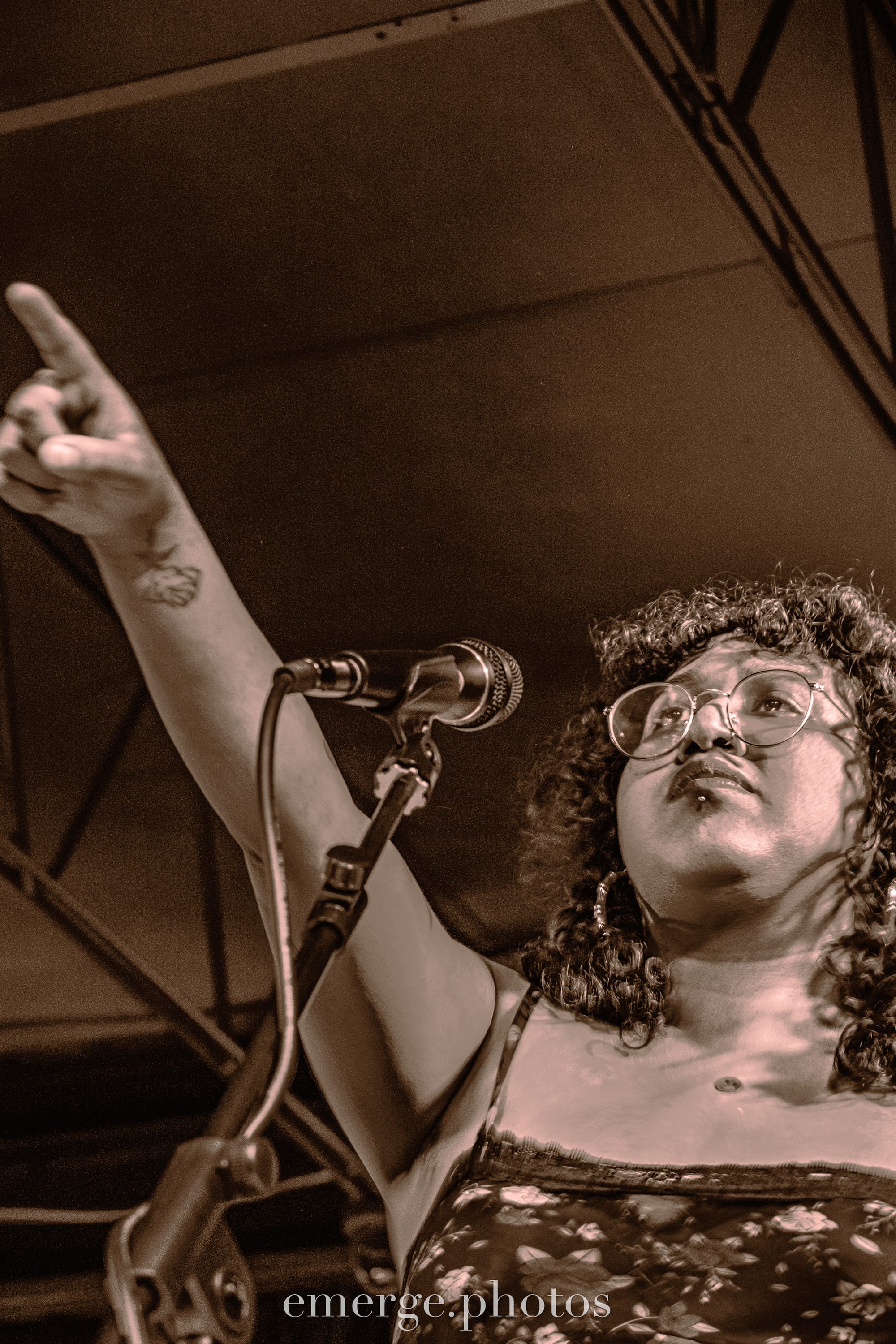
The work gives voice to a non-conformist, anti-capitalist, anti-racist, and feminist perspective that seeks justice through righteous vengeance.
In putting together a band to bring the Canción to life, Ortiz created the first version of Las Hijas de la Madre, only realizing late in the process that they were destined to be the front woman of the group, delivering their potent words themselves where they had initially imagined a professional singer/musician taking up the role.
In the time since, the band—“maybe the first band to be born from within a musical,” Ortiz joked—has evolved into more than just a vehicle for Ortiz’s urgent and radical poetry, though it is certainly still that too. Now, Las Hijas has a slew of all original material which has resulted from years of collaborative work.
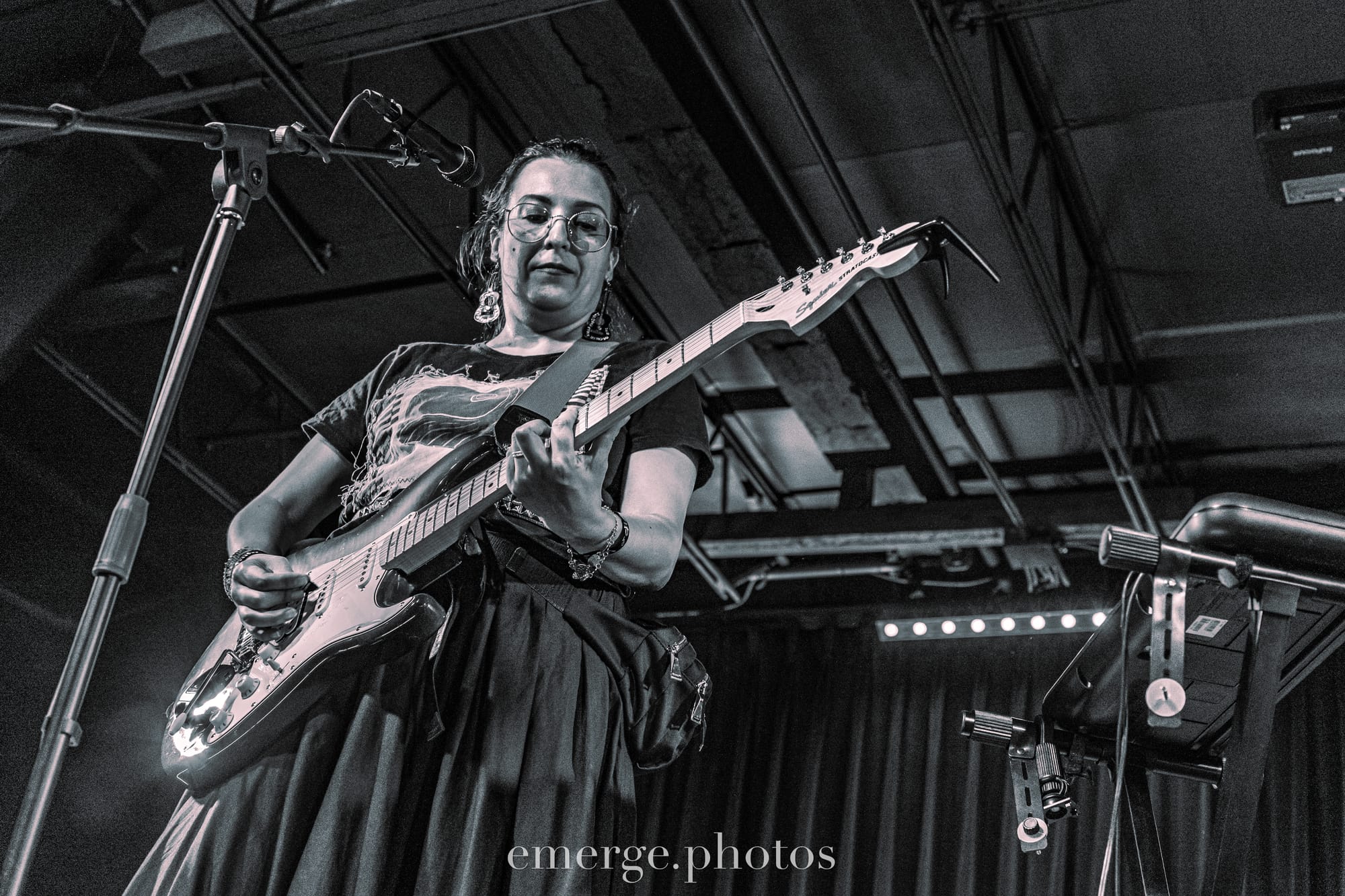
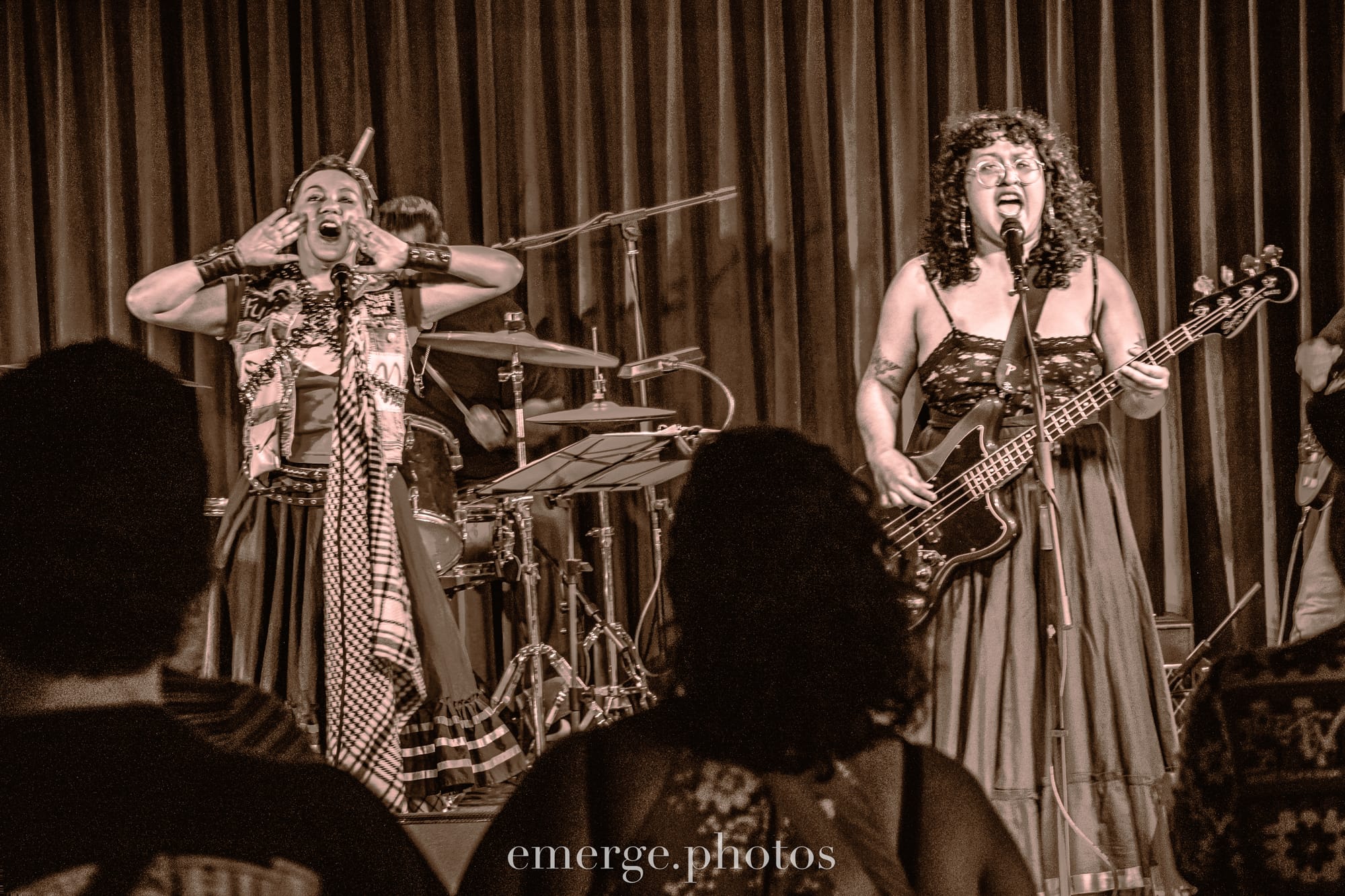
The group’s current members include Lilith Tijerina (bass and vocals), Lety RZ (guitar and vocals), Kip Austin Hinton (guitar, bass, and keys), and Joaquin Muerte (drums).
Tijerina, who first joined during the Canción performances as a vocalist and actor, said they were eager to keep working with Ortiz because of the quality and energy in her work.
“As a young artist that was getting into theory and leftism, it was something that shocked me, that someone had the balls to say these things and that she was saying them in a way that I’d never heard before,” Tijerina said.

Their longest musical collaborator, and the band’s musical director, largely because he is the most experienced and versatile musician in the group, Hinton has helped Ortiz transmute their ideas to music since even before the Canción.
“She is really good at trying to figure out things she hasn’t tried before, which is a great thing to do as an artist—you can’t be fearful,” he said of Ortiz’s work with music.
He said that he is continually inspired by the sense of joy and camaraderie that each band member brings to the table as they collaborate on songs.
RZ, for her part, was welcomed into the group shortly after finding herself deeply moved by a performance of Canción back in 2020. She approached Ortiz after the show to express her love for the work and the two struck up a kinship that has blossomed into a creative collaboration.
Muerte, of similarly noteworthy San Antonio bands Joaquin and the Glowliners and Combo Cósmico, grew up in an activist family. He joined the band just a few months ago, eagerly replacing the previous drummer when given the chance.
He said that it is always important to him to be politically aligned with the members of any band he is in, indicating that the truest collaborators are also comrades.
“There is a clear intention to center the power of the matriarch and to speak for the community’s well being,” Muerte said of Las Hijas.
Toward Diatribas Punk
Envisioned as “a Punk her-story,” with songs, poems, and even essays inspired by Ortiz’s punk sheroes, the project evolved with support from multiple artist awards, including the City of San Antonio’s individual artist grant (2021) and the Democratizing Racial Justice Artist Residency from the Mellon Foundation (2024).
The album’s planned 13 songs address wage slavery (“Working Dead”), environmental catastrophe (“Dayglo”), the patriarchy (“Periphery”), femicide (“You Want to Kill Me”), hollow ideologies (“In Name Only”), and so much more. Yet the songs are not preachy or crushed under the weight of their sense of duty. Instead, they are catchy, raucous, fearsome, bold, motivating, and even fun.
Throughout the album, filled with sometimes blunt and always empowering treatments of these sensitive, important issues, there’s a sense of humor and levity, which seems like a kind victory in itself and serves to make the music all the more powerful.
“It is simultaneously rage and also humor, and if we balance those things right, then it can be way more powerful than just going out and giving a persuasive speech,” Hinton said, in reference to the song “Too Drunk to Consent,” the ferocious album track, opener for the band’s June show.
“I find performing these songs on stage as a white man feels like a natural thing to be doing, to work in this collaborative woman-led group to challenge this anti-woman aspect of our society,” Hinton said.
That the music happens to be ferocious, well-executed punk played with immense feeling and a warrior-like dedication also means the album will call that many more minds to its important messages and calls to action.
“These are social justice songs,” Ortiz said, explaining that the songs ended up being about their fears and concerns for their community, even as they arose partly in conversation with an extensive bibliography of feminist punk autobiographies and other books they selected to read as a part of the larger project.
Art as Healing, Activism as Human
Feminist thought has long maintained that the personal is political, and therefore all art is political to some extent. Still, a distinction must be drawn between art that is incidentally political and art that is intentional in its radical, activist messaging.
Ortiz said she decided “early on as a poet” to tackle difficult and important topics with unflinching honesty. In their first days of slam poetry at San Antonio’s PuroSlam, she felt like she had some “poems that were kind of about nothing” but that got good reactions “because they just sounded good.”
“Then, in response to a trauma, the first thing I did was write about it. And after that, I had this realization that, for my own mental health, it is really important to write about the things that are harming me, and then have that help me to connect with other people,” Ortiz said.
Their performances have the potential to lead people to conversations and an “OK, what can we do about it?” moment.
“I’m super fortunate that in purging in that way, I have been able to connect with activists that are really doing things,” Ortiz said. “The way that I can contribute is that I am the bard.”
Tijerina echoed the notion of art as a healing force and took it a step further, elucidating the connections between social change and personal healing.
“For me, activism and healing are intertwined; I feel like I must get involved if I want to feel better,” Tijerina said. “I don’t like to be a part of things that don’t have a message.”
For her part, RZ believes that “art has a responsibility to reflect the historic time that it is being created in and to imagine alternatives.”
“Ultimately,” she continued, “art is an externalization of whatever the artist has inside. It would be a lie if it didn’t actually reflect what you felt, and if you were just trying to make something that looks or sounds impressive.”
Marco Cervantes, performing under his rap moniker MexStep at Saturday’s show, is a professor with the University of Texas at San Antonio’s Department of Race, Ethnicity, Gender, and Sexuality Studies who spends his free time making hip-hop music focused on decolonial analysis and community building.
Noting that the “genre of punk welcomes voices to be loud and proud,” he praised Las Hijas as an important act that counteracts dominant forces in society, where there has been “an historical silencing of Chicanas and Latinas.”
Cervantes cited art’s ability to “bring people together,” to “make people feel aligned,” and to “help people see issues from different perspectives.”
“It is a powerful tool in any kind of social movement, and it is inspiring to see people create art with social change in mind,” he said.
For Hinton, “Art is an essential part of what it means to be human,” but making art just for its own sake or to make money isn’t where it’s at.
“Doing art that is for social change means living in a way that helps to make the world more fair,” he said. “It’s not a question of ‘should we make art that’s trying to create social change?’ It’s a question of ‘what are we trying to do when we make art?’”


