


Last month, a solid majority of San Antonio’s City Council members (7 out of 10) pushed through an early agreement with Spurs Sports & Entertainment LLC (SS&E) for a new $1.3B stadium that—if it comes to fruition—would put the city on the hook for about $489 million. And that’s just for the imagined starter property intended by its secretive architects to anchor an imagined sports and entertainment district known as “Project Marvel,” which itself will require billions more.
These elected leaders are—on cue—bedazzled with yet another glitzy arena-rocking promise, in spite of sustained failures of such agreements to truly serve their surrounding communities. Many sheepishly voted against recently elected Mayor Gina Ortiz Jones’s call for an independent financial analysis. That has now kickstarted negotiations based upon a term sheet developed by a company with close ties to the Spurs, who themselves have wasted no time launching a campaign to close the deal with a skeptical public before a November vote on Bexar County’s share of over $300M.
Some on Council were demonstrably irritated with community members who helped fill the Council chambers on August 21, 2025, with calls, for instance, to first secure strong labor agreements.
“I hear some of y’all saying, ‘We all love the Spurs. We all love the Spurs,’” chided D3’s Councilmember Phyllis Viagran. “But do you really?”
District 1 Councilmember Sukh Kaur wore oversized Spurs earrings to the discussion and vote.
Lost in the entire debate (as brief as it’s been) is the important but troubling context of this particular moment in time. These billions of dollars would be funneled into a massive entertainment complex, to be realized with as-yet-unrevealed additional private partners, at a time when our social safety net is rapidly being shredded at state and national levels, and on a global level our ecological safety net—this habitable planet—is collapsing in climate crisis.
We’re living in a city where the number of triple-digit summer days are expected to quadruple by 2035—just a few years after this stadium would be complete—over what we experienced in the 1980s. A city that has made virtually no progress bringing down its greenhouse gas emissions. A city that watched helplessly as COVID-19 nearly overwhelmed our food assistance programs, yet which subsequently offered scraps to community visionaries calling for the urgent expansion of city-scale agricultural production to help feed (and cool) the city.
While some in media writing about the project top their copy with ominous warnings that a delay on this project could cause the Spurs to flee for another market, Deceleration could find no public statements about the project (of which there are many) made by members of the Spurs ownership, team members, or management that intimated anything other than the Spurs remaining San Antonio’s team.
Viagran’s public comments, made minutes before voting to pursue a deal without pause, described (in spite of claiming to “trust” the Spurs) a virtual lifetime of anxiety over a potential exit. “I worry about it every time some city that doesn’t have an NBA team builds a new arena,” she said.
Yet this is a team with 50 years of history in San Antonio and with a loyal fan base. A team with one of the newest stadiums in the NBA. A team that just a few years ago received more than $30M from the city and county for a state-of-the-art facility housing its new athletic center, deemed “part workout facility, part day spa, and part country club.” It’s hard to take seriously the suggestion by San Antonio Express-News Editorial Page Editor Josh Brodesky, for example, that Jones’s call for independent financial analysis could “open the doors for the Spurs to leave.” The fear being peddled means something, but not the imminent flight of the Spurs.
In development politics as traditionally practiced, it’s hard to imagine a bigger or shinier deal than this $4B Project Marvel wrapped in a giant Spurs flag. In the early 2010s, Mayor Castro attempted something more participatory, launching his “decade of downtown” after waves of community visioning efforts that allowed anyone who cared enough to put a sticky note on a poster board to weigh in on what a healthy downtown meant to them.
Project Marvel, by contrast, is a curiously unimaginative return to old-school growth machine politics, rushed forward with unapologetically thrown elbows to any mention of fair wages, gentrification, or displacement, in a city where working families remain caught in cycles of “high employment and low wages.”
It’s hard to fathom how former mayor Ron Nirenberg sequestered himself in years of backroom meetings to come up with this as the ultimate pursuit for our city. And that is, perhaps, the greatest threat of the project and its army of boosters: the theft of our imagination of the city we actually need.
Already with Council’s premature advancing of unfavorable terms right out of the gate, Project Marvel is demanding our collective attention—in public and private meetings, in activist spaces, in breathless daily news updates—even as the Trump and Abbott administrations are unpacking concentration camps across the state for a long-promised “largest deportation in history.” As more than one in 10 of our friends and neighbors in this city are at-risk immigrants who could feasibly be camp-bound in the very near future.
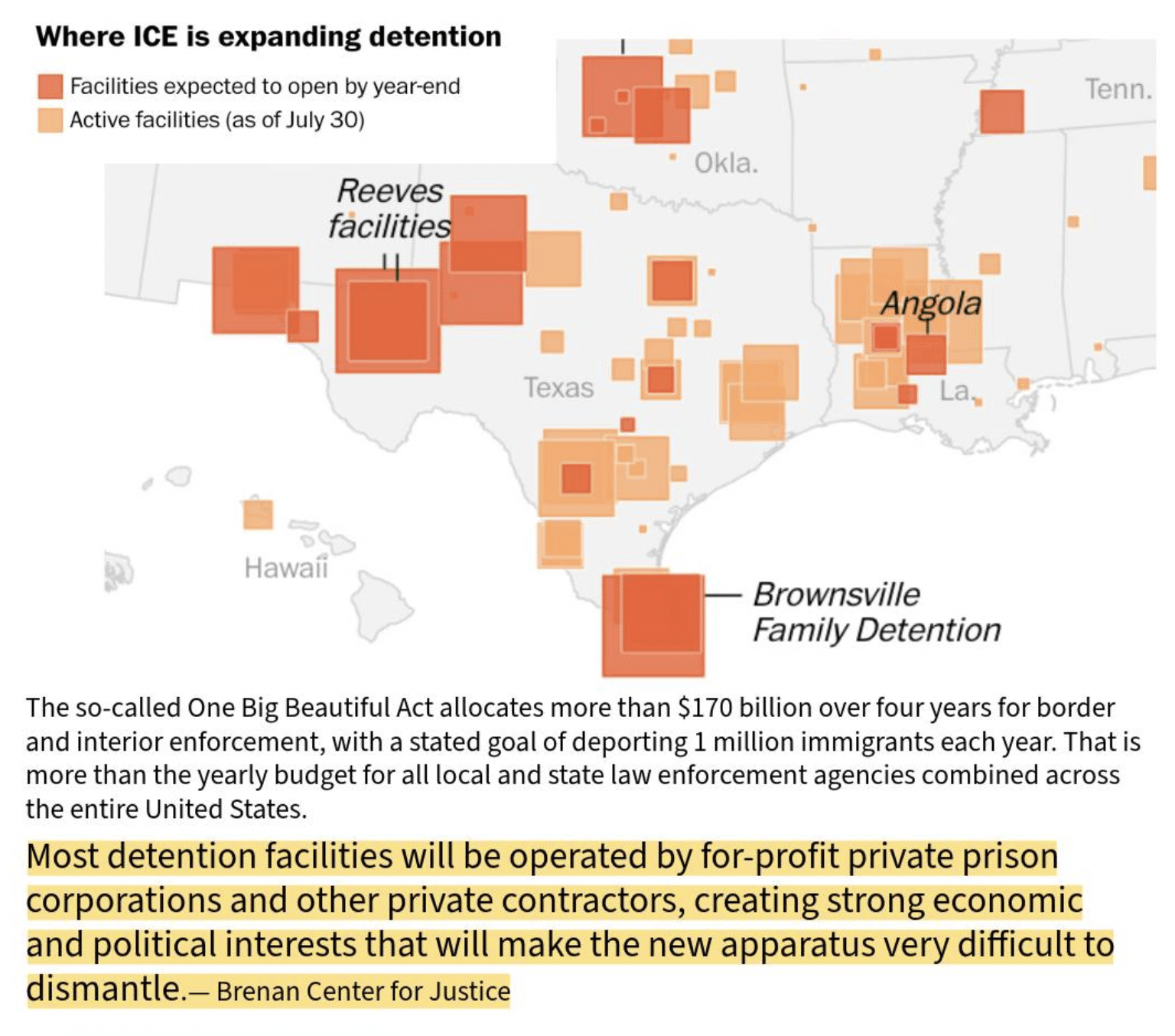
As basic federal assistance programs that have helped keep thousands housed and fed are suddenly being removed by a hostile regime pushing folks toward homelessness, even as that regime suggests great dragnets may be needed to then scoop up and detain those pushed into the streets.
San Antonio hasn’t yet been occupied by ICE in the way Los Angeles has. But that is almost certainly coming.
And so…what is the plan?
The refusal by those seven councilmembers who opposed the mayor’s proposal for good numbers or a deeper reflection of their priorities represents a failure of elected leadership. It is development politics at its very worst. (Would you trust your elected rep to fight for your best interests if they came to a vote on automotive industrial expansion on the South Side, for instance, wearing Toyota swag?)
Considered against the backdrop of a collapsing global climate—with some researchers warning of ecological and economic collapse by 1940 and growing swathes of the planet fast becoming uninhabitable—even participating in stadium debates feels like being trapped in a dark comedy.
And this even as our city’s most promising programs aimed at helping communities keep themselves cool and safe are being eliminated under our current budget (more about that in future stories) .
Texas cities are growing far hotter and more humid than anything our parents or grandparents ever experienced. How many are dying on the street or in overheated homes remains largely a black box, due to the fact that most cities and counties (including ours) simply don’t count heat-related deaths. These deaths will continue to be recorded as strokes and heart attacks and the like until we agree to look. And, in looking, commit to the solutions that will save lives in the future.
Project Marvel boosters will retort that none of these competing priorities can be funded with the particular taxing powers being proposed for Marvel’s realization. And that may be so. (Clearly we need new authorities to decide how tourist dollars and rebounding developer investments can be converted and to what purposes.) Even if the project were delivered on a tidal wave of free money (which is not the case) the enormity of Project Marvel’s demands have already proven their power to freeze public discussion of alternative futures for our city, seizing and refocusing our attention on false promises at a time when threats to our very lives are massing.
In a world on fire and with a federal government targeting so many, local communities become our units of survival. Yet Project Marvel rips our attention away from the level of the neighborhood to insist on the promise of “trickle-down” economic development from a reconfigured urban core.
The tragedy of Project Marvel lies in its boosters’ insistence that they own the ultimate vision for San Antonio, even as competing efforts that carry seeds of our survival (in some cases literally) are either defunded under the current city budget or forced to fly on fumes and volunteer labor.
Deceleration has been tracking a range of such creative, local, and grassroots projects that carry those seeds of survivance. In the coming days and weeks we will publish a series of stories about some of them, asking readers to consider how these efforts can continue as we are told by local leaders that our budgets don’t have space.
In the meantime, maybe I’ve missed it.
Let me know if you’ve seen any of these players or their wealthy owners organizing to mass weatherize homes, distributing cooling packs to those on the street, filling communities with shade and edible landscapes, installing misters across our transit system, or going deep to help bring neighbors into dialogue to develop emergency plans to survive the climate shocks that are already coming fast and furious.
Until you do, my response to Project Marvel will be: ‘No, Spurs. No.’
-30-
Top graphic: Deceleration illustration incorporates photographs as follows: Tower of the Americas, Lady Justice by Greg Harman; Spurs Coyote by Zereshk; and Spurs player by Jose Garcia. All shared via Creative Commons licensing.


