

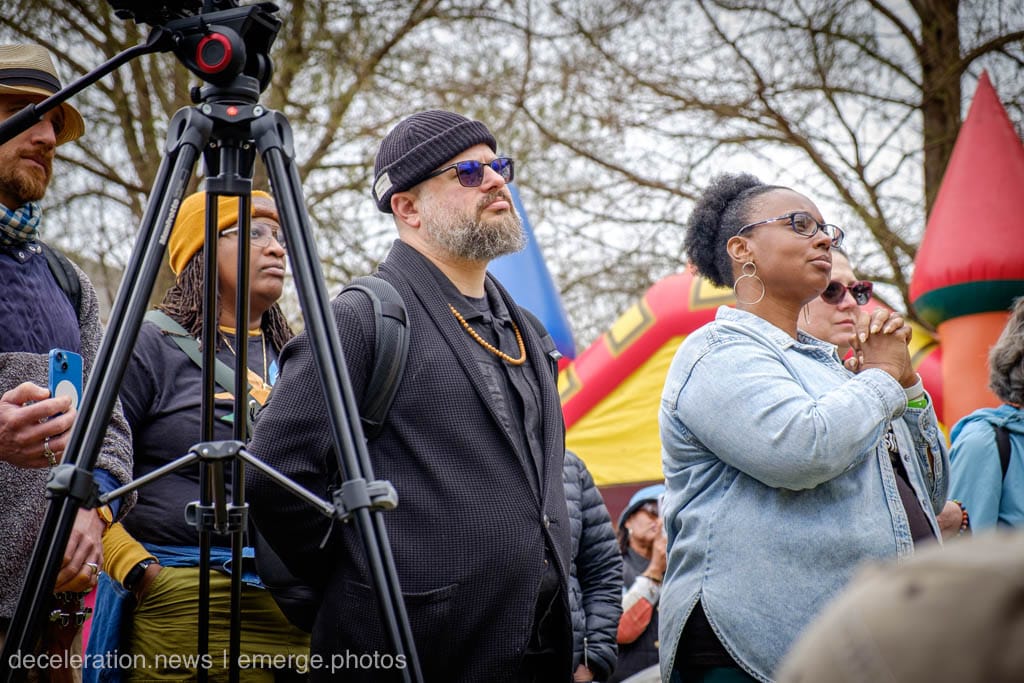
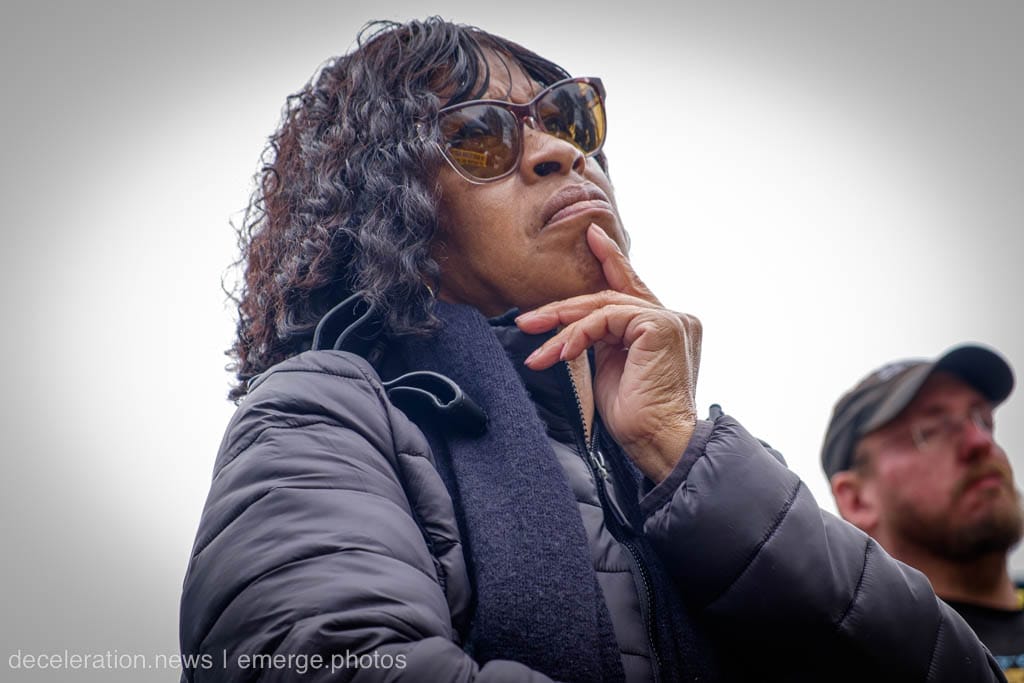
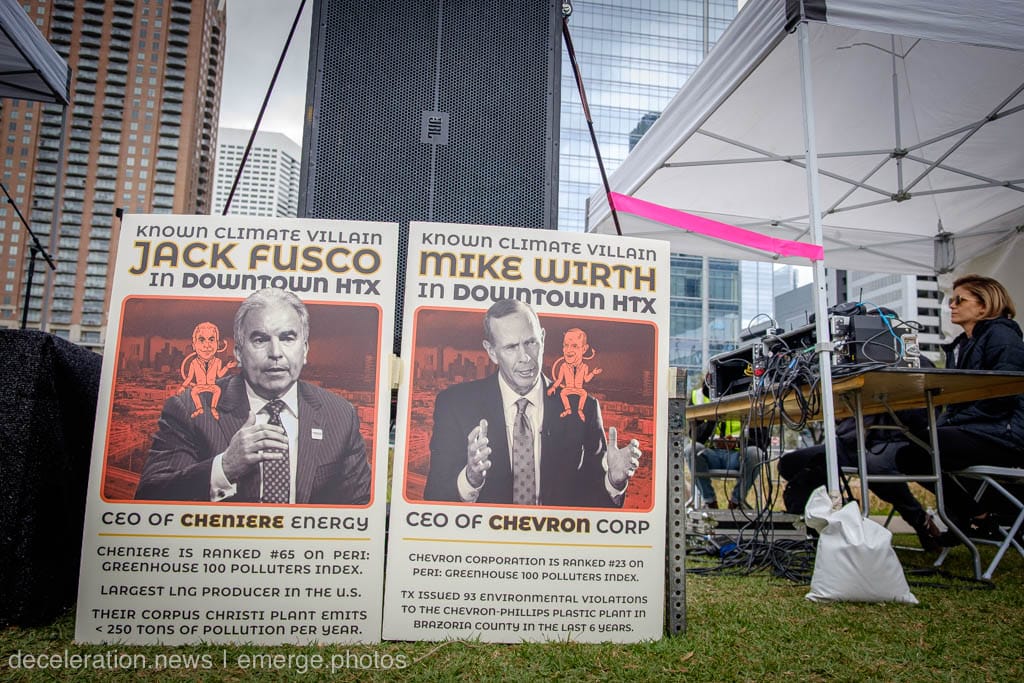
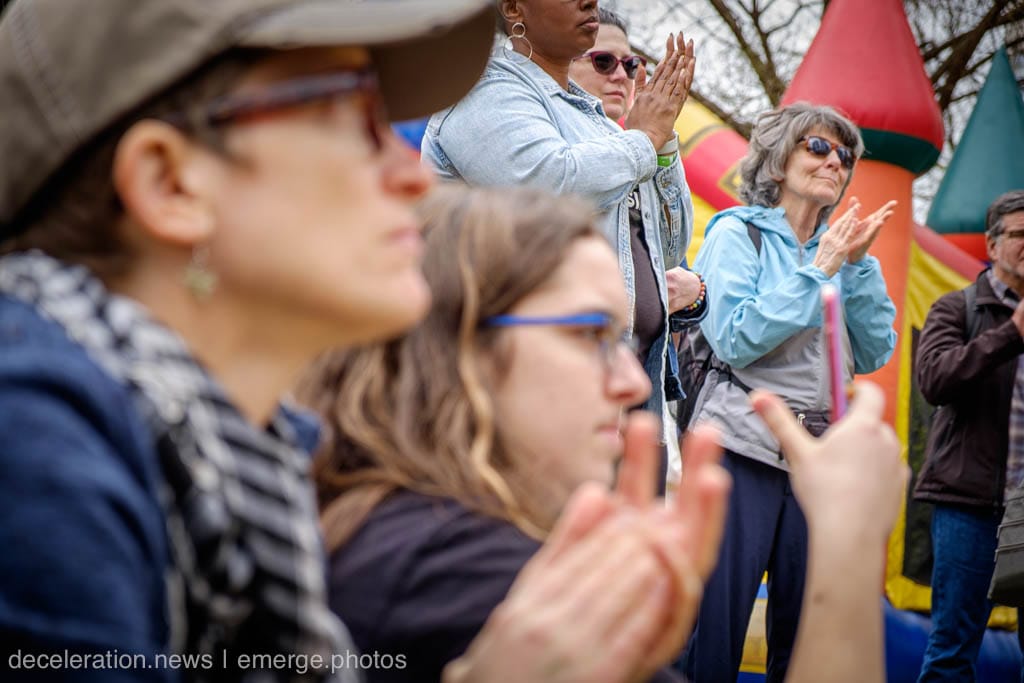
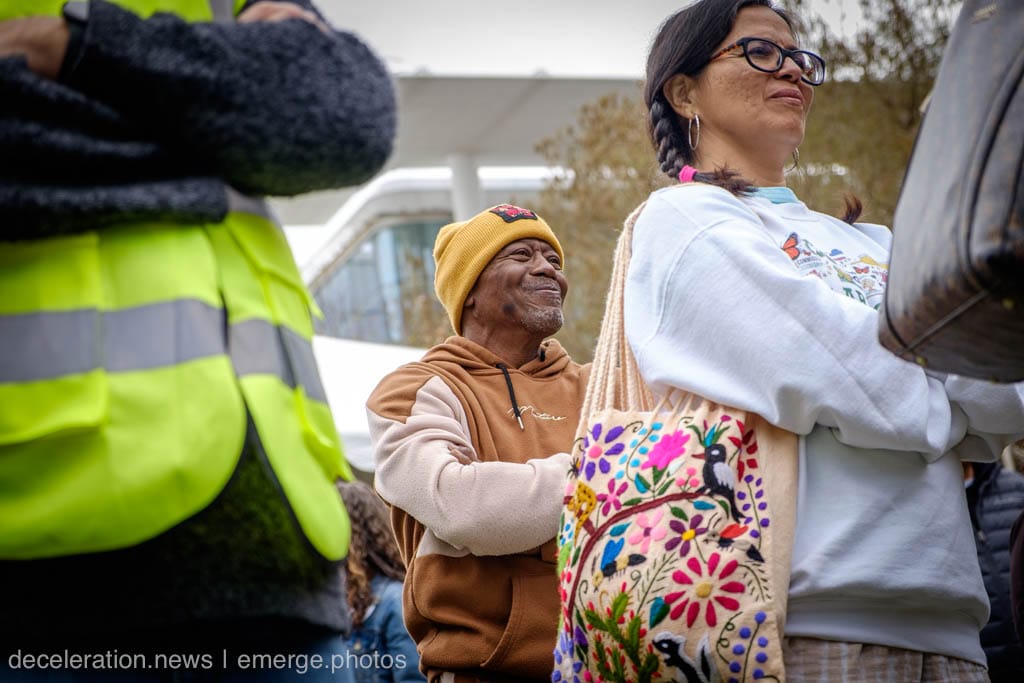
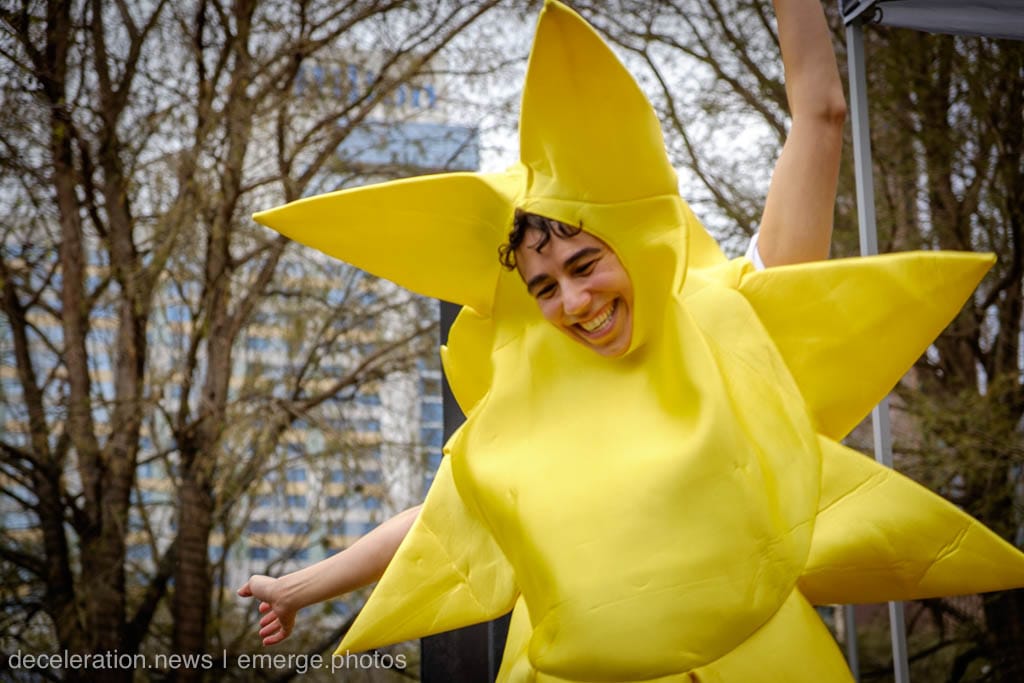
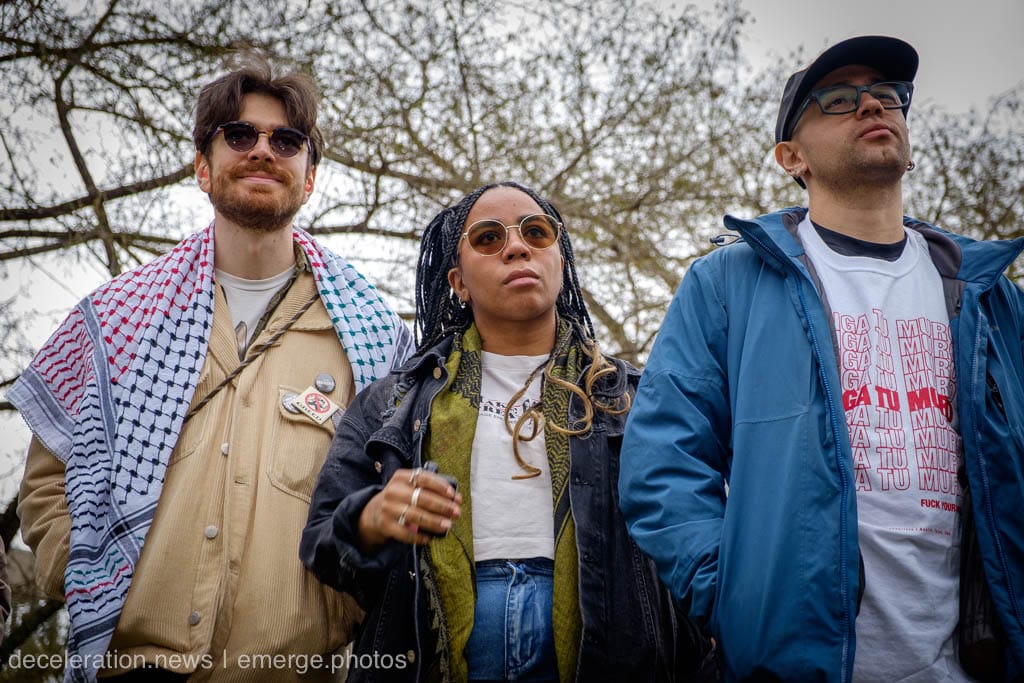
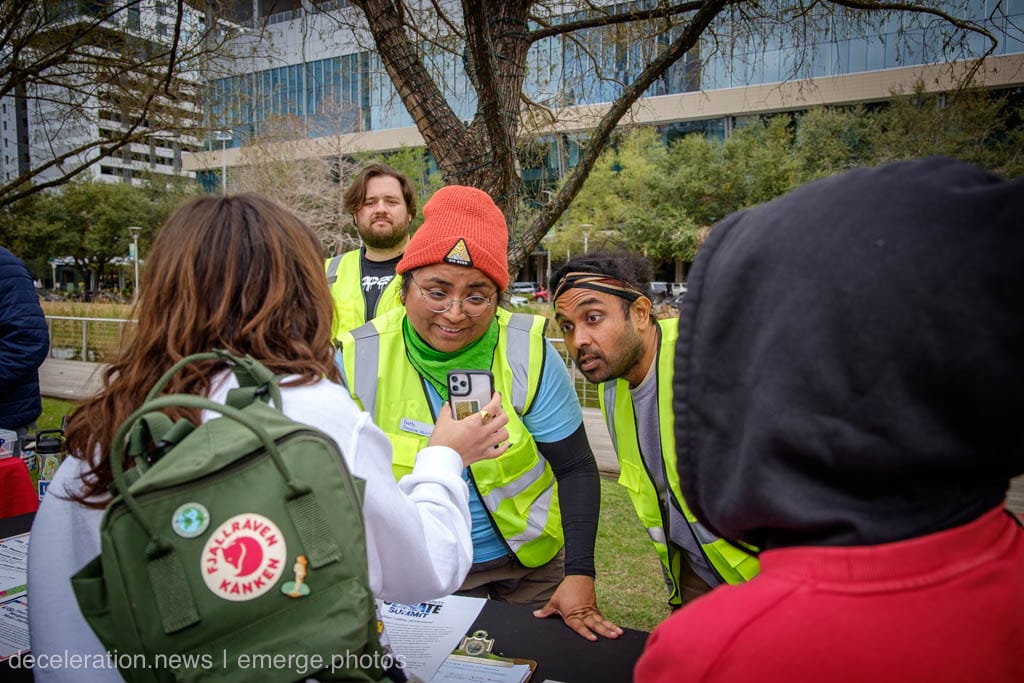
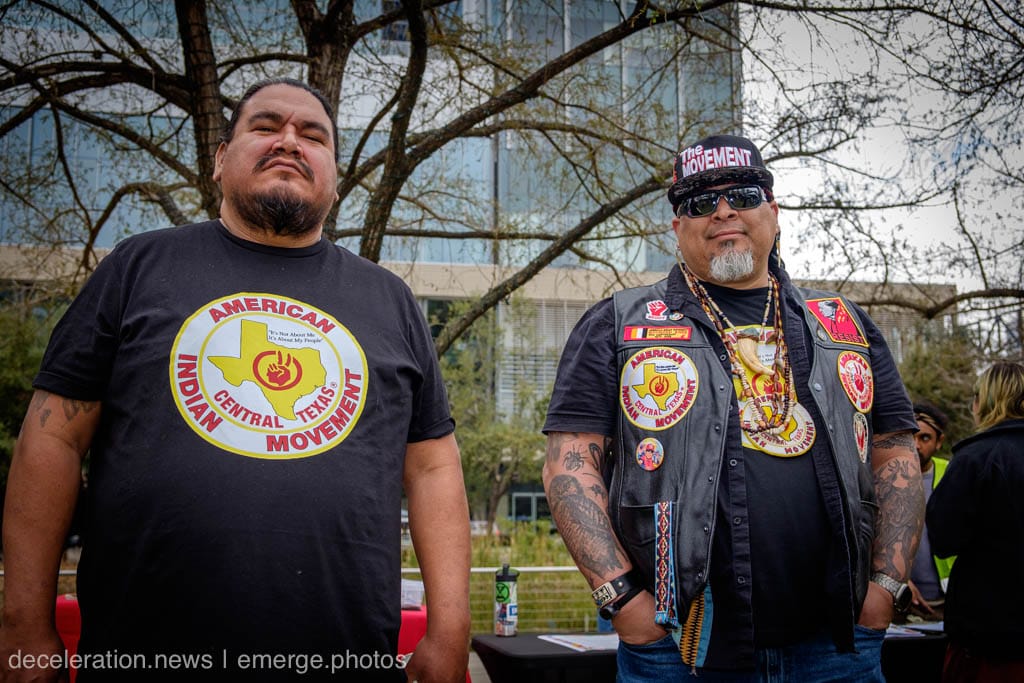
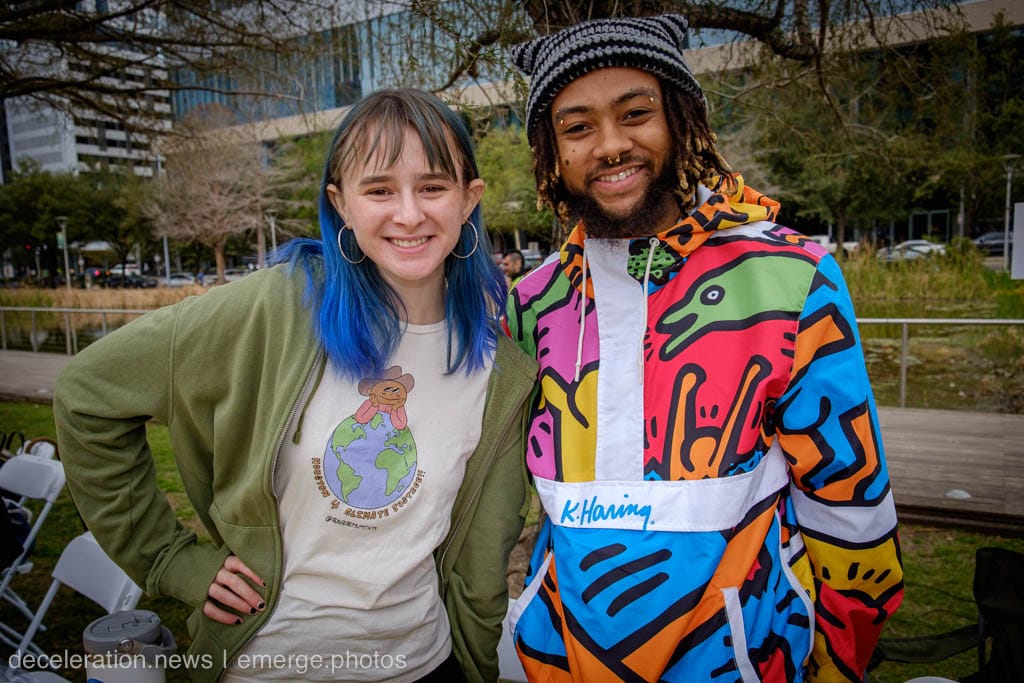
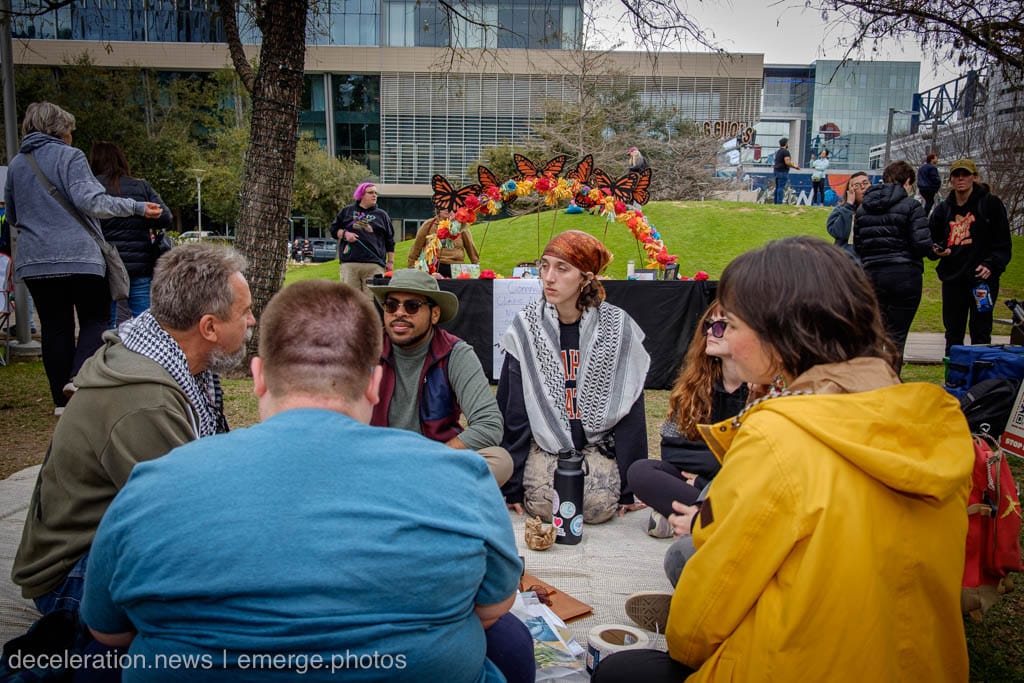
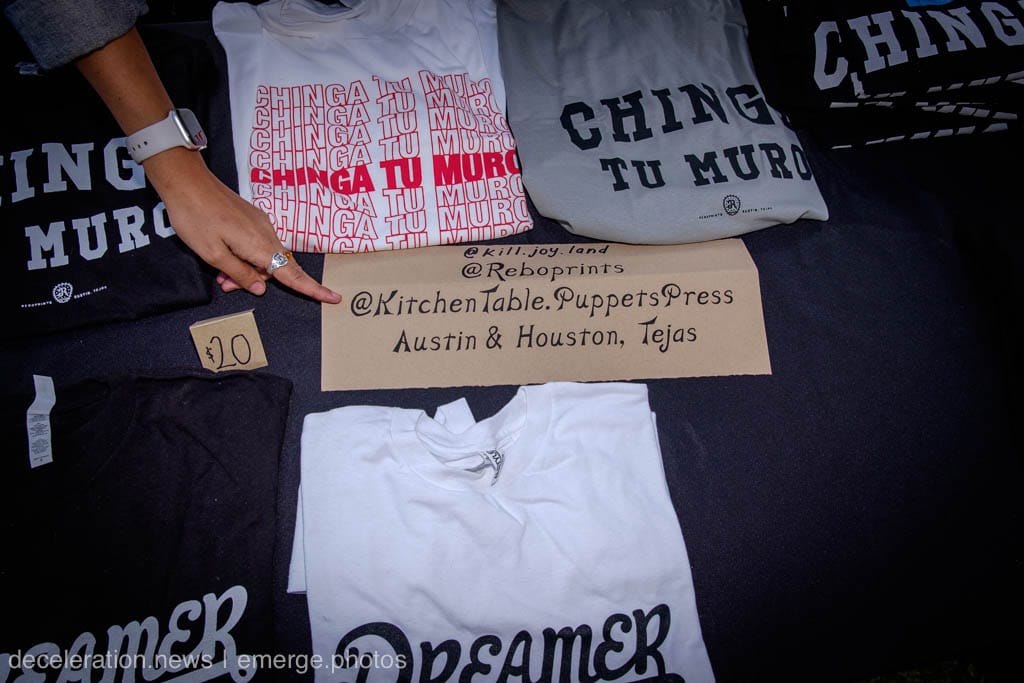
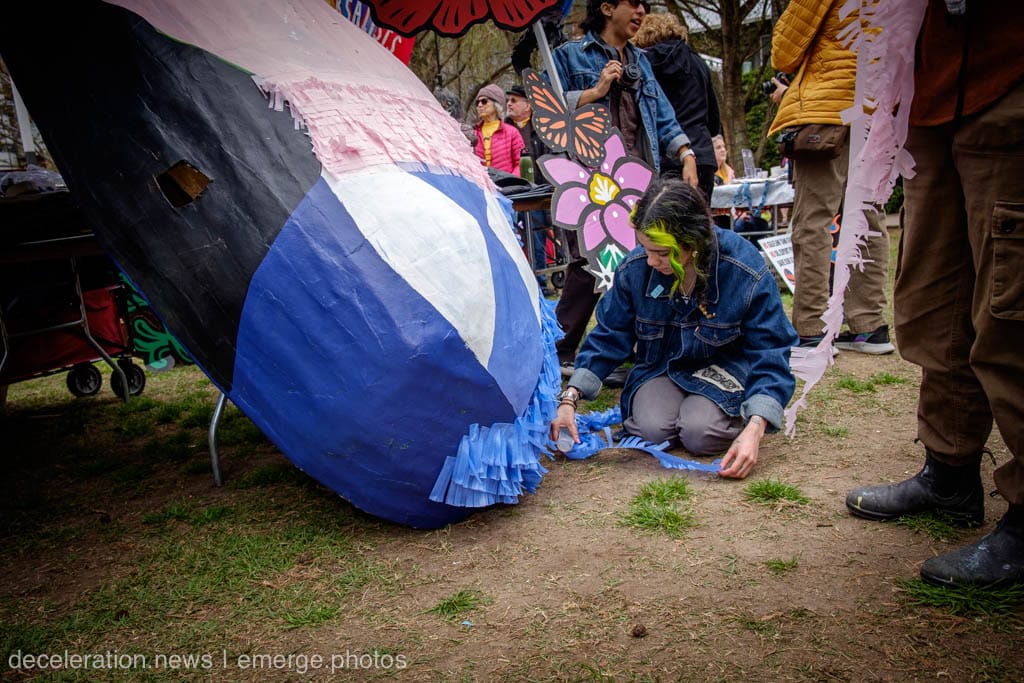
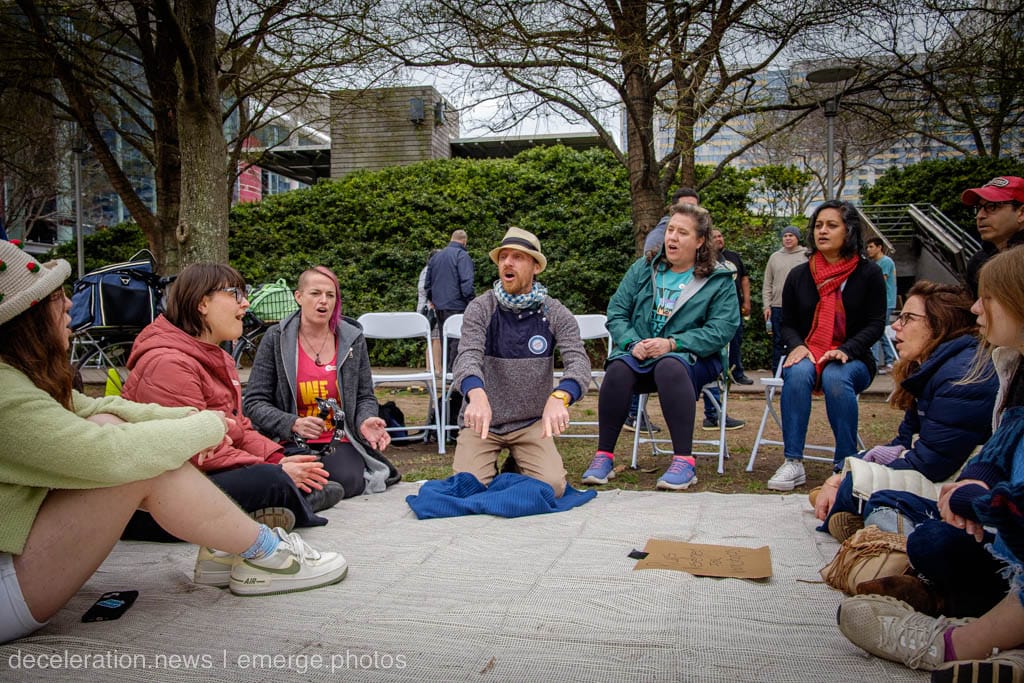
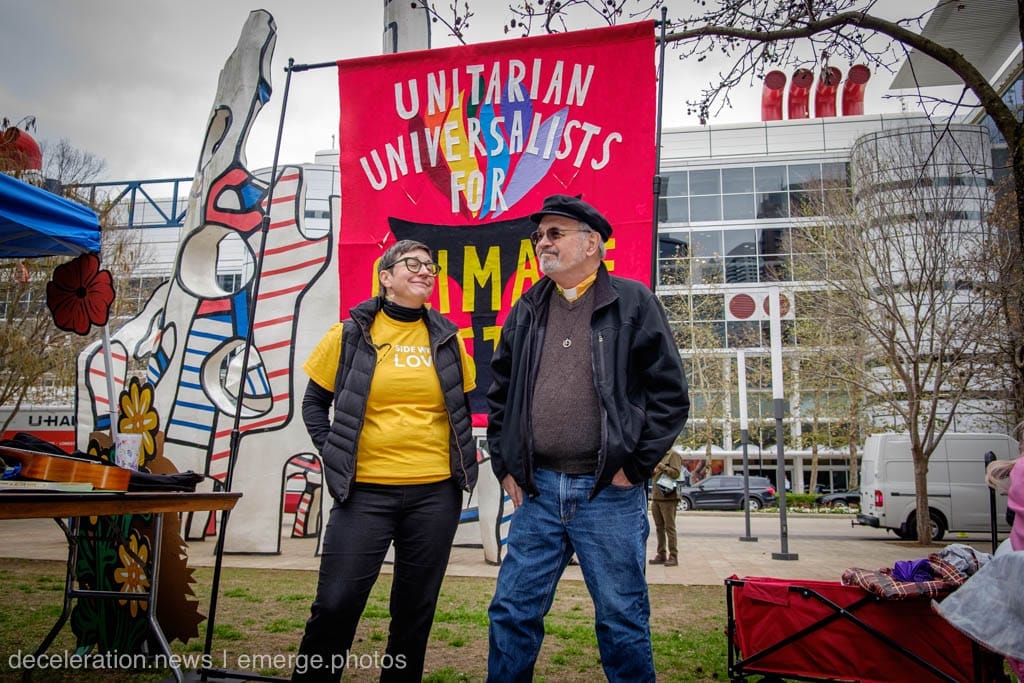
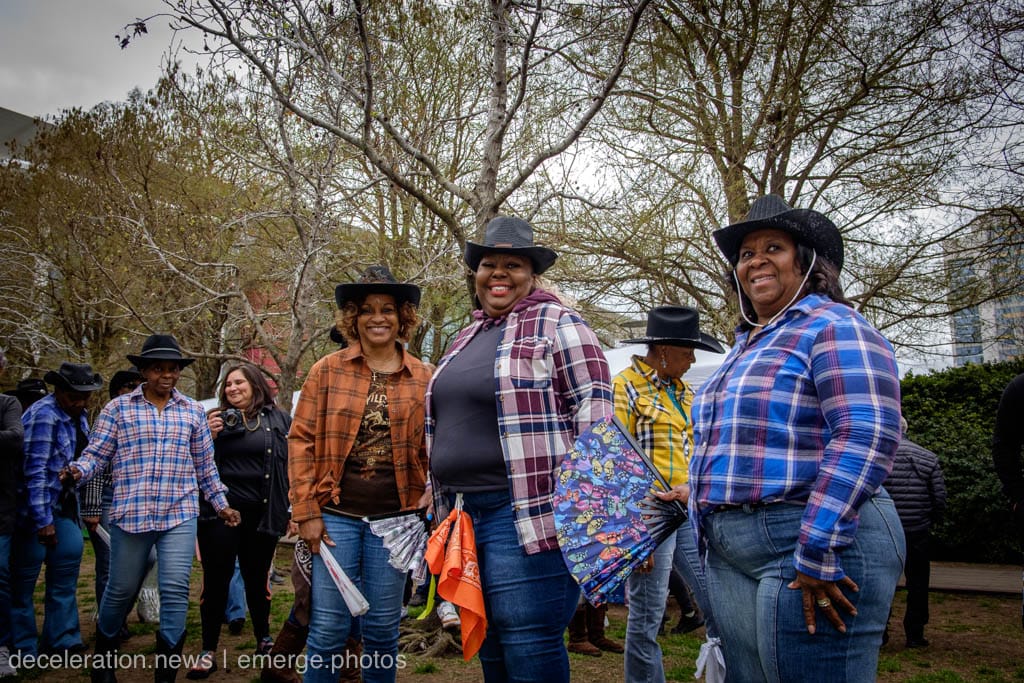
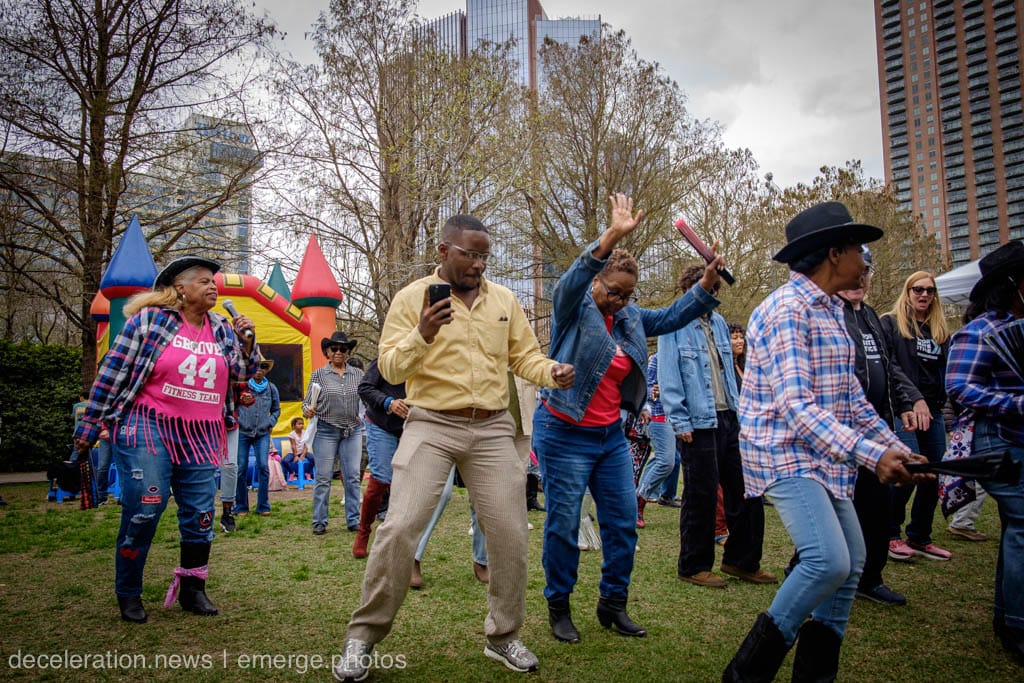
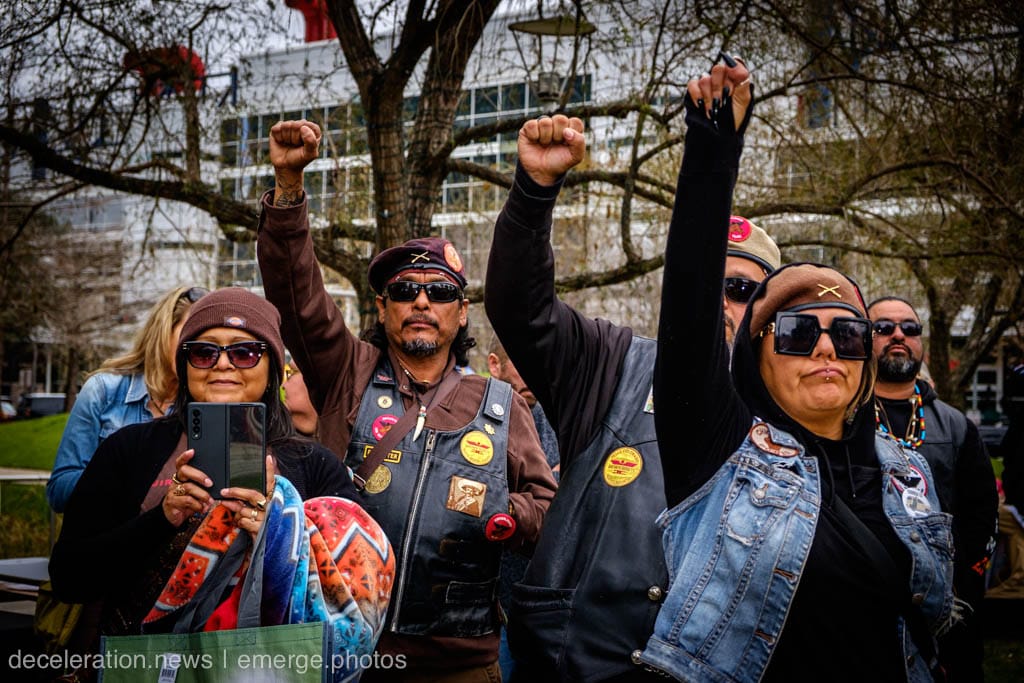
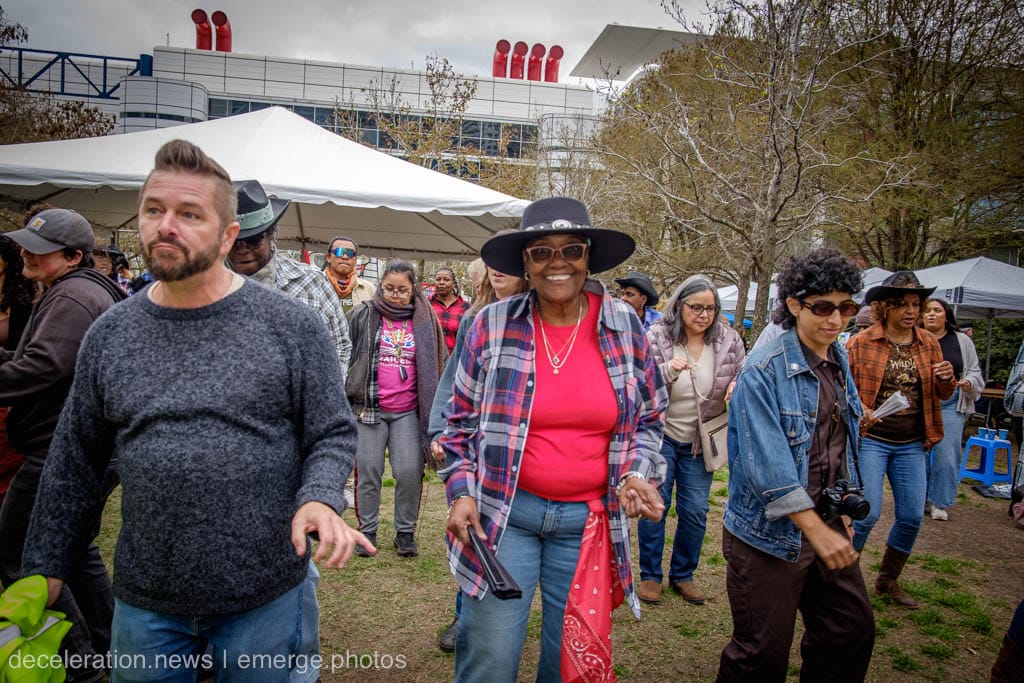
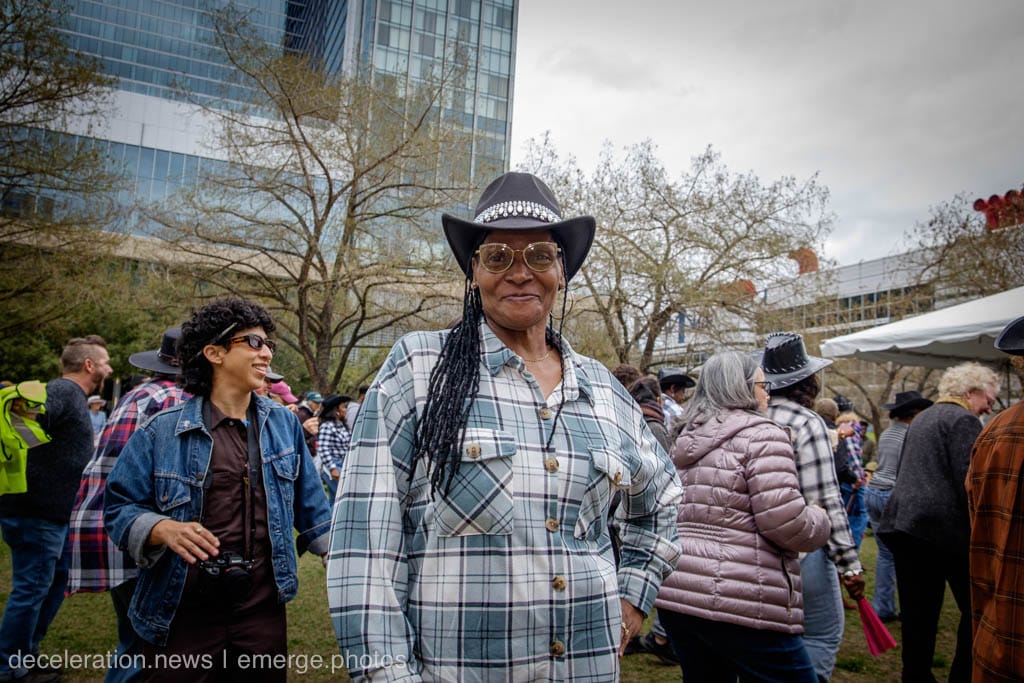
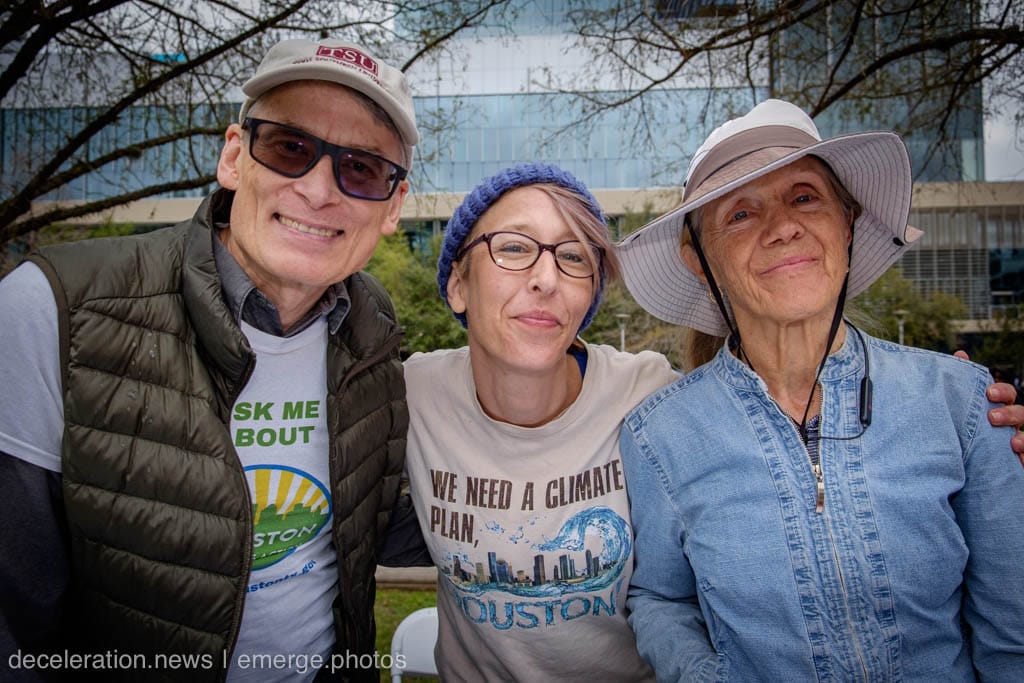
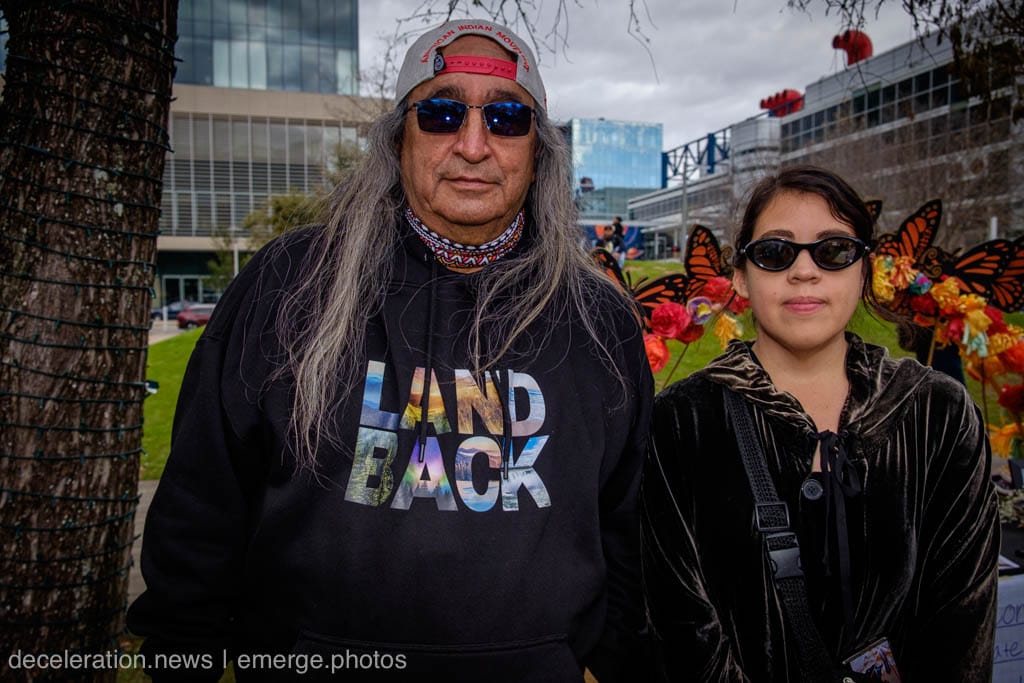
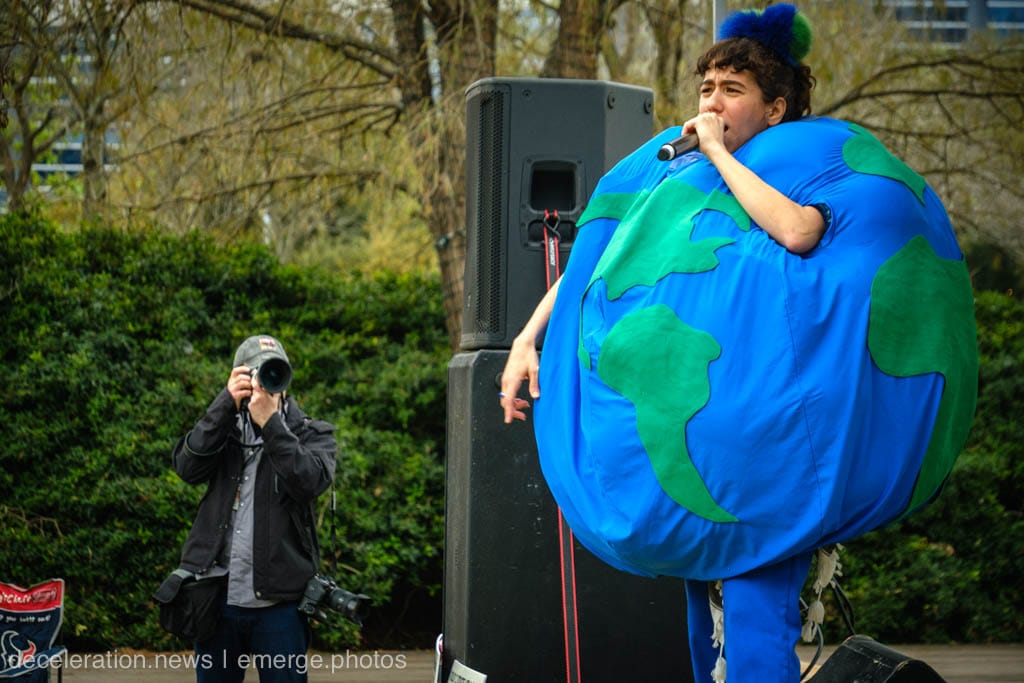
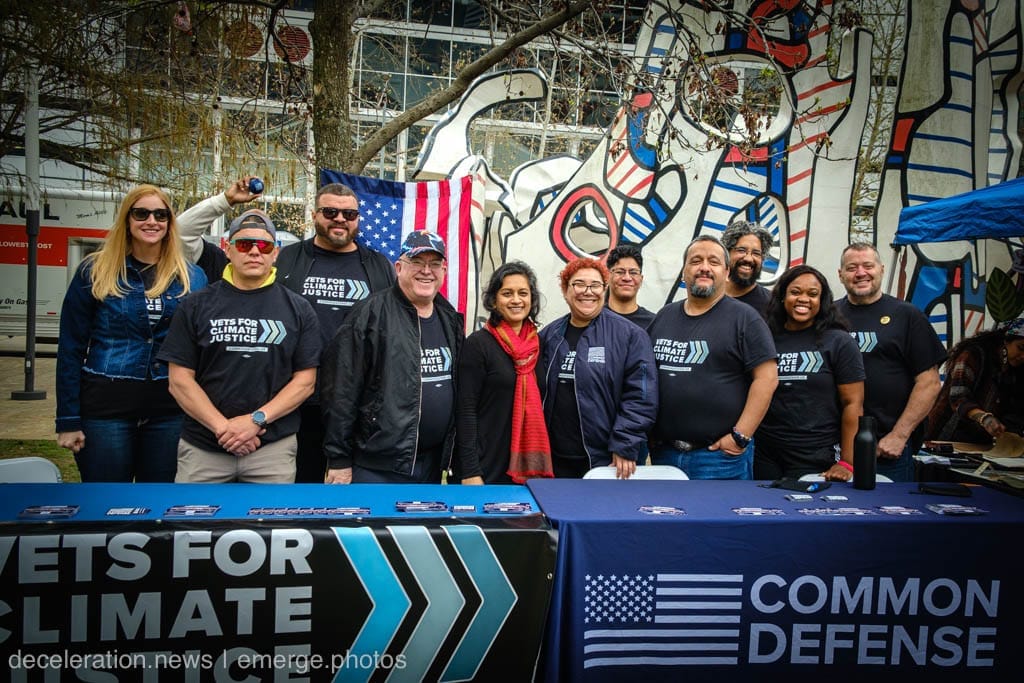
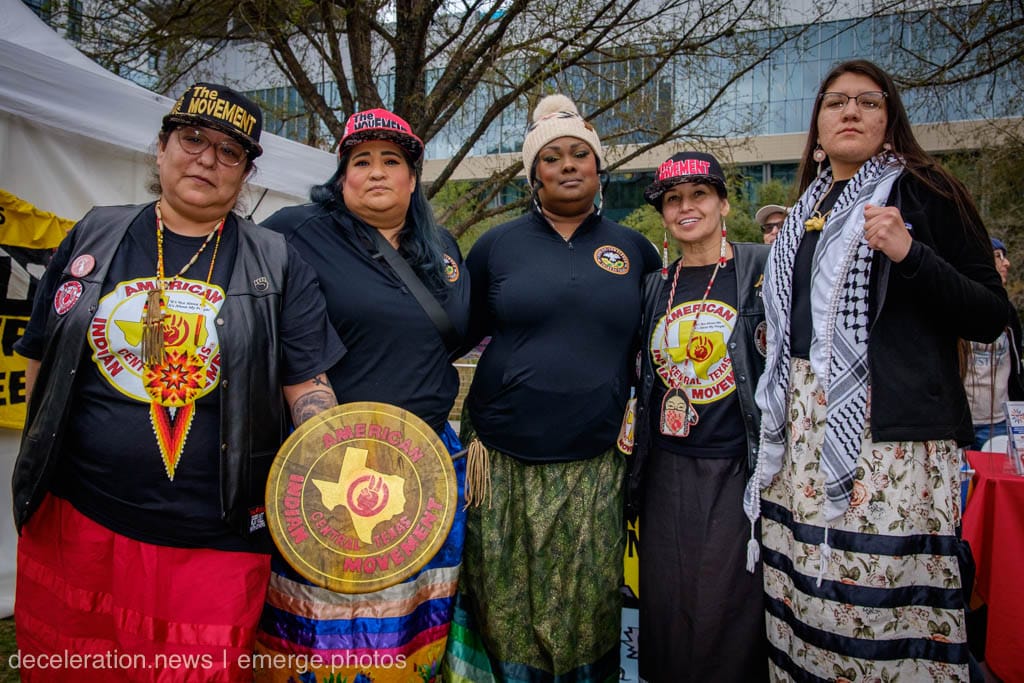
Hundreds of largely Gulf Coast residents gathered in Houston on Sunday to share their experiences of the onslaught of the fossil fuel industry on their communities— both the immediate impacts from pollution and the escalating violence of the climate crisis that dependence upon those fuels has spawned. They were here as part of “Sunday for the Future” to challenge the message of the global fossil fuel cabal convening across the street at CERAWeek, frequently described as the “Super Bowl” of energy.
Inside the Hilton Americas downtown, oil executives were lining up to commit to dirty U.S. fuels in part to appease the radically imperial and deeply transactional President Donald Trump, The New York Times wrote. U.S. Secretary of Energy Chris Wright used his keynote to pledge an end to “irrational quasi-religious policies on climate change,” while Trump’s Secretary of Interior insisted that “Drill Baby Drill” must also mean “Mine Baby Mine” across more U.S. public lands.
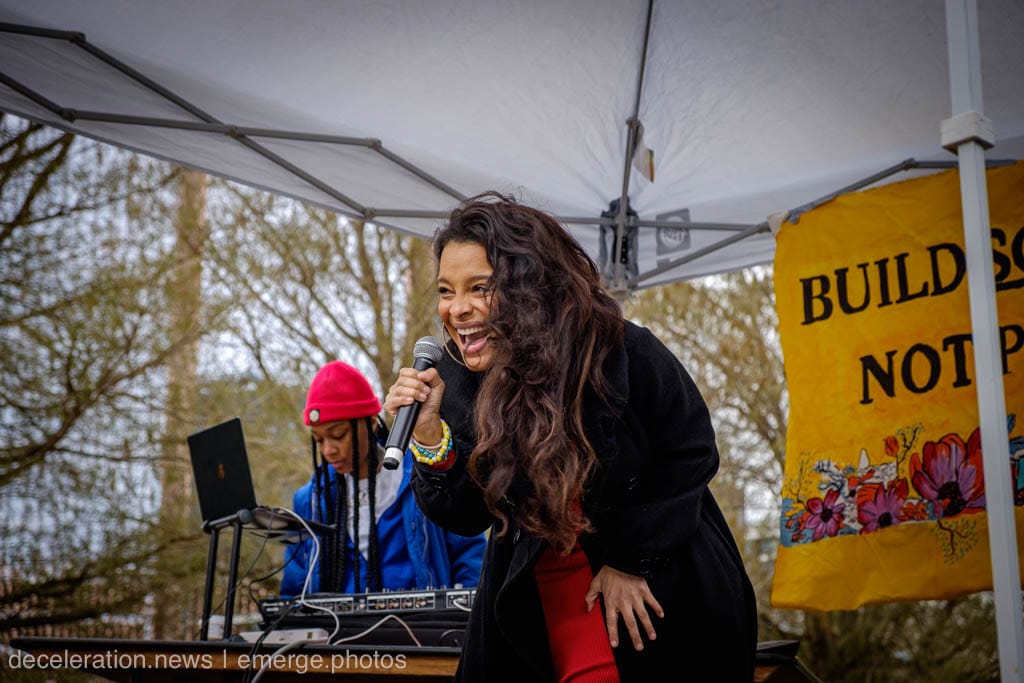
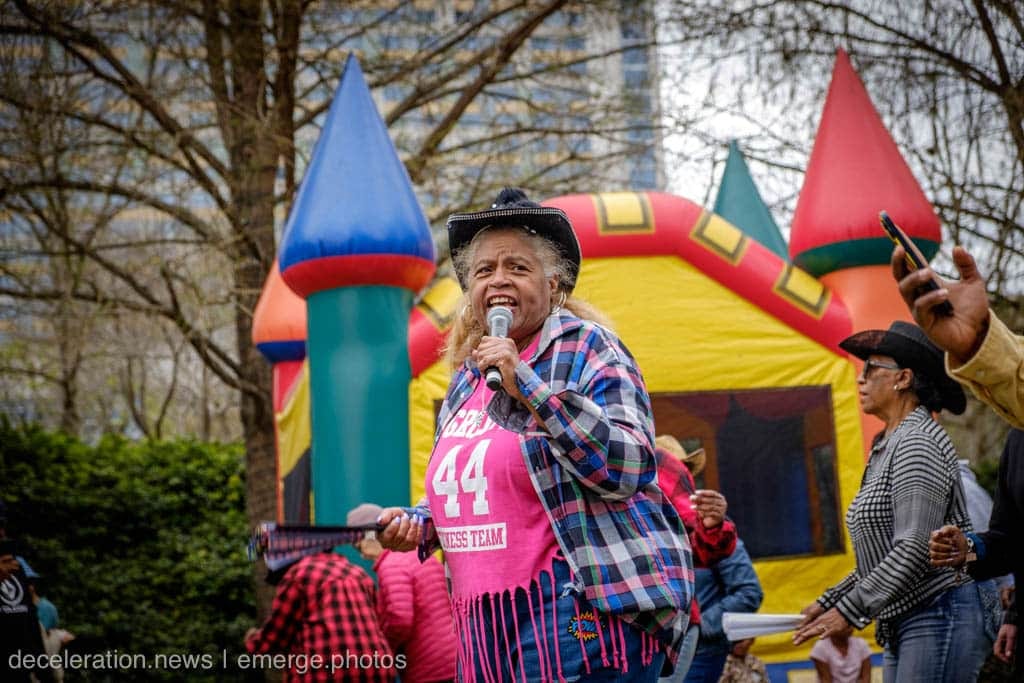
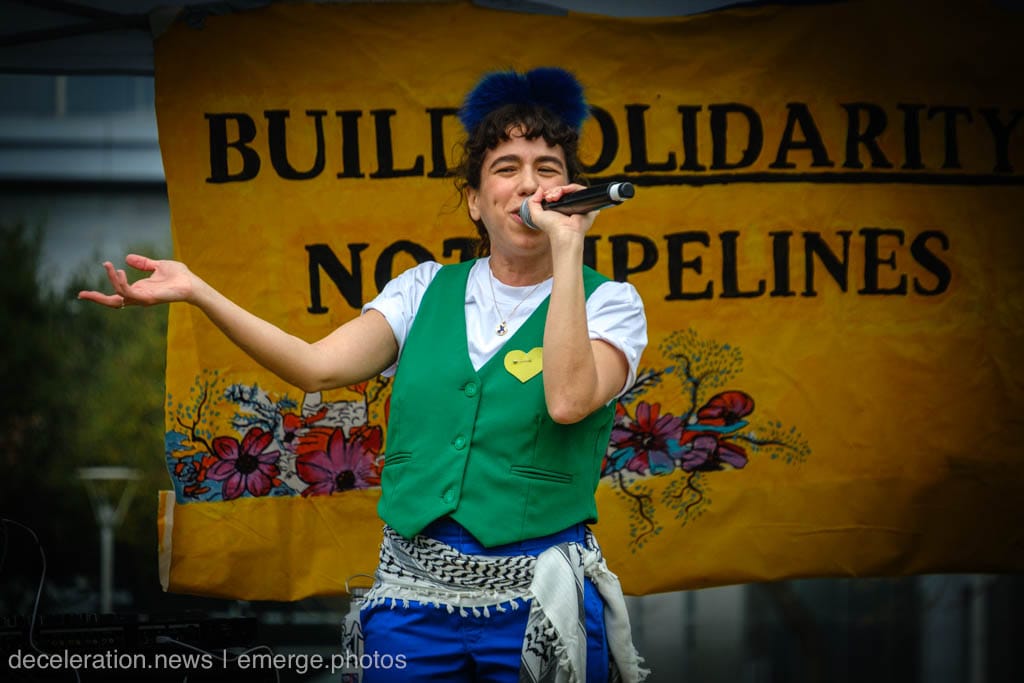
But at the day-long community building exercise across the street at Discovery Green Park, the mood veered between religious service and celebration to deep reflections upon the positive possibilities that still exist in a world that must move beyond fossil fuels. That was particularly true as Climate Revival co-founder Antonique Smith belted out gospel songs between preaching on the need for love in action to interrupt the gathering global crisis.
“We need more love, y’all. If there was more love in this world we wouldn’t be in the midst of a climate crisis,” Smith said. “If there was more love in this world Freeport wouldn’t have been destroyed by the fossil fuel industry. If there was more love in this world we wouldn’t put profits before people.”
Increasing storm intensity tied to climate change is wreaking havoc across the Gulf Coast, said Manning Rollerson Sr. of the Freeport Haven Project, an organization committed to improving the homes and lives of Gulf-side residents. Not only is existing infrastructure being fast overwhelmed by extreme weather events, but the scale of the disasters is obliterating what safety nets exist.
“It’s time for us to wake up to climate change,” Rollerson told Deceleration. “It’s real. We can deny it, but the weather events showing you in your face, ‘I’m here, and I’m here to stay till you do something better.'”
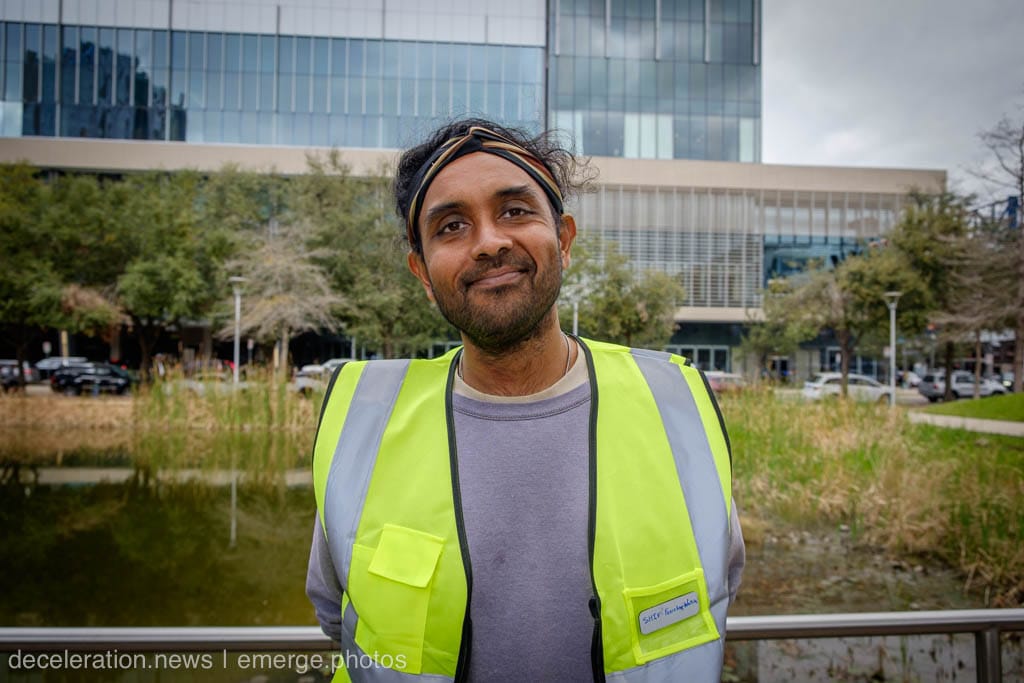
Deceleration interviewed a dozen area residents at the event to capture the range of issues folks are collaborating on across the bioregion.
Juan Mancias, tribal chair of the Carrizo/Comecrudo Tribe of Texas, who Deceleration featured recently as part of our Preparing to Protect series, decried the harms being caused by LNG buildout in the Rio Grande Valley and by SpaceX’s Elon Musk.
“[Musk] is a criminal because he got his visa here and misused it,” Mancias said. “Just because of who he is and because he bought the presidency doesn’t give him the right to to do or say what he’s doing.”
“The reality is that there’s no such thing as a good billionaire,” added Bekah Hinojosa of the nonprofit South Texas Environmental Justice Coalition. “People are pissed. Their our homes are shaking because of the earthquakes and the rocket launches. SpaceX has been caught illegally dumping pollution into the bay. I mean the list of of our grievances goes on and on and on.”
At Monday’s March for Future Generations hundreds of water protectors and land defenders took their challenge to the street and directly into the heart of CERAWeek. Protestors were corralled by mounted police and, when they refused to retreat, eight were arrested.
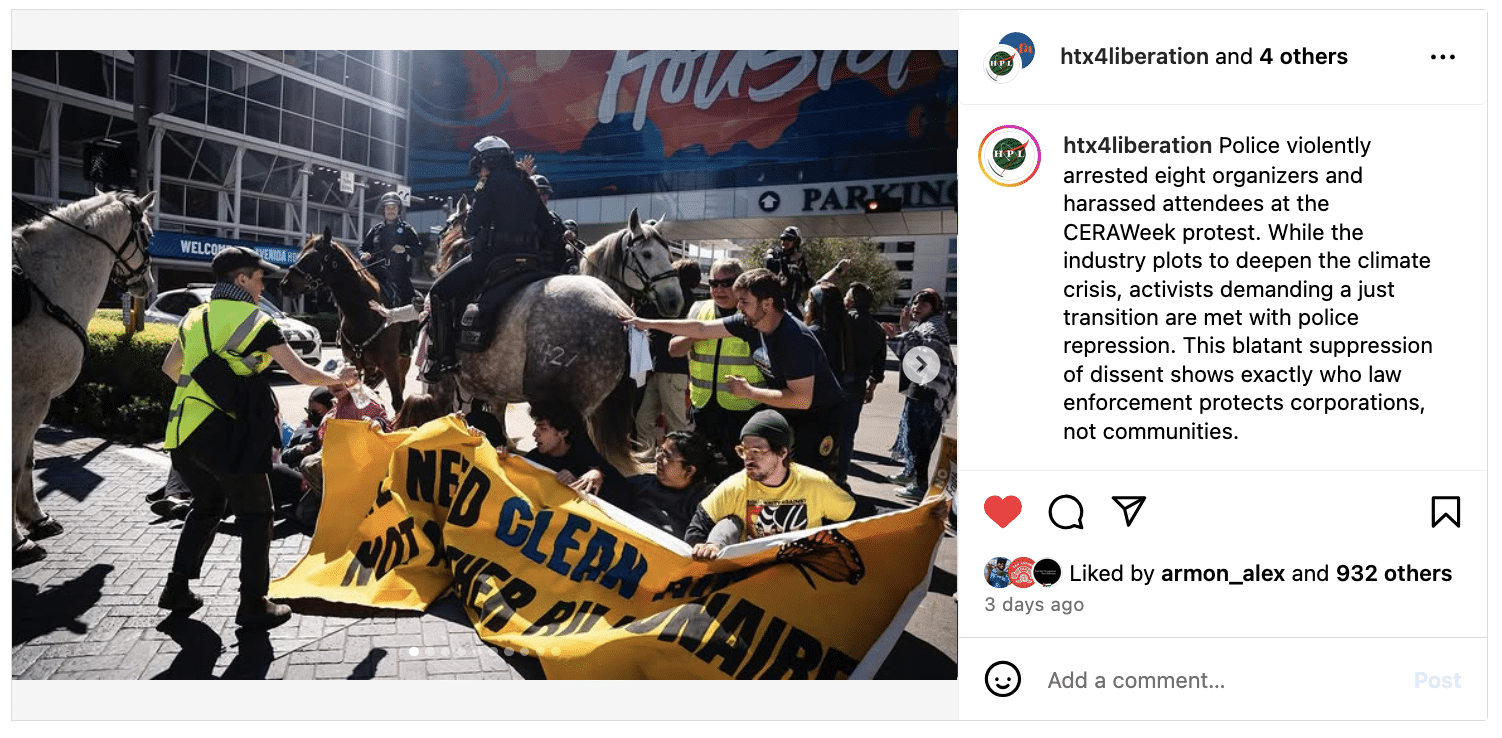
On Instagram, Houston for Palestinian Liberation wrote:
“Eight grassroots organizers from oil and gas impacted communities were violently arrested during CERA week- and others were physically injured- they were threatened by, harassed, and assaulted by the police with horses, and those arrested faced terrible conditions in Harris County Jail. We are fundraising for medical needs, travel support, and general aftercare as they process from the trauma, so they can heal up and continue their courageous movement building work resisting the onslaught of oil gas and petrochemical expansion.”
Media relations at Houston Police Department provided Deceleration booking photos and the names and ages of those arrested. However, they referred us to the Harris County District Clerk for information about the charges and any pending court appearances. We received no response from the clerk’s office on Friday before deadline.
Activist support funds are being directed to @HTX4PAL on Venmo.
To better understand the vision behind the week of organizing events, Deceleration caught up with Dominic Chacón, Houston regional coordinator for Texas Campaign for the Environment and one of the primary organizers for the CERAWeek actions.
The following interview has been edited lightly for length and clarity.
Q&A with Dominic Chacón
Greg Harman/Deceleration: For folks who aren’t familiar: CERAWeek. How would you describe it for folks who had never heard of this event?
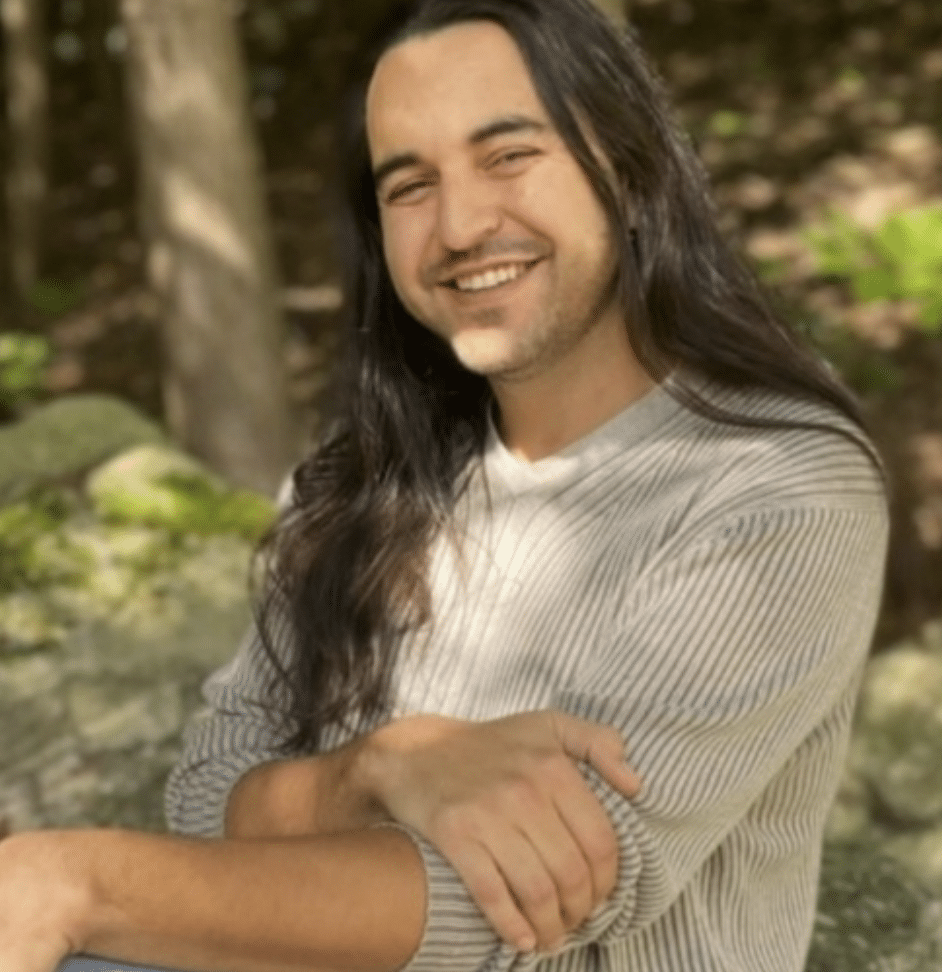
Dominic Chacón, Texas Campaign for the Environment: We kinda describe it as the Super Bowl of energy: conferences, oil, gas, and petrochemical industry, specifically. It happens every year in Houston, Texas. It brings together the richest, the CEOs of oil, gas, and petrochemical industries. It brings together the financiers and insurers of these industries, you know, global finance institutions. And it brings together government officials from also across the world. And to kinda help people understand just how big and significant and bougie it is we let them know that the tickets to get in on the lowest level is $10,000. People have have recognized that it’s significant for a long time, but it is hard to get in. Like people have mostly been getting in to listen and learn and sometimes sort of disrupt. But, essentially, last year, a few community members, you know, fund-raised and got the money to buy the tickets to get in, to listen and learn about the plans that these industries are gonna be implementing within the year, in our own communities. And they were denied entry even after purchasing the tickets. They were given their money back and said you cannot come.
Quite literally we are being locked out of the room where these decisions about our communities are being made. And we’re being denied any sort of input or even heads up about what’s happening.
As undemocratic as that is, it is also just a huge sort of normal thing that happens here in Texas. And so this year we were really forced to organize more on the outside and really demonstrate our complete and utter dissatisfaction. Our anger and our willingness to stand up and speak out. So we decided to kinda throw our own event in the counter. But that’s what CERAWeek is.
I caught some coverage and I saw the new head of the Department of Energy and some of their statements. We’re kind of in this moment where no one even pretends to have sympathy for the the torching of the climate or all the implications of the climate crisis. It’s just full on animosity. And so how would you describe the objectives to show up and to kinda refuse to be complicit? I was only able to be there Sunday, but I really wanted to be there on Monday. But what I was able to get on Sunday is—yeah, the community building, the positive way of communicating the world that we would have. So I wonder, in the midst of this full-on animosity from this [Trump] administration, do you see that trickling into other governments and other agreements, or being contested in any way in those spaces?
One thing that I kinda tell everybody is that we were planning to do this under a Biden administration. I started our planning way before any of the elections happened or anybody changed any position or before Kamala [Harris] entered [the election]. These problems exist under both administrations. And so I think one of the powerful things about it is that we were able to sort of ground ourselves in the fact that this injustice is wrong under any administration and both of them have in their own ways disregarded community, or even worse, pretended like they have given us breadcrumbs while really turning their backs when we need it the most.
It has been a challenge to keep the hope alive, and to focus on the world that we know is possible but that we are being denied, and visibilize the solutions. One of the really powerful tools of this was to sort of center our organizing energy around us, around what we needed to keep inspired and to stay grounded and to stay hopeful. What I’ve realized in this entire planning process, especially as it came to including other regions that aren’t from the South but also have a bone to pick with these people, is that the rest of the country is now dealing with [what] Texas and Louisiana and other Southern states have been dealing with for quite a long time, which is an industry-captured government that is quite literally making money by treating our communities as sacrifice zones. So that for the nation, and for a lot of these national movements, it has really opened their eyes to understanding more about what we’re up against here, and to shift the narrative a bit. So one of our goals for CERAWeek was to shift the narrative on, like—stop treating Texas as the scapegoat for the environmental movement.
Like, this is what we want. This is what we endorse. We need to shift the tone to say Texas is an opportunity. Texas is where the organizing and resources need to be in order to shift the needle.
I always keep telling people I know it feels impossible here in a place like Texas. I’m originally from El Paso, Texas. And believe me, the isolation is real. The hopelessness is out there. But the way we re-contextualize it is, if we can move the needle here in Houston, Texas, and in Texas generally, think of the ripple effects. And clearly, I think this has demonstrated that people have now seen that there are a bunch of people in Texas who do not and will not stand for this. And we want to let them know that we are not alone. And this is just who we were able to bring. In this moment of darkness we were able to shine light on it. But there are others and there are more.
This is an important point. I’ve done most of my work in Texas. I’ve been other places, but I keep coming back here. And that means continuing to defend, a lot of times on social media, where people in safely blue pockets of the country speak about Texas as if it were a homogeneous population. And that we’re all guilty. And I’m like, no. People here are fighting an incredibly unbalanced battle. Our losses are not because of numbers, but because of money.
And because of the the size of the state as well. Coming from El Paso, Texas, to engage in our own state government, we would have to drive eight hours just to show up to the Capitol. It’s just nonstop. We had a couple national allies from national orgs that showed up to help us do certain things. And we rented a space at the Post Houston to have our art build. And they were kind of putting up the banners so that everybody can see where we’re at and come to the art build. But because of what the banners were saying, you know, the people in charge of the Post came and said that we can’t post our propaganda. That we would need to turn it around. And I think for all the people who were showing up, we’re like, “What? What? Like, how is that…?” And I kinda had to show them [our national allies], like—this is a perfect example of what we’re up against.
Everything in this area is touched by money. And even if people agree with our cause, which the Post said they do, they’re like, “We have to be mindful of of our funders and the people that have other events here.” It’s having to lift that veil of what people think Texas is versus what it is. Again, coming from El Paso, I have to plug in the Permian Basin [where] there are other people fighting so hard out there. And it’s just there’s not enough media as well. And I think that’s been another thing: like, how do we shift the narrative in the greater discussion?
One of the climate revival speakers was talking about how nonprofits and environmentalists wasted decades basically trying to get some of these changes made internally. They thought if we had better science or we had good policy papers or whatever [they could change national policy on climate]. And eventually they realized, no. It can only be done with the movement. So now here we are, where not only have some of those resources and attention been turned over to frontline communities, but we’re also seeing the climate crisis change what the frontline looks like. You know, it’s gone into more affluent areas, into the interior pockets of the country. And I wonder if you see that in who shows up, and does it make a difference positively?
It’s a tough thing, you know, especially in this era of extra risks and extra brutality. And just, you know, our security state that we live in. It’s hard to build something that is both open and transparent and welcoming, but also something that’s relatively safe and not naive to the very real risks out there. But at the end of the day, I think the principle that we kinda try to keep blending in is that this is everybody’s fight. That the planet and our Earth is the one thing that really connects us all, whether we realize it or not.
So it’s really trying to to create opportunities for people to see themselves in the work and see themselves in the organizing and kinda try to move a bit away from this whole professional aspect of nonprofits. And that kinda challenges the fundamental aspects around, like—how does change occur? Most of my work that I’ve done has been not paid. And not only not paid, I would say I put money into it. I put my own funds to get things done and to move, get gas, all these things. And the power of a group of well organized 20 to 30 people, we’d be surprised what we can really do.
Creating spaces that are easier to access, like the Sunday community day. One of the main goals of CERAWeek this year was to not have it just be a place where national orgs can parachute in and kind of do their typical thing, but actually use it as a base building opportunity for community to find new people and engage them in this conversation in a way that’s not overwhelming. To have that but not be too performative and actually have something that demonstrates our opposition on the day of their conference and flex the muscle of nonviolent direct action. We started to approach this as an opportunity for us to learn and to grow and to flex this muscle.
You’re always gonna get retirees. You’re always gonna get people in the nonprofit structure. But it’s also really kind of an alignment that we’re trying to build. I think one of the sort of magical things is bringing people who have worked together in the past and maybe had tension, but trying to work through them and come together in this moment of a greater common enemy. I think that was the other faith-based element that I thought was really important and powerful—bringing the faith leaders.
If we’re in the era of bigots who are willing to openly preach their bigotry as though it is some sort of thing rooted in faith, why should we be shy? Why should we be coy about our values and what we know to be true? Especially when we’re not preaching any hate. Or any harm. We’re preaching acceptance and love and inclusion and stewardship of our planet. So I think it’s also empowering people right now that we don’t always just have to resist with anger. We can also resist with joy and art.
So how would you describe what happened on Monday and then through the week? What did y’all want to bring about? I’m interested in the arrests and how people can help with that? What was the goal of that march?
We wanna be vocal. We wanna be visible. And we wanna let them make sure that they see us. They can lock us out. But if we go right in front of their media bridge, right in front of their conference, they cannot ignore us.
The police did not give us any permits to do that march. They said, this place was already rented out for an event. And we’re like, well, we’re not trying to have an event. We’re trying to have a protest. And we’re giving you a heads up. You’re gonna give us the permits or not, but we’re gonna be there.
The green role that we had was to kinda just make sure everybody who did not wanna be in that part [direct action] could be in a safe place, so they went to the park and did their own thing. The orange role was, we had a piñata that may or may not have the resemblance to Michael Wirth, the CEO of Chevron. And then our red roles were out on the sidewalk, and some folks apparently wanted to escalate. They planned their own sort of direct action and decided to occupy the street. As is well within their right. But it was really clear that the police were ready with their horses.
[Houston PD] were really aggressive in many ways. The photos speak for themselves. The folks who were arrested and in the jail process … it took about 24 hours until they were released. But everybody was released. Although some people who are were of a certain faith and in practicing Ramadan were not given food after or proper accommodations. I also know some people were injured, some sprains and bruises.
But right now, they have a court date coming up on Tuesday, I believe. So we are coordinating our solidarity to show up and support them for taking a direct action against these robber barons.
What were the charges?
I do not know. That’s a good question. I don’t know off the top of my head. … Some of the people that did get arrested were some Native youth from Standing Rock that came down to sit in solidarity with what we’re fighting and what they’re fighting up there as well. So we need funds to help while they stay here and make sure that they can get around and get an Airbnb for them, things like that.
How would you encourage folks who want to support the growth of this form of resistance and future building?
Texas Campaign for the Environment. I have to plug our org. But I think generally it should not live only in the nonprofits. My piece would be get connected to other groups in people’s areas primarily first. And look for those opportunities that allow you to exercise these rights that we should be allowed. And it could be like the, you know, the First Amendment auditors. I think that is a huge example of ways that we could simply sort of push back against the infringement on our basic rights to film in public or film a public building. So there’s all kinds of forms. The only thing is: keep each other safe, be smart, get informed.
I would say follow us on social media: TX Environment. And we’ll have more calls to action. We have a huge state and many fights happening all throughout it. So we will need to kind of exercise that muscle around those campaigns in the future. So they can plug in there.
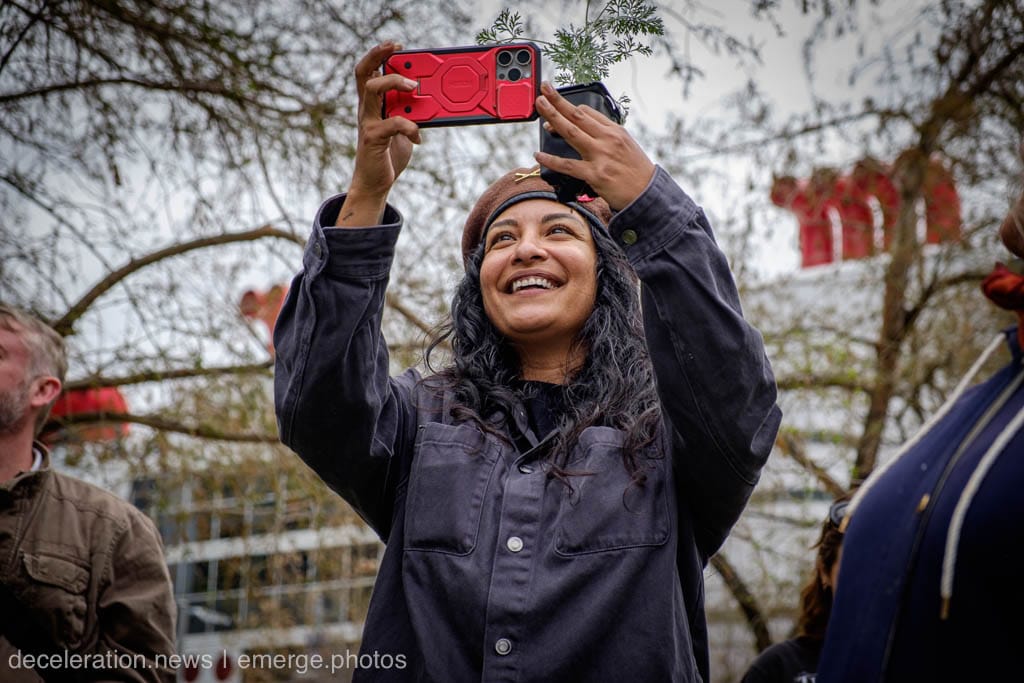
Sunday for the Future in Pictures
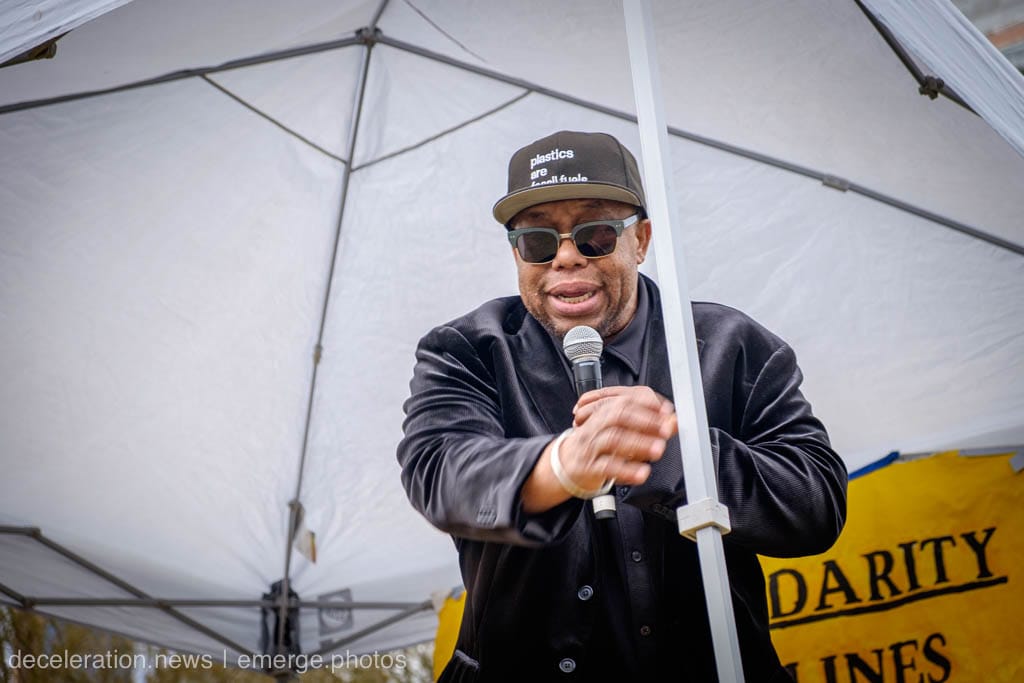
All images: Greg Harman


