

Headlines blaring warnings of an asteroid hitting Earth have receded (though the Moon isn’t out of reach of a potential strike) but that doesn’t let everyday folks off the hook. After tapping Tesla CEO Elon Musk to savage the federal workforce, ostensibly searching out fraud but delivering blistering political attacks instead, President Donald Trump is now steering a federal budget through Congress that is expected to devastate the lives of millions of Americans.
The “one big, beautiful bill”* passed by the U.S. House of Representatives and headed to the U.S. Senate would shortchange Medicaid and Medicare, for instance, by hundreds of billions of dollars. It is estimated that 68 million older and disabled Americans rely upon Medicare for insurance.
Meanwhile the U.S. Department of Housing and Urban Development (HUD) under Trump plans to cut rental assistance programs by roughly 40 percent and homelessness programs by 12 percent. This comes as homelessness is at a record high and half of all renters are classified as rent burdened, NPR reports.
Ann Oliva, CEO of the National Alliance to End Homelessness, called it a “recipe for disaster.”
In San Antonio years of high growth and predatory housing practices have pushed rents up, while inflationary pressures and Trump’s increasingly erratic trade wars have driven up costs.
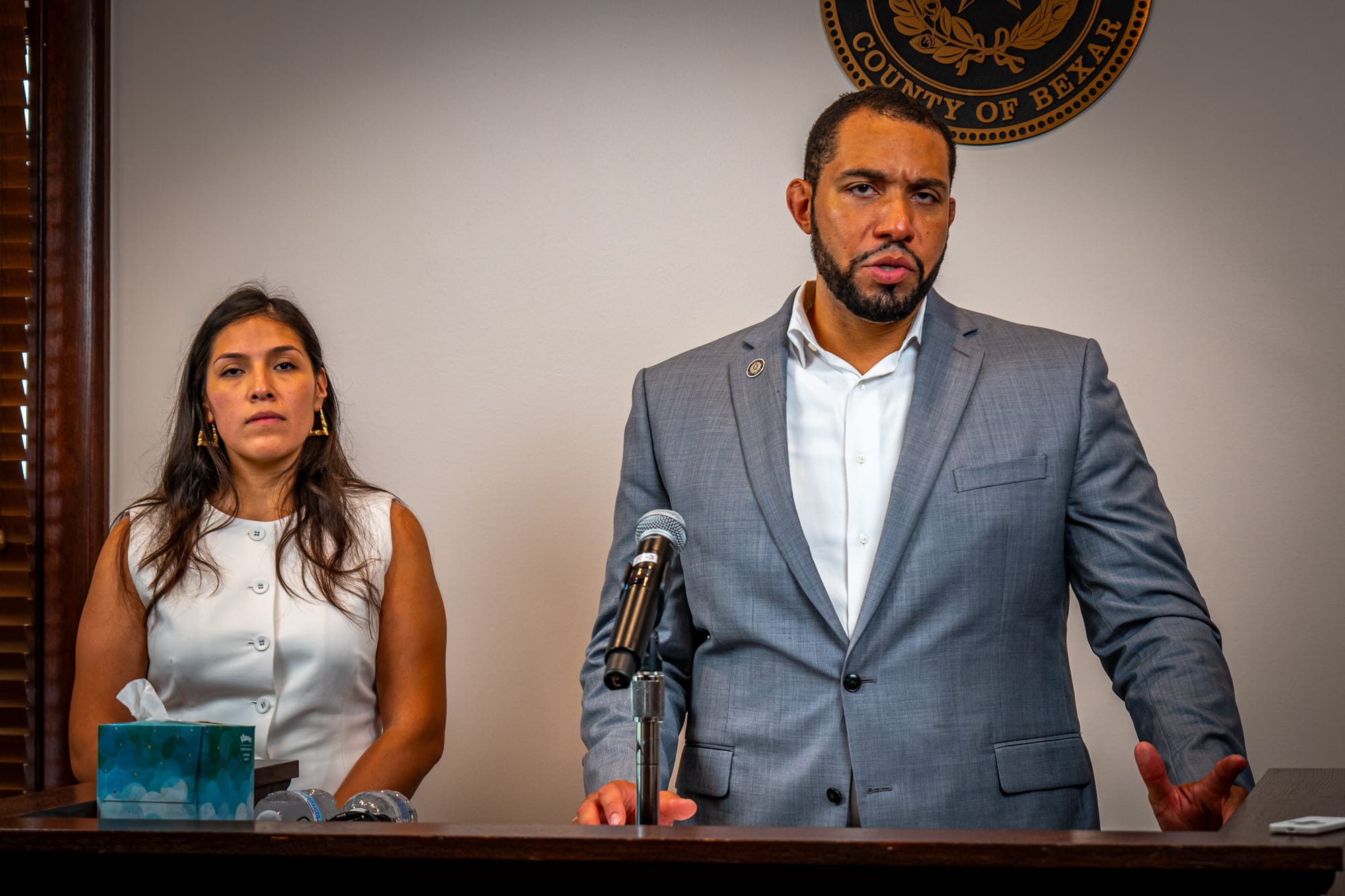
At a press conference in San Antonio on Thursday, Bexar County Commissioner Tommy Calvert compared the level of threat to the livelihoods of local residents to the onset of COVID-19 virus in 2020, calling on “local leadership, local organizations, our faith based community, people who care about this issue” to step up.
“Much like we met during the pandemic, where in the pandemic the city and the county were talking about how do we take these federal funds and make smart investments and leverage them, we need to do the same thing in this social-net slashing,” Calvert said. “Every elected leader needs to increase our resources to the tsunami of homelessness that will be seen in our streets should these budgets happen.”
He credited local organizers for pushing him to develop a response to these challenges.
“It was time to sound the alarm and elevate the conversation to the community and ask: is this the type of crisis we wanna tackle after it’s too late?”
Specifically, Calvert’s vision calls for creating 3,000 new Permanent Supportive Housing (PSH) units over the next seven years. These would be built, a press release states, “in 250-unit clusters to support neighborhood integration.” He also promoted investment in transitional housing options like “pallet homes, affordable senior housing, owner-occupied rehab funds, emergency shelter units, rapid rehousing, and clean community tent villages—to serve an additional 3,000 individuals who are currently unsheltered and without low barrier options.”
A recent count suggests that roughly 3,400 individuals are homeless in Bexar County, though such counts, the press release notes, are notorious for under representation of the problem. While calling the costs of inaction too high, both “morally and financially,” Calvert’s office suggests between $450M and $600M will be needed for the housing investment, while the pallet shelters will require between $22.5M and $75M.
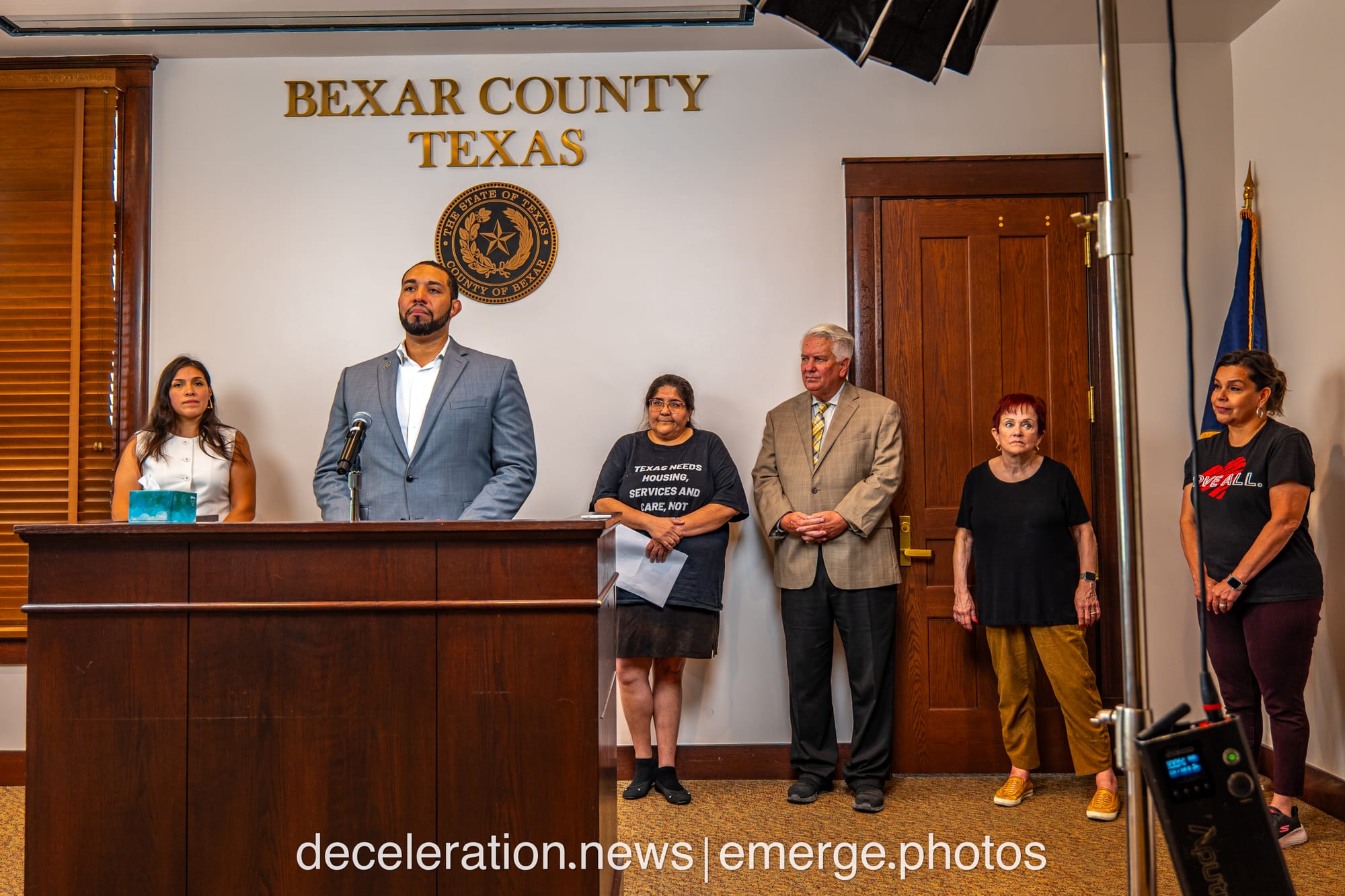
Standing in solidarity with Calvert was San Antonio City Councilmember Teri Castillo, community advocate Molly (who operates by just the single name), President of Towne Twin Village Mark Wittig, and coalition members from The Alliance to House Everyone. Community advocates for housing justice, some of whom (including Yanawana Herbolarios, Harlandale Sunshine Food Pantry, and others) have been meeting regularly with Commissioner Calvert about these issues, also stood in attendance.
Turning to Councilmember Castillo, Calvert said:
“It’s important if these [federal social services] are gonna be cut, councilwoman, we may have to be the bridge here in this particular budget. We may have to put aside as much money as the feds did into our our local budgets.”
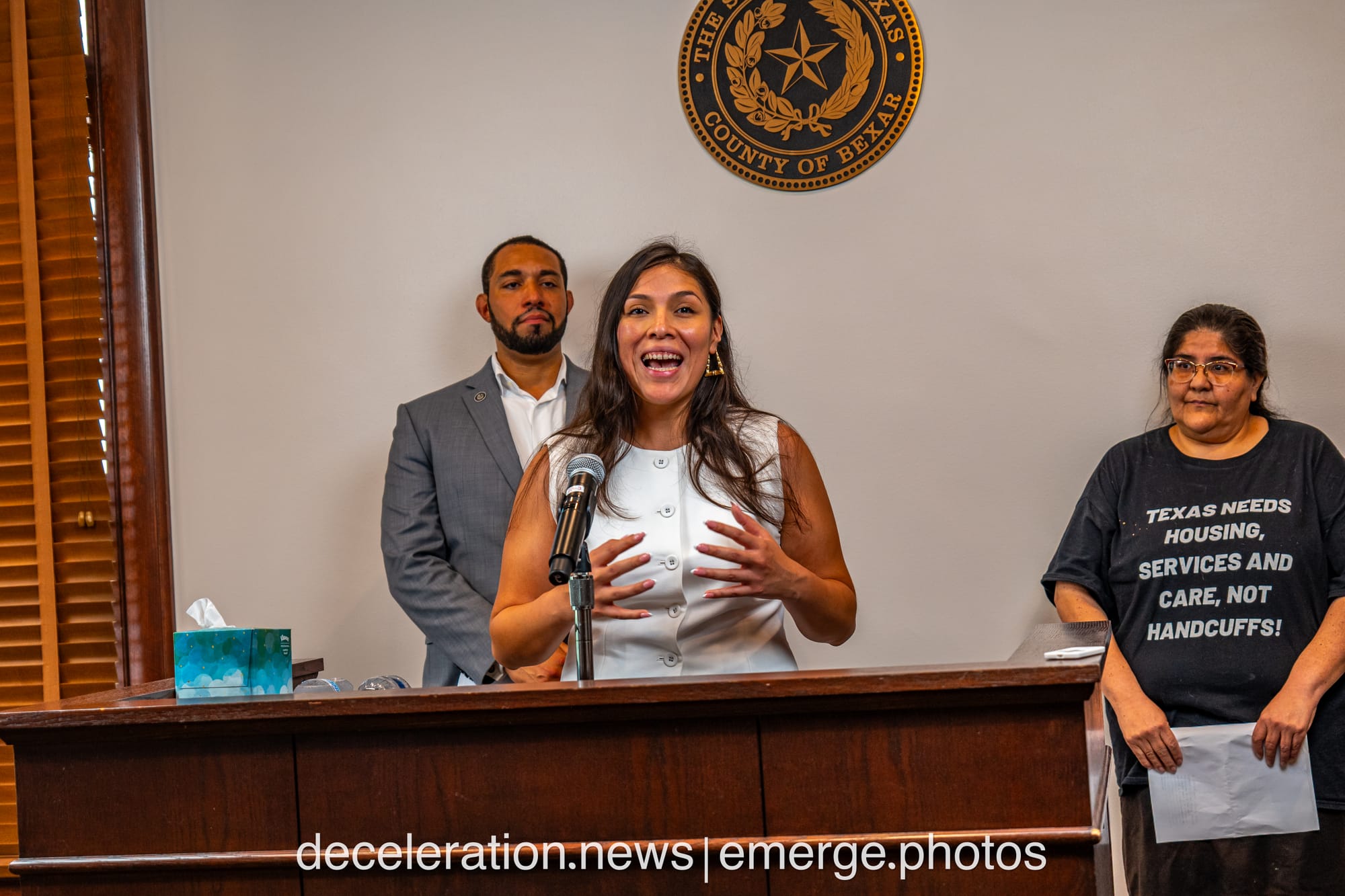
Councilmember Castillo stepped to the mic to also highlight threats coming from the state level, saying that:
“What continues to surface to the top for the priority of San Antonio residents is ensuring that we’re providing access and services to our in-house community as well as making investments in affordable housing. No doubt many San Antonio residents are one paycheck away from being out on the streets. And what we’ve seen at the Texas Lege is that there’s also policy and bills being passed and discussed to remove due process for renters.”
“We need to ensure that we’re prioritizing investments in housing that San Antonio residents can afford to live in,” Castillo continued. “Too many teachers, too many servers, and too many unhoused folks looking for resources are struggling to find a safe, sustainable, and quality living unit. And that’s something that is going to take collaboration with the county, and the city of San Antonio to ensure that we’re being strategic with our limited dollars and being intentional.”
Additional pics
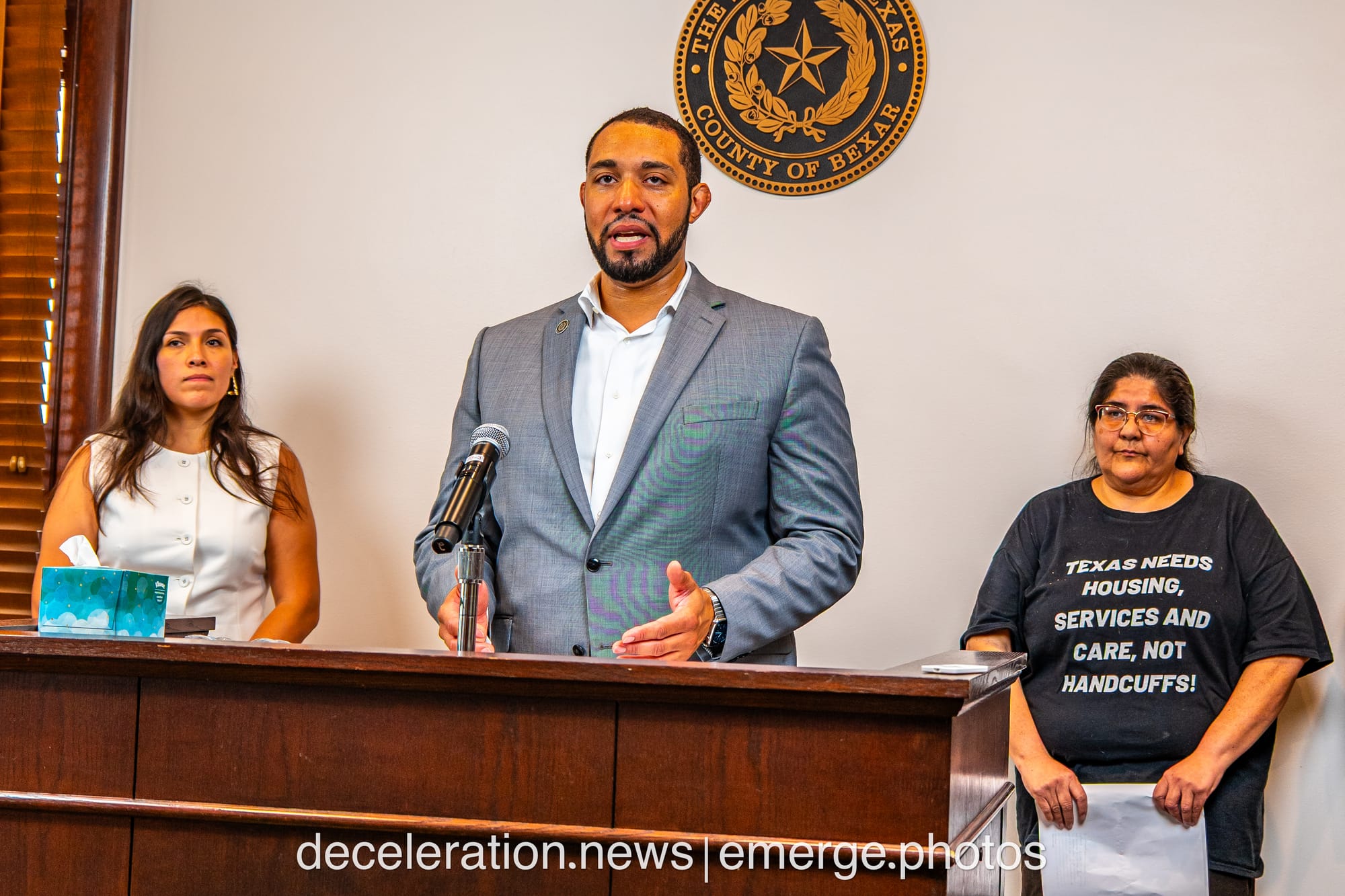
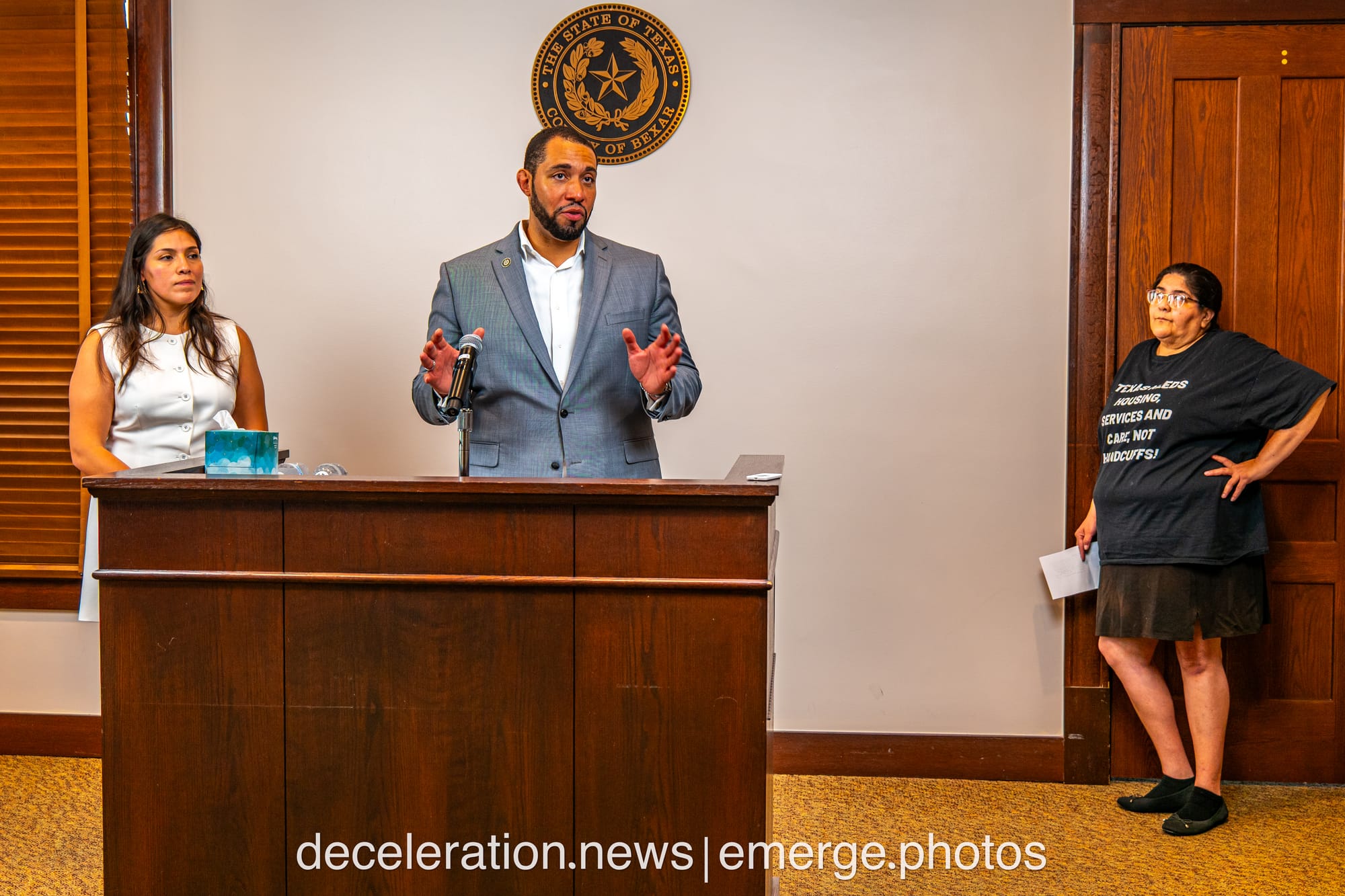
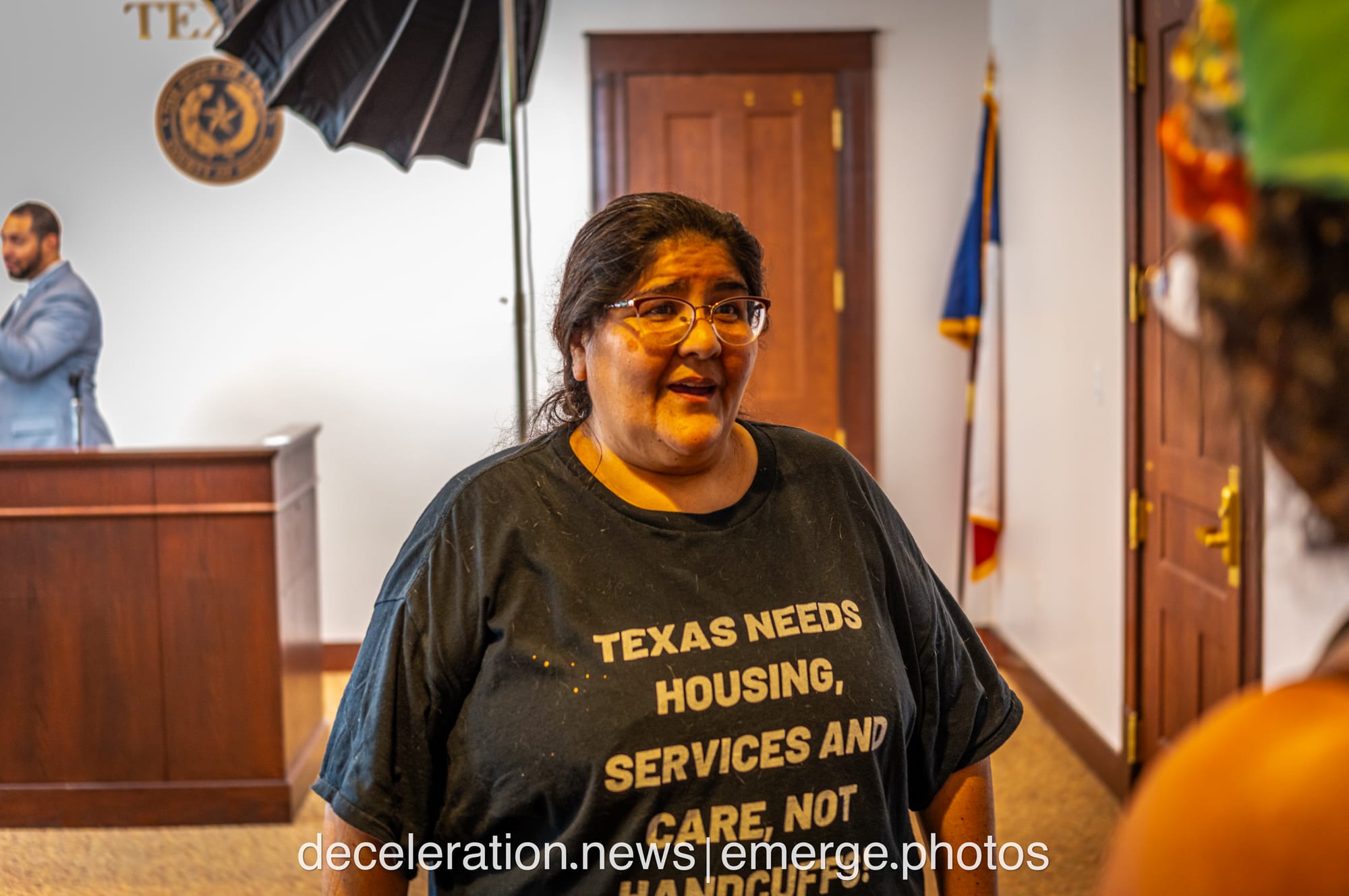

Molly said her outfit of all black (with large text reading: “TEXAS NEEDS HOUSING SERVICES AND CARE, NOT HANDCUFFS!”) was to “mourn the continuous loss of lives of senior citizens, veterans, women, and children. We all, collectively, know who are dying from the heat-related deaths, who are living on the streets, constantly being told to move along by our law enforcement rather than being given actual options to get real help.”
Deceleration asked about long-standing failures to track heat deaths and provide protection from extreme heat, which is known to disproportionately harm the unhoused community and low-income renters and homeowners.
Calvert expressed support for action. Opening his response by admitting that economic boosters in San Antonio believe “we just can’t tell the truth about these things” for fear of losing tourists.
“But Arizona is not embarrassed. Arizona still has tourists. And Maricopa County keeps track of their heat-related deaths,” he said.
Full comments in video:
The press conference was the first time City and County reps had discussed a coordinated response to track heat-related deaths. Although Castillo and fellow Council member Jalen McKee Rodriguez filed a Council Consideration Request a month ago calling for collaborative action on tracking heat’s impact on public health—in particular heat-related deaths, which neither city nor county currently track—this was the first time the two sides had discussed the matter, Castillo confirmed after the meeting.
The policy director for Councilmember McKee-Rodriquez told Deceleration that their boss has yet to speak with Calvert about the issue.
The event, however, showcased that growing support for cooperation and coordination. On the County side, Bexar Commissioner Justin Rodriquez, who has also previously told Deceleration that he supports improved heat surveillance, met recently with the Bexar County Medical Examiner to discuss the issue. Calvert was scheduled to meet with the ME on Friday.
Castillo said heat reforms are moving through the “bureaucratic process” on the City side and will be integrated in whatever housing program reforms gather steam going forward.
-30-
* Buried in this ‘big beautiful bill’ are a raft of threats to the nation and humanity, unsurprising for a regime that scholars say is veering hard and fast into authoritarian territory. These include: limiting the power of courts to hold the Trump administration in contempt for any action (meaning, as one critic writes: “democracy is over“), releases $45B (more than 13 times ICE’s current detention budget) for migrant detention, and prohibits state’s from regulating AI (which many tech leaders consider a threat to humanity).


