

WEATHER ALERT: ERCOT released a Weather Watch alert for January 24-27 due to incoming cold weather expected to bring freezing temperatures across the state, freezing precipitation in some areas, and responding high electricity demand. However, the alert states, “grid conditions are expected to be normal.” Cold weather brings other risks, especially those without adequate housing and heat. Check on your neighbors. Here’s a map of heating centers across Texas, courtesy of the Texas Division of Emergency Management.
Welcome to Water & Power, a Deceleration newsletter about … well, just that. Every year we survey Deceleration readers what they most need from an environmental justice media project such as ours. Two years ago we saw water climb the ranks in a big way. Last year we started hearing more about data centers. Water & Power is how we tackle that.
Water is the essential source of all life but also a highly contested resource. Power generation comes at costs both ecological and personal. At the intersection of both are events that impact lives across Texas and beyond. Water & Power aspires to cover these intersections with a skeptical eye, highlighting the latest developments around thirsty data centers, the resurgence of polluting fossil fuel projects, and the broken regulatory system that too often sacrifices our most critical needs for the short-term gains of a few.
Water & Power highlights reporting found at Deceleration, but also offers links to critical stories from other publications, prepares you to engage on these issues with notices of events around the bend, and always offers unique content exclusively for newsletter subscribers.
If you know someone who would appreciate this research and analysis, pass it along. — Greg Harman
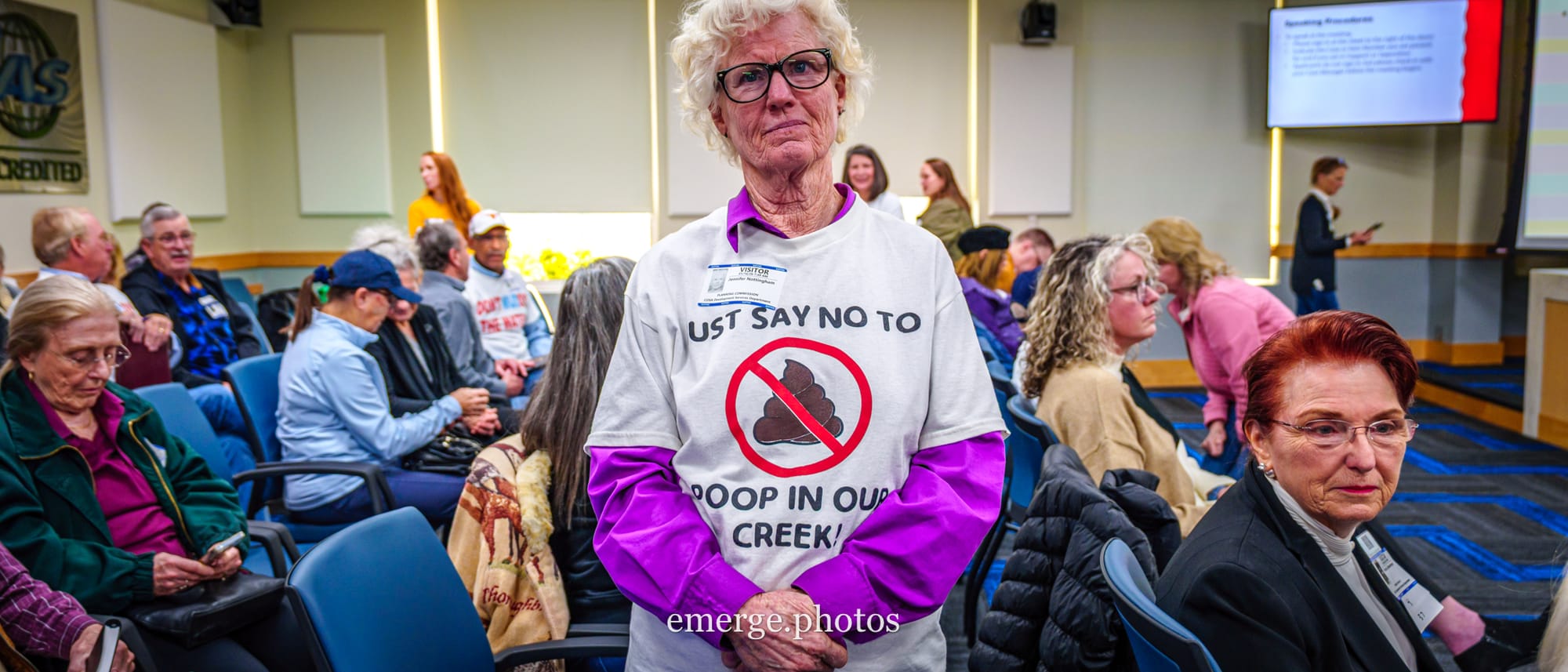
Lennar’s Controversial Guajolote Ranch Getting Cautious Treatment by San Antonio Council
Almost universally spurned by regional elected leaders, Lennar’s pursuit of 2,900 homes in spite of risks to area drinking water, speaks volumes about broken planning processes and perhaps a widening local-state power divide.
In the state of Texas, private property is king. But every once in a while even an enthroned interest gets deposed.
Home builders and car sellers get away with a lot in the state. But if history is any guide, it’s possible Florida-based Lennar’s requested funding mechanism for a controversial housing development and wastewater plant planned for Northwest Bexar County may still secure state support—in spite of a bruising string of rejections and local opposition.
Last week, members of the San Antonio Planning & Zoning Commission recommended 5-4 that City Council not support the application for a municipal utility district (or MUD).
A hearing by Council this week before a planned February 5 vote exposed deep concerns among members, in spite of negotiated improvements negotiated by San Antonio Water System staff that includes pledges to utilize advanced nutrient removal at the wastewater plant.
The potential risk, we are regularly reminded, is not just local water wells, who will certainly see the pulse of treated effluent in the upper Trinity Aquifer first. But connections to the wider Edwards Aquifer, the primary drinking water source for 1.7M people across the greater San Antonio region.
Donovan Burton, senior VP over water resources & governmental relations at SAWS, told Council members: “We believe a lot of the significant concerns have been mitigated, as it relates to SAWS water source, in terms of the Edwards Aquifer.”
That take is still disputed by many fighting the project. And Burton reminded Council that he was not disputed more localized impacts to the Trinity Aquifer.
The Council doesn’t have power to start or stop the project at this point, or the wastewater treatment plant permitted to discharge a million gallons of treated wastewater per day (including lots of contaminants like so-called “forever chemicals” that plant’s don’t clean up).
The treatment plant was already approved by a trio of commissioners at the Texas Commission on Environmental Quality—in spite of years of steady objections.
At issue now is a funding mechanism known as a Municipal Utility District that would saddle future homeowners with the cost of the plant and other services.
The question now may be if state appointed leaders even care what local elected officials—and the people who elect them—think.
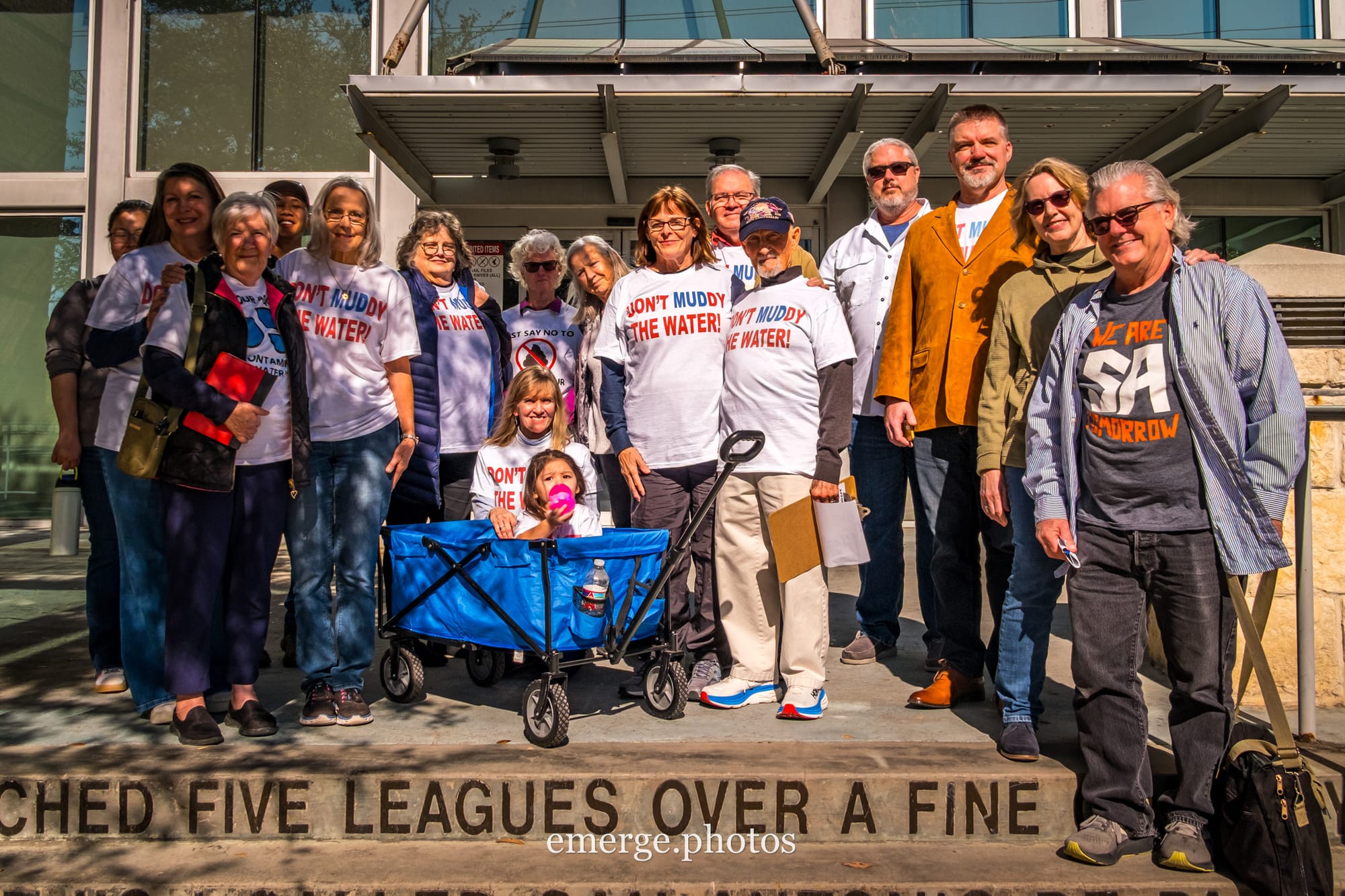
After all:
- All of the state reps from the area objected to the wastewater plant.
- State Sens. Roland Gutierrez, Jose Menendez and Sarah Eckhardt also all warned of the threat of the treatment plant.
- After approval, Bexar County Commissioners petitioned the TCEQ to reconsider.
When Council takes up the matter, they may either consent to the creation of the MUD, deny the application, or take no action. But that sets a clock on potential negations with San Antonio Water System that, win or lose, ultimately lands at the TCEQ. But when it gets there it will be an embarrassing shade of black-and-blue from an ever lengthening string of rejections and denials. Of course, that’s unlikely to prevent approval by a trio of appointees at the Texas Commission on Environmental Quality who owe their station to Governor Greg Abbott.
The near universal loathing for the project speaks volumes about the sensitivity of the location. The City of San Antonio has spent hundreds of millions buying up land and entering into protective conservation agreements with landowners west of San Antonio to prevent exactly this sort of contamination.
Councilmember Ivalis Meza Gonzalez (D8) lamented the lack of “meaningful local control” that would have helped avoid the situation to begin with.
“I will not be supportive of this on Feb. 5 and I ask my colleagues to do the same.”
She said Council must be more targeted in their conservation efforts in the future and immediately review the Edwards Aquifer Protection Program and what properties are being prioritized.
“I do believe we are able to achieve more priorities for the public by conserving properties within Bexar County that are more likely to be developed in the very near future,” said Meza Gonzalez.
As a newsletter subscriber, you get this story first. Publication to follow at Deceleration.news.
Q&A: Amy Hardberger
George W. McCleskey Professor of Water Law; Director, Center for Water Law and Policy
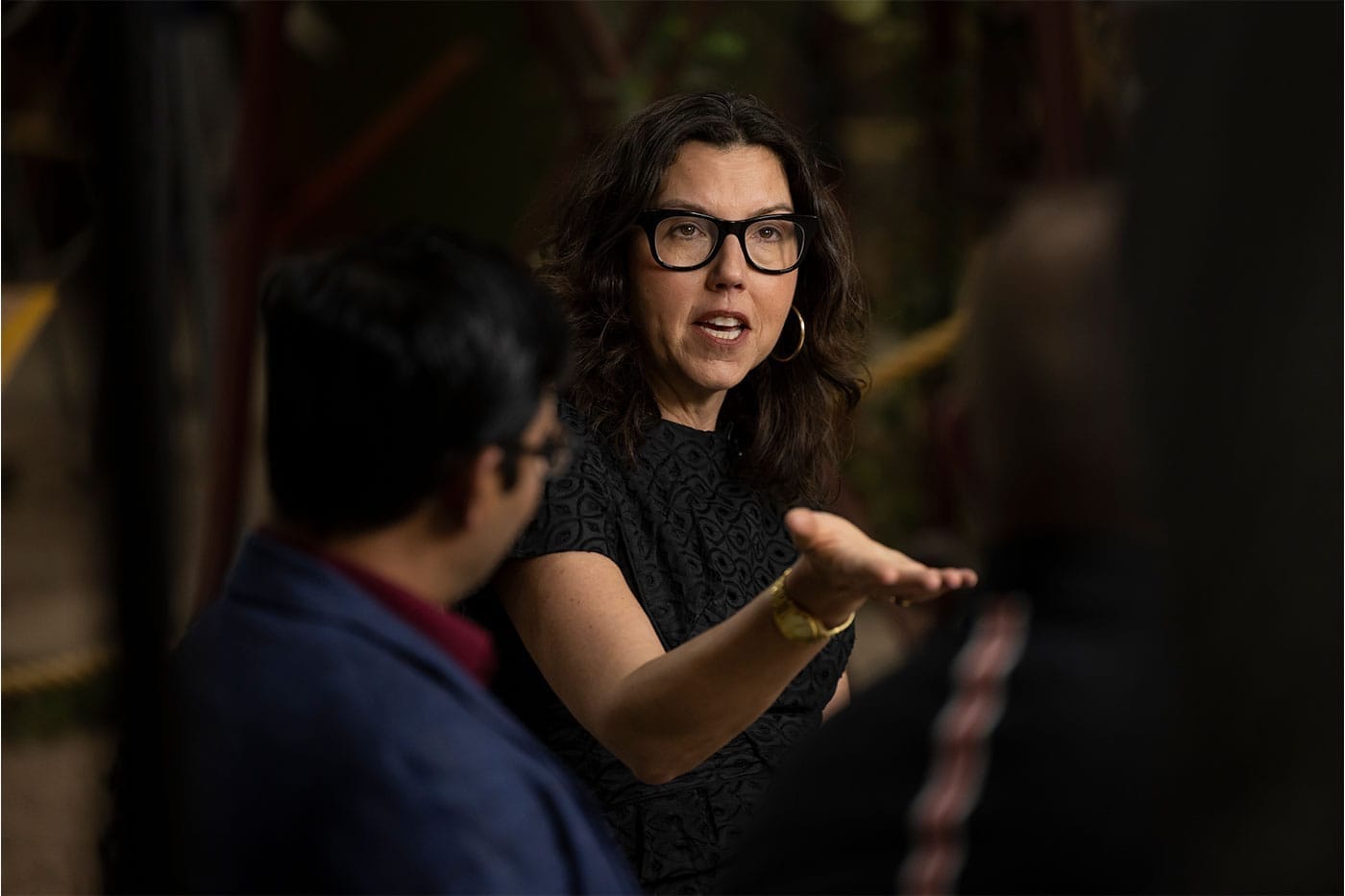
Greg Harman: I've written a lot about power, but I haven't written as much about water. Over the last year or so I have been writing more about the Guajolote Ranch fight and have opinions that are informed by reporting over a number of years. But as I start this new effort [Water & Power], I’m seeking to better understand the state of water in the state of Texas. I hear the horror stories, but also I continue to seek context, to understand how some of these decisions are allowed to continue. I’m hoping to get a better grasp of our regulatory environment, elected leadership, public involvement, all these factors—these really root issues—and their result. So I have been looking forward to speaking with you about Guajolote Ranch.
Amy Hardberger: There's an interesting side issue of environmental justice. It’s like: These things happen all the time. They just don't always happen with people that have enough money and education and time. [to fight them] But when you get out into these kind of suburban retirement communities that have a certain socioeconomic [status] all of a sudden you see a different response. In many ways, it gives us an opportunity to talk about the larger issues. Because whenever people talk about Guajolote I'm like, ‘You think that's only happening there?’ This is a symptom of a much bigger problem that we are not addressing. Is the [issue] only effluent? Or is it really that they don't want however many thousand people living there? That has its own environmental impact.
I think one of the biggest mistakes that we make, or even in our law, the way it's structured, is that we look at these things independent [of one another]. Really this is about unchecked growth, lack of authority, who has approval power for these things.
In each of these giant developments there are environmental impacts. It just happens that in this one it's effluent. Which, of course, I am concerned about. But just because there isn't effluent going into the creek doesn't mean that these other developments out [Highway] 151 down south aren't really going to put San Antonio ratepayers at risk. They will, just in a different way.
Growth is the issue. And the risks manifest in different ways in different locations. Guajolote obviously gets a lot of attention by having a former mayor of the city saying our water's at risk. That's a legitimated grievance.
I would say it way predates that. I was on the SAWS board when [Guajolote Ranch] first came through. And if you read the minutes from those meetings, we are very concerned about this development. We just didn't have any real choice because it was within the CCN [Certificate of Convenience and Necessity]. I don't know of anybody on that board that was excited about the idea of Guajolote. I've heard a city council person say “SAWS said, yes, we'll give you the water,” and I go, “Whoa, time out.” We did say that, but, like, we made them come back multiple times, we got downside protection. Like, this has been an uphill battle for [Lennar] from the jump.
And for good reasons, it sounds like you agree. So in relation to these other developments maybe the risks are more acute the closer you are to the development. It’s definitely not going to be good for Helotes Creek or the species that live there, right? If you start with the fish, you know, and the turtles and everything else. More broadly, though, How would you rate the health of our rivers and creeks across the state?
I don't do a lot of water quality research, so I'm not the best person to ask in terms of like, how are we on the Clean Water Act, fishable-swimmable categorization. I would say we're not in the most terrible place for that. I think they're generally quote-unquote clean. It's not the East Coast, for example, where there are some of those rivers you wouldn't want to touch. I think where I come at it, and a water quality expert may have much more nuance to that answer, is asking are they healthy ecosystems? These are natural systems that, without us taking out so much water, they behave quite differently.
When you look at these drought conditions and … this growth, you're setting up conflict between the entities that get lawyers and say “I want to pump” and the users of these ecosystems, which, by the way, we also rely on, right? We rely on these healthy ecosystems, but we never have done a good job of valuing them.
It's not so much should we be worried about the water quality of these rivers. It's about what should we be thinking about for the health of those systems into the future as we pump more effluent. It’s not without its risks. So we're even talking about that in these areas where they want to use produced water effluent [from oil and gas production] and discharge it into the Pecos River. Even if you can get the water quality to what you're comfortable with, you are significantly changing the geomorphology and chemistry of a system when you dump a bunch of water in there.
They could promise that that water is “crystal clean,” it's still not natural. It's not naturally there. So you may have everything from increased erosion, which could change property boundaries, and also change the water quality, the dissolved oxygen, all that kind of stuff. So temperature, water flow: some fish require a lot of water to be flowing; some need it to be stagnant. We're changing that whole system when we do things like this.
It's a bigger conversation about where are we growing, sounds like.
Most of our growth right now is in the counties. They have no regulatory authority. So then when they want to stop these things, they get all upset. You know, ironically, a lot of times people move out there because there's no regulation and then they suddenly want regulation. And what we're learning is somebody minding the ship, having an overall plan, even if that plan is guided by local communities, is important. Otherwise you're very, very vulnerable.
It seems like we don't have those kind of regulations at a county level by design. That interests such as home builders, automobile dealerships, and all those have an interest in keeping it that way.
I think it's more complex than that. I think a lot of the people who are complaining liked it that way until they didn’t. You can go back and look at the legislative history. There have been county authority bills that have not prevailed. It's not just big business. A lot of times the locals are like, ‘No, we don't want more regulation.’ Well, that's fine—if nobody comes into your area.
But what we're finding with data centers is it's unlimited where they'll go. There was a lot of conversation five, seven years ago about could we add county authority just in the counties that border these exploding cities like San Antonio, Austin, Dallas, right? Like, poor New Braunfels, you know, they're doing everything they can, but they're a small area. We changed the rules on annexation. So they now are getting pummeled by people that are right outside their jurisdiction.
But the rural counties were like, “Under no circumstances do we want county authority.” With data centers, they're realizing they have no power to say no. Or very, very limited power. So be careful what you wish for.
That's actually the other story I'm researching right now. I was in San Marcos at this last planning and zoning re-hearing for one of the proposed data centers up there. Is that something that you're tracking or advising on?
I'm trying to do my own research and understand what I think best practices are. I've got my eyes on Abilene. I've kind of got my eyes on Amarillo. There's one south of Marfa in this very pristine area. It's whack-a-mole for sure. And what we're seeing is now these people that generally would be very anti-regulation saying, “We think we should ban data centers.” So that's very antithetical to what that group of people generally are advocating for. And I think it's going to lead to a really interesting [legislative] session because it can't be written off as “those environmentalists.” What we're seeing is wealthy property owners not wanting it too. And so now you get this weird, kind of strange bedfellows thing, which is always my favorite when that happens.
I look forward to those conversations for sure. And those alliances are really helpful, especially if they can move into other spaces. Like, if you start with data centers and then you move into controlled growth.
Data centers is just the latest thing. It's the latest symptom to the same disease we've been experiencing. So can we have a broader conversation about letting local communities make decisions about who comes there and who doesn't? And under what circumstances? It's not data center versus no data center. It might be [yes to the] data center, but we're not going to give you any of our water, fresh water. Or if there's brackish water available, you have to use that.
So do you agree there are some spaces where we need to have higher standards or just no development? I mean, we spent a lot of money west of San Antonio [on conservation agreements for aquifer protection].
Yes. I would love to see more standards over development. Under what we had, I think SAWS did the very best that it could [on Guajolote] and did more than it would have done on a similar project 10 or 15 years ago. I think the question that needs to be asked is why is a municipal water authority essentially the gatekeeper for development? Is that really the way we want this to go? Because what ends up happening is oftentimes, [developers] come to SAWS first because they're not going to have any city council approval.
SAWS is not a city planner. And that is the position that they are in time and time again. And then people get mad at staff and [staff] don't have the authority to say no. They have the authority to say, are you within our CCN? What can we maybe negotiate to make it easier or better? And we can only do that in certain circumstances.
It is time for San Antonio City Council to start thinking about more stringent land use ordinances. And then county authority is the next piece. It's not the water utilities or power utilities’ job to manage this. You will never get it right if you let them do it.
Story to come at Deceleration.news.
Fighting Data Centers in San Marcos
A clutch of data centers have San Marcos in their sites. Earlier this month more than 100 turned out to a second hearing at the San Marcos Planning & Zoning Commission to call for an application to rezone property for one of those data centers to be denied. Commissioners instead pushed it forward. Info session planned for Jan. 27 ahead of an expected Feb vote at San Marcos City Council.
Watch more videos at Deceleration's YouTube channel Deceleration-News.
Story to come at Deceleration.news.
Upcoming Events
 Deceleration Staff
Developers are proposing at least four data centers in Hays county. What are these new developments? What do they mean for our electrical bills, electrical grid, water supply, and the future of local residents?
Water & Power News
- The Link Between This Weekend’s Dangerous Winter Storm and Climate Change
- These kinds of events don’t happen despite a warming climate — they’re connected to it, writes Climate Central.
- Looming water supply 'bankruptcy' puts billions at risk, UN report warns
- The world is facing irreversible water "bankruptcy,” with billions of people struggling to cope with the consequences of decades of overuse as well as shrinking supplies from lakes, rivers, glaciers and wetlands, U.N. researchers said on Tuesday.
- Energy Dept. Says It Is Canceling $30 Billion in Clean Energy Loans
- Many of the cancellations had been known for months, but the announcement underscored the drastic change in the energy landscape under President Trump.
- Trump’s plan to make data centers pay for power plants has big flaws
- The Trump administration wants PJM Interconnection, the country’s biggest power market, to force data center developers to pay directly for the new power plants they need. It’s the latest attempt to curb skyrocketing energy costs for the roughly 67 million people PJM serves from Virginia to Illinois.
- Mexico Is Sending Texas Billions of Gallons of Water. It Won’t Be Enough.
- A treaty between the U.S. and Mexico aims to manage resources that flow between nations. What happens when the water dries up?
- A Conservative Cowboy Town Embraces the AI Revolution
- Abilene lured one of the world’s largest artificial intelligence hubs to the city by meeting Stargate’s big demands. Will locals benefit?
- Trump administration speeding deep-sea mining permits in international waters
- The Trump administration is accelerating the permitting timeline for deep-seabed mining applications. The National Oceanic and Atmospheric Administration (NOAA) unveiled revisions to the regulatory process for exploration licenses and commercial recovery permit applications Wednesday. Under the changes, eligible applicants can apply for and obtain an exploration license while simultaneously applying for a commercial recovery permit from NOAA.
- Trump Rollbacks Put Children’s Health at Risk as Pollution Increases
- New federal decisions remove health protections as Black communities face rising pollution and asthma rates.
- Water rule rollback stokes affordability concerns
- The Trump administration says the regulation will ease permitting expenses. Utilities say costs could shift to them and their customers.
- David Bamberger (1928-2026)
- I write with a heavy heart and the sad news of the passing of J. David Bamberger, founder of Bamberger Ranch Preserve and legendary Texas conservationist. He passed away peacefully surrounded by his family on January 17, 2026. He was 97 years old.


