In this episode, we speak with researcher Conor Harrison, author of 'Brokers of Power,' who spent years embedded in electricity finance conferences, tracking how Wall Street has taken over the power grid. Follow Deceleration on YouTube.
Not everyone is treating Texas Governor Greg Abbott's threat to forcibly break up the state's dozens of remaining city-owned utilities seriously. Yet. This is the heat of campaign season. Polls show the three-term governor's competitor, Texas state Rep. Gina Hinojosa, has a real shot at unseating this deeply Trump-aligned Republican. And, obviously, Abbott has to be governor to fulfill his pledge. But even if elected, the degree of his success—and if he presses forward in full or in part—will also rest on statehouse ratios.
Right now, Republican control of the Texas Senate is definitely troubled, but flipping the House will take shifting more than a dozen new seats. Some Dems up at Tribune Fest Way are displaying confidence, but Hinojosa herself was not one of them. She dismissed the idea of a coming Democratic Lege (something about living in "reality," she said).
This matters, because in the midst of growing budget shortfalls, with San Antonio and Austin's budgets built firmly on the hundreds of millions generated by energy sales (Austin just under $200M, SA floating around $500M), Abbott's threat is deadly serious.
But Abbott's threat also serves a more cynical purpose within the broader MAGA agenda, one an Austin Council member suggested to Deceleration (interview to come) is about convincing Americans that government is broken. That our faith, instead, should flow instead toward a Great Leader and the deservedly anointed (aka the plutocrats).
Of course, Abbott has been about amassing state power and bringing local expressions of it to heel (his heel, particularly) for years. And those muni profits funding emergency services and road repairs he slurs as a "slush fund."
The risk is real enough—and the discussions critical enough—that we started booking interviews.

Our first, published here in full, is with University of South Carolina professor Conor Harrison. His freshly published, 'Brokers of Power: the Financialization of the US Electricity System,' offers lots of lessons to ground the discussion.
It is a deeply researched examination of how financial interests have asserted themselves within the energy sector. That assertion, Harrison finds, manifests in new, complex, and complicating ways for a needed energy transition to cleaner energy sources as global climate disasters accelerate.
Of course, finance has always played a role in energy generation and distribution, he says. In some ways it's not news that Big Money runs stuff.
“The financial industry has always been intertwined with the electricity industry,” he tells Deceleration in this interview.
“I mean, it's no mistake that the first central electricity generation station in the U.S. was built by Edison on Pearl Street, which is exactly one block off of Wall Street.”
Thanks for being a subscriber
Welcome to Water and Power, a newsletter about the elements of our survival—and those who seek to profit off them. If you know someone who would appreciate this research and analysis, pass it along. Subscribe to this and our growing roster of Deceleration newsletters. Reader support makes this work possible. — Greg Harman
But decades after the rise of deregulation and the break up of more centralized models across the country, the financial system has been loosed in a period of capitalism "intensification" now cutting more deeply into all aspects of our lives. This includes sometimes running our power systems directly.
These profit forces, more than local controls or even state or national level policy, are what now most influence our needed transition to less planet-combusting energy sources, Harrison argues. This points back to recent trends in regional activism, wherein protestors are booking flights to Japan, for example, to influence the buildout of LNG on the Texas Gulf Coast.
 Gaige Davila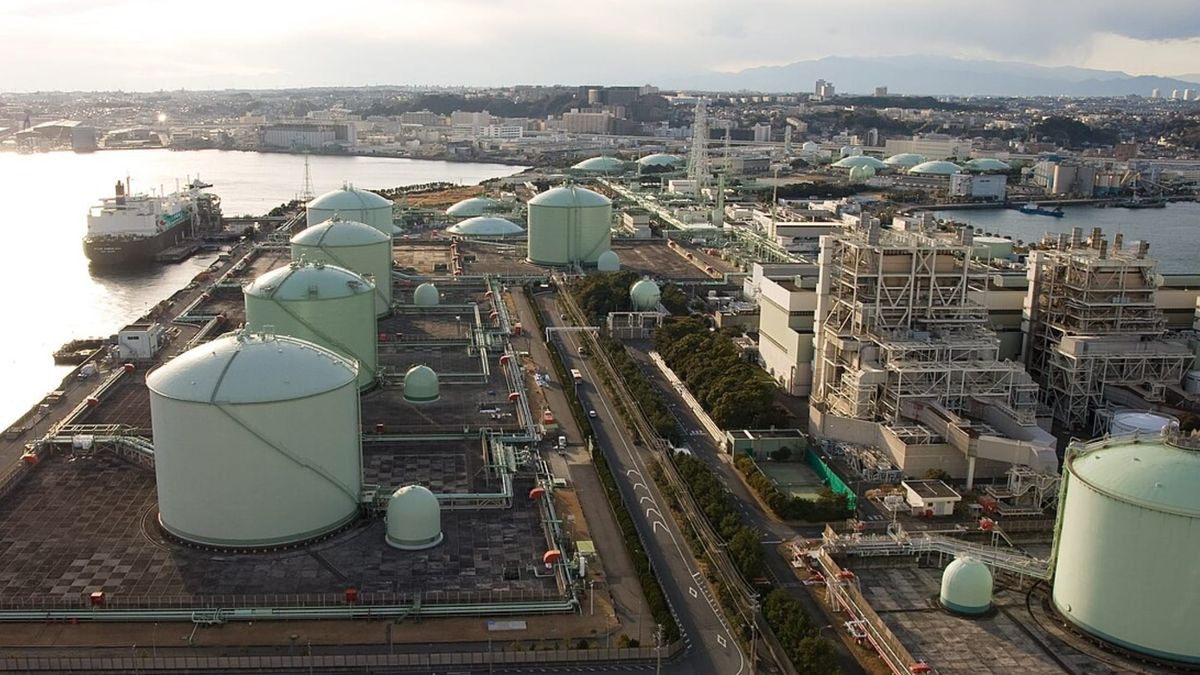
While nuclear is poised for a massive resurgence in hopes of meeting the rapidly ballooning energy needs at the fringe end of social benefit (AI, crypto, etc.), the real energy revolution of solar and wind are penalized not as much for their collapsing generation prices as the difficulty investors find in profiting off of them.
"[T]he investors holding the key to the energy transition are much more concerned about the profitability of those technologies," Harrison writes in 'Brokers of Power.'
"And, by and large, in their unsubsidized forms, wind and solar have not been profitable enough to attract the investment that has traditionally gone to fossil fuels."
Obviously, President Donald Trump's efforts to slow solar, crush wind, and breath life back into the dying coal industry—all while poisoning the public mind about the real threat of ecological (and thereby social) collapse—send real signals to these financial interests.
Enjoy the discussion. Leave us a note about what questions you'd like to see us tackle next.
More video interviews to come.
As part of Deceleration's commitment to produce more video-based reporting and analysis, our interview with Harrison is offered nearly complete above. I expect to do the same with future interviews.