Welcome to Deceleration In Depth, where we are growing solutions for an overheating world. We highlight the latest global, national, and regional developments in climate and environmental justice to better inform local action. Deceleration is rooted in San Antonio and the South Texas bioregion but our concerns and enthusiasm are broad. Pitch us your story idea at editor@deceleration.news.
- Click any story below to log in to our new website
- Become a paying supporter today—with benefits!
- Review Deceleration on Apple Podcasts or Facebook or ... wherever.
- Forward this email to friends; grow the work.
- Subscription info at the bottom of every email.
What do you want us to cover next? Members may leave a comment below.
How to Grow Beyond a 'Post-Crisis' World
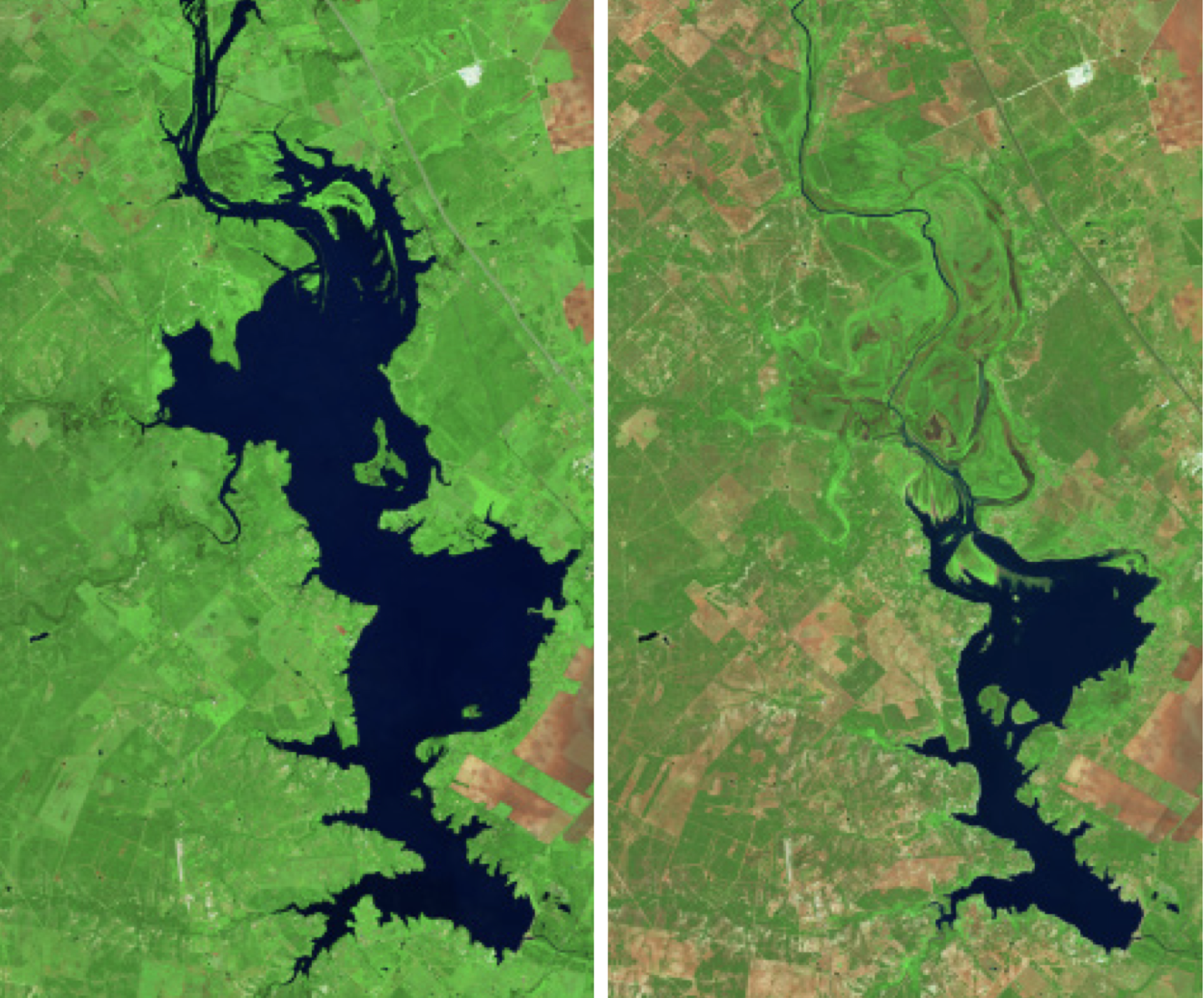
It Starts with Having a Right Relationship with Water.
The world has moved beyond a water crisis into a “post-crisis” state. That’s according to the authors of a recent report from The United Nations University Institute for Water, Environment and Health (UNU-INWEH). “Post-crisis” means “broken,” as far as I can make out. It means that for many parts of the world, there is no recovery of the water systems our ancestors experienced.
It appears our “long-term water use has exceeded renewable inflows and safe depletion limits,” where “irreversible or effectively irreversible damages make full restoration of the old baselines and past conditions unattainable.”
Corpus Christi understands. Recent reporting from Dylan Baddour at Inside Climate News, republished by Deceleration last week, should be required reading here. Water collapse appears imminent. And, to be clear, not because the Earth's ability to provide water suddenly broke down; it wasn’t natural systems that failed. Climate stress is real, but Corpus's hammer fell due to operational failure: prioritizing the needs of industry profits years on end, while the people, already living one boil-water notice to the next, were told they had to go without, to tighten up. The city pledged to find water somewhere in the future while it kept hooking up pipes for polluters. Now the bill has come due.
The situation is eerily similar to the climate crisis, where reports of imminent collapse of key global climate regulating systems (our coral reefs, the Amazon forest) grip our attention with increasing frequency, and as heatwaves shatter records again and again. (Our "all time" March record just shattered with a monstrous heat dome bringing summer heat back to Texas in March.)
As weather reporters work to normalize crisis—by invisibilizing the 11 atomic bombs worth of heat that fossil fuels add to the global atmosphere every second, by wrongly distilling this heat into the familiar language of La Niña and El Niño cycles "long-term climate trends." In this, they are essentially pushing around the drinks cart on the ocean liner (sorry, all out of ice, I'm afraid), explaining away the rupture in our hull as mere background noise. Maybe turn up the radio, if it's upsetting the young'uns?
A George Monbiot writes: Only radical action can save us now. Fossil fuel billionaires and their apologists of all stripes must be defeated. Doing that involves all the familiar forms of fight-back: boycotts, protest, and pulling electoral levers. All of this is required, but it's all also insufficient. We must work outside those systems to realize alternative ways of living capable of allowing the Earth and all her families to thrive.
That’s a process Deceleration is committed to. As the second non-Indigenous signatory to the INDIGENOUS PEOPLES OPEN TREATY HONORING GRANDMOTHER EARTH:
we’re committed to “the health of Grandmother Earth and all those who reside upon Her lap and within her embrace, including our natural relatives and our future generations.”
That explains why we dropped everything to lend a hand when Azul Barrientos rang us up to talk about building up Todos Agua III together. This is the third annual convening dedicated to realizing a right relationship with water, Mother Earth more broadly. Held at the Esperanza Center, the gathering is dedicated to helping cultivate a soul-level transformation in our relationship with water. For if there was a signal we are being led by Indigenous framings of the world versus the extractive capitalistic model, it is this necessary shift from living in a world of "resources" (natural or otherwise) and one of "relationship."
You'll find more about the event in our podcast and event post below. Because we can't say it better, we close with Monbiot's words from his reflection on war and fossil fuel empire:
“Concentrated fossil power leads to concentrated political power. Had we been less dependent on fossil fuels, there might have been no President Trump, no President Putin, no ayatollahs, no Prime Minister Netanyahu. Fossil fuels push the world towards autocracy. Overthrow our demand for them, and we overthrow much of the current tyranny. Greener, cleaner, cheaper, kinder, fairer: what a beautiful world we could have.”
Correcting destructive patterns and practices means we must delve deeply into other ways of being, modes of life practiced widely across the Earth before capitalism and colonialism literally became the air we breathe. It's an invitation. And an honor.
Join us.
— Greg Harman
Podcast

Our Data Center Boom Threatens More Than Water—A Conversation About the Emerging Stakes in the Struggle
Warehouses are popping up across Texas: Some to fill with mistreated humans, others with a human-displacing consciousness.
Across Texas we’re seeing an explosion of two kinds of industrial warehouses going up: one to fill up with humans in the some of the most miserable conditions imaginable as part of the drive to deport millions (including many being actively stripped of citizenship or refugee protections to do so), the other to fill with an emerging human-like/human-displacing (anti-human?) consciousness.
This week, Deceleration speaks with two members of the Data Center Action Coalition, Saunders Drukker and Kay, about what they learned while beating back an AI data center that had its sites on San Marcos, headwaters of the sacred San Marcos River. We speak in advance of a panel being hosted by the Esperanza Peace & Justice Center in San Antonio dedicated to recovering an identity rooted in relationship with water: Todos Agua, now in its third year. Azul Barrientos fills in the details of that convening.
Event

Todos Agua III ~ Water Calls Us to Remember
A week honoring water, tradition, and community.
From March 21–28, we gather in San Antonio, Texas, for conversations where art, memory, and water justice meet. Elders, artists, organizers, and community voices come together through dialogue, song, and reflection to honor water as life and shared responsibility.This year’s gathering includes:
- Community conversations on Texas waters
- Ancestral perspectives on water shared by elders and community leaders rooted in their lands
- Song and poesía offerings
- Online dialogues and workshops
- A closing gathering by the river with plant walks, writing, and collective song
Locations:
- Esperanza Peace & Justice Center
- Brackenridge Park (Joske Pavilion)
- Online gatherings
Reporting

Keeping Tabs on Migrating Whooping Cranes on the Texas Coast
Tracking this small population of big birds is revealing potentially significant changes in their habits.
Melissa Gaskill | The Revelator
Endangered whooping cranes (Grus americana) are among North America’s rarest birds, but also one of its most well-known. This may be in part due to an impressive, continent-spanning migration by a population of the birds who breed during summer in Wood-Buffalo National Park, Canada, and spend winters on the Texas coast, some 2,500 miles away.
Since 2009 scientists have fitted dozens of the birds with tracking tags and placed leg bands on dozens more to monitor their movements between the two. This research has revealed some mysteries and new discoveries.
A December 2024 paper reports that tracking data began to show something surprising in 2011: Some cranes didn’t stay in their usual coastal bay and wetland habitats but moved inland for significant portions of the winter. During the winter of 2024-2025, at least 21 individuals made the move.