Welcome to Deceleration In Depth, where we are growing solutions for an overheating world. We highlight the latest global, national, and regional developments in climate and environmental justice to better inform local action. Deceleration is rooted in San Antonio and the South Texas bioregion but our concerns and enthusiasm are broad. Pitch us your story idea at editor@deceleration.news.
- Click any story below to log in to our new website
- Become a paying supporter today—with benefits!
- Review Deceleration on Apple Podcasts or Facebook or ... wherever.
- Forward this email to friends; grow the work.
- Subscription info at the bottom of every email.
What do you want us to cover next? Members may leave a comment below.
Editor's Note: Our cities' natural allegiances aren't always to the people who make them, as Gaige Davila's reporting on Corpus's water crisis makes plain. But even when they display a desire to do right by their sweltering publics, as with the heat planning going on from Austin, to San Antonio, to El Paso, cities still have the autocratic weight of MAGA bearing down on them. At Deceleration we know we have to not only show up to block abuses and support positive movement in official spaces, but also be about building the surviving world in the margins. So take in all of our editorial offerings this week and stay engaged advancing justice, but also look forward to ways we can partner and grow that new world together. To that end, I wanted to let you know about several growth spurts going on at Deceleration this spring. In coming weeks watch for the return of our bioregional Regeneration Events calendar and newsletter, a quarterly print journal we hope to mail to paying supporters and release on the street for free, new Heat Emergency convenings to help communities prep for another summer of extremes, and sponsorship and advertising opportunities across our event, print, and online spaces. If you need a media kit or want more info about any of the above, write me at editor@deceleration.news. In Hope and Feralocity. — Greg Harman, Deceleration
Reporting
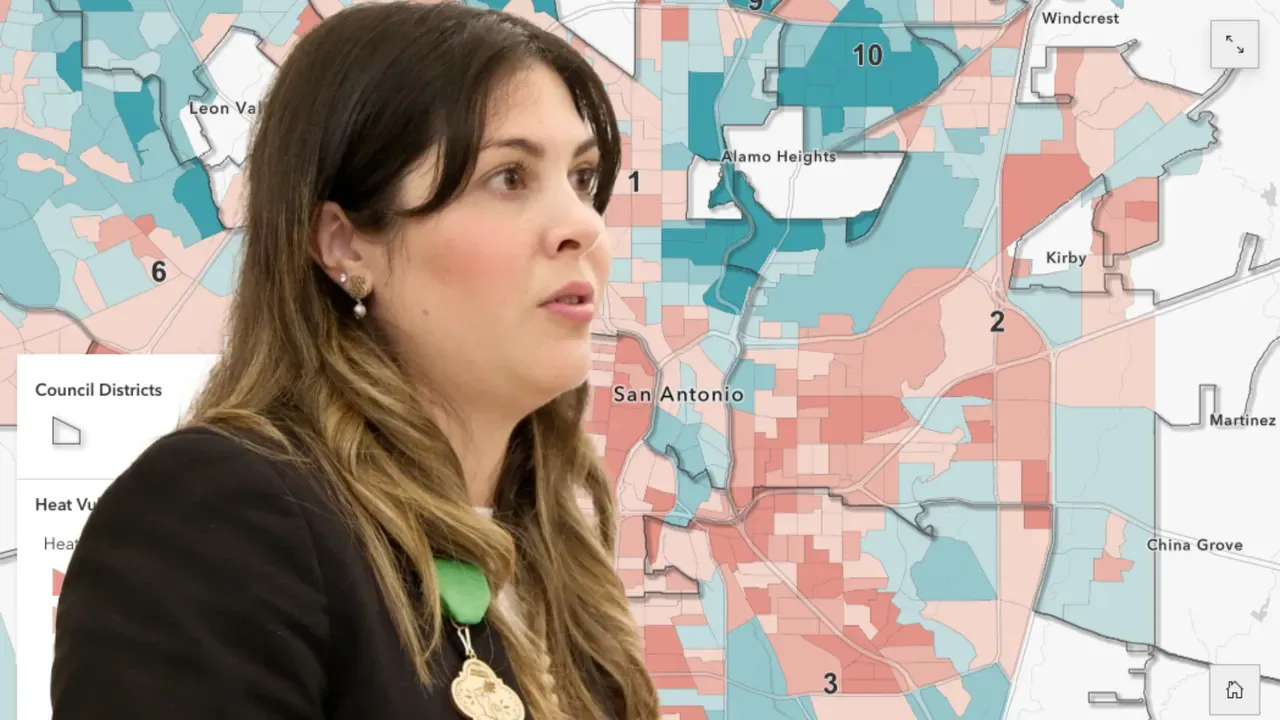
San Antonio Boosts its ‘Heat Resilience Playbook’ as Texas Cities Seek to Adapt to Rising Temps
Republican state leaders stripped cities of the ability to require water breaks for workers, but Texas cities are still fighting to create more habitable conditions for their residents as dangerous heatwaves continue to expand.
Greg Harman | Deceleration
Like most of their neighbors across the planet, Texas residents are on voyage into the sizzling unknown. In recent decades, heat and humidity across the state have risen steadily as the heat-trapping gases pumped out by fossil fuel combustion continue to clog the atmosphere. Texas, a land of highly variable weather, is fast emerging as one of the fastest warming states in the U.S. And it's keeping a dangerous pace with flood-, storm, and fire-prone states like Florida and California as a national epicenter for costly billion-dollar disasters.
The heat hitting in recent years has exceeded anything local inhabitants have ever faced. Climate scientists are increasingly confident heat this extreme hasn’t been known on Earth for more than 120,000 years—possibly much longer.
There are political and structural challenges to navigating this heat. In the second most populous state in the U.S. a full 80 percent of residents live in cities—where the amount of concrete and asphalt artificially raises temperatures as much as 10 degrees or more.
Reporting
Sen. Ted Cruz Working to Grant Fossil Fuel Companies 'Sweeping Legal Immunity'
Members of Congress in Texas and Wyoming tout the bills as protecting energy security, but opponents say they amount to a corporate handout that will cost taxpayers billions and harm human and environmental health.
Jake Bolster | Inside Climate News
Members of Congress from Texas and Wyoming introduced bills recently that would grant fossil fuel companies sweeping legal immunity and shield energy producers from stricter compliance with the Clean Air Act.
Republican Harriet Hageman, Wyoming’s only member of the U.S. House of Representatives, and Sen. Ted Cruz, R-Texas, spearheaded legislation that would protect fossil fuel companies from liability for damages caused by storms, wildfires and other climate-fueled disasters. Sen. Cynthia Lummis, R-Wyo., and Rep. August Pfluger, R-Texas, collaborated on another bill called the FENCES Act, which would make it easier for states to claim that foreign emissions are driving local pollution.
“Energy security is national security, and we will not self-sabotage our critical industries with a cascade of costly lawsuits and extreme penalties that jeopardize American drilling,” Hageman said in a statement accompanying her bill’s announcement.
“America’s energy producers should be protected from the dangerous legal precedent that would be set by the retroactive punishment of lawful activity.”
Hageman’s statement included quotes from fossil fuel lobbyists and executives thanking her and Cruz, whose bill in the Senate is co-sponsored by Sen. Ted Budd, R-N.C., Sen. Tom Cotton, R-Ark. and Sen. Mike Lee, R-Utah, for introducing the legislation. The bill is being referred to as the “Stop Climate Shakedowns Act.”
Coastlines/Faultlines
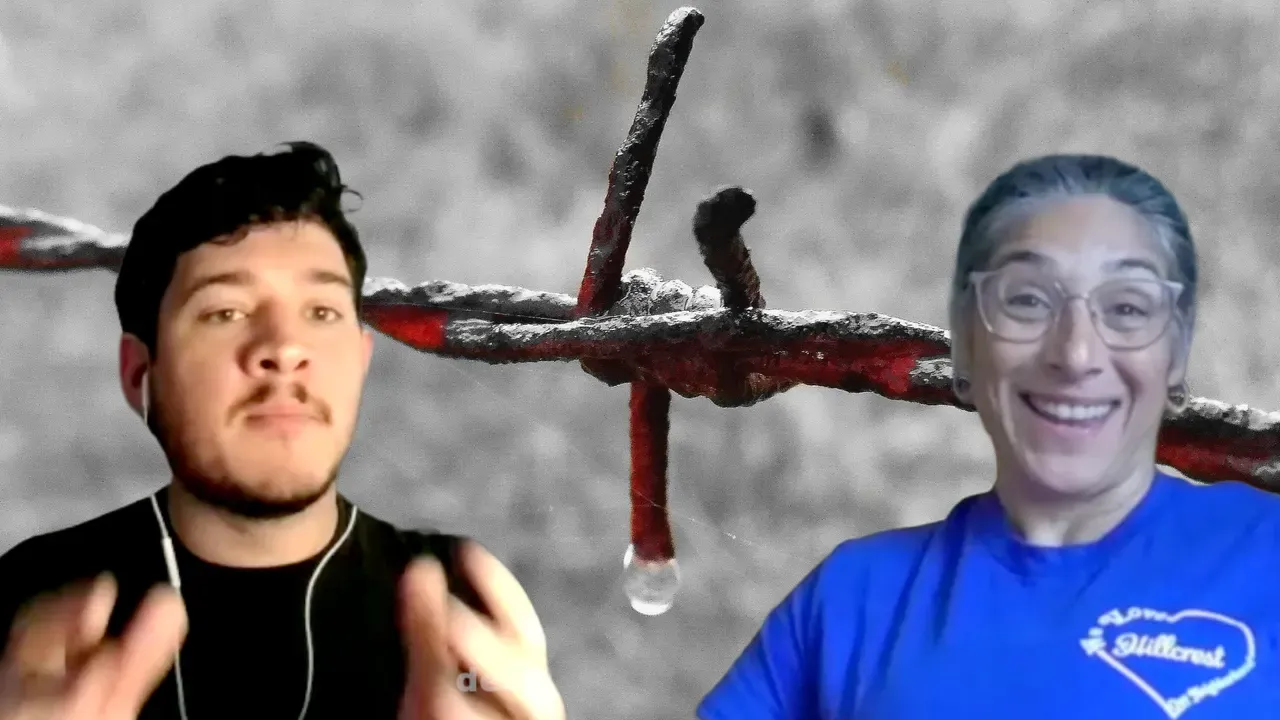
The Corpus Christi Water Countdown to 'Day Zero'
Predictability, accountability, and hope, amidst a coastal city’s vanishing water supply.
Gaige Davila | Deceleration
It’s been about two years since I first reported on Corpus Christi’s water. I shouldn’t be at all surprised that what residents were worried about back then has not only happened—a city so enamored with billion-dollar industry that it pushed into the bleeding edge of water promises to the detriment of residents—but is even worse than predicted. Yet here I am, writing this from just a few hours away in Austin, Texas, after screening the documentary Shifting Baselines by Julien Elie, being surprised for another reason.
It has to do with the idea behind the title of the film. That idea was first elucidated by Daniel Pauly, a fisheries biologist who is heavily featured in the film.
Here’s a good Ted Talk listen on the concept of shifting baselines from Pauly himself, but think of it as our collective understanding of “normal” changing imperceptibly, year by year, until the new “normal” begins to collapse. Only then would people notice anything was different at all.
For instance, if you were to watch any Corpus Christi council meeting or see its city manager, Peter Zanoni, talk about water, you’d assume the industrial companies and the region’s drought were always there, beyond history, in a productive tension. It’s a convenient illusion for industry boosters. But the people who live there know better.
Community Voices
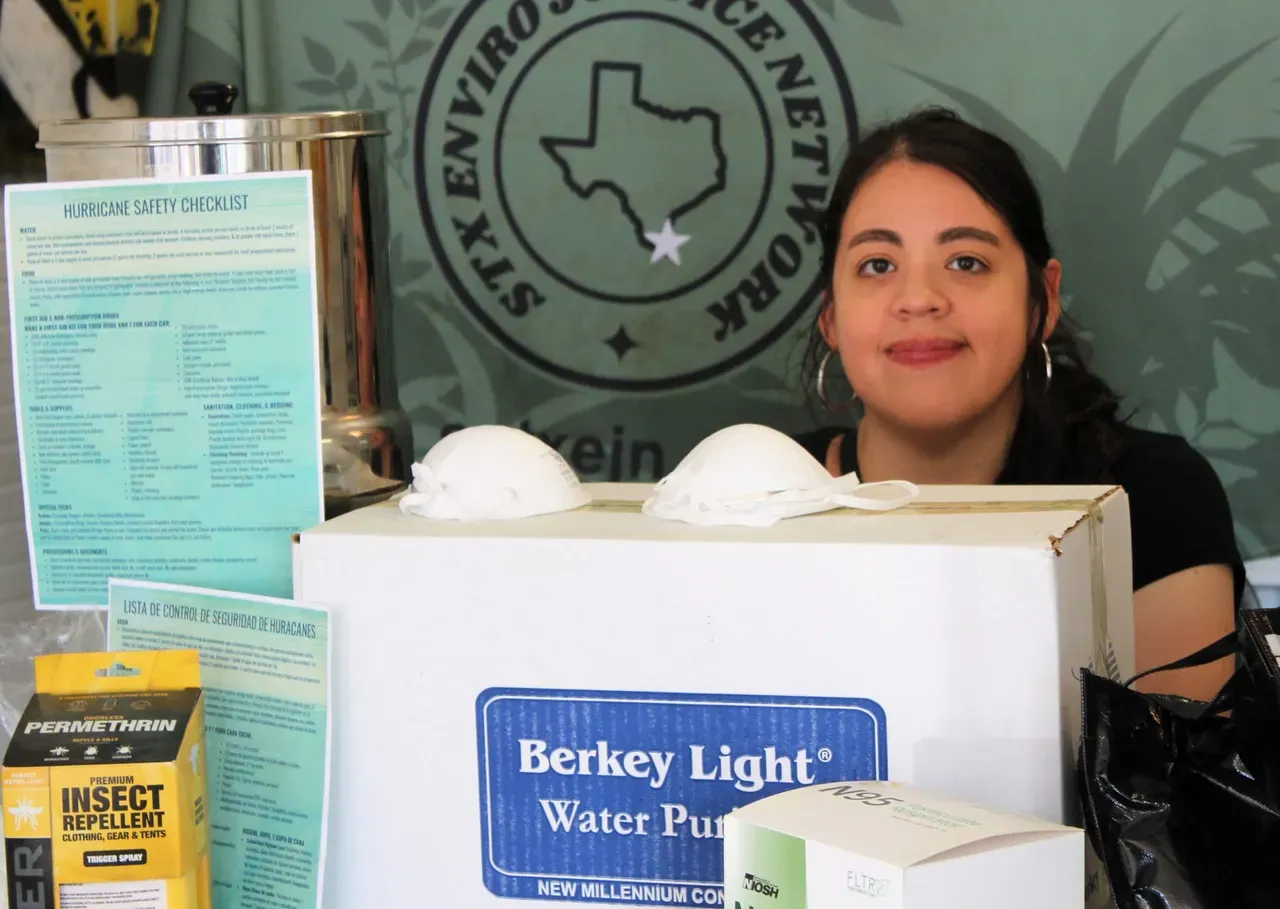
Preparamos kits de emergencia para nuestros vecinos del Valle del Río Grande — se utilizan para su supervivencia diaria
A medida que las «crisis» climáticas afectan cada vez más a las zonas más prósperas de Estados Unidos, se extienden como una sombra sobre esta región fronteriza.
Bekah Hinojosa | Deceleration
En un día típico soleado del sur de Texas, fui a hacer una compra rápida al H-E-B, el súper cerca de mi departamento en Brownsville, Texas. Estaba dando una vuelta por la tienda y, justo cuando estiré el brazo para agarrar unas salchichas del congelador, todo oscureció ante mis ojos.
«¿He muerto?», pensé. «¿Es esto el más allá?».
Cuando oí los gritos de otros clientes y se encendieron las luces, vi las caras preocupadas de la gente. Esto no fue para nada la primera vez que viví un corte de electricidad en Brownsville, una de las muchas comunidades del Valle del Río Grande, que en si abarca cuatro condados a lo largo del río Grande/Bravo y del golfo de México. El Wall Street Journal suele referirse a esta región entera, en la cual viven aproximadamente 1,43 millones de habitantes, como una de las más pobres del país.
Brownsville ha sido recientemente clasificada como la segunda ciudad «más necesitada» de Estados Unidos. Los impuestos no se reinvierten de forma fiable en laconstrucción de infraestructuras básicas. En cambio: nos encontramos con muros fronterizos de miles de millones de dólares.
Se producen cortes de electricidad debido a ráfagas de viento, tormentas o un consumo elevado durante épocas de temperaturas extremas.
Video
Subscribe to Deceleration on YouTube.
Corpus Christi, Texas, is hurtling toward a potentially disastrous 'Day Zero.' Years spent privileging the water wants of incoming heavy industrial users over the security of the hundreds of thousands of local residents of this seaside city got us to this point. Gaige Davila, of Deceleration's Coastlines/Faultlines newsletter, wrote about the tensions over water use two years ago. He brings that investigation current with this deep conversation with Corpus resident, instructor, and sociologist Isabel Araiza of the community organization For the Greater Good.
“If Corpus can rise up … and fight billionaires and an authoritarian governor and have the audacity to say 'No'—that has them quaking in their boots.” — Isabel Araiza
Reporting

US Drivers Bearing Brunt of Trump's War on Iran—Not So Much in Nations with More Renewables
“The only real energy independence from the Middle East is renewables,” said one policy expert.
Stephen Prager | Common Dreams
Average gas prices in the United States are quickly climbing toward $5 per gallon this week as US President Donald Trump’s war with Iran shows little sign of resolution.
Where average prices were about $2.98 the day before the war’s launch, they had shot up to $4.48 as of Tuesday, according to AAA’s gas price tracker, as Iran’s restriction of ships traveling through the Strait of Hormuz has squeezed global oil shipping and the shipping of other fuel sources like liquefied natural gas (LNG), causing global price hikes.
And while Trump has touted America’s supposed “energy independence” as an ace in the hole, achieved by ratcheting up fossil fuel production while canceling solar and wind power projects, data shows that the US has been hit harder by the price shocks than any other major economy in the world, with those that have embraced renewable energy being especially resilient.