Welcome to Deceleration In Depth, where we are growing solutions for an overheating world. We highlight the latest global, national, and regional developments in climate and environmental justice to better inform local action. Deceleration is rooted in San Antonio and the South Texas bioregion but our concerns and enthusiasm are broad. Pitch us your story idea at editor@deceleration.news.
- Click any story below to log in to our new website
- Become a paying supporter today—with benefits!
- Review Deceleration on Apple Podcasts or Facebook or ... wherever.
- Forward this email to friends; grow the work.
- Subscription info at the bottom of every email.
What do you want us to cover next? Members may leave a comment below.
Reporting
After the Hunger Strike, an ‘Unreasonable’ Woman’s Battle Against Dow Goes On
Four decades into her crusade against Texas petrochemical plants, a retired shrimper remains determined to fight the largest chemical company in America.
Dylan Baddhour | Inside Climate News
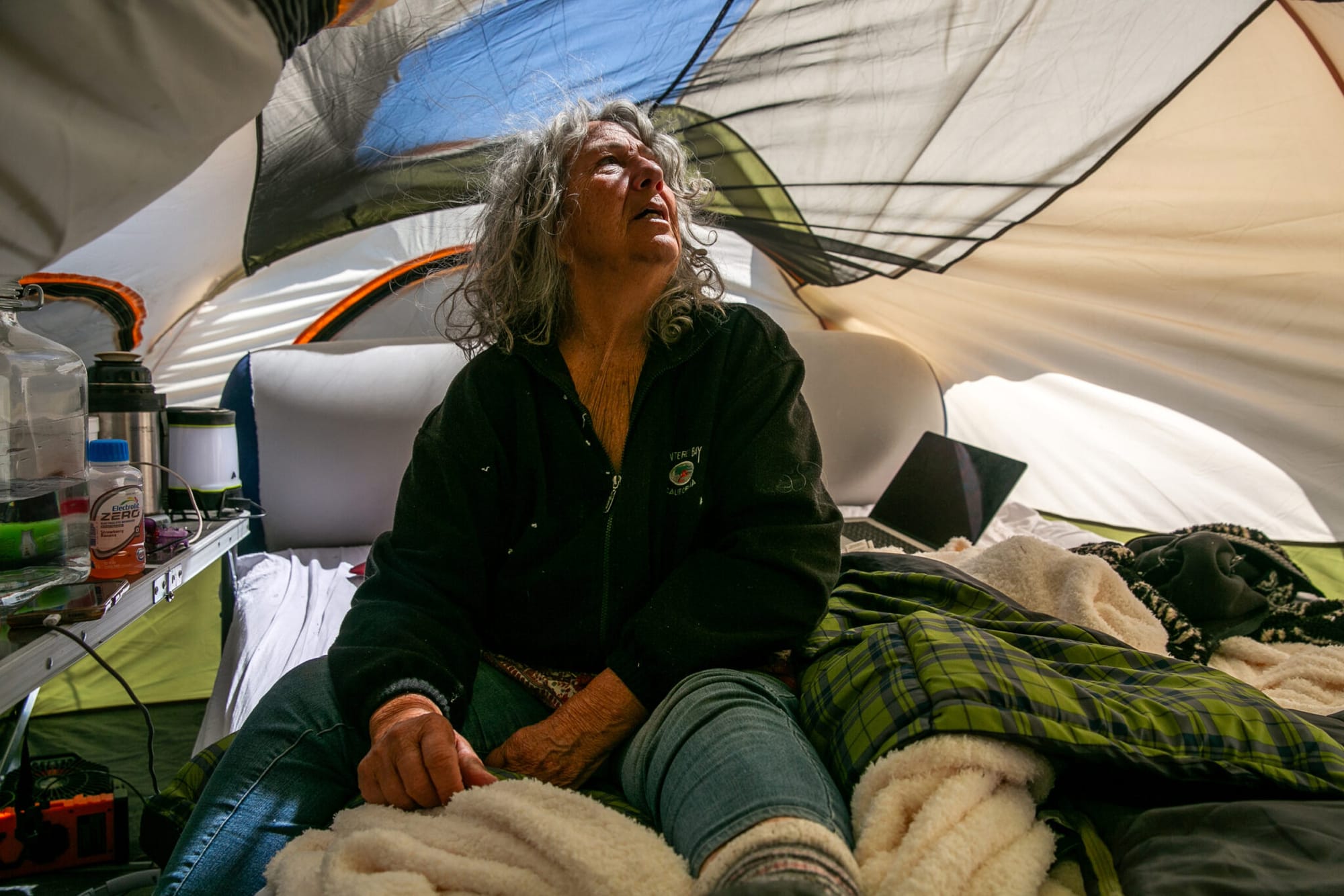
SEADRIFT, Texas—All day, Diane Wilson sat in a ditch outside a chemical plant here on the Gulf Coast of Texas, waiting to see if sheriff’s deputies would show up to run her off. When they didn’t, she returned the next morning, set up her tent, settled in and stopped eating.
Wilson, 78, watched the day go by, then spent the night and watched another.
By the fourth morning, her craving for food was fading. At twilight in early March, she crawled from her tent to the deafening screech of train breaks, pulled out her earplugs and grabbed a marker to update her sign.
“Hunger Strike: Day 4,” read the poster hung on the side of her truck. Beside it flapped a banner her grandkids had painted. “No Nuclear. No Nurdles,” it said.
With a solar-powered laptop on a fold-out desk, Wilson began drafting her demands for Dow, the largest North American chemical manufacturer and the operator of the 4,700-acre complex outside her tent, about two hours southwest of Houston.
After five days without eating, she marveled at how much energy writing required.
Reporting

Collaboration in a Time of Climate Crisis—It's Complicated
'A Conversation of Climate, Community, and Collaboration' keynote closed Day One of the South Central Climate Resilience Forum being held in San Antonio, Texas, this week.
Greg Harman | Deceleration
Governmental institutions are being hollowed out and globally significant research centers shuttered. Much of the private sector has been cowed into obedience by and to a rising authoritarian regime. Funding flows toward climate-dedicated nonprofits have been dramatically reduced.
This is the political backdrop to a three-day convening being held in San Antonio, Texas, this week for governmental employees, academics, nonprofit leaders, private-sector technical experts, and community members across a five-state region. The South Central Climate Resilience Forum (SCCRF) comprising the member states of Arkansas, Kansas, Louisiana, Oklahoma, and Texas, is intended to foster “meaningful dialogue and action” toward climate adaptation and resilience efforts that may be severely hobbled but are ongoing in many critical sectors.
Peppering presentations were oblique references concerning threats to ongoing research or funding sources in jeopardy, but mostly discussions and presentations unfolded with an agreeable neglect. The topics under discussion this week are massive: rising extreme heat and the corresponding public health emergency; the hundreds of lives swept away in the recent Hill Country Floods; punishing drought and disappearing water supplies; the collapse of global biodiversity.
While so many of the attendees were clearly doing their best at what they do best, that is, managing crisis, Colette Pichon Battle, founder of the unapologetically radical Louisiana-based environmental justice organization Taproot Earth, tacked directly toward the essence of the dilemma stalking the sessions here.
“The system does not work. It does not work if what you care about is humanity, you know, viability of community,” Battle said on a Wednesday panel on the topic of community and collaboration. “We have to knock this system down and build a new one.”
Events
 Deceleration Staff

Sat., April 18, 2026 (Dilley, Texas)
Deceleration Staff
Sun., April 19, 2026 (San Antonio, Texas)
ICE Watch
ICE Watch: The Master Plan to Fill Detention Centers
How Trump's plan for a million deportations year hinges on targeting non-violent, non-offenders, and asylum seekers.
Roxana Rojas | Deceleration
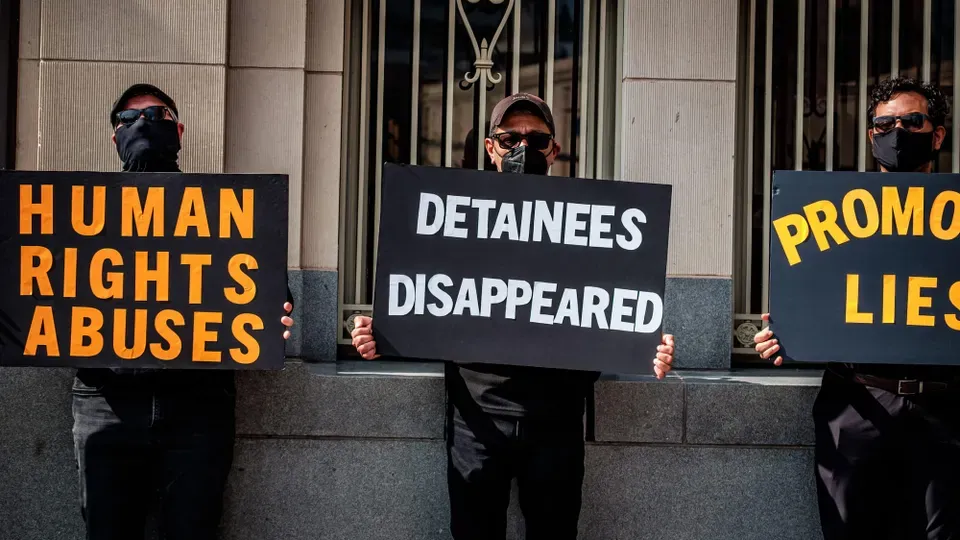
While people across the country continue to fight the expansion of immigrant detention nationwide, so too does the Trump regime’s commitment to the promised largest deportation action in U.S. history with a goal of a million deportations a year. Hiring fairs and recruitment efforts across the country continue to draw many, with the most recent events even luring in prospects with free Spurs tickets to a three-day U.S. Customs and Border Protection career expo in San Antonio, Texas.
With the December 2026 deadline for Texas sheriffs to sign onto 287(g) agreements with ICE, effectively granting local cops the powers of federal immigration agents, Texas is already ahead of the curve nationally with 361 agreements active in 205 of the 254 total counties. That’s more than 80 percent of the total counties in the state, placing Texas second only to Florida, which has 370 such agreements in place. These agreements include municipalities, state agencies (such as the Department of Public Safety, in the case of Texas), and counties operating jails. In Florida, even university campus police have entered into these agreements.
The federal data no longer lists entities with pending agreements. This makes it more difficult for communities to anticipate if an agreement is in the works or what model will be adopted. It is important to note that under the recent Texas state law that codified cooperation between ICE and state and local law enforcement, SB8, only sheriffs are required to enter into 287(g) agreements. That didn’t stop 68 municipalities (which include city and township police departments) and four state agencies from voluntarily signing on.
So what is a 287(g) agreement and how does it impact your community? Well, the impact will be determined by the type of agreement model. There are three primary models listed below as described by ICE:
- Jail Enforcement Model: This allows officers to identify and process removable aliens who have pending or active criminal charges while those individuals are in local custody. This model operates primarily within the jail setting.
- Task Force Model: This model allows trained officers to exercise limited immigration enforcement authority while performing routine police duties or participating in ICE-led task forces. ICE oversight remains in place, but this model expands immigration enforcement activity beyond jail intake.
- Warrant Service Officer Program: The WSOP allows local officers to serve and execute administrative immigration warrants on non-citizens already in custody.
Analysis

Democracy Lessons: How the People Defeated Orbán
Understanding how Hungarians ousted Viktor Orbán offers a critical case study for everyone doing the unglamorous but essential work of democracy defense.
Daniel Hunter | Waging Nonviolence
On Sunday night, the streets of Budapest were filled. Tens of thousands of Hungarians poured into the streets along the Danube River, singing folk songs and waving flags celebrating the end of Viktor Orbán’s rule. A young man named Mark Szekeres, his face painted with the colors of the Hungarian flag, told CBC News:
“This election was about a clash of civilizations. Either you belong in a Western-type democracy or an Eastern-type dictatorship.”
For 16 years, Orbán controlled the country as the classic strongman. Orbán’s electoral defeat was sound — so much so that he conceded defeat before all the votes were counted. Péter Magyar’s Tisza Party captured more than 53 percent of the vote and approximately 136 of 199 parliamentary seats, a supermajority decisive enough to undo the constitution and other laws that Orbán rewrote.
The turnout alone was a verdict: nearly 80 percent of all eligible voters.
For us fighting democratic backsliding, this is exceedingly consequential. Orbán wrote the authoritarian playbook now being used by Donald Trump and actively exported his approach, even giving Hungarian tax dollars to fund CPAC.
The people’s playbook used to oust him is a critical case study to learn from — from how the opposition party organized in Orbán’s strongholds, to how they made repression backfire when he overreached, and more.
Video
How do communities in the south-central U.S. overcome challenges to build resilience to weather and climate impacts? How do we work together to accomplish shared goals and effectively drive community resilience work forward? This keynote event will bring together diverse speakers across sectors to explore these themes. Through stories of resilience and perseverance, the conversation will highlight both the barriers communities face and the opportunities to address them. Our diverse speakers will share their experiences and lessons learned to inspire actionable ideas for strengthening climate resilience and advancing collaborative efforts to reduce risk and increase preparedness.
Opening Day Keynote at South Central Climate Resilience Forum.
Speakers:
- Colette Pichon Battle (Taproot Earth)
- Nicole Alderete-Ferrini (City of Pecos, TX)
- Adam Parris (ICF)