

Support Deceleration’s reporting project at WILD12, a global gathering dedicated to centering Indigenous leadership and concepts in conservation and rewilding efforts the world over.
Greg Harman
Roughly every four years the World Wilderness Congress convenes to assess the state of the planet and the health of the full and wondrous web of life that fills the Earth. Each gathering brings new causes for alarm and urgency. But each convening also produces new reasons for hope. These are found in the growing networks of resistance and regeneration that the event fosters among Earth guardians working for wild nature and all of our related species. In 2009, I traveled to Mérida, Yucatán, Mexico, to cover WILD9 for the San Antonio Current and Environmental News Network.
The result of that 2009 gathering was the Nature Needs Half movement calling for half of the planet’s lands and waters to remain wild in order for the Earth to continue Her life-sustaining functions. That declaration found a popular audience in 2016 when famed biologist E.O. Wilson published Half Earth. In 2020, it was clear that the 2009 conference call had filtered up to the Biden Administration as it immediately broke with the Trump years of “Drill, Baby, Drill” declaring the goal of connecting and conserving 30 percent of the US lands and waters by 2030.
Deceleration, in our small way, has helped to promote and defend the Half Earth agenda, too, in part by calling out efforts rooted here in Texas to undermine the movement for a habitable planet.
Much of that has involved pushing for a just transition to cleaner energy economy and utility justice. But, in a land that is almost entirely private property, we’ve also defended the rewilding vision. (Read: “The Culture Warriors Out to Destroy ‘America the Beautiful.”)
WILD12 & WILD History
The history of WILD is inspiring at its root: growing out of an illegal friendship between two men in Apartheid South Africa who were then determined to protect the Southern White Rhino. A potentially fatal encounter helped open the white friend’s eyes to both the moral wrongness of white supremacy but also the shortcomings of Western models of conservation. In a remarkable encounter involving a Zulu shrine and a Black Mamba, the white man learned from his Zulu friend that the land and all its inhabitants were a fullness that he had failed to previously recognize.
“[Magqubu Ntombela] told Ian [Player] that history is not a mere succession of events or people. It is the land. It is the trees. It is the birds and the animals and the rivers and the insects. They all form a part of history and you acknowledge them all the time by showing respect.”
This fundamental cosmological truth long held by many Indigenous Peoples is today a paradigm shift ongoing and accelerating around the world in an time of ecological crisis.
From its beginnings, Deceleration has endeavored to put this respect for all beings at the forefront of our work. This is why we continue to advocate for Indigenous leadership over development decisions of sacred sites in our very colonial home city of San Antonio. This is why we continue to challenge the abusive relationship of City leaders toward our wild feathered relatives.
It is why Deceleration is headed to WILD12—the first World Wilderness Congress being convened under tribal authority.
And it is why we are asking for your support.

Where Deceleration Fits
As Deceleration was first taking form around 2016, we answered the call to support the Standing Rock Sioux Tribe’s stand against the Dakota Access pipeline. While supporting solidarity actions across Texas we traveled to document what became a global fight at Oceti Sakowin Camp, just outside the Standing Rock Native American Reservation.
During that struggle, representatives of the Seven Council Fires of the Great Sioux Nation reconvened for the first time in 150 years. Today, the Sicangu Lakota Treaty Council of the Rosebud Sioux Reservation and on behalf of the Oceti Sakowin, the Seven Council Fires, are calling together this new wilderness congress.
Phil Two Eagle, executive director of the Sicangu Lakota Treaty Council, has invited the world to come “witness what is happening to the land and to listen to it speak.”
Our Proposal
Deceleration hopes to bring three representatives to listen deeply. We also hope to document reliably as Indigenous leaders from around the world join their partners in conservation science, arts, and activism to set the agenda for protecting and rewilding the planet with Indigenous leadership.
We invite you to donate at whatever level you are comfortable. And please include a note to let us know what about the program topics you would like to see covered. We will do our best to represent our community in a good way and return with stories and inspiration to help carry us through the coming months and years.
Deceleration has committed $2,500 toward this trip. That just covers travel and lodging and meals for Editor Greg Harman and Events Calendar Editor Ceiba Ili.
Funds raised over our goal of $1,500 will be set aside for future story projects in the Greater San Antonio bioregion (such as highlighting the Great Springs Project linking greenways from Austin to San Antonio) or Gulf Coast (where we hope to document deeply the issues around Elon Musk’s expansion and operations at SpaceX).
Our Team
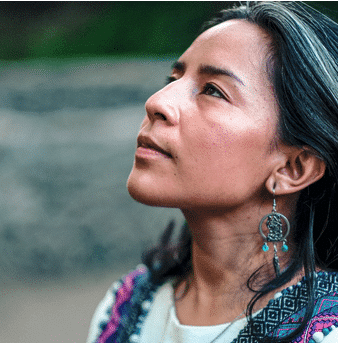
Deceleration Events Calendar Editor Ceiba Ili is a cultural educator and musician from Honduras who skillfully incorporates indigenous instruments and languages into her music. Her work bridges the worlds of migrant communities and indigenous rights and promotes environmental justice. She has helped lead on Deceleration community events (including our recent Heat Emergency forum) and provides translation services.
“Coming from a family that has faced ongoing displacement due to global warming, violence, and witnessing the devastating loss of wildlife, including the decimation of the jaguars in our homeland, I feel a profound responsibility to be part of this conference. The knowledge and strategies shared at WILD12 are crucial for those of us who have experienced the direct impacts of environmental and social challenges.” —Ceiba Ili
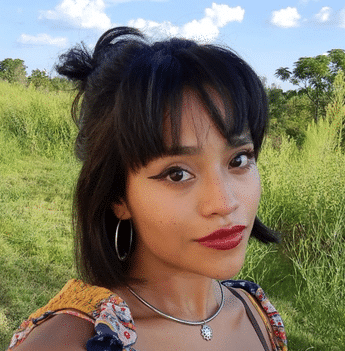
Deceleration Contributor Ariana Ramirez
is a student of urban gardening, farming, Mexican-American foodways and food sovereignty movements. She contributes to Deceleration’s calendar and events planning (including our recent Heat Emergency forum) and recently completed a summer internship with Southwest Workers Union dedicated to helping mitigate the urban heat island effect.
Ramirez is attending as a Society of Native Nations Youth Media Liaison. Thanks to Society of Native Nations for sponsoring her travel costs. Learn more about their mission here.
Ariana Ramirez sees WILD12 as a unique chance to connect with Indigenous elders and others who live in harmony with the land outside colonial systems. She is eager to learn how youth like herself can play a crucial role in the solutions for our Mother Earth.

Deceleration Editor/Founder Greg Harman is an independent journalist and community organizer who has written about environmental health and justice issues since the late 1990s. His work has appeared in places such as the Austin Chronicle, The Guardian, Indian Country Today, Yes! Magazine, Houston Press, and the Texas Observer, among others. His journalism has been recognized by the Association of Alternative Newsweeklies, Houston Press Club, Lone Star Chapter of the Sierra Club, Public Citizen Texas, and Associated Press Managing Editors. He holds a bachelor’s in English from Texas Wesleyan University and a master’s degree in International Relations (Conflict Transformation) from St. Mary’s University.
We will be supported by the home team, who will be reporting and editing on the convening from a distance.
These include:
Marisol Cortez, Co-Editor of Deceleration. As a writer and community-based scholar, her work is grounded in Chicanx and decolonial movements for justice and earth protection in South Texas. Beginning her political life as a poet, she later participated in grassroots campaigns for environmental justice in San Antonio, which inspired her doctoral research at the University of California at Davis. After graduating with her Ph.D. in Cultural Studies, she has walked between academic, activist, and artistic worlds in an effort to make the labor of thinking and writing useful to on-the-ground struggles in her home community of San Antonio, Tejas. She is author of the award-winning cli-fi novel Luz at Midnight (FlowerSong Press 2020) and I Call on the Earth, a chapbook of documentary poetry about the displacement of Mission Trails Mobile Home Community.
Deceleration contributor Danielle López, PhD (two spirit) is a born & raised Nepantlera from the settler occupied medicine gardens of Aztlan, Coahuiltecan, Ndé Kónitsąąíí – Lipan Apache, Esto’k Gna (Carrizo/Comecrudo) territories, better known as the Río Grande Valley of the Transfronteriza at the U.S-Mexico Borderlands. They are a seventh generation curandera in practice, activist, researcher, and educator of the spiritual literacy of their ancestral medicine. Centering curanderismo, their Border Arte-scholarship focuses on empowering communities via their ancestral wellness praxis. They promote the collaborative plática of all healing cultures to foster pathways for spiritual reparations. Their autohistoria-teoria is archived at the Latin Smithsonian Museum, the University of Houston Center for Public History, and the Indigenous People’s Caucus of Texas.
Deceleration contributor James Courtney is a freelance journalist in San Antonio with particular interests in arts and culture, social justice, and environmental issues. He also is a poet, a teacher, and a proud girl dad.
The WILD12 Agenda
WILD12 organizers have set an ambitious agenda.
The write:
“Traditional cultures are the best stewards of biodiversity and wild places. Close to 80% of Earth’s remaining biodiversity are in traditional Indigenous cultural areas as well as nearly 40% of the wildlands. WILD12’s organizers wonder, why traditional cultures are so adept at keeping the biosphere intact? And whether or not there is something mainstream wilderness conservation can do better if we place traditional leadership at the center of our movement?”
Before the convening breaks up on August 31, WILD12 conveners hope to produce:
- An official declaration reinterpreting wilderness through an Indigenous lens
- A globally accepted framework for tribal-led wilderness designations on traditional lands
- A declaration urging the restoration of IP lands to meet the Half spatial target
- A platform to help unify the restoration of wild bison to the Northern Great Plains

To Close
Deceleration’s WILD reporting project will have support in San Antonio from Deceleration Co-Editor Marisol Cortez and freelance contributors who have agreed to provide daily event coverage for the week of August 26-August 31.
We recently documented the passage of the Peace & Dignity Journeys runners weaving their way through Texas with a message of Indigenous solidarity and hope for all peoples to rekindle proper relationships with the land and one another. We are convinced that the key to navigating Earth crisis in our times resides in prayers and actions such as these.
As such, we’ll be looking to the organizers, panelists, and elders of WILD12 to answer questions like: What does talk of wilderness mean for a state like Texas, where 96 percent of land is privately owned? And: How can a unified plan to restore the buffalo across the Great Plains change land stewardship in our state?
Supporters paying $10 or more will be invited into a planning meeting on Friday, August 23, 2024, to discuss the venture and all we hope to accomplish.
-30-


