Happy Thursday, everyone. With the EPA razing its own ability to regulate greenhouse gases and AI data centers ignoring what clean air rules still ostensibly remain, Black communities face retrenched threats to their health and survival.
Of course, for anyone familiar with environmental justice, this is, unfortunately, nothing new. But confronted with these constant challenges, Black people are no strangers to fighting against the institutions that jeopardize their health.
This week, we’re taking a look at a new, short documentary that unpacks this centuries-long struggle and what Black communities are doing today to “build a way out of no way.”
If this newsletter speaks to you, be sure to share it with your friends, family, and community. Join as a paying supporter and engage in the comments below. Let me know what you want to see in our next newsletter!
Happy reading,
Syris Valentine
'Grasping at the Roots' Highlights Violence Suffered by Black Communities—But Also Their Resistance and Resilience
Many, if not most, Americans today understand that the United States would not—could not—exist but for the enslavement of millions of Africans over the span of centuries. Emancipation, however, did not mean the end of oppression for Black people. Instead, it exposed them to new forms of exploitation like sharecropping and chain gangs, both of which helped the post-Civil War South to rebuild its economy.
Geography also imposed no constraint on oppression.
As Black families fled north looking to escape racial terror and access new opportunities, the communities they landed in became the dumping grounds for the toxins, residues, and wastes produced by the swelling fleet of factories that the United States built out during the wartime booms of the 20th century.
Black people have long been the pawns America has manipulated in its gambit for global economic hegemony, sacrificing entire communities if such violence would allow some piece of the country’s industrial army to advance down the ranks and assert dominance in the never-ending geopolitical chess match played between world powers.
Filmmakers Keenan Rhodes and Leah Derray explore the arc and impact of this legacy in the first part of their new documentary, Grasping at the Roots, produced by Climate Justice Alliance. The film combines historical footage, archival photographs, fresh B-roll, and on-location interviews with Black environmental justice leaders from Detroit, Michigan; Indianapolis, Indiana; Richmond, California; and Jackson, Mississippi.

In just seven minutes at the beginning of the documentary, Rhodes and Derray show in moving detail how, when you look at American history through the lens of Black communities “you see a progression from different forms of brutalization and extraction,” as described by Doria Robinson, executive director of the Richmond-based food sovereignty organization Urban Tilth.
Other documentarians investigating environmental racism, particularly those who see themselves as interested outsiders, may be inclined to leave the story there, as one of trauma and tragedy. But Rhodes and Derray—themselves activists who have suffered the effects of environmental injustice in their own lives—turn their lens toward the resilience and resistance that Black people have demonstrated across generations to reveal the tenacity and courage they continue to display today.
What we know as the environmental justice movement today, the documentarians show, was born out of Black communities fighting for survival in the face of dangerous pollutants.
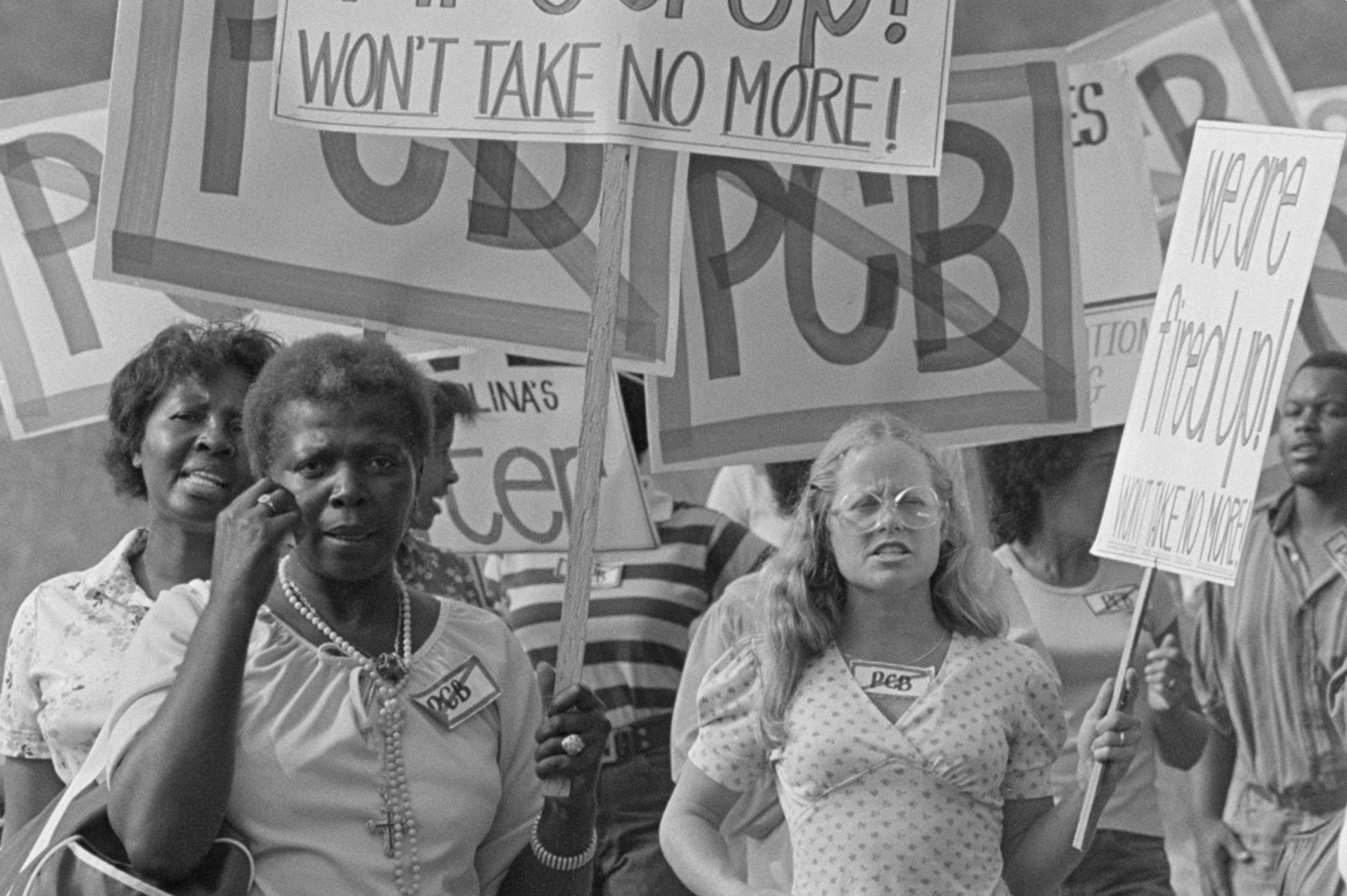
“The term ‘environmental racism’ was first circulated in mass media in 1982,” Rhodes says in a voiceover. At the time, Black and low-income residents of Warren County in rural North Carolina rallied in protest against the prospect of becoming a dumping ground for of soils contaminated with chemicals known to cause birth defects.
Rhodes and Derray reveal different corners of the country where people continue to expand this movement in the present to protect their communities.
They toured 48217, a Detroit neighborhood that identifies by its ZIP code, where the majority-Black community of 7,000 residents is home to more than three dozen polluting facilities. Around one major polluter for every 200 people. As local activist Theresa Landrum showed them, only a chain link fence separates homes in one part of 48217 from mounds of slag wastes piled two stories high by steel factories nearby.
They flew to Jackson, Mississippi, where boil-water notices were a common trend even before the Pearl River overflowed its banks in August 2022—just two weeks after Rhodes and Derray visited to film their interviews. The flooding overwhelmed the city's largest water treatment plant and sparked a crisis that remains unresolved three-and-a-half years later thanks to the mismanagement of $600 million appropriated to revive the city's laggard infrastructure.
They visited Richmond, California, where, on August 6, 2012, a fire broke out at a Chevron refinery that forced residents to shelter in place, produced flames reportedly visible from San Francisco, and eventually sent 15,000 people in search of medical attention.
Yet, Grasping at the Roots isn't just about the strength that Black communities must summon to survive in the sacrifice zones they’ve been condemned to. When Rhodes and Derray first conceived of the documentary, their intent was always to highlight the ways that Black folks are building alternatives and inventing solutions to the injustices before them.
“I like to reimagine what our city could possibly look like,” Richmond resident Najari Smith, executive director of Rich City Rides, says in the film. “This is our environment.”
In the documentary’s third and final part, "Building the Future," that is what the filmmakers focus on: how Black community leaders around the country, as Rhodes says in the film, "continue to build a way out of no way."
"You've got to fight to make this world the best it can be for you," Detroit activist Darryl Jordan tells the filmmakers. "And if that ain't happening: Rise up; fuck this shit.”
In Richmond, Smith's organization has aimed to expand access to bikes, repair shops, and the protected infrastructure necessary to make Richmond a bike-friendly city. Not only does this help get cars off the road—thereby addressing a key cause of climate change and a common source of asthma-inducing pollution in Black communities—their work also helps to promote the health and wellbeing of the community by getting more people outside and active.
Meanwhile, in the Mississippi capital, Cooperation Jackson has spent over a decade fostering a network of Black-led, worker-owned cooperatives to create a robust, local solidarity economy that can afford the city’s Black residents the economic power to dictate their own destiny. The community building and economic organizing they've accomplished since their 2014 launch even allowed them to mobilize quickly during the 2022 flooding to distribute water and other resources to their community members.
Several of the organizations they highlight—D-Town Farm in Detroit, Urban Tilth in Richmond, Kheprw Institute's "Growing Good in the Hood" program in Indianapolis—share a common focus on food sovereignty and on giving Black folks, especially young folks, a chance to reconnect with land and nature. The work creates a space to support active living, emotional wellbeing, and access to fresh produce—an important endeavor given how many Black communities often exist in food deserts.
These organizations, as Robinson says in the final part of the film, "sow a lot of idea seeds as well." They help young people to envision what other worlds are possible, then work to realize them.
That is perhaps one of the most brilliant and beautiful parts of Rhodes and Derray’s film. They reveal the ways that Black people have always kept a guiding light alive, even in the midst of all-consuming darkness, and they show how this capacity has the potential to help the world to rise out of the deep-shadowed abyss into which it has tumbled.
As the credits roll, Robinson provides a parting message for future generations:
"Envision the elders that you wish you had. And then become them."
Video
Please check out the 36-minute documentary for yourself. It’s free! I promise it will be well worth your time. To help audiences get the most out of the documentary, the filmmakers have compiled a conversation guide to shape discussions should you decide to host a watch party.
Event
Creating an Economy of Care
 Deceleration Staff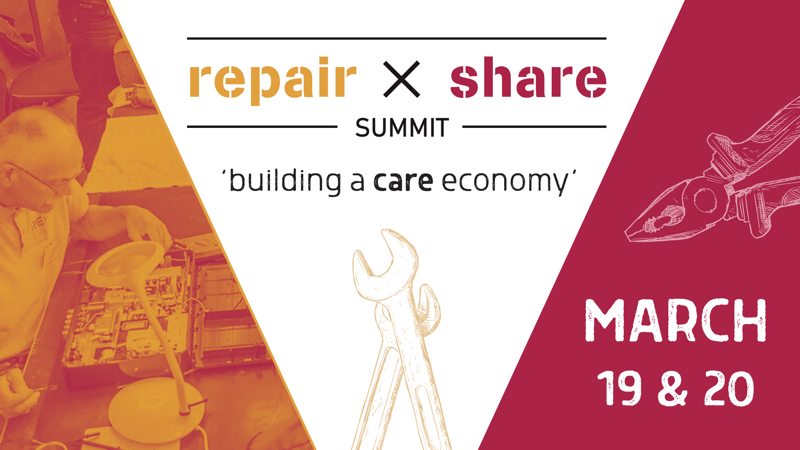
Whenever I think about a just, livable future, I often revisit the idea of the “Circular Economy”: an economy that eliminates waste through reusing, sharing, repairing, upgrading, upcycling, and so on, instead of allowing items to end up in the bin.
Next month, on March 19 and 20, Repair x Reuse Washington is hosting an online “Repair x Share Summit” with circular economy practitioners from around the world to exchange ideas and inspiration about what can be done, and is being done, to build an economy of care.
It’s free, and you can register via the link above.
News for the Future
- A new playbook for countering authoritarianism in America
- Since played-out tactics are no longer proving effective, the community-based organization People’s Action has put together a “Organizing for Democracy” toolbook that they hope will inform new ways that activists and organizations can act in concert to oppose Trump. (Convergence)
- Artists tend the embers of protest and dissent in Iran
- Three and a half years since Jina Mahsa Amini died in a Tehran hospital after being arrested for allegedly wearing her hijab improperly, Iranian artists inside and outside the country are using their work to send messages about the impact and legacy of the repressions women face in their homeland while preserving and amplifying traditions of resistance. (In These Times)
- A Black-led bank in Ohio shows the power of community-focused banking
- In 2023, Adelphi Bank in Columbus, Ohio became the first Black-led bank to be chartered in the last two decades, and at just three years old, it already has a $90M loan fund that it’s investing into Black-owned businesses based in Adelphi’s own Columbus community. (Next City)
- Worker-owned co-ops are on the rise
- According to a new report, worker-owned co-ops and democratically governed workplaces have grown by over a third since 2020 — a rate which far exceeds the pace of more traditional small businesses. (Co-operative News)
- A Maori declaration could reshape New Zealand laws
- In 2024, Maori leaders signed a declaration recognizing the rights of whales, and New Zealand’s parliament is now considering legislation informed by that treaty which would affirm the rights of whales to migrate, live in a healthy environment, and maintain their natural behaviors and cultures. If adopted, the country would have to consider whales’ rights when assessing its stance on climate action, fishing, deep-sea mining, and so on. (Inside Climate News)
- It's all good in the 'Agrihood'!
- A so-called “agrihood,” where communities are designed around farms and gardens, has the potential to improve food access, dampen heat spikes, reduce rainwater runoff, and promote biodiversity. The architecture firm Steinberg Hart has recently finished two of these neighborhoods in California. Though they come with many challenges, they offer ample promise for making cities healthier and more livable. (Grist)