

I’m a sucker for a baked treat. So the first time I heard about “Donut Economics” I immediately started craving a maple bar from the grocery store bakery. (I kinda want one right now.)
But when I took the time to learn about this idea that combined planetary limits with social guarantees, I found it made so much sense—all captured in a tidy graphic that I can wave in my friends' faces whenever I go on a now trademarked rant about capitalism and climate change.
Donut economics is all about how we ensure that everyone has food, clothing, shelter, education, etc., without destroying the Earth's biodiversity, polluting our shared lands and waters, or wreaking climate chaos.
Of course, we’re currently failing on both counts: exceeding our planet’s limits while also letting countless people fall into an abyss of poverty.
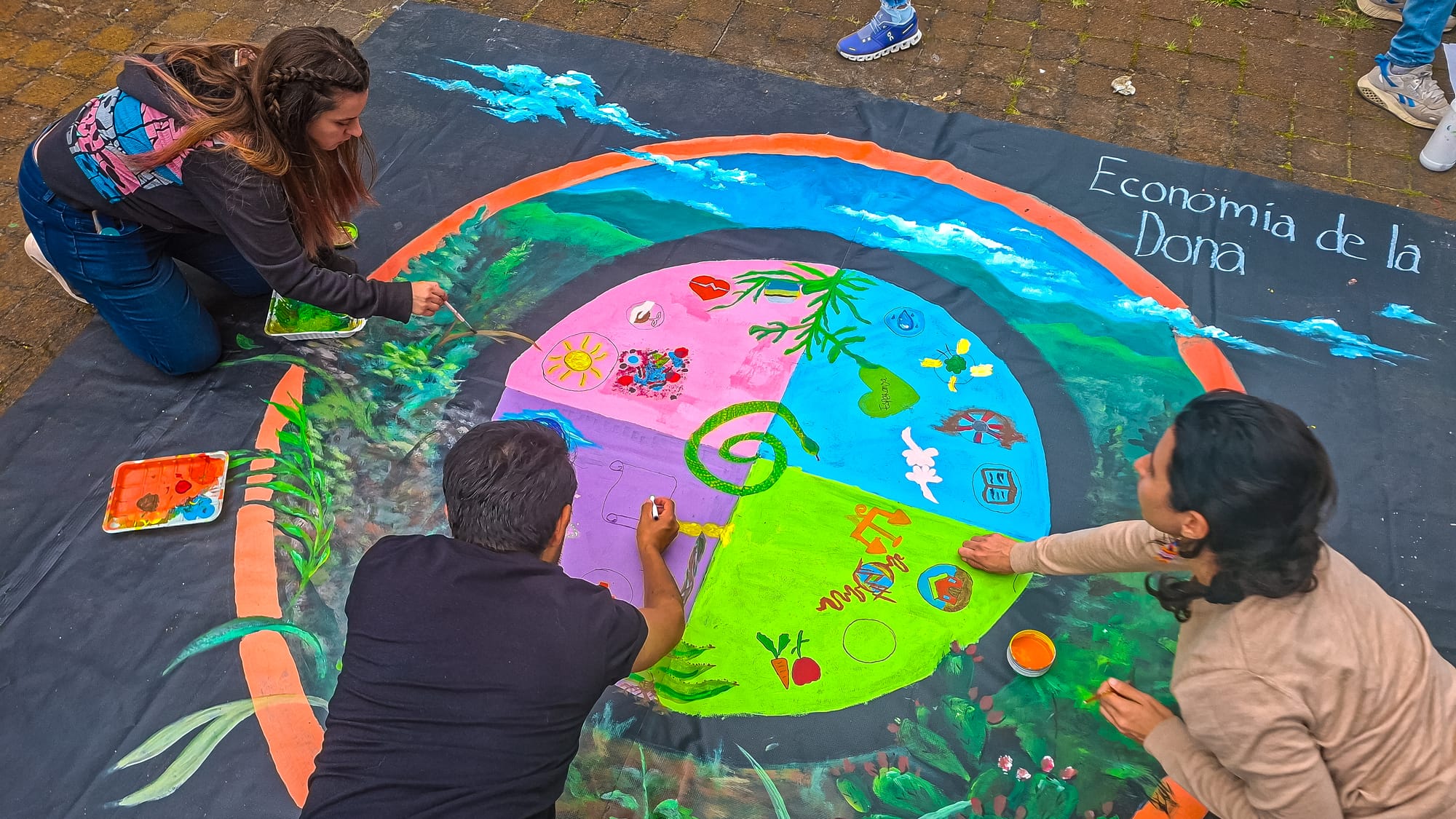
But people are organizing around the world to correct this, pushing their communities, cities, and countries to move toward the safe and just space of the metaphorical donut ring. And that’s the inspiring story I’m here to tell you about today!
— Syris Valentine
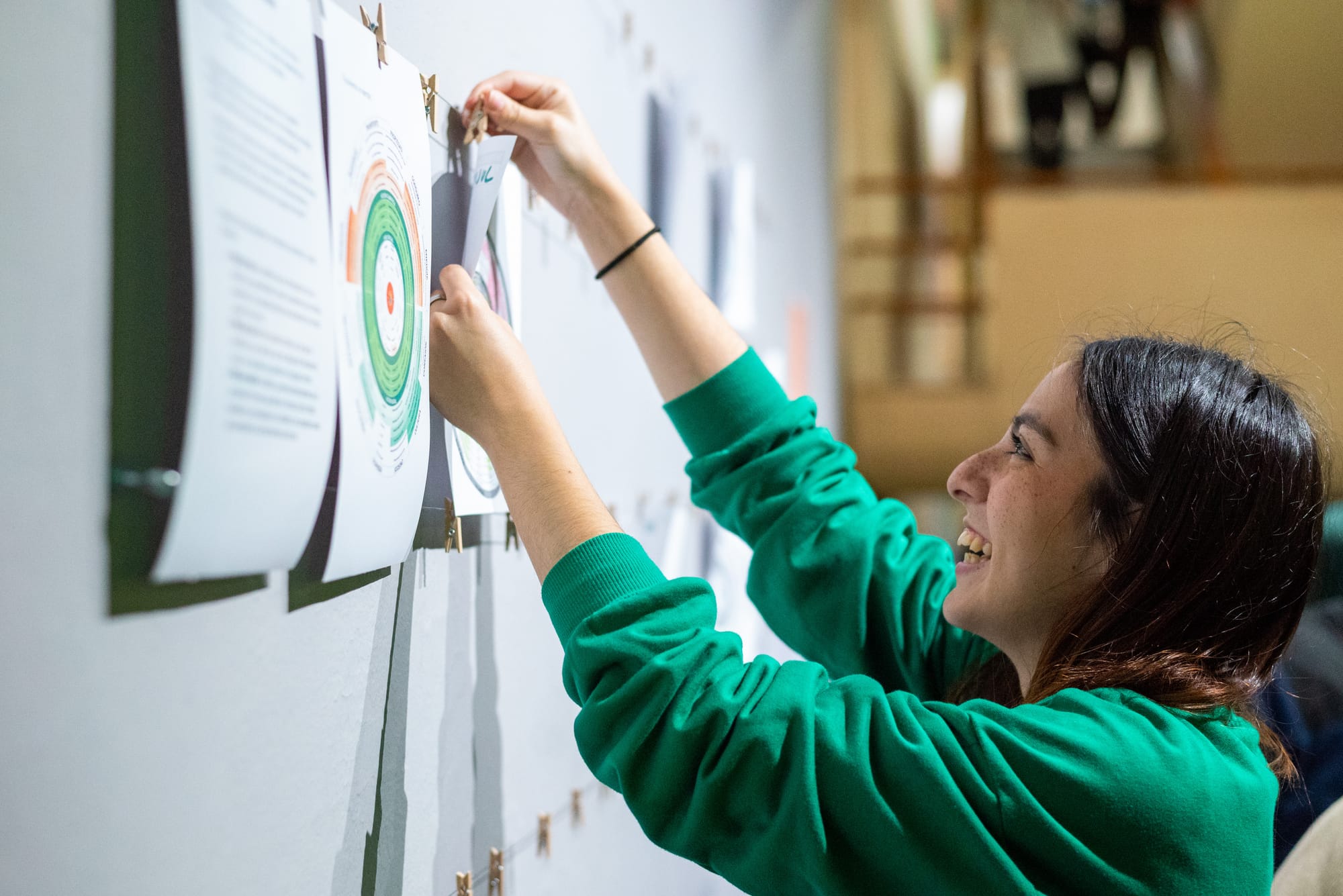
Citizen groups worldwide are calling on their cities to respect nature’s limits and meet residents' basic needs
Syris Valentine | Deceleration
In the world of donut economics, there’s a narrow corridor where we can meet everyone’s basic needs without exceeding the boundaries necessary for the health of our planet. For the past week, hundreds of organizations around the world have hosted local events for Global Donut Days 2026 to move their cities and, by extension, the world in this direction.
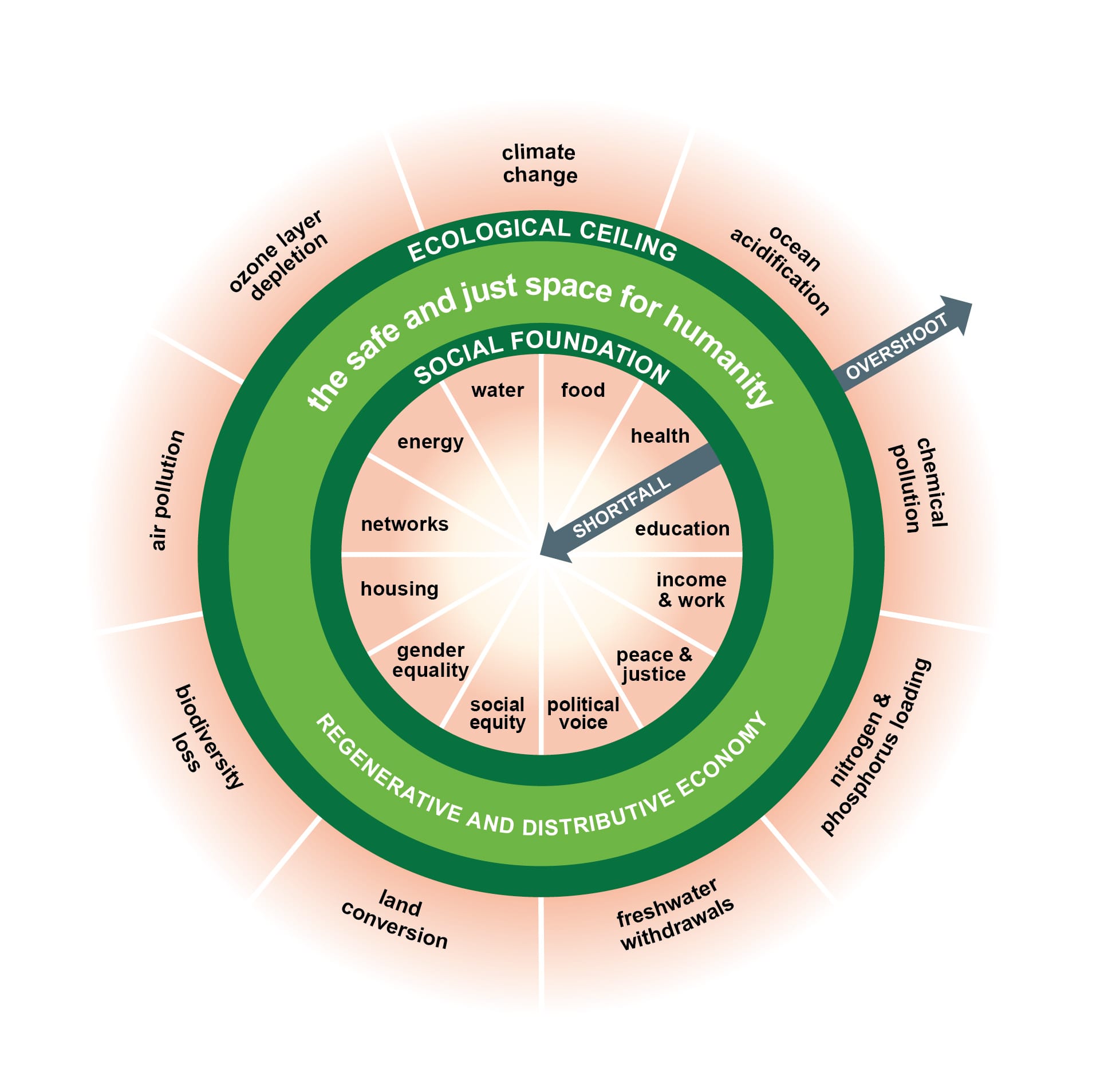
Oxford economist Kate Raworth first defined this safe corridor in a paper she published in 2012, where she put together two ideas: the fact that the planet had certain ecological boundaries that shouldn’t be exceeded, and that it was the duty of every country to provide its people with certain guarantees. The former defined the “ecological ceiling” that the economy should not surpass while the latter described the “social foundation” that an economy should raise all people above. The space between ceiling and foundation Raworth called the “donut.”
This donut is defined by 21 different indicators. Nine describe the planet’s ecological thresholds and include things like climate change, biodiversity loss, land use, and air pollution. The remaining 12 assess the state of social access to water, food, housing, health care, work, education, political participation, and more.

The idea gained global popularity after Raworth set down her ideas in a 2017 book and a condensed 2018 TED Talk. Her book was named “Book of the Year” by both Forbes and the Financial Times, and it’s been translated into two dozen languages.
The idea gained global popularity after Raworth set down her ideas in a 2017 book and a condensed 2018 TED Talk. Her book was named “Book of the Year” by both Forbes and the Financial Times, and it’s been translated into two dozen languages. More importantly, however, it’s helped to inspire a new approach to policy planning and urban development among a growing cohort of cities around the world. The evidence is slowly accumulating as to whether the idea has the strength and coherence to steer a world in crisis toward a future that is not just stable but just and humane.
Dutch Oven Donuts
Raworth developed donut economics from a planetary perspective. But even the most ecologically attuned individuals don’t live their lives on a planetary scale. Most people can grapple, however, with what it takes to reshape their city. Here is a less daunting and potentially more inspiring stage for action.
Whereas conversations about addressing the impact of endless economic growth can be quite depressing and catastrophic when viewed from the global scale, “If you look at cities, you can see a lot of movements that are foregrounding a new future in their everyday life,” said post-growth urban scholar Federico Savini. “It’s a space where you get optimistic about the future.”
Amsterdam, where Savini lives and works, is an excellent example of that optimism.
In 2020, the people of Amsterdam leveraged Raworth’s framework to reinvent itself as it navigated the shocks of pandemic. That process began by creating a portrait of the state of Amsterdam’s economy and how it fared across the various metrics of Raworth’s donut. From there, residents were able to assess the most urgent avenues for action, both socially and environmentally.
Unsurprisingly, like all major cities in highly developed nations, the lifestyles of Amsterdam’s residents produce more climate pollution, use more fresh water, degrade more land, and generate more waste than is sustainable on a per capita basis. Meanwhile, on the social side of the donut, 20 percent Amsterdammers struggle to afford basic needs after paying their rent, 40 percent are overweight, almost half are at risk of depression and anxiety, 25 percent have been the victim of a crime, and 15 percent report facing discrimination. And none of that is to mention the social and economic injustices across the Global South that Amsterdammers (like most all residents of wealthy nations) unwittingly contribute to through the goods they consume.
In a bid to rectify these shortcomings, the city government used these findings to inform its “Amsterdam Circular Strategy,” a suite of actions that aimed to use the strategies of the circular economy to promote an atmosphere of innovation, inclusion, and prosperity in the city. It even used that strategy as the basis for the wholesale redevelopment of a former industrial district on the northside of the city called Buiksloterham.
The project will use publicly owned affordable housing, greenways, biking infrastructure, and mixed-use buildings to transform Buiksloterham into a nearly self-sustaining community with fully electric buildings powered by 100 percent renewable energy; water systems that recover, treat, and reuse waste water and rainwater; and a comprehensive compost network to transform food waste into organic fertilizer for urban farms and gardens that could meet up to a third of residents dietary needs.
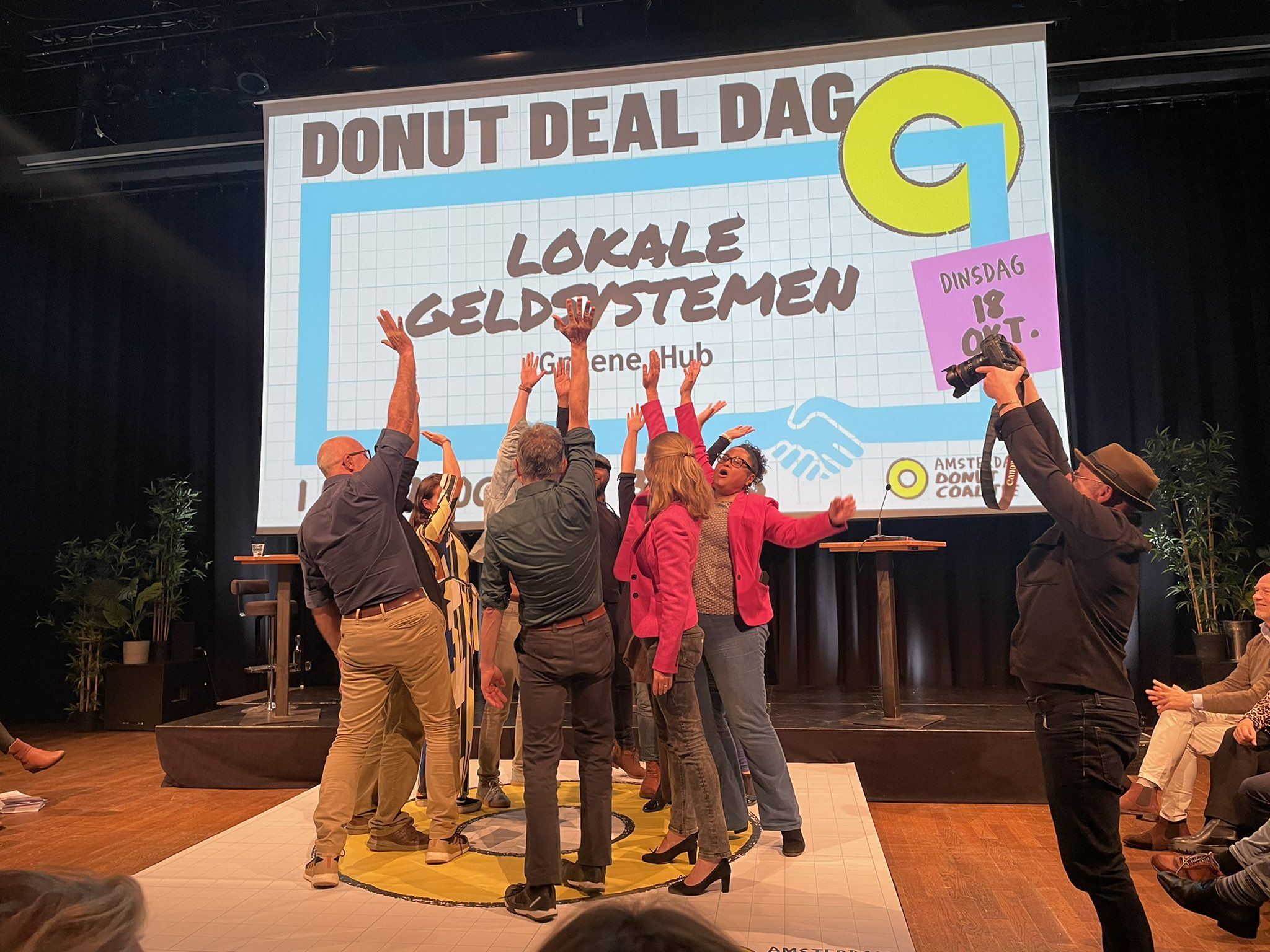
In many ways, however, this vision of a donut economy for Amsterdam was largely a cultural campaign, according to Savini, who is a professor at the University of Amsterdam. The city has long been a socially and environmentally progressive city, and much of the visioning around circularity and such were already underway before they adopted the donut. The Amsterdam Donut Coalition “basically gave visibility to things that were already existing,” Savini said, “and it reframed those existing practices within a bigger project.”
Suddenly people who’d never felt a reason to work together began to collaborate, envisioning possibilities they hadn't before.
“That's actually a very good way to do politics,” Savini added: Build a narrative that unites divided communities under a common banner, mobilizing them toward shared goals.
An Alignment Problem
Despite a transformative vision that, at its core, aims to counter today’s dominant ecocidal ideology of endless economic growth, Amsterdam’s strategy has struggled to actually uproot the centrality of the growth that drives so many ecological ills. Most other cities and towns that are experimenting with donut economics face the same struggle.
“The current strategy is mainly about introducing new practices to the already existing economy, rather than breaking down old and unsustainable practices,” a trio of scholars noted in their paper investigating the successes and shortcomings of Amsterdam’s donut efforts.
That has been a common criticism of donut economics among other post-growth scholars. In her book, Raworth describes the framework as “agnostic to growth”; It is neither pro- nor anti-growth. This agnosticism affords it a political palatability that more radical post-growth ideas like degrowth may never achieve.
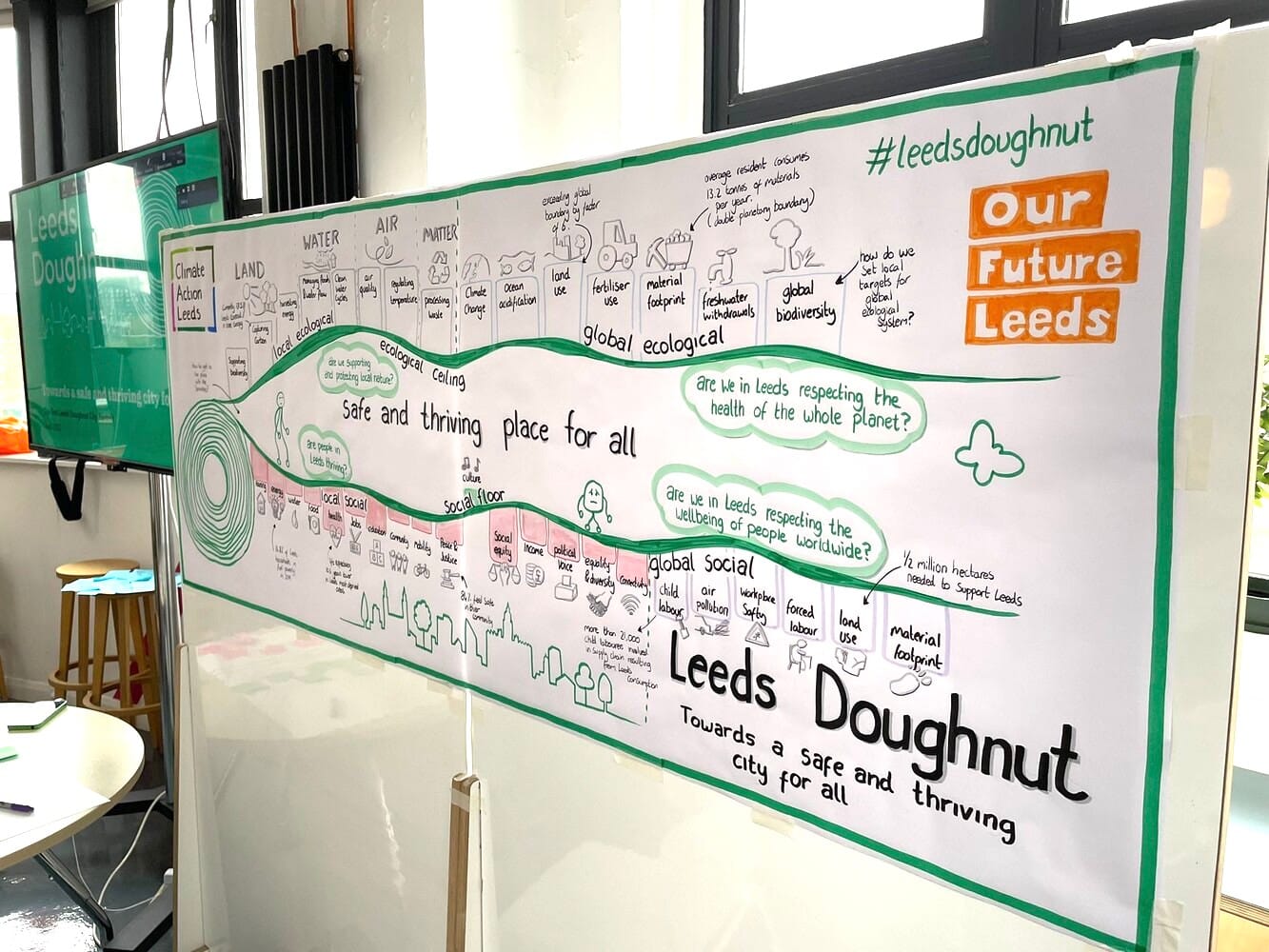
But by adopting a passive stance on growth, the framework can be easily co-opted and watered down as it finds footholds around the world. When one researcher investigated how the cities of Tomelilla, Sweden, and Bad Nauheim, Germany, had attempted to use donut economics to inform city planning, he found that the framework appealed to local leaders because it used a simple and easy to understand visual to convey its central premise. But this ultimately led to a wide range of interpretations — many of which did not actually reflect Raworth’s initial aim to unseat economic growth as the fundamental goal of the economy.
“I don’t think there is any municipality in Sweden that would say that they don’t want to and don’t need to grow,” one municipal official in Sweden told the researcher.
That sentiment, by an official supportive of donut economics, reveals a common shortcoming of donut-focused movements: They rarely aim to shift the norms and values that shape the way a culture interacts with the economy.
The Limits of City Politics
While small communities and progressive cities proved the most ready to take up Raworth’s ideas and try to translate them into practice, donut economics must also reach policymaking at a higher level to make global change.
“Instead of just moving from city to city, this narrative needs to upscale and go to a level of scale where the regulation of these [issues] is actually taken seriously,” Savini said.
This is where political parties have an important role to play. “[Political parties] start in cities, and then they connect the city narrative with existing issues of discontent,” Savini added. “They do this work of [creating] ideological coherence between different political issues.”
Moving to a national platform that unifies different urban efforts can also help to safeguard such a movement from being upended when momentum swings the local political pendulum in a different direction.
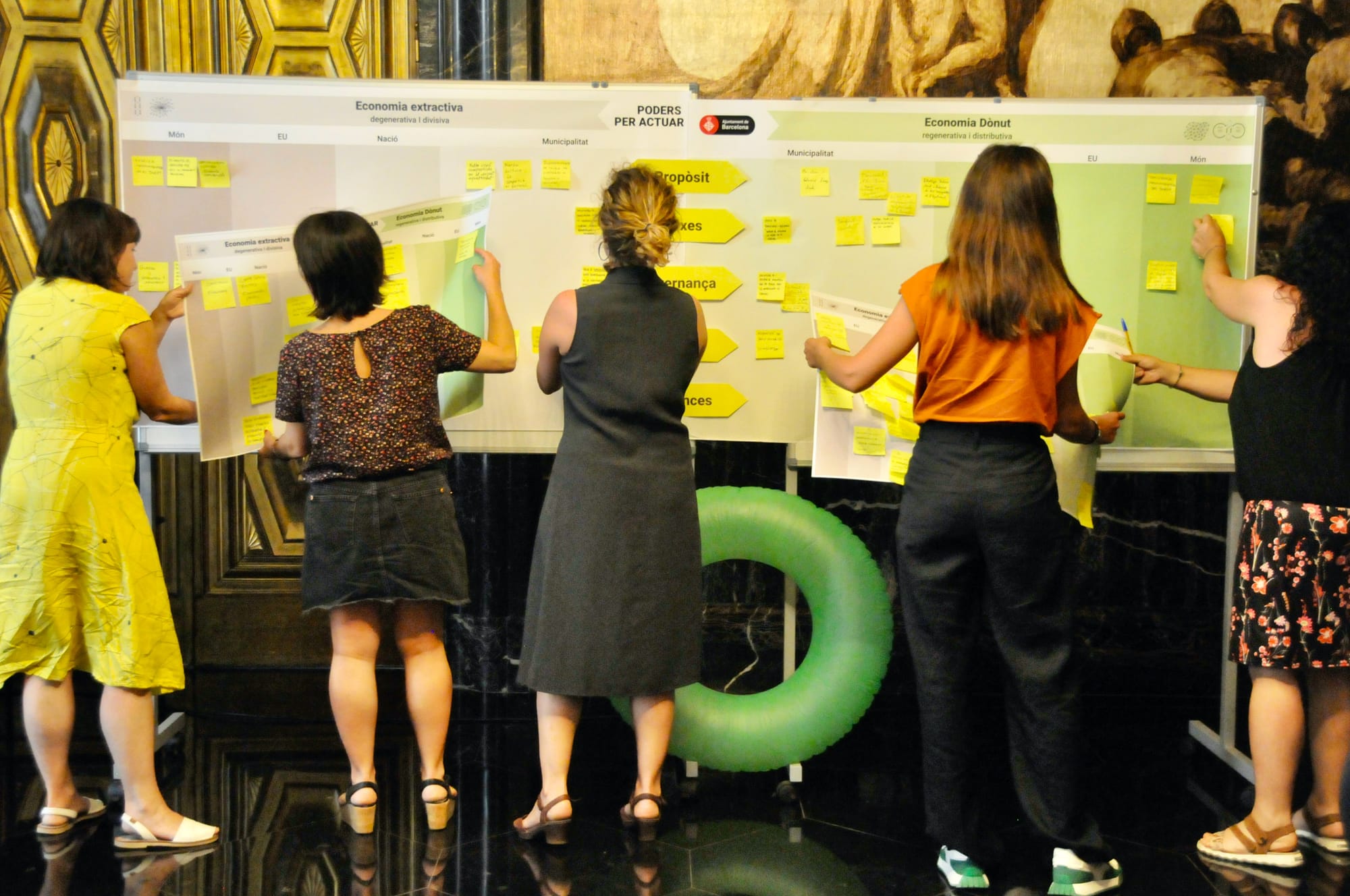
Barcelona, for instance, was another early adopter of donut economics when Ada Colau, the leader of the Barcelona en Comú political party, was mayor. But after the party stewarded the “superblock” projects — turning short segments of numerous streets into pedestrian-only zones that could be used for growing trees, gathering community, walking, and simply loitering — the city’s right wing organized a campaign that drove Colau out of office and reduced Barcelona en Comú political power.
After that, Enric Tello, a professor of economic history at University of Barcelona, worried that the city council might set aside the work that he and his colleagues had done to create a comprehensive donut portrait for Barcelona.
“We were not very optimistic on what was going to happen with it,” he said.
Thankfully, the “Citizen Commitment for a More Sustainable Barcelona” that was adopted a year after Comú was voted out maintained the commitment.
“We need to head in a direction that will keep us within the donut,” the document reads.
In Amsterdam, however, “discussions about environment and foundational economy have lost momentum,” Savini said. Amsterdam has been dealing with a housing crisis and a massive increase in rent prices that have pushed the city in a more moderate direction. Discussions of donut economics have ended almost entirely.
Beyond such political challenges, the reality is that cities are significantly limited in what they can accomplish on their own. The experiments that cities like Amsterdam and Barcelona are doing, alongside more than 250 other local organizations, can lay an important foundation while providing venues for everyday people to get involved and shape the future. But individual cities acting in isolation cannot be the end goal.
The potential for donut economics, or any other post-growth framework, to achieve its ultimate ambitions relies on coordinated efforts at the national and international scale.
Event: Noon Today!
Video
The 1:30-min Donut Economics summary. Follow Deceleration on YouTube.
Tip Jar

Buy Syris a Coffee
Show your appreciation for all the positive energy and actionable intelligence that Alternative Futures brings every month.
News for the Future
- In 2024, after decades of coping with a landfill that was leaching pollutants into the soil, the Tk̓emlúps te Secwépemc First Nation bought the landfill and turned it into a robust environmentally sound facility that handles multiple waste streams and deploys more than 50 different measures to mitigate its environmental impacts. (The Tyee)
- A youth protest movement has overtaken France as they demand a better education and improved school conditions. A major part of their demands are rooted in climate change. The European nation has struck by horrendous heatwaves and the country’s schools just aren’t equipped to handle the escalating temperatures, and heat exhaustion grips some students while doing nothing but sitting through a lecture. (Inside Climate News)
- There’s a global shortage of aluminum that’s hitting the United States particularly hard, but most of the aluminum cans that Americans toss out don’t get recycled. But a suite of startups and other companies are iterating new technologies that could help solve the problem and help keep valuable metals from ending up in landfills. (Canary Media)
- Makerspaces, tool libraries, community centers, and other groups across the country are hosting “Fix-It Nights” and “Repairfests” at an increasing rate to help people save money and reduce waste by mending clothes and repairing old electronics. (The Guardian)
- A dense white foam rolls off Mexico’s Santiago River, the byproduct of the hundreds of industries that pollute the river. This is one of countless “signs of death” that is motivating Indigenous activists and water defenders to mobilize against the industries polluting the Santiago River and other parts of Mexico. (Truthout)


