Happy Thursday!
It’s your friendly neighborhood solutions journalist coming to you with a story focusing on a climate solution founded in a simple, grade-school lesson: Sharing is Caring.
It almost sounds silly, but the truth is, constructing systems that facilitate sharing across communities has a huge part to play in how we address overconsumption and its consequences. When items are shared and reused, their impacts on the environment are reduced simply because fewer of them need to be produced to satisfy the same need.
So this week in Alternative Futures, we’ll be looking at the movement surrounding “Libraries of Things,” both for their environmental benefits and for the other benefits they provide to communities.
Enjoy!
—Syris Valentine
If you enjoy the story, share it with your friends. It helps a lot!
And if you have any thoughts you want to share, make sure to leave a comment. I’d love to hear from you!
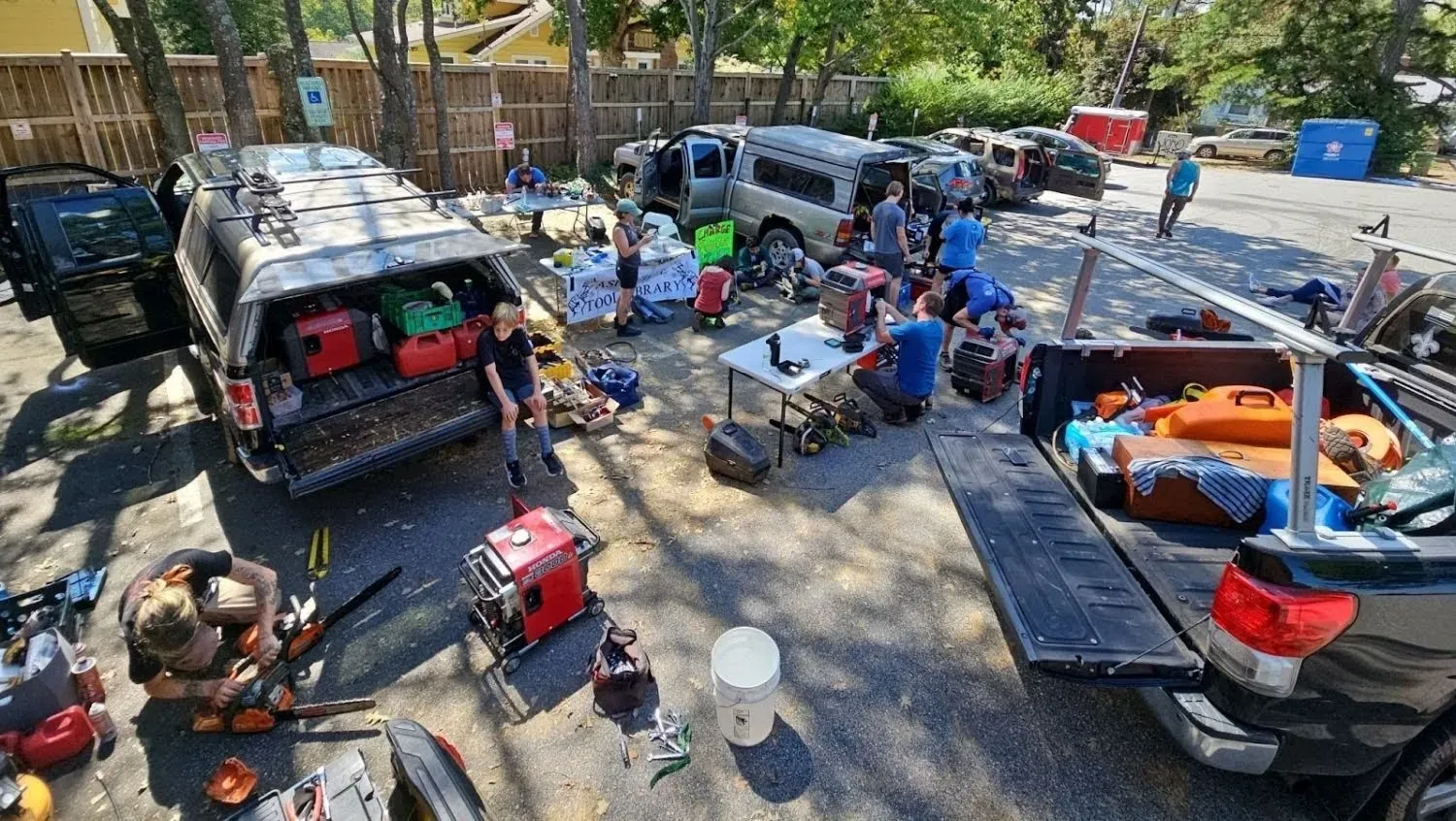
Libraries of things provide crucial community infrastructure for a solidarity economy and climate resilience
Syris Valentine | Deceleration
When Josh Epstein and his wife first decided to convert the garage of their new home into a small apartment and made their budgets, the costs were staggering. Renting scaffolding so they could install drywall on the ceiling would cost $1,000 on its own. And they’d still need to get the equipment to do everything else the conversion demanded. So when they discovered the Northeast Seattle Tool Library, it was something of a financial godsend. After spending under $100 on a yearlong membership, they could borrow the scaffolding they needed along with saws, jackhammers, and other assorted tools.
“I was enamored,” Epstein told Deceleration.
He tried to volunteer with the tool library after that and its host organization, Sustainable Northeast Seattle, but they never got back to him. Soon after, he saw they posted a job. Everything about the position resonated with him and his values. He applied almost immediately. With the assorted set of skills he’d gained running outdoor education programs with the YMCA and getting sent around the country to train others to run similar programs of their own, he felt that he was perfect for the job, and the hiring committee seemed to agree.

“It was a minimum wage, part-time job, but I wasn’t looking to climb any ladders,” said Epstein. “I was just excited. I loved the tool library.” But before long, he and the other part-time employee realized “there was infinite potential,” he said.
All the members and volunteers were so enthusiastic about it, it became easy to grow. Whenever Epstein would talk to people about it who weren’t already involved, they understood it right away. Some would even start selling the idea back to him.
“It's so intuitive,” he said, “because all it is is sharing resources, which is what humans have done from the very existence of society.”
As he brought in more volunteers, got people motivated, and provided them with a sense of agency, everything took off. The organization eventually opened a second tool library in a suburb just north of Seattle and, at the same time, rebranded themselves “Seattle Reconomy.” They chose the name in part because the whole notion of sustainability has gotten greenwashed in recent years, Epstein said, and because they’re leaning increasingly into the work of building a circular economy and “fostering an economy of reuse and sharing.”
Today, they’ve recruited around 10,000 members and 12 staff, and Epstein serves as their executive director. And they promote the practices of reuse and sharing through their tool libraries — which also house seed libraries and a reuse store selling used bikes, second-hand building materials, and old power tools — and through a new location they opened in mid-July called the Reuse Commons.
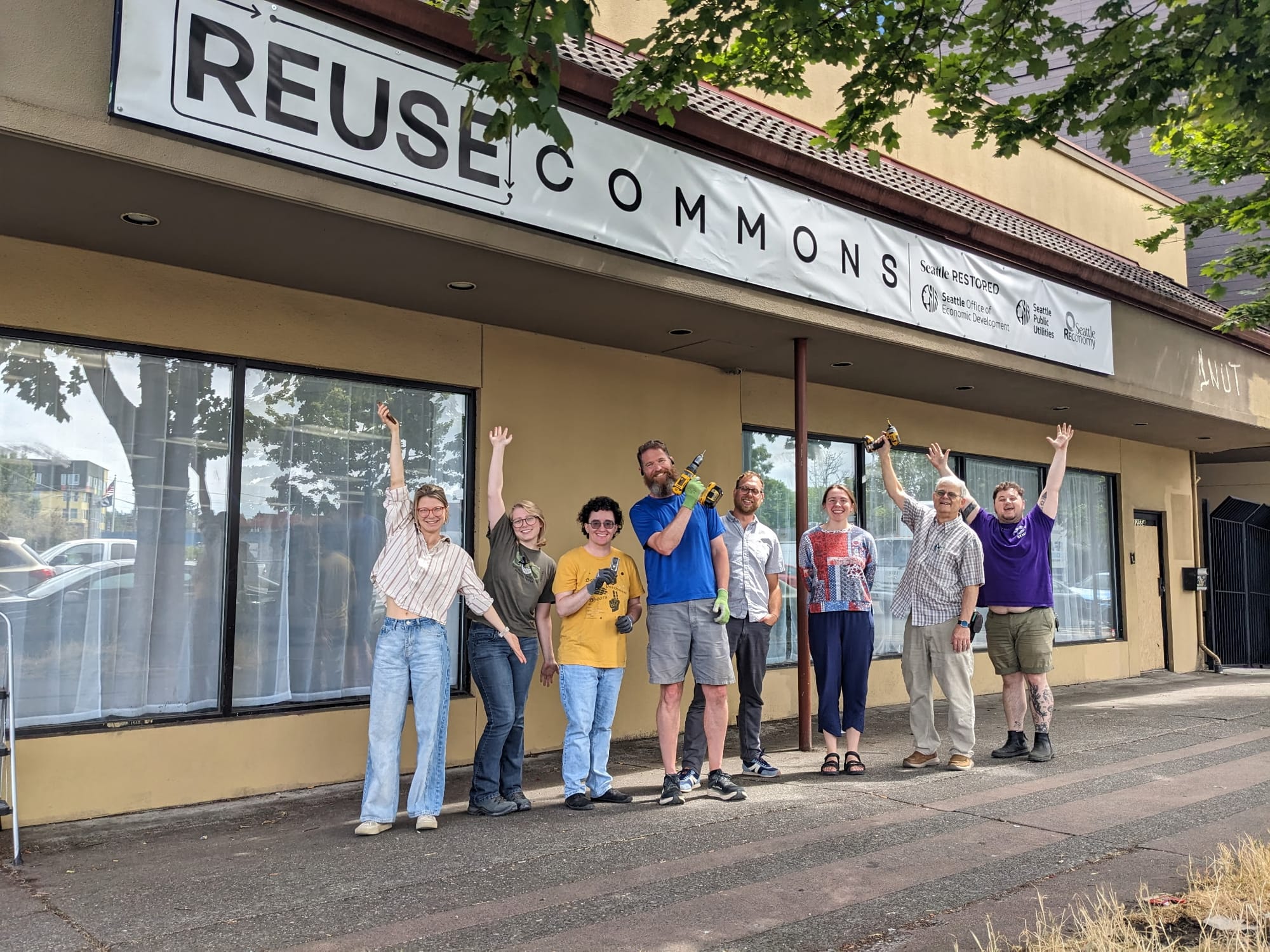
They describe the Commons as a “circular economy mall,” where partner organizations dedicated to the many varied tasks of building a circular economy can operate, host events, store equipment and materials, and convene together. Still, tool libraries remain the organization’s bread and butter.
In that effort, Seattle Reconomy is part of an international movement that has been growing for decades to counter the increasing consumerist tilt of today’s economy.
The Evolution of the Sharing Economy
“People have been sharing things forever,” said Tom Llewellyn, programs director at the nonprofit Shareable. Shareable emerged in 2009 during the recession to support the growth and awareness of the sharing movement that was gaining steam at the time. At the time the sharing economy was taking off in popularity, and they were intent on documenting it and providing on ramps for others.
Llewellyn joined that movement through one of Shareable’s events. After traveling around the country co-leading the Sustainable Living Roadshow, Llewellyn settled in Asheville, North Carolina, at the tail end of 2012, where he quickly got involved in community organizing. In 2013, he and his friends brought together 25 people from around Asheville to participate in a local rendition of Shareable’s international map jam along with 50 other towns and cities around the world.
Together, they plotted as many of Asheville’s community resources they could find and think of: parks, farmers markets, libraries, credit unions, community clinics, co-ops, repair shops, and more.
“What those maps do,” Llewellyn told Deceleration, “is not only show everything that’s there, but they also show what’s missing from those spaces.”
As a result of that mapping exercise, two overlapping things happened in Llewellyn’s life: He was invited to join the Shareable team to help others organize their own map jams, and he co-founded the Asheville Tool Library.
“There was no tool library in the community,” he said. “And we were able to show that with the map and say, ‘this is an important resource and it's missing.’”
Any time he hears from a group that’s interested in starting a new tool library or other community resource, he encourages them to step back and map existing community assets. This will help them know if their idea is even necessary and identify who else might have tried something similar as well as who they could partner with to bolster their chance of success if it is needed.
The support they and others have provided to community groups around the world has helped to invigorate the growth of tool libraries and similar library-of-things efforts. The longest lasting tool library was started in Berkeley, California, in 1979, according to Shareable. But three decades later only around 100 or so had gotten started, said Llewellyn. Today, there’s more than 2,000.
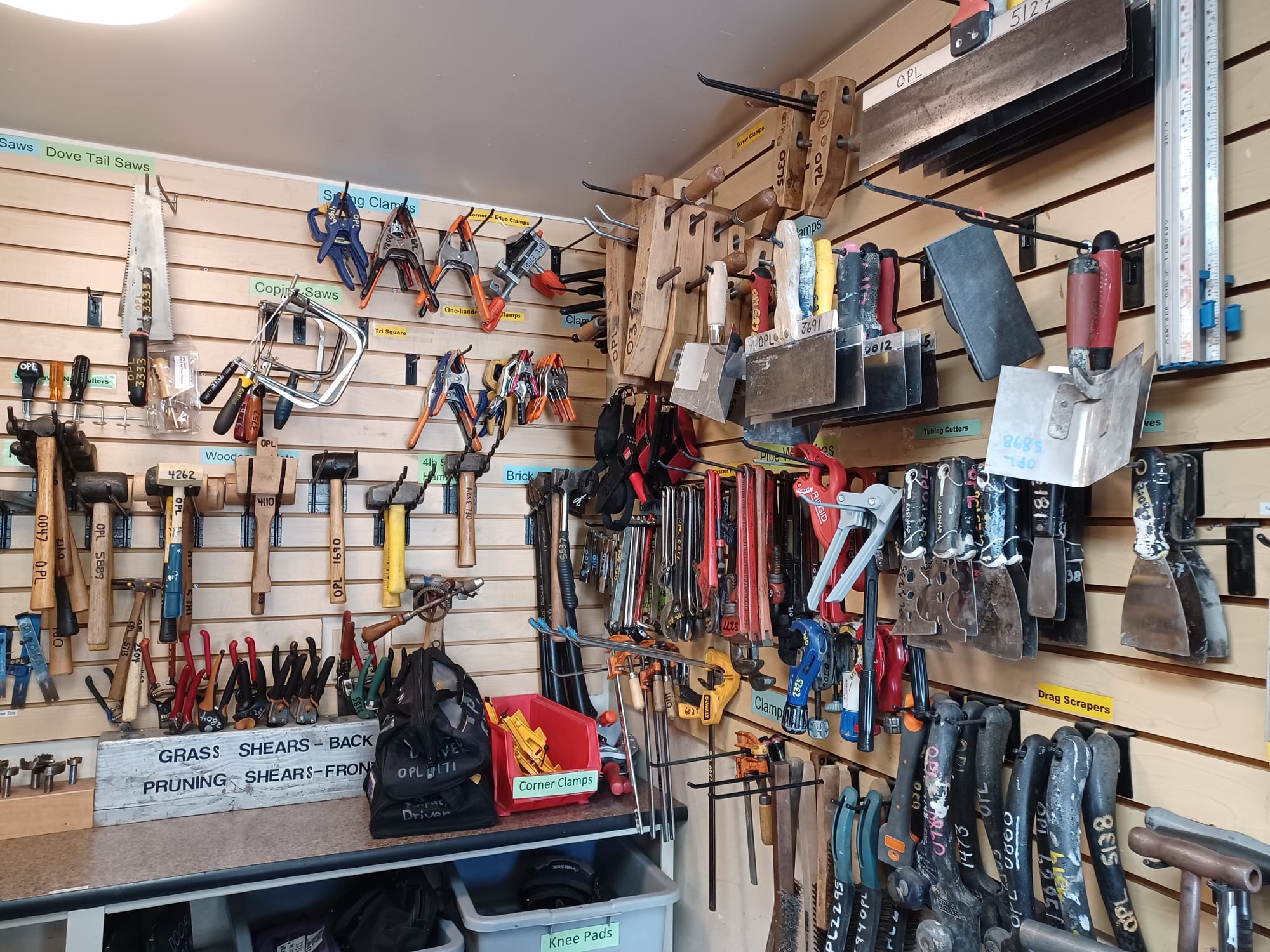
While these lending libraries are all about facilitating resource sharing between and among community members, Shareable has shifted its focus from being explicitly about the sharing economy to become something much broader.
Similar to Epstein’s feeling that “sustainability” had become greenwashed and co-opted, Shareable came to feel that as AirBnB, Zipcar, and other “sharing” start-ups swelled, the entire notion of the sharing economy got swallowed by venture capitalists and had its purity tainted. “Now we’re in this post-sharing economy space,” Llewellyn said, “and the deeper connection with the solidarity economy has taken over.”
Resources for Texas-based readers
San Antonio Community Tool Shed: San Antonio City-run program; hand & gas-powered tools; Thu/Fri checkout, Monday return. 210.207.0154. My Community Connect: Serving the Houston neighborhoods of Gulfton and Sharpstown from 6440 Hillcroft St., Houston, TX 77081. Others?
The Potential of Sharing Libraries
“Libraries of things aren’t going to end capitalism,” said Paige Kelly, Shareable’s communications manager. But when she and the Shareable team envision what a post-capitalist world would look like, “we believe libraries of things and tool libraries and sharing hubs will be core parts of that.”
It also provides an opportunity for people to work to bring the solidarity economy to life right now, right where they live.
“Capitalism is sincerely flawed,” Josh Epstein said. “It is a system that relies on infinite growth in a planet with finite resources.” And while he acknowledges that the entrepreneurial impulse capitalism can induce has provided the occasional positive change in society, that doesn’t make up for its broader flaws. “So we’re trying to fight it from within and trying to soften the edges,” he said. They’re aiming to take what few benefits capitalism has brought, and balance them out with tools like the circular economy, the gift economy, the sharing economy, and the solidarity economy.
In the United States, it often seems impossible to engage the government at any level in a project that exists to counteract the failings of capitalism. The Trump administration has declared anti-capitalist rhetoric to be tantamount to domestic terrorism. And yet, many tool libraries have found little trouble garnering such sponsorship from municipal governments, because sharing, reusing, repairing, promoting circularity in all its forms, is natural. It’s a no-brainer. Not only does it reduce waste and reduce how many metals, minerals, and other materials need to be extracted from the environment by as much as 99 percent, it also helps people to save money at a time when so many people are struggling with mounting costs of living.
The City of Seattle was one of the primary partners of Seattle Reconomy’s new Reuse Commons, and it remains an ongoing supporter. Building a circular economy locally “is critical from an environmental and waste reduction and climate perspective, but also from an affordability perspective,” said Ashima Sukhdev, climate mitigation and circular economy policy advisor at Seattle Public Utilities. “The more that people can reuse and repair and share, it helps with the affordability question that is on everyone's minds right now.”
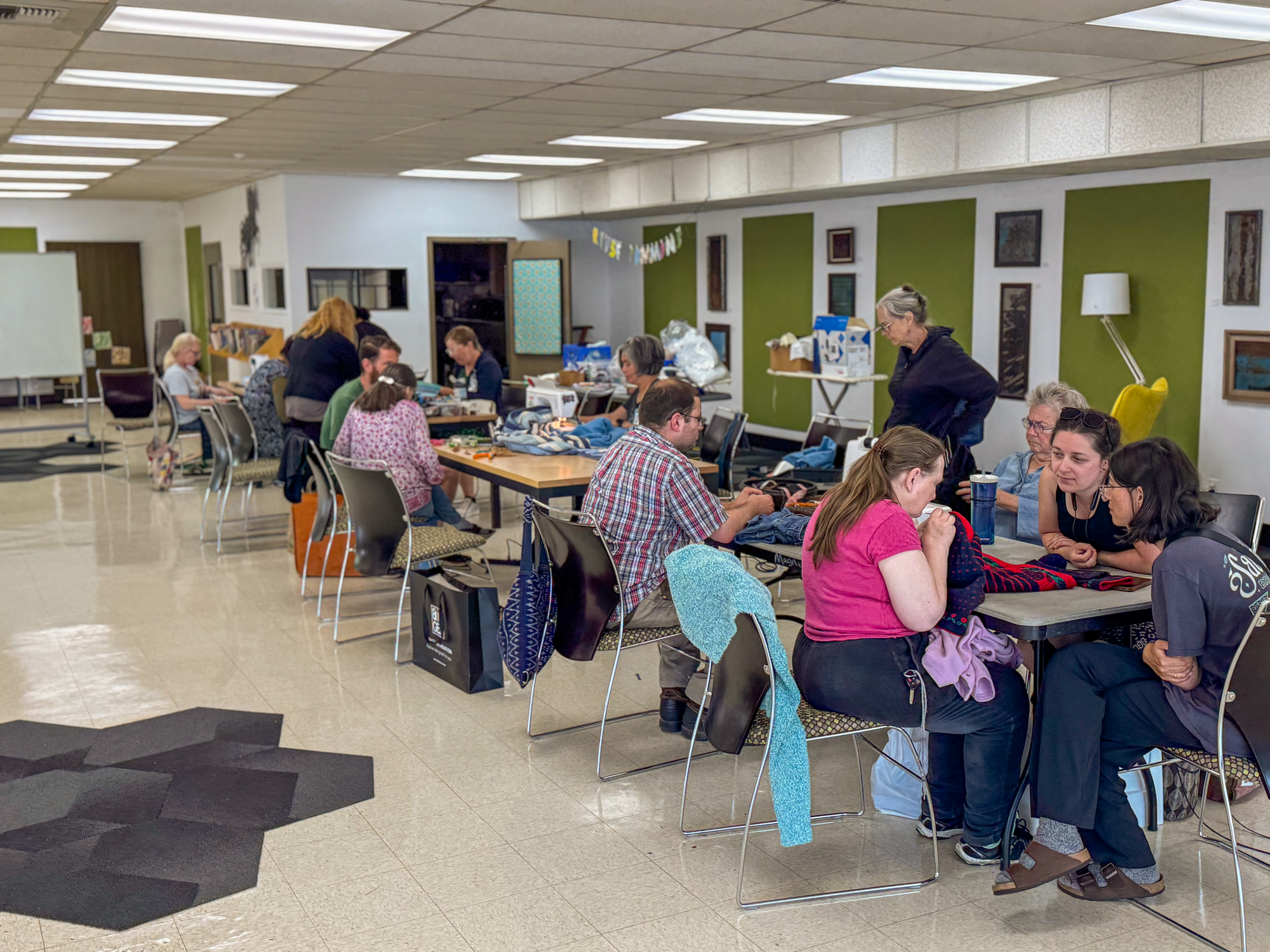
And while the city, its agencies, and its representatives would never explicitly endorse the statement that this work is supporting a transition away from a capitalist economy, that is nonetheless how Epstein, Kelly, Llewellyn, and others engaged in this work see it. But the work also solves many more practical everyday problems that people contend with today.
These hubs often host fix-it nights to help people repair malfunctioning electronics and mending circles so people can learn to stitch rips in beloved clothes, as well as providing space for learning other practical skills.
Sharing hubs can take many different forms. They can be a branch of the city library, as is the case in Berkeley. They can be run through other city departments like in San Antonio. They can be independent, brick-and-mortar locations like in Seattle. But they can also be operated out of garages, which is how Llewellyn started the Asheville effort.
“There should be a library of things in every neighborhood,” Llewellyn said, “and the only way that we're going to be able to get there is by taking a kind of a diversity of approaches to meet it.”
In Houston, the place-based nonprofit My Connect Community has helped show how this can work directly inside of an apartment building called Connect Highstar that they developed right on the border between the Gulfton and Sharpstown neighborhoods. The nonprofit worked with Llewellyn and Shareable to devise a scheme that converted a small, groundfloor community space inside the building into a library of things to provide their residents with access to whatever tools and equipment might best serve them, including accordion carts to make grocery shopping easier and steam cleaners so that their Muslim residents can clean their prayer mats.
It’s a model that, if more widely adopted, could cause tool libraries to swiftly spread. But most libraries of things aren’t lucky enough to start with that kind of institutional support. A new effort underway in Central Florida, for instance, is currently operating out of a storage unit.
But regardless of their size, scale, and service model, these libraries of things have the potential to build community resilience in a time of mounting disasters, explained Rachel Jerusha Kinbar, an organizer with Central Florida Mutual Aid
These lending libraries can provide people with the tools and equipment they need to clear downed trees from roadways after a storm, Jerusha Kinbar told Deceleration. They can mobilize volunteers to help people clear out their flooded homes, gut what’s been damaged, and salvage what can still be saved. They can coordinate mutual aid efforts to get food, clothing, detergent, and other basics to people who need them. And they can connect with people on an ongoing basis to understand what supports those people need and then find a way to get those needs met.
At the end of it all, Kelly added, these sharing hubs support both present needs and future visions because they do something simultaneously simple and essential: “They provide a physical space that grounds us in community and resiliency.”
Alternative Futures Video
Sharing Economy 101: Don't Buy a Drill—Join (or Found) a 'Library of Things' ... Alternative Futures. Follow Deceleration on YouTube.
Events
If you’re feeling inspired and curious to help start a tool library in your neighborhood, the Tool Library Alliance is hosting a free training around budget planning on Sept. 8. 2026.
You can find the details here: https://www.shareable.net/events/library-of-things-budget-development/
And they also have a library of webinars from past trainings available on YouTube:
https://www.youtube.com/@ToolLibraryAlliance
Tip Jar

Buy Syris a Coffee
Show your appreciation for all the positive energy and actionable intelligence that Alternative Futures brings every month.
News for the Future
- 8 years ago, Portland, Oregon started taxing corporations to fund climate solutions, creating the largest municipal climate budget in U.S. history. The billion-dollar budget has helped remodel thousands of homes, plant thousands of trees, distribute portable A/Cs, and purchase electric buses. (Magic Canoe)
- Marine life in Florida has been slowly disappearing for decades. Now, the state’s fish and wildlife commission and its associated foundation have announced an effort to create a “coastal corridor” of interconnected marine projects, parks, and protected areas that will protect turtles, oysters, manatees, and other forms of ocean life. (The Guardian)
- When an offshore wind is installed, the noise and activity can scare fish and marine mammals away at the same time that the seafloor is disturbed. But over the years afterward, the turbine foundations become artificial reefs that flourish and thrive with a complex assortment of sealife. (Atmos)
- It’s rare to hear of water being replenished in lakes, streams, and aquifers. But that’s what’s currently happening in Africa’s Sahel Region, on the southern edge of the Sahara. And while some of it comes from increased refall, much can be attributed to the revival of traditional methods of water harvesting. (Yale E360)
- As Lahaina recovers from the wildfire that tore through the town and much of Maui in 2023, locals are reimagining the future of the island in ways that prioritizes resilience and sustainability with an approach that focuses on restoring plants native and endemic to the island. (Offrange)