

Welcome to Deceleration In Depth, where we are growing solutions to an overheating world. We highlight the latest global, national, and regional developments in climate and environmental justice to better inform local action. Deceleration is rooted in San Antonio and the South Texas bioregion but our concerns and enthusiasm are broad. Pitch us your story idea at editor@deceleration.news.
- Log in to our new website to become a member with benefits. (Comments are open!)
- Join our community of volunteers and contributors.
- Forward this email to friends; grow the work.
- Subscription info at the bottom of every email.
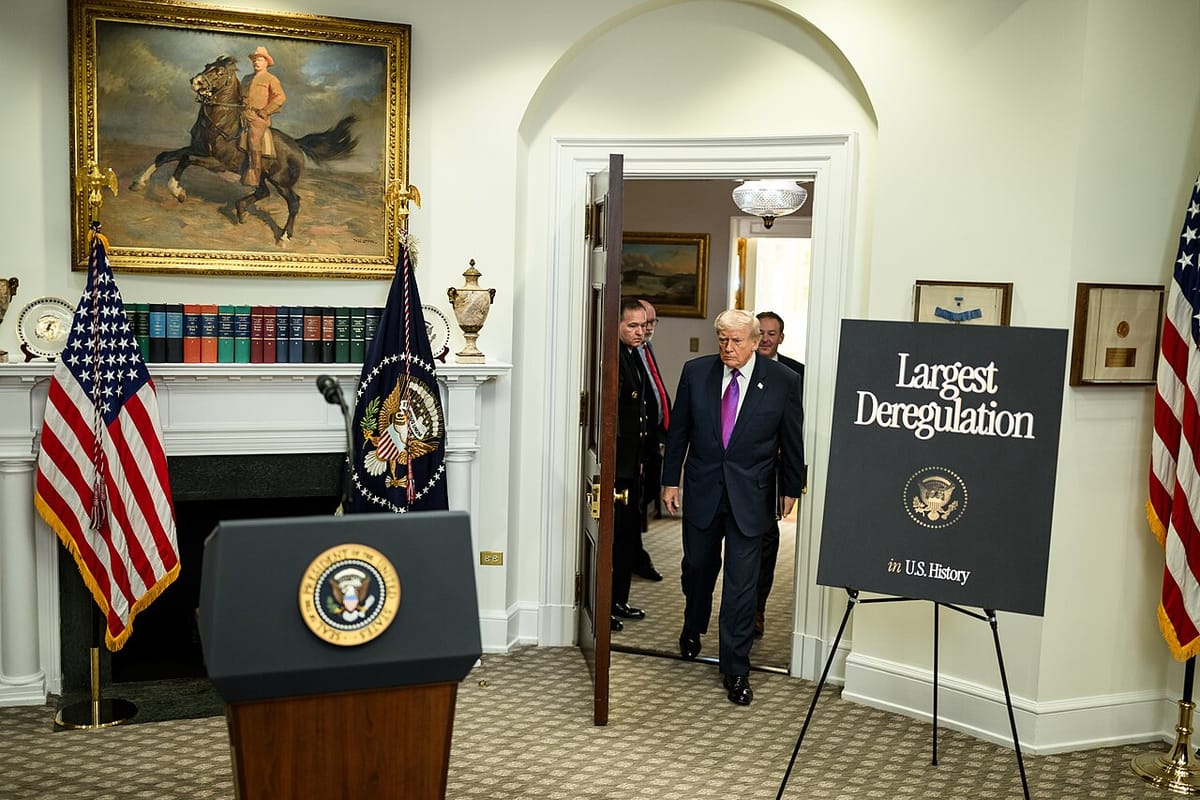
This week, President Trump gave his billionaire fossil fuel donors more than they perhaps bargained for by revoking the "endangerment finding," the legal root of a variety of climate reforms set in motion nearly 20 years ago across myriad industries. It has been this fundamental understanding of our impacts on the planet's climate, first elucidated by scientists in the 1800s and worked through in policy settings during the 2000s, which set a course for gradual—in some sectors, imperceptible or nonexistent—declines in our national greenhouse gas emissions.
This action reflects a bit his "gift" of the Venezuelan oilfields, dense tarry fuels in an even denser political thicket that even ExxonMobil toed to cautiously. But this demolition of the foundation for climate action at the federal level has loosed a new chaos into the world. And the floodgates are open for years of legal and political tumult, as a result.
This betrayal not only set into play a "race for the bottom" in the international system but quickened an already unmoored global climate. As the Earth lurches into increasingly dire straights, and discussions about the planet's "hothouse trajectory" accelerate, the United States is being contorted more clearly than ever into an authoritarian petrostate. And as if that weren't enough damage: our foreign policy is out to force others into similar alignment, including efforts to fracture states who continue to stand on human rights and climate action. Like Canada.
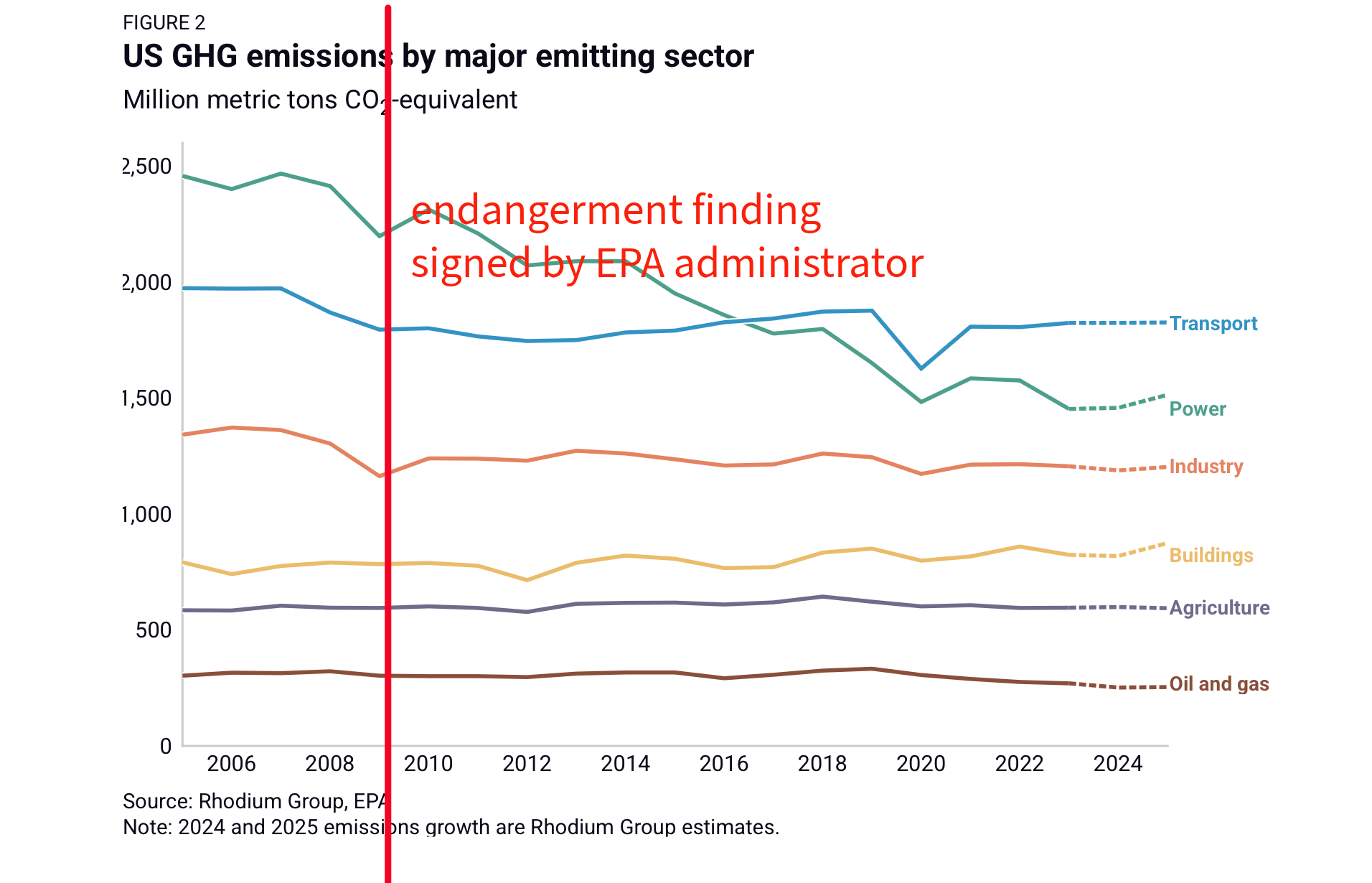
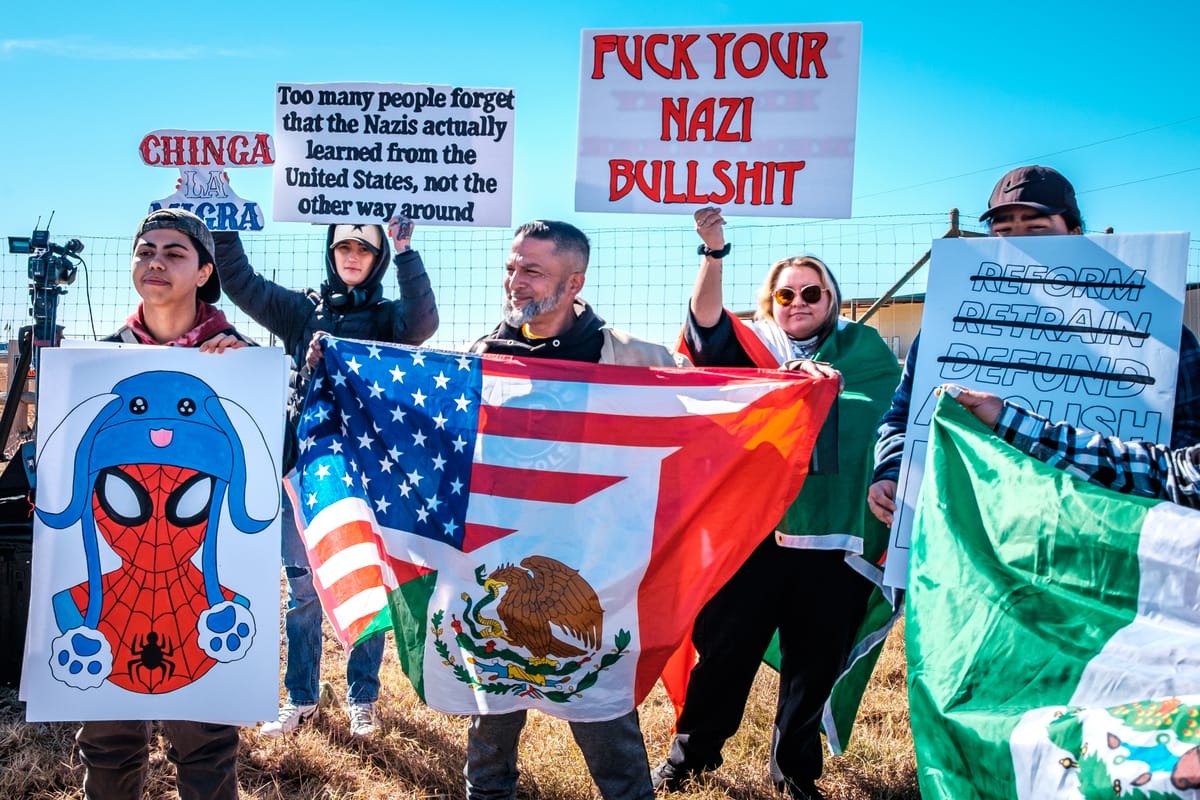
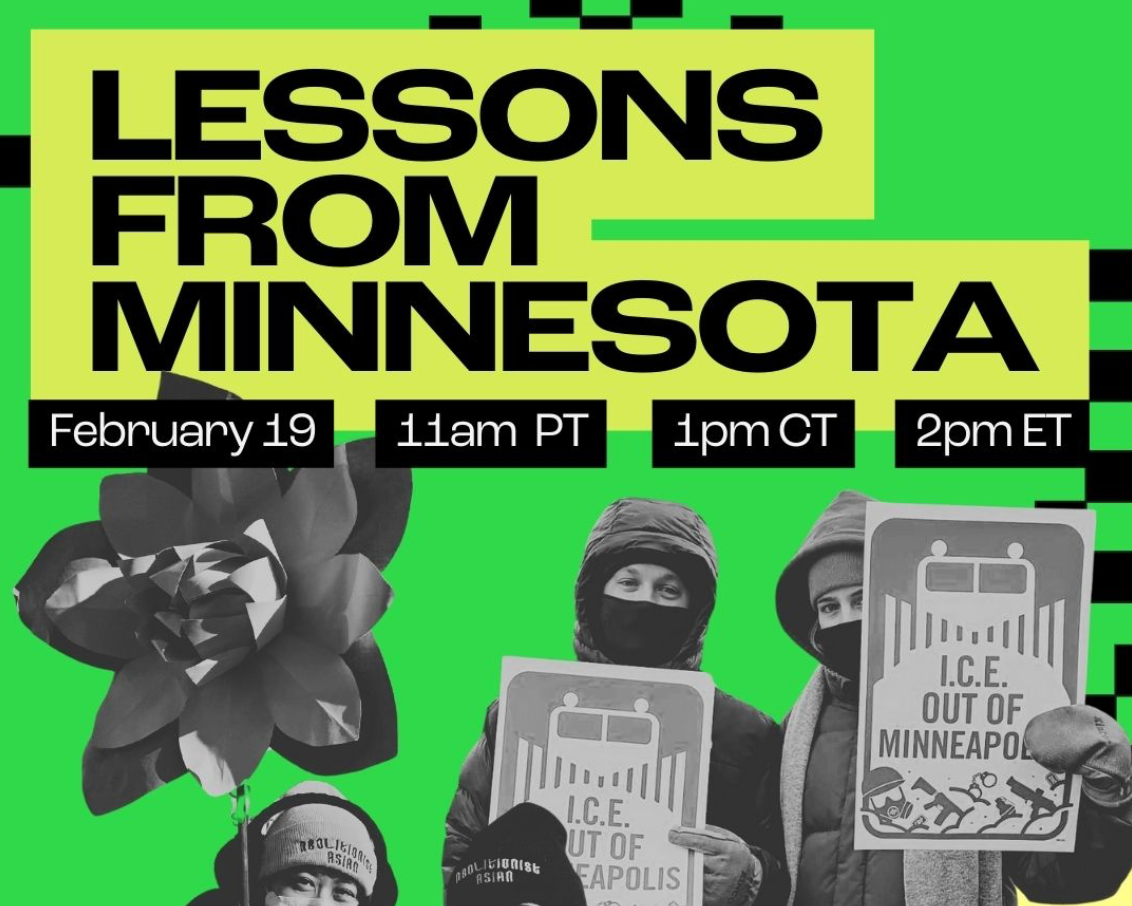
The people of the planet want to live. They have other ideas. This is the resistance. Trends toward cleaner power and transportation solutions continue. Nations are reorganizing to meet the challenges of the moment while excluding the bad actor. And while an unconstrained MAGA U.S. can do potentially irreversible damage at our current precipice of risk and power, the climate movement can take a page from the Minneapolis playbook and constrain them. You will hear more about those efforts in the weeks ahead at Deceleration. From the start, we've been about tapping into global movements to empower local climate action.
This week we draw inspiration from Bekah Hinojosa, who, along with friends within the South Texas Environmental Justice Network, has been building disaster kits for her neighbors across the Rio Grande Valley. As with other s0-called "frontline communities" the world over, residents across the RGV are certainly impacted more than their fair share by flood, storm, and power outages. But in negotiating the story, it became clear right away what the headline would be: Bekah shared that many who received the kits didn't pack them away beneath the sink, waiting for the next climate shock. They were using the contents, water filtration, bug repellent, masks, to navigate their already very precarious daily lives.
Looking at the challenges that storms and heat bring, we also wanted to get an early jump on summer. After all, the winter needle on our block was pushing close to 90°F last week. We rang up Bill Barker—formerly of VIA, formerly of Solar San Antonio, formerly of the Office of Sustainability—for a chat. We've known Bill to actively measure the impact of heat with an assortment of tools and a briefcase full of policy recommendations capable of saving lives. With climate progress, marginal as it's been, suddenly thrown in reverse by the fascists amassing power upstream, Barker is one that city leaders (and we really do mean any city) would do well to tune an ear for.
Finally, as I wrote last week, Deceleration is incredibly excited and proud of the many new newsletters rolling out. Find this week's links to Roxana Rojas's ICE Watch below. And don't miss the related impassioned "Letter to an ICE Agent."
I'll be reflecting on this much more deeply next week for my second installment of Water & Power. Until then, supporting members are invited to take a moment to comment below. What you want Deceleration to tackle next?
— Greg Harman
COMMUNITY VOICES
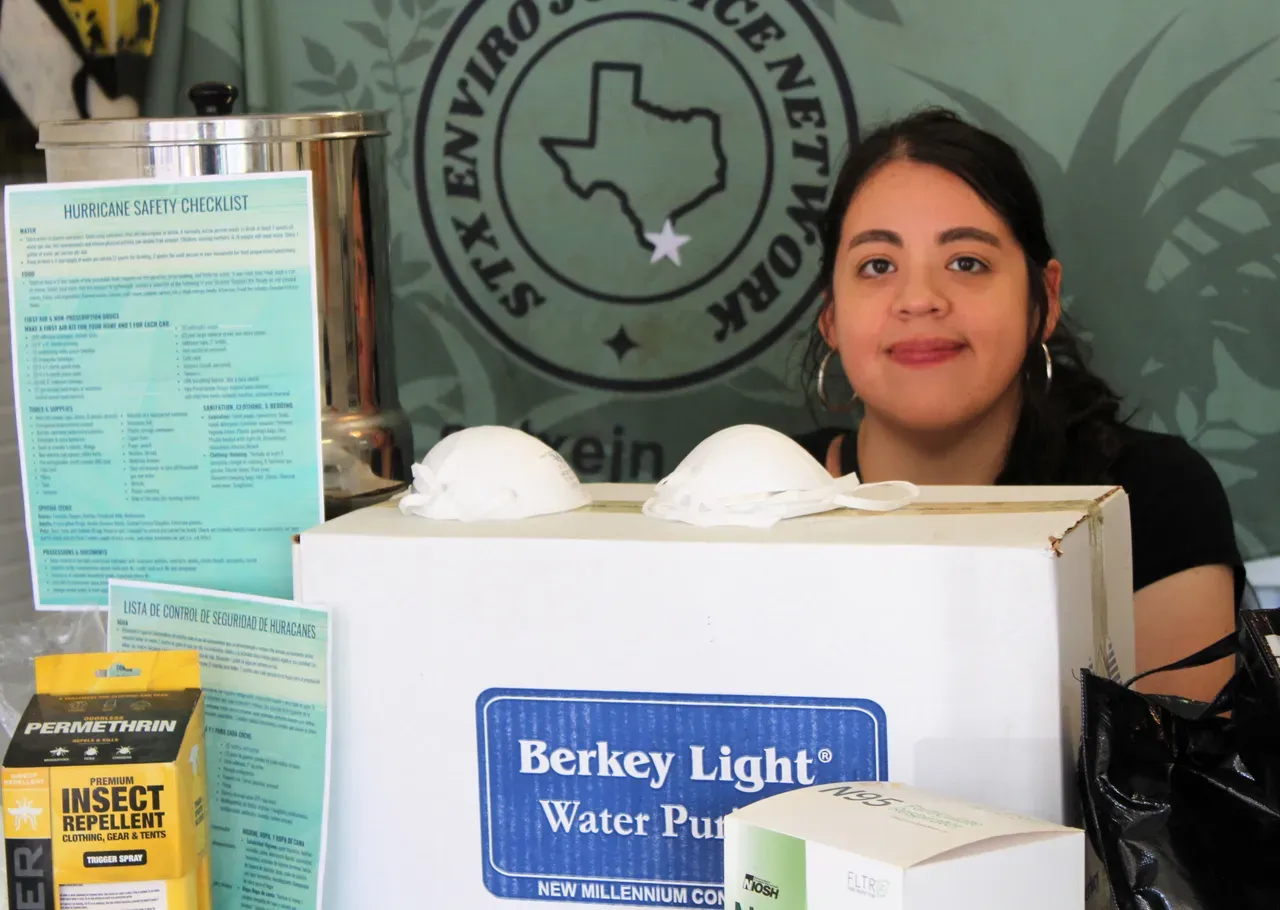
We Built Disaster Kits for Our Rio Grande Valley Neighbors—They Use Them for Daily Survival
As climate 'shocks' increasingly puncture wealthier parts of the U.S., they lengthen like a shadow across this borderlands region.
Bekah Hinojosa | Deceleration
On a typical sunny South Texas day, I made a run to the grocery store, H-E-B, near my apartment in Brownsville, Texas. I walked around, and just as I stretched my arm to grab some sausage from the freezer everything went pitch black in front of my eyes.
“Did I die?” I thought. “Is this the afterlife?” When I heard cries from other shoppers and the lights switched on, I saw people’s concerned faces.
This was far from my first power outage in Brownsville, one of many communities stretched across the Rio Grande Valley, which itself spans four counties along the Rio Grande River and the Gulf of Mexico.
Our combined population of about 1.43 million is often referred to by the Wall Street Journal as one of the poorest regions in the country. Brownsville was recently ranked the second “neediest” city in the U.S. Tax dollars don’t reliably trickle back to build basic infrastructure. Instead: We get billion-dollar border walls.
PODCAST
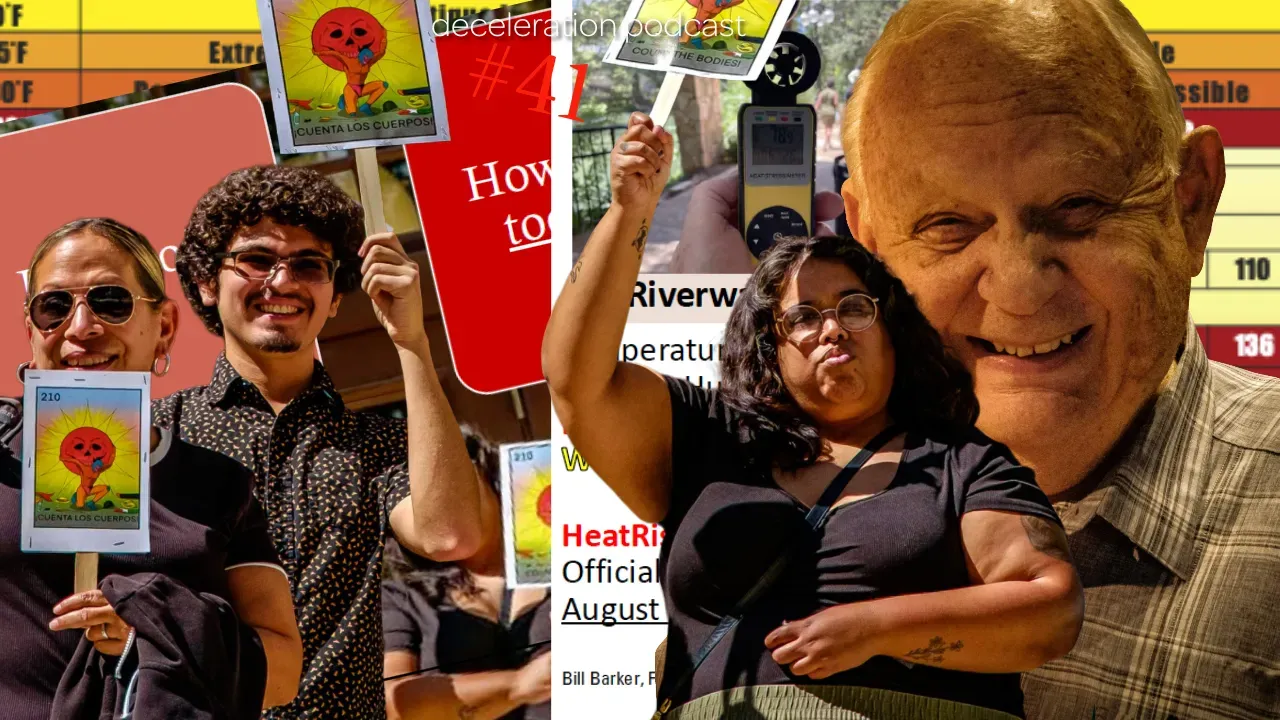
Bill Barker on Extreme Heat, City Planning, and Policies to Save Lives
Humankind didn't evolve in heat like this. Heat that is increasingly claiming lives. So how can we cool down our cities and keep more people safe?
Greg Harman | Deceleration
Humankind didn't evolve in heat like this. It's been well over 100,000 years since the planet has seen the sort of scorching temperatures that have become the norm in the last few years. And that goes for Texas, too, where many are still tempted to shrug and claim, 'This is Texas. It's always been hot.'
But this is not the heat (or the humidity) of our parents or grandparents. And it's claiming lives. Obviously, until we transition away from fossil fuels and begin the work of ecological repair the world over to bring these temperatures back down the work of adaptation will be needed. So how can we design our cities and towns to help more people survive?
Bill Barker has worked as director of planning at VIA Metropolitan Transit, as executive director of Solar San Antonio, and has spent years thinking about heat, cities, and adaptation. Lately, he's been making his case for local action with presentations to groups small and large.
Deceleration had a chance to sit down and hear from him recently about the situation in San Antonio. But the lessons here are relevant to communities the world over.
ICE WATCH
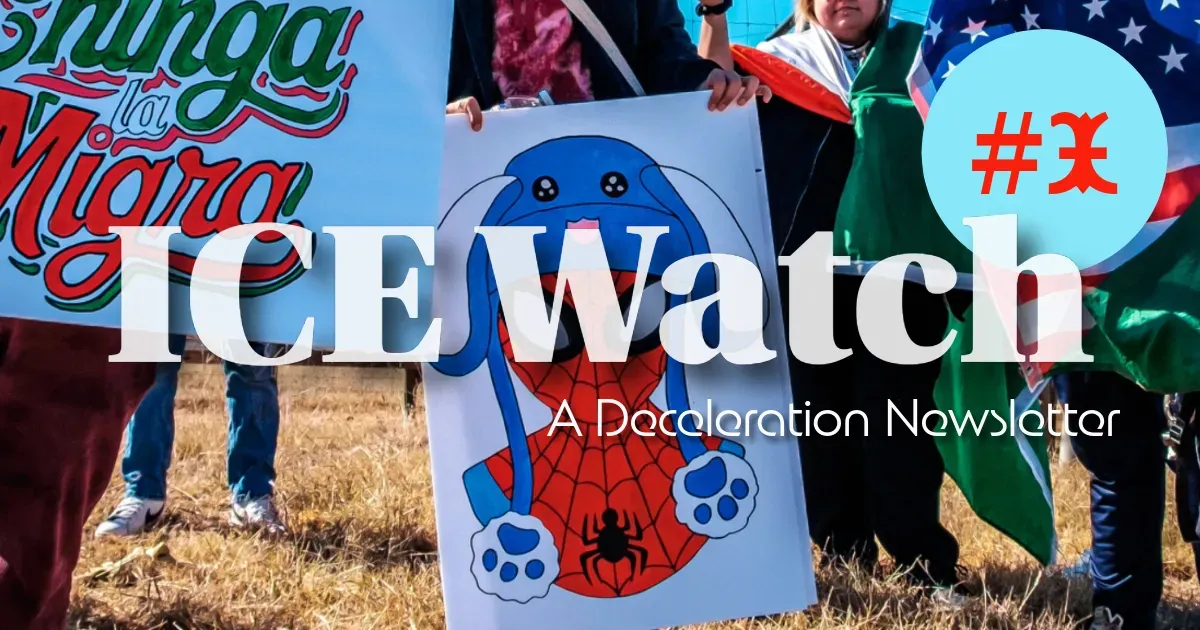
ICE Watch: Weaving a New World in the Twilight of Fascism's Sunset
The roots of today's assault on immigrant communities and people of color reach back to much earlier abuses.
Roxana Rojas | Deceleration
"It’s been a long time since I left my home village;Who could know I’d end up imprisoned in a wooden building?I’m heartsick when I see my reflection, my handkerchief is soaked in tears;I ask you, what crime did I commit to deserve this?"
—Inscribed by Li Hai, South Village, Taishan
After visiting a Japanese internment camp on Gila River in 1943, Eleonor Roosevelt said in a speech advocating for the closure of the camps:
“We have no common race in this country, but we have an ideal to which all of us are loyal: we cannot progress if we look down upon any group of people amongst us because of race or religion. Every citizen in this country has a right to our basic freedoms, to justice and to equality of opportunity. We retain the right to lead our individual lives as we please, but we can only do so if we grant to others the freedoms that we wish for ourselves.”
We are now 389 days into the second Trump administration. We have $75 billion more funding for ICE than the budget range of $6B-$10B seen over the past decade, making it the highest funded law enforcement agency in the U.S. and surpassing all federal agency funding combined. If ICE were an army it would have the 15th largest military budget in the world coming in second only to Canada’s $29.3B annual budget.
DECELERATION VIDEO
‘Days and Nights of Love and War,' attributed to Dr. H.H. Coyotl and read here by Roxana Rojas, editor of the ICE Watch newsletter at Deceleration.news.
The heaviness of our current reality requires creativity and imagination to propel us towards the future we want for ourselves and future generations. In the same vein that painters, musicians, poets, and other creatives imagined a different world through their art during times of political strife, we too can participate in the coloring of our future and the creative analysis of our present. As the Zapatistas wrote communiques from the Lacandon jungle under the name of Subcomandante Marcos to expose the realities of neoliberal violence on indigenous communities, and as Albert Camus wrote letters to a fictional German friend during the Nazi occupation to argue for the French cause, this letter to a fictional ICE agent penned under the name of Dr. H.H. Coyotl is a call to the resistance of our time.
OTHER STORIES
 Inside Climate News
 Truthout
EVENTS
 Deceleration Staff
February 19, 2026
 Deceleration Staff
February 21, 2026
 Deceleration Staff
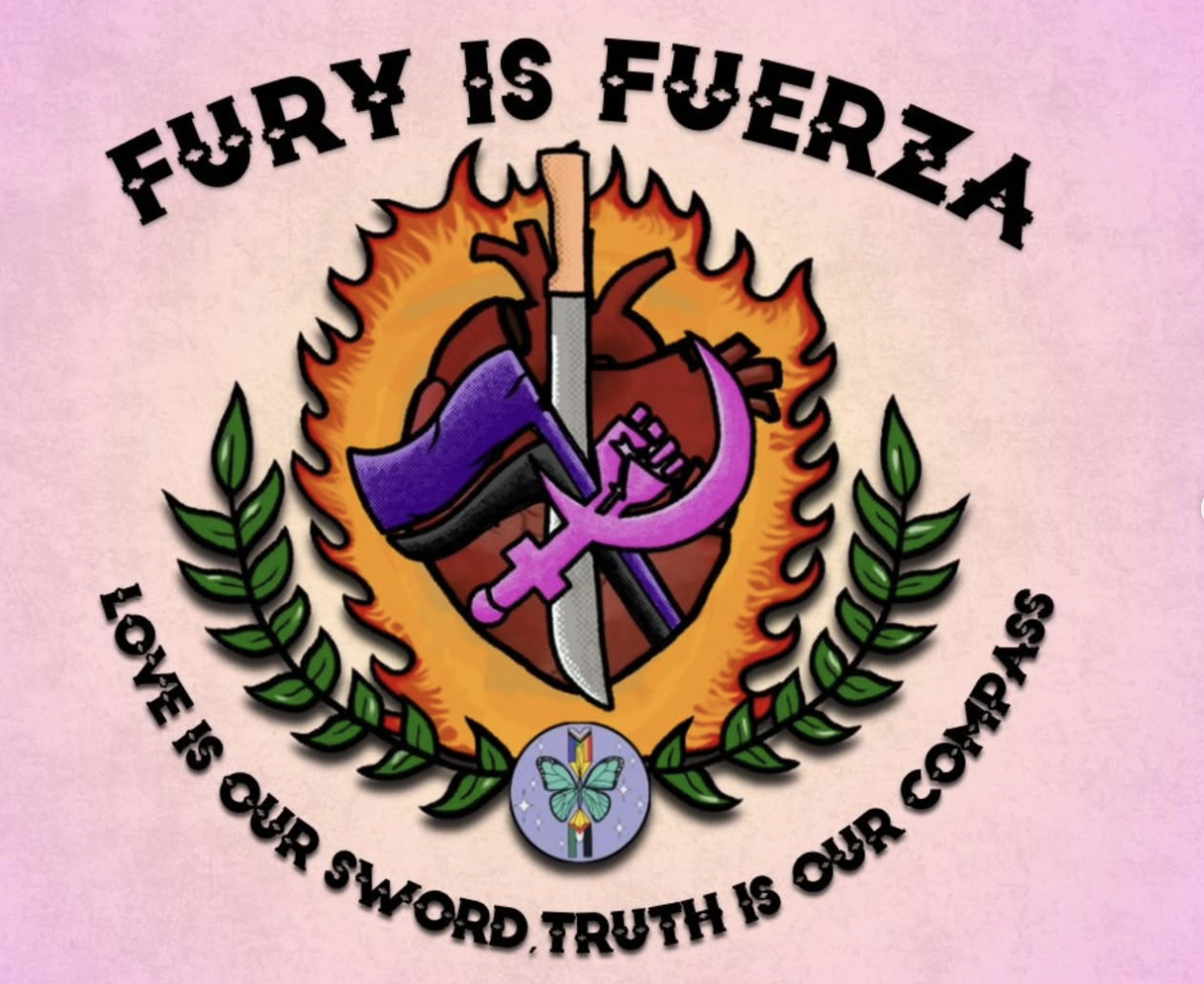
March 8, 2026
 Deceleration Staff
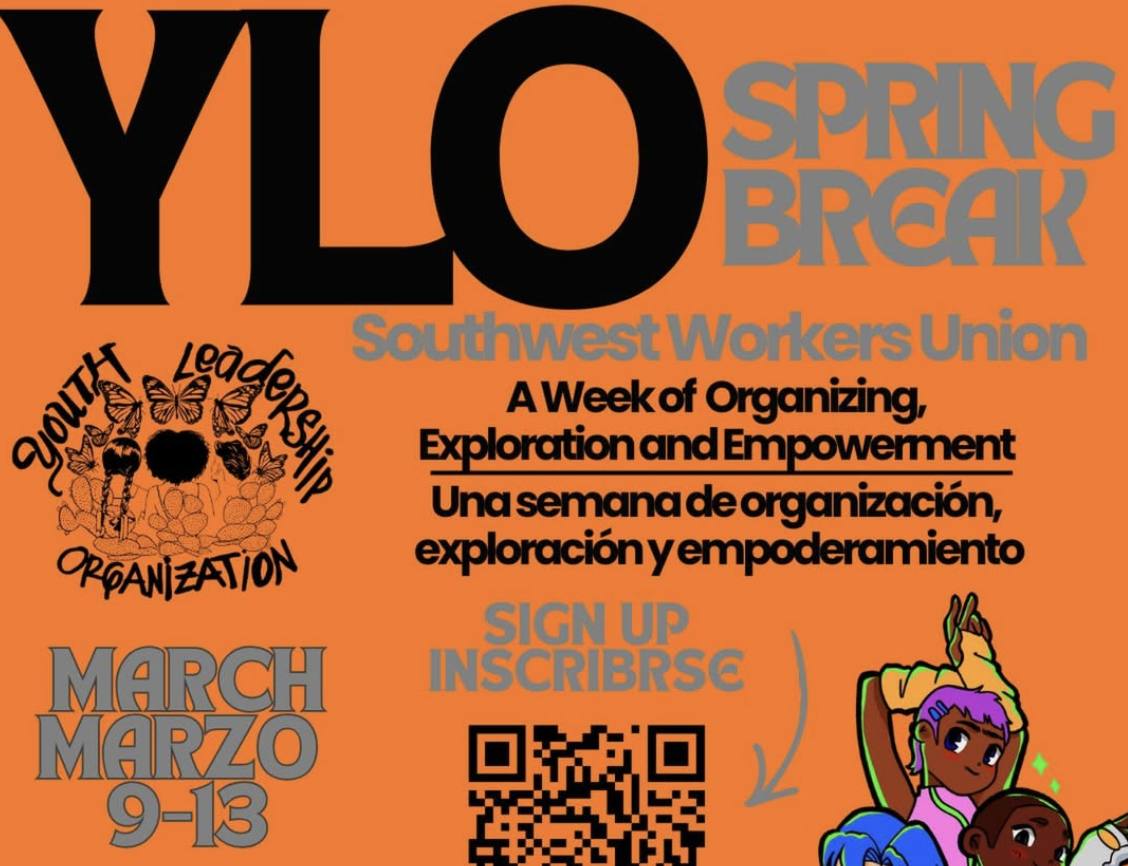
March 9-March 13


