Research and recent reporting suggest Gov. Greg Abbott's plan to force Texas's city-owned utilities into the deregulated market is unlikely to lower anyone's power bill. What it would definitely do is strip cities of a major source of revenue, money Abbott's campaign brands a city "slush fund." The campaign promises San Antonio households would save 13 percent on their bills—but no data to back up the claim.
Rates are rising fast across the utility landscape, largely in response to accelerating climate-related disasters and the need to rebuild or harden utility infrastructure. In Texas, generation and distribution efforts are accelerating in attempts to meet the needs of voracious data center projects rising across the state.
Nationally, these cost increases are coming more quickly in the for-profit sector, as opposed to publicly-owned utilities. But some communities are organizing public power projects to push back on privately operated energy projects, Inside Climate News wrote last year.

However, CPS Energy in San Antonio is not immune to these pressures and is expected to bring another rate increase request this year or early next.
DeeDee Belmares has worked to reform the largest of these so-called Texas “munis,” the City of San Antonio-owned CPS Energy, for years. As our interview shows, she isn’t exactly sympathetic to the utility now coming under threat from Abbott. She points repeatedly to the utility board's deep resistance to community campaigns pushing CPS to invest more deeply and quickly in cleaner energy sources and end forced disconnections for the most vulnerable residents.
"I believe in public power. I think that people should have impact and control over these two very necessary things, water and and electricity," Belmares tells Deceleration.
"But that's not what we have here in San Antonio. It's not public power. It's a municipally owned utility that is owned by the city but governed by very powerful people, their board of trustees, and the mayor is part of that."
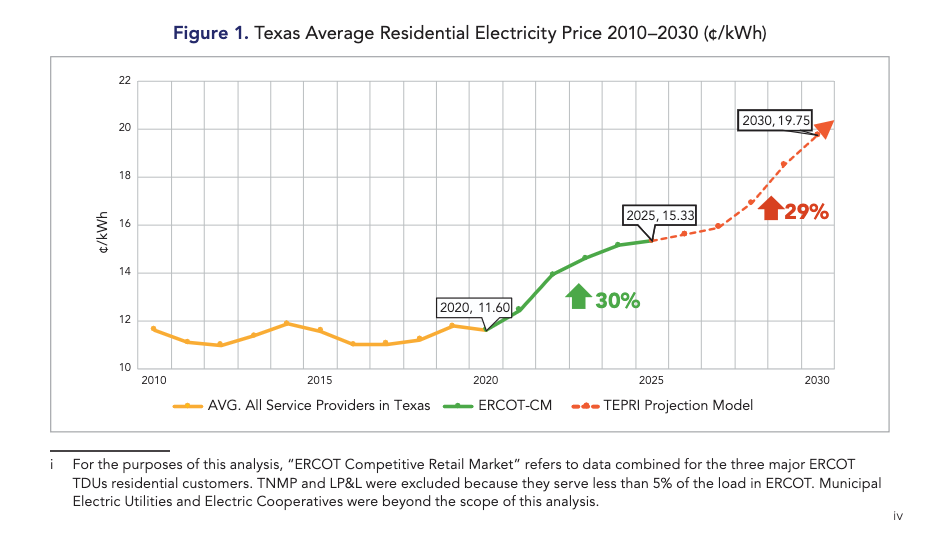
CPS, rushing to develop power sources and transmission capacity to meet gigawatts of new power requests from data centers, recently backpedaled on its clean energy commitments, as Deceleration wrote at the time.
In spite of her critique of CPS, she does not expect a deregulated market to lower costs for residents. She also warns that it would also likely reduce access to programs that she says CPS does well: energy conservation and rebate programs that help local families save on their utility bills. These are programs that for-profit, investor-owned utilities are less likely to develop or promote, she says.
However, Belmares concludes here that she hopes the pressure of Abbott’s proposal will force CPS Energy's board to engage more deeply with community members working for reform—including by retaining a customer rate advocate to give an independent review of proposed rate increases going forward—and embrace many of the reforms she says the board has long resisted. She calls here also on San Antonio’s City Council to take a more active role in utility reform.

-30-
This is the second in a series of interviews on the subject of deregulation. Read the first installment here:
 Greg Harman