

In 2019, San Antonio’s City Council and the trustees of the City-owned CPS Energy committed to zeroing out local climate pollution by 2050, with reductions milestones along the way. But after a few years of progress, those overall emissions started trending back upward, according to data released late last year.
In one of the least reported local stories of 2025, the Office of Resilience and Sustainability announced that between 2021 and 2023, the most recent year for which federal data is available, emissions rose from 16,726,424 metric tons to 16,860,381 metric tons.
“We don’t want to see [emissions] going up,” Doug Melnick, San Antonio’s assistant director of the Office of Resilience and Sustainability, said at the time.
This while global heat is breaking records year after year on land and at sea.
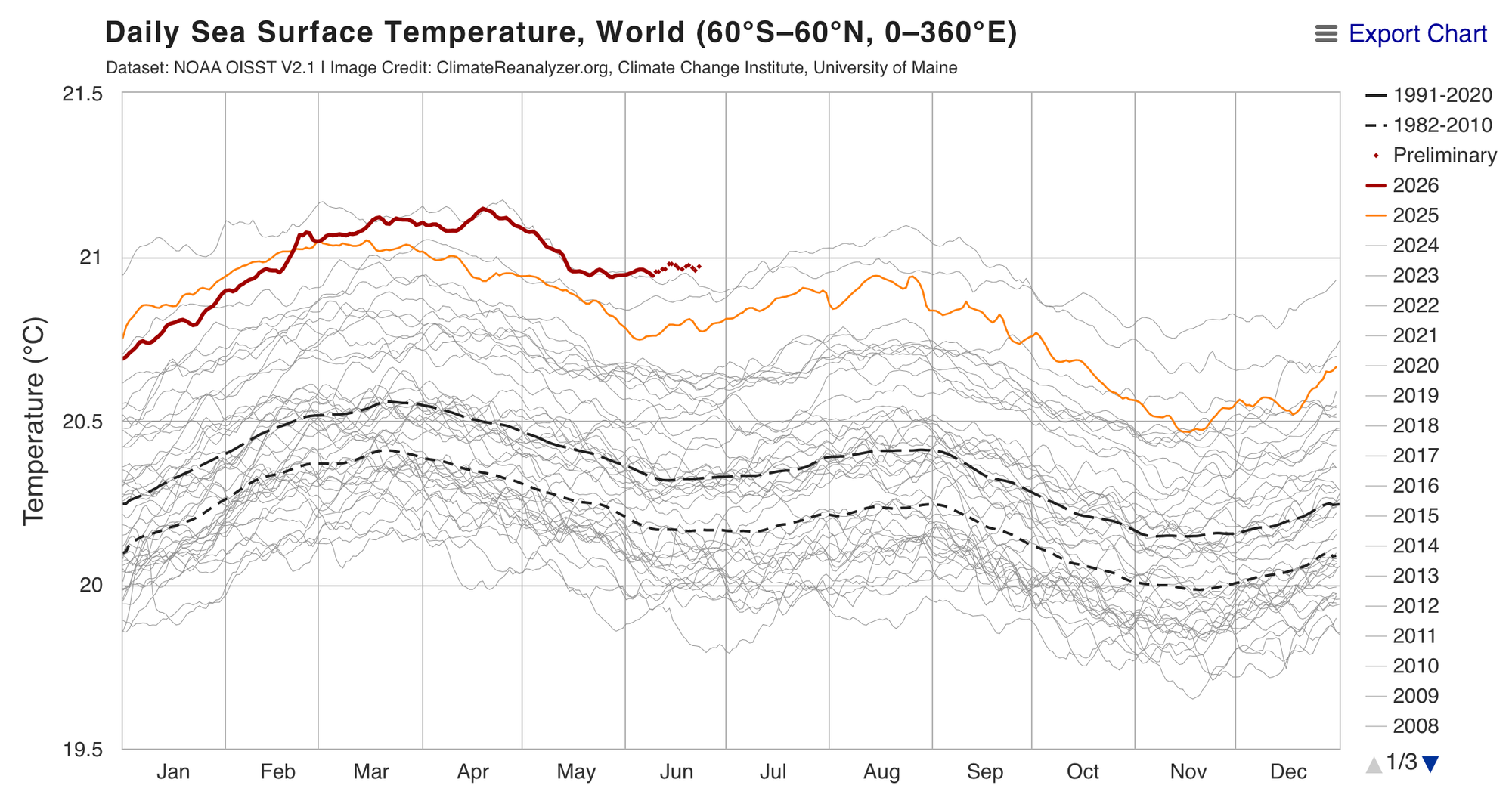
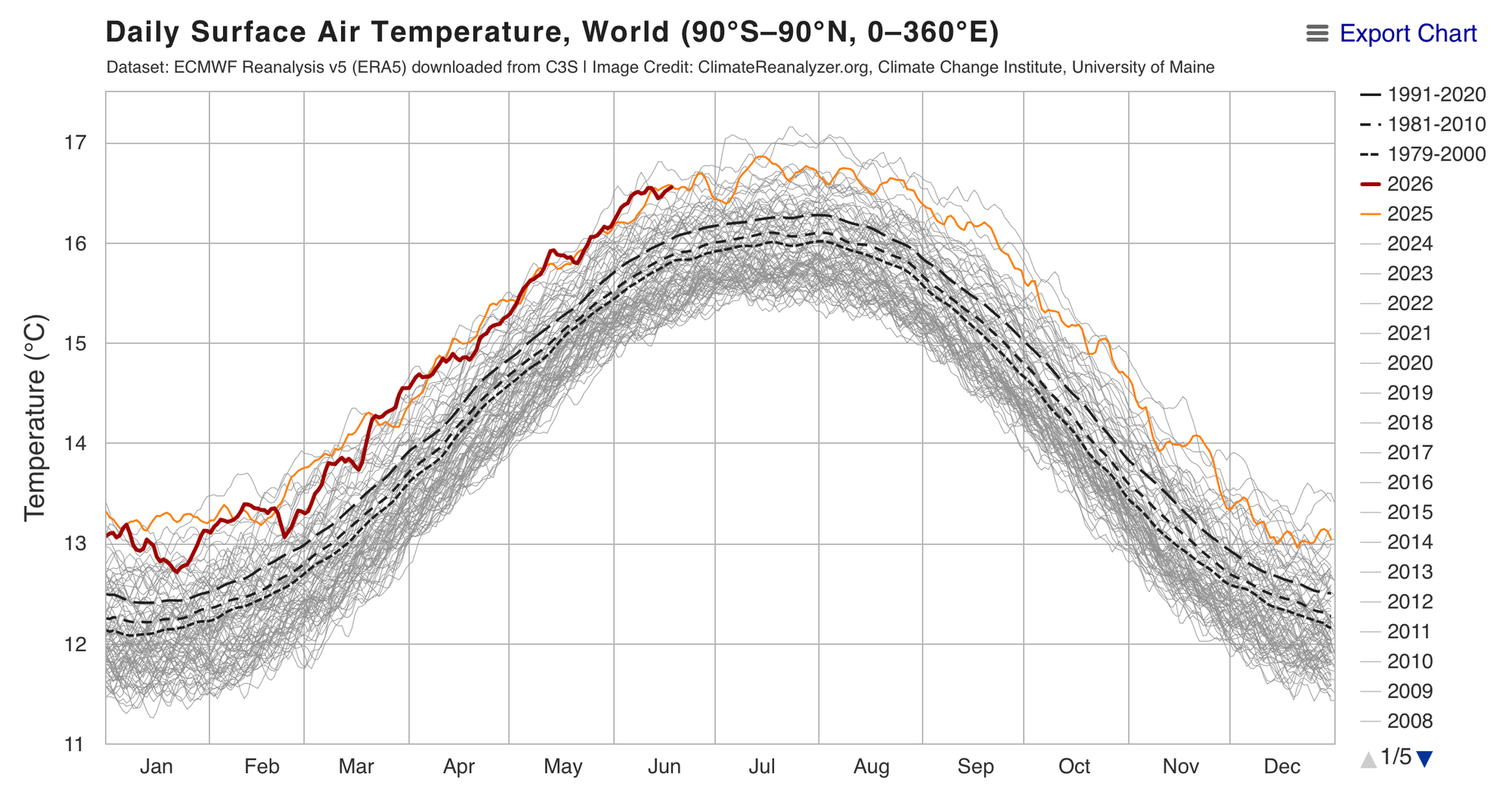
Surface air and water temperatures have been rising steadily in recent decades, driven largely by expanding fossil fuel use. Charts: Climate Reanalyzer/University of Maine.
Now another blow.
On Monday, CPS Energy—the greater San Antonio region’s largest climate polluter—voted to expand future investments in natural gas, a power source that is primarily methane, a far more potent and fast-acting heat-trapping gas than CO2 when released into the atmosphere. As part of a “refresh” on generation planning, a majority of the board also chose to back off of previous commitments to renewable and lower-carbon sources like wind power and battery-storage options.
Prior to the meeting, protestors shamed the board before many also addressed them directly inside before the vote. They decried rising rates, forced disconnections of struggling households for nonpayment, generation commitments driven by demands for power from extractive AI data centers, and the prioritizing of dirty energy tied to increasing levels of extreme heat punishing communities—human and non-human—around the world.
"CPS wants to lock us into decades of natural gas despite San Antonians' climate goal emissions," said Isabella Herrera of the Party for Socialism & Liberation's San Antonio chapter.
"Which, if they want us to ignore this extreme heat, these droughts, the storms that are already devastating our communities ... we will not let them!"
Video Update
CPS Energy Generation Plan Meets Protest. Follow Deceleration on YouTube.
As Deceleration wrote in October: Energy produced for commercial and residential electricity and gas is responsible for roughly half of the city’s total greenhouse releases. This is followed by transportation, where emissions are released mostly through the fuels burned, largely carbon-dense liquid fuels, such as gasoline and diesel.
Without CPS Energy leading the way, our community’s climate goals become impossible to reach. This was a fact emphasized by Melnick while announcing the new emissions figures last year.
"We can’t get to our goals unless we’re aligned with CPS,” Melnick said at the time.
Or if CPS is not aligned with the rest of us.
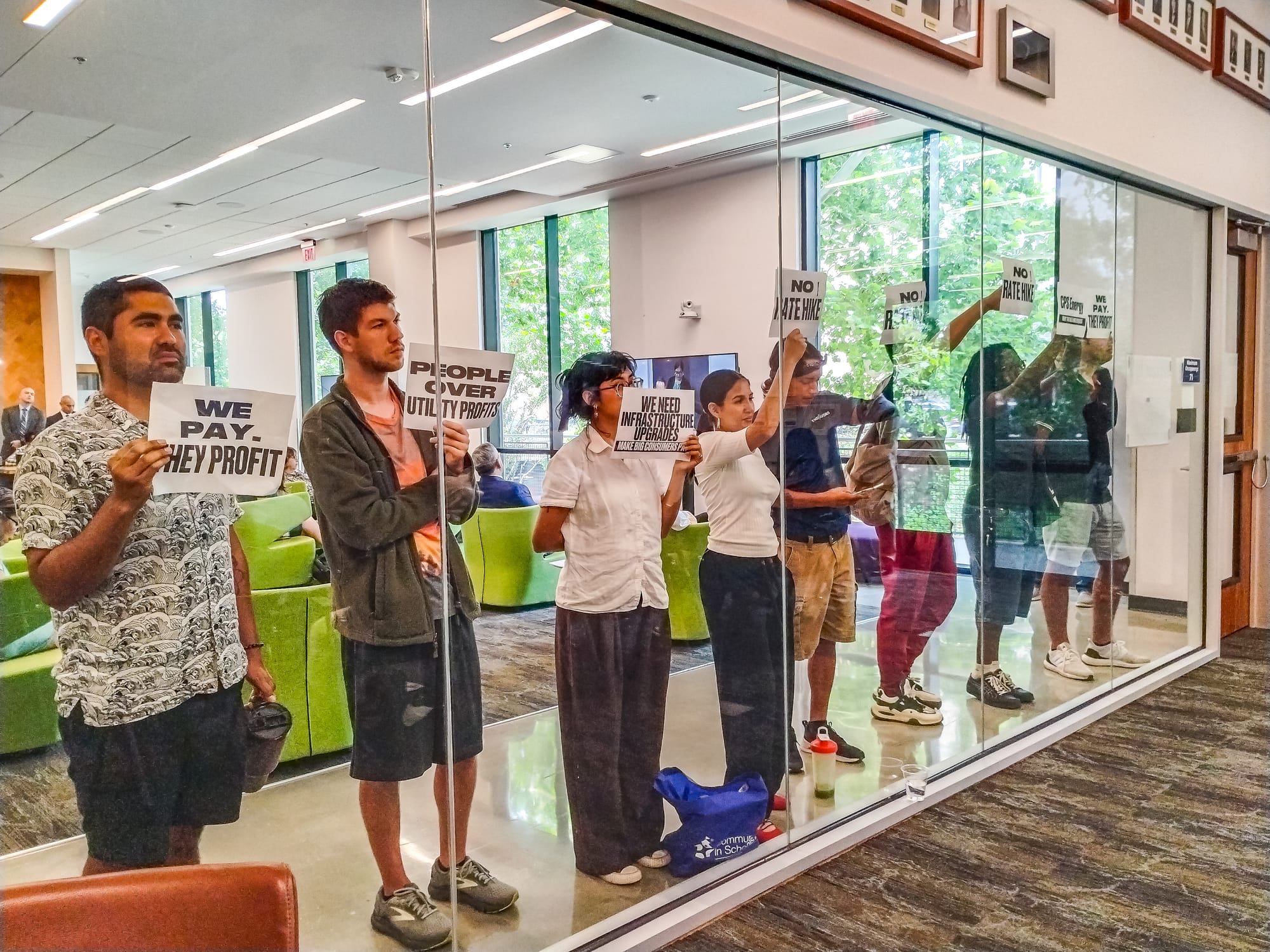
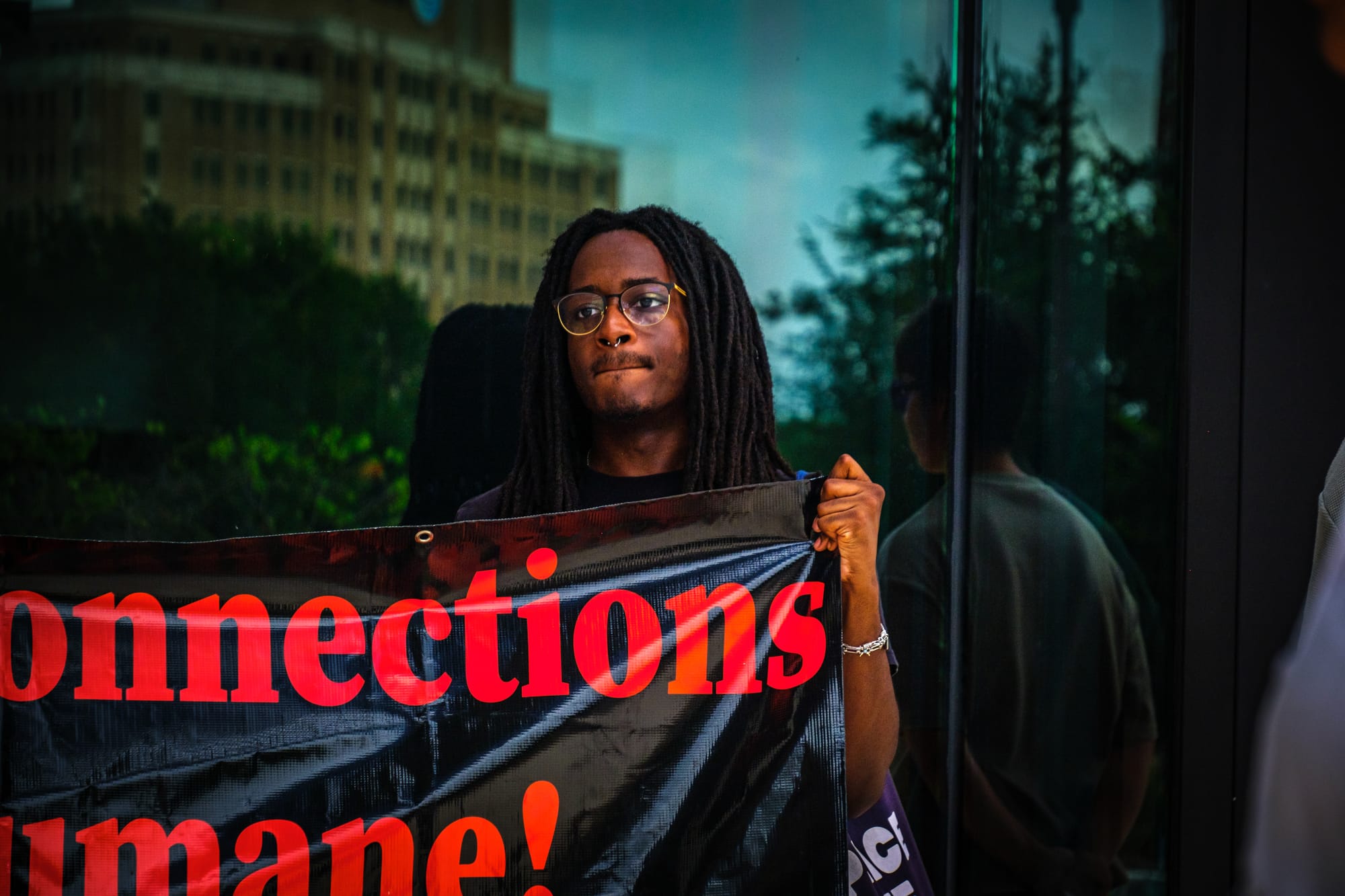
Protestors demanding accountability from the board for its climate and affordability commitments inside and outside chambers. Images: Marisol Cortez (left) & Greg Harman (right)
At Monday's meeting, San Antonio Mayor Gina Ortiz Jones, who has a seat on the CPS Board as an ex officio member due to her position as mayor, highlighted elements of generation planning that were outside of the board’s control. These include (but aren't limited to) the Trump administration’s insistence that aging coal plants stay online (which could impact existing plans to close Spruce 1 coal-fired unit in 2028) while intervening to stop the development of more than 50 wind power projects in Texas.
"One of the ways we thought we were going to be bringing on power we’re no longer doing, because of the federal prohibitions stopping some of the things that would have freed up resources in order to make those investments," Jones said.
But CPS is moving forward with previous plans to convert Spruce 2 coal-fired unit to run on gas instead of coal. In assessing that decision made back in January 2023, Deceleration concluded the conversion would not decrease and likely increase climate pollution. That’s largely due to the high methane leakage rate across Texas shale extraction zones like the Eagle Ford and Permian Basin.
The board on Monday also agreed to increase overall generation to avoid future purchases off the open market, where there are rising pressures to quickly add more highly polluting generation sources to meet the needs of surging AI data centers and crypto "mining" operations. (Just peep the plans at Vantage Data Centers LLC near Sea World and you get the idea.)
The board neglected to select a less polluting option that would have kept the city on track to keep its climate commitments, though it was expected to have increased rates more than the so-called "blended" approach adopted.
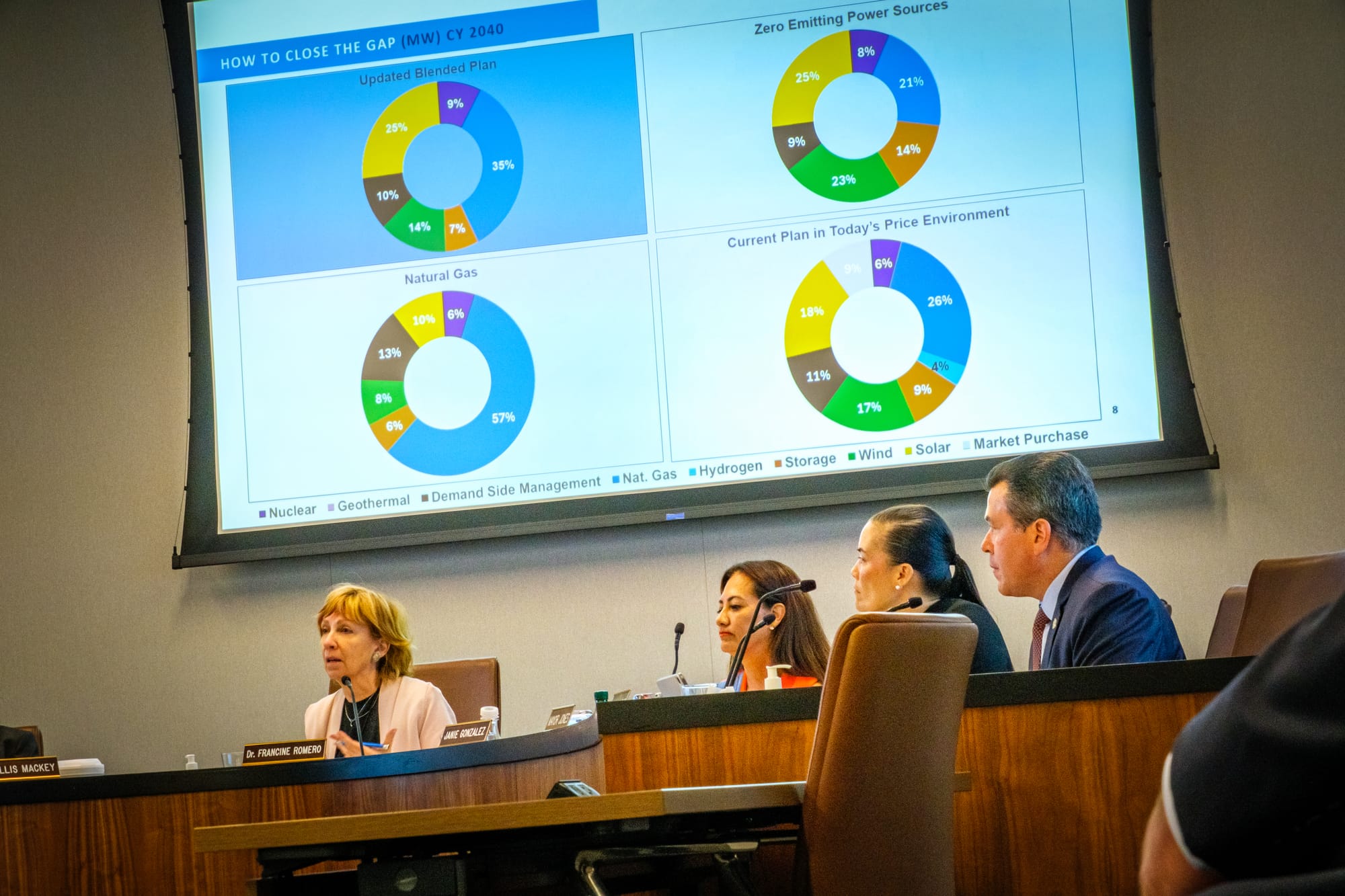
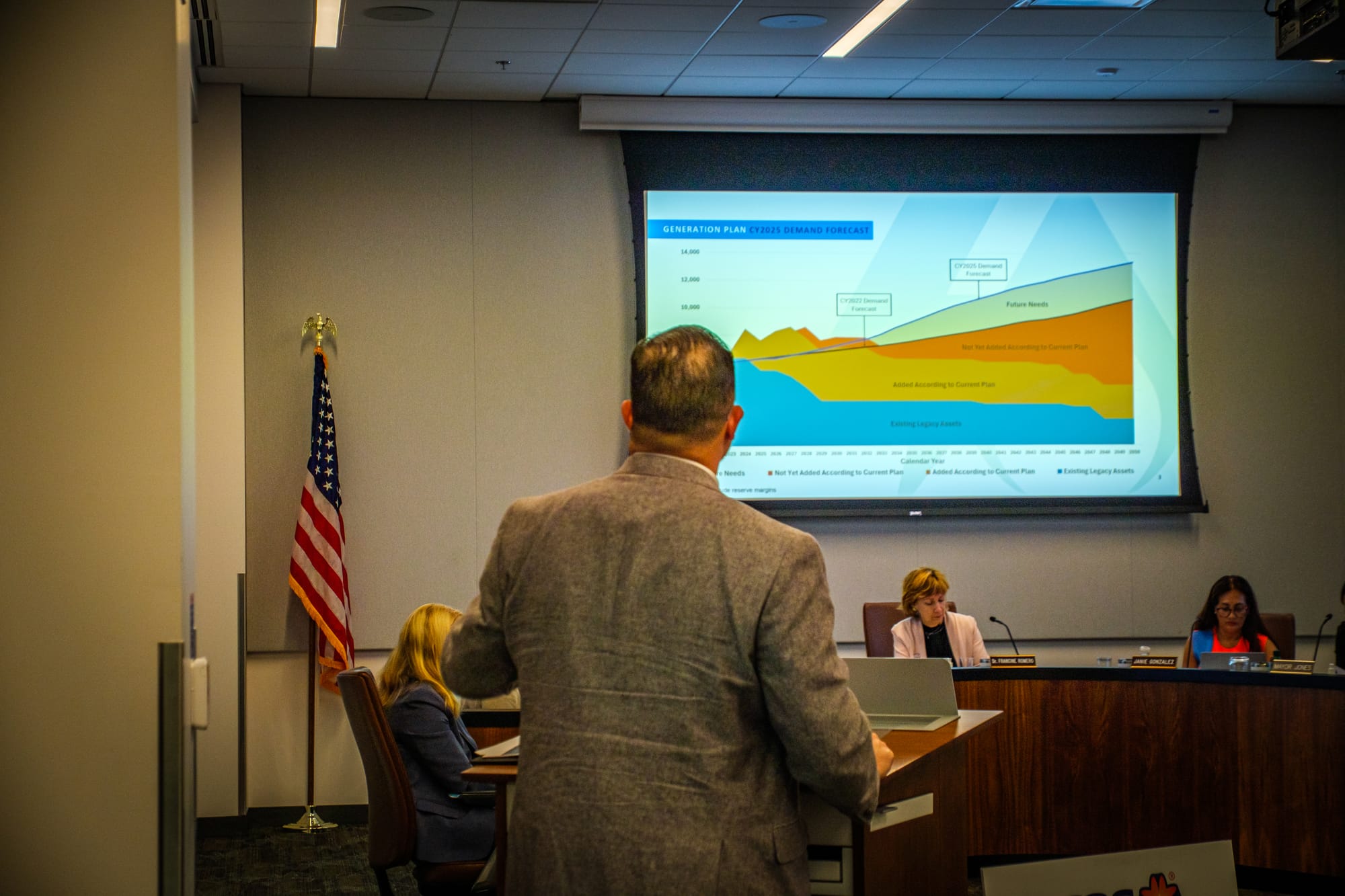
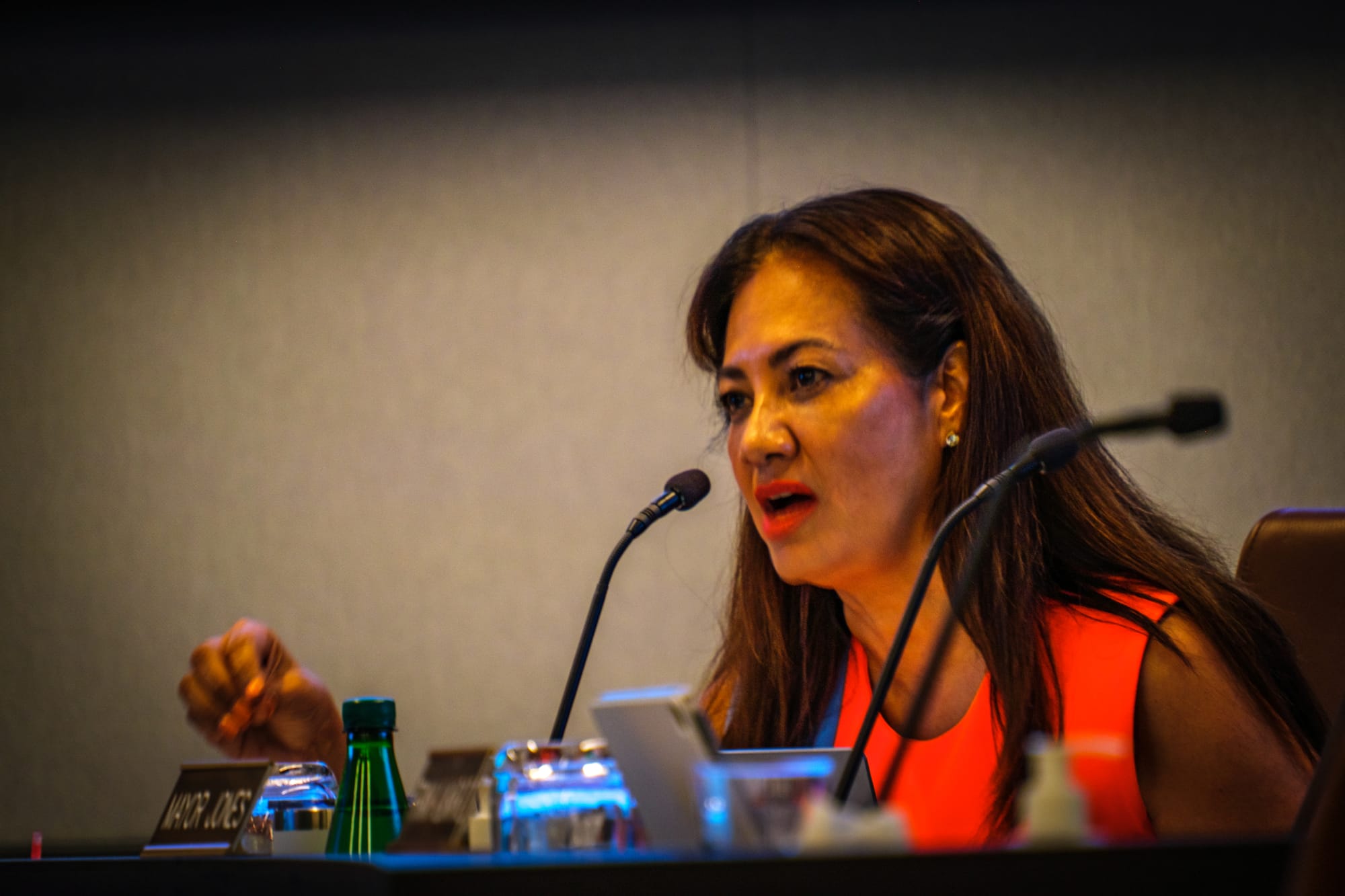

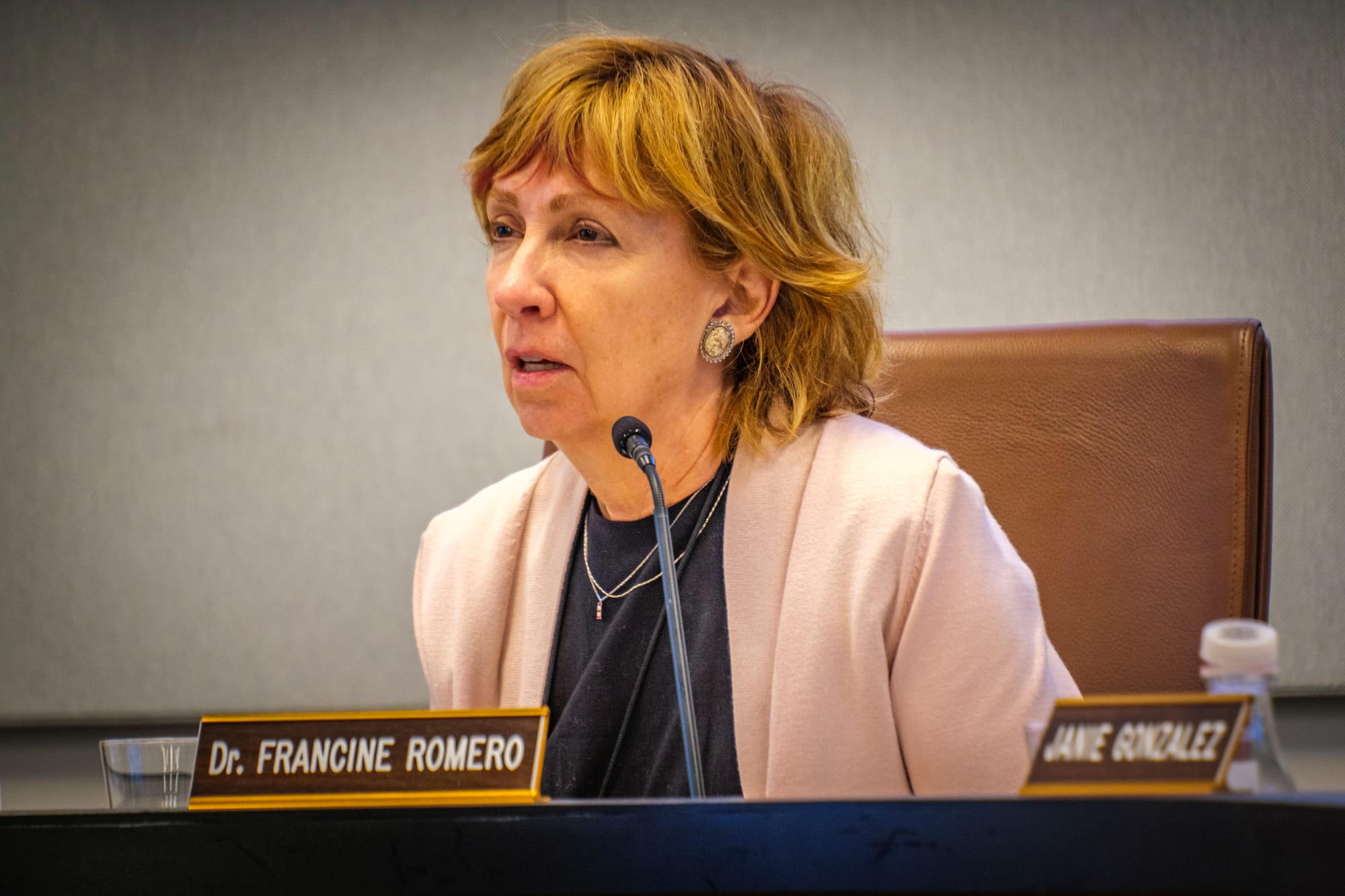
Clockwise from upper left: presentation on unanticipated expansion of power demands since 2022; CPS Trustee Janie Gonzalez; Board Chair Francine Romero; and Mayor Jones with incoming Interim CEO Frank Almaraz. Images: Greg Harman
CPS still expects to hit a 41 percent reduction in climate pollution by 2030, as required by the city's climate plan, but will swing wide of the 71 percent reductions by 2040. After that, it's very hard to imagine how the community could reach net-zero emissions by 2050.
Board members suggested they were following the direction of residents who ranked reliability and affordability over lower-polluting energy sources as part of CPS Energy surveys, they said. But board member Janie Gonzalez, the lone dissenting vote that day, questioned whether there had been a deep enough conversation within the community about affordability and the trade-offs involved in reworking CPS's generation plan to meet the demands of high-use customers. "What are we willing to sacrifice or prioritize if there’s no rate increase?" she asked. "Or if the budget can’t support all these things?"
During public comments, Jeff Webster, president and CEO of the Greater San Antonio Chamber of Commerce, appeared to mock some of the young people who voiced alarm over affordability, urging the elimination of utility disconnections and dedicated reliable power regardless of the ability to pay (something outgoing CPS CEO seemed to agree with when we interviewed him in 2022).
“We all like free power, we like free water, we don’t want to pay for groceries," Webster said. "It doesn’t work that way.”
CPS officials said a lower-polluting plan for meeting anticipated energy demand that reduced gas reliance and increased wind and storage would increase local residential utility bills by $20 per month (from $239/month on average to $259/month). The “updated blended plan" approved on Monday is expected to increase rates, too, but by about half that amount ($248/month for average household). A third option to invest more deeply in gas was expected to reduce bills over current levels by $13 per month but nearly double the climate emissions intensity of current operations (see chart below).
In the short-term, the "blended" generation plan will continue to invest in additional renewable power in the coming few years, along with the conversion of Spruce 2 from coal to gas by 2030. In the longer term, however, the plan amounts to a rollback of the city's climate efforts. Of the four plans considered, only the "Zero Emitting Power Sources" option stays the course on the climate targets set by the city's climate plan.
Board Chair Francine Romero chided speakers concerned by the generation course change by downplaying the significance of the vote.
“I appreciate that one of our citizens said this, that they were not trying to be condescending. And I’m not trying to be condescending, but I just want to be clear on this," Romero said.
"We are voting today on a strategy. On a pie chart. We are not voting on a rate increase. We are not voting on a rate increase. We are not voting on any purchases. And so I just want to emphasize that point again. We are voting on a strategy going forward."
The nation's largest municipally-owned electricity and gas provider, however, has to put generation decisions into motion years in advance, a fact that was regularly emphasized by the outgoing CEO Rudy Garza, who received a tearful farewell at the meeting (save for the smattering of chuckles when Texas state Senator José Menéndez joked about how, prior to coming to work at CPS, Garza worked in Corpus Christi..."back when they had water.")
In other words, the generation plan approved this week has real financial and climate impacts that won't be put back in the bottle easily.
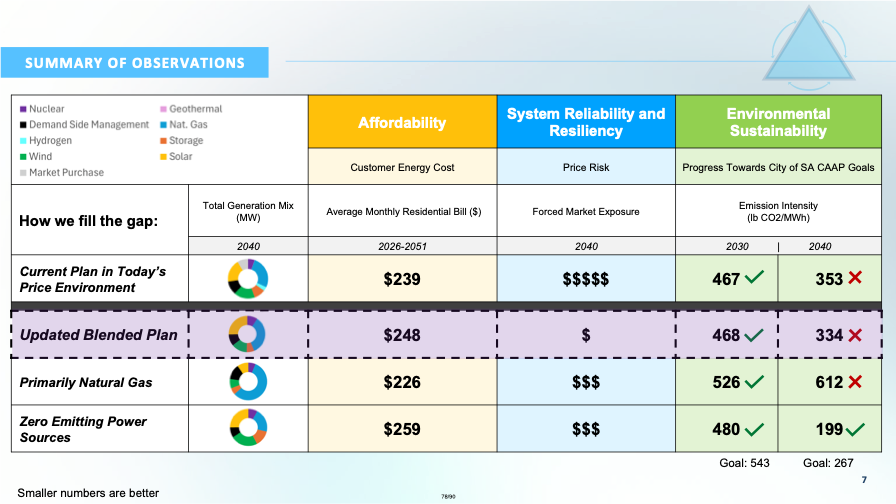
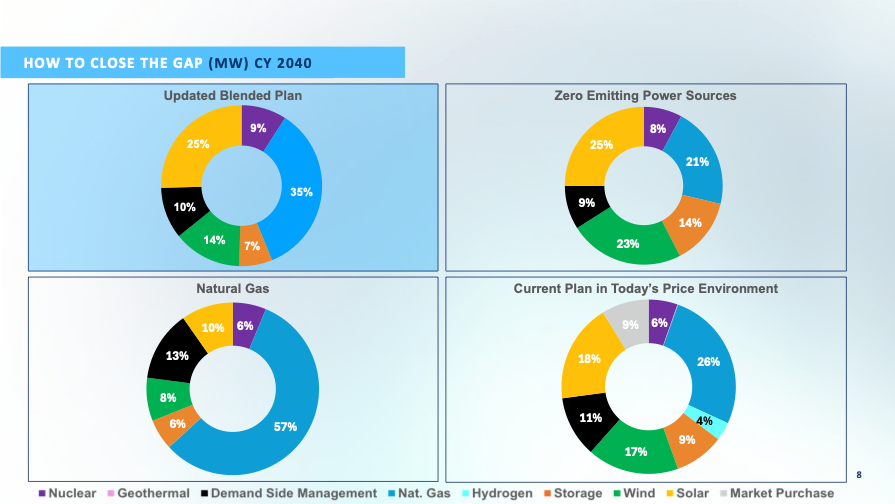
Slides shared at the meeting showing the various generation scenarios considered and their impact on rates, 'resiliency,' and the city's climate goals.
Notably, in a separate agenda item about a new transmission line intended to assure grid reliability in the face of rising demands from large-load customers in far west San Antonio, Romero also sought to minimize speaker concerns about the ultimate purpose of the investment.
"I would like to just make sure we clarify some things for people who might be watching," Romero said. "It's easy for people right now maybe to assume that any time a line is being built, it's being built at the behest of data centers."
She then invited LeeRoy Perez, CPS's vice president of transmission distribution engineering, to expand on the purpose of the project "in the bigger context of state needs, and what the state is trying to achieve with this." Kicking it back to the local level, he responded:
"Given the load growth that we are seeing in this area [of far west San Antonio], this line will help that load growth, so that we can continue to reliably serve the load growth that we’re seeing there."
As it happens, the area being served by the "Omicron New 138kV Transmission Line Project" correlates with one of the city's densest clusters of large-scale data centers, home to Microsoft, CyrusOne, Vantage, and CloudHQ.
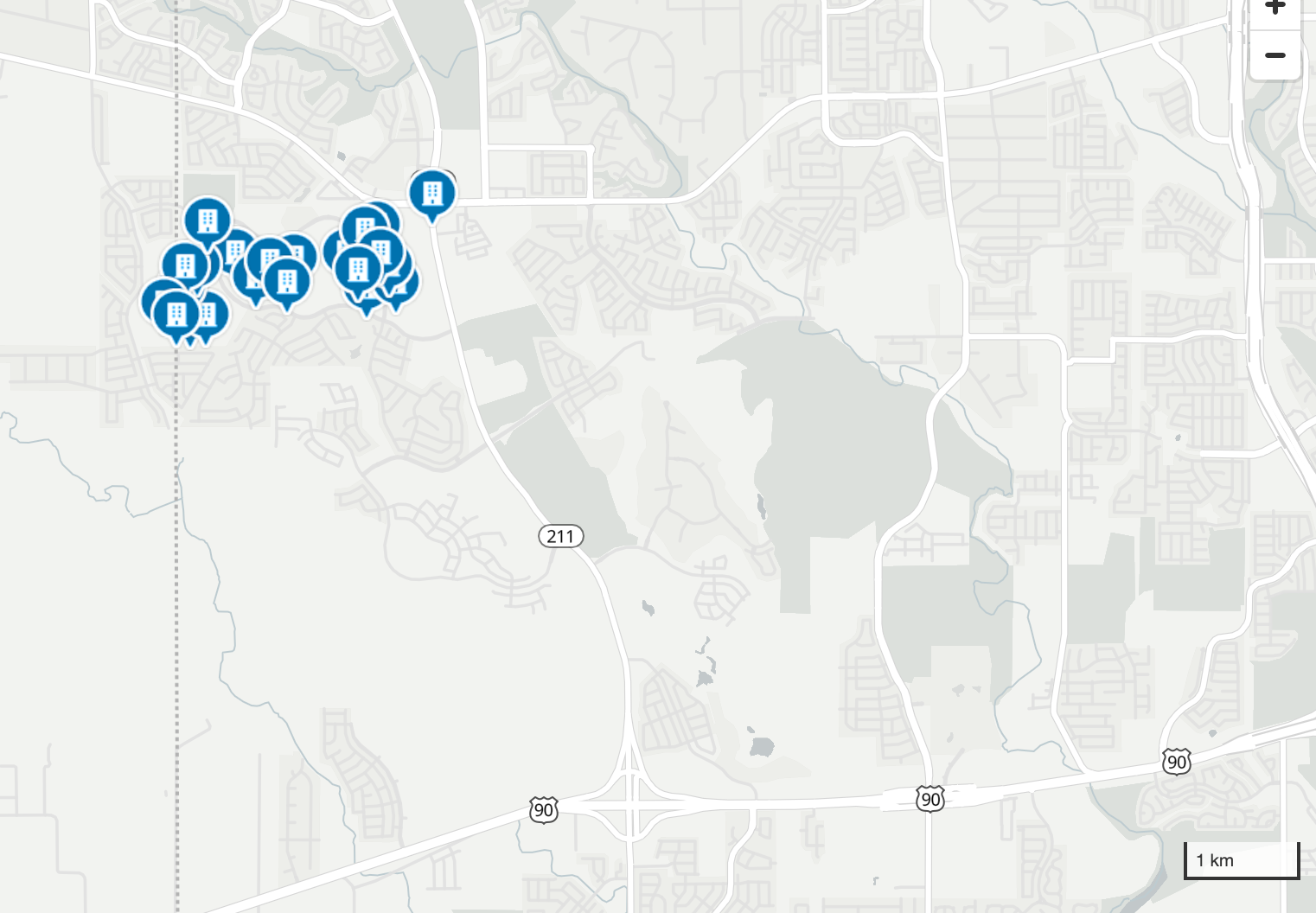
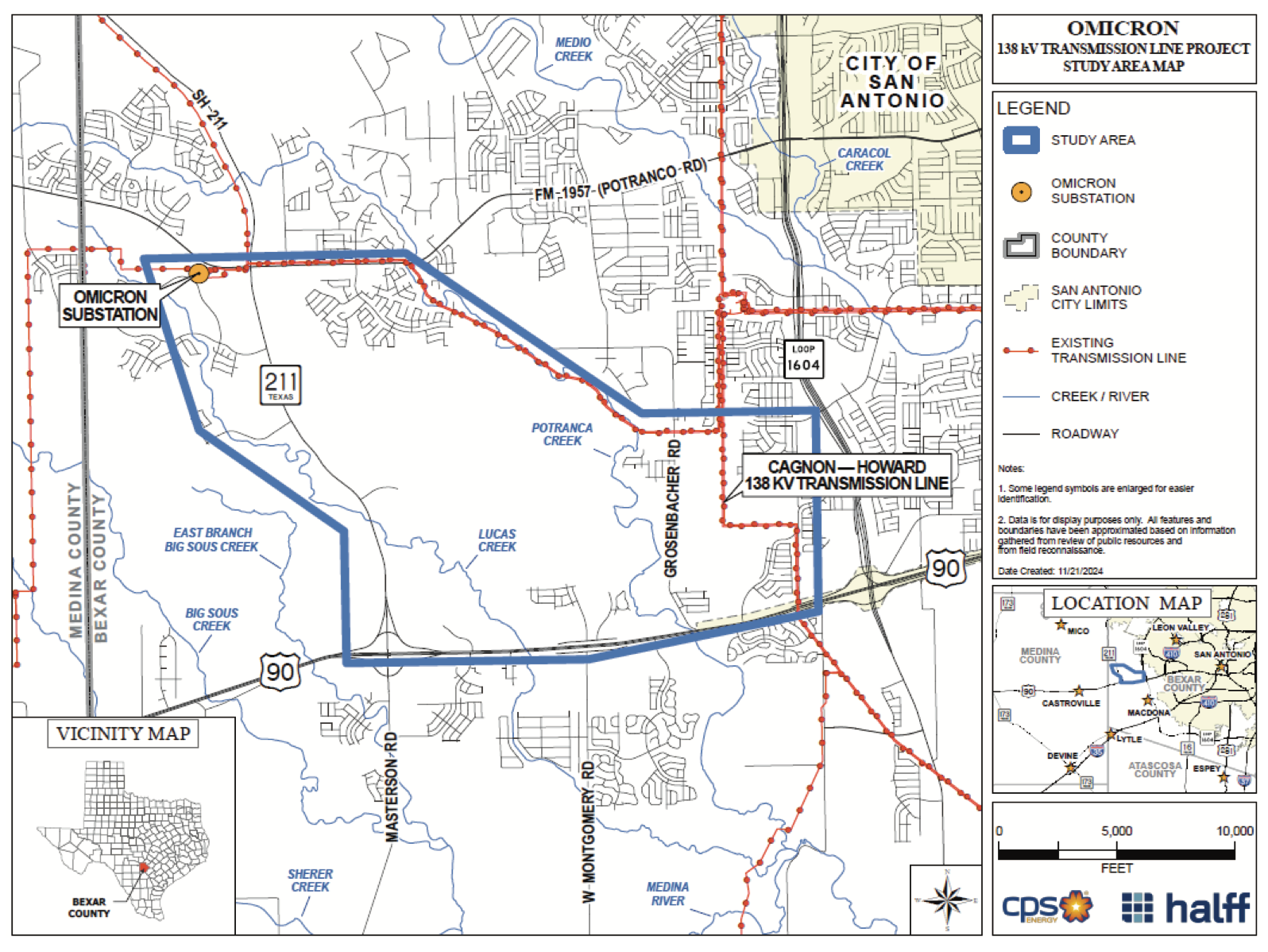
Left: Map of data centers clustered off State Highway 211 near the Bexar County line in Far West San Antonio, via the Data Center Map; Right: Substation location and boundary lines of the the Omicron New 138kV Transmission Line Project, from a CPS Energy brochure.
Adrian Shelley, director of the public interest nonprofit Public Citizen's Texas operations, also highlighted the 26GW of power requests recently made by what he described as "large load" operators to CPS Energy. While not all of those power demands will materialize, he said, it demonstrates the need for concerted planning—particularly if CPS is going to help keep the cost of their demands from falling on local residents.
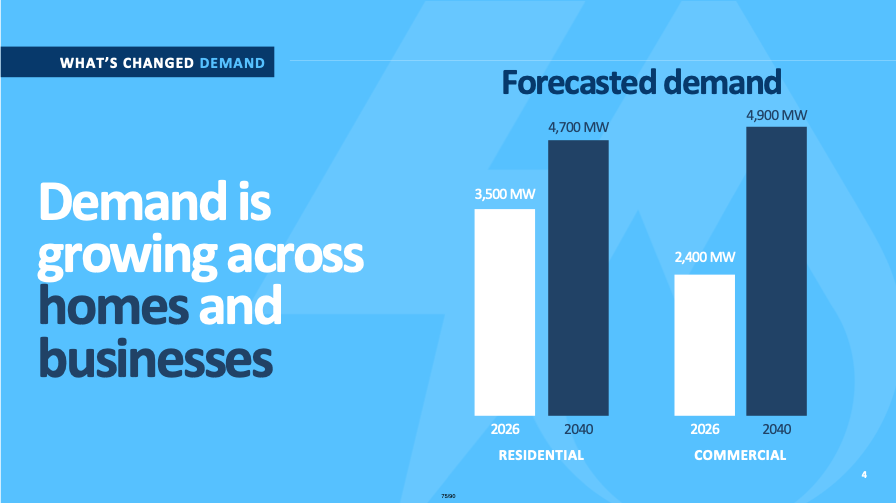
CPS expects, for instance, commercial demand to more than double by 2040, while residential demand is expected to rise by about half that amount during the same period. Much of that industrial demand is expected to come from AI data centers.
When questioned by Mayor Jones over data centers and power demand forecasts, David Kee, CPS's director of energy market policy, admitted that the CPS forecast had probably been low-balled.
"We believe there’s probably room for that to go up as time goes on," Kee said. "We just don’t want to be overbuilding in case there’s some kind of big political change that reduces demand on the load side."
-30-
Additional reporting provided by Deceleration Executive Editor Marisol Cortez.


