

Fort Worth, Texas, is considered one of the most conservative large cities in the United States. As crypto and AI were being embraced by the Republican Party (ultimately to Trump's personal benefit), this North Texas city's elected officials followed right along: putting a mini crypto mine right in its city hall.
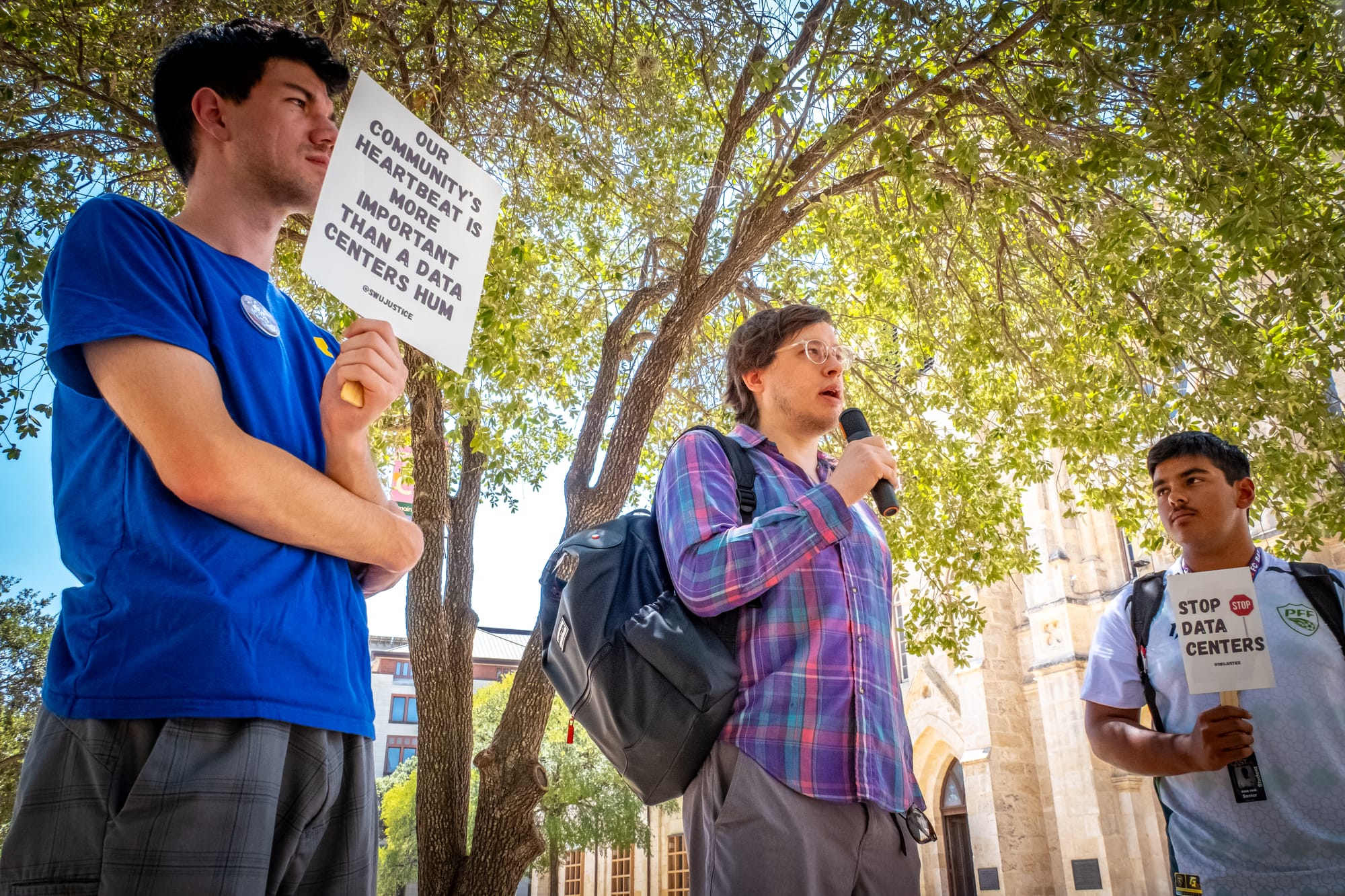
And yet, somehow, Cowtown beat San Antonio to a moratorium on data center development, in spite of progressives holding “an eight-to-two majority on the dais” in San Antonio, as the Current framed the current Council’s political makeup after last year's election.
Facing rising popular pushback on the issue, five of Fort Worth’s council members pushed for a moratorium back in July, saying a pause on development was needed as regulations are being developed.
"We believe it is far more important to get these regulations right than rushed," the group wrote.
On Aug. 11, Fort Worth Council members unanimously approved the development of a 90-day moratorium. (But, we should note, that didn’t stop them from since approving a site plan for a new data center already in the permitting pipeline.)
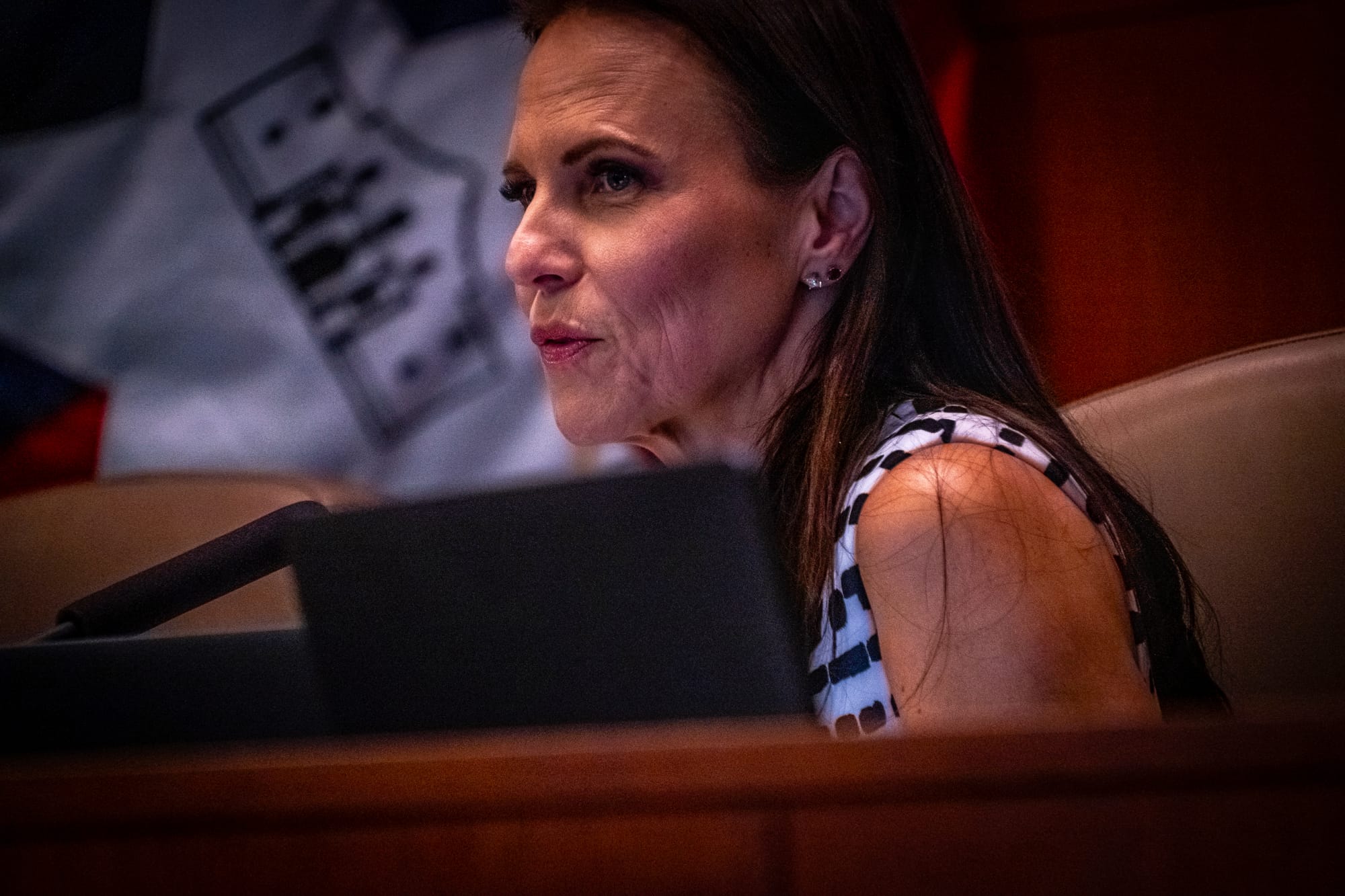
On Tuesday, San Antonio’s City Council, by comparison, showed they are still broadly divided on the question of a moratorium. During a special meeting on the topic, Deceleration counted only four solid “yes’s” to the proposal, though most members expressed support for modifications to the local Universal Development Code to regulate where data centers would be allowed to operate.
“I’m not ready to commit to a moratorium,” said Mayor Gina Ortiz Jones. “I want to see what else we can do to help ourselves.”
Zoning the Key to Regulation
In the fight against data centers, zoning may be the magic sauce. In Texas, attempted bans have fallen under legal challenge (or threat of legal challenge) in both Hood and Hill counties.
In June, the City of San Marcos effectively banned data centers in that city by first defining data centers under its Universal Development Code—a primary step that allows regulation by land use—and then proposing to limit data centers only to the most intense industrial category…before then stripping that category away also. This approach is more likely to survive a lawsuit than an outright ban, as Katlyn Ma wrote in the Texas Tribune recently.
The process of legally defining a data center under the UDC got underway in San Antonio on Tuesday. The initial proposal from Development Services staff would allow data centers...a lot of places, including:
“C-3” General Commercial District, “L” Light Industrial District, “BP” Business Park District, “I-1” General Industrial District, “I-2” Heavy Industrial District, “MI-1” Mixed Industrial District, “MI-2” Mixed Heavy Industrial District.
As Logan Sparrow, assistant director of Development Services said opening Tuesday morning’s meeting:
“We’re not here to ban data centers.”
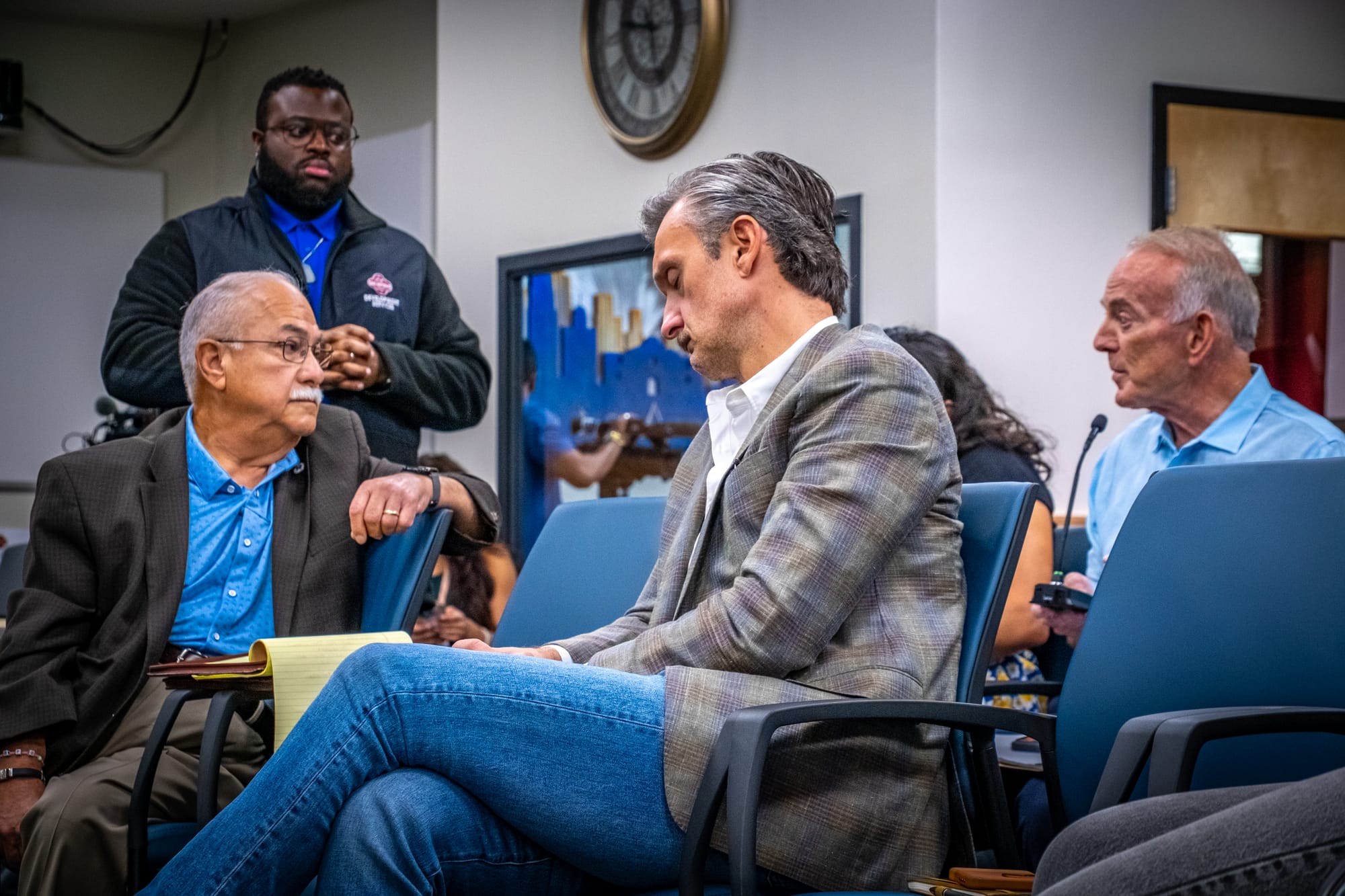
Sparrow left early to help brief the City Council at a budget meeting that morning, leaving staff to run the show. They quickly fell into something of a rhetorical trap by agreeing with local data center lobbyists when they characterized Sparrow’s proposed 500-foot buffer for data centers as “a compromise” but didn’t have the research grounding it.
Too Far, Too Near
“We think 1,000 feet is a little drastic. Obviously 100 feet isn’t enough," said the staffer. "We’re trying to kind of compromise and find that middle ground.” She said the department wants to limit noise but didn't want to go "overkill.”
This arbitrary-sounding posture didn’t sit well with DeeDee Belmares of the nonprofit advocacy organization Public Citizen.
“The setback should be supported by studies, not just for noise, but for light and air pollution,” Belmares said. “500 [feet] not enough to protect neighbors and the children.”
“The elephant in the room is the 500 feet,” said prominent local lobbyist Bill Kaufman.
Kaufman and fellow lobbyist Rob Killen disagreed with the proposed setback. But they weren't arguing for tougher limits. Kaufman said he hopes to eliminate it entirely.
“I think we’re going to ask staff to scrub that,” Kaufman said.
Deceleration Video
Concerns About Heat Impacts
It’s not just noise, light, water, and power concerns that need to be mitigated, however. One representative of the small manufacturers association said he was concerned about the well-being of warehouse workers who work without the benefit of air conditioning. A data center pushing out up to 10 degrees of extra heat (or more) in their direction would be a concern for employers like HEB, he said.
“They will receive the airflow coming from the plant,” he said. “You do take into consideration what direction the wind is blowing.”
Kaufman suggested Development Services host a tour of a data center operation—maybe Vantage, now on the cusp of being sued by a trio of public-interest orgs—adding that much more study is needed to come up with evidence-based policy.
That, however, was a nonstarter, as City staff reminded him that City Council is setting the pace here. The UDC changes—whatever they wind up being—will need to fit Council's agenda, which Development Services Director Amin Tohmaz told Council a few hours later, would require a vote at the Zoning Commission as soon as Sept. 15, 2026, and a Council vote on Oct. 15, 2026.
Here’s the full UDC discussion, that largely ping-ponged between local activists and environmental policy folks and data center lobbyists:
Timeline to a Moratorium
Tohmaz briefed Council on what will be required for a moratorium, which would begin with a Council vote, potentially as soon as Sept. 3.
Then would follow a public notice, two council hearings, two readings of the proposed ordinance, winding up with a Council vote. The soonest this could come would be the tail end of December or early January 2027. That would trigger a 90-day moratorium, which could be extended for one 90-day period.
Tohmaz then said his staff recommends against a moratorium but rely instead on zoning and UDC modifications.
That exposed a soft middle among Council members.
You can watch the presentation here.
Where Council Landed, First Discussion
With no calls for an outright ban, we can’t say there’s a truly hard line being drawn here, but members positioned themselves between the boosterish (Misty Spears, who spoke of our obligations to beating adversaries in an AI arms race) to the moderately tough Ric Galvan, who started advocating for regulation last year.
To get a handle on this destabilizing industry that is already seeking more power than CPS Energy is able to produce, Galvan has proposed a moratorium on all new permits until protective processes and regulations are in place. Ultimately, he aspires to a system where each individual data center will have to come to Council for a vote.
Based on their public comments made at the meeting, here is where the pack split on a moratorium:
Yes
- Ric Galvan (D6): The leader of data center reform efforts.
- Ivalis Meza Gonzalez (D8): Signed on with Galvan’s memo to launch this process and also favors the Special Use Authorization idea for individual votes.
- Jalen McKee-Rodriguez (D2): Fully on board. Data Centers, he said, are “one of the largest and fastest growing threats to our communities.” (Comments here.)
- Teri Castillo (D5), who also joined Galvan’s request for this action, said: “I support the staff recommendation” for UDC changes...but also a moratorium.
Maybe
- Mayor Gina Ortiz Jones: “I’m not ready to commit to a moratorium,” she said. “I want to see what else can we do to help ourselves.” That may include requiring cleaner energy options or recycled water through utility permitting.
- Sukh Kaur (D1): “My biggest concern is jobs,” she said, while stating she needs to research to better understand the broader impacts of data centers.
- Edward Mungia (D4): Said he wants to demonstrate to the public that Council is doing their best to limit high energy users.
No
- Marc Whyte (D10): Favors UDC changes, not a moratorium.
- Marina Alderete Gavito (D7): Complained about swirling (negative) “misinformation” about data centers; warned a moratorium would “drive jobs from our city.”
- Rebecca Viagran (D3): “A moratorium would just be a patch.”
- Misty Spears (D9): Supports UDC amendments. Giddy about mini nuclear reactors for data centers.
Next Up: Data Centers - Community Meeting
This meeting will be used to discuss changes to the UDC amendments for data centers based on feedback received at the third stakeholder meeting, and to provide a summary of the council discussion from the Aug. 25 City Council Special Session, including a timeline for next steps. — Development Services
- 9am Fri., Sept. 4
- 1901 South Alamo Street, San Antonio, TX


