“We will sacrifice because we know in future generations, my children, my grandchildren, are going to be in a better space,” said Tracie Mafile’o, a Tongan researcher based in Aotearoa, also known as New Zealand. I spoke with Mafile’o for this week’s piece about the need for a post-growth economics of well-being and the ways Pacific Islanders approach that work.
Anytime I’m out reporting, I always collect far more quotes and anecdotes than I can ever hope to include in the published piece, and sometimes beautiful sentiments like Mafile’o’s above never make it to print.
But it’s sentiments like that that motivate this newsletter. I’m not a parent and I might never be one, but I’ll always be committed to uplifting the stories and solutions that afford generations present and future the best possible opportunity for living in worlds and communities to thrive.
Another quote from the cutting room, this time from Sally Hett, who you’ll meet below, illustrates part of what makes the well-being economy an important conversation in that vein:
“I saw the wellbeing economy movement as bringing in a vision for what we do want, and allowing people to see themselves in it, and how they can contribute.”
Please enjoy. And if any thoughts or feelings arise while you read the story, make sure to leave a comment! I’d love to hear from you.
—Syris Valentine
The Myth of Endless Growth is Strangling the Earth—and All of Us! This is How We Break Free
Crisis confronts the economy. The billionaire class has become a black hole for wealth, to the increasing impoverishment of everyone else. The war in Iran has revealed—just as did the pandemic in 2020 and the crash of a container ship in the Suez Canal in 2021—the fragility of modern trade. Insurers themselves have even warned climate disasters could spell the collapse of capitalism.
Each of these challenges are the byproduct of an economy whose primary objectives are profit and growth. Nevermind what drives the growth or who it serves: So long as the GDP grows, we’re told, we’ll all be happier, healthier, and wealthier for it. Walk a few blocks through my city, Seattle, where teams of homeless huddle on street corners just blocks from the glittering terrarium Spheres making up part of the Amazon headquarters, and the myth that growth guarantees wellbeing shatters.
“The U.S. is a shocking example where growth doesn't solve anything,” said Aljoša Slameršak, a researcher at the Autonomous University of Barcelona’s Institute of Environmental Science and Technology who studies post-growth approaches to climate mitigation. “You could have endless growth, and just by the political decision of how you share the benefits of it, you would always have abject poverty.”
Confronting the growth imperative must be central in addressing the climate crisis because for the economy to grow so too must energy use and, by extension, emissions. The spread of renewable energy has helped the economy to grow faster than its emissions, but this decoupling has been insufficient to bend the global emissions curve. In the 34 years since the United Nations adopted its framework convention on climate change, worldwide emissions have only dipped for recessions and global crises.
To resolve this anti-progress on climate change and the declining wellbeing of people around the world, scholars like Slameršak are investigating how the economy can be reimagined to support the outcomes that matter most. An array of alternatives have been proposed: degrowth, doughnut economics, solidarity economics, wellbeing economics, and more. Each approach takes a slightly different tact for thinking about how to remove the blinders we’ve long worn in our pursuit of endless growth. The most significant question for each proposal is simply, what would this look like in practice?

Most of the answers about a new economic system focus on policies: taxing the wealthy, democratizing the workplace, nationalizing fossil fuel companies, reducing work hours, guaranteeing jobs, providing universal basic incomes, provisioning universal basic services. These proposals are often quite popular, but it still leaves one to wonder what would need to be different about our businesses and our cultures for a post-growth economy to properly function.
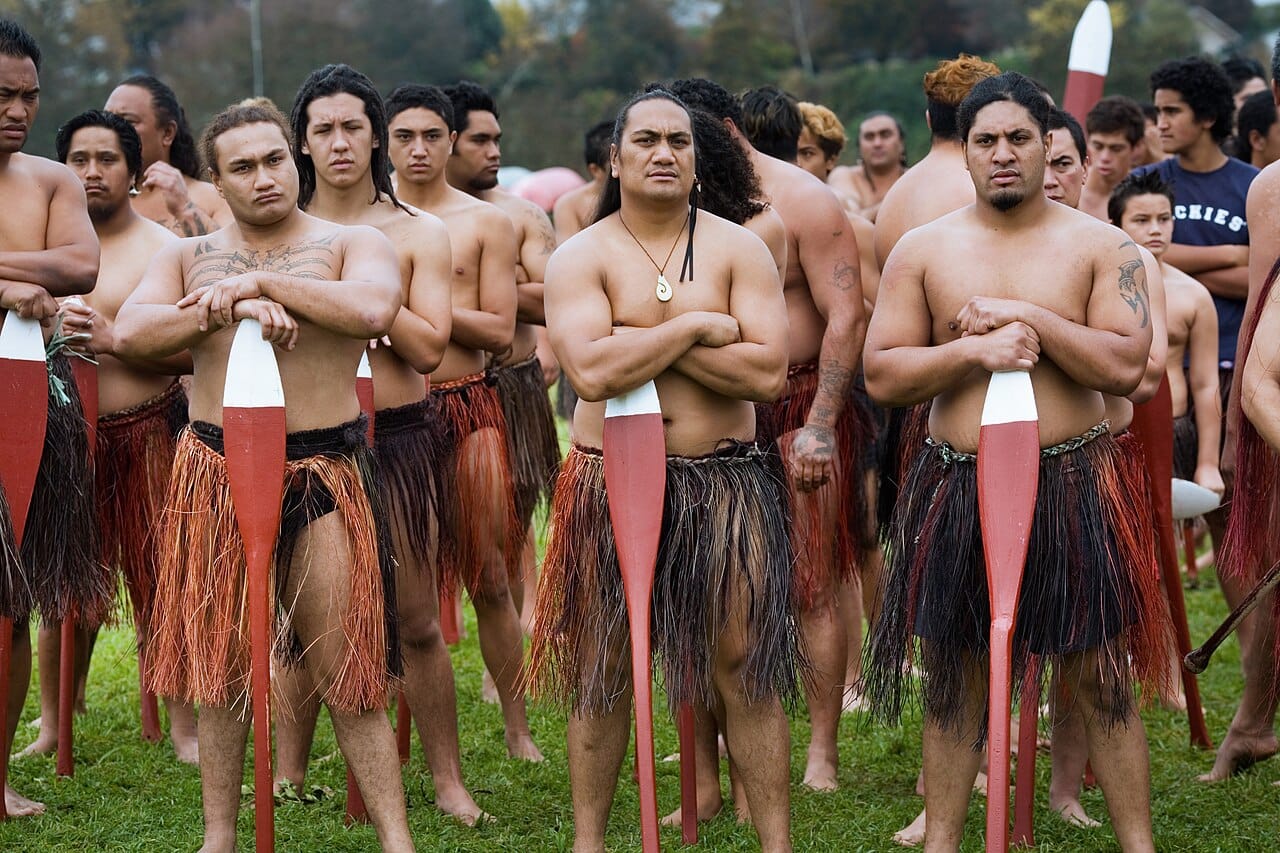
To answer that, we can look to the Māori and other Indigenous Pacific Islanders for lessons in wellbeing economics because of the alignment between post-growth ideas and the core tenants of the Māori worldview, or te ao Māori.
In a recent paper, Matthew Rout, a researcher focused on Māori economics, and his co-authors highlighted this “cognitive convergence.” Rout and his team argue that this convergence comes from the “relational worldview” that post-growth scholars are tapping into, a worldview which sees the connections between human and nonhuman life and that recognizes the intrinsic value of life and nature.
While modern capitalism has suppressed this relational worldview in the West, Rout and colleagues argue that it remains innate to the human spirit and nearly ubiquitous among Indigenous peoples, shaping the way the Māori and others interact with each other and the environment.
Among the Māori, this worldview leads to an economy that is embedded in its community and environment, prioritizes collective wellbeing, centers empathy, promotes reciprocity, maintains a dynamic balance between people and with the environment, and roots itself locally.
There are many Māori-led businesses and organizations in Aotearoa, the Māori name for New Zealand, that are trying to operate with cultural integrity, said Sally Hett, the knowledge and engagement lead of the Wellbeing Economy Alliance Aotearoa (WEAll Aotearoa). “The system makes that really difficult because of market forces.”
A recent report commissioned by WEAll Aotearoa and authored by Māori scholars highlights the ways in which Māori organizations continue to act in alignment with te ao Māori in the face of these market forces, and how New Zealand’s constitution could be transformed to support Māori economies and, by extension, the wellbeing of everyone in the country.
Of the four case studies highlighted in the report, Hett said she was most drawn to the example of Whenua Warrior, a nonprofit promoting food sovereignty in the far north of New Zealand by empowering people to grow their own food. The aim goes beyond expanding access to food, with the ultimate goal of reducing how much people need to rely on markets and paychecks to survive. As Whenua Warrior’s founder sees it, wage labor deprives people of the time to engage in kaitiakitanga, an ethic of ecological stewardship central to te ao Māori.
This case study, Hett said, poses an important question: “How do we give ourselves more time for the things that really matter?”
The work that Whenua Warrior does is essential and inspiring, but the core challenge their work speaks to — that people must sell their time to acquire the money to buy the essentials of survival — requires systemic change to rectify. “Government could have a role in decommodifying our basic needs,” Hett said, “say through universal basic services.”
“Decommodification means that more human activities — the way we relate with each other — are not conditioned on monetary incentives,” Slameršak said.
“This is change that will be beneficial for all New Zealanders to lead a good life,“ Hett added.
Another aspect that’s core to the relational worldview of Māori and other Indigenous cultures of the Pacific and beyond is the idea that wellbeing extends beyond the here and now across generations.
Meanwhile, under capitalism, present profits are prized over any future concerns, and it’s a major reason why the climate crisis has reached its current proportions. When I recently watched the Netflix documentary The White House Effect, which unearths the obstacles that prevented early action on climate change in the 1980s and ‘90s, I saw this myopic thinking on display. In a clip of archival footage shown during the film, a fossil fuel representative said at the time, “even the pessimists, the ones who predict these terrible cases, aren’t really predicting large effects for 50 years or so. So I don’t see the reason for haste.”
“You can see how impoverished that thinking is, right?,” Tracie Mafile’o, an interdisciplinary social researcher with Avondale University and Mana Pacific Consultants, told Deceleration.
When Mafile’o and her colleagues studied how families across six different Pacific Island nations approach resilience and wellbeing in the context of the climate crisis, they repeatedly found that people understood economic benefit to be something that extended far beyond the present generation. “It's not about what I'm experiencing now,” Mafile’o said. “It's about the prospects of the future for future generations.”
This idea is also captured in a proverb that appears in WEAll Aotearoa’s case studies of Māori economics that is roughly translated as, “For us and for our children after us,” which informs the way Ngāi Tahu Holdings manages the assets it won as part of a settlement with the British Crown for violating Ngāi Tahu’s treaty rights.
The practices and principles go well beyond this, like the practice of inati in Tokelau where all the men of a village will fish together and the catch shared equally among every family — even those who couldn’t participate.
With all this in mind, as Hett put it, “Māori economies provide leadership and values and practices for a more just and sustainable economic future for everyone.”
As we seek out ways of practicing an economics of wellbeing in our own communities with this relational worldview in mind, it’s important to recognize that Pacific Island practices cannot be simply copy-pasted — not least of all because the practices are inherently designed for a specific local context.
Nonetheless, given the cognitive convergence between the broader suite of wellbeing economy strategies and the Māori approaches to wellbeing, we can take inspiration from them and, as we experiment, exchange lessons and learning with Māori and others as peers in the shared search for an escape from the decaying machinery of capitalism.
Penny for your Thoughts: How do the ideas expressed here resonate with you? What do you think the economy, whether locally or globally, can do to better support the wellbeing of you, your family, and your community?
Leave a comment below, and let me know.
Video
Click play for a video summary of Syris's latest newsletter. Follow Deceleration on YouTube.
Event
 Deceleration Staff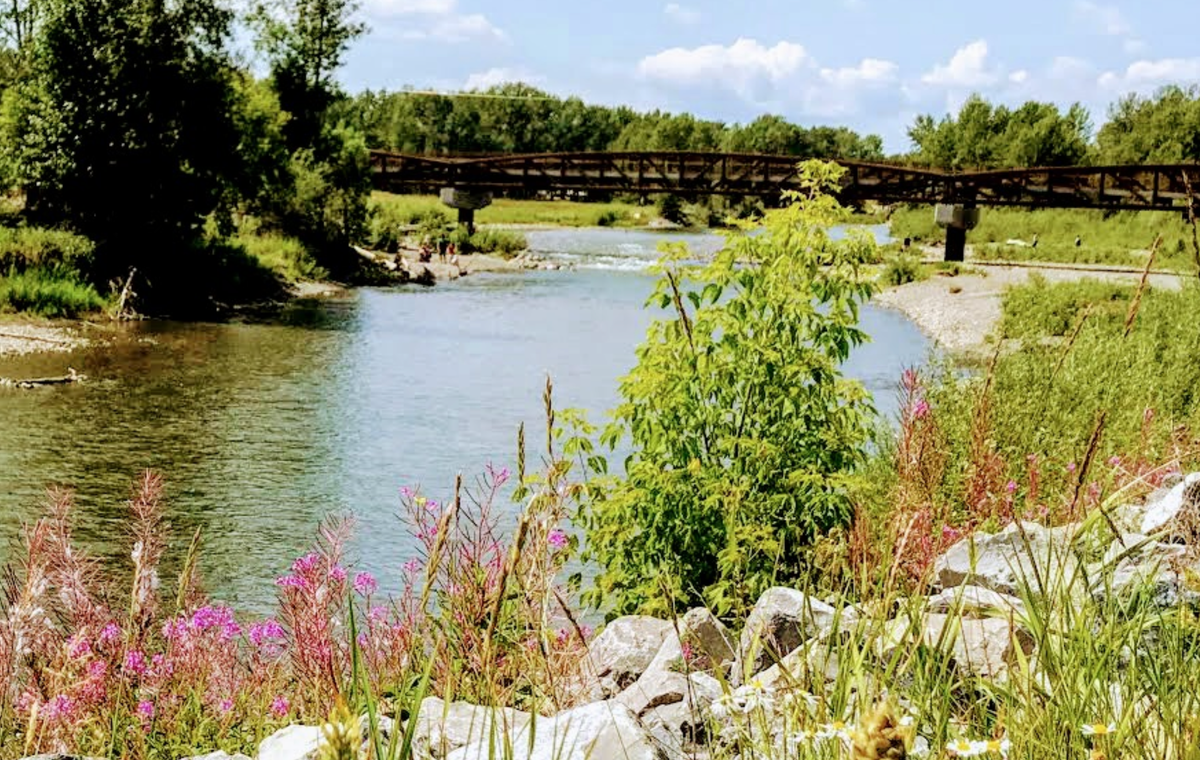
If you want to think more about how a city and town can look beyond short-term, growth-minded economies, the town of Okotoks, in Alberta, Canada, is hosting a summit focused on just this question.

News for the Future
- In Kelowna, British Columbia, Brayden and Angela Rogers have created a “recycling studio” that collects all kinds of plastic and uses 3D printers to turn them into tumblers, planters, soap dishes, food trays, and children’s toys. (The Tyee)
- Thanks to a law passed in Virginia earlier this month, there are now two states in the nation that allow residents to install “balcony solar,” so whether someone owns a home or rents an apartment, they can still benefit from solar energy. Hopefully more states will soon follow suit. (Canary Media)
- In Crockett County, Texas, the development of large scale wind farms has helped inject much needed tax revenues into community projects and programs like a senior center in Ozona. (Grist & The Texas Observer)
- Fashion designers have begun to work in collaboration with nature for their latest collections, specifically by venturing out into bogs and even going so far as to bury fabrics in their muck, to reimagine what clothing can mean by diving into “mud, mess, and mistakes” and putting the focus on “dirt, desire, and decay.” (Atmos)
- From the 1890s to the 1970s, the toxin-laced waste of lead and zinc mining operations were piled in the lands of the Quapaw Nation in the midwest, and by 1983, most of the nation’s land was included inside the boundaries of the EPA-designated Tar Creek Superfund Site. Over the last 40 years, the Quapaw Nation has been restoring its land and finally begun to return agriculture to once-poisoned soil, making it the first and only Indigenous community to clean up a superfund site. (The Guardian)