

Last week, this year’s annual UN climate conference wrapped up with an almost predictably disappointing outcome.
And while countless other magazines and news outlets have shared their take on the breakdown in the negotiations, I wanted to provide at Deceleration an often overlooked aspect of the UN’s environmental conferences: the fact that the global ecological crisis is divided up into three different bins: one "council of parties" for climate, one for biodiversity, and yet another dedicated to land degradation.
Oh, and by the way, in each of these meetings, every participant needs to agree on every letter and line of the final text. It’s a far from perfect process and many want to see it fixed.
I’m here to tell you more about that repairing the process might look like.
— Syris Valentine
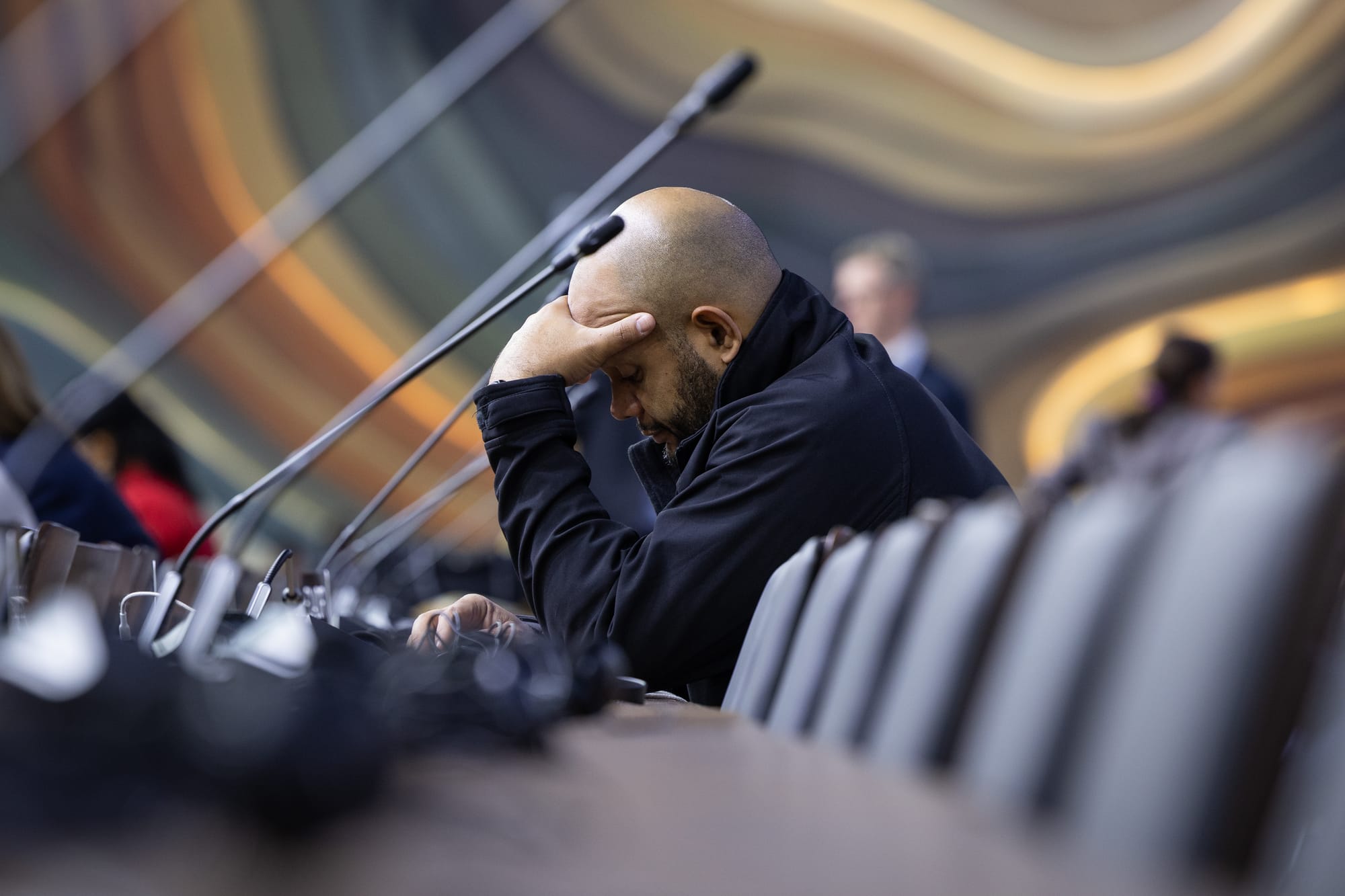
The world is dangerously off track on all its environmental goals. Is it time to revamp the US COP process?
Syris Valentine | Deceleration
Imagine going out to a restaurant for a family-style dinner with 25 people. Some of the party have nut allergies. A few are vegan, others celiac. And a couple are simply picky eaters. Everyone else just wants to eat the best meal possible. But instead of ordering a diversity of dishes where everyone could find two or three plates across the spread that would satisfy them, all 25 of you must collectively agree on every item you want to order. Oh, and you only have 30 minutes to reach that consensus—or else you lose your table and everyone goes home hungry.
That’s basically how the UN climate negotiations work. Only there’s a lot more at stake than a missed meal.
The challenge grows when you consider that instead of 25 dinner guests, 198 nations are party to the United Nations’ climate change treaty. Considering that quite a few nations with fossil fuels at the bedrock of their economy benefit from delayed action—the United States, Saudi Arabia, Russia, and India, for instance—reaching agreement on meaningful strategies verges on the impossible.

It is some miracle, then, that this year’s climate-focused conference of parties, or “COP,” is only the first since 2009 that collapsed without any sort of agreement.
Just the cover text being negotiated would have done little more than “reaffirm,” “acknowledge,” “emphasize,” “encourage,” and “underscore” that international action matters, the Paris Agreement must be implemented, ambitions need to grow, and the current trajectory of global warming should cause concern.
But this bland and unambitious language wasn’t the issue: A bloc of oil-producing nations fought tooth and nail to keep any mention of fossil fuels out of the text.

On the other side of the rostrum, small states and developing nations—who didn’t cause the problem but are bearing the brunt of the storms, droughts, and famines caused by climate change—refused to accept an agreement that denied the importance of ending our economy’s dependence on coal, oil, and gas.
Even previous climate agreements have meant little in practice. Even 2015's much-heralded Paris Agreement has hardly slowed the marching crisis.
Yet, the limitations of these negotiations go beyond their tepid outcomes.
Climate activists tend to talk about COP as though it is the only thing of its kind. But the climate conference has no special claim to the term. In the environmental sphere alone, there are two other conferences of parties: one focused on desertification, and another dedicated to biodiversity.
In fact, a week and a half before the climate conference in Antalya, Türkiye, which went from November 9 to November 20, environmental delegations from around the world descended on western Asia for the biodiversity COP from October 19 to October 31 in Armenia. And two months before that, in the capital of Mongolia, nations met to discuss desertification.
This approach, to return to the earlier metaphor, is like forcing the same party of diners to negotiate breakfast, lunch, and dinner, one at a time, at each, individual meal. A more sensible approach might mean the group sets aside an hour or two in the evening to parley and decide what the slate of meals for the upcoming day will be.
Given the mediocre outcomes of these convenings, the ways consensus obstructs progress, and the diverging paths for addressing overlapping crises, the diplomatic process governing international environmental action is in dire need of reform.
Major Takeaways from the COPs
Before we get into what those reforms could look like, here’s what you should know about these recent conferences.
Each of the three COPs took place against the backdrop of severe, global, and growing crises.
Around 40 percent of the world’s land has been degraded. Global wildlife has declined by 73 percent in the last five decades. And the world is set to exceed 1.5 degrees of heating over the next two years, and the rate of warming has doubled in the last decade.

So what did the parties imbued with the authority to halt and reverse these trends accomplish during their trio of meetings?
At the conference on desertification, delegations agreed to:
- Mobilize $1.3 billion for land restoration and drought resilience,
- Implement a new drought resilience index to help vulnerable nations prepare for and adapt to drought, and
- Recognize the importance of protecting rangelands and the trillions of dollars in ecosystem services these grazeable landscapes provide.
Meanwhile, at the biodiversity negotiations the assembled nations adopted resolutions to:
- Accelerate protections for marine and terrestrial ecosystems to get back on track with the 30% of lands and waters protected by conservation agreements by 2030,
- Pursue economic policies that phase out subsidies for industries that thrive off nature’s destruction, and
- Expand funding for projects to protect and restore biodiversity in small and developing states.
And lastly, the recent climate conference closed with:
- 75 countries adopting a pledge to convert 35 percent of all the energy they use (including burning gasoline and residential heating oils) to electricity by 2035,
- The energy use of artificial intelligence becoming a talking point with few backing an associated sustainability pledge,
- Funding for developing nations taking center stage even as (yet again) pledges from wealthy nations continuing to wane, and
- Fossil fuel producers stymieing any attempts to establish an agreement to transition off their products.
Why Three Different COPs?
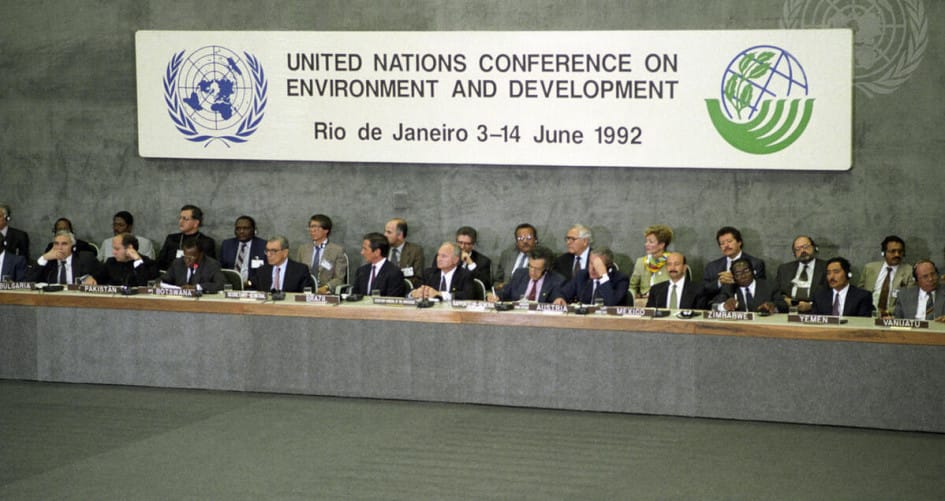
In 1992, the nations of the world convened in Rio de Janeiro for the first ever environment-focused international gathering.
At this “Earth Summit,” the assembled countries discussed, among other things, the text of three different treaties: the Convention on Combating Desertification (UNCC), the Convention on Biological Diversity (UNCBD), and the Framework Convention on Climate Change (UNFCCC).
Together, they form the “Rio Conventions.”
It is well understood that growing desertification, climate change, and biodiversity decline are issues that feed off of and into one another, and the solutions with the greatest potential impact are those that simultaneously address all three.
But, given that even narrowly focused treaties are tedious to negotiate with diplomats bickering about comma placements, it seemed sage at the time for each issue to have its own governing convention.
Perhaps they thought this would allow for smoother negotiations and swifter action in the future. But, nearly 35 years on, the world sits further from its joint environmental goals than at any time since the treaties were first implemented.
For that reason, an assortment of activists, scientists, and politicians want to see these conventions and the processes around them reformed to support the scale and pace of action demanded by the crises before.
Unifying 'Nature' and 'Climate'
In 2023, the United Kingdom Health Alliance on Climate Change (UKHACC) published an editorial across 200 different health journals calling for that kind of unified action. In the editorial, the authors describe these crises as a global health emergency.
“Tackling this emergency requires the COP processes to be harmonized,” the authors write.
“If we were to discover tomorrow that the Intergovernmental Panel on Climate Change had made a terrible mistake and there wasn't actually any global warming going on,” said Richard Smith, the former chair of the UKHACC, “we would still be in an equally bad predicament because of the destruction of nature.”
These issues cannot be divided, and the scientists tasked with advising the UN recognize it.
The Intergovernmental Panel on Climate Change (IPCC) advises the UN climate convention while the biodiversity convention has its own scientific body: the Intergovernmental Platform on Biodiversity and Ecosystem Services. And in 2020, the two panels hosted a joint workshop for the first time to discuss the intersections of their science and solution sets.
Coming out of it, Hans-Otto Pörtner, a former co-chair of an IPCC working group, felt even deeper convictions than before that these issues must be addressed in concert.
“It's very clear,” Pörtner told Deceleration, “only when you address both things together, without forgetting about human issues, that you can really develop a convincing string of action that doesn't harm one at the expense of the other.”
Even some of the politicians responsible for administering the trio of COPs have come to recognize the importance of uniting these processes. In 2023, the presidents from each of the three conferences called for the diverse groups to unify their approach. And this year both the desertification- and biodiversity-focused convenings reached agreements calling for strengthened relationships between the conventions.
The division of labor also puts a strain on the resources and people power of small nations, who have more limited finances with which to dispatch their delegations.
“We need to have common objectives, common projects,” said Alain-Richard Donwahi, who led the desertification COP in 2022 in Côte d’Ivoire. “If they are separated, you multiply by three the work for mobilizing financing, looking for communities where to apply those projects and so forth.”
One Majority to Bind Them
Beyond all of that, many of the nations who bear the greatest burdens of climate change but little of the responsibility for creating it are also eager to see the conferences adopt a majority-rules approach. The environment minister of Panama told reporters as much in the final hours of this year’s climate negotiations.
“COPs are designed to fail,” Juan Carlos Navarro said.
Shifting away from that decision-making approach would mean that the world’s fossil fuel-dependent countries could no longer commandeer the conferences in order to protect their own interests.
If the negotiations instead only required a simple majority of countries present to agree, then nations on the frontlines of these crises would be the ones that would be able to have a meaningful voice in the conversation.
“There shouldn't be leaders or followers in the COP,” said Donwahi. “All nations have something to bring to the table.”


