Through 2025, fossil fuel-powered industry continued to overheat the planet’s atmosphere and ocean, spinning out disastrous weather trends and megastorms that rural and urban communities the world over proved poorly prepared for.
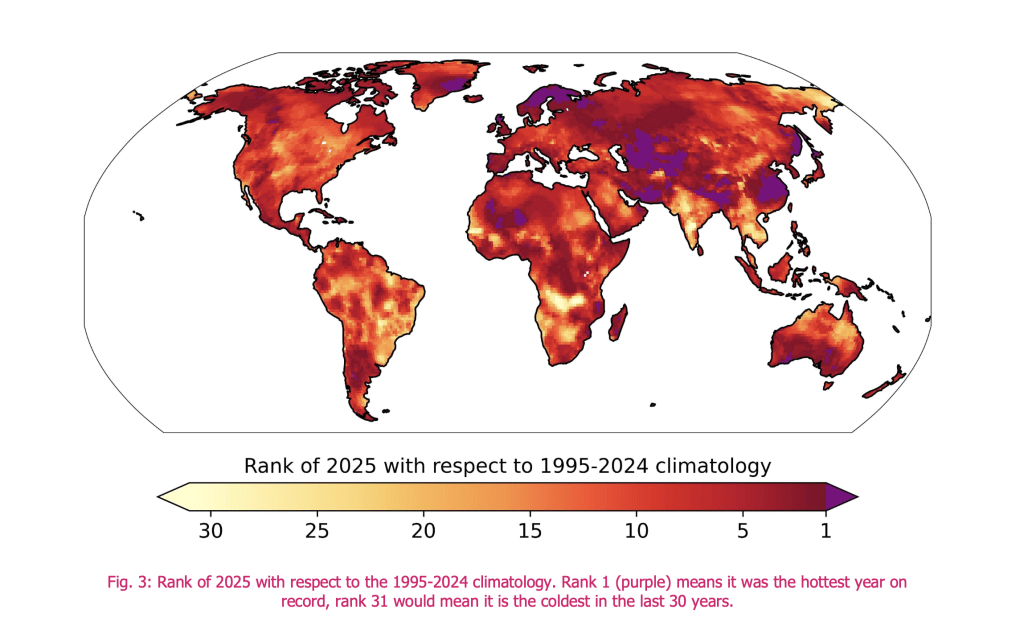
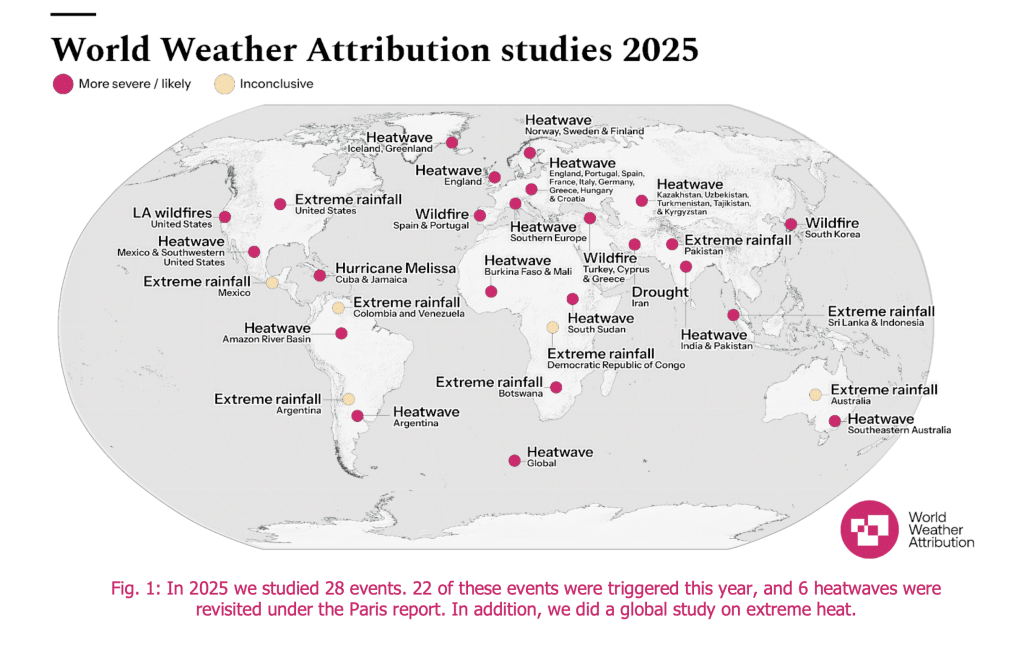
The year now a week behind us will rank among the hottest three years on record—years also likely the hottest the planet has experienced for 120,000 years or more. Some of the most powerful storms strengthened by industrially generated climate pollution proved that “even relatively high levels of preparedness cannot prevent extreme losses and damage,” according to a report from the research collaborative World Weather Attribution released late last month.
“Every December we are asked the same question: was it a bad year for extreme weather? And each year, the answer becomes more unequivocal: yes,” that report opens. “Fossil fuel emissions continue to rise, driving global temperatures upward and fueling increasingly destructive climate extremes across every continent.”
Natural climate variations tilted into a cooler La Niña cycle in 2025 and still the heat pushed through, showing just how persistent the product of fossil fuels combustion is, the report states.
U.S. President Donald Trump declared this week virtually all existing international agreements and treaties intended to restore a stable climate, including the U.N. Framework Convention on Climate Change, to be at fundamental odds with what he described as “the interests of the United States.” Meanwhile, the 22 extreme weather events of 2025 present a “stark picture of the escalating risks we face in a warming world.”
The United States is far from immune to such climatic violence.
While global temperature averages are still being parsed, 2025 definitively ranks as the third-highest year for billion-dollar weather and climate disasters (after 2023 and 2024) responsible for roughly $115 billion in damages, a report released this week by Climate Central finds.
The U.S. suffered 15 such disasters in just the first six months of 2025, Yale Climate Connections reported, and 23 by year’s end, according to Climate Central, which describes itself as a policy-neutral research organization dedicated to communicating the science of climate change.
Massive fires feeding on extremely dry conditions razed large sections of Los Angeles and Altadena—one of the costliest disasters in world history. Since a warmer atmosphere holds more moisture, massive discharges and resulting flooding have grown more common. Dozens died and up to $90 billion in damages were wrought during April storms across Central Mississippi River Valley states. These were storms made 40 percent more likely and 9 percent stronger by anthropocentric, or human-caused, climate change.
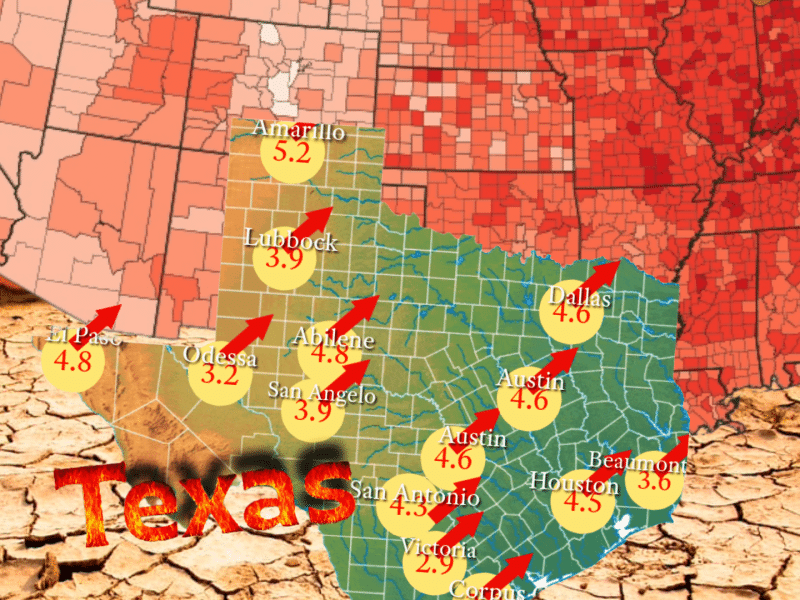
In the Texas Hill Country, the extremely hazardous “flash flood alley” went from severe drought conditions to raging floodwaters over the July 4 weekend after being hit by a “rain bomb” when a “summer’s worth of rain” fell in the span of a few hours, claiming more than 135 lives.
An estimated 276 people in the United States lost their lives in the 23 studied billion-dollar disasters (this economic framing excludes the deaths in the Hill Country floods). It’s less clear how many thousands suffered persistent injuries, economic hardship, were forced to relocate, or left homeless by the range of storms.
Chronically undercounted heat-related deaths remain the largest and growing cause of weather-related deaths in the United States.
While the year’s global temperature ranking is still being parsed, the United Kingdom has declared 2025 as its hottest ever. And across Europe, heat deaths tripled with one recent study finding that nearly 7 out of 10 of the 24,400 estimated heat-related deaths were directly attributable to climate change.
“This underscores that adaptation alone is not enough; rapid emission reductions remain essential to avoid the worst impacts of climate change,” the WWA authors write.
Back in the U.S., President Trump, the beneficiary of an unprecedented $96M in direct donations from the oil and gas industry leading up to 2024’s election, has gone to war on climate change science.
Trump is eradicating climate research, shutting down and demonizing alternative energy sources like wind and solar, while invading other states in an attempt to seize foreign oil reserves while retreating from international climate agreements and partnerships on renewable energy development. The Venezuelan oil fields he rhetorically seized after kidnapping that nation’s president and first lady is some of the dirtiest oil on the planet, which Trump himself dismissed two years ago as “tar.”
All of this has been done while largely sloughing off the historic disaster response duties of the U.S. Federal Emergency Management Agency, which was largely criticized for its performance after the Hill Country floods, to state governments.
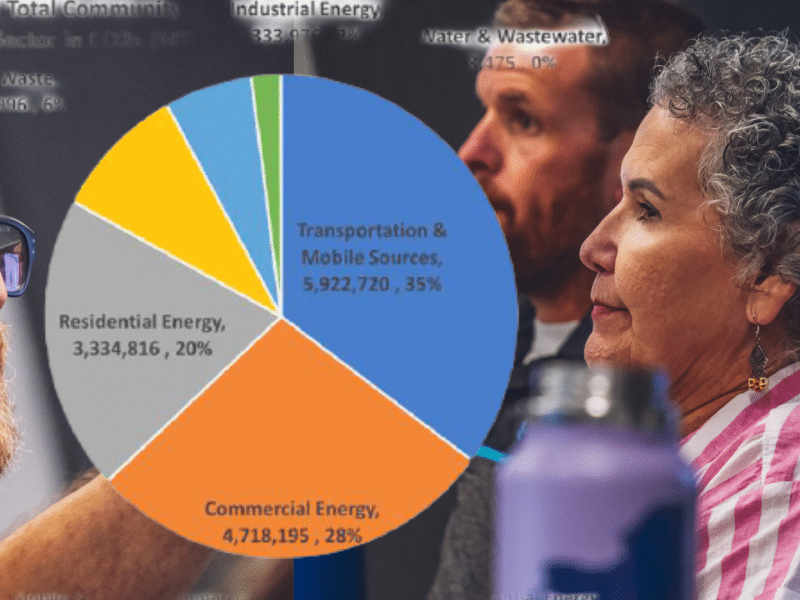
Federal funding for community-level climate planning has been diminished too. This leaves much of the work of adapting to and mitigating the gathering threats of extreme heat, drought, and storm to local communities.
Extreme heat has been accelerating dramatically across the globe, most noticeably since the 1970s, even as the Earth’s natural systems have grown more limited in their ability to dampen or modulate the emissions causing that heat. The oceans, for example, have sequestered as much as 30 percent of industrially generated carbon since the Industrial Revolution kicked off. But those systems, strained also by the continued destruction of forests and broader ecological damage, are struggling.
Microplastics, the subject of the first ever people’s convening in Calhoun County, Texas, are further compromising the ocean’s ability to absorb and retain carbon dioxide.
Even with the attacks on research in the United States, science continues to advance. And it continues to offer grim forecasts for the future if concerted collaborative actions aren’t taken to slow emissions alongside complementary actions to renew and restore natural systems worldwide.
Heat-related deaths have already increased 23 percent since the 1990s, according to 2025’s Lancet Countdown on Health and Climate Change.
The paper by premier global public health experts warned of Trump’s corroding influence on global efforts to restrain the petrochemical giants.
“With reduced pressure from powerful political leaders, fossil fuel giants (including Shell, BP, ExxonMobil, and Chevron) have paused, delayed, or retracted their climate commitments, increasingly pushing the world towards a dangerous future,” the authors write.
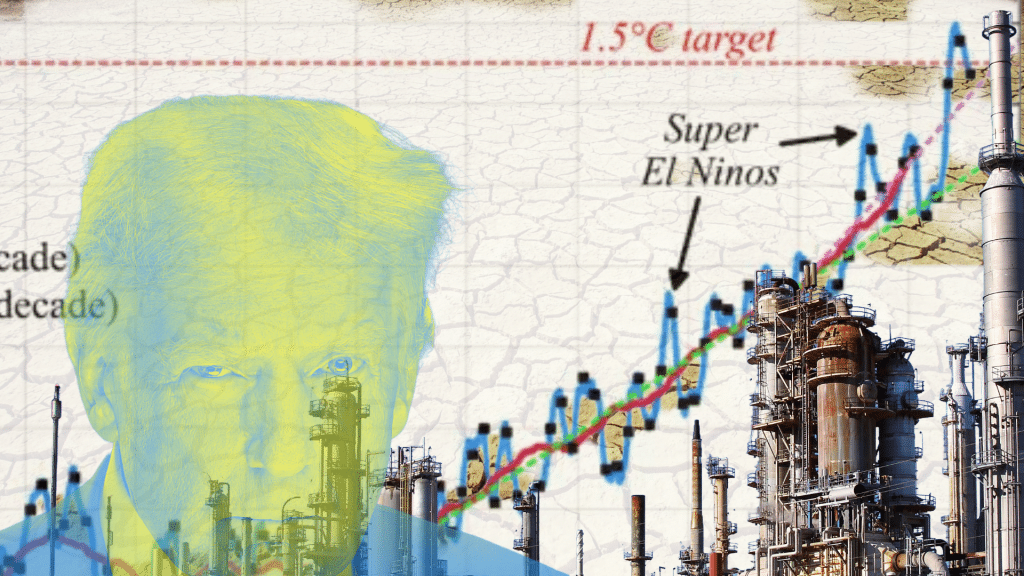
“As of March, 2025, the 100 largest oil and gas companies had production strategies that put them on track to exceed their share of production consistent with 1·5°C of heating by 189% in 2040, up from 183% in March, 2024.”
Some estimates hold that millions are already dying from extreme temperatures each year that are strongly influenced by climate change.
While the World Economic Forum projected another 14.5M could die in the next quarter century on the march to up to what others warn could lead to a billion or more premature deaths this century.
Fossil fuel apologists and pundits have taken to extolling the life-generating power of oil and gas for developing nations. But the leading public health experts producing the Lancet’s assessment beg to differ:
“Such dirty fuels are already causing millions of deaths every year due, not to warming or climate-linked disasters, but the ambient air pollution such fuels release—deaths that could largely be avoided by transitioning to clean, renewable energy.”
This is whiplash territory. It was only 2022 that former President Joe Biden pushed through the most ambitious climate investment in U.S. history and sparked 100,000 jobs in the renewables sector. Today that progress is being erased with the global trajectory shifting back toward some of the worst projections of global climate researchers. Forecasts today hold that 2026 isn’t likely to barrel past 2024 in heat. But it is headed in a warming direction.
Expect the next hottest year ever by 2027.
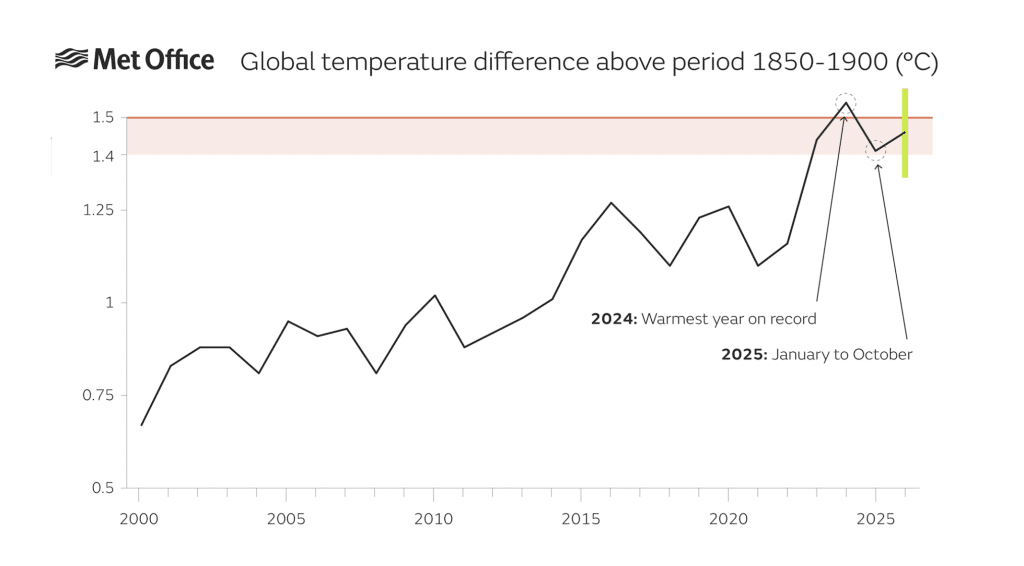
While the U.S. federal government no longer benefits from climate literate meteorological support , we’ll close with the U.K.’s Met Office for their sign off on the year ahead:
“The scientific community has repeatedly warned that warming of more than 1.5°C risks unleashing ever more severe climate change impacts and extreme weather, and decreases adaptation options. Avoiding every fraction of a degree of warming matters to minimise these risks.”