Pocacito—POst-CArbon CIties of TOmorrow—is an initiative of the Washington D.C.-based Ecologic Institute, whose goal is to build trans-Atlantic solidarity and intellectual exchange around local creative efforts for a renewable economy and planet. As part of their “Eight to Infinity” tour (think eight cities, then lay the eight on its side to invoke ideas of a permanent economy/culture), they are on a mission to seed community building efforts around climate and environment with an understanding of the circular economy.
This week, that tour is idling in San Anto for three days before pressing on to New Orleans.
{You can hear Decleration’s interview with this year’s Pocacito guests at top, and view their first public talk below.}
Not unknown in the U.S., but definitely less well-established here than in Europe, the idea of the circular economy bears some resemblance to the emphasis within permaculture on modeling social and economic systems after ecological systems.
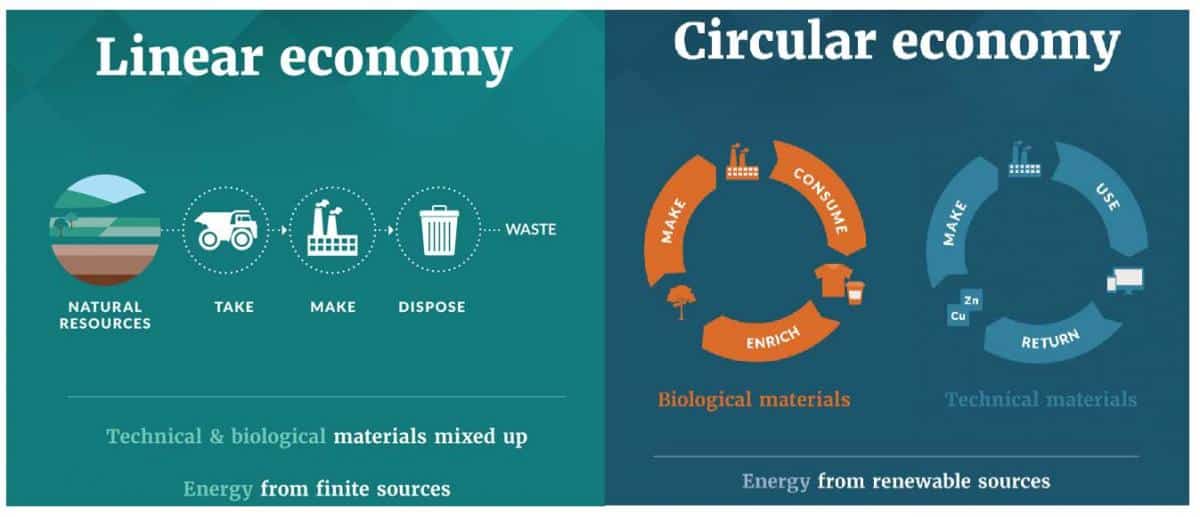
Whereas industrial economies are largely linear systems (extracting finite resources, converting them into products which are then consumed and disposed of as ecologically unincorporable waste), the circular economy attempts to “close the loop” on material flows, trading extraction for renewables and reintegrating “waste” into production in a process that more closely mimics biological flows and exchanges. As summed up nicely in this diagram from New Zealand’s Ministry for the Environment:
Click to Expand View: Linear and Circular Economies.
As an online journal rooted partly in post-growth/post-development intellectual and political movements, we were excited to hear about Pocacito’s trip to San Antonio and eager to discuss with them the finer points of the circular economy, an underexplored paradigm this side of the pond, much less in SATX.
Because much of the official discussion and implementation of the circular economy has taken place from the top down, on the level of governments and industries, we were most interested to hear about local, bottom-up, and community-driven efforts not just to transform large-scale material flows but the social relations in which they are embedded. Click below to read more about the specific background and expertise of each Pocacito envoy:
Luis Calderon left his position as COO in a multinational company to explore Spain’s rising social
movements in the early 2010s. An innovative and endlessly creative cultural manager, he was
seduced by Madrid’s self-organized space La Tabacalera de Lavapies which brings together Madrid’s
diverse communities, allowing them to share their cultural experiences, express themselves, and
engage in knowledge sharing. Staying true to its beginnings as a democratic space where anyone
from any background can experience art and culture, admission is always free. He is currently in
charge of communication and inter-institutional relationships coordination for La Tabacalera.
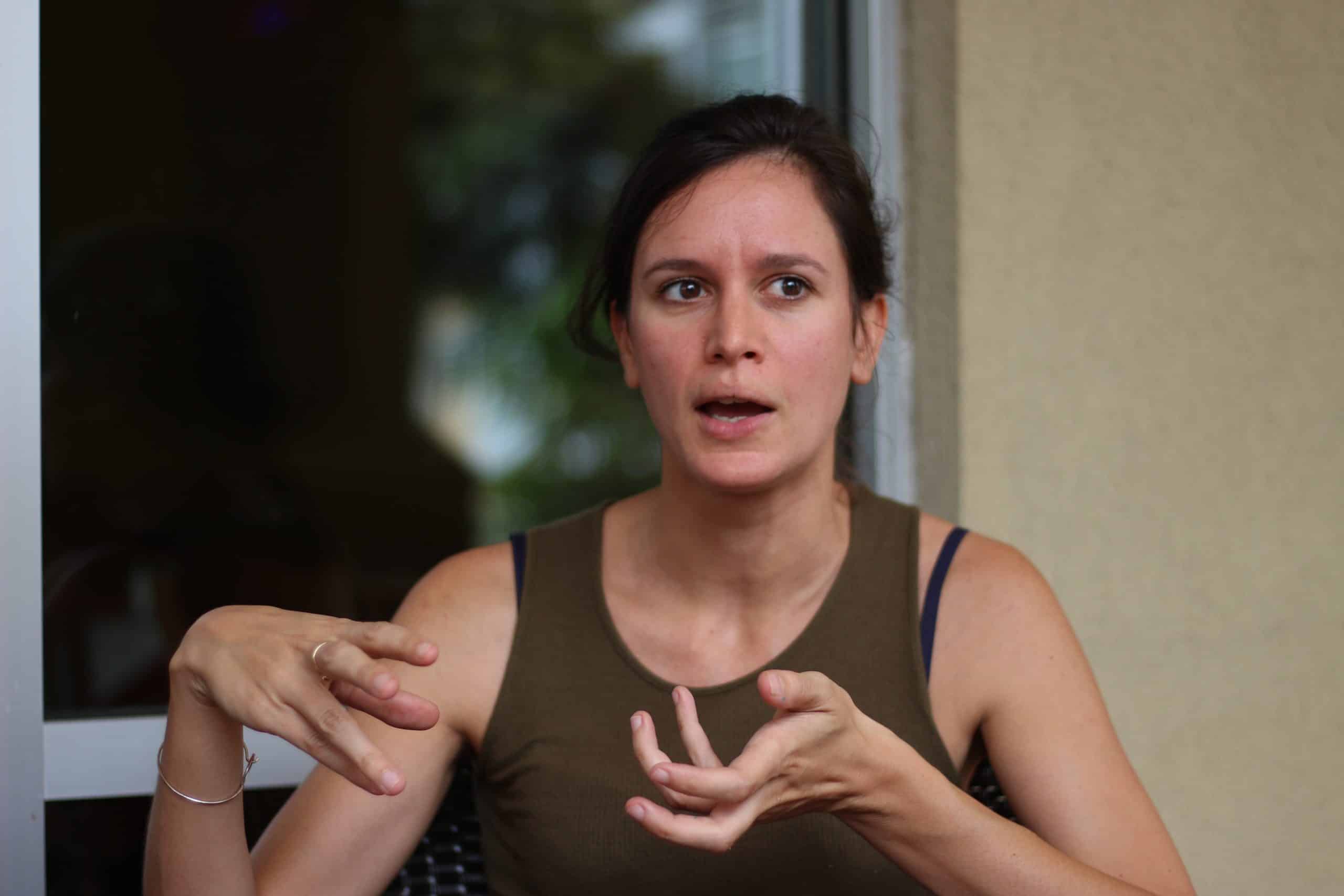
Camille Chapuis studied international management and sustainable development in France, South
America and Portugal, before joining Ouishare in Marseille, where she is part of an international
collective of entrepreneurs, allowing her to experiment with alternative models of work. She enjoys
launching challenging projects with an international dimension that address the social and
environmental challenges we face, bringing extremely varied actors together to collaborate and
create new opportunities for learning. Camille’s focus on developing models through networks
centers community in the collaborative economy, helping to redefine and reimagine the future of cities and the future
of work. Image: Greg Harman
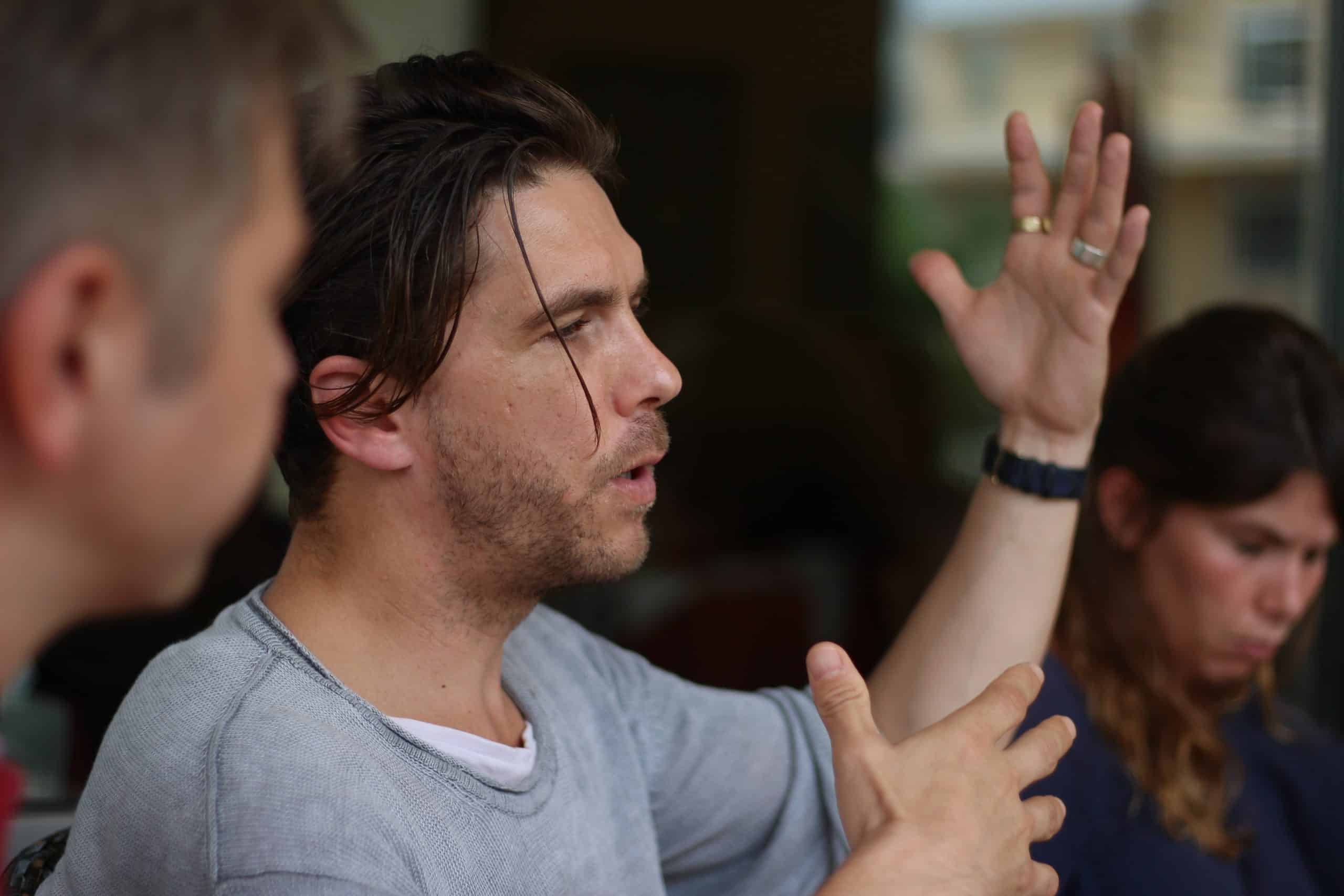
Mauro Gil-Fournier is an architect and co-director of estudio SIC and the research-based
Charlotte Lovera (above) is a Marseille-based architect with Atelier Aïno, a firm she founded with fellow
architect Elise Giordano and textile and material designer Louise Dubois in 2016. Their social and
environmental approach reconciles people with the built environment. For each project, they curate
a tailored material from the site’s existing resources, highlighting interactions between the memory
of a place and those who inhabit it. With this ‘slow architecture’ (think slow food) vision that relies
on more brain power and less raw matter, Atelier Aïno received the French Ministry of Culture’s
2018 AJAP prize for young architects. Image: Greg Harman
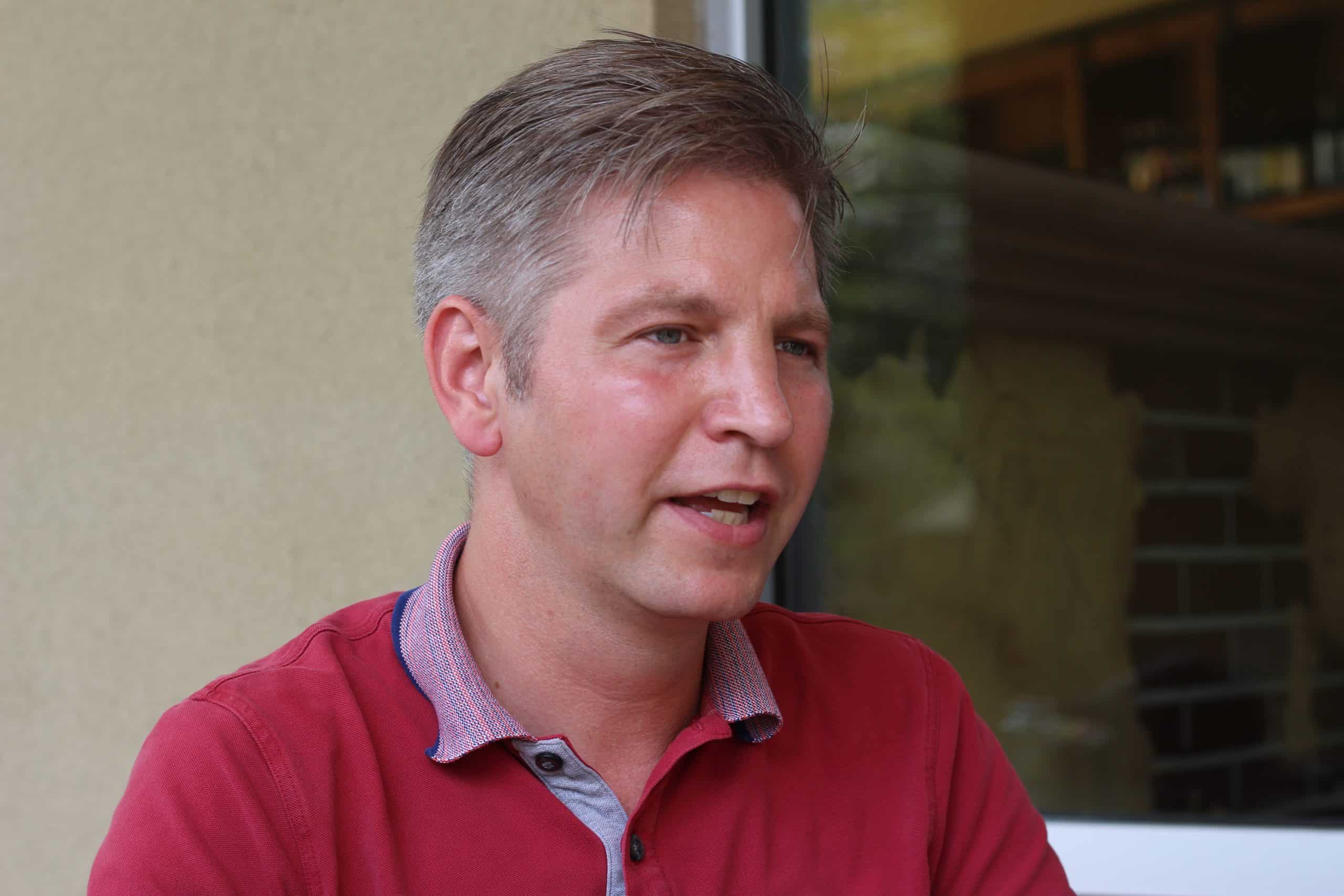
Brendan O’Donnell is a Fellow at Ecologic Institute. His work focuses on sustainable urban development, especially the visibility and accessibility of diverse communities in the decision-making process; post-carbon finance, including the development of vehicles and policies to support sustainable investing; and the future of environmentalism, particularly how art and other cultural influences inform the concept of nature and inspire environmental policy. He speaks English and German fluently and has a working knowledge of Italian. He has studied and worked in Berlin, Germany; Venice, Italy; and throughout the United States. Image: Greg Harman
Max Gruenig is the President of Ecologic Institute US and has been with Ecologic Institute since 2007. His work focuses on sustainable development in the energy and transport sector, as well as urban sustainability and resilient cities. In particular, he is leading the efforts by Ecologic Institute in the Emerging Leaders in Environmental and Energy Policy Network (ELEEP). He is also coordinating the Post-Carbon Cities of Tomorrow (POCACITO in the US) and POCACITO in Germany and the European research project Post-Carbon Cities in Europe: A Long-Term Outlook (POCACITO). In 2004, Max Gruenig received his degree in economics from the Humboldt-Universität zu Berlin (HU Berlin, Germany). The main focus of his studies was natural resource economics and auction theory.Image: Greg Harman
Our hope is that those interested in or working on issues of the solidarity economy, climate justice, energy descent/democracy, permaculture, transition, resilience, degrowth, and cooperation will find inspiration here as well!
Here’s a video of their first talk, held at EcoCentro on Sunday, September 30, 2018.
Deceleration Founder/Managing Editor Greg Harman is an independent journalist and community organizer who has written about environmental health and justice issues since the late 1990s. His journalism has been recognized by the Association of Alternative Newsweeklies, Houston Press Club, Lone Star Chapter of the Sierra Club, Public Citizen Texas, and Associated Press Managing Editors. He holds a bachelor’s in English from Texas Wesleyan University and a master’s degree in International Relations (Conflict Transformation) from St. Mary’s University.
Marisol Cortez is Deceleration’s Executive Editor. As a writer and community-based scholar, her work is grounded in Chicanx and decolonial movements for justice and earth protection in South Texas. Beginning her political life as a poet, she later participated in grassroots campaigns for environmental justice in San Antonio, which inspired her doctoral research at the University of California at Davis. After graduating with her Ph.D. in Cultural Studies, she has walked between academic, activist, and artistic worlds in an effort to make the labor of thinking and writing useful to on-the-ground struggles in her home community of San Antonio, Tejas. As a community-based scholar, she has used research to support grassroots struggles around development and displacement, and as a creative writer she is author of the award-winning cli-fi novel Luz at Midnight (FlowerSong Press 2020) and I Call on the Earth, a chapbook of documentary poetry about the displacement of Mission Trails Mobile Home Community.
Reflecting on the disappointments of COP30 climate conference should draw us toward deeper consideration of grassroots alternatives that are already embodying just and sustainable ways…
In a community conversation closing out a gallery exhibit organized by ABOUT Face: Veterans Against the War, panelists from Texas and California discuss the histories…
Our podcast interview with author Anel Flores talks Monsanto’s decades of contamination in Mission, Texas, the beauty of South Texas people and places, and fiction…