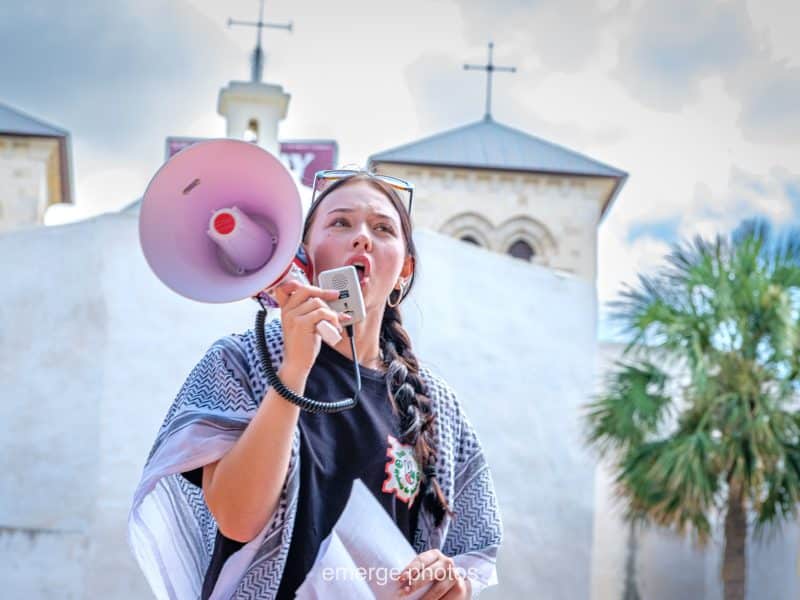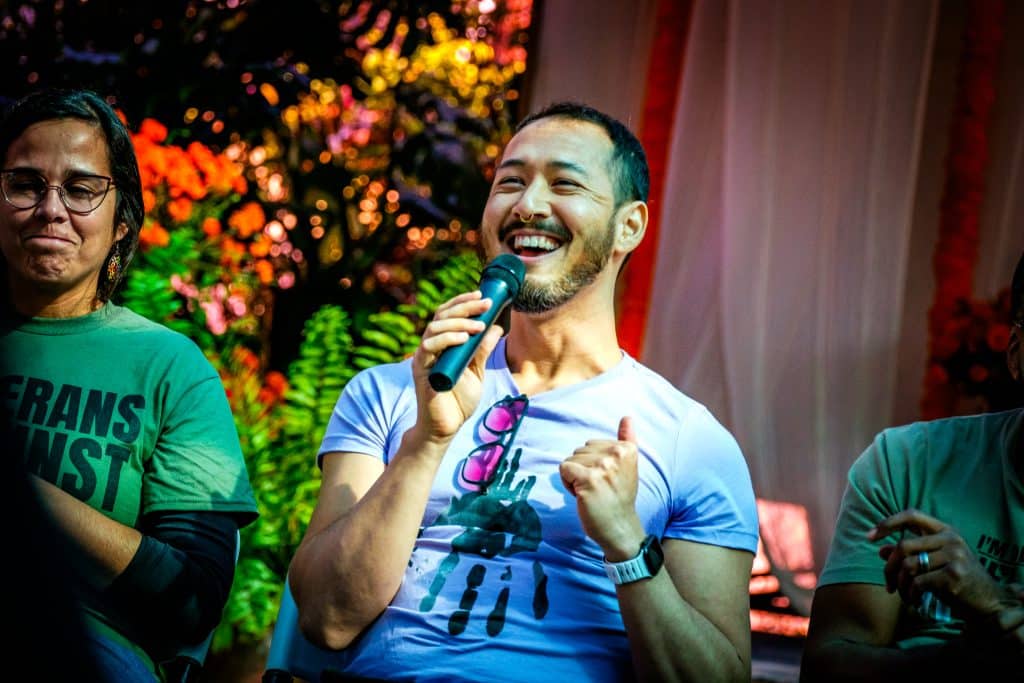
Leading up to Veteran’s Day on November 11, 2025, the local chapter of ABOUT FACE: Veterans Against the War organized a weekend of activities—live music, a family day, a drag story hour, a fire ritual, and a community panel and discussion—as part of “Veterans Voce,” a gallery exhibit held on San Antonio’s Southside.
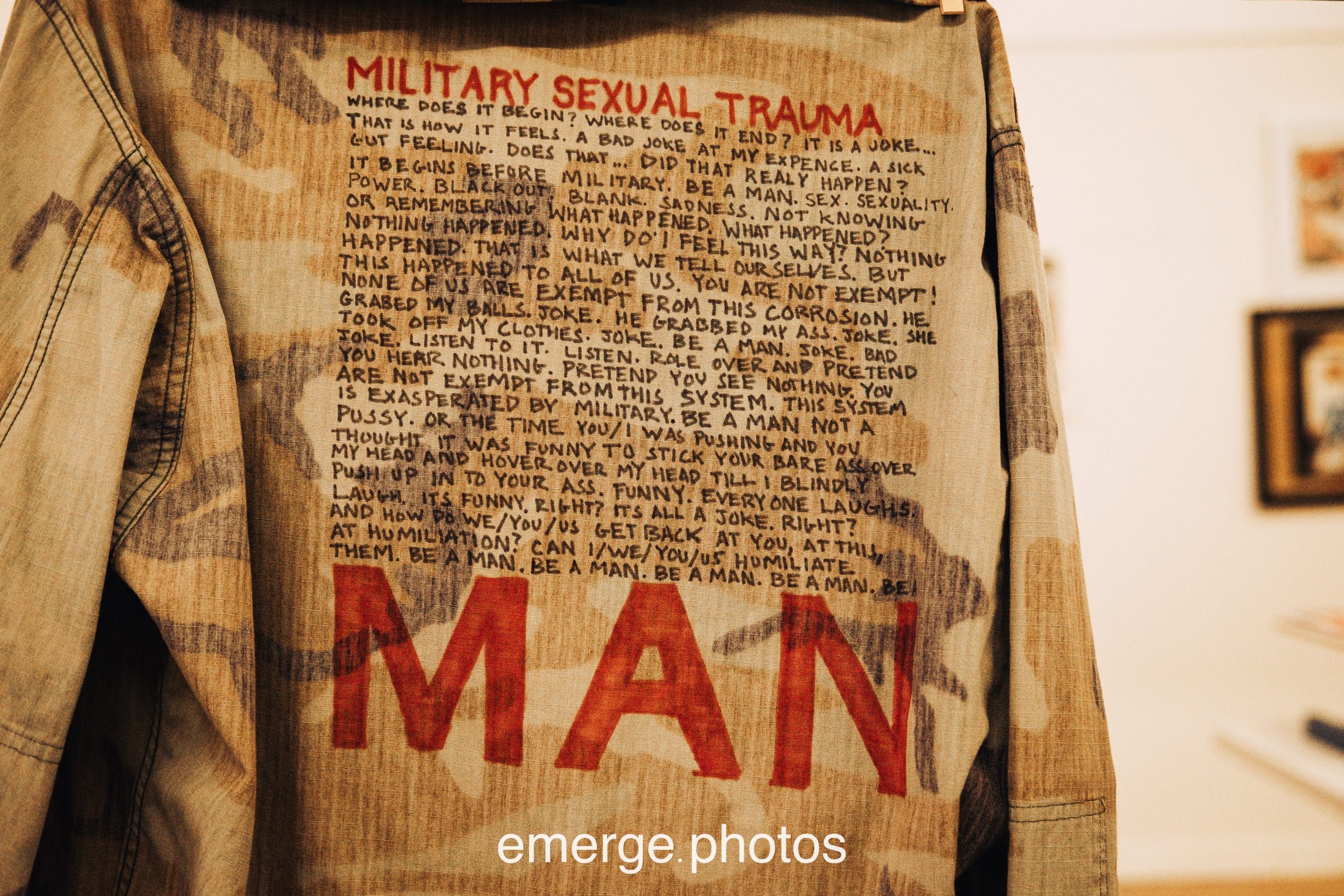
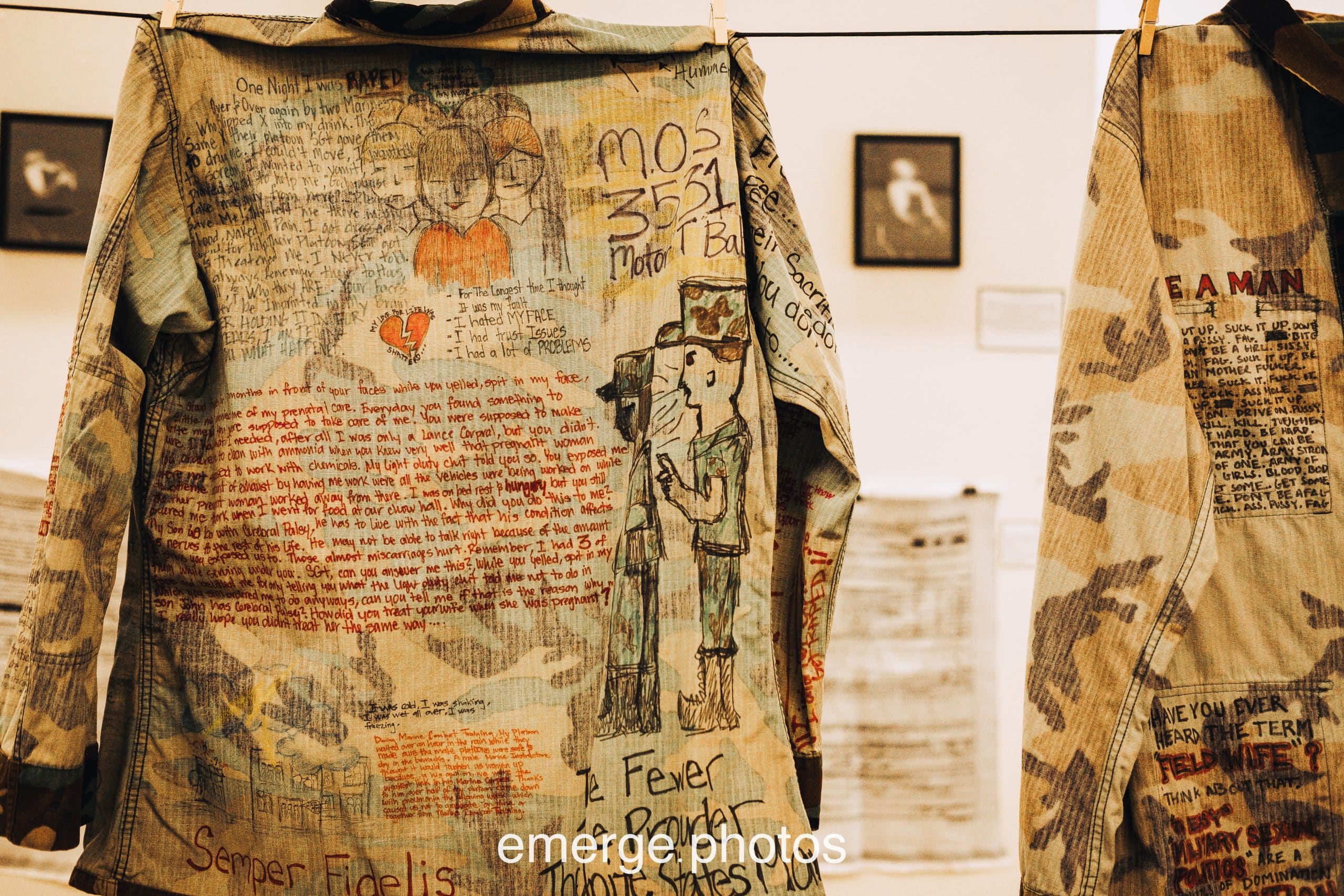
Though the exhibit itself has now closed, you can view photos here which capture some of the power of these pieces by veteran artists, some local to “Military City, USA” and some visiting from points around the country. Many of them are reflections on the abuse or assault suffered during military service; one of the most haunting of these is Regina Nelson’s “Fatigues Clothesline,” which features testimonio representing thousands of military sexual assault survivors scrawled on hanging garments.
Similarly, “Dangerous Times” by Charlie Reynolds, a trans and disabled artist from Michigan, remembers Vanessa Guillén, the young Tejana soldier assaulted and murdered at Fort Hood in Killeen, Texas as a way of grappling with his own personal history of assault in the military. In a chilling display, the artist’s service record anchors a netting woven from torn and stretched underwear.
In “Unnatural Conversion of Energy” and “My Body is Illegal,” Reynolds also documents lived experiences of post-service disability as well as queer and trans histories of military service during the years of “Don’t Ask, Don’t Tell.”
Slideshow: Veteran Voce Art Exhibit

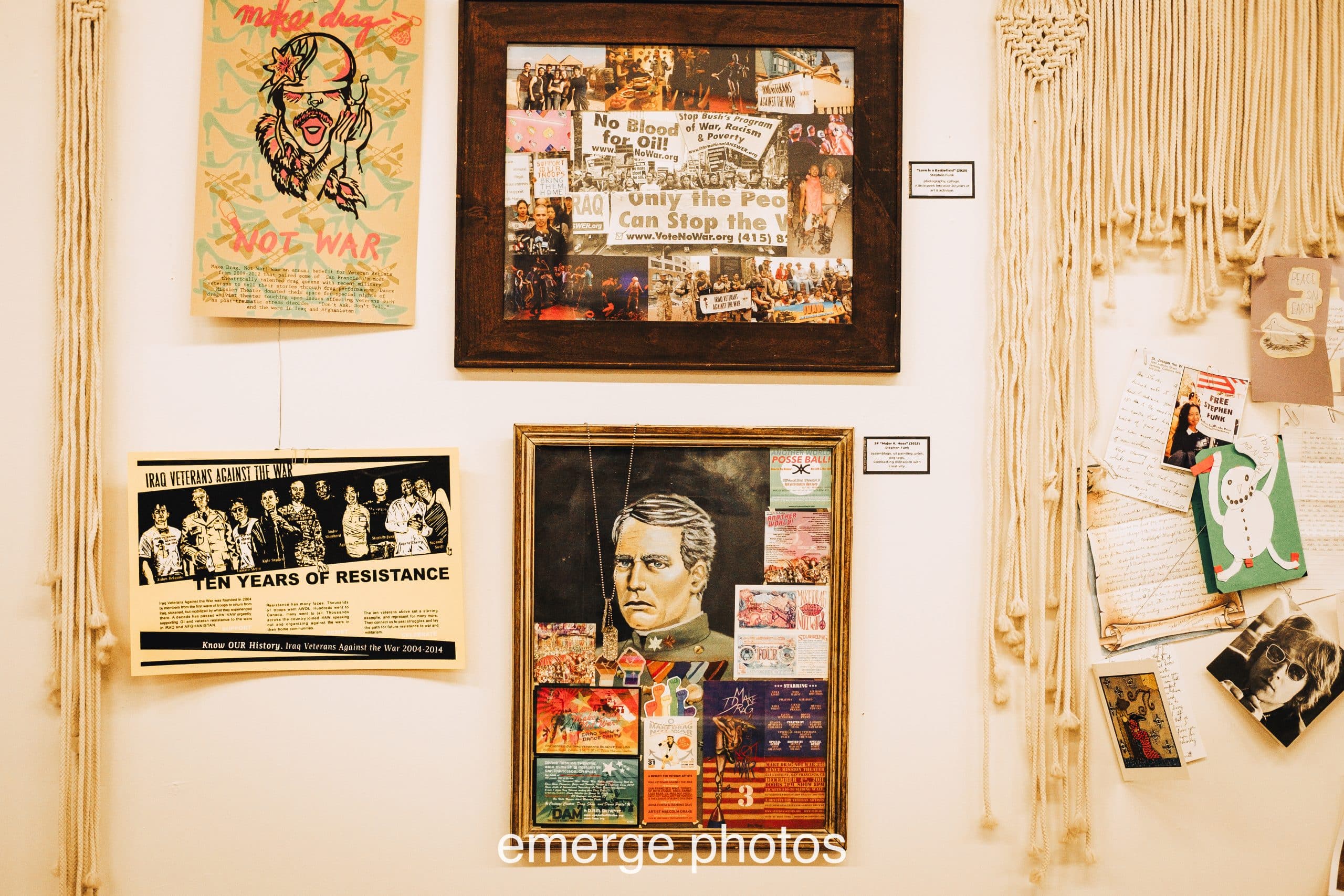
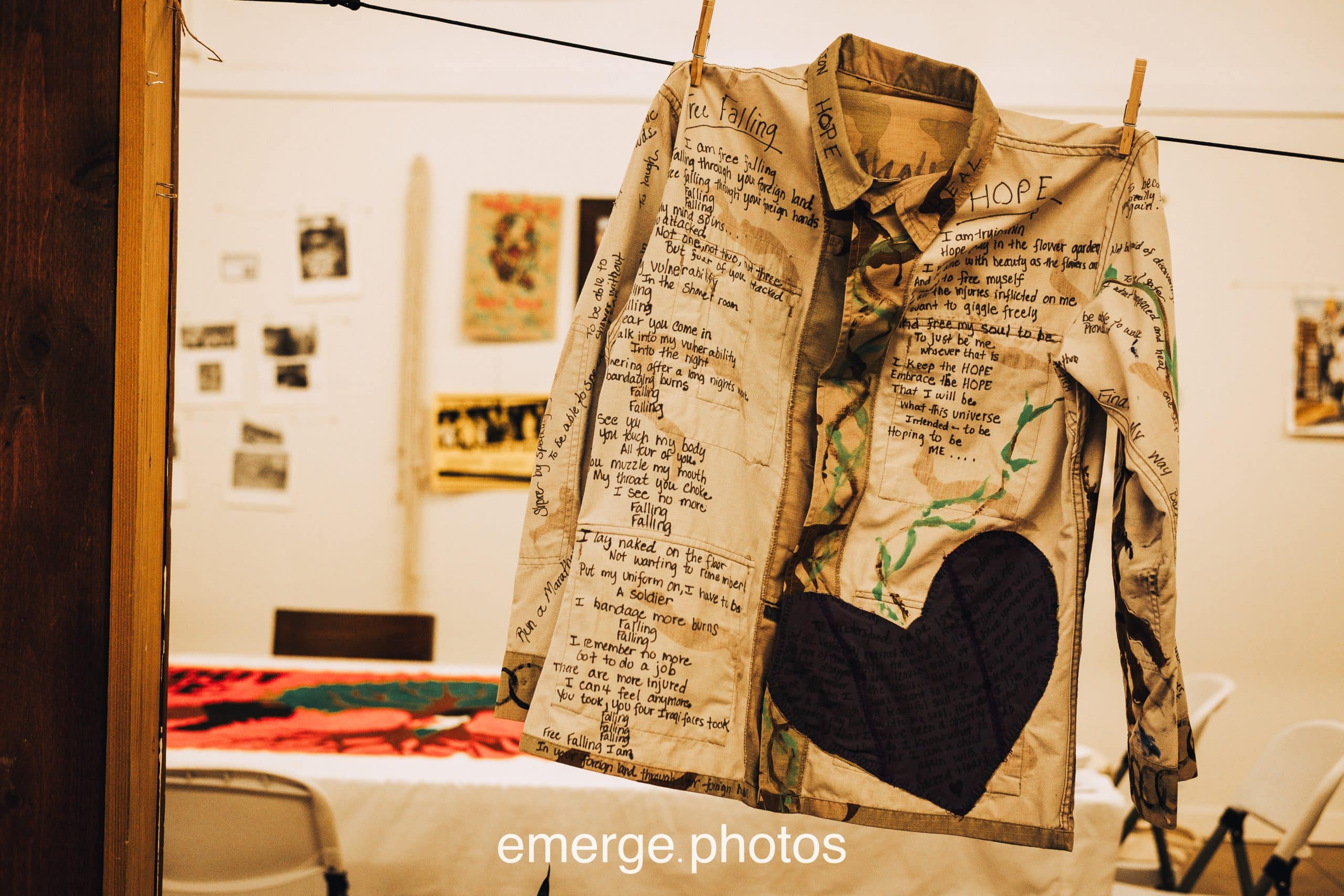
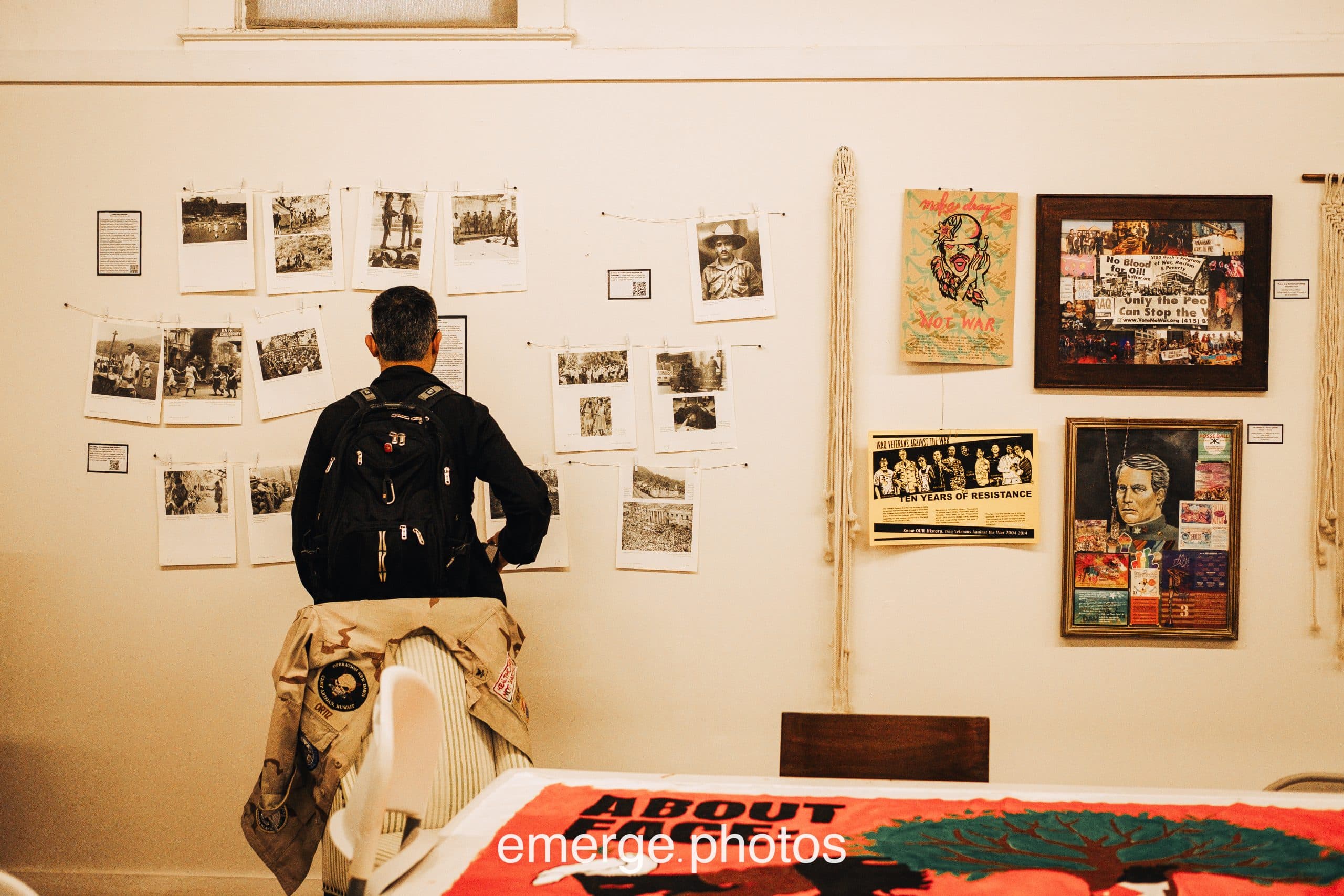
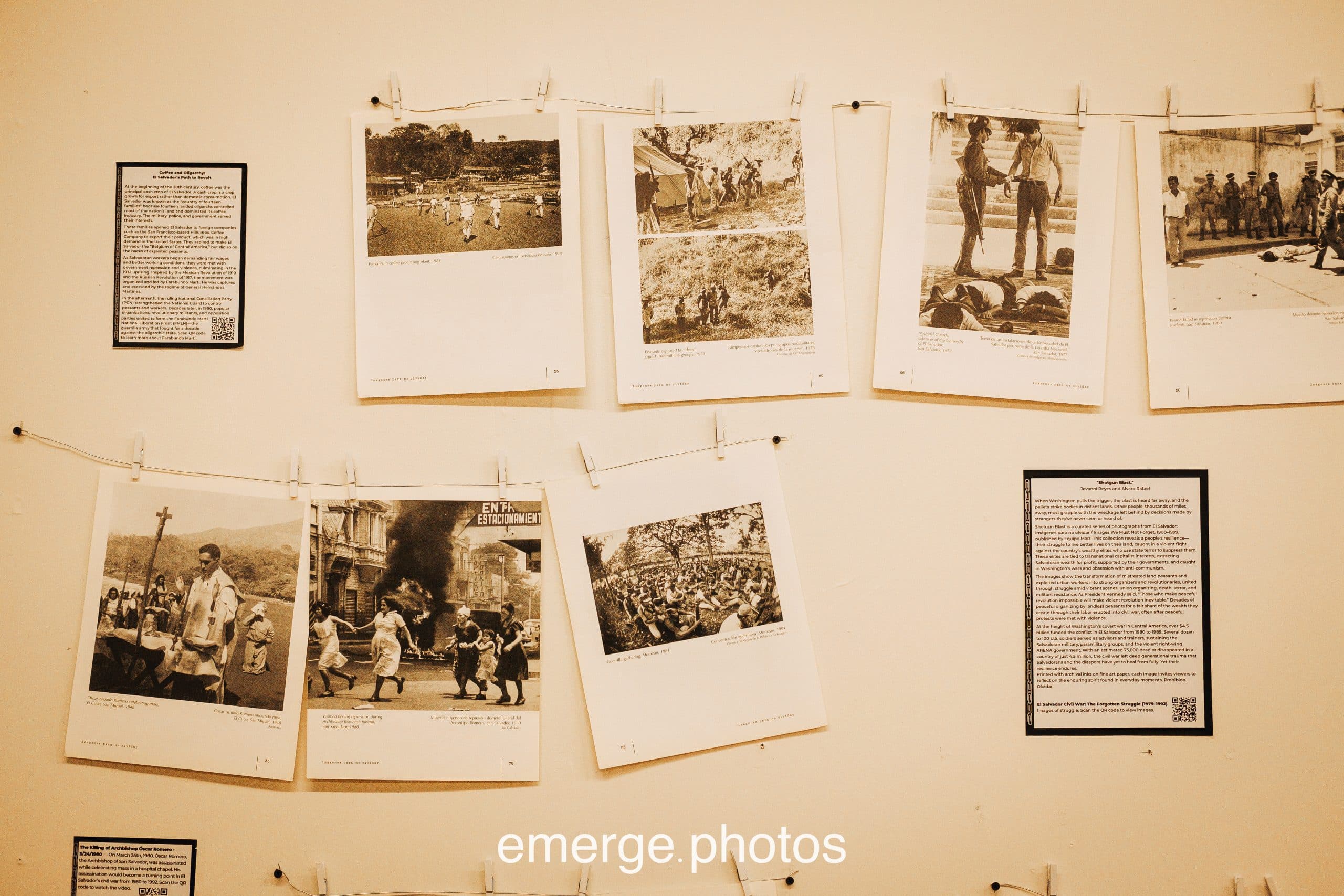
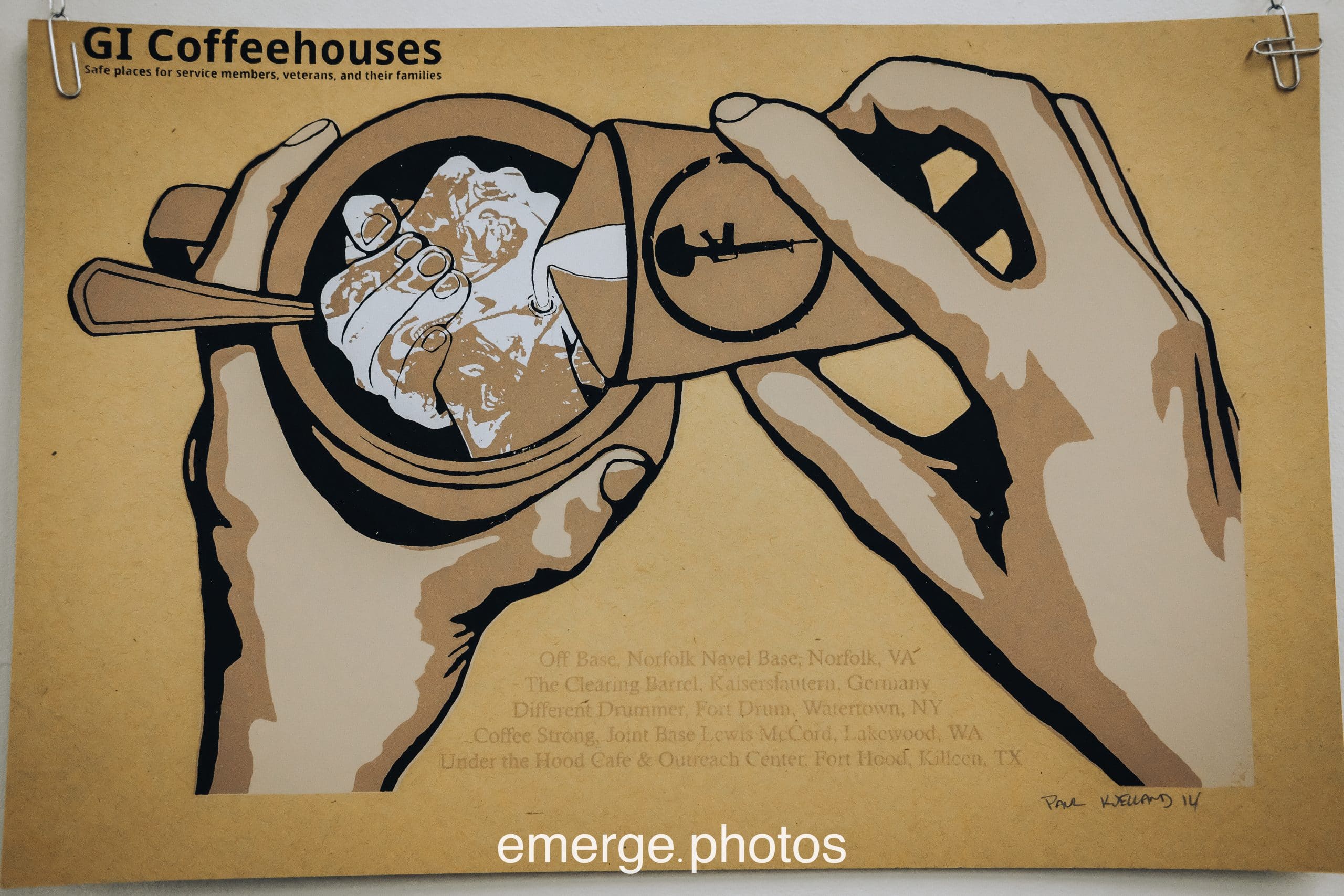
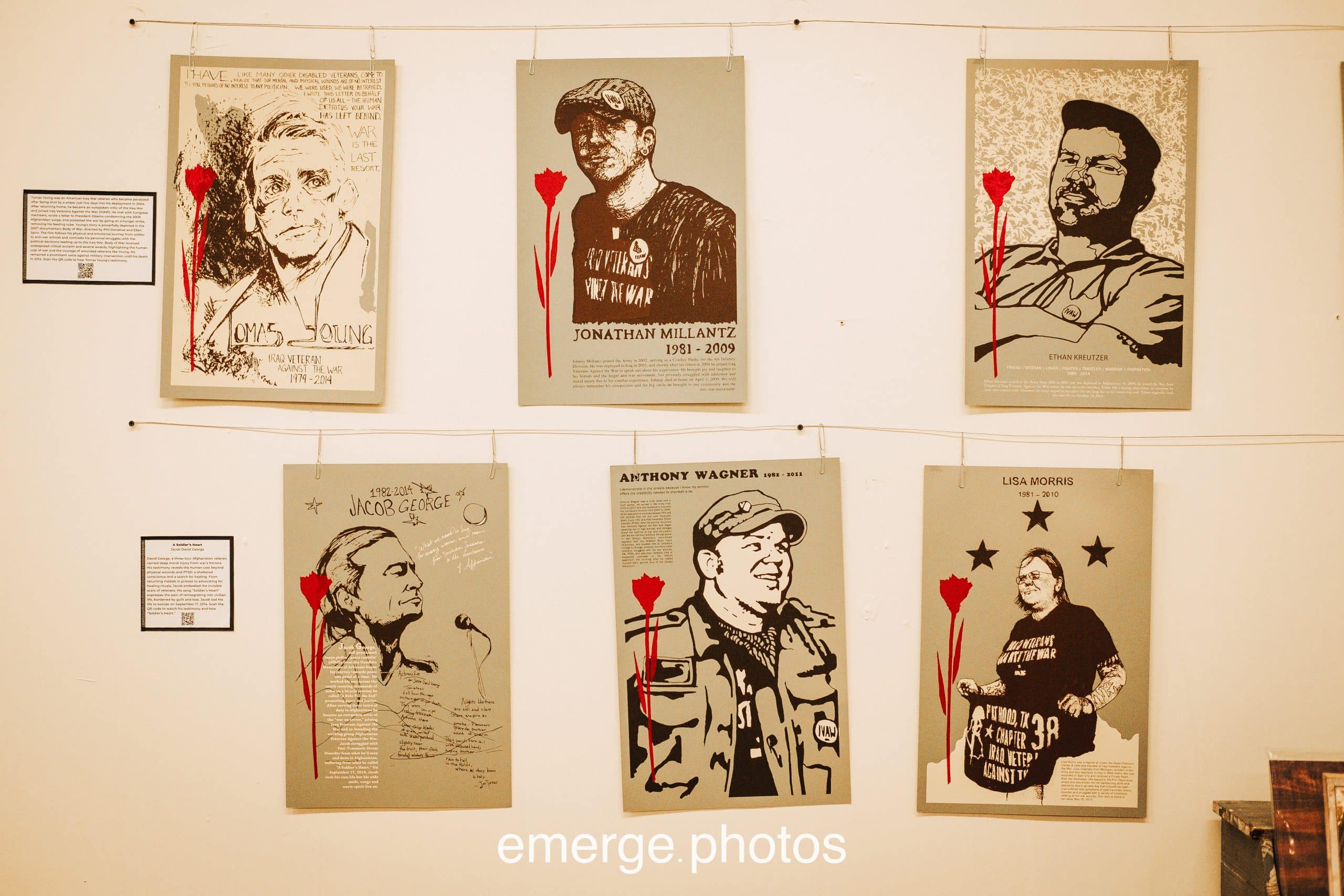
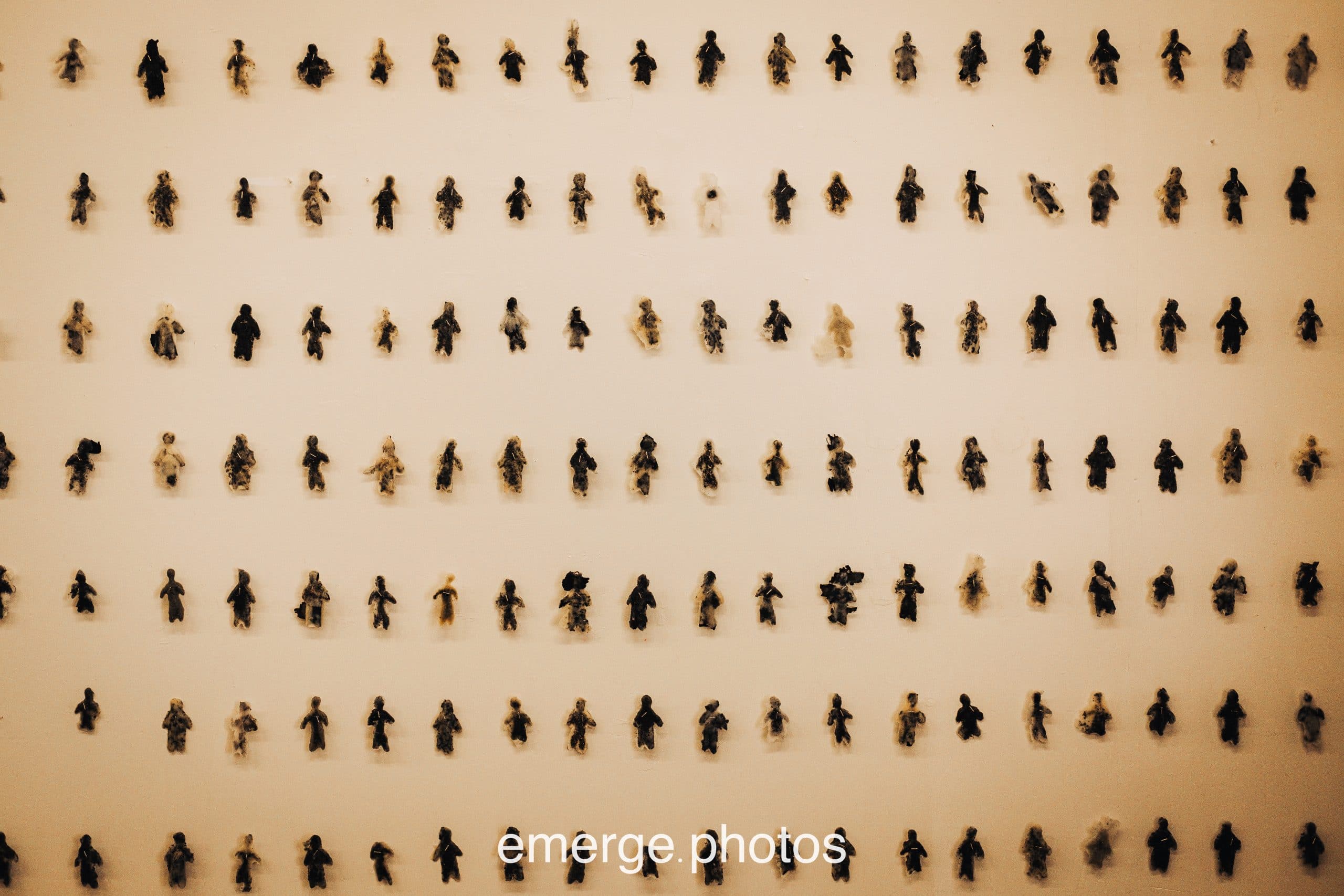
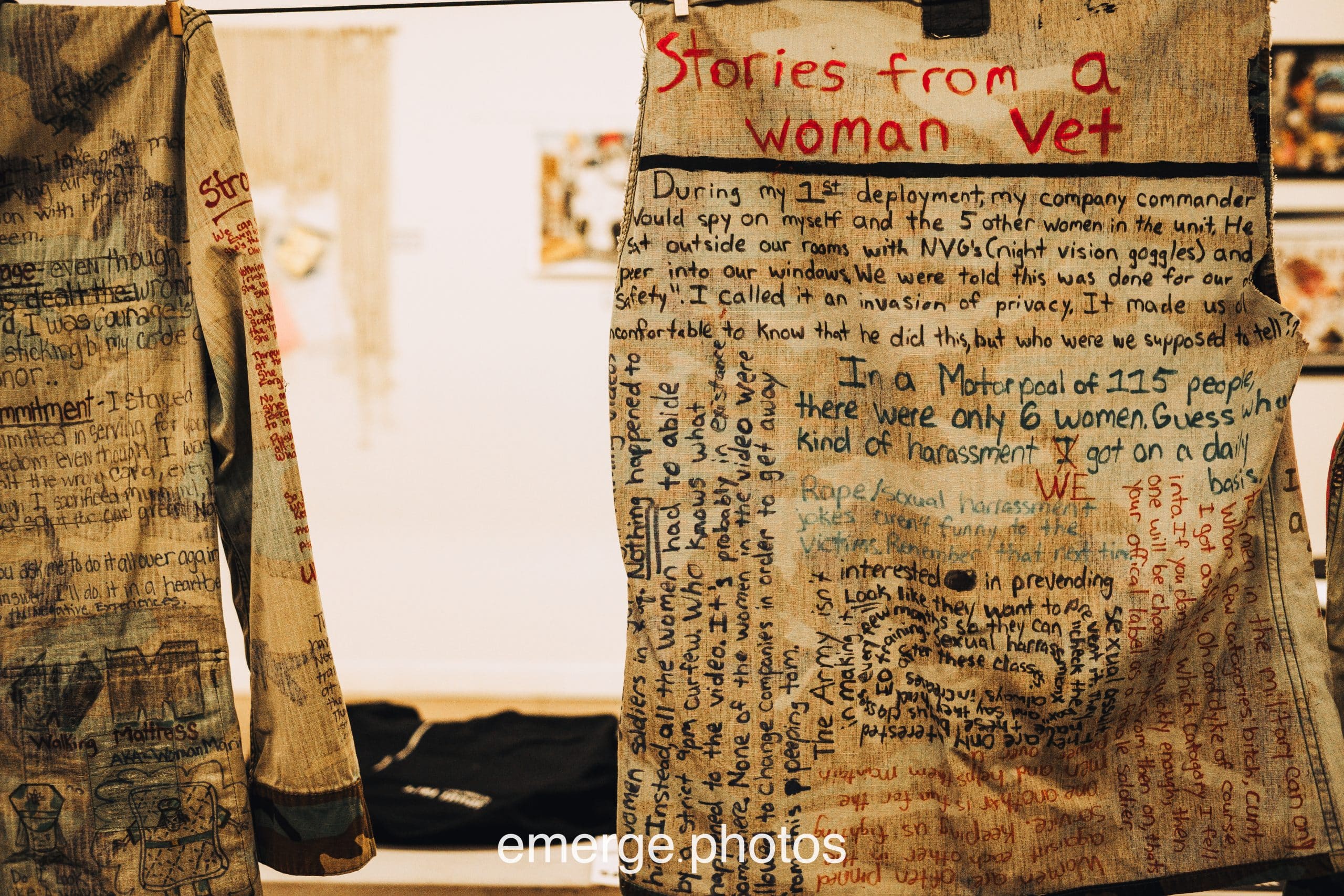
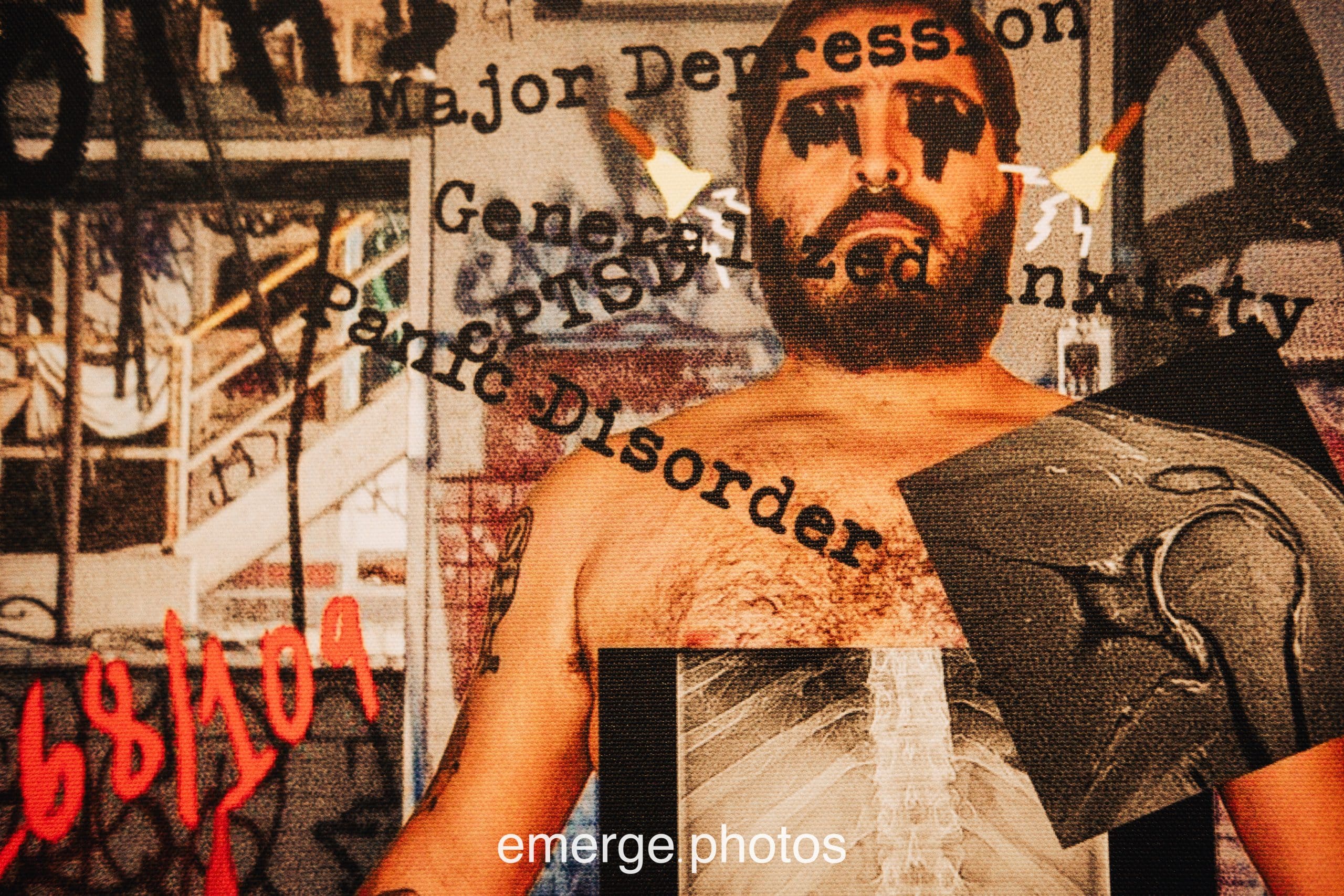

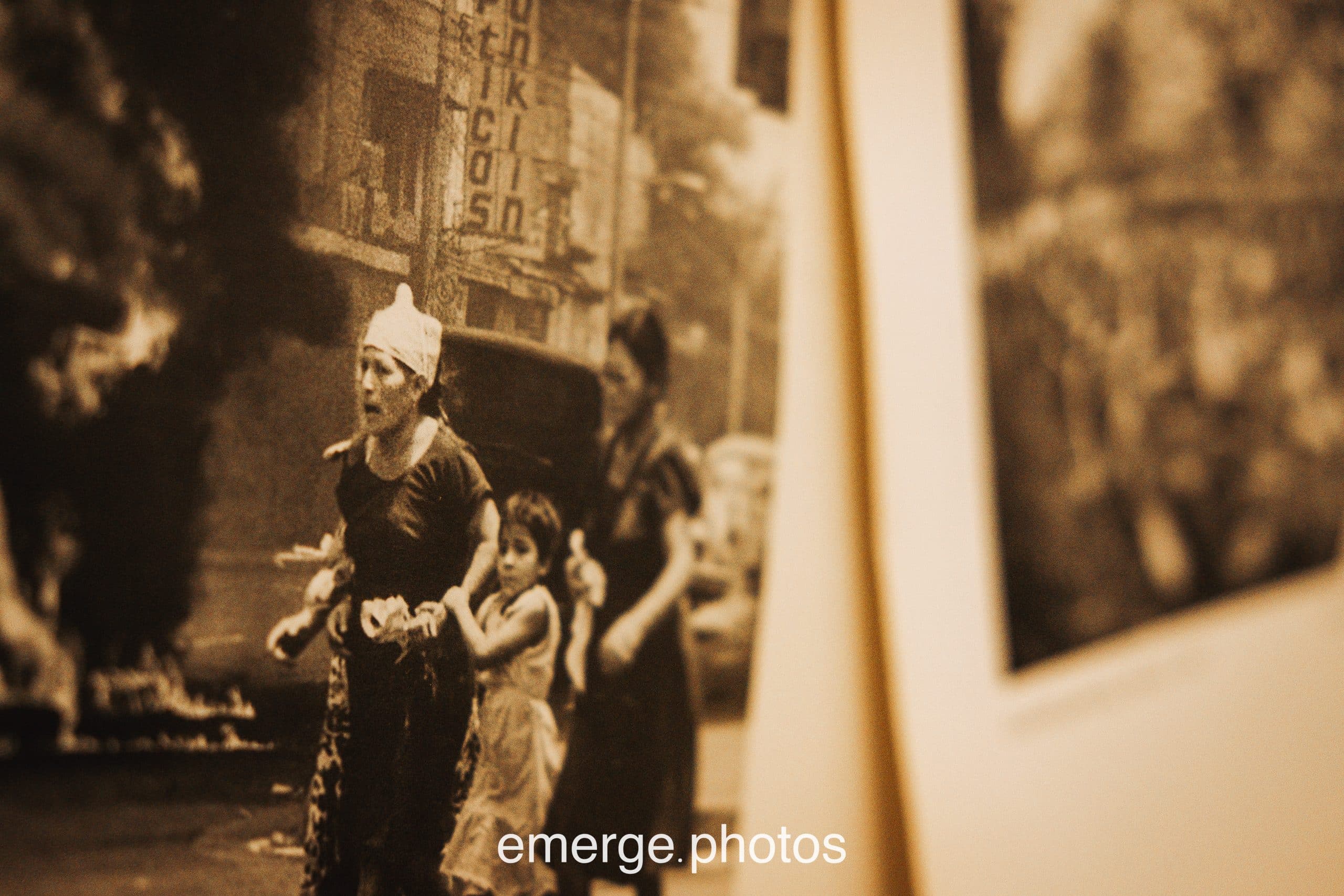

Much of the power of “Veterans Voce,” though, lies in its unflinching reflection on and transformation of the moral injuries that attend participation in war against other peoples, or the imperialist invasion and occupation of other lands. On entry to the exhibit, I was immediately arrested by “Glutton,” a sculpture by Tony Allevato that features a human head with open eyes and mouth streaming a darkness evocative of blood or oil.
Cupped hands rise from Allevato’s army fatigues, also streaming black and blue. Allevato turned to art as a way of processing his participation in the bombing of Iraqi villages, only to learn that
In ceramics, as in many other art forms, the rich beautiful blues generally come from cobalt. 73% of cobalt comes from what can only be described as slave mines in the Congo. I was using metals mined by child slaves to process feelings that came out of being a tool of imperialism where bombs were dropped on children daily.  It is impossible to be perfect in a capitalist society, but we should do the best we can and never stop learning how to be better.

I can no longer see blue with dry eyes. I will never use cobalt again in my art. This is the last of the cobalt I had, poisoning my body as I lusted for its rich hues. I will do better.
Sideshow: Veteran Voce Panel
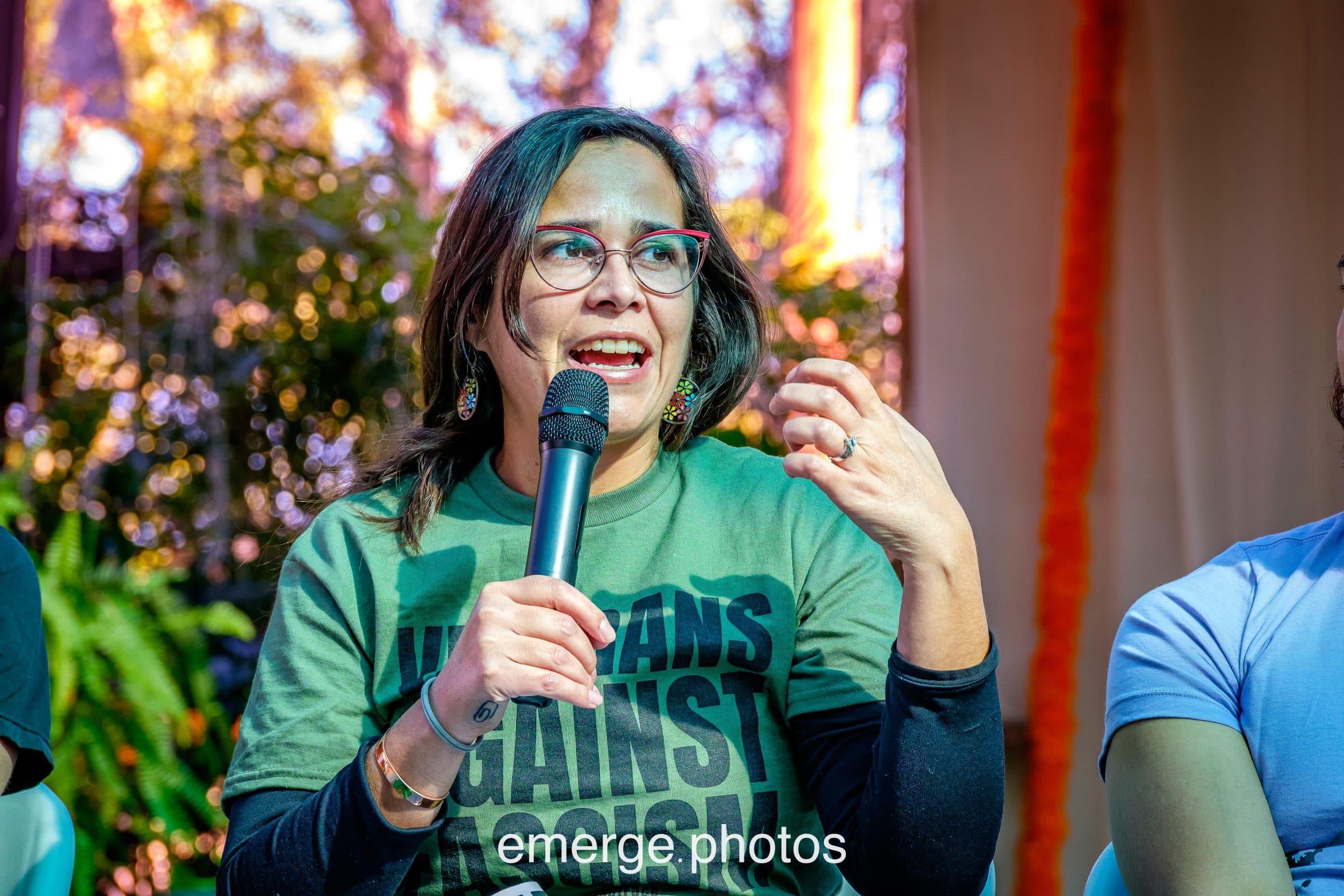
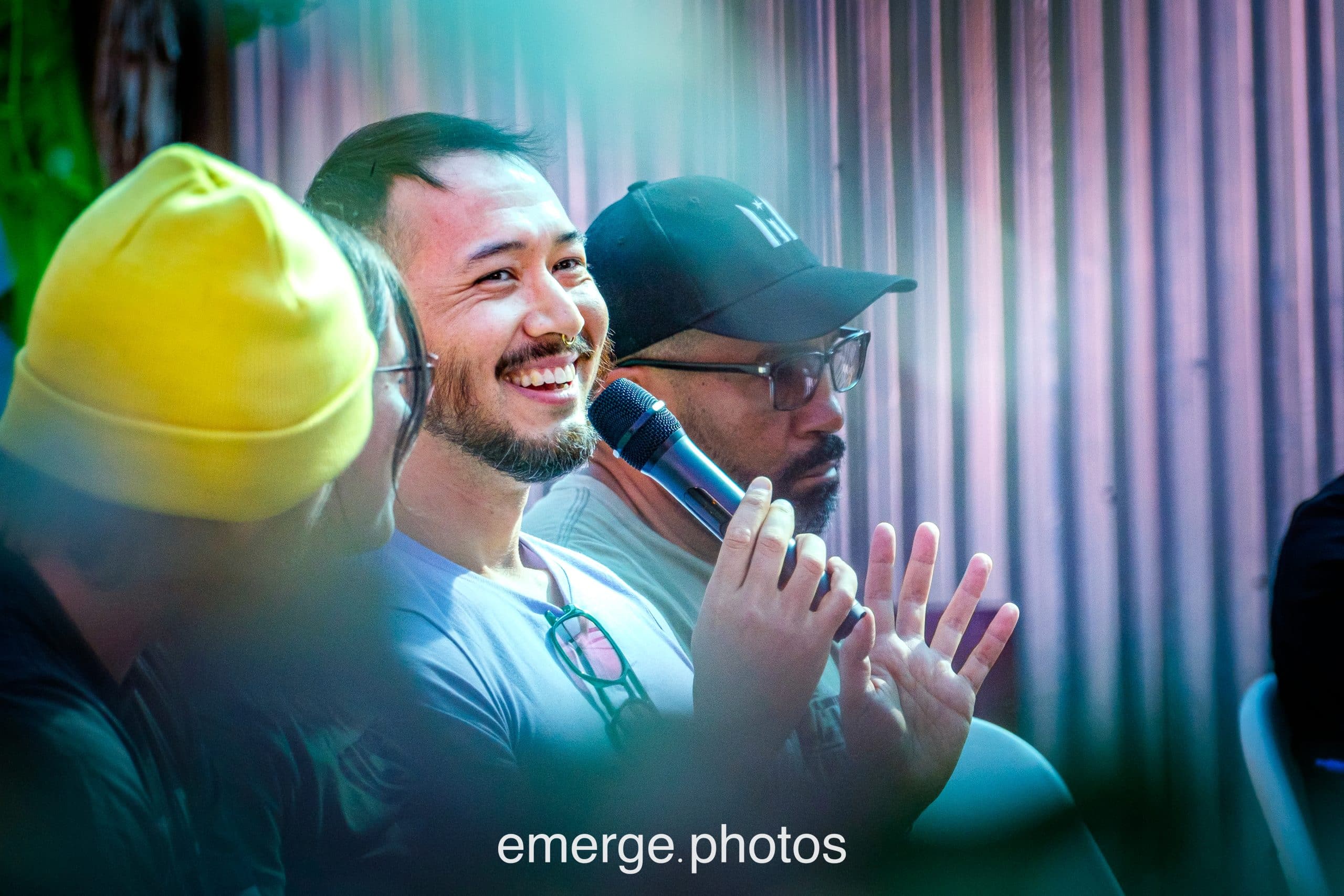

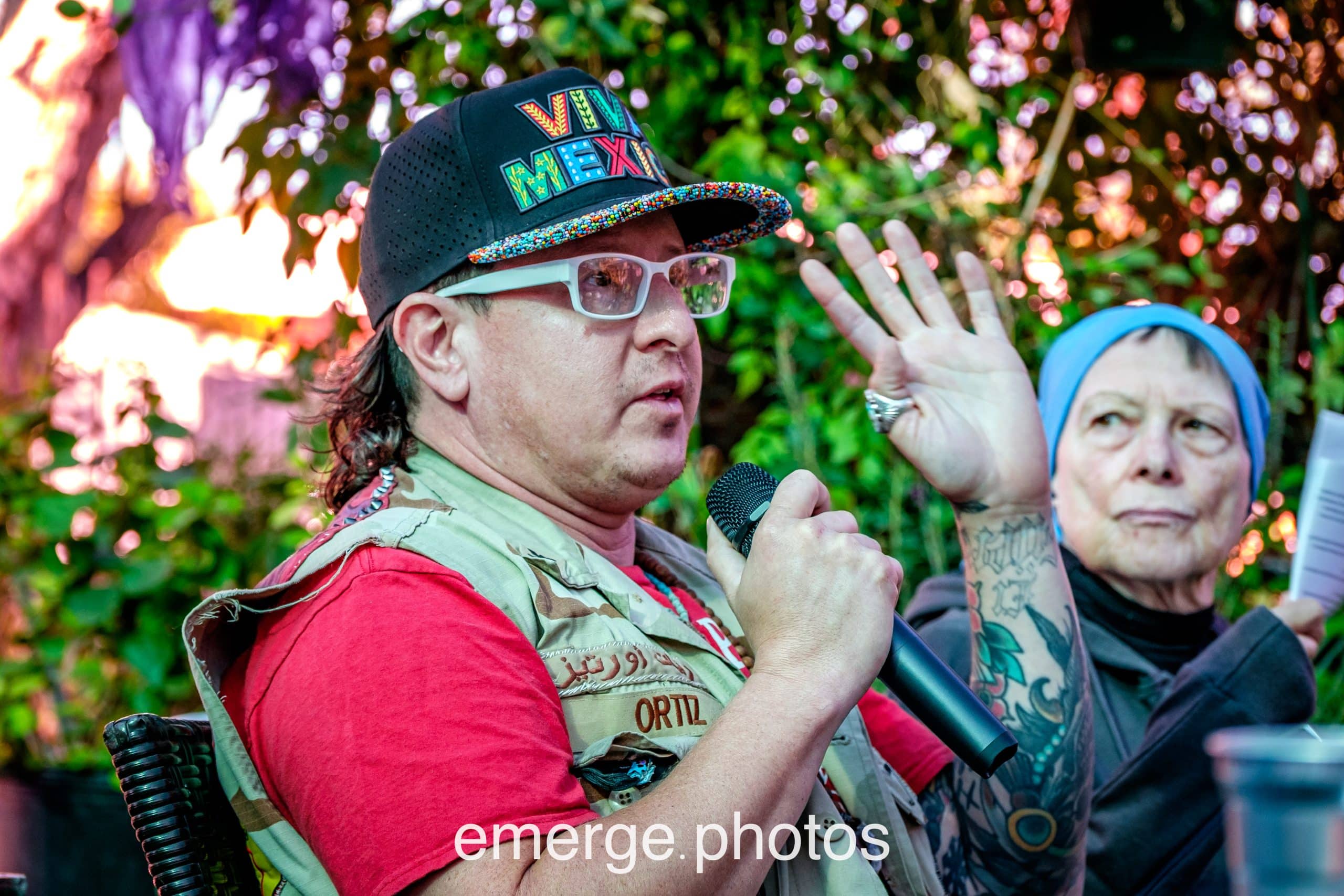
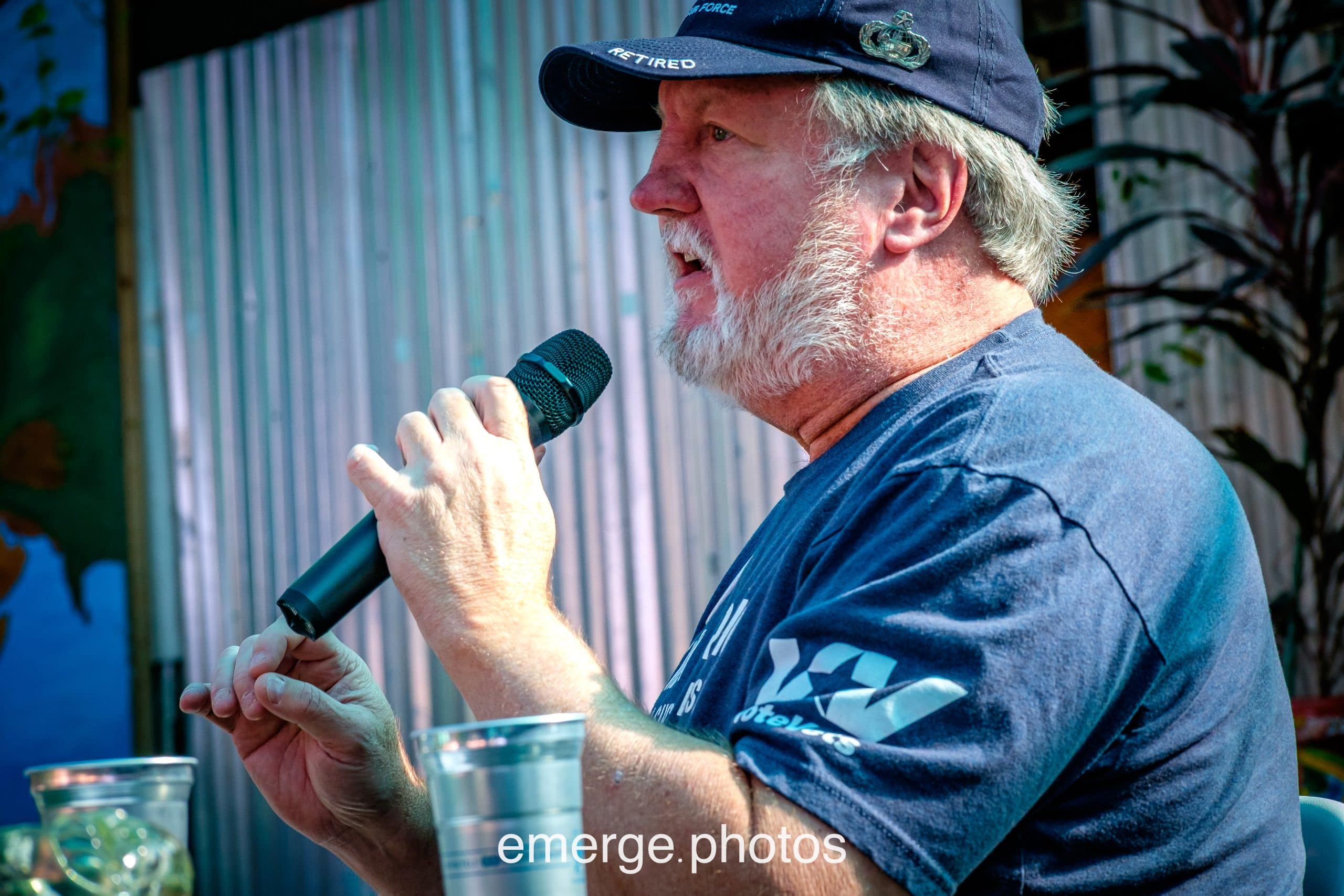
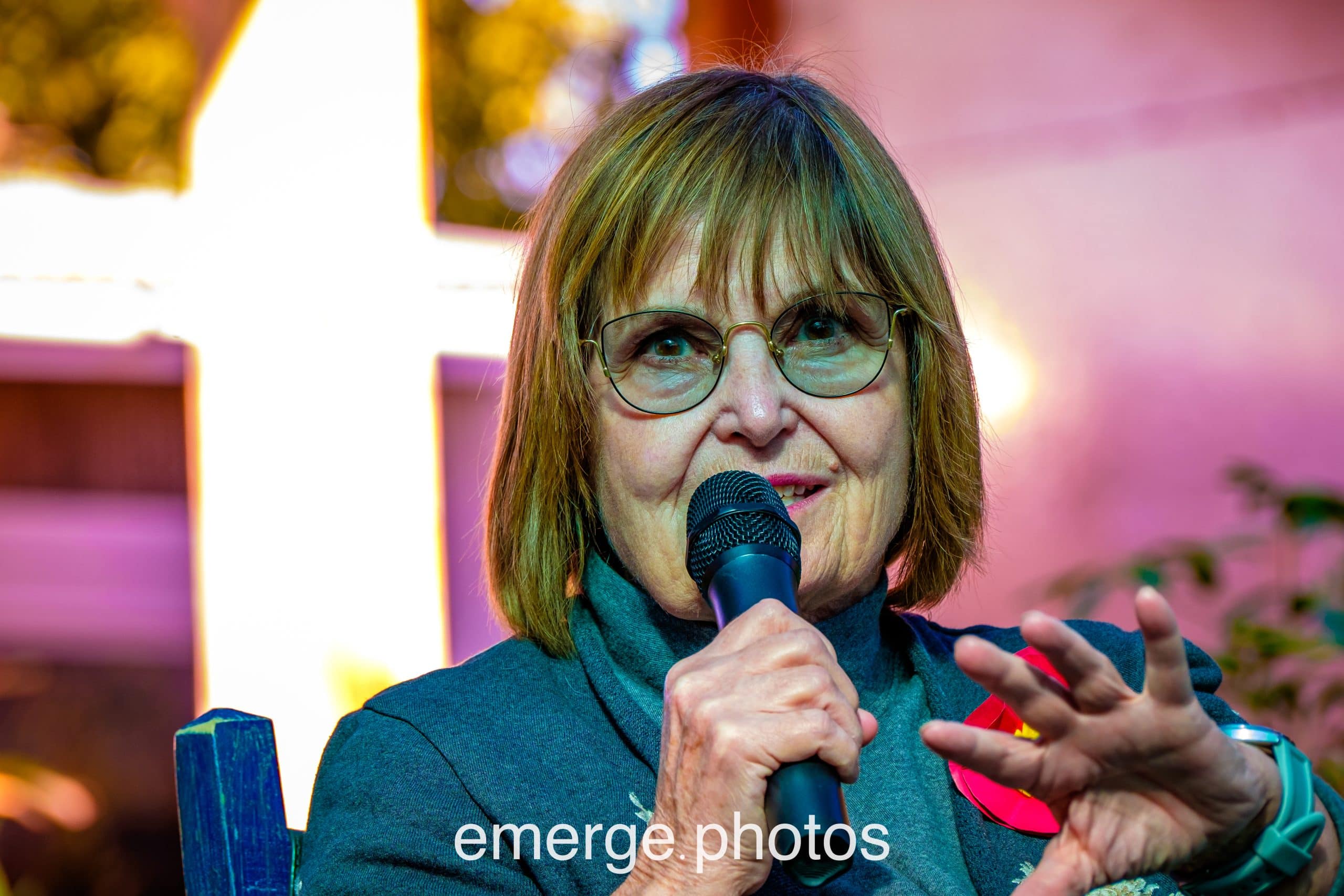
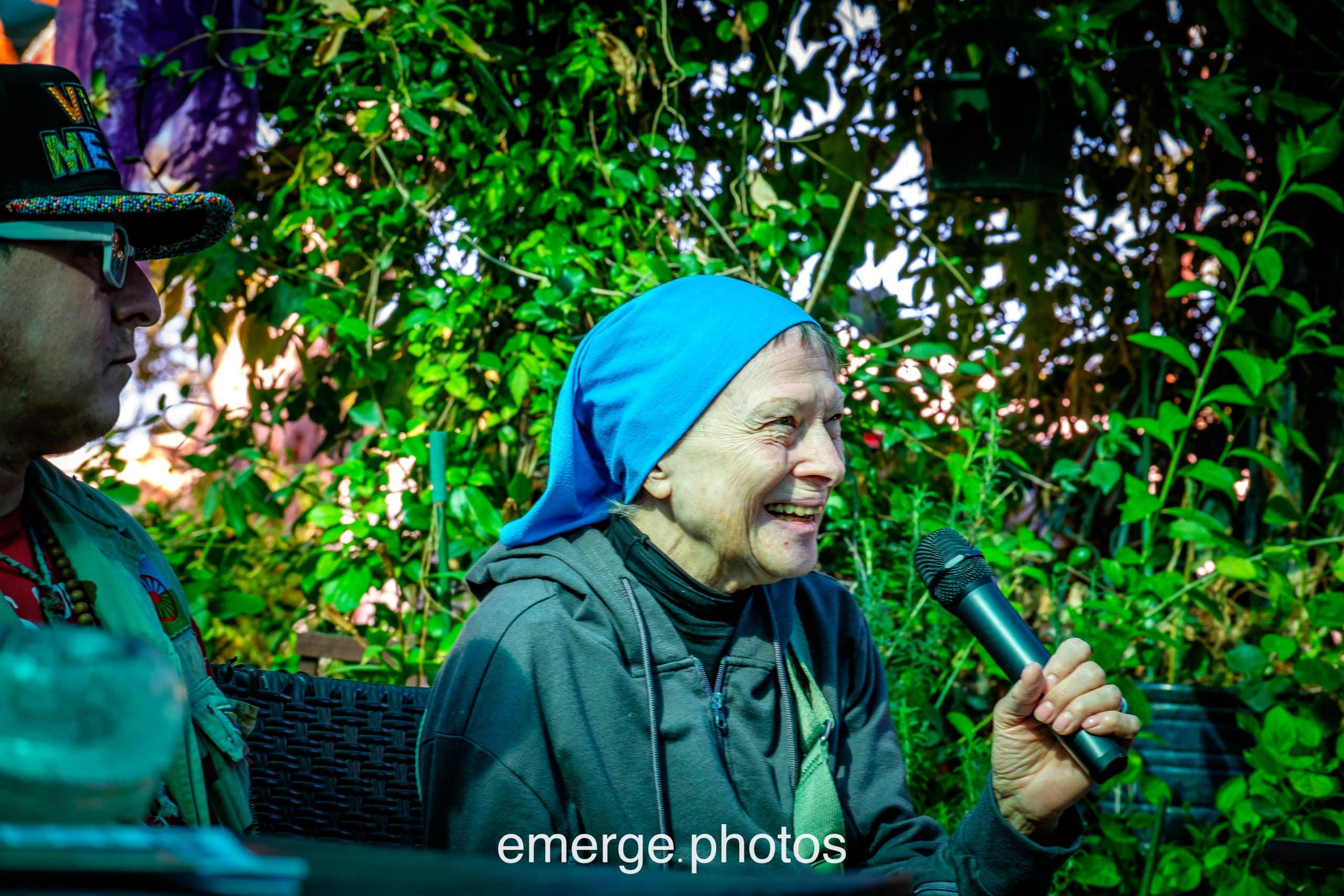
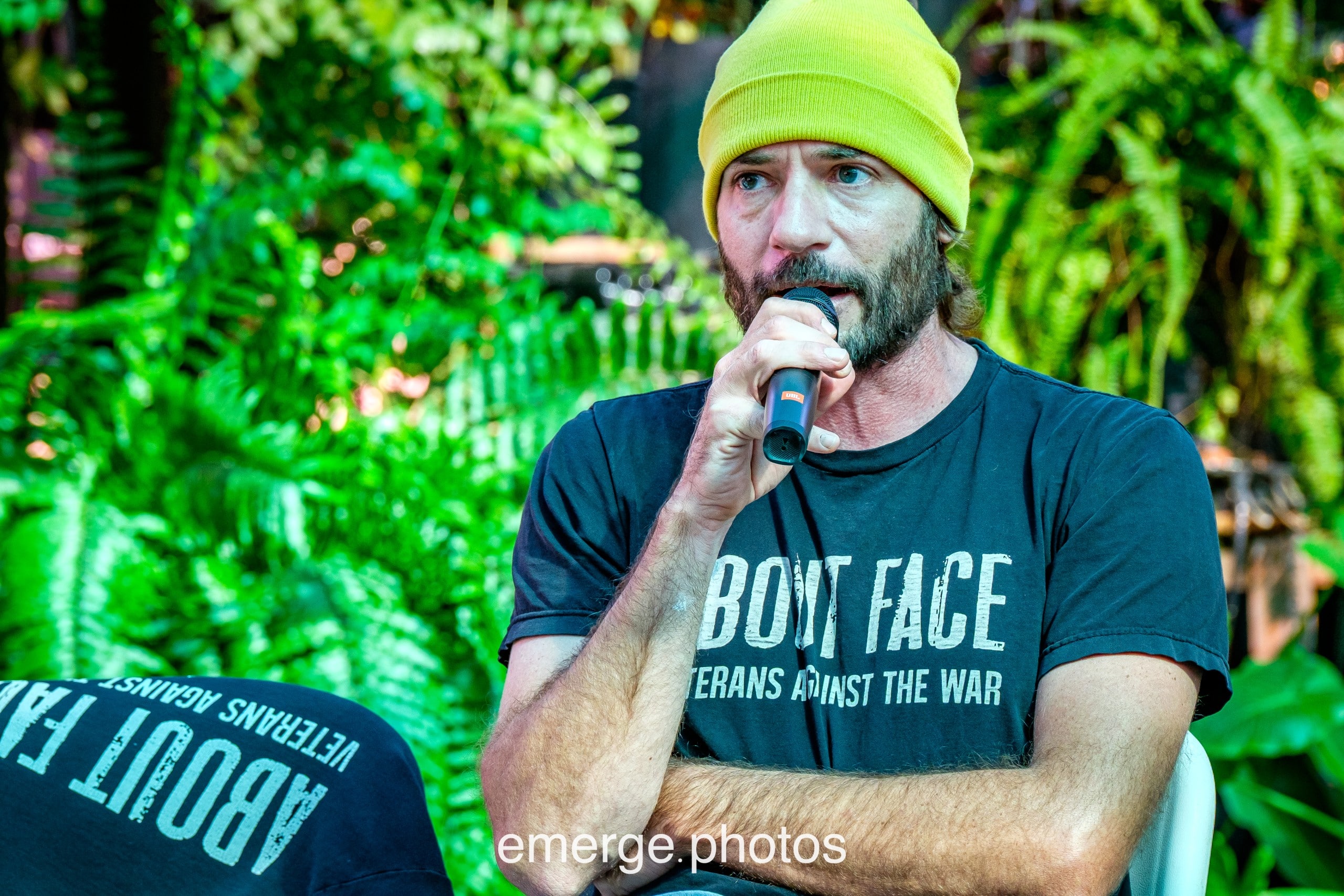
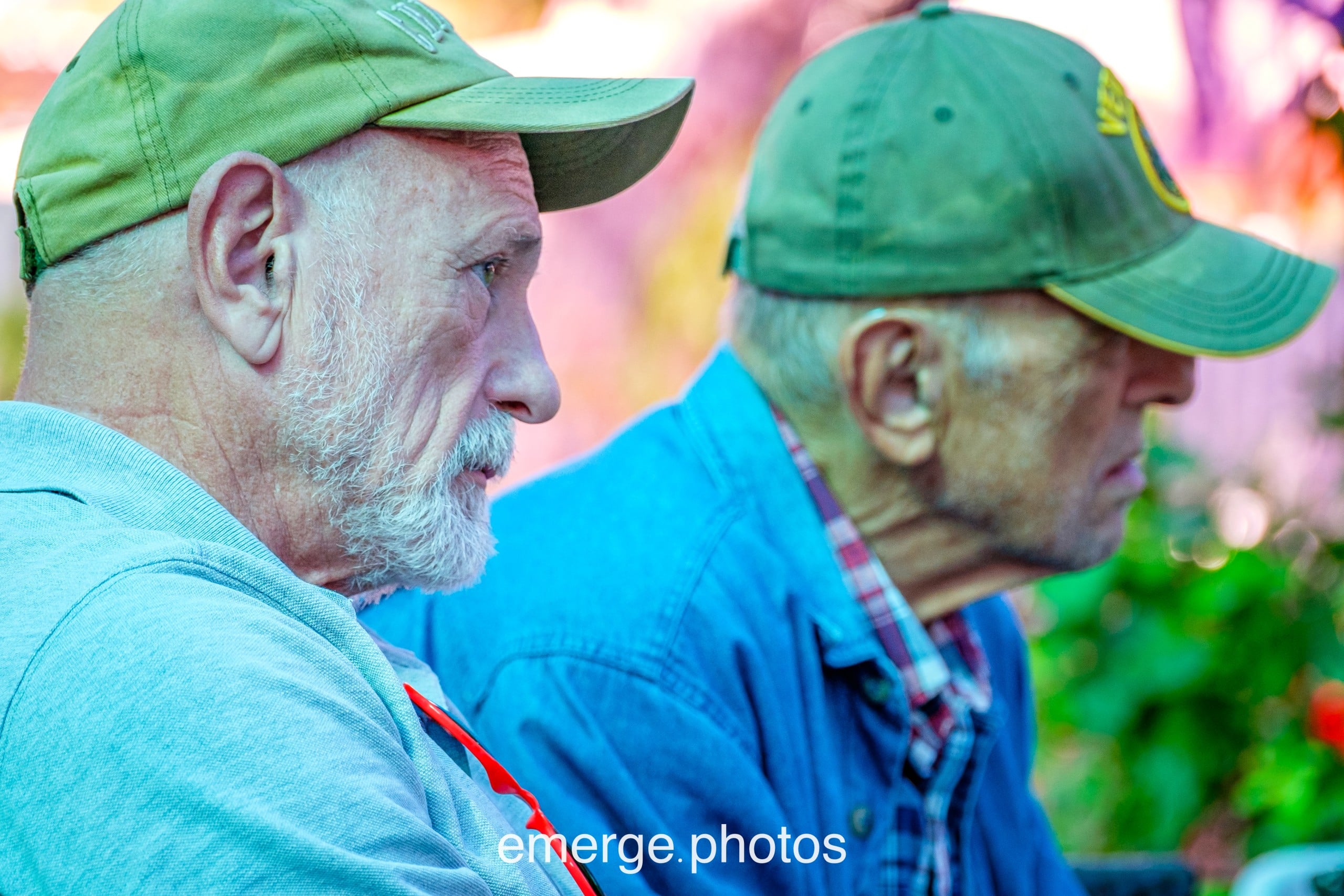
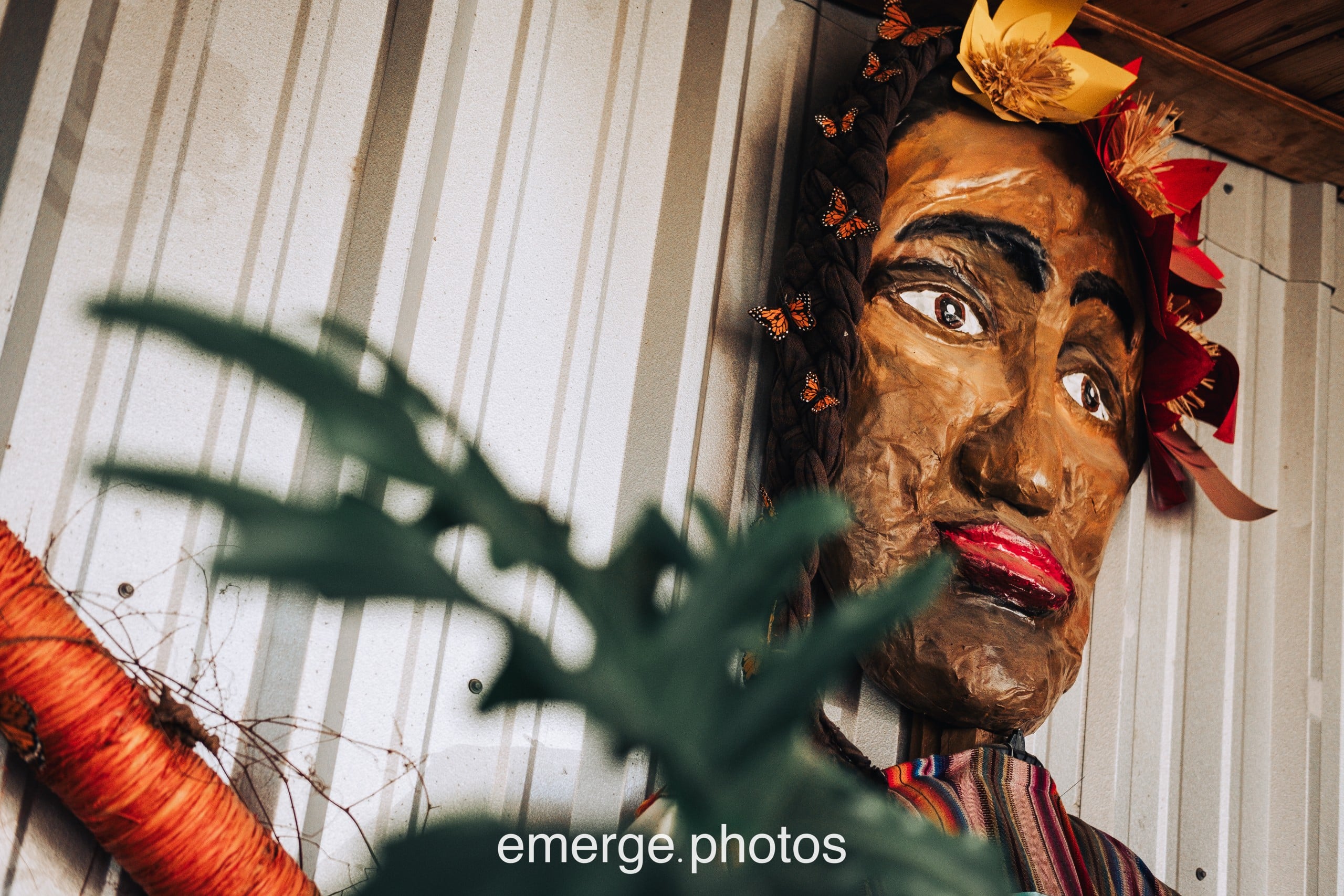
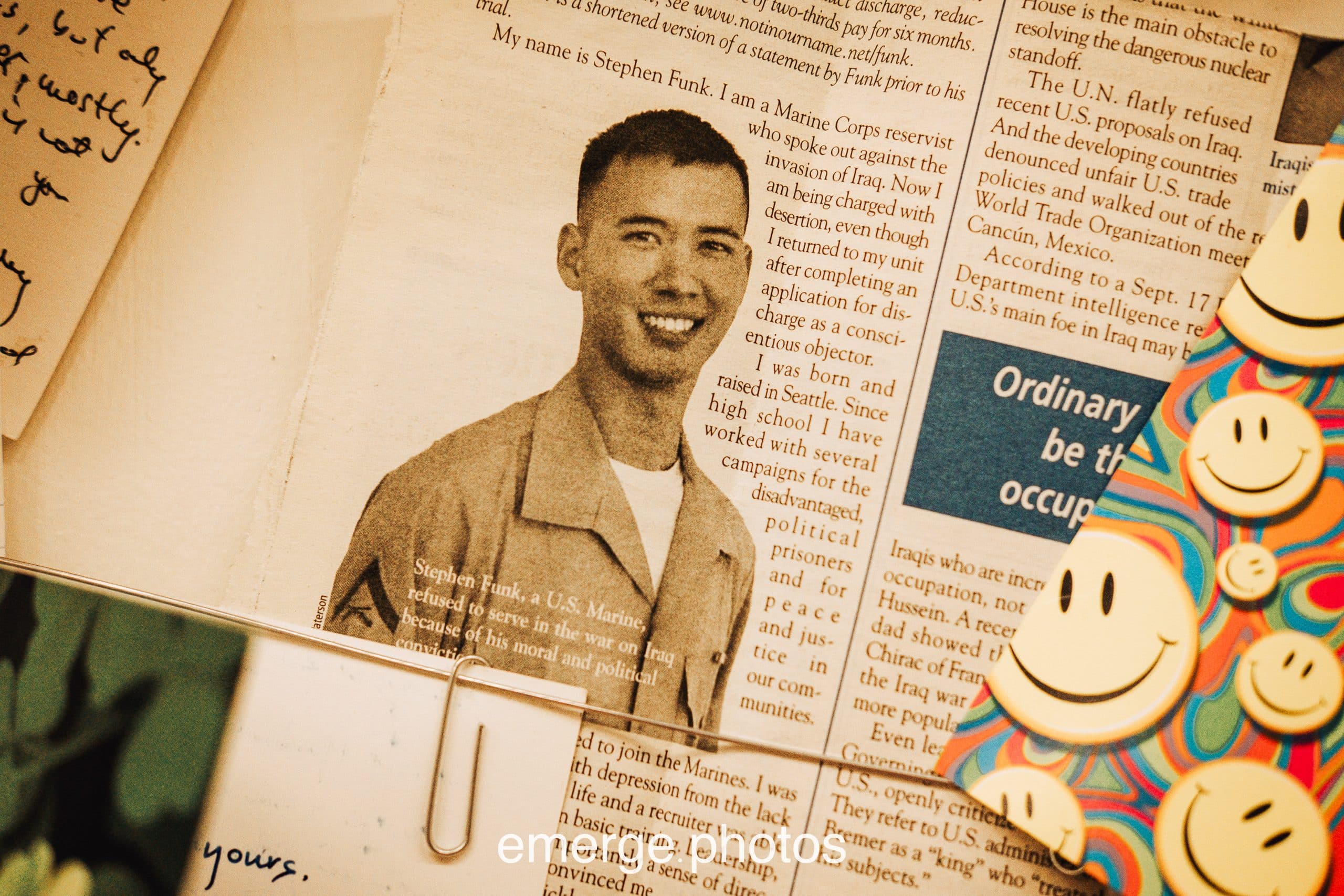
Other artists visiting San Antonio with the exhibit reflected on their experience as conscientious objectors. A former Marine from the Bay Area, Stephen Funk refused to participate in the invasion of Iraq and as a result was imprisoned for six months; “Letters from the Brig” displays the many notes and photographs he received from around the world during his time as a political prisoner.
To help close out a week of activities connected to Veteran Voce, Funk joined “Right to Refuse: A Community Conversation” alongside local veteran organizers Jovanni Reyes, Jake Tucker, and Rachell Tucker. As captured in the podcast above, all four sought to connect long histories of veteran protest against war and occupation to the present moment, when the Trump Administration has deployed the military against US cities as agents of domestic policing.
Soldiers have a “right to refuse,” the panelists say, as part of a wider campaign About Face: Veterans Against the War launched this year on July 4, which pushes Congress to codify the right of servicemembers to refuse to obey illegal or immoral orders.
It’s a discussion as timely as it is sobering. But as Tucker reminded the gathering of vets and supporters: “Armistice Day was [originally] a day for peace. Not a day of uplifting war. Armistice Day was done on the 11th day and the 11th hour and 11th month…to end all wars.”
-30-
Featured image from landing page and captured in first image in the exhibit slide show above: ‘I Joined for the Benefits,’ by Tony Allevato, describes how the “economic draft” serves as a primary recruitment tool for many who face futures threatened by hunger, lack of housing, and prison.